



Writer: Helena Bergström
Now that the Midsummer weekend is over, we can't just sit around doing nothing... The houseboat is on land and we've got our hands full. Right now, we're painting the hull. We've got some two-component paint that needs to be applied in a thick layer to protect the hull.
 Tweet
Tweet Share
Share Share
Share Pin
Pin Share
Share Share
ShareTable of contents
Caring for a steel hull
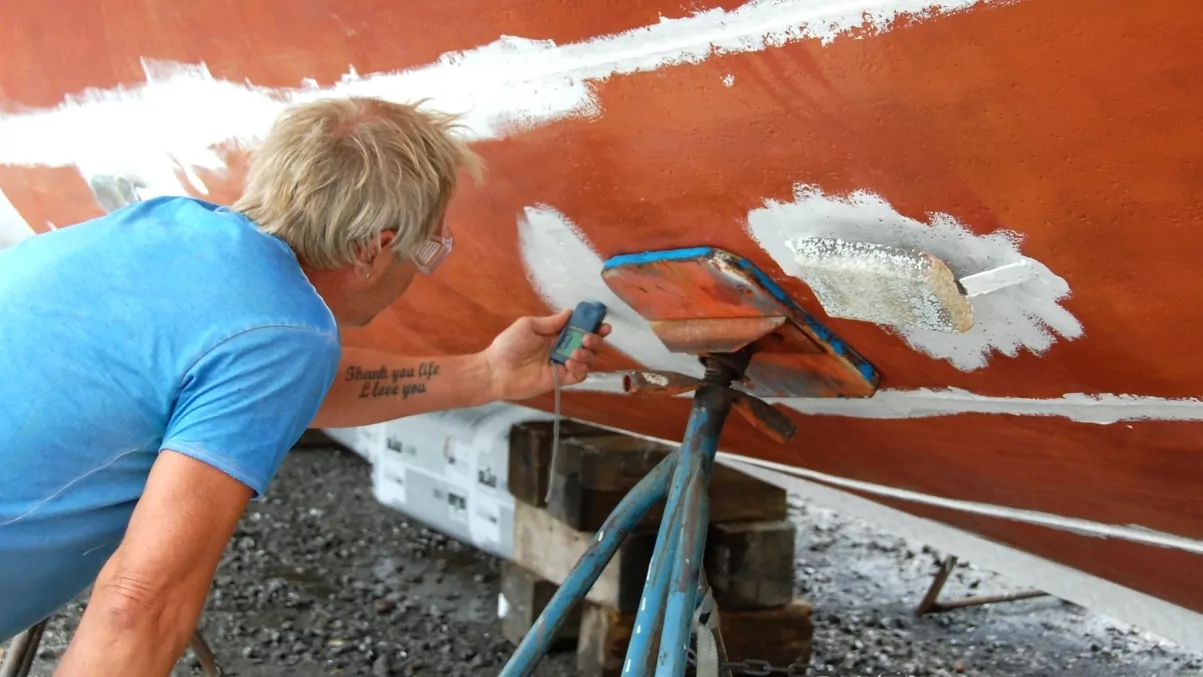
The houseboat was on land in 2012, when the previous owner had the hull blasted and painted. In other words, the board the hull to be perfectly ok, but that doesn't seem to be the case. We brought in an expert the other day who walked around the boat and measured the thickness of the paint with various technical devices, which we had never seen before.
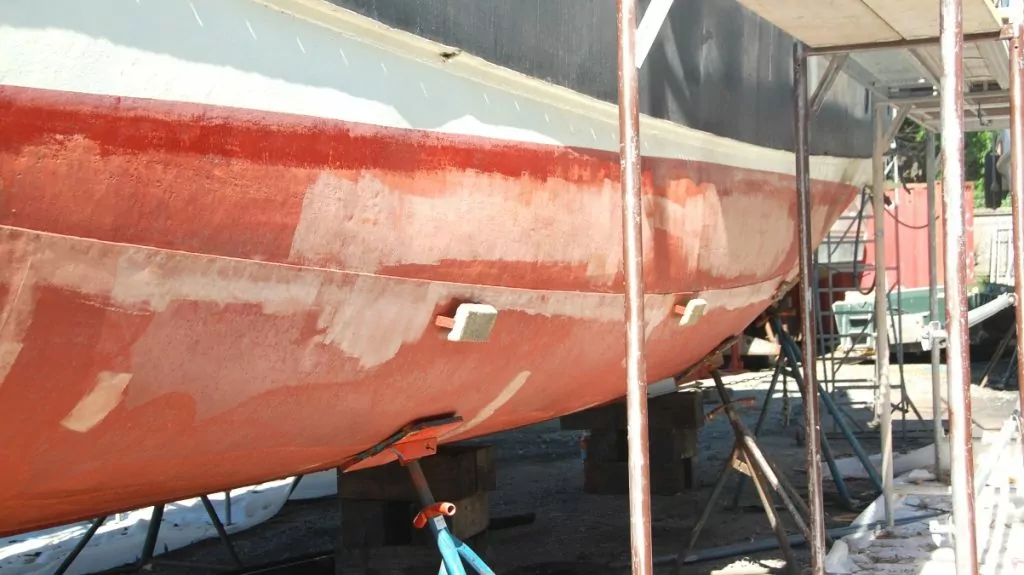
The paint should apparently be at least 250 micrometres thick. Otherwise the water can penetrate the paint and reach the steel hull. According to the measuring equipment, the paint layer was much thinner than 250 almost everywhere below the waterline ... What were they doing in 2012, one wonders? So we need to see the hull again!
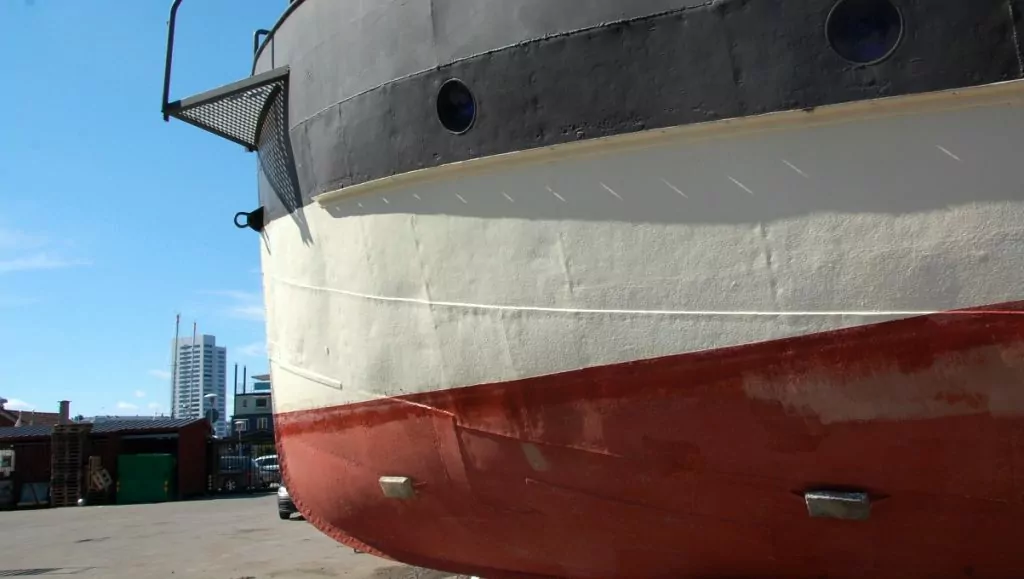
Sanding the boat hull
To start with, we have sanded the boat hull. Working hours for one person (that's me): three full working days and two evenings. I've been dreaming about this boat hull at night for the past week... Now I can feel it inside and out: every nick and dent.
After this, Peter sanded off all the small rust spots with a sander and then we washed the hull with a pressure washer.
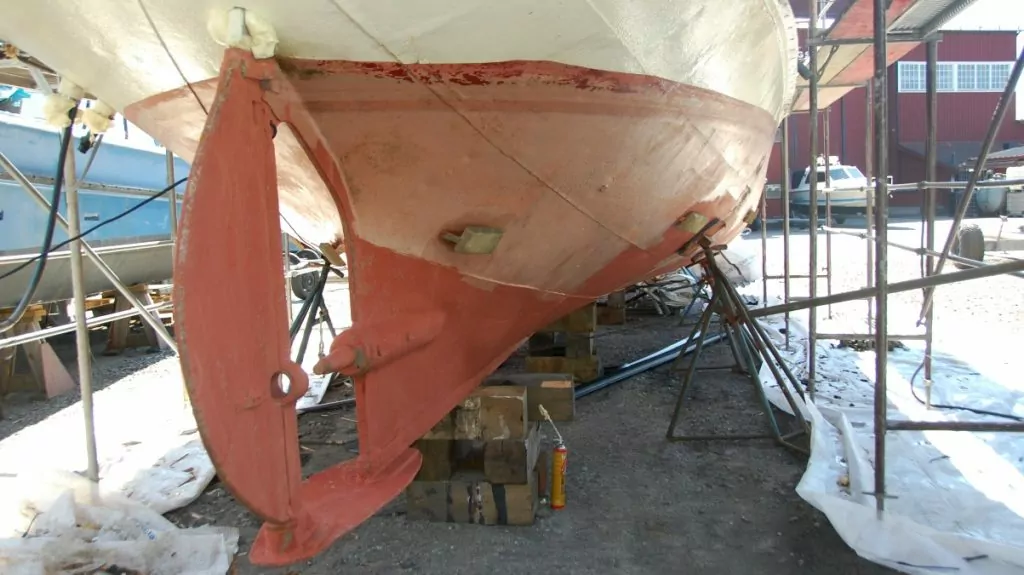
Four laps
There are four rounds (painting edges + rolling + painting edges + rolling). Between each round, the paint has to dry for 30 hours. Tonight we have done the first round, and we have had help from Peter's son Billie, who is staying with us in the motorhome for a few days. We chose white this time because paint with less pigment has better protective properties. We may have to paint the waterline a different colour afterwards ...
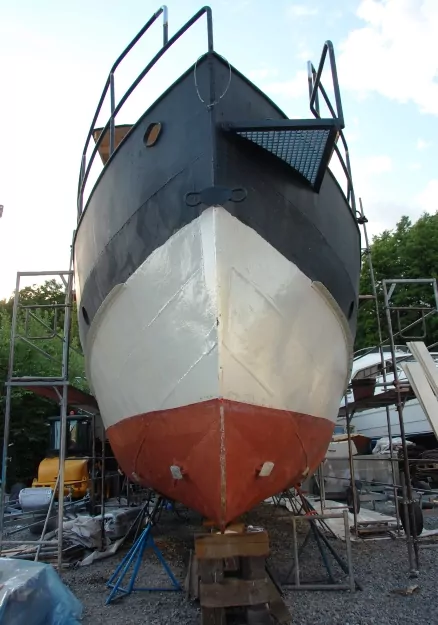

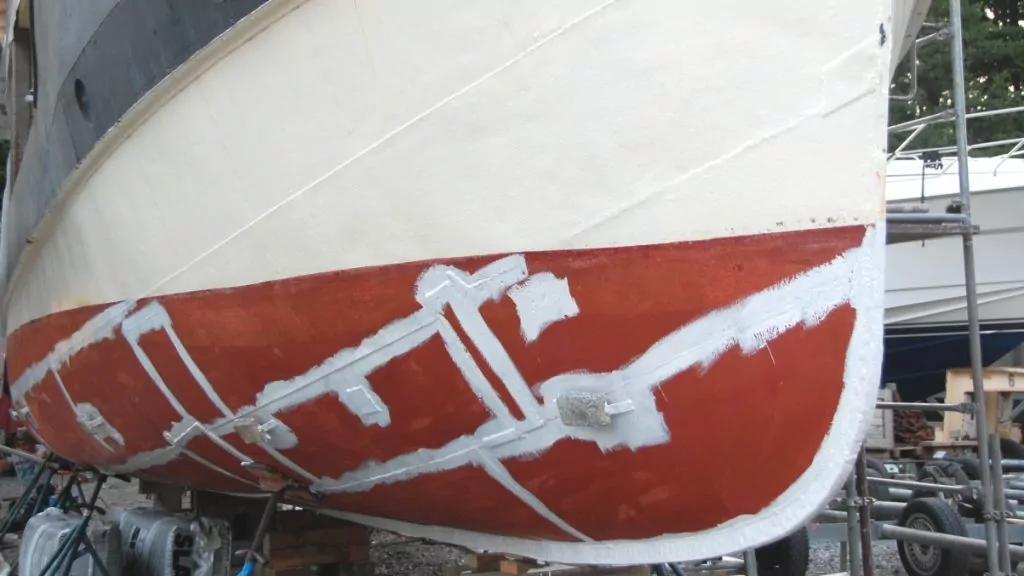
Painting with epoxy
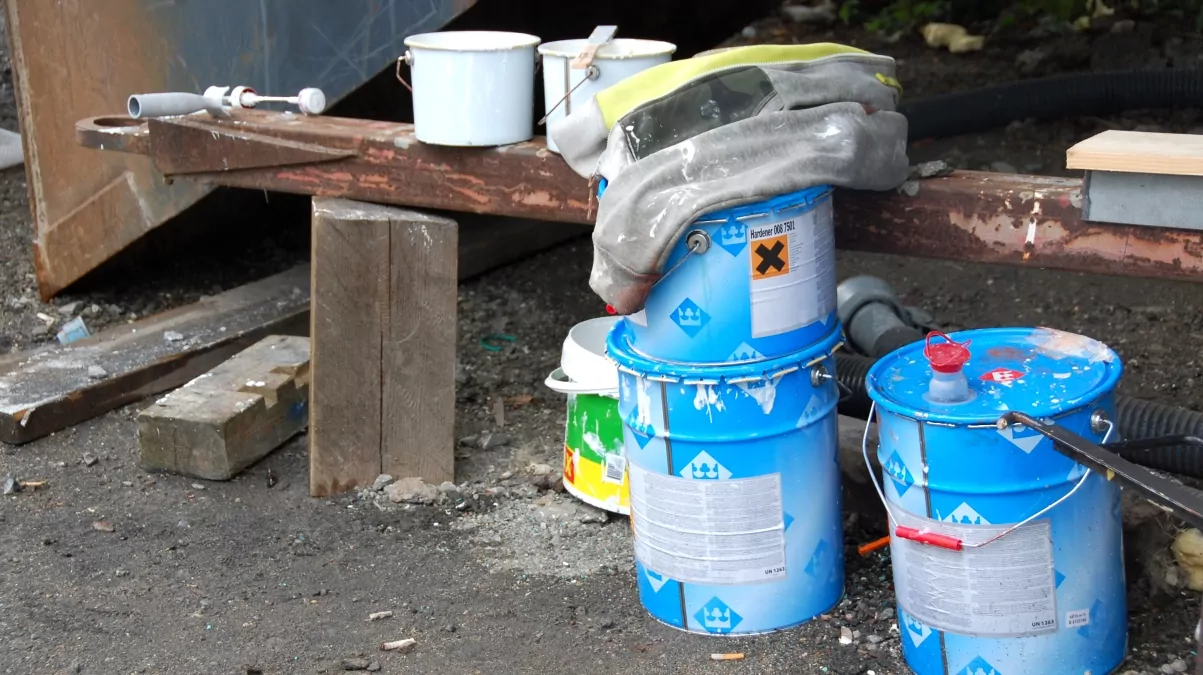
We paint the hull with two-component epoxy. This means mixing two different components just before painting. One component is a hardener. The paint dries in a few hours, and then cures for 1-2 weeks. The final result is a rock-hard surface that will protect the hull from moisture.

What's interesting is that the paint doesn't just harden on the hull of the boat - it hardens everywhere else it happens to go. It drips and smears, and when you lie under the hull of the boat, it ends up everywhere.
I'm wearing construction trousers, a long-sleeved shirt and safety glasses. And yet I have epoxy everywhere - in my hair, on my ankles, on my belly... The colour comes off (half and half) when you rub hard with thinner against the skin. Or when you cut off your hair ...








 English (UK)
  Svenska
BP says:
Like the pattern on the last picture;-)
27 June 2014 - 8:05
Maggan och Ingemar says:
How much you are learning by renovating your "house" 🙂 .
Take care
27 June 2014 - 9:44
Ama de casa says:
Sounds perfect! Well, with those 30 hours of rest in between, that is...
🙂
27 June 2014 - 10:00
Marina says:
Suddenly, "repainting the house" takes on a different meaning!
27 June 2014 - 11:36
Ditte says:
Well done! And nice to have some help! It will be nice too.
27 June 2014 - 12:06
Steve says:
Impressive! And it gives you something new to dream about.
27 June 2014 - 16:34