


Writer: Helena Bergström
Updated: September 2026 | Ghent really surprised us. I had been here once before and was already hooked on the city, but when Peter and I came back together we really got to experience Ghent. We paddled through the canals, cycled between the sights and ate our way through a city that turned out to be much more fun than we had expected. Here are our best tips for Ghent!
 Tweet
 Share
 Share
 Pin
 Share
 Share
Table of contents
Things to do in Ghent – attractions and experiences you don't want to miss
Ghent is a city that is easy to like and even more fun to explore. It has a medieval castle, mighty church towers and some of Belgium's most famous art treasures, but also canals to paddle on, street art, Belgian beer and little quirks that make the city much more playful than it first appears.
1. Visit Gravensteen – Ghent’s mighty medieval castle
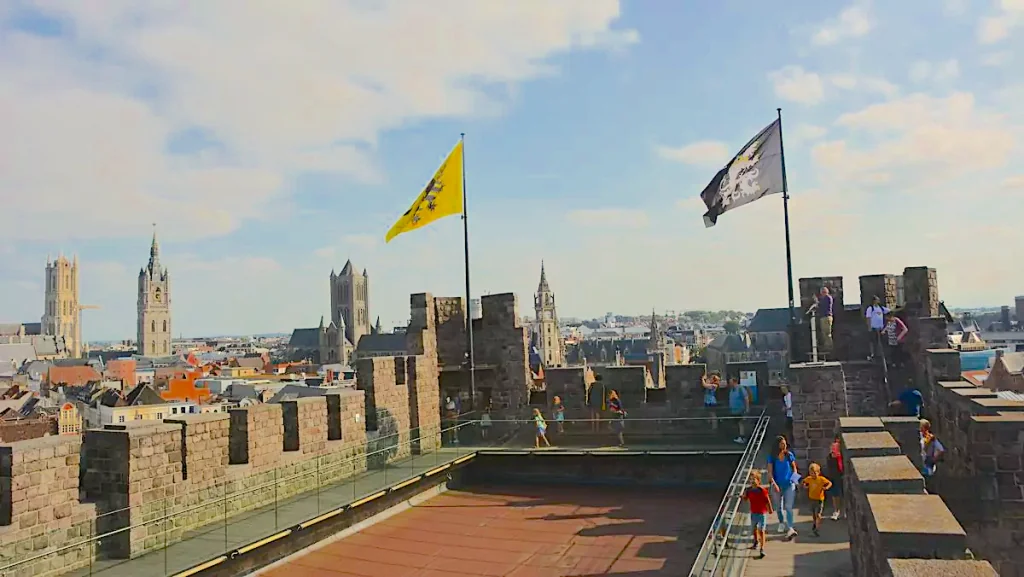
In the middle of Ghent, the Gravensteen stands tall with thick stone walls, towers and battlements, as if someone had forgotten to leave a medieval castle in the middle of the modern city. The castle was built by Count Philip of Alsace in the 12th century and was a clear way to show the inhabitants who was in charge. Today, you can walk through the old halls, see the collection of torture instruments and climb the walls for views over Ghent.
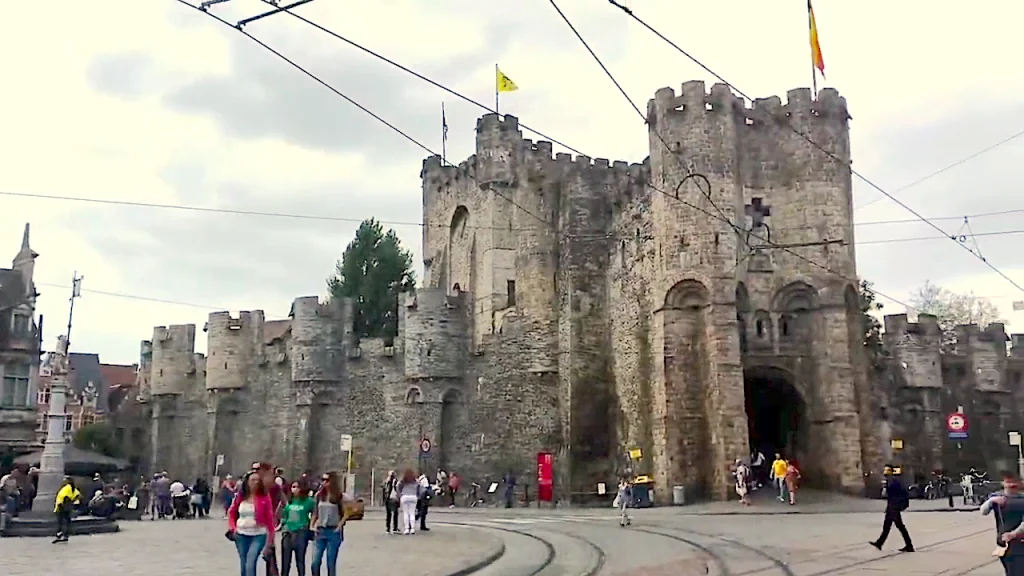
But Gravensteen also has a much more fun story. On November 16, 1949, the castle was stormed by 138 students from Ghent. They protested, among other things, against rising beer prices and barricaded themselves inside the castle. The action received so much attention that even newspapers in New York wrote about it.
And what about the rotten fruit? The students had brought overripe fruit with them, which they threw at the police and fire brigade from the castle walls. The occupation ended that same evening, but the student coup became part of Ghent's history and is still commemorated every year in November.
Peter's advice: If you're going to take over a medieval castle to protest the price of beer, I recommend doing it in Ghent. They seem to have some understanding of the problem.
2. Experience Graslei and Korenlei – The heart of the waterfront
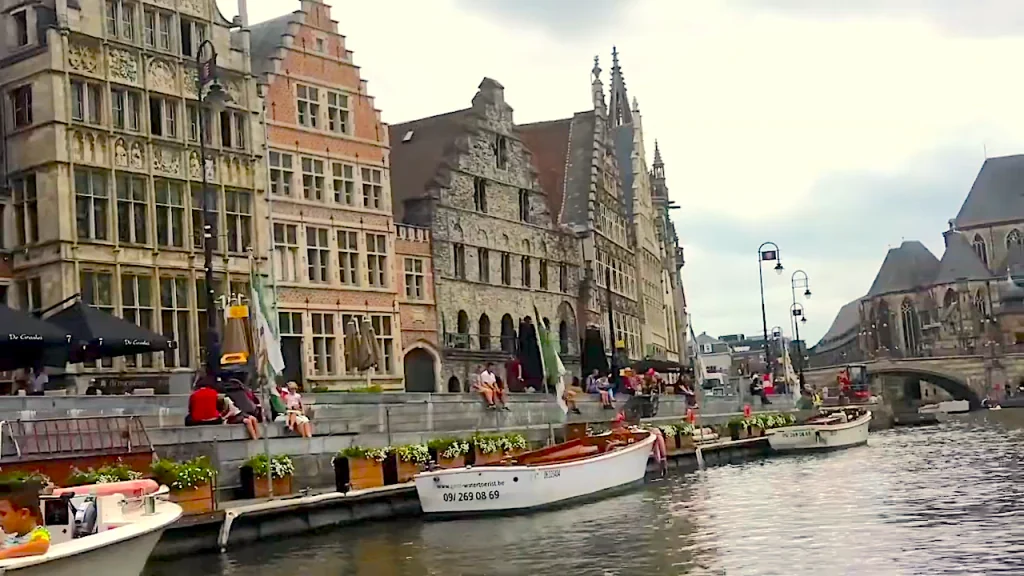
Graslei and Korenlei lie opposite each other on either side of the Leie River and are for us one of those places where you don't have to do much. Stroll along the quays, sit by the water and watch the boats glide past the beautiful old houses. This is simply Ghent at its finest. Students, locals and visitors mingle here on the outdoor cafes and along the water's edge.

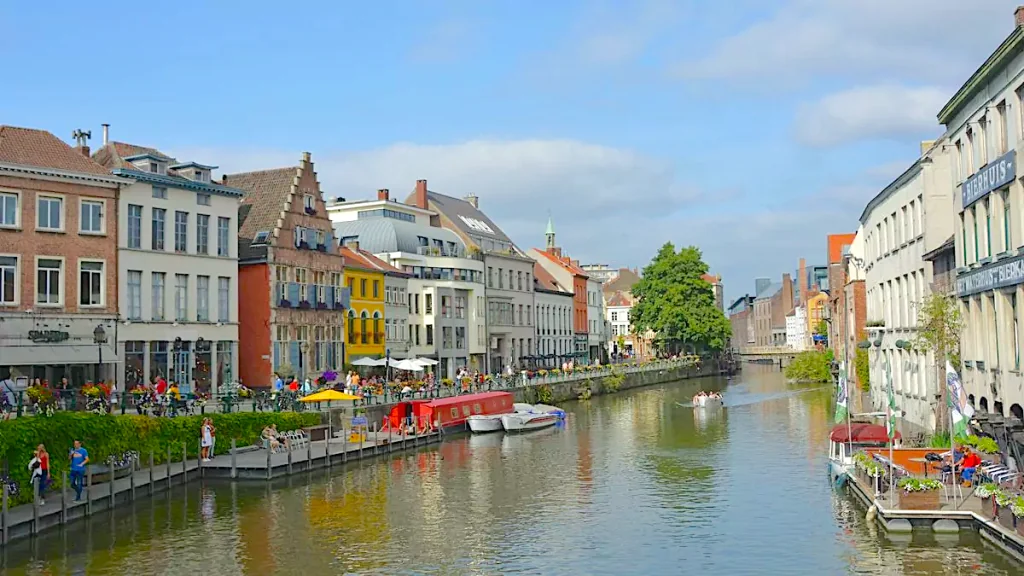
But the grand houses are not just there to look good in holiday photos. As early as the 11th century, the area developed into Ghent's port and an important center for the grain trade. Warehouses and guild houses for merchants and sailors were built along the quays, and several of them still remain as living rooms for the people of Ghent. Take a closer look at the facades – some deliberately lean forward to make it easier to hoist sacks of grain to the upper floors.
3. See the Adoration of the Lamb in Sint-Baafs Cathedral
Inside the Sint-Baaf Cathedral is one of Ghent's greatest treasures: the enormous altarpiece The Adoration of the Lamb, also known as the Ghent Altarpiece. The work was begun by Hubert van Eyck and completed by his brother Jan van Eyck. It was first displayed in the cathedral in 1432 – and since then the painting has seen more drama than most people will experience in a lifetime.

The altarpiece has been dismantled, sold, hidden away and ended up in the middle of Europe's wars. During World War II, it was taken to a salt mine in Austria along with a host of other art treasures. As the war drew to a close, the art in the mine was in danger of being destroyed, but the altarpiece was saved and later returned to Ghent.
But the biggest mystery had already begun 1934. One morning, two panels were discovered stolen from the cathedral. One, John the Baptist, was later returned after the thief demanded a ransom. The other – The righteous judges– disappeared without a trace. A man linked to the blackmail letters claimed on his deathbed that only he knew where the panel was hidden, but he died without revealing the location.
And the story doesn't end there.
The panel is still missing.
The part you see in the altarpiece today is a copy, and over the decades people have searched for the original in everything from private houses and wells to Gravensteen. Even today, new theories are emerging about the whereabouts of Ghent's lost masterpiece.
FREEDOM tips: Even if you normally pass by old paintings with about the same enthusiasm as Peter passes a salad bar – give Adoration of the Lamb a chance. When you know the history of the thefts, the wars and the still missing panel, it suddenly becomes something completely different from ”just another old painting”.
4. Climb the Belfort – with the kite over Ghent
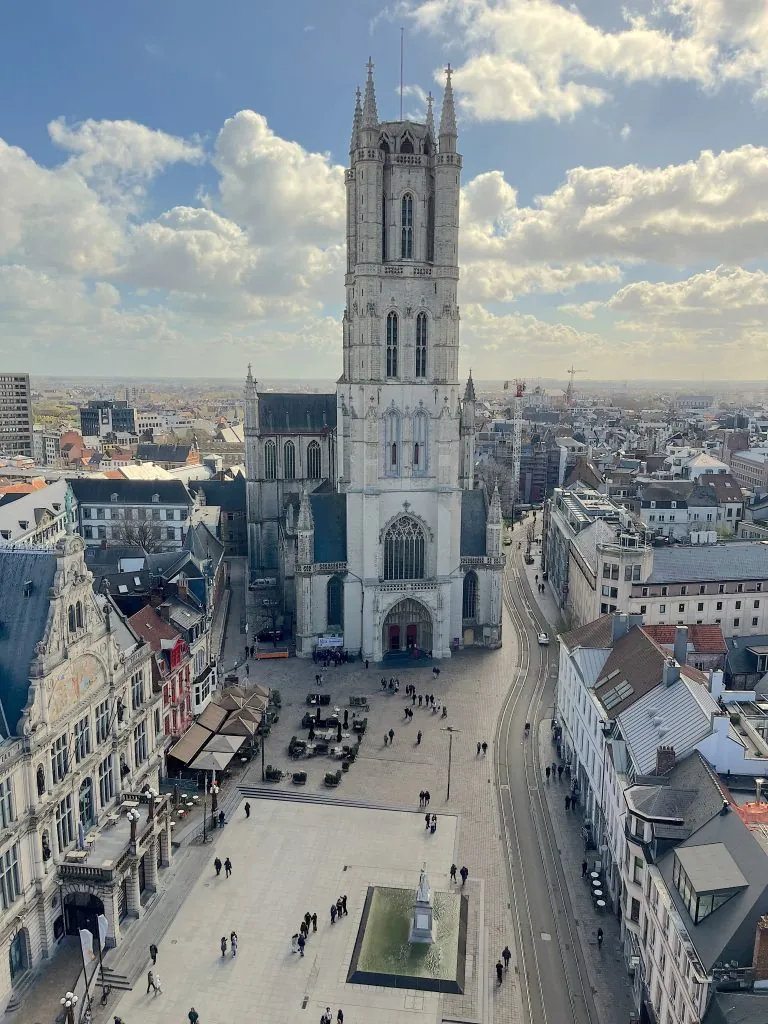
Between the Sint-Baaf Cathedral and the Sint-Niklaaskerk stands the Belfort, the middle of Ghent's famous three towers. Construction began in the 14th century and became a symbol of the city's freedom and independence. Ghent's important charters were kept here and guards looked out for fires, in particular.
Climb the tower and you'll be rewarded with views over the rooftops and the historic city center. Luckily, you don't have to compete in any medieval fitness competitions - there's a lift from the first floor for most of the way up.
But now we come to the important thing.
The dragon.
Since 1377, a gilded dragon has watched over Ghent from the top of the Belfort. Over the centuries, fantastic stories have emerged that the dragon was stolen from Bruges or even brought to Europe with the Norsemen during the Crusades. These are good stories – but according to the city of Ghent, they are just legends. The dragon was made in Ghent.
The dragon that sits at the top today is the third version and was installed in 1980. And it's no small lizard. It consists of 130 copper parts and 1,298 rivets, is gilded with gold leaf and weighs a whole 408 kilos. Four people stood on a small platform high above Ghent while the kite was lifted into place by helicopter.
You don't need binoculars to see the earlier dragon, however. It is preserved inside Belfort.
Peter's advice: Look up as you walk through Ghent. A 408-kilogram golden dragon has been guarding the city for almost 650 years. I'm not going to be the one to tell him that dragons don't exist.

5. Kayak through the canals of Ghent
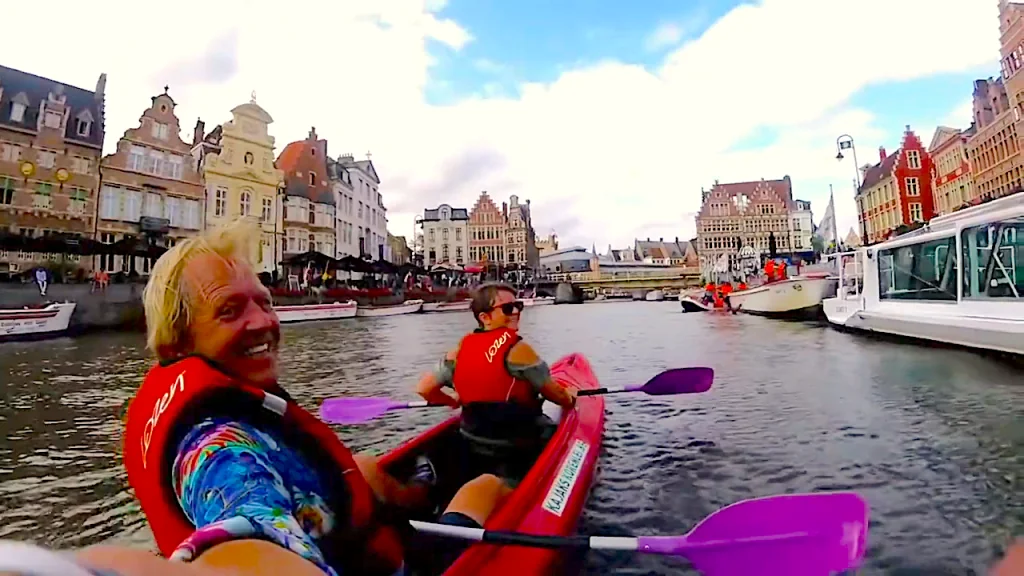
One of our most memorable experiences in Ghent was seeing the city from a kayak. We set out on the canals and paddled straight through the historic city center, under the bridges and past the old houses that suddenly looked completely different from the water level.
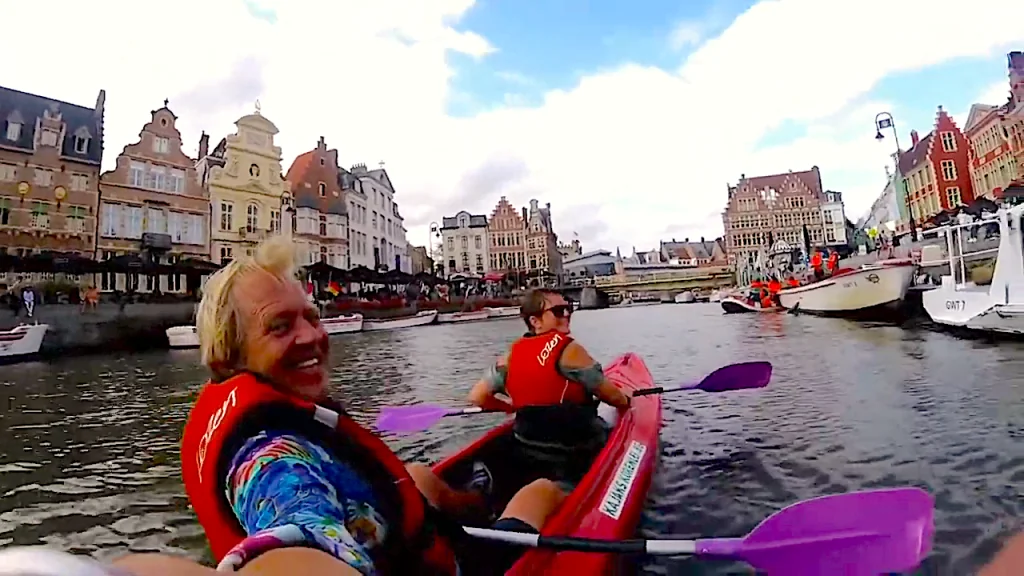
The beauty of kayaking is the freedom. Instead of following a guide, you set your own pace, can stop when something catches your eye and discover small details along the canals that are easy to miss from land. At the same time, you are in the middle of Ghent – just a few meters below the people walking along the quays.
We had already walked and cycled through the city, but from the water we got another view of Ghent. And maybe that's why the kayak trip stuck in my memory so strongly.
Our experience: For us, the kayak was one of the highlights of the trip and a fantastic way to see Ghent from the water. If you want to paddle yourself today, we recommend that you rent from a local operator and follow their current routes and safety advice. Parts of Ghent's central waterways have narrow passages, low bridges and a lot of boat traffic.

6. See Ghent from the water on a canal tour
Want to experience Ghent from the water but don't feel quite at home in a kayak? Then a canal boat is a much more comfortable alternative. You get the same great perspective from water level, but you can sit back while someone else takes care of both the navigation and the risk of paddling into a bridge.

The boat tours go through the historic city center and past several of Ghent's most famous buildings, quays and bridges. At the same time, you will hear stories about the city and things that are easy to walk past without realizing what you are looking at.
We tried both the canal tour and the kayak, but loved the freedom a little more when paddling around on our own. But not everyone wants to balance the vacation camera, paddle, and marriage in the same small craft. Then the canal boat is a very good way to experience Ghent from perhaps its most beautiful side – the water.

7. Stop at Sint-Michielsbron – Ghent's best view?
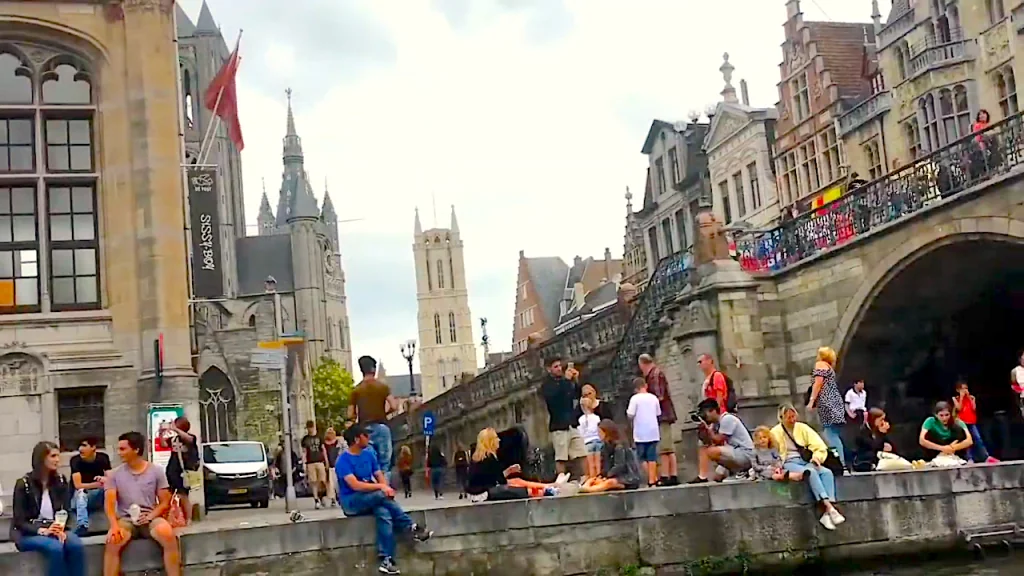
There are places where you almost automatically stop in mid-step – the Sint-Michiels Bridge is one of them. From the bridge you get one of the classic views of Ghent, with Graslei and Korenlei along the water and the city's historic center all around you.
Turn your gaze the other way and you'll see something that has made the view extra famous: Ghent's three towers in an almost perfect line – Sint-Niklaaskerk, Belfort and Sint-Bavo Cathedral. It is only from here that you really understand how close the city's major landmarks are.
And the best thing about the Sint-Michielsbron?
You don't really need to do anything.
Stop in the middle of the bridge, look both ways and let the camera work for a while. Do you have time for a single classic Ghent photo, we should take this.
8. Stroll through Patershol
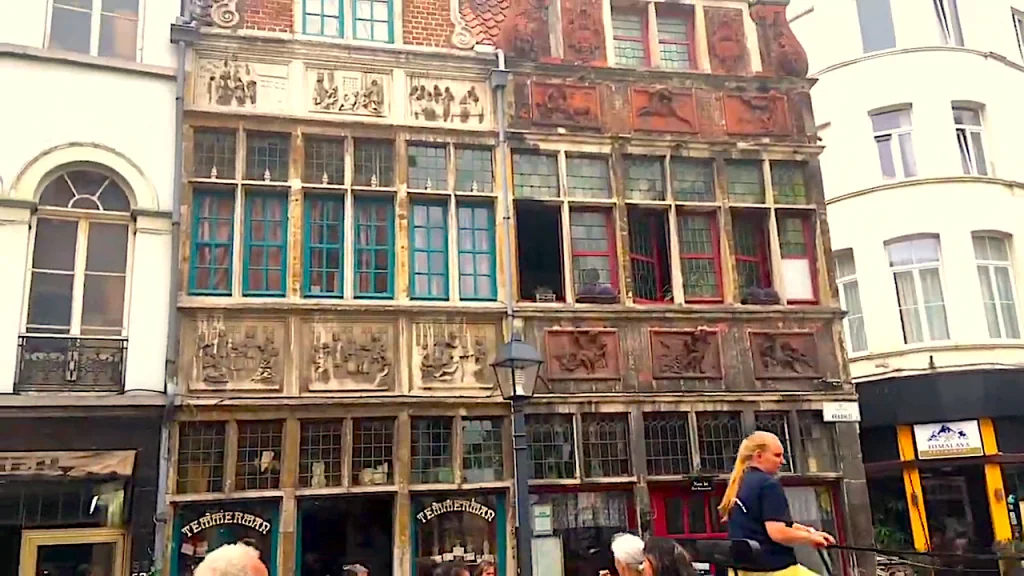
Patershol is one of those parts of Ghent where it's a good idea to leave your map in your pocket for a while. The neighborhood is located just below Gravensteen and consists of narrow cobblestone alleys, old brick houses and small squares where it's much more fun to go wrong than to find the quickest way out.
The area dates back to the Middle Ages and was long home to craftsmen and workers. During the 20th century, parts of Patershol fell into disrepair, but the neighborhood was saved and has today become one of Ghent's most charming areas, filled with restaurants, bars and small businesses.
What we like about Patershol is that there is no particular attraction that you have to hunt for. It is the neighborhood itself that is the attraction. Stroll around, peek through an alley that looks exciting, and settle down somewhere when you get hungry or thirsty.
And if you suddenly become unsure of where you are, the solution is simple:
If you see a huge medieval castle above the rooftops, you probably haven't gone very far.
9. Discover Ghent by bike
Ghent is a city that almost begs to be discovered by bike. The center is compact, large parts are car-free and cyclists are everywhere. After a while we began to understand why – by bike you can quickly get between the sights while still feeling like you are in the middle of the city.
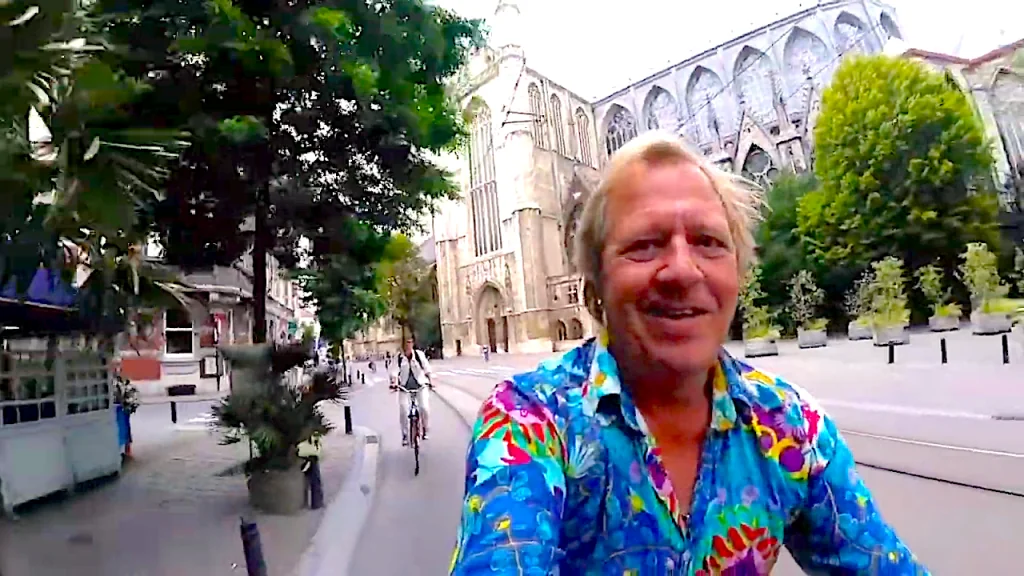
We rented bikes and headed off to the museum area at Citadel Park, among other places. This meant we saw much more than if we had just walked around the historic city center. Suddenly, the movement itself became part of the experience instead of just transportation between two points.
But there is one small detail to consider.
Ghent residents don't cycle like tourists.
They're going to university, work, the store, or home for dinner and don't always have the same romantic attitude towards slowly wobbling along while wondering if the church on the left might look nice in a photo.
Our experience: Feel free to rent a bike and discover Ghent on two wheels – but keep an eye on the bike traffic and stop to the side when you want to take a photo. That way you won't discover another local attraction: an irritated Belgian on a bike.

10. See Street art and Graffitistraat
Amidst Ghent's old churches, castles and medieval houses, there is a street where someone seems to have said: ”Uh, paint everything.”
Werregarenstraat is much better known as Graffiti Street and became a graffiti tolerance zone in 1995. Officially, graffiti is not allowed here, but it is tolerated and the walls in practice function as an ever-changing canvas for street artists. There are no discreet little paintings in a corner here – graffiti and street art cover the walls from the ground up to the ceilings. The motifs are constantly changing as new artists paint over the old ones.
It also means that Graffitistraat is never really finished. The picture you take here today may represent something completely different when the next FREEDOMtravel reader comes here.
We especially like the contrast. One moment you're standing in front of a centuries-old church, the next you're walking through an alley full of color, figures, letters and messages.
FREEDOM tips: Don't try to find "the greatest piece of art" from a picture you saw online. It may already be gone. Instead, look at what's on the walls at the moment. you is there.


11. Eat your way through Ghent – Join us on a food walk
One of the most fun ways we discovered Ghent was through its food. We went on a guided food walk where we not only got to taste local specialties but also discovered parts of the city that we would have probably just walked past otherwise.
We started in the old meat hall, Groot Vleeshuis, where charcuterie still hangs from the ceiling. The roof structure itself is also worth looking up at – it resembles a huge ship turned upside down.
Good to know: Groot Vleeshuis is closed for renovation in 2026. Our food walk therefore describes our own experience from Ghent and the layout may look different today.

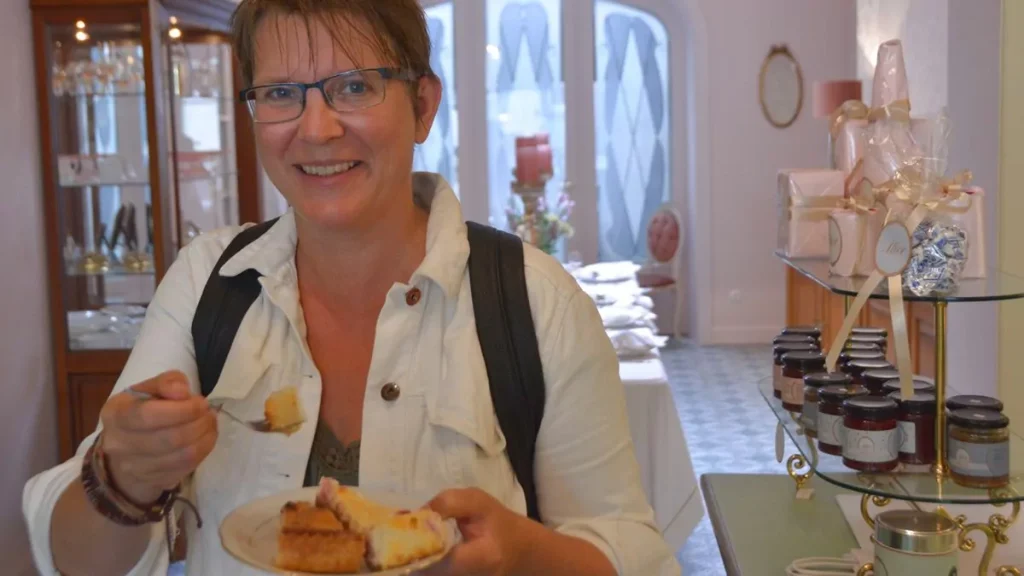
Then we continued through Ghent and ate more. At a local charcuterie we got to try Ghent cup, reminiscent of Swedish jam, along with liver pâté and sausages made in the shop. Next up were Belgian cheeses, and then pastries in small shops that seemed to be created for people who think calories are someone else's problem.
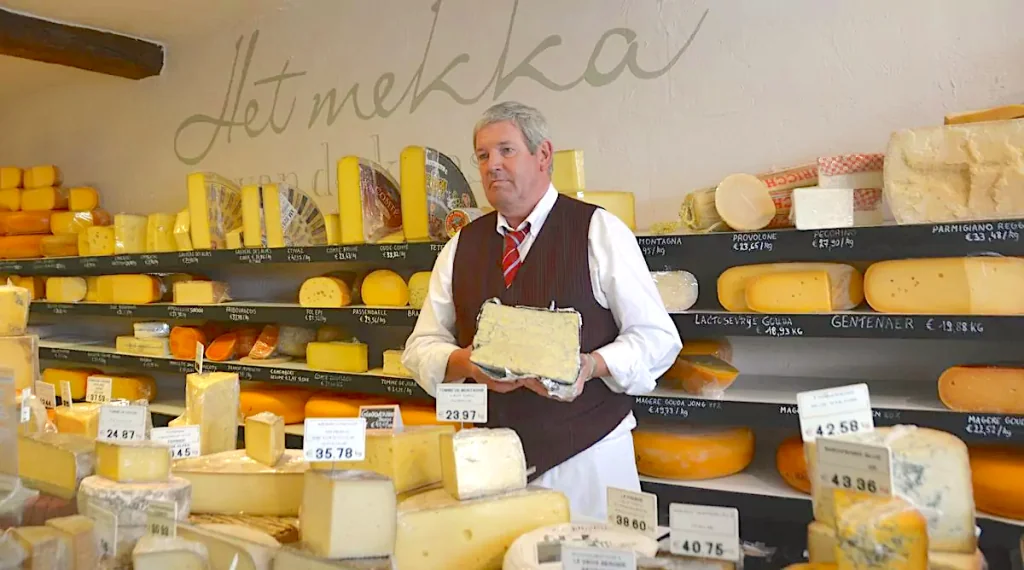
The beauty of a food walk is that it tells a different story about Ghent than the castles and church towers. You meet people, step into small shops and learn why certain flavors and dishes are associated with the city. And somewhere along the way you realize that sightseeing doesn't necessarily have to mean walking around hungry and looking at old houses.

Our experience: Come hungry. We did – but obviously not hungry enough. When we later stood in front of Ghent's famous cuberdons, we were so full that we couldn't even taste a single one.

12. Taste Cuberdons – and discover Ghent's candy wars
After the food walk, we should have tried one of Ghent's most famous sweets. We didn't.
We were too full.
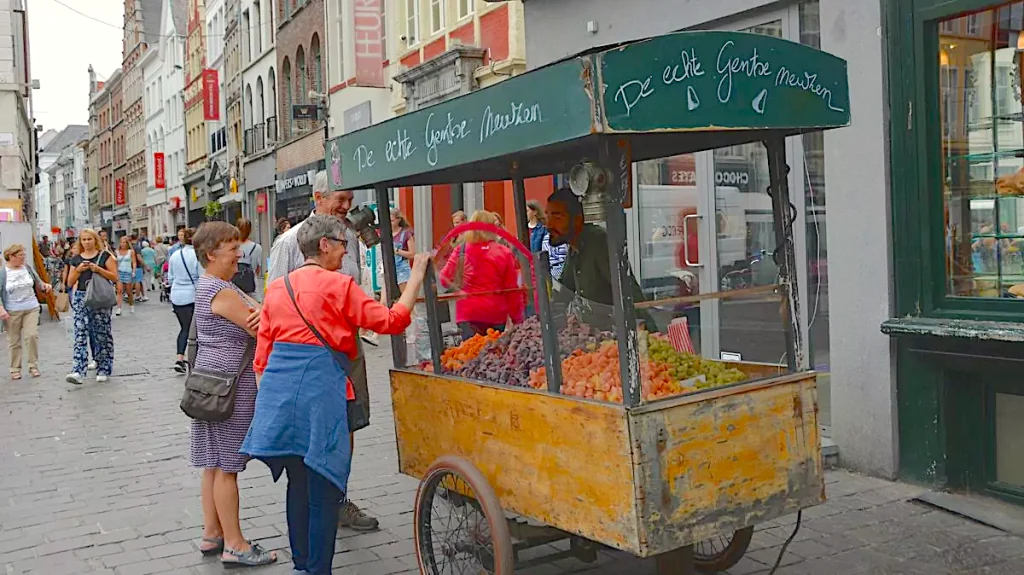
Cuberdons are small purple, cone-shaped candy pieces also known as neuzekes – little noses. Under the thin, hard shell hides a gooey, sweet raspberry-flavored filling. They are sold at the Groentenmarkt, among other places, and have become so associated with Ghent that it almost feels like a dereliction of duty to leave the city without at least trying one.
The story gets even better. According to Visit Gent, the cuberdon was invented by chance when a pharmacist in Ghent was trying to find a way to make medicine last longer. He discovered that the syrup formed a hard shell while the contents remained liquid – and somewhere along the way, the medicine apparently took a much more pleasant turn.
The candy has also had its own little ”"War of the Noses"”. The rivalry between cuberdons sellers on the Groentenmarkt became so fierce for many years that the quarrel ended up in the media and became part of the history of Ghent's little noses.
Nowadays, cuberdons are sold in several places in Ghent, so you don't have to choose sides in a candy war. The most important thing is to buy them fresh.
They have a limited shelf life. The liquid syrup starts to crystallize after a few weeks, which is one reason why cuberdons are not particularly suitable for export. A really fresh cuberdon should have a thin shell that breaks when you bite into it, releasing the sweet filling.
Our miss: So we managed to eat charcuterie, cheese, pastries and a whole lot of other things through Ghent – only to then get too full for the sweets the city is famous for. Don't do like us. Eat your nose first.
13. Try Belgian beer – part of the Ghent experience
Going to Ghent without trying Belgian beer is like going to Champagne and ordering mineral water. Of course you can – but you’re missing out on a pretty important part of the experience.
Beer isn't just something to drink here. Belgian beer culture has been on UNESCO's list of intangible cultural heritage since 2016, and in Ghent, the tradition is evident in everything from old beer cafes to small breweries and huge beer menus.

The fun part is the variety. There are light and dark beers, Trappist beers, sour lambic varieties and strong Belgian ales, sometimes served in glasses so special that the ordering itself starts to feel like a minor ceremony.
And Ghent, of course, has its own stories.
On Café De Dulle Griet at Vrijdagmarkt you can order the house's famous Max-beer in a tall, special glass. The problem is that the glasses have been so popular over the years that guests have wanted to take them home. The solution was quite Belgian:

If you order the beer, you can leave a shoe as a deposit.
The shoe is hoisted up in a basket to the ceiling and reunited with its owner when the beer glass returns.
Peter's advice: Don't start the evening with your most expensive shoes. And after a few strong Belgian beers, it's probably wise to check that you've got back two shoes that are actually yours.

14. Visit STAM – and see Ghent from above
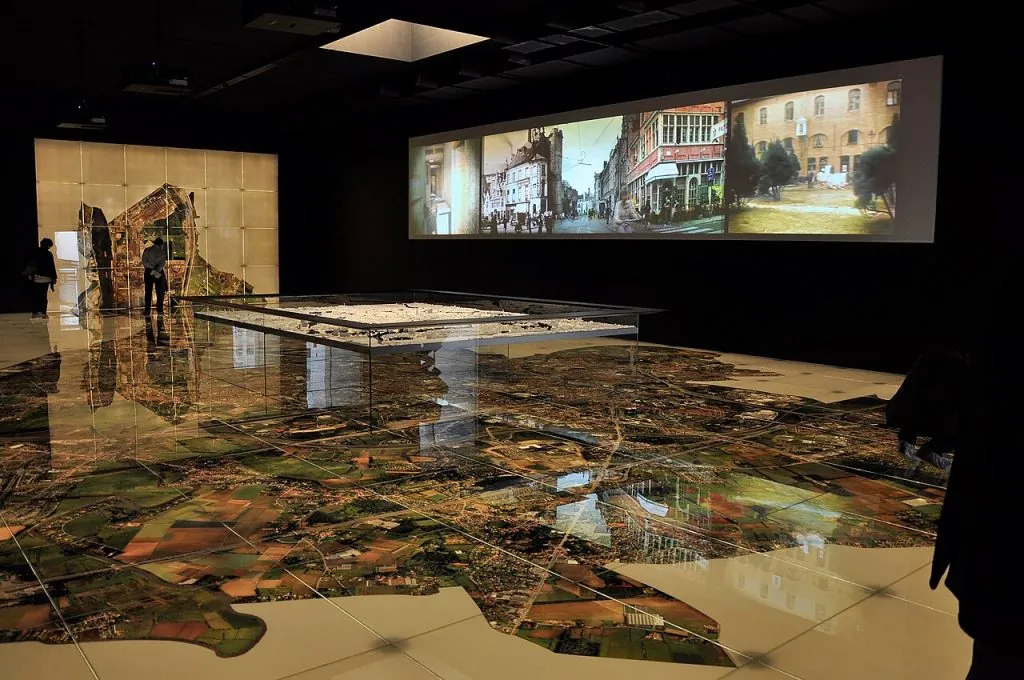
If you want to understand Ghent a little better after walking, paddling and cycling through the city, STAM is a good stop. It is the Ghent City Museum and tells how the city has grown and changed from the Middle Ages to today's Ghent.
What we particularly liked was the huge aerial view of Ghent covering the floor. Here you can literally walk across the city, looking for places you have already visited and suddenly get a completely different perspective on how Ghent is connected. The aerial view is still one of the museum's great eye-catchers.
The museum is also located in the historic Bijloke area, a bit away from the most touristy neighborhoods in the city center. For us, STAM was not only a museum but also a reason to discover another part of Ghent.
This is what I remember: Sometimes you don't need a hundred museum objects to make something stick. For me, it was the aerial view. After seeing Ghent from the street, the bike and the kayak, we suddenly had the whole city under our feet.
15. Choose between old and new art at MSK and SMAK
In the area around Citadelpark, two of Ghent's major art museums are located almost opposite each other. MSK is the museum of classical art, while S.M.A.K. takes care of modern and contemporary art. If you are interested in art, you can travel several hundred years through art history by basically just crossing the street.
We cycled here and visited both museums. At MSK I was captivated by something that wasn't really a work of art at all – an old map showing what Ghent looked like around 500 years ago. After walking among the same churches, canals and alleys out in the city, it was fascinating to suddenly see how everything was connected long ago.
At SMAK the experience is completely different. Here the art is contemporary, sometimes playful and sometimes such that you are left standing in front of something and wondering if you have understood the genius – or if you simply don't understand anything at all.
Our tip: You don't have to visit both. Choose MSK if you're drawn to older art and art history, SMAK if you'd rather be surprised by contemporary art – or take both and decide for yourself which side of the street Ghent is most understandable.

16. Discover modern Ghent at Dok Noord
With its castles, church towers and medieval alleys, it's easy to think that Ghent lives above all on its history. But the city also has a rawer and more modern side – and you can find it at, among other places, Dock Noord.
The area was previously a large industrial environment and parts of the old factory buildings have been given new life with restaurants, shops, activities and businesses. The brick, steel and industrial feel are still there, but the content has changed. It is a completely different world from Graslei and Patershol.
And perhaps that's precisely why Dok Noord fits so well as the last stop in our guide.
During our days in Ghent, we encountered a city that seemed to enjoy being both old and young at the same time. Here you will find a medieval castle and a golden dragon guarding from a clock tower – but also students, street art, bicycles and old industrial areas that continue to change.
READ MORE: 18 things to do in Brussels as a tourist
READ MORE: 12 things to see and do in Antwerp
Best areas to stay in Ghent
Ghent is compact and large parts of the city center are easily explored on foot. So you don't have to hunt for the perfect neighborhood, but your choice of area will still affect the feeling you get when you step out the door in the morning.
Historic center – best for first visit
If you want to stay in the middle of Ghent's major attractions, the city center is the easiest choice. Here you have Graslei and Korenlei, Belfort, St. Bavo's Cathedral and the shopping streets within walking distance. The downside is that it can be busier and more expensive than further out.
Patershol – most charming
Choose Patershol if you'd rather wake up among cobblestone alleys and old houses than in the middle of a shopping street. There are plenty of restaurants and bars here, and Gravensteen is right next door. An area for those who want the Ghent feeling to continue even after the day's sightseeing is over.
Citadelpark – quieter and close to the museums
If you don't need to stay in the middle of the biggest attractions, the area around Citadelpark may be a better fit. Here you will find MSK and SMAK, among others, and you can easily reach the city center by bike or public transport.
Sint-Pieters Station – convenient if you come by train
There are many accommodations around Gent-Sint-Pieters and you don't have to drag your bags through half the city when you arrive. The historic center is a bit far away, but trams and bicycles make it easy to get there.
Our choice: For a first weekend in Ghent we had chosen historic center or Patershol. You may pay a little more, but the opportunity to walk out the door in the evening and already be in the middle of Ghent is worth a lot on a short trip.
Ghent by motorhome – our experience
We came to Ghent with a camper van and had planned to stay at Camping Blaarmeersen, just outside the city center. It went like this.
When we arrived, there was no place for us the first night. The staff at the campsite instead suggested that we could park by the river just outside the area, where several other campers were already parked. We did as they said – and it actually turned out to be a much more pleasant night than we had initially imagined.

It was quiet and we felt safe. Outside the camper, joggers and cyclists passed along the river, people paddled past on the water, and at one point an elderly couple appeared herding sheep.
It wasn't quite the campsite in Ghent we had planned – but it became one of those little travel memories that you still remember years later.
The next day we found a place at Camping Blaarmeersen. From there we could then get into Ghent and continue discovering the city by bike, which worked out very well for us.
Our experience: If you are travelling by motorhome during a popular period, it is wise to check the availability of a campsite in advance. And our night by the river should be seen as just that. our experience then, not as advice to free camp in the same place today – rules and opportunities may have changed since our visit.

Motorhome in Ghent today: Camping Urban Gardens – Blaarmeersen has 48 camper van pitches. Another option is the Driebeek Camper Van Site in Gentbrugge with eight pitches and basic services. Please note that overnight camping in a camper van on public roads is not permitted in Ghent.
Ghent also has a low emission zone (LEZ). If you drive a Swedish-registered vehicle that meets environmental requirements, it must still be registered before entering the zone. Always check the current regulations before your trip.
READ MORE: 13 things to see and do in Bruges
READ MORE: Belgian beer - and breweries in Belgium
You might also like:
 Things to do in Istanbul - 25 tips for sights and experiences
 Things to do in Bregenz, Austria - our top 12 tips
 Things to do in Närpes – 10 tips for the tomato city in Finland
 What to do in Jakobstad, Finland - 20 tips
 Things to do in Batumi, Georgia - 16 tips for a Black Sea gem
 Things to do in Sopot - 17 tips for Poland's luxurious Riviera


 English (UK)
 Svenska
Britt-Marie Lundgren says:
What wonderful and enticing posts you have made from Flanders and what a cool and intense journey you have made.
It often takes a while after coming home before it sinks in how incredibly much you have been through. I have just made two photo books from our five weeks in Slovenia, Croatia and Germany, it's almost like experiencing the trip in replay.
26 August 2018 - 7:41
Helena says:
Delta has indeed been a wonderful and intense journey! And I understand exactly what you mean. It is difficult to process all the impressions while travelling. Going through pictures is like travelling again 😉.
26 August 2018 - 14:08
Steve says:
Phew! What a pace you keep.
26 August 2018 - 8:25
Helena says:
It has been full steam ahead! 🙂
26 August 2018 - 14:09
Yvonne says:
I thought it best to post the answers for the sake of the holiday season.
Have a good day!
🙂
26 August 2018 - 8:41
Helena says:
Thank you very much Yvonne!
26 August 2018 - 14:09
Lena - gott för själen says:
Yes, it was really a lot you have done! Much like us in Berlin 🙂 Always fun to discover new places!
Hug Lena
26 August 2018 - 8:46
Helena says:
It's fun to discover new places! We also want to see Berlin properly on occasion.
26 August 2018 - 14:10
Anonymous says:
Really nice to read about a city that may not be so "touristy". At least not so well known to us from Sweden!
Read about everything, but got stuck on the tip about the food tour. I would have loved to visit that cheese shop. Then I also saw that you wrote a little surprised that you got to taste two good rosé wines. Rosé wine is what I now drink all year round, so I'm not surprised.....
THANK YOU for the tips! / Susie
26 August 2018 - 8:58
Helena says:
I agree with you Susie. Ghent is not so "over-touristy". Of course there are tourists, but it is also very much a normal small lively city, with many students. The food tour was super nice! And yes haha, maybe I was a little surprised by the rosé wine. It feels like you are more often served red or white wine. In addition, there were very good rosé wines! 🙂
26 August 2018 - 14:12
Mamma C says:
Gosh, you managed all this in two days!
Carin
26 August 2018 - 9:22
Helena says:
Yes haha, full roll 🙂
26 August 2018 - 14:13
Ama de casa says:
Ooh! I love those maps that suggest walking routes through cities. Then you don't have to make a lot of decisions yourself. Perfect also with that map pointing out where the street art is - kudos to the city's tourist office! 🙂
I would probably have dared to refuse the bail. Haha! Easy to say now that I sit "a good bit" from it 😀.
26 August 2018 - 9:43
Helena says:
Surely it's nice to not have to decide for yourself sometimes 🙂 And the castle is actually unusually easy to visit! In the middle of the city and no heights to climb 😉.
26 August 2018 - 14:14
Ditte says:
I have not yet visited Ghent. Seems like a really nice city with a lot to see and do. Thanks for the tips and nice pictures. However, I have visited Bruges and Antwerp before.
Keep up the good work.
26 August 2018 - 14:53
Helena says:
Glad you visited Bruges and Antwerp! I like all three cities, but maybe Ghent a bit more 😉 It's a charming city that's nice to be a tourist in, without feeling too touristy.
26 August 2018 - 21:00
Matts Torebring says:
Your pace would not be a holiday for me. You are professionals, exploring Europe bit by bit and doing research, which you do with all your professionalism. We have started exploring our home turf, the forests and the countryside south of Vetlanda. That's fun too. We find fantastic gems there too.
26 August 2018 - 15:23
Helena says:
Sometimes we want to see and experience a lot at once! Sometimes it can be nice to have a slower pace too, of course. I'm sure you'll find gems at home, Sweden is beautiful!
26 August 2018 - 21:01
OnTrip.dk says:
Really 10 good things you come up with that you can experience in Ghent.
/Annette
26 August 2018 - 17:17
Helena says:
Right? The food experiences were probably top notch! Boat and canoe are also always nice 🙂 .
26 August 2018 - 21:02
BP says:
The houses by the canal are incredibly charming, I think. And the street art of course! Absolutely marvellous! Once again, you should send some of Stockholm's urban planners to Ghent on a study visit - to get inspiration.
26 August 2018 - 19:26
Helena says:
They can find inspiration here! I like this city very, very much! 🙂
26 August 2018 - 21:03
Liniz Travel says:
Oh what a nice city 🙂 I really want to go there. Nice trip hugs
26 August 2018 - 19:36
Helena says:
Recommended! A bit less touristy than Bruges 🙂
26 August 2018 - 21:03
"LillaSyster" says:
Incredibly beautiful! I also want to paddle, or just stand there and collect energy =)
27 August 2018 - 10:59
Helena says:
Fantastic city! Nice to paddle, but also nice to sit along the canal somewhere! 🙂
27 August 2018 - 22:48
Maria / Magnolia Magis says:
Cool with street art! There are many talented artists who never come into the light! You have had a lot of time on this trip! Where will you go back to and stay for longer? So far...
27 August 2018 - 13:58
Helena says:
We have certainly done a lot during this trip! Do you mean places throughout the trip that we want to go back to? We would like to go back to Ardeche in France, for example.
27 August 2018 - 22:50
Maria / Magnolia Magis says:
Yes, exactly, the whole trip so far. Your report has made me want to travel to the Czech Republic, for example. France is never wrong either! 😉
28 August 2018 - 14:04
Christian says:
Street art, food tour, beautiful canals - definitely a destination to my liking!
27 August 2018 - 19:42
Helena says:
Yes, I definitely think it is! 🙂
27 August 2018 - 22:50
marianne says:
Here there was a lot that attracts..... it looks very cosy along the river, these small cafes, does it feel natural or touristy? You get what I mean right? 😉
27 August 2018 - 21:06
Helena says:
I understand what you mean! Ghent doesn't feel very touristy to me, there are a lot of students and locals mixed in with the tourists. You can compare with Bruges which definitely feels touristy.
27 August 2018 - 22:51