


Writer: Helena Bergström
Dining etiquette in other cultures is not always easy. In Europe, we are taught that it is important to choose the right glass and fork, and to look each other in the eye when toasting. In Asia, where there is a lot of symbolism, the importance is often quite different.
 Tweet
 Share
 Share
 Pin
 Share
 Share
Table of contents
Basic rules of etiquette at the dinner table abroad
The dining table is often the place where cultural differences are most noticeable. Small details - how you hold your cutlery, whether you leave food on the plate or when it's okay to start eating - can mean completely different things depending on where you are in the world. For those who travel a lot, it can be useful to know the basic table manners of different cultures. Whatever the country, there are some simple principles that are usually well received:
- Observe and adapt. Watch how the locals do it and follow their pace.
- Wait for the host. Do not start eating until the host or the oldest person at the table does.
- Show respect for the food. Complaining loudly or picking at your food is almost universally seen as impolite.
- Put your mobile phone away. In many cultures, it is considered disrespectful to use your phone during the meal.
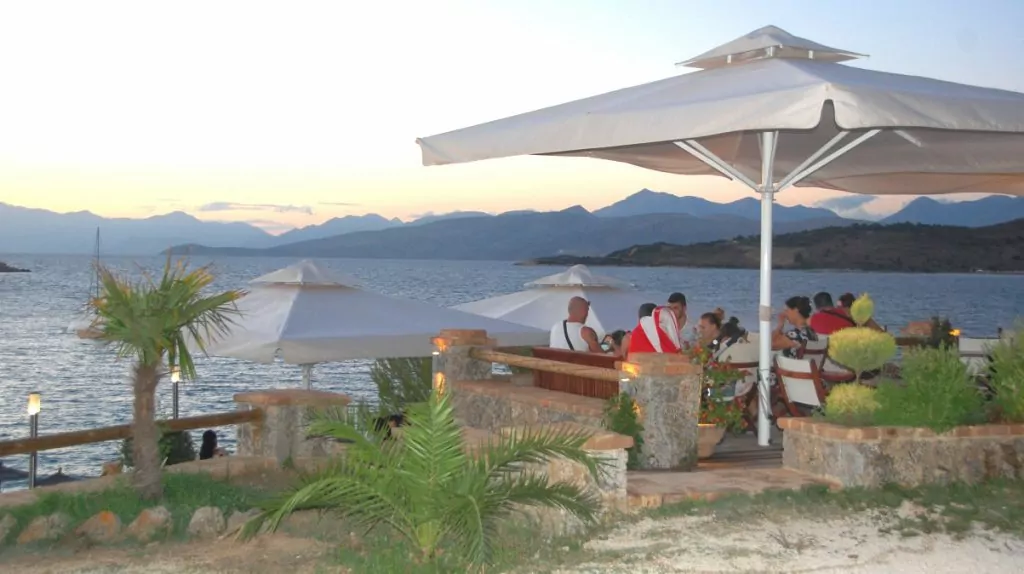
Europe - small differences with big impact
In Europe, the meal can often be seen as a social ritual, not least in France. Here are some things to consider.
France
- Keep both hands visible above the table (but not your elbows on the table top).
- Always use cutlery - even for salad and fruit.
- It is considered impolite to ask for extra spices before you have tasted.
Italy
- Cutlery is used consistently, and pizza is often eaten with a knife and fork in restaurants.
- Cappuccinos belong in the morning - ordering one after dinner can give you away as a tourist.
- Leaving some food can be interpreted as being full, not dissatisfied.
Germany and Central Europe
- Punctuality is important, even at dinner.
- Place the cutlery parallel on the plate when you are finished - this signals that you have finished eating.

Asia - respect and symbolism
In Asia, it is important to show respect. In addition, the meal situation can be full of symbolism.
Japan
- Never stick chopsticks straight into the rice - this is associated with funeral rituals.
- Do not pass food from stick to stick.
- Slurping noodles is fully accepted and can even be seen as appreciation.
China
- Meals are often shared, and dishes are placed in the centre of the table.
- Leaving some food can signal that the host has been generous.
- Avoid flipping a whole fish - it can symbolise bad luck.
- In southern China, it may be inappropriate to point the teapot's spout at someone in the company.
Thailand and South East Asia
- The fork is often only used to push food onto the spoon.
- Knives are rarely needed, as the food is already cut.

Middle East and Africa - hospitality in focus
In the Middle East and Africa, hospitality is considered very important.
- Many dishes are eaten with the right hand - the left hand is considered unclean in many cultures.
- It is common for the host to ask you to take more food; please accept at least once.
- Saying no too quickly can be perceived as dismissive.
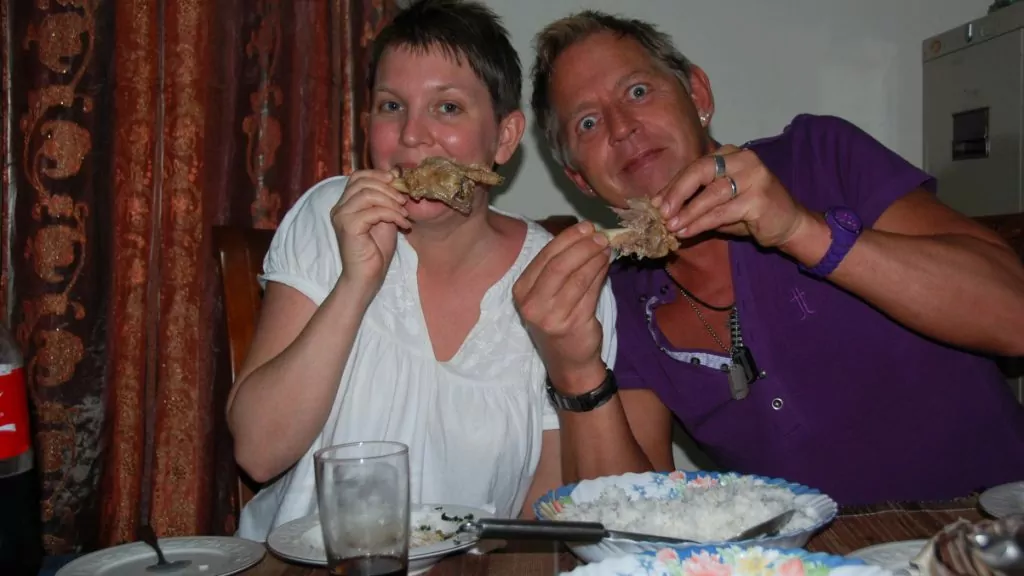
USA, Canada and Australia - relaxed but not sloppy
In the United States, Canada and Australia, dining etiquette may be relatively relaxed, but on the other hand, some thought may need to be given to tipping and billing.
- Table manners are generally informal, but do not chew with your mouth open.
- In the United States, tipping is often an integral part of the restaurant experience.
- Splitting bills is common, but always check what applies.

Common mistakes to avoid
- Starting to eat as soon as the food arrives.
- Discussing sensitive topics like politics or religion at the dinner table.
- Comparing food negatively with food at home.
Summary
Good etiquette at the dinner table is fundamentally about respect and curiosity. You don't need to know all the rules perfectly - a friendly smile and a willingness to adapt will take you a long way. Respecting local customs will not only make your meal tastier, but also an important part of your travelling experience.

Eating like the locals is often one of the best ways to truly understand a culture.

You might also like:
 Testing Christmas beer - and Christmas food in a new way
 3 simple and delicious casseroles with stir-fries
 Vineyards in Stellenbosch, South Africa - 4 great places to visit
 Christmas spices - Aunt Anna spices up life
 What to eat in Switzerland? - 15 classic dishes you must try
 Italian food - 25 classic dishes you must try



 English (UK)
 Svenska
Lennart says:
When you eat soup and drink Sakè in Japan, you have to slurp loudly, I learnt!
I hope it was right!
03 February 2014 - 22:52
BP says:
Yes, you;-) If you cut potatoes with a knife in Germany you will be lynched!
Oooops, it's always good to memorise before going to another country. They say you should take the custom where you come from....
03 February 2014 - 23:55
Christine says:
In Bali, you don't eat with a knife because it is considered rude/unfriendly to have a knife lying on the table. You are seen at the dinner table as friends and then nothing threatening should be there, so fork and spoon is what applies. (However, you usually get a knife for the food in restaurants now because of the increasing rate of tourism). But fun anyway.
🙂
04 February 2014 - 2:56
Marina says:
If you just avoid putting the chopsticks in the food (meaning death), I don't think there is that much etiquette in the Chinese food world. At least not if you see what it looks like after they have finished eating...;)
04 February 2014 - 4:30
admin says:
Lennart, interesting! Yes, you always hope you get it right!
😉
BP, is that true? But what about.... huur do you do then...?
Christine, of course it is becoming more and more international all over the world. But interesting, I only knew that people usually eat with a spoon and fork, not that a knife was considered bad.
Marina, the chopsticks thing was in Aftonbladet too! Haha, no, you may have a point there...
04 February 2014 - 8:09