

Writer: Helena Bergström
Updated: October 2026 | After a traditional Kenyan wedding, we traveled with some of our Kenyan friends and their relatives from Nairobi to Rangala in western Kenya. Our friend Rose had grown up there and her mother still lived there. It was a long drive with road construction, bananas, live chickens and grilled goat intestines – and a few days on a green and well-kept farm without electricity or running water.
 Tweet
 Share
 Share
 Pin
 Share
 Share
Table of contents
From Nairobi to Western Kenya
We were in Kenya in 2012 because we were invited to a traditional Kenyan wedding. After the wedding, it was time for the next part of the trip. Together with some relatives, we would travel from the Nairobi area to Rose's mother, who lived in Rangala in Siaya County in western Kenya, near the small market town of Ugunja and just over seventy kilometers from Kisumu.
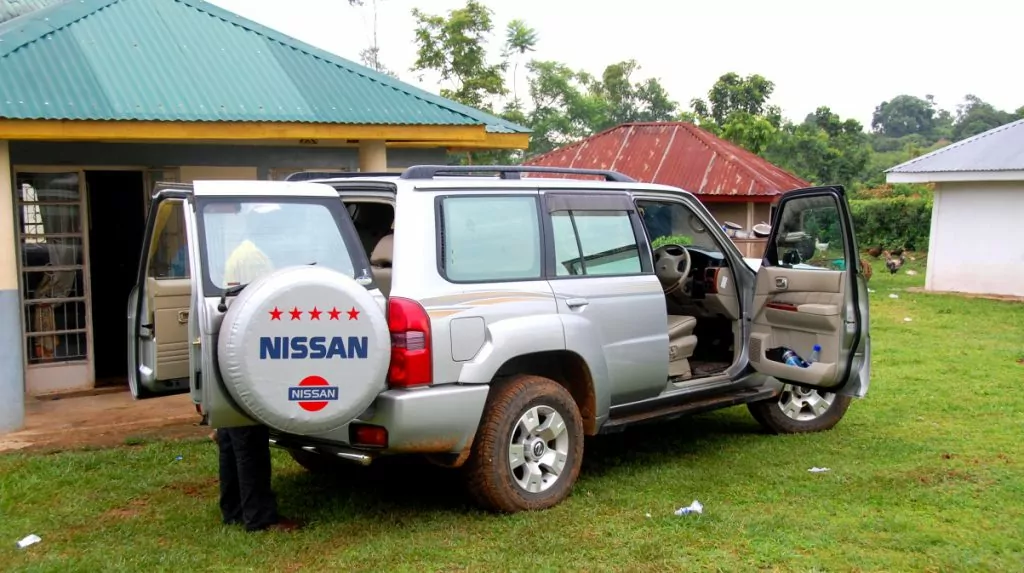
Rose's cousin Tom was our driver and the car was filled with people and luggage. Ahead of us was a journey that might not have looked too far-fetched on the map, but would take most of the day. By the time we finally arrived, we had been on the road for about twelve hours.

A road trip where everything takes its time
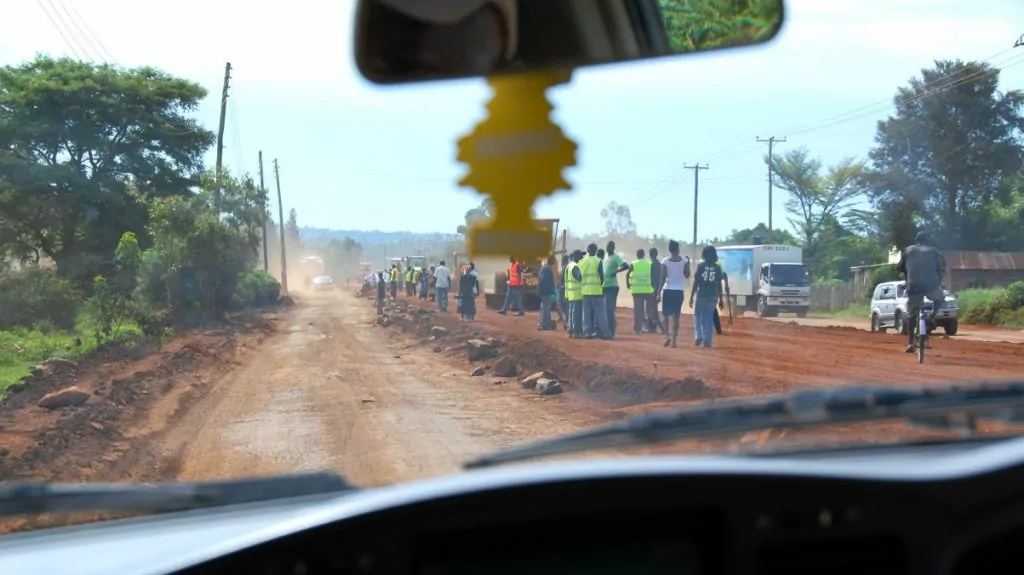
The road conditions varied greatly. Sometimes we sped along on fine asphalt, while in other places we were met with major road construction. New roads were being built and in the meantime traffic simply had to drive alongside the future road, on significantly slower and bumpier surfaces.
But it wasn't just the roads that made the journey long. There was also shopping to be done. The journey west became a bit of a shopping trip where we stopped at various places to buy things that were available along the way. At one place, large quantities of bananas were bought. At another, cages were loaded with live, cackling chickens.
We were in no hurry by Kenyan standards. A trip simply had to take its time.
Lunch break with grilled entrails
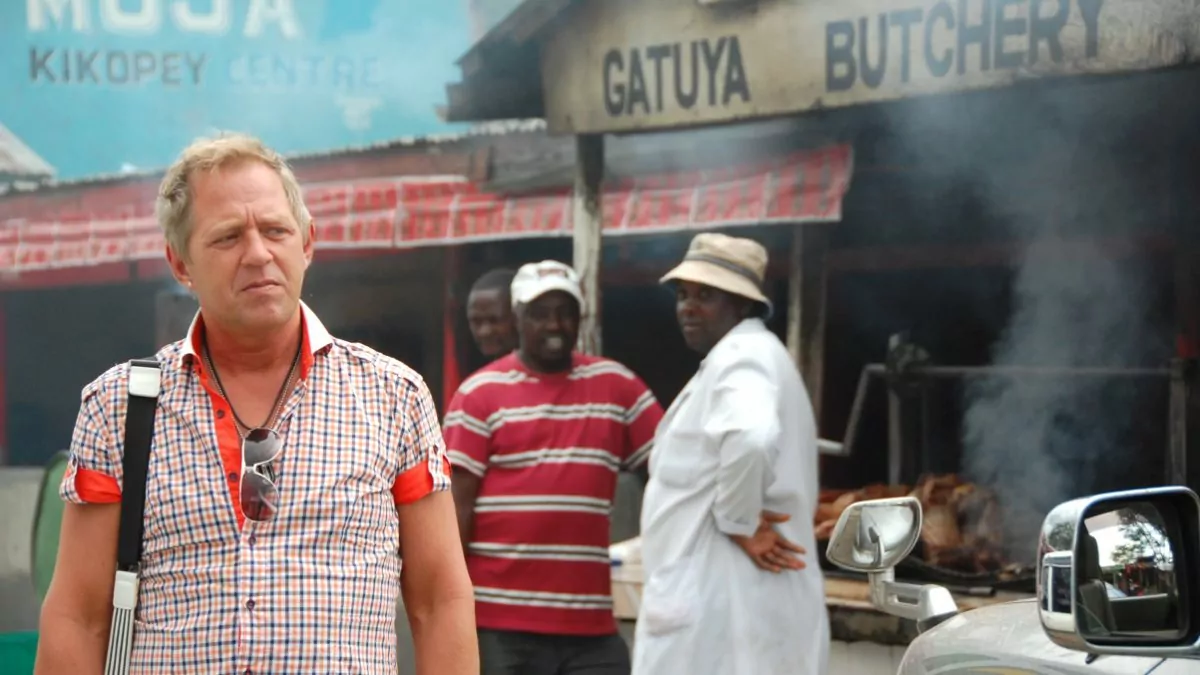
Somewhere along the way, of course, it was time for lunch. We stopped at a very simple eatery where they were grilling goat – including parts that we might not have chosen ourselves first on the menu.

We're not usually very picky when we travel and like to try local food. But this time our adventurous spirit was put to the test. Among other things, we were given pieces of intestines and liver, and the intestines were… well, quite chewy.
Our Kenyan friends ate happily, but eventually realized that the Swedes were struggling a bit. They took pity on us and let us concentrate on the pieces of liver, which we thought were much tastier. There are limits even for two curious travelers.

READ MORE: Kenyan Food – 25 Classic Dishes You Must Try

Arrived in Rangala
After a whole day on the road, we finally arrived in Rangala. This is where Rose had grown up and where her mother still lived on the family farm.
The contrast to Nairobi was great. It was green, quiet and rural, with several buildings spread over a large area. There were animals, crops and people working on the farm. We were warmly welcomed by Rose's mother and the other relatives and were allowed to settle into our own small house, where there were beds for us but not much else. But first we had to eat.
Fish for dinner – while everyone watches
We were tired and hungry after the long journey and were offered fish when we arrived. Fish has a strong place in the food culture among the Luo in western Kenya and the area around Lake Victoria, so in that way dinner was well in place.
The meal itself, however, was a bit unusual for us. As guests, we were supposed to eat first – while the others waited and watched. It was probably intended as a way to show ourselves respect and hospitality, but for us it almost felt a bit uncomfortable. We would have much rather sat down and eaten with everyone else.
Someone also told us that eating the fish's eye was considered lucky. Whether this was a local tradition, a family joke, or something else entirely, we still don't know. But when you're sitting in the Kenyan countryside and someone says that the fish's eye brings luck, it certainly feels silly not to at least consider the matter.
Rose's childhood home in rural Kenya
From a Swedish perspective, life on the farm was simple. There was no electricity or running water, and our little house was very sparsely furnished. At the same time, the word ”simple” becomes a bit misleading if you just use it to mean poor or destitute.
The farm was large, green and well-kept, with several buildings, livestock and people working on the farm. We saw the cows being milked and could follow the daily life around us. This was not a small abandoned place but a living farm where people lived and worked.

The buildings also looked very different. There were rectangular houses with tin roofs, but also a round house with earth or mud plastered walls and a thatched roof. The round shape and conical thatched roof have been used in traditional Luo architecture, and in the courtyard older building traditions stood side by side with more modern houses.
For us, it was yet another reminder of how easy it is to come up with your own standards when traveling – and how reality is almost always more complicated.

Peter showers – with a bucket and a cigarette
Of course, a bathroom with a hot shower was out of the question when there was no running water. But you still need to wash yourself.
Peter got a bucket of water and sat on the porch to take his morning shower. And since this was 2012, when Peter was still smoking, he of course managed to combine the shower with a cigarette.
There he was squatting naked with a yellow bucket of water in front of him and a cigarette in the corner of his mouth. Fortunately, there is photographic evidence.

”I can go barefoot here – but not you”
For Rose, this wasn't just a farm in rural Kenya. It was the place where she had grown up, and sometimes the memories of her childhood seemed to stick stronger than the practical skills.
”I can go barefoot here, but you can’t,” she confidently explained to us. She had run barefoot here as a child and knew how to do it.
It soon became apparent that many years of wearing shoes had taken their toll on Rose's feet as well. She could no longer walk around barefoot quite as easily as she remembered. We couldn't help but tease her a little.

A trip to Ugunja
A short drive from Rangala is Ugunja, a small market town along the road between Kisumu and Busia. We went there to look around, do some shopping and eventually settle down at a simple bar for a beer.
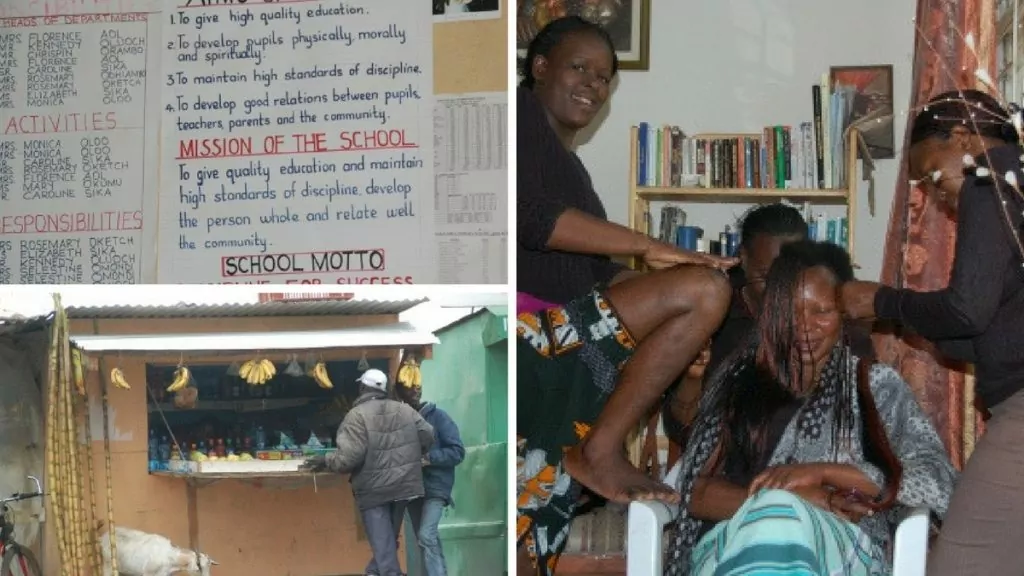
We remember Ugunja as sandy and quite simple, but also as another place where our own ideas were put to the test. Amid sandy roads and simple buildings, people could be seen walking elegantly dressed. Fine suits, well-pressed clothes and sometimes high-heeled shoes – even when the surface didn't exactly look like it was designed with stiletto heels in mind.
It was a contrast we noticed in several places during our trip. Things that we might have associated ourselves – a certain environment with a certain style of clothing or standard of living – didn't necessarily belong together in the same way here.

A few days away from Nairobi
Our visit to Rangala wasn't about seeing any famous sights. We came here for a much simpler reason: our friend's mother lived here. That's exactly why the visit was special.
After big city life in Nairobi, the wedding and the long drive, we suddenly had a few quiet days on Rose's childhood land. We watched the cows being milked, walked around the houses, met relatives, visited Ugunja and got a little insight into an everyday life that was far from both Nairobi and the image of Kenya that you see in safari brochures.
And perhaps it's often precisely those trips that you remember best. Not the ones where you check out the most sights, but the ones where you get the opportunity to go home with someone.
You might also like:
 Snorkelling at Malapascua in the Philippines - a wonderful trip
 Philippine ghost animal - 2 places to see them on Bohol Island
 Animals in Kruger Park in South Africa - more than the 'big five'
 Victoria Falls Safari Lodge in Zimbabwe - overlooking a waterhole
 Atremaru Jungle Retreat - eco-resort on Palawan in the Philippines
 Things to do in Coron, Philippines - our top 11 tips



 English (UK)
 Svenska
Johanna Siljehagen says:
Thank you for all the wonderful pictures you post!
And I apologise for not always having time to comment.
04 May 2012 - 13:04
Anders och Anna says:
What an exciting journey, hope you are well
04 May 2012 - 23:08
Katarina i Asien says:
Oh, how exciting to get so close to the locals. Peter's shower actually looks like the one I have in the Philippines. Bucket in hand! Ha, ha...
Can you speak English with your family and local people or is body language the key? What a great experience you will have!
Hugs
05 May 2012 - 6:32
Anki says:
So fun to follow this journey 🙂 Many wonderful pictures!
Take care!
05 May 2012 - 7:02
admin says:
Katarina, English is the official language in Kenya, Swahili is the national language and then there are lots of different tribal languages. English is used a lot, even among the children when they play with each other and at school. The relatives in the countryside also spoke English, but not the older generation. So with the older ones, it was just single words and body language.
05 May 2012 - 9:37
Husbilspraktikan says:
Great trip! Africa goes home with you in your heart, doesn't it?
07 November 2016 - 19:29