


Writer: Helena Bergström
Updated: October 2026 | What do Nobel laureates have in common, besides being awarded one of the world's most prestigious prizes? And what stories lie behind their discoveries, books and peace work? At the Nobel Prize Museum in the Old Town of Stockholm, you can get closer to the people behind the Nobel Prize.
 Tweet
 Share
 Share
 Pin
 Share
 Share
We visited the museum together with Sweden's Tourist Journalists and received, among other things, a fascinating guided tour about authors who have used literature to change the world.
Table of contents
Nobel Prize Museum in Old Town
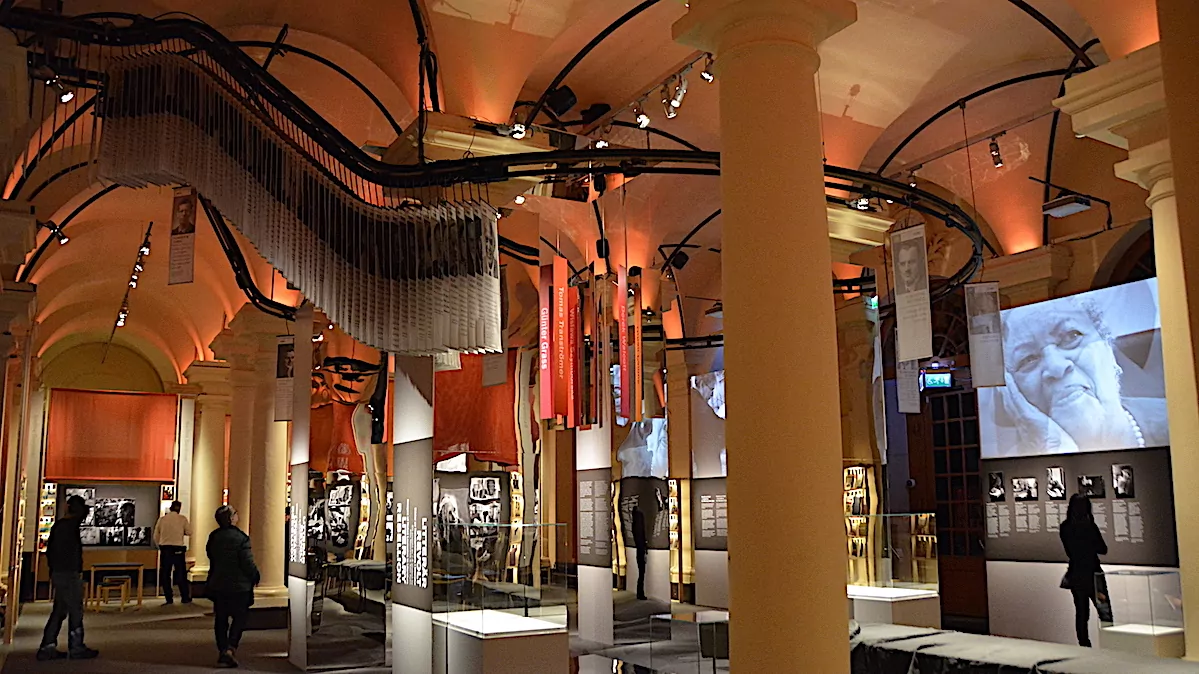
The Nobel Prize Museum, also known as the Nobel Prize Museum, is located in the old Stock Exchange Building at Stortorget in the Old Town. It tells the story of Alfred Nobel, the Nobel Prize, and the people who have been awarded prizes for their contributions to science, literature, and peace over the years.
We visited the museum in December 2017, just as preparations for Nobel Week were in full swing. Together with some other members of the Swedish Tourist Journalists Association, we were given a guided tour, where we both learned more about the Nobel laureates and gained insight into the traditions surrounding the annual Nobel celebration.
What made the strongest impression on me were the stories about the literature laureates, but we also learned more about the personal items that Nobel laureates leave behind at the museum.

A literary revolt at the Nobel Prize Museum
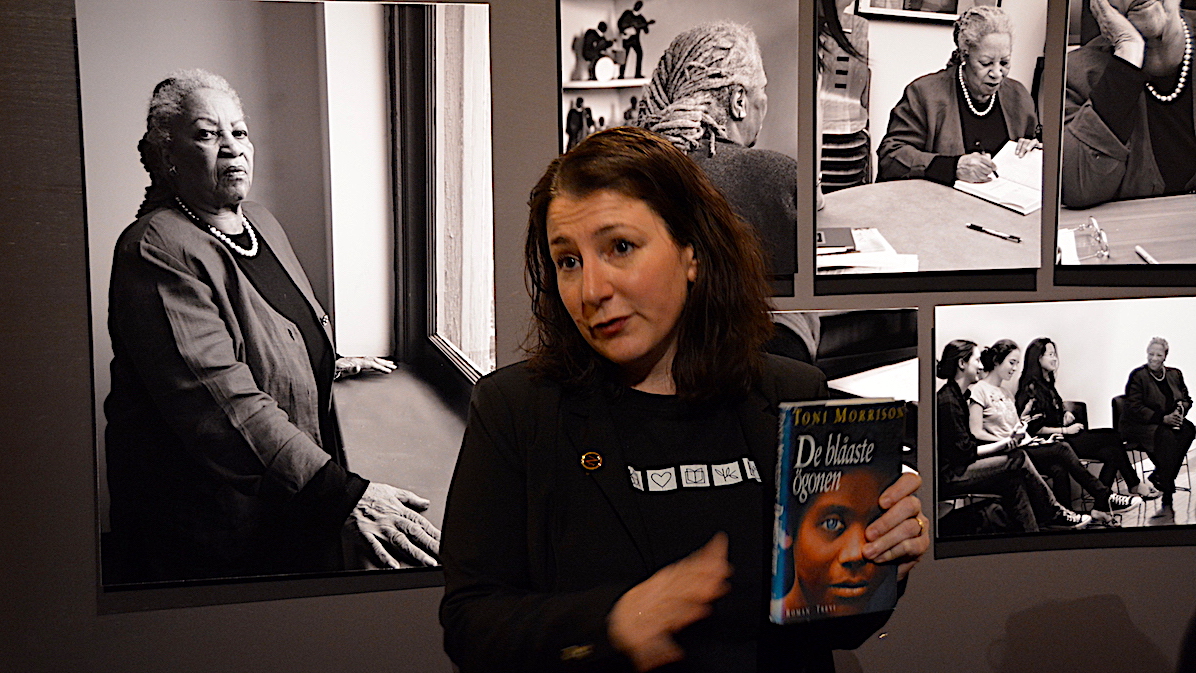
During our visit, the exhibition was shown Literary revolt, which was about Nobel laureates who used their texts to question, resist and create change. The exhibition is no longer there, but it gave us an interesting insight into the power that literature can actually have.
Our guide was Laura Aronovici, who at the time was the subject manager for literature and head of the museum's public department. She told us about Toni Morrison, Doris Lessing and Svetlana Alexievich – three authors who have portrayed society, people's living conditions and historical events in different ways.

I especially remember how movingly she talked about Toni Morrison's books. There's something special about having literature presented in that way, where you not only get to know what the books are about but also understand more of the context and the authors' motivations.
The tour also made me really curious about Svetlana Alexievich's books. I already thought that I would like to read more of her, if only I could find a little more time for books!

Personal items of Nobel laureates
Another fascinating part of the museum is the personal items donated by Nobel laureates. During Nobel Week, there is a tradition where laureates are given the opportunity to donate an item that is in some way significant to their lives or work.
It can be about things that at first glance seem quite mundane, but take on a completely different meaning when you hear the story behind it.
While we were there, we saw objects from past laureates and heard about how the museum's collections continue to grow. It's a nice thought that Nobel laureates not only leave behind great discoveries and works, but also small personal traces of their lives.
Today the museum has a permanent exhibition called The things that change the world. Over 250 objects are on display here that tell the story of Nobel Prize-winning discoveries, literary works and efforts for peace. Through the objects, visitors get to know the people behind the achievements and discover how their work has influenced the world.
We haven't seen that exhibition ourselves yet, but it seems to be an interesting development of what we experienced during our visit.

Chairs signed by Nobel Prize winners
A slightly different tradition at the Nobel Prize Museum is that the Nobel laureates get to sign a chair in the museum's restaurant, Bistro Nobel.
The signatures are not on the seat or backrest, but on the underside of the chairs! In this way, the restaurant has its very own guest book, filled with signatures from people who have made an impact on world history.
When we visited the museum, the chairs were ready for this year's award winners. It was fun to hear about the tradition and imagine that these seemingly ordinary restaurant chairs carry such a special history.
The tradition is still alive, so anyone visiting Bistro Nobel today can take the opportunity to peek under the chair.

The Nobel Prize and the great Nobel celebration
The Nobel Prize was established through Alfred Nobel's will, in which he determined that the majority of his fortune would be used to reward people who had provided the greatest benefit to humanity.
The Nobel Prizes are awarded every year on December 10, the anniversary of Alfred Nobel's death. In Stockholm, the awards ceremony takes place at the Concert Hall, followed by the grand Nobel Banquet at the City Hall. The Peace Prize, on the other hand, is awarded in Oslo.
During our museum visit, we heard about the Nobel Laureates' intensive program during Nobel Week, with lectures, meetings, ceremonies and festivities.
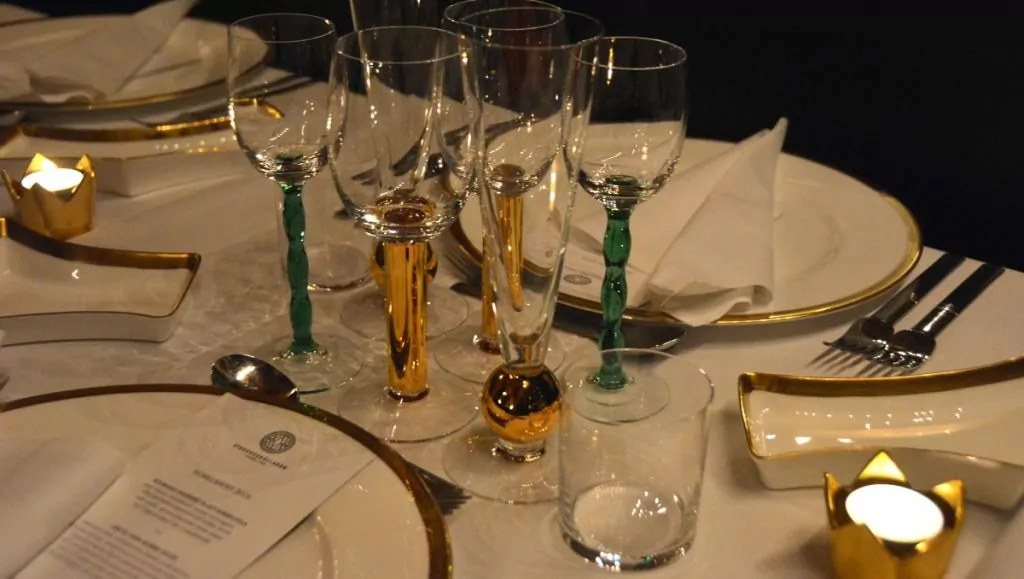
We had actually already gotten a little taste of the Nobel party through a visit to the City Hall Basement, where we tried a previous Nobel menu and got to see the famous Nobel service. Please read our report about the tasting menu at Stadshuskällaren.
Visiting the Nobel Prize Museum – good to know
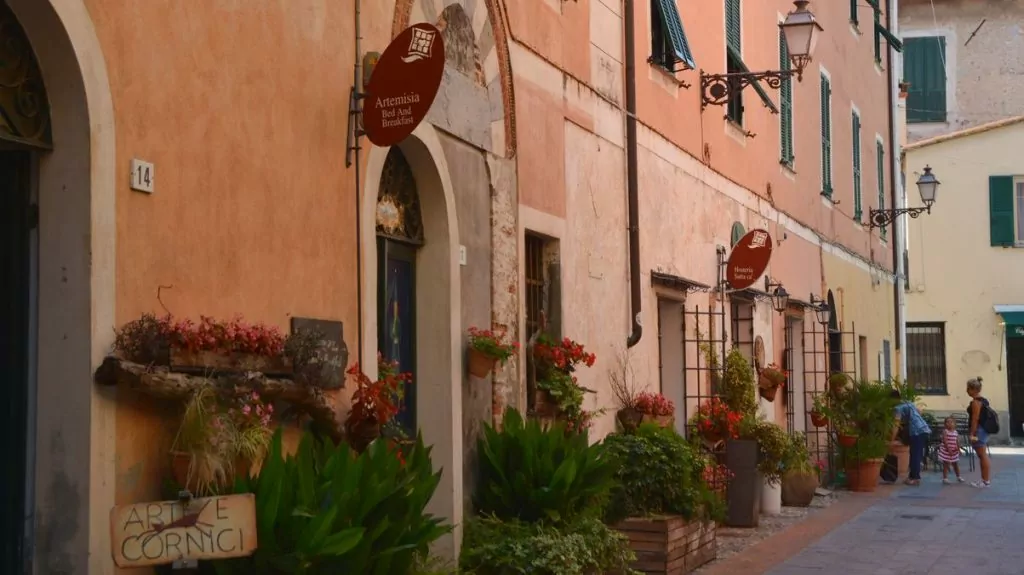
The Nobel Prize Museum is centrally located in the Old Town and is easy to combine with a walk through the historic alleys. The museum has both permanent and temporary exhibitions, and there is the option of taking a guided introduction that is included in the entrance ticket.
There is also a museum shop and Bistro Nobel, where you can have a coffee or something to eat. Among other things, the classic Nobel ice cream is served.
- Address: Stortorget 2, Old Town, Stockholm.
- Guidance: A short guided introduction is included in the admission ticket. The number of seats is limited.
- Opening hours and exhibitions: Check current times and programs on the Nobel Prize Museum's official website before visiting.
More places in Alfred Nobel's footsteps
Over the years, we have visited several places connected to Alfred Nobel and his family, both in Sweden and abroad.
In Karlskoga we have visited Alfred Nobel's Björkborn, where Nobel spent his last summers in Sweden and where his connection to the country was of crucial importance for the will to be realized.
We have also followed the history of the Nobel family to Vinterviken in Stockholm, where Alfred Nobel had his explosives factory, to the Nobel Museum in Batumi in Georgia and to the old Noblessner shipyard area in Tallinn. Follow along on Travelling in the footsteps of Nobel - Winter Bay, Georgia, Tallinn.
You might also like:
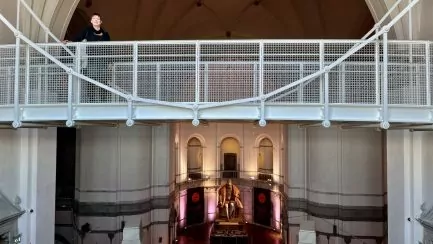 Nordiska museet 150 years - Jubilee bridge and new exhibitions
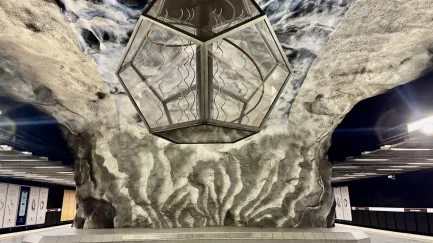 Art in the Stockholm metro - 16 stations to discover
 Art in Stockholm - 12 art experiences
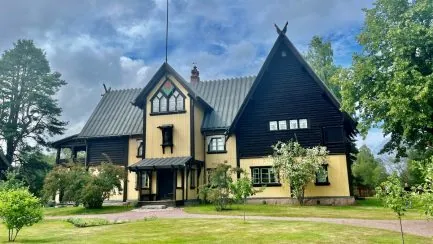 Visiting Zorngården and the Zorn Museum in Mora - fascinating!
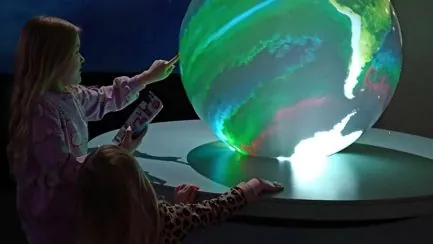 Swedish Museum of Natural History - Grandma Anna's secret winter journey
 Today, Äventyrs opens in Stockholm - a modern adventure museum in the city centre


 English (UK)
 Svenska
Lena - gott för själen says:
My parents always "play" the nobelfest every year. They dress up, make a nice three-course meal and watch the TV programme. They are so cute! 🙂
It seems sweaty to be a Nobel Prize winner. I think I'll skip it 😉 .
Hug Lena
06 December 2017 - 6:18
Helena says:
But oh how charming and cosy it sounds to "play" Nobel party 🙂 I can imagine that it's a bit sweaty to be a Nobel Prize winner, but on the other hand they get a few million for the trouble 😉.
06 December 2017 - 6:58
Ditte says:
Nice to have a visit here. Easy to forget that this museum exists. I was here at the museum in October and saw the exhibition. Definitely worth seeing!
And there's a lot going on during Novel Week.
And trying a Nobel dinner in Stadshuskällaren is a good idea. In any case, a good taste of what food and table settings can be like.
I have been to two Nobel parties in my younger days and they are still the best and funniest and most solemn ones.
parties I've been to. Party for a day including after parties and other things. And even the Nobel dinner with all the food, speeches and guests is fun to think about. I would love to do it again, but have not received an invitation in the last 40 years. Sadly!
06 December 2017 - 8:38
Helena says:
Great that you have been to the Nobel Museum Ditte! And especially glad that you have been to the Nobel dinner! 🙂 My parents have been there a few times, but I myself have not received an invitation ... 😉.
06 December 2017 - 18:58
Nils-Åke says:
Would be something to visit.
06 December 2017 - 9:38
Helena says:
A nice little museum, and you can hang out in the Old Town when you get tired 🙂 .
06 December 2017 - 18:59
Liniz Travel says:
How exciting. Looked like
A wonderful evening!!! Too bad I missed it! Have a nice Wednesday hugs
06 December 2017 - 9:52
Helena says:
A really nice and interesting visit! But we will surely see you soon in some other context! 🙂
06 December 2017 - 19:00
Biggeros says:
Thanks for the tip! I had no idea that there is a Nobel Museum. It might be a place to visit in Stockholm. The worst thing is when I am in Stockholm, everyone pulls me in and many other things have to give way. It's always just as exciting what the Nobel menu will be?
06 December 2017 - 11:26
Helena says:
The Nobel Museum is a rather small museum, but nice and interesting and with a good location in the centre of the Old Town 🙂 .
06 December 2017 - 19:01
Stolen says:
Great post 🙂
06 December 2017 - 16:05
BP says:
It was very interesting reading! Much that I did not know. How nice that such visits are organised for those of you who are members of the Association of Swedish Tourist Journalists.
As for the Nobel menu, it must be the trickiest thing ever - to cook, that is, considering all the nationalities and "religious restrictions". Also, I've always wondered how hot the main course is when it arrives at the table after being carried a long way from the kitchen down the stairs;-).
06 December 2017 - 16:07
Helena says:
Cooking the Nobel dinner is certainly a challenge! Hopefully someone thinks it's a really fun challenge. I myself would be very nervous 😉 .
06 December 2017 - 19:02