



Writer: Helena Bergström
Updated August 2026 | Visiting Pompeii is a once in a lifetime experience. A well-structured and well-developed Roman city disappeared in a single day, and digging it up is like travelling straight back to 79 AD. Incredibly fascinating!
 Tweet
 Share
 Share
 Pin
 Share
 Share
Table of contents
Pompeii
Pompeii is an ancient Roman city, which was unfortunately destroyed in a violent volcanic eruption in 79. The upside of this terrible fate is that the city was preserved in very good condition from the very moment it was destroyed.
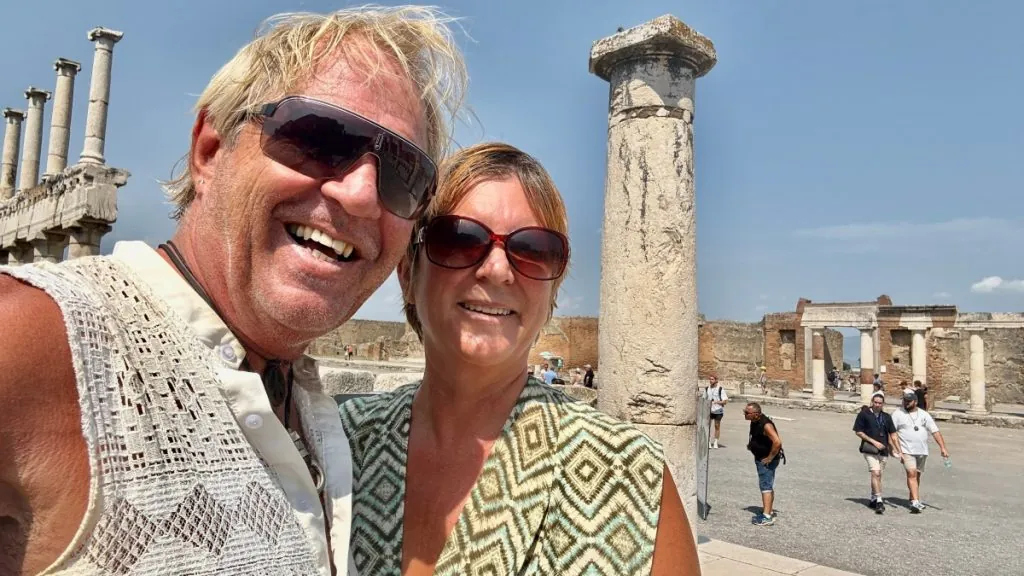
Pompeii is located just outside the city of Naples, in southern Italy.
Pompeii - back in the day
Pompeii was probably founded by a people called the Oscans, and later influenced by Greeks and Etruscans. In the 2nd century BC, the city came under Roman control and the site began to flourish.
At the time, Pompeii was known for its luxurious villas, fine bathhouses, exciting theatres and bustling streets filled with taverns and shops. It was a well-functioning city that excelled in many ways, not least when it came to water supply.
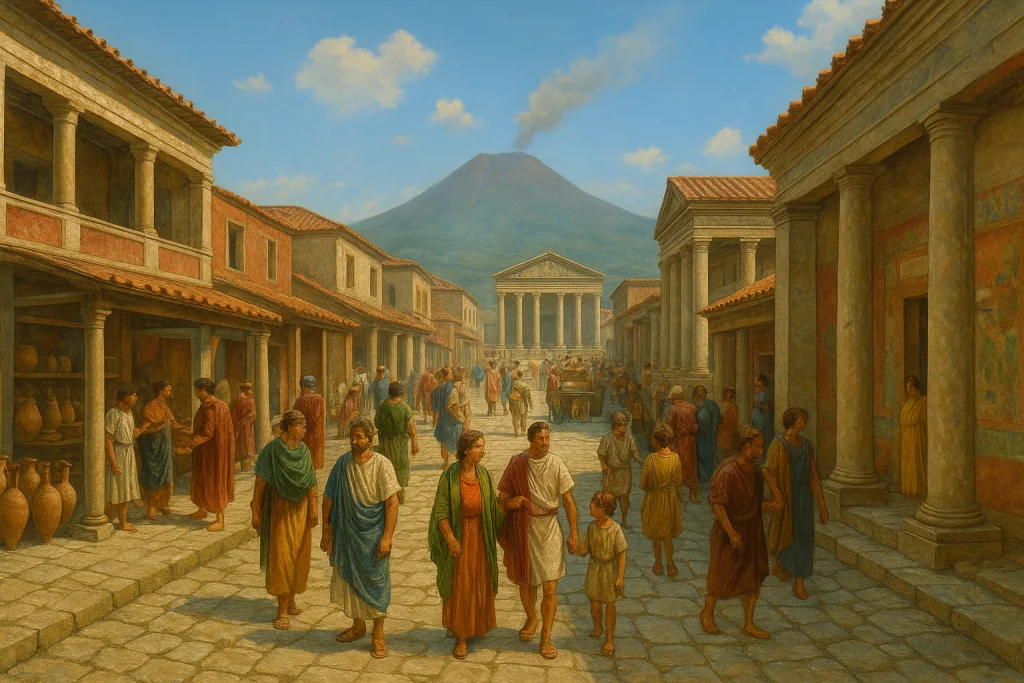
Water entered the city via the aqueduct Aqua Augustaand then distributed from a distribution centre to fountains, wells, bathhouses and even wealthier private households. In total, the city had perhaps around 10 - 15,000 inhabitants and was a place full of life and activity. This is what it could have looked like.
That fateful day in 79
Traditionally, 24 August has been given as the date of the disaster, but some findings suggest that it may have been a day in October. Whatever the case, on this day Vesuvius began to throw pumice and ash over the city. This first stage of the eruption lasted several hours and many people, probably the majority of the population, actually managed to escape during this time.

It was probably chaotic. Perhaps people wanted to take their most important and valuable possessions with them, or perhaps they wanted to hide them until they could return. Some fled by land in carts, while others tried to get to boats - because, yes, Pompeii was at that time on the water and had a harbour.
Still others chose to stay and take shelter in their homes, waiting for the outbreak to pass. Some also turned back when things seemed to calm down a bit. Both of these choices proved disastrous.

The crucial phase of the outbreak, known as pyroclastic flows, meant hot clouds of gas and ash rushing down the mountain in waves. The floods filled the streets and houses. Anyone left behind died from the extreme heat or suffocation, and the whole beautiful city was completely buried and disappeared from the maps for more than 1500 years.
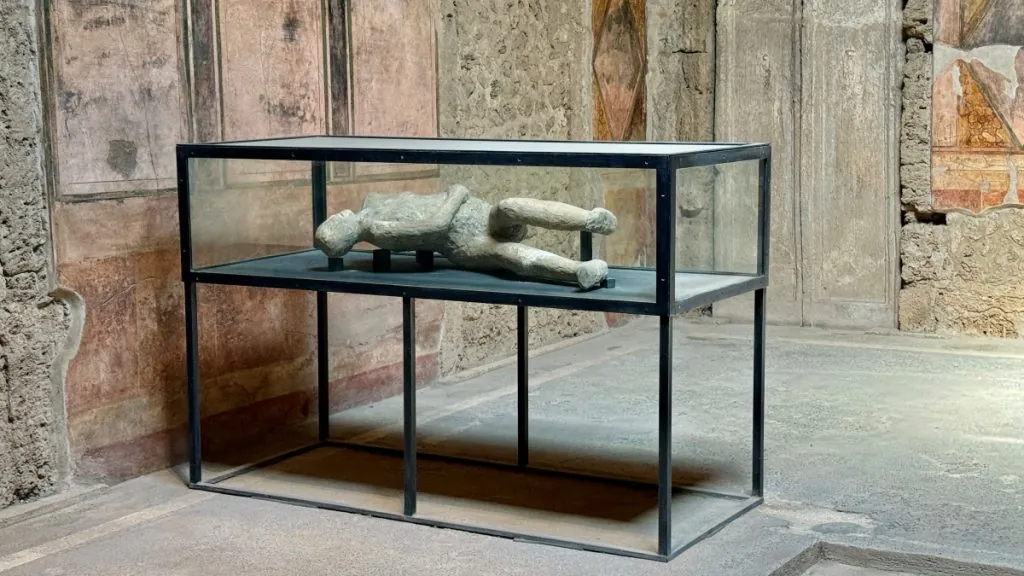
The rediscovery and excavation of Pompeii
Pompeii was rediscovered by chance in the 16th century, but it was not until the 18th century that the importance of the find was realised and excavation began. Initially, the focus was on artefacts, but in the 19th century, interest began to focus on the city as a whole.
The exciting thing about Pompeii is that it stopped developing at a precise point in time - and can therefore be described as a kind of preserved time capsule. It's like it's still 79 in this city.
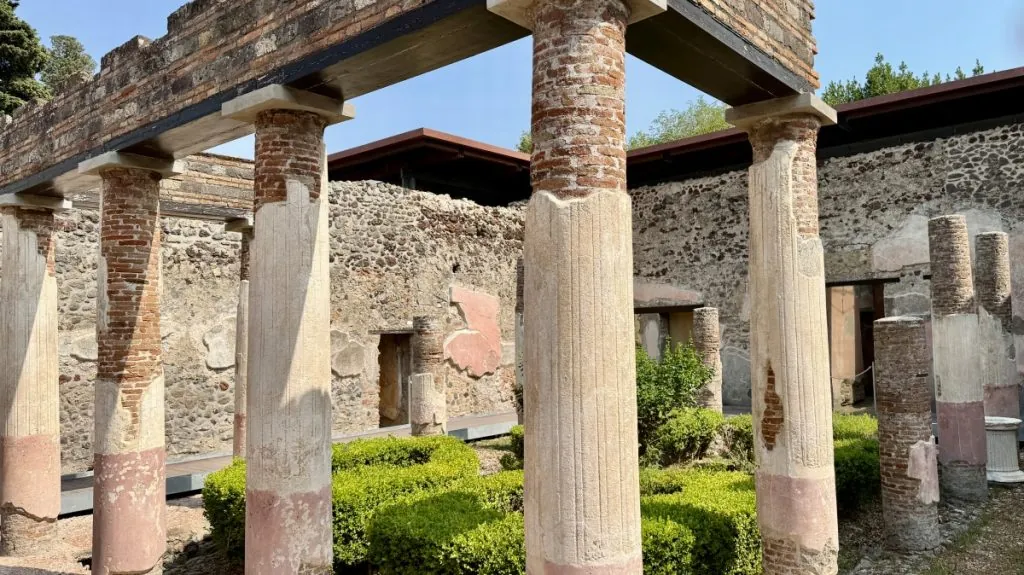
Visiting Pompeii today
Today, Pompeii is a huge tourist attraction. Around 4 million people visit the site every year and there is even a cap - a maximum of 20,000 visitors are accepted per day. However, the average number of visitors is still lower than this, so it is usually possible to visit Pompeii without booking a ticket in advance.
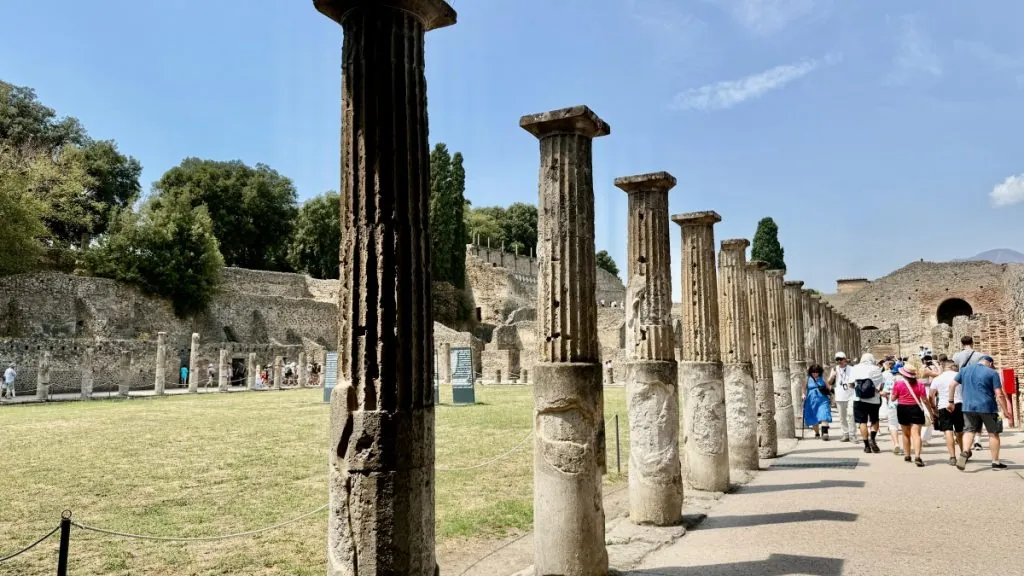
There are three different entrances and around the visitor centre there are lots of both municipal and private car parks - often with avid parkers, so we guess that parking fees are an important source of income for local residents.
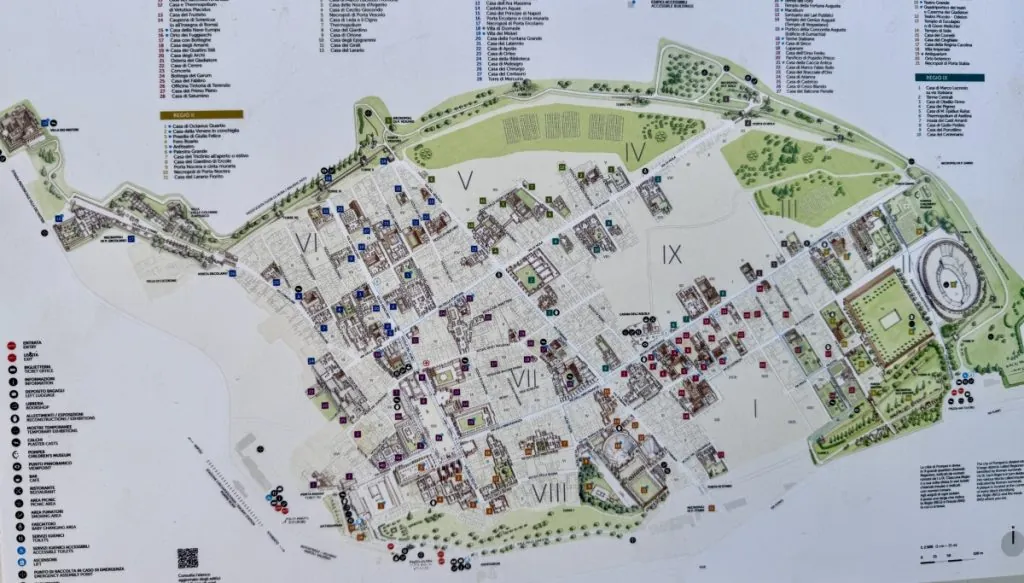
The area is large - a whole city - so it's a good idea to set aside half a day for the visit. It's also a good idea to take a map with you from the entrance, so you have a chance to find your way around and read about the different sites.
Well-planned streets with pedestrian crossings
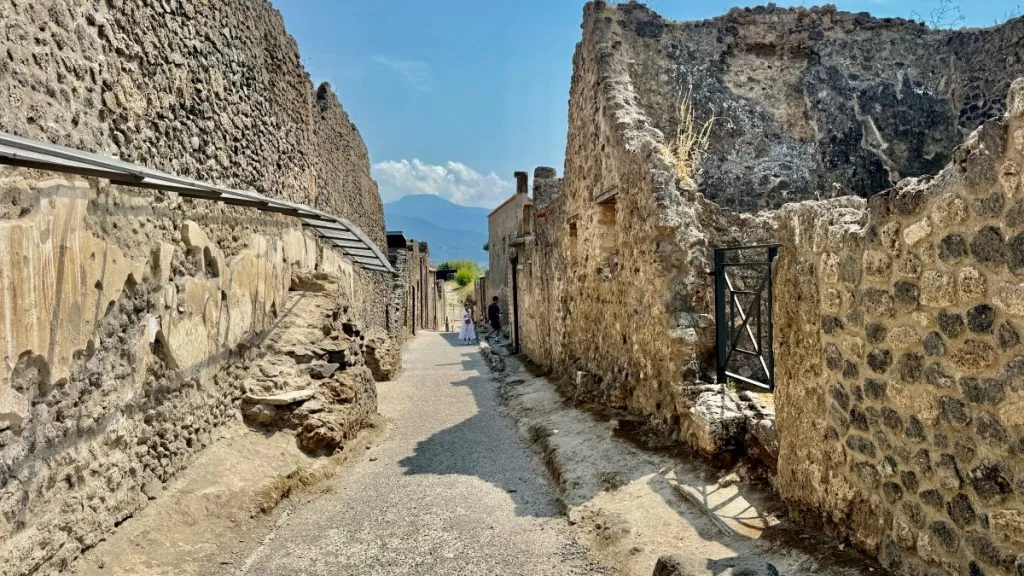
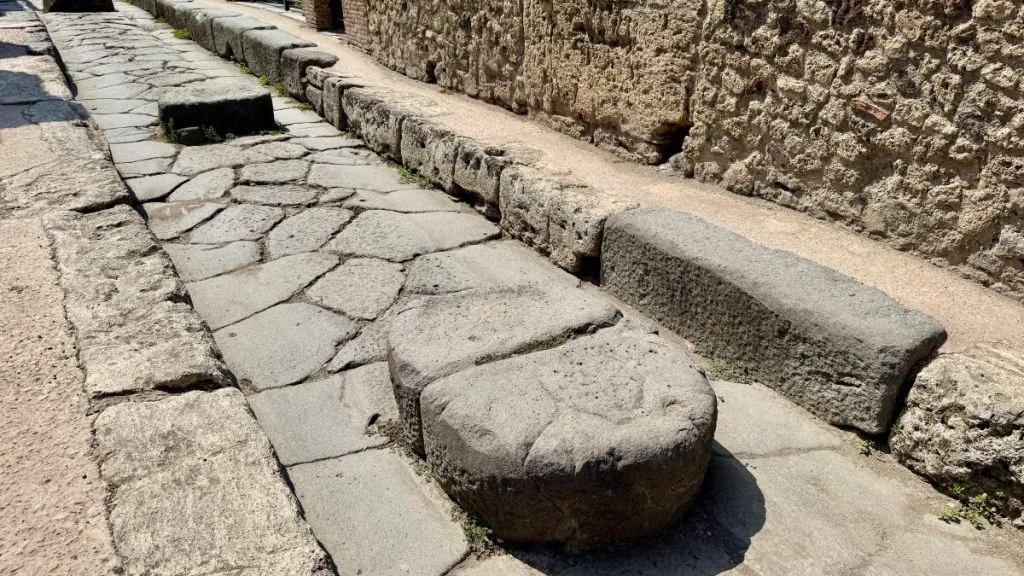
The first thing we noticed was how straight and well-planned the streets looked. At regular intervals there are neat well-planned pedestrian crossings in the form of raised stones. These were created because the sewers ran through open gutters in the streets - and you didn't want to have to put your feet in them.
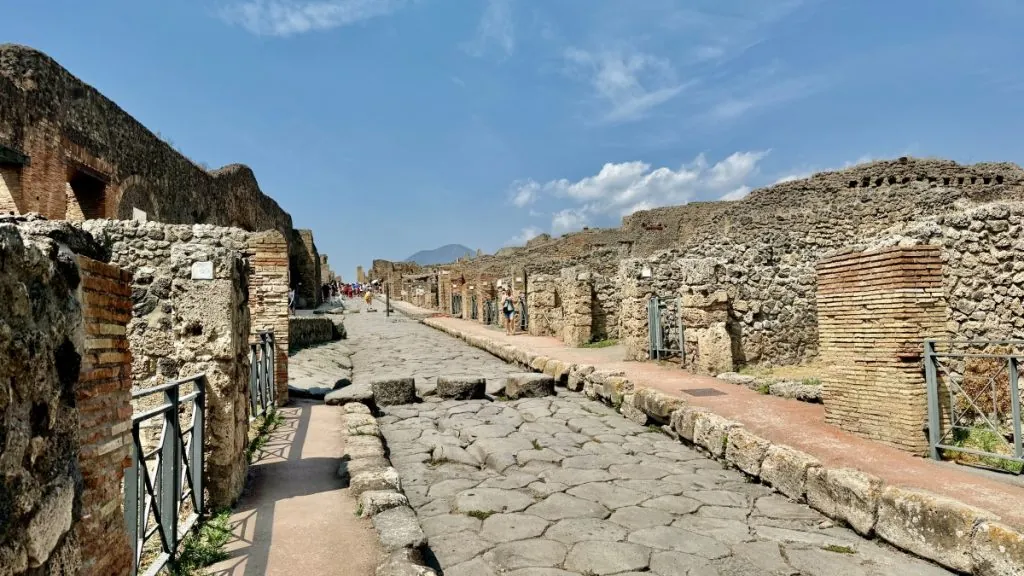
The space between the stones was created to allow horses and carts to pass.
Roman houses (Domus)
In the city, of course, there are ruins of lots of residential buildings of various sizes. Upper-class houses almost always consisted of a atrium (central open space) at the entrance, and around this were the other rooms: bedroom, laundry/cleaning room, dining room and living room.
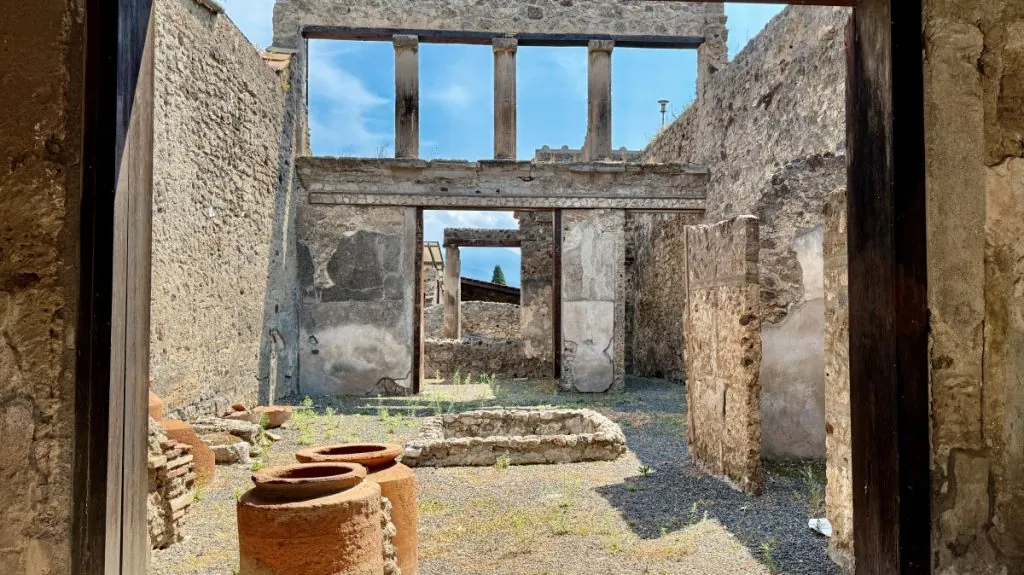
In the central atrium, a small pool collected rainwater from an opening in the roof - which also provided light.
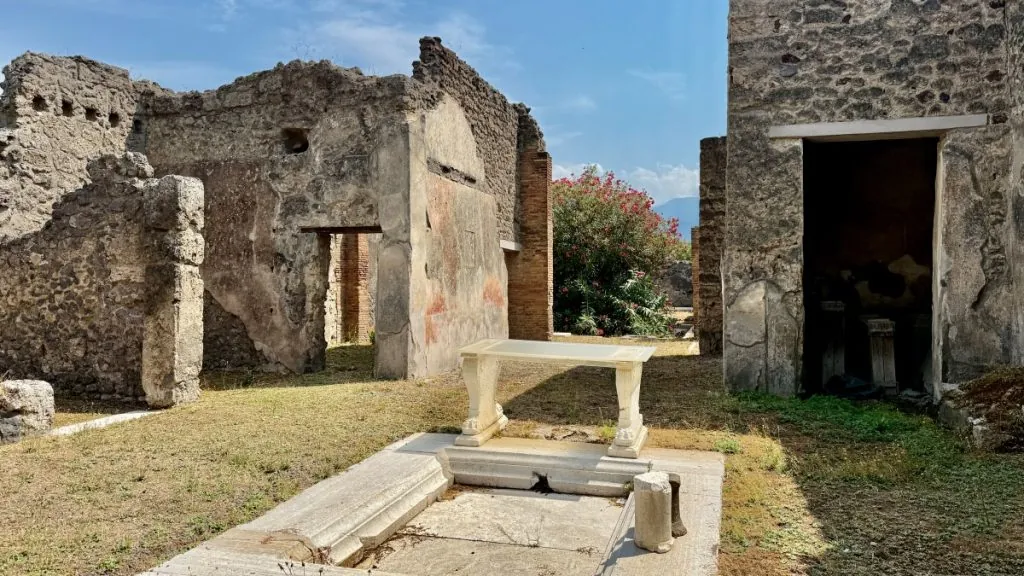
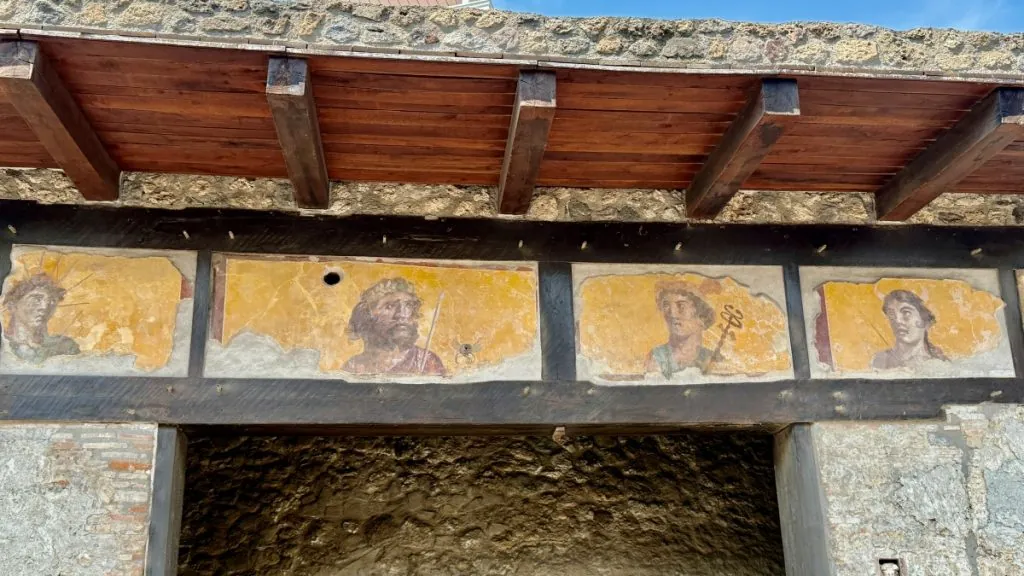
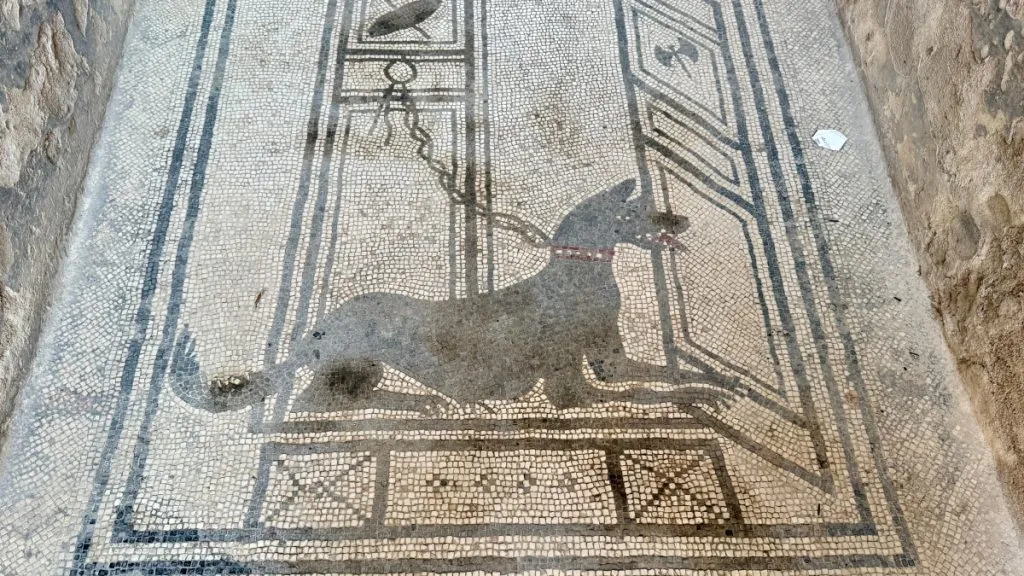
The houses of wealthy families were decorated with colourful paintings and beautiful mosaics.
Bakeries and fast food restaurants
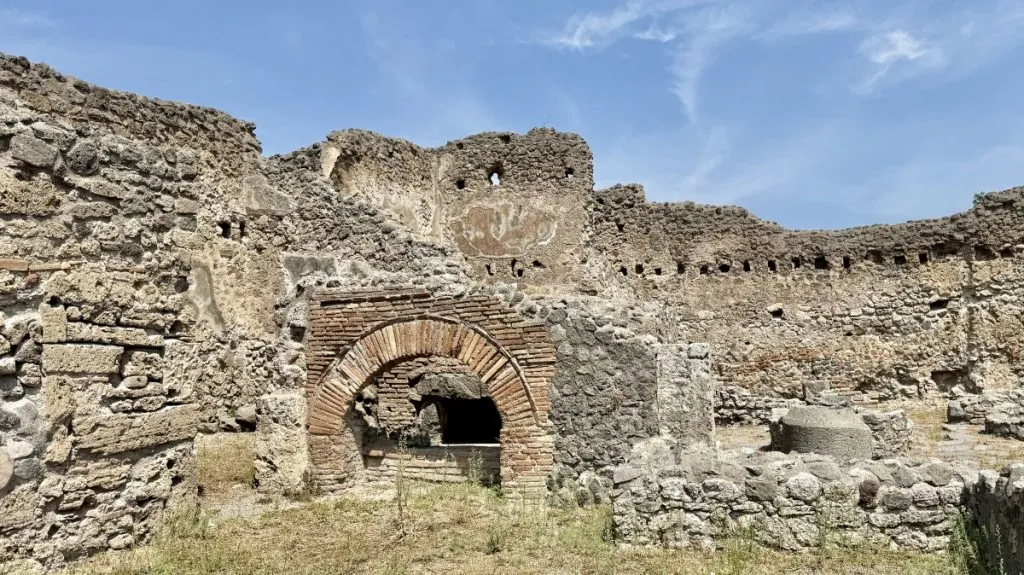
The remains of no less than 36 bakeries have been found in Pompeii.
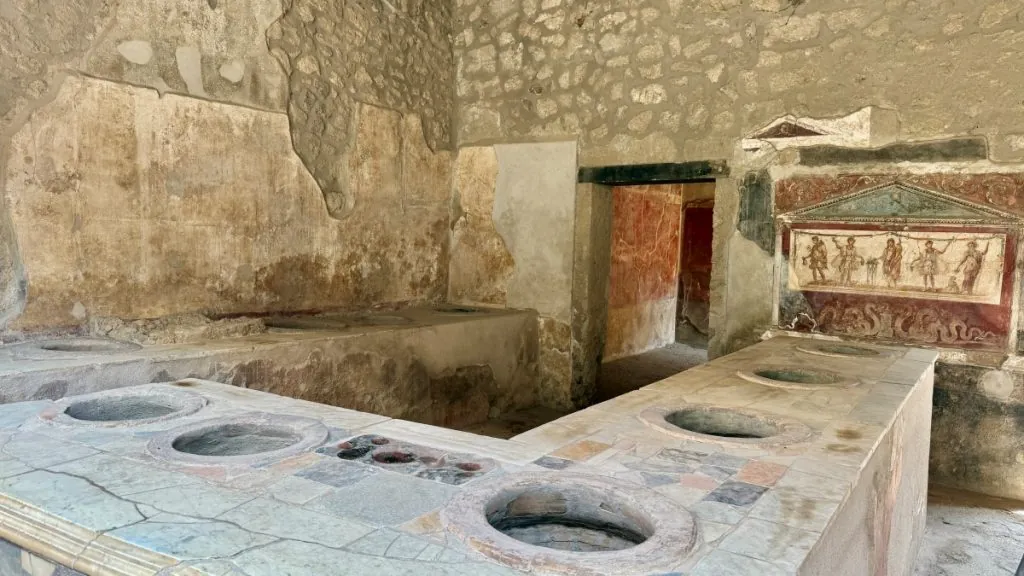
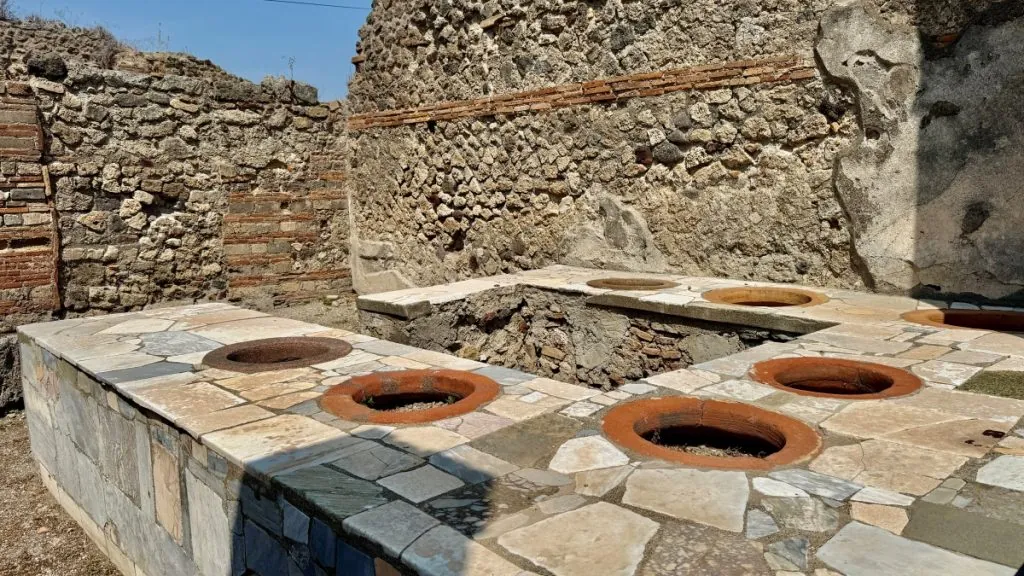
There is also a long list (around 80!) of so-called thermopoly - a type of Roman fast food restaurant. The word comes from the Greek 'thermos' (hot) and 'poleo' (to sell). They simply sold hot drinks and food.
The round holes contained clay pots in which soups, stews, wine, olives or other ready-made food were stored. From the pots, it was easy for the vendor to scoop up a portion for the customer.
In the Roman world, eating out was common, and many people didn't have kitchens at home. No wonder these 'fast food' restaurants were popular!
Bath houses
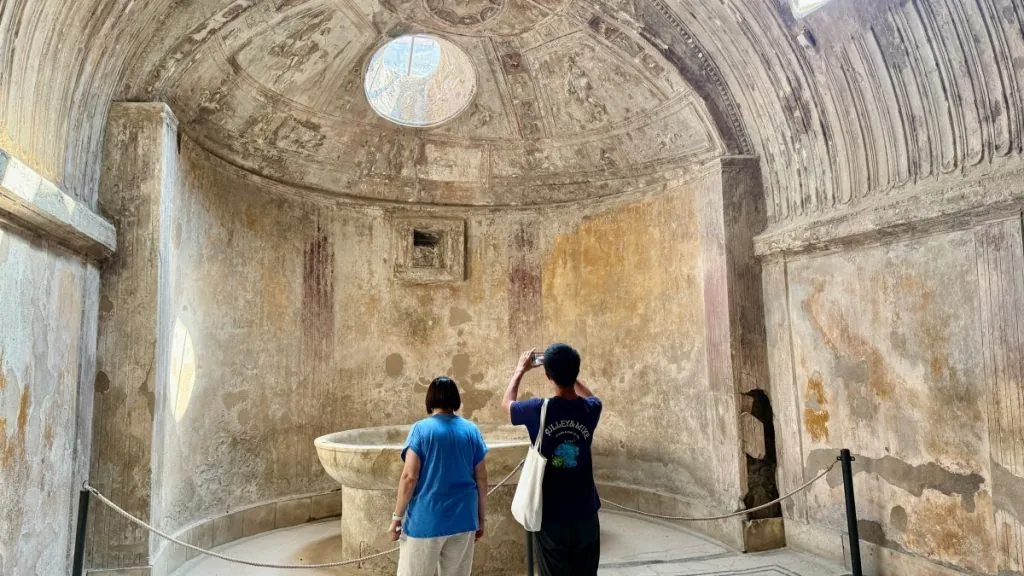
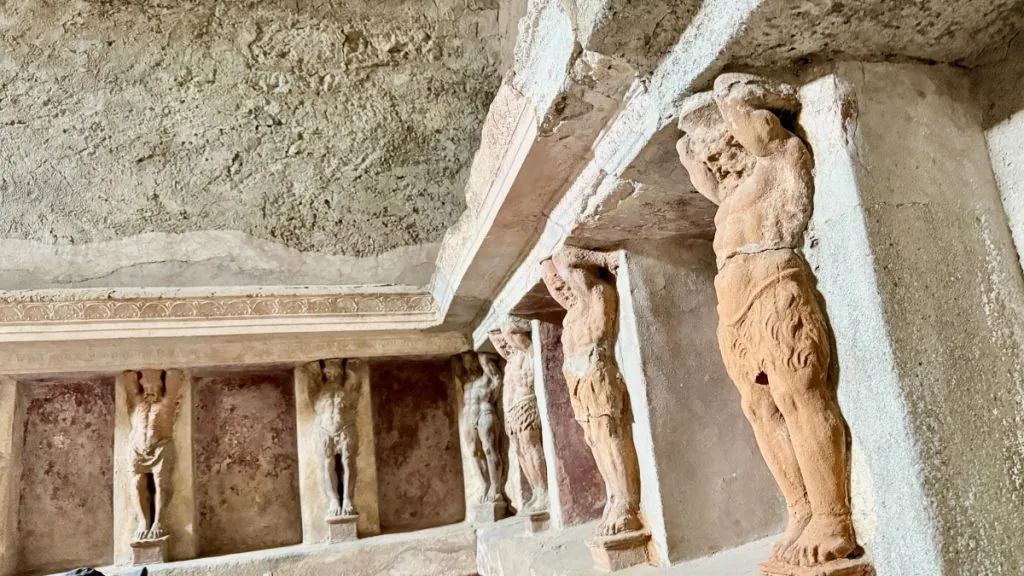
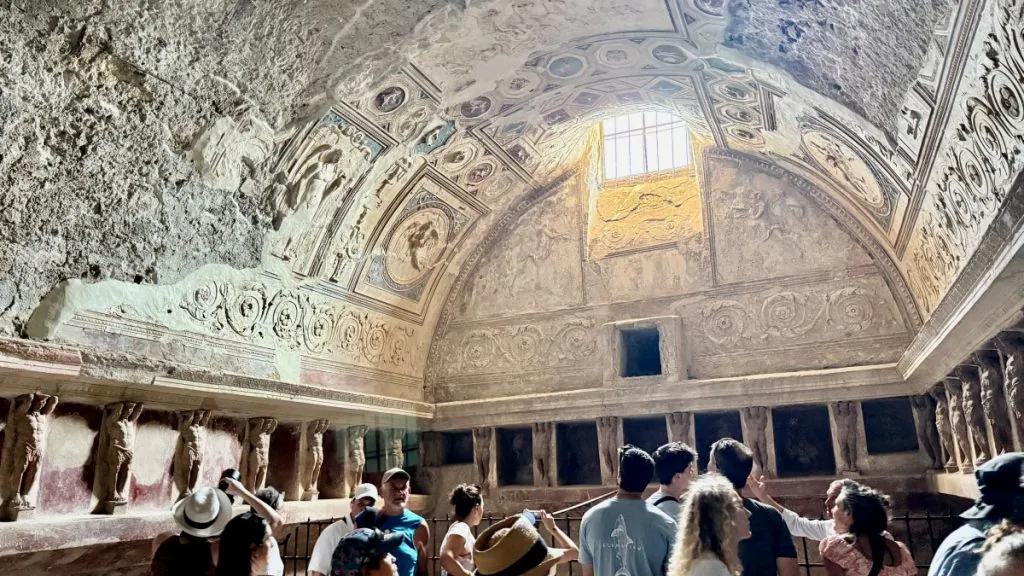
In Pompeii, there were five public bathhouses, where people came both to wash and to socialise. The bathhouses include changing rooms, rooms for cold baths and rooms for hot baths, divided for men and women respectively.
Theatre district and amphitheatre
Pompeii is home to a large amphitheatre (not pictured), which is the oldest known from Roman times. Built around 70 BC, the amphitheatre could accommodate around 20 000 spectators, not only from Pompeii but also from surrounding towns.
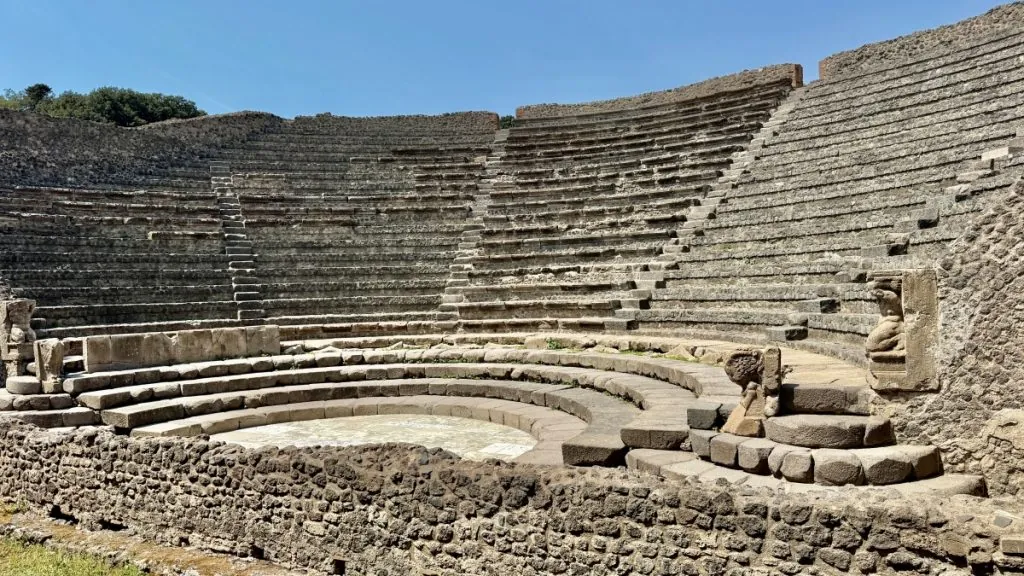
In addition to the amphitheatre, there is a theatre district, a little more central to the city. There is a larger theatre with a capacity of 5,000 spectators and a smaller theatre.
Forum
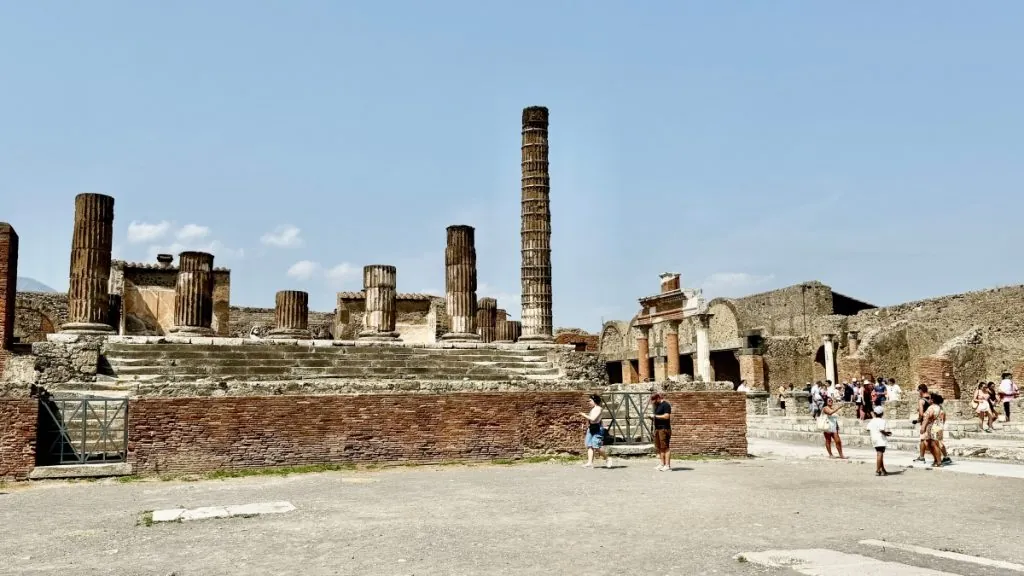
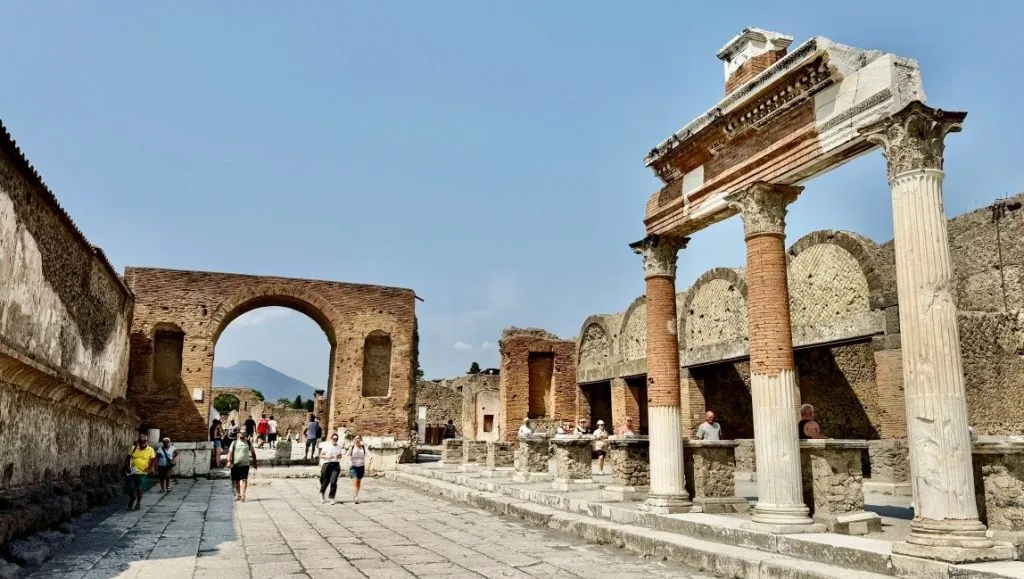
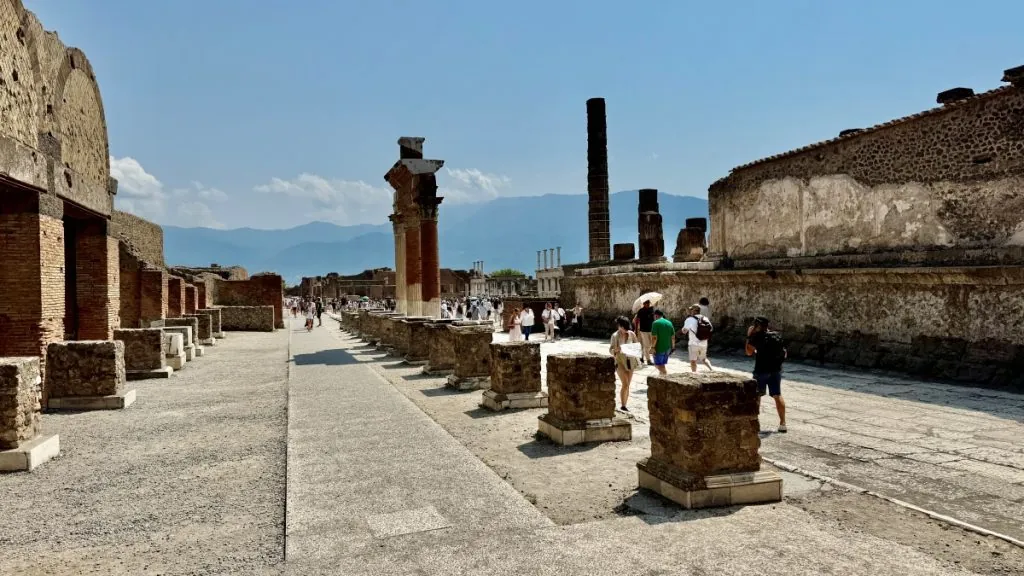
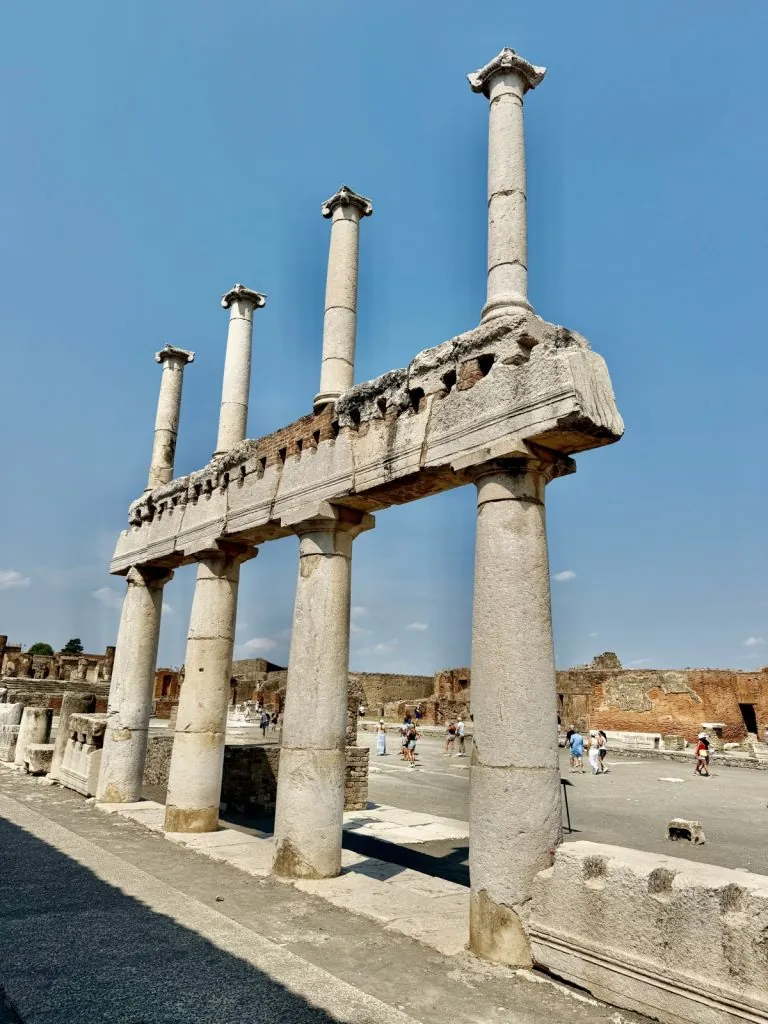
The Forum served as the heart of Pompeii, and it was also where all the important buildings were located, related to administration, law and commerce. It was also home to the market and important religious monuments.
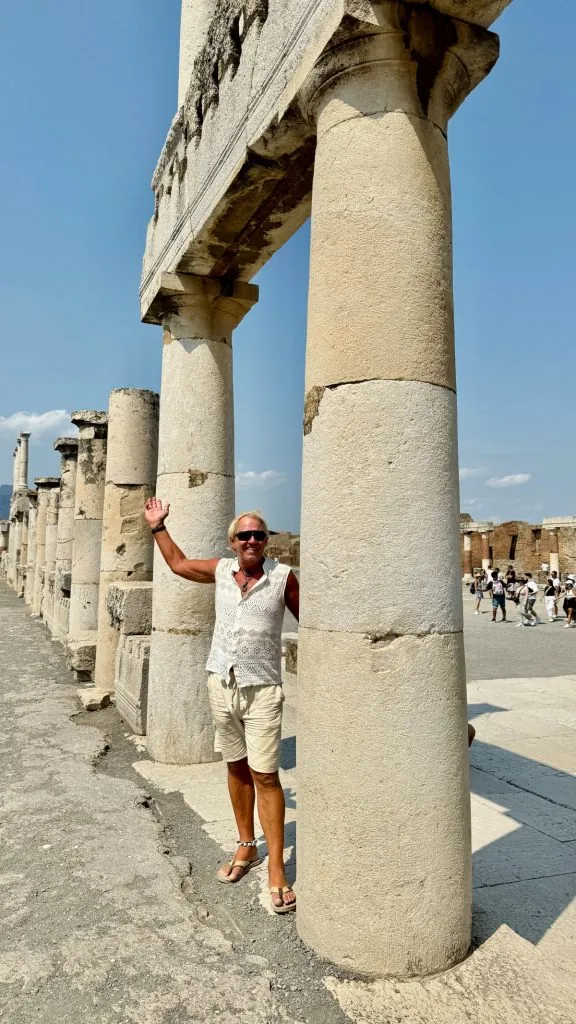
Villa dei Misteri
We chose to buy a ticket for the whole area, which meant that, in addition to the city centre, we could also go to several villas outside the city, including Villa dei Misteri. On the way there, we walked through a long street lined with graves.
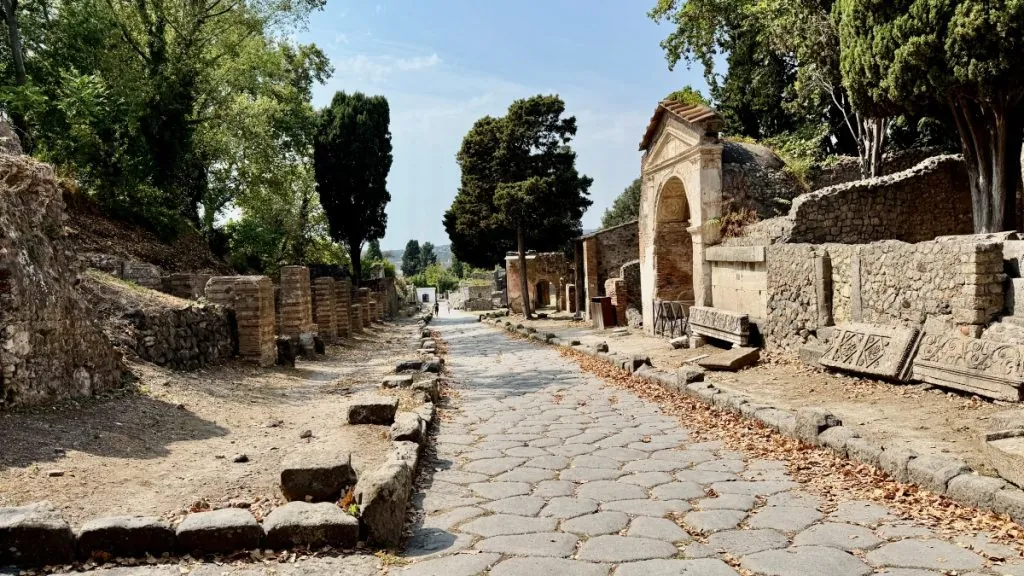
Villa dei Misteri is a well-preserved suburban villa, originally built in the 2nd century BC.
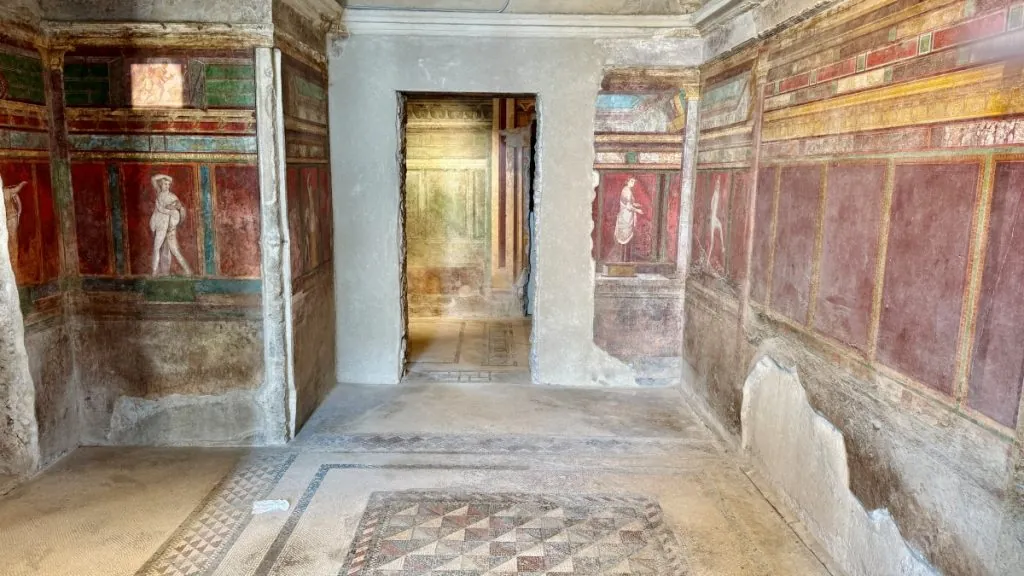
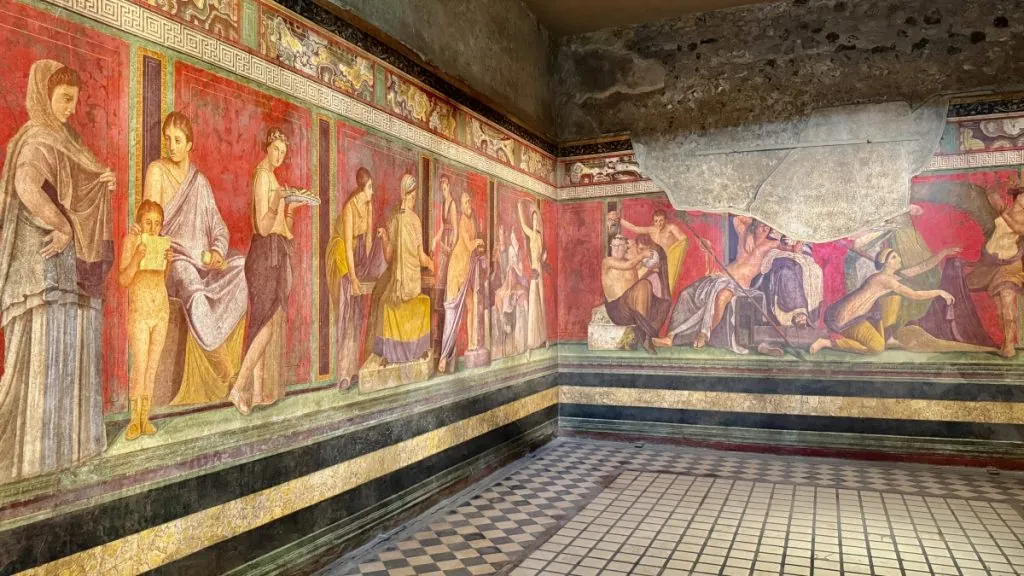
The most special thing here is the 17-metre-long series of frescoes in the dining room. Absolutely marvellous!
Church of Pompeii
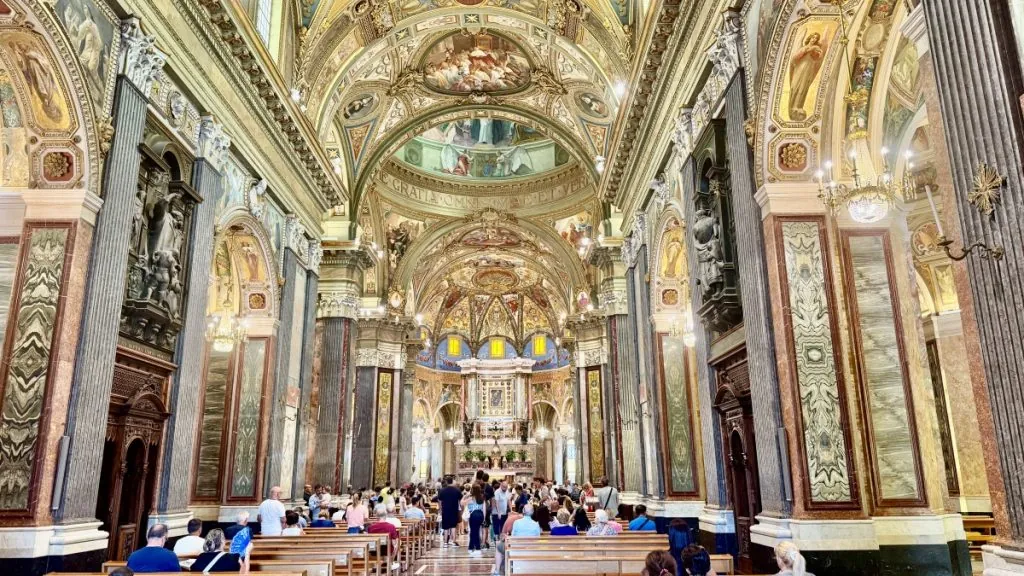
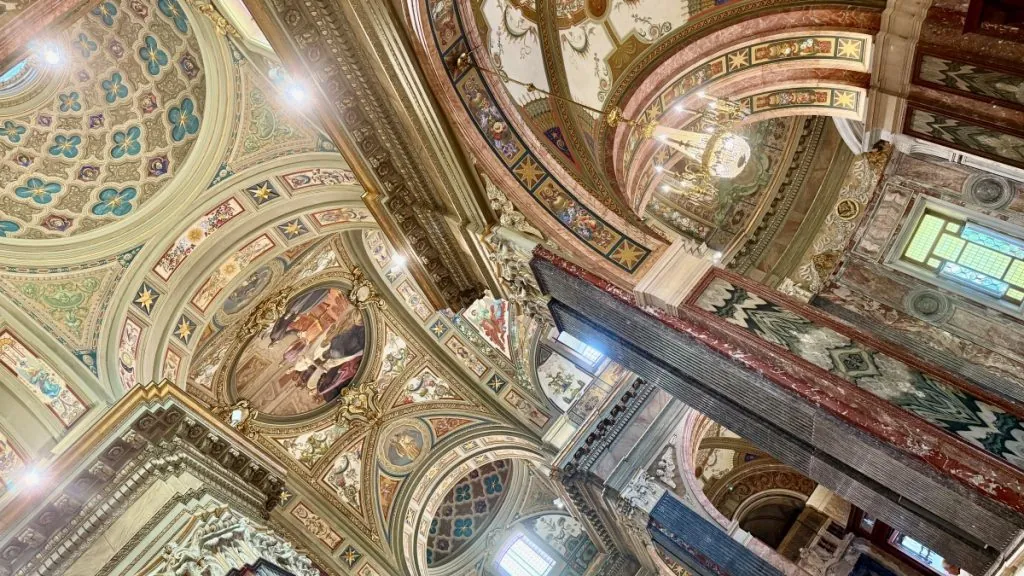
Another thing worth seeing when you visit Pompeii is the church Pontificio Santuario della Beata Vergine del Santo Rosario di Pompei which is just outside the archaeological site. Well worth checking out when you are in the area!
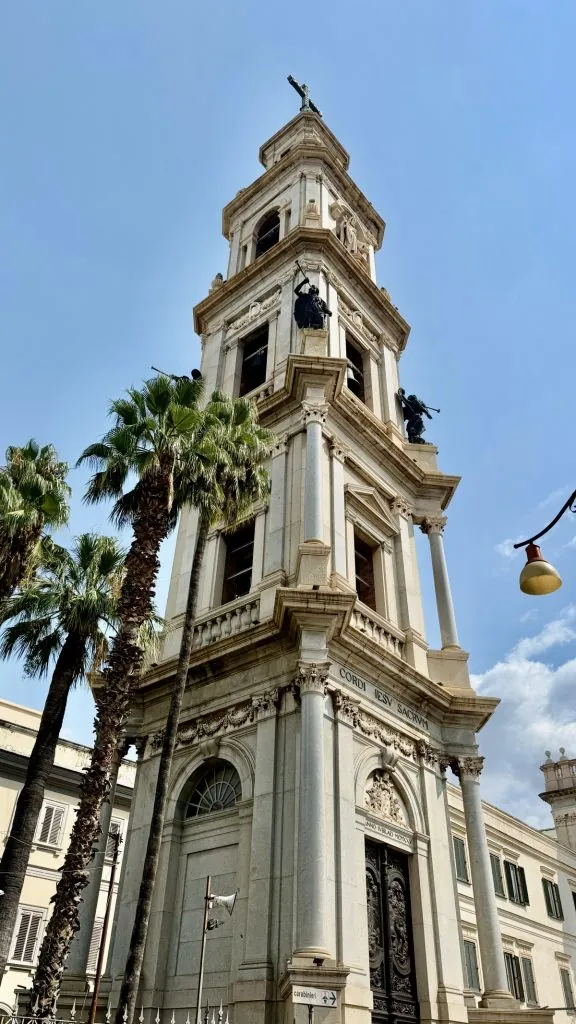
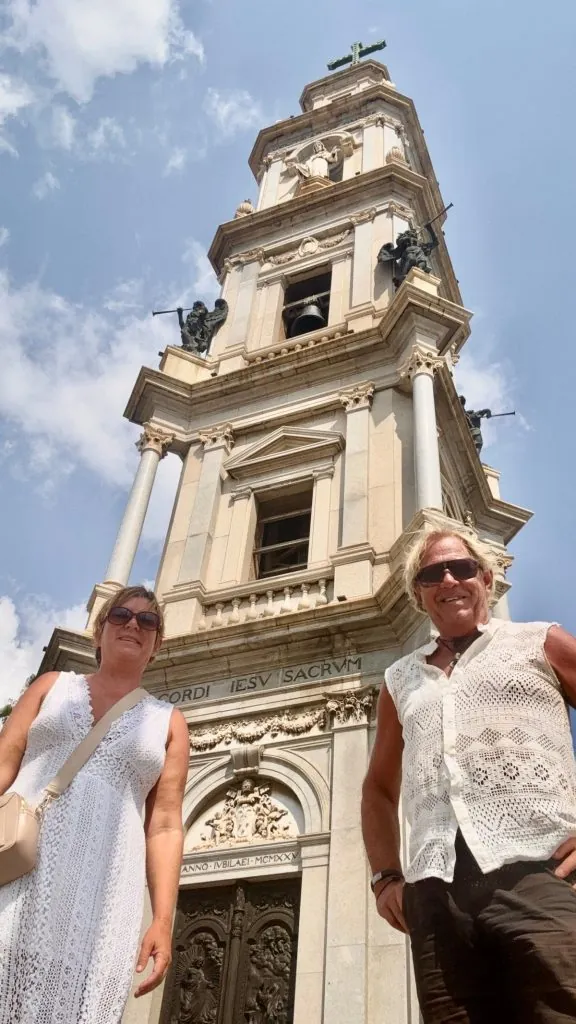
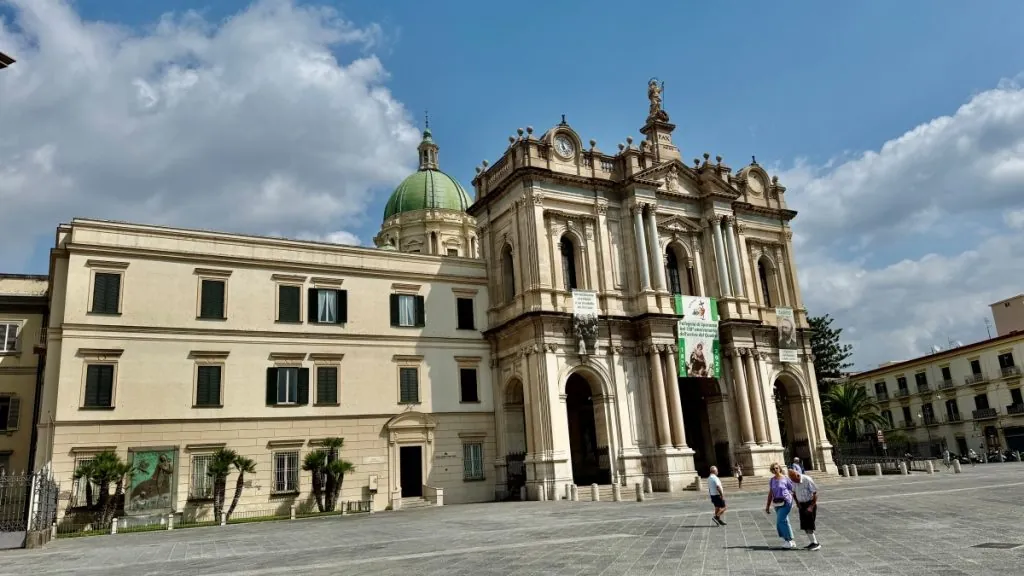
What an incredibly beautiful church! It's hard to do justice with the photos, don't miss out if you travel here!
Video from Pompeii
Where can you stay or park your motorhome?
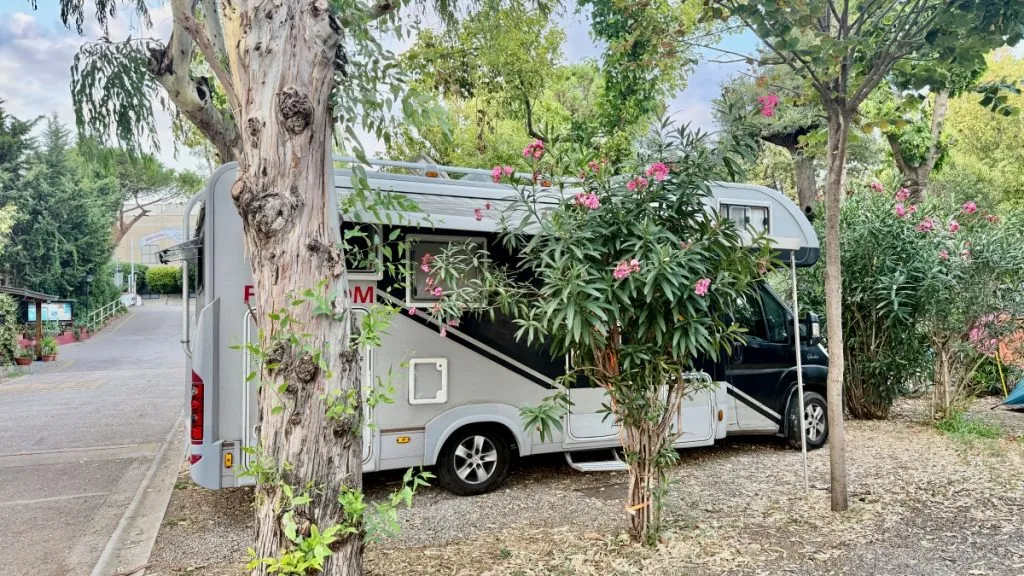
So, where can you stay or park your campervan when you visit Pompeii? We have only tried one place, but we were very satisfied. Camping Spartacus offers pitches for motorhomes, caravans and tents, as well as accommodation in chalets. The campsite is extremely close to one of the entrances to the archaeological site.
The advantage of a motorhome is that you do not have to pay both car park and campsite. The campsite has all the services you need in the form of electricity (8 amps), water, grey and black water drainage, service buildings and washing machines. The campsite also has a pizzeria with good pizzas.
More to see in Italy
Near Pompeii you can visit the city of Naples as well as Sorrento, Positano and Amalfi. It is also possible to go to islands such as Ischia and Capri. Here you will find more tips and reports:
- The Royal Palace of Caserta
- Church of the Holy Sepulchre in Otranto
- Tropea in Calabria
- Capital Rome
- Sardinia
Are you curious to visit Pompeii?
Are you curious to visit Pompeii? Or maybe you've already been here? Tell us about it!
FAQ – frequently asked questions about Pompeii
Where is Pompeii located?
Pompeii is located in southern Italy, near Naples in the Campania region. The archaeological site lies at the foot of the volcano Vesuvius and is one of Italy's most visited tourist destinations.
What is Pompeii famous for?
Pompeii is famous for being buried during a powerful volcanic eruption of Mount Vesuvius in 79 AD. The ash preserved buildings, streets and objects in a unique way, making the site one of the world's most fascinating archaeological remains.
How to get to Pompeii?
Pompeii is easily reached by train from Naples and Sorrento via the local Circumvesuviana railway. It is also possible to travel there by car or book an organized day trip from, for example, Naples, Sorrento or the Amalfi Coast.
How much time do you need in Pompeii?
Most visitors spend between four and six hours in Pompeii. The archaeological site is very large, so those who want to explore the area thoroughly can spend a full day.
What is there to see in Pompeii?
Here you can stroll the ancient streets and see well-preserved residences, temples, bathhouses, theaters and squares. Don't miss the Forum, the amphitheater, the Villa dei Misteri and the famous plaster casts of people who perished in the volcanic eruption.
Is it worth booking a guided tour of Pompeii?
Yes, a guided tour can provide a much deeper understanding of the city's history and how the inhabitants lived before the volcanic eruption. If you prefer to explore at your own pace, audio guides and information signs are also available.
Can you combine Pompeii with Vesuvius?
Yes, many people choose to visit both Pompeii and Vesuvius on the same day. From the car park or nearby stops, buses go up to the volcano, where you can hike the last bit to the crater rim.
Is Pompeii child-friendly?
Yes, Pompeii can be exciting even for children, especially those interested in history and volcanoes. However, keep in mind that the area is large, hot in the summer, and has uneven cobblestone streets.
Do you need to buy tickets in advance?
Yes, especially during peak season it is a good idea to buy tickets in advance. This will often save you time in queues and allow you to plan your visit better.
When is the best time to visit Pompeii?
Spring and autumn are the most pleasant seasons, with mild temperatures and fewer visitors than in the middle of summer. During the summer, it is wise to arrive early in the morning as the area offers limited shade.
What should you consider before your visit?
Wear comfortable shoes as you will be walking a lot on uneven cobblestone streets. Also bring water, sunscreen and preferably a hat, especially during the warmer months.
Can you combine Pompeii with other destinations in Campania?
Yes, Pompeii is often combined with Naples, Sorrento and the Amalfi Coast. Many also take the opportunity to visit Vesuvius, the ancient city of Herculaneum or the island of Capri during the same trip.
You might also like:
 Visiting the castle of Caserta in Italy - one of the largest castles in the world
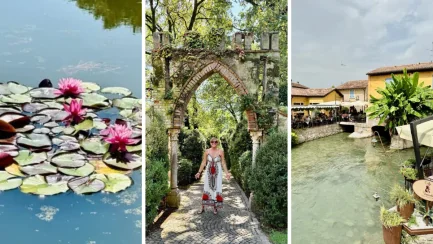 Sigurtá and Borghetto Garden Park near Lake Garda
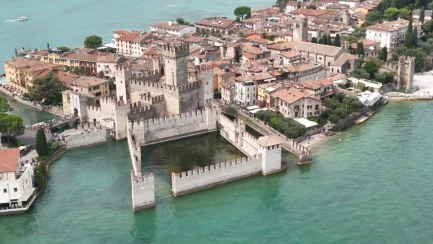 What to do in Sirmione - 12 tips for a gem on Lake Garda
 The Valley of Palaces and Gardens at Jelenia Góra in Poland
 Visiting Rocamadour in France - a sacred pilgrimage site
 Visiting Chateau de Beynac in France - a historic gem



 English (UK)
 Svenska
Netti Starby says:
What a horrible story and so terrible for all those affected. But how nice the city has become over the years with many nice sights. Hugs <3
26 August 2025 - 6:26
Helena says:
Yes, it was a terrible event. But it's fascinating that we now have an extra well-preserved peephole into history!
26 August 2025 - 7:50
Monnah says:
I really love all of Italy (the places I've been), but Pompeii is still on my top three list if I have to choose something. Naples I could probably both have and lose, but Pompeii... The stories that are literally in the walls and the feeling that everything has just stopped in time touched me incredibly much. I don't dare go back even though I probably would have liked to, because I want to cherish the feeling that is still there after 25 years. I realise that not everyone embraces history in the same way as I do, but I find it hard to believe that this place could have passed anyone by emotionally. Hatte Furuhagens documentary from 1980 made me "obsessed", so I would still say that I had had many years of preparation before I got there. As I said, I was not disappointed! (I looked up the documentary now, it's still on SVT Play.)
26 August 2025 - 6:49
Helena says:
Isn't it an incredibly fascinating place! I have also been fascinated ever since I was a child, and now we are once again stuck in a phase of reading and reading 😉 The documentary sounds interesting, thanks for the tips!
26 August 2025 - 7:52
Anette says:
Great to revisit this amazing place with you.
It was a powerful feeling to wander around the ancient city.
I'm definitely going to watch that documentary that Monnah writes about.
It was winter when we were there so there was snow on the volcano, would have liked to go up there but it was not allowed.
26 August 2025 - 8:39
bmlarsreseblogg says:
I have visited Pompeii before I met Lars and since he hasn't been there, it is a destination we would like to experience together. I thought it was an incredible experience to walk there on the pedestrian crossings and visit all the well-preserved buildings. One of the most fascinating places I've visited and now it was lovely to relive it in your lovely post!
26 August 2025 - 8:55
Hannas krypin says:
So wow! That's a city I would have loved to visit. The city must have been well covered as it was hidden for so long. Fascinating to see how well preserved the city is. Truly a dream destination!
26 August 2025 - 17:11
BP says:
This was by far the best and most interesting post from my long journey.
Pompeii was way ahead of its time, I would say. And it's absolutely amazing that the city is so well preserved.
I guess Pompeii makes up for the disappointment you experienced in and around Naples.
26 August 2025 - 18:46
znogge says:
What a fascinating and interesting place that is well worth a visit I realise. I myself have never visited Pompeii but would love to go there at some point.
26 August 2025 - 21:16
Monica says:
Great post about Pompeii. Reading more and more history, could it be the age tro😉 and also that I understand more, (age again), even though much is unfathomable.
I like Italy a lot in summer and winter and very interesting everything you experience, even the boat trip😄. Have some memory of a storm trip when we were up all night because the cabins were not suitable then. Too bad I did not write a diary at all but it came later. I took photos from childhood and memories emerge but not so exactly.
Have a good trip and thought after the boat trip it was probably nice to see the motorhome. All good and good in the future to you.
26 August 2025 - 22:58
Marika says:
I have heard stories about Pompeii when I was a child. My father's aunts, who travelled a lot, had been there and told me about what they had seen. I thought it was terrible when they said that people could not escape the lava and were petrified. It must have been in the 60s.
I'm fascinated by the art of building when they didn't have machines like we do.
The church is stunningly beautiful.
Best regards Marika
27 August 2025 - 9:57
Sara i Barcelona says:
Pompeii is really amazing, I was there a bunch of years ago and I still remember how fascinating it was to see it. Very nice to see it again through your photos and texts 🙂
Naples is the city we have been to the most (in Italy) as we have our whole family there, and our children love that city immensely <3 Yes, of course, me too.
However, I can understand that it is not a city to drive around with a motorhome in, but I would definitely say that Naples should really be experienced as it is both genuine, special, charming and unique with wonderful and generous people <3
The Amalfi Coast is also incredibly beautiful, and so are the islands outside, Capri and Ischcia for example <3
Hugs!
27 August 2025 - 10:28
Lillan Kind says:
Pompeii certainly suffered an incredibly terrible fate. But it is an amazing place to visit, and to see how people lived at that time. We were there a few years ago when we were on a cruise, and I would have liked to spend many more hours there to see much more.
27 August 2025 - 22:49
Marika says:
There is a town that was even better preserved when Vesuvius erupted in 79. Ercolano, it is called and I was there in 202o. Even the dead people are intact. Preserved by the lava. Scary and fascinating at the same time.
29 August 2025 - 16:43
Lena - gott för själen says:
Wow, what a visit! Now that destination is even more appealing! How fascinating. I have of course heard about the history and that it was preserved, but that they have managed to get it so nice and intact is absolutely incredible. Thanks for the nice post!
Hug Lena
05 November 2025 - 13:43