



Writer: Helena Bergström
Updated August 2026 | Lisbon is an unusually charming capital with bright and pastel-colored houses that are worn and beautiful at the same time. The city is filled with nice outdoor cafes and historical sights, and we were immediately delighted. Now we offer 14 tips on things to see and do in Lisbon.
 Tweet
 Share
 Share
 Pin
 Share
 Share
Table of contents
Lisbon in Portugal
Lisbon has been the capital of Portugal since 1256, and was for a long time a very important city in Europe, not least during the period when the Portuguese were engaged in voyages of discovery and colonization. Today it is a lovely and cozy capital, ready to be discovered during a few days of vacation.
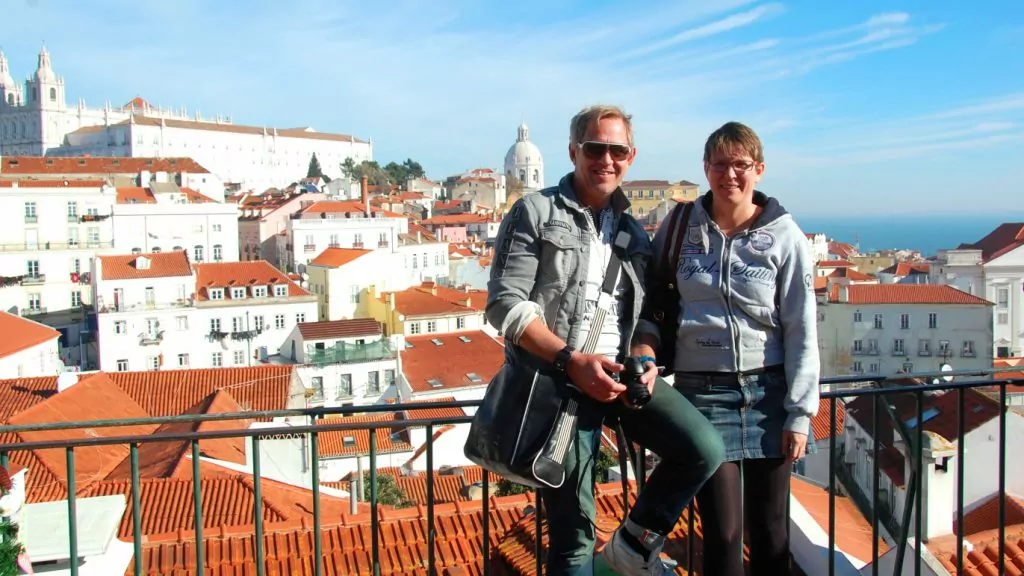
Quick Guide: Lisbon
Top 5 attractions in Lisbon – our best tips
- Alfama – Lisbon's oldest district with narrow alleys, colorful houses and genuine Portuguese atmosphere.
- Belém Tower (Torre de Belém) – One of Portugal's most iconic landmarks and a UNESCO World Heritage Site.
- Jerónimos Monastery – Impressive monastery from the 16th century, known for its beautiful Manueline architecture and listed on the UNESCO World Heritage List.
- Tram 28 – The classic yellow tram that passes many of Lisbon's most charming neighborhoods and attractions.
- Praca do Comercio – Lisbon's large parade square on the Tagus River, surrounded by grand buildings and one of the city's most famous meeting places.
14 things to see and do in Lisbon
Lisbon offers charming environments, great viewpoints and a number of interesting sights. Here you will find our best tips.
1. Take tram 28
Lisbon is said to be built on seven hills, which means that the city has some very steep streets. Sometimes the streets are even too steep for motor vehicles, which is why the city has three cable cars and a lift. The steepness of the city also means that there are several really good vantage points that are worth travelling to.
The easiest way to get around the city is by tram, which runs frequently and to good locations. A good tip is to get both a map of the city and a tram map. You can also use the cable cars, such as Elevador da Gloria or Elevador da Lavra. These are a great way to get where you want to go, as well as offering Lisbon's must-sees on holiday.

2. Discover the alleys of Alfama
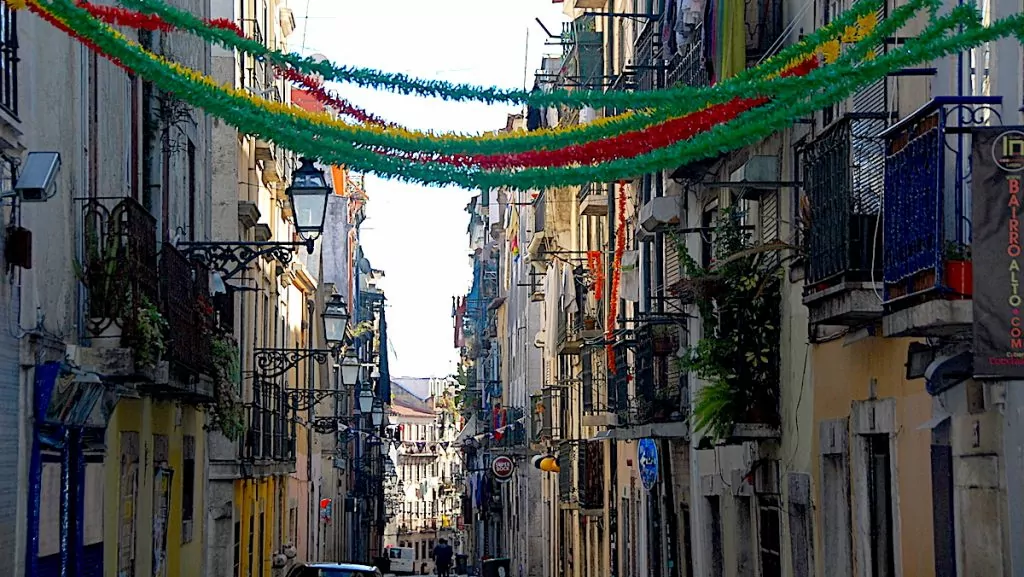
Alfama is the oldest district in Lisbon. Everywhere you see winding little balconies, dotted with potted plants and long rows of laundry hanging to dry. The cobblestone streets slope steeply up and down, and the small, fully-loaded trams scurry up and down the slopes.

We had a sunny and beautiful day in Lisbon, Portugal. We were able to enjoy both lunch at a nice outdoor restaurant, and coffee and ice cream in a green park.



3. Visit Commerce Square
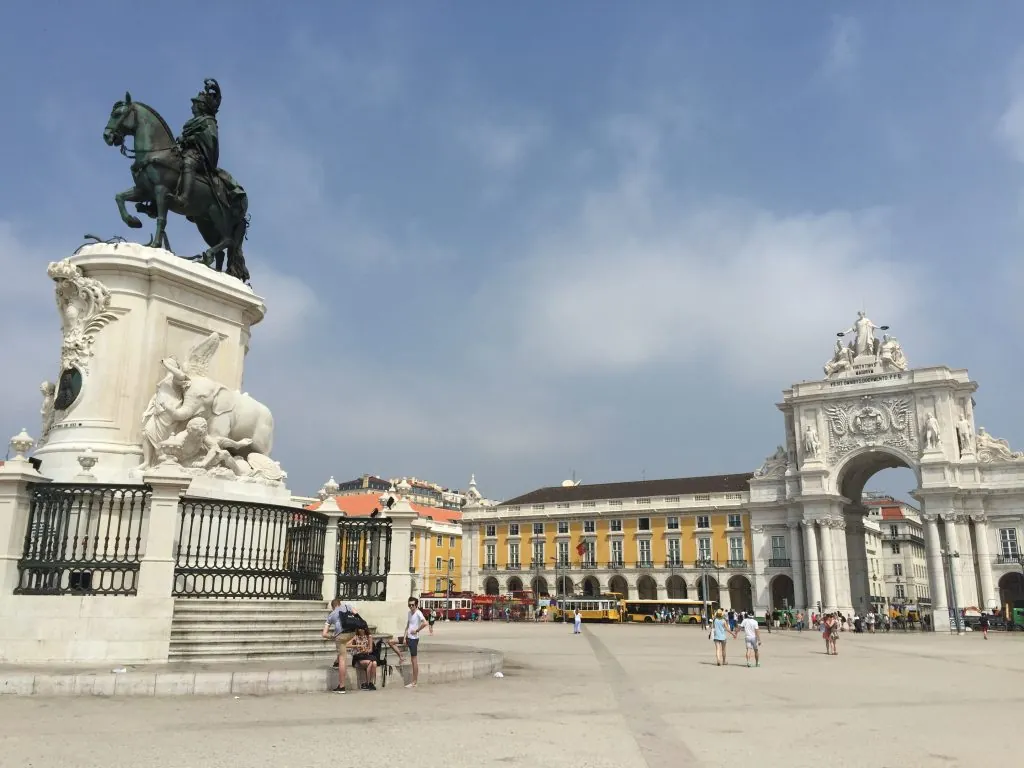
Praça do Comércio is Lisbon's most famous square and a natural gathering point in the city. The square is beautifully situated on the Tagus River and surrounded by elegant yellow buildings, arcades and restaurants. It was once the departure point for Portugal's great maritime expeditions, and has therefore played a central role in the country's history.
Today, Praça do Comércio is a perfect place to stop during a stroll through Lisbon. Sit on an outdoor terrace, enjoy the view over the river, or stroll through the grand triumphal arch, Arco da Rua Augusta, which leads into the city's bustling shopping streets.

4. Discover Rossio – the vibrant heart of Lisbon
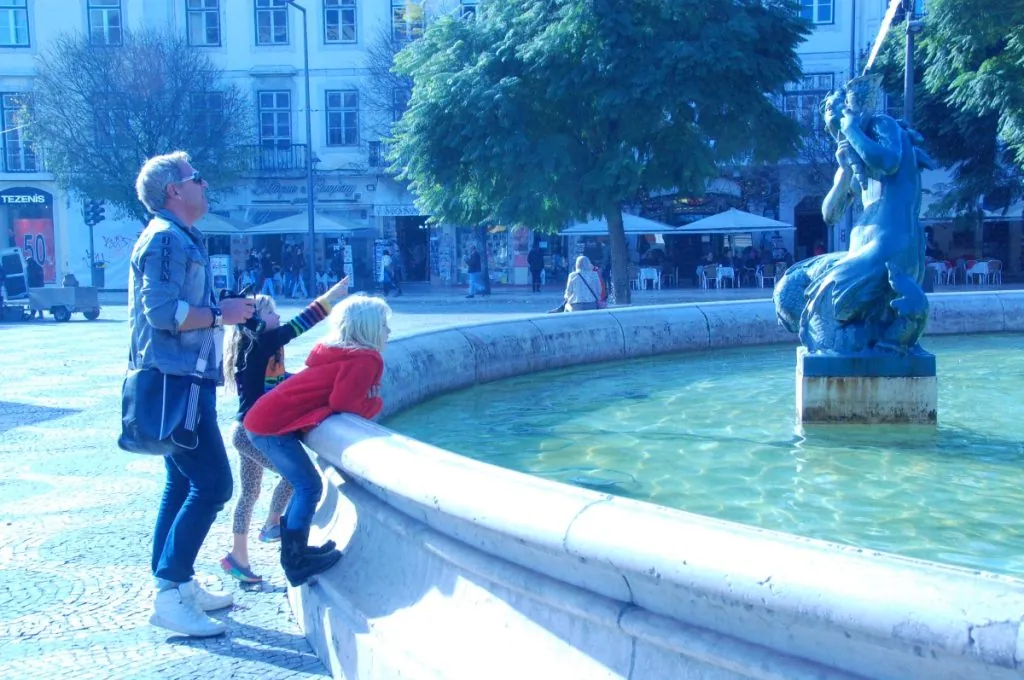
Rossio Square is located in the Pombaline center and has been one of the most important squares since the Middle Ages. It has hosted bullfights, parties and executions. Today it is a beautiful square, with tiles and fountains.
Rossio is still one of the city's most important meeting places. It is home to the National Theatre, the beautiful train station and plenty of cafés where you can sit down for a while before continuing to discover Lisbon.
5. Check out the Belém Tower
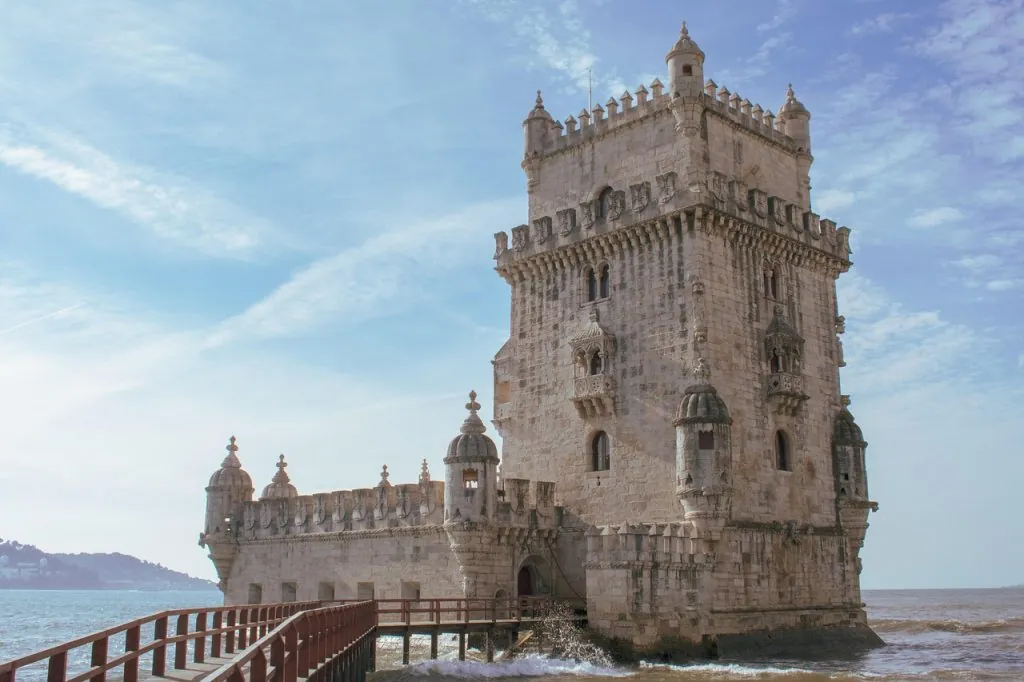
Belem Tower (Torre De Belém) was built in the early 16th century to honour Vasco da Gama and all the explorers. Together with the nearby Hieronymus Monastery, the tower is now a UNESCO World Heritage Site.
6. See the Jeronimos Monastery
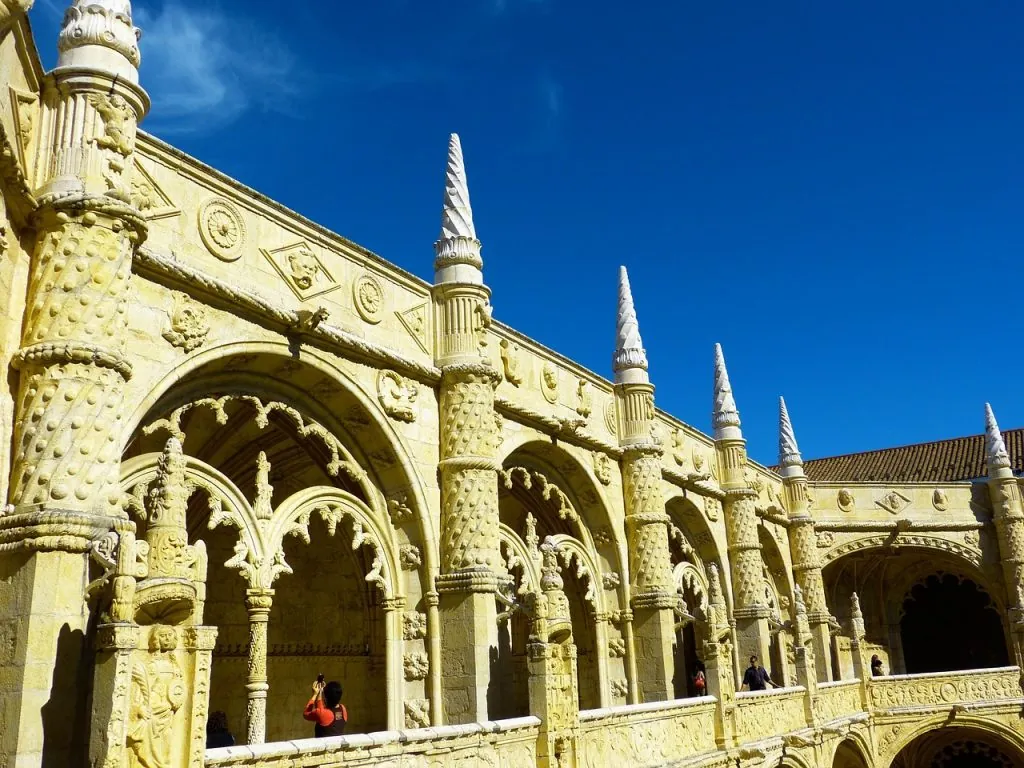
Jeronimos Monastery (Mosteiro dos Jerónimos) is a large monastery in honor of Vasco Da Gama's successful expedition to India. The monastery or monument was built with the riches they brought home (or looted) from their voyages in the Far East. The monastery is on the UNESCO World Heritage List.
7. Take the Elevador elevator
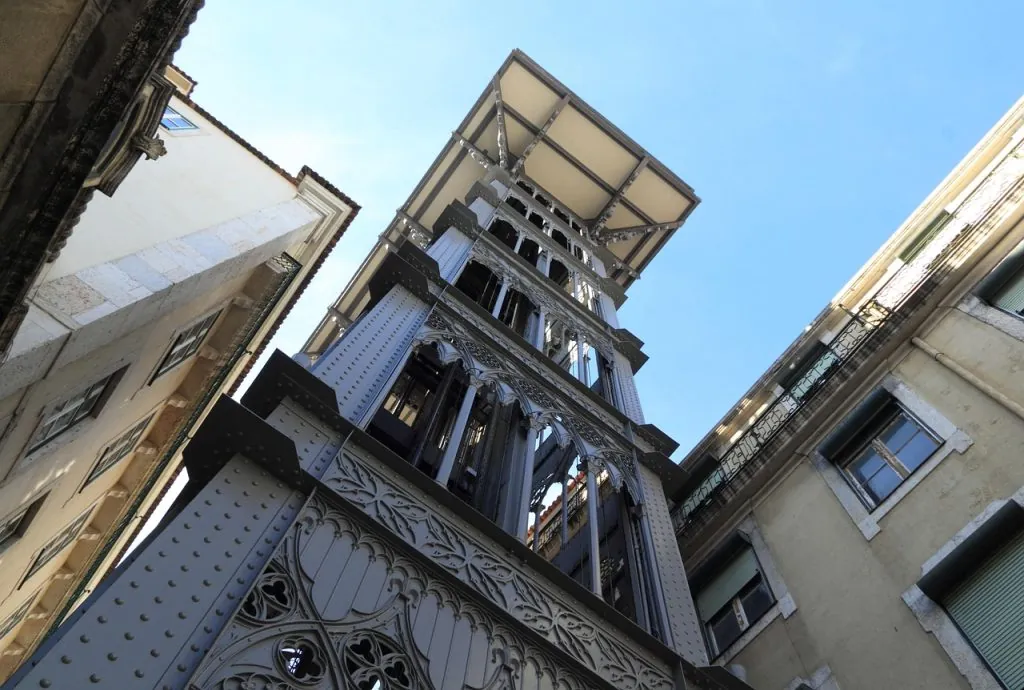
The Elevador do Carmo (Carmo Elevator) runs from the lower parts of central Lisbon to the higher Carmo Square (Largo do Carmo). The iron elevator is in Gothic style with different patterns on each floor, and was designed by an apprentice of Gustave Eiffel. It was built in the early 20th century and clad in wood.
8. Be fascinated by Saint George's Castle
Saint George's Castle (Castello de Sao Jorge) is a medieval castle (Moorish castle) with a lot of history, which has also withstood many battles over the course of 2000 years. There are remains of the first fortification from Roman times, and the castle has since been rebuilt several times.
The castle with its citadel is of course located on a hill overlooking the city, with moats and strong walls. The tower in the citadel (Ulysses Tower) is the highest point and here you have a 360-degree view of the city center.

9. See the views from the city's lookout points
There are several great viewpoints in Lisbon. Here you will find examples of places where you can get absolutely fantastic views.
- Santa Luzia Viewpoint
- Miradouro da Senhora do Monte
- Miradouro de São Pedro de Alcântara
10. Eat Pastéis de Belém
If there's ever a time you should try Pastéis de Belém, it's when you're in Lisbon. The pastry was originally created in 1837 at the Jerónimos Monastery.
To eat the original – the only place that is allowed to call the pastry cold Pastéis de Belem you can head to Pastéis de Belém at Rua de Belém 84–92 in the Belém district. The line can be long, but it usually moves surprisingly quickly. You can eat similar pastries with the same name at other cafes around Lisbon. custard tart.

11. Visit the seaside resorts of Cascais and Estoril
From Lisbon it is not far to the Atlantic coast. Here there are several nice seaside resorts and beaches. For example, you can visit Cascais or Estoril.

12. Be impressed by the castles of Sintra
Sintra is located just over half an hour outside Lisbon and is known for several fantastic castles, especially the colorful Pena Palace (Pena Palace), the historic Sintra National Palace (Palácio Nacional de Sintra) and the old Moorish castle (Castle of the Moors).
The area is now a UNESCO World Heritage Site and is one of the must-see destinations. You can easily get here by commuter train from Rossio station in about 40 minutes.

13. Visit Europe's westernmost point – Cabo da Roca
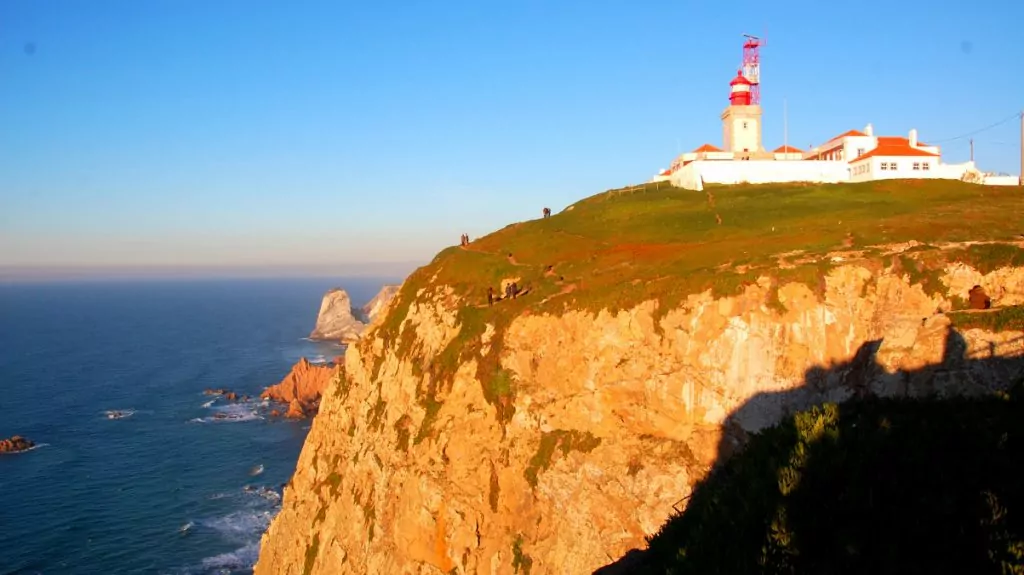
The Cape Cabo da Roca is the westernmost point of Europe, and is located 30 km west of Lisbon. Cape Roca, as the cape is also called, was the end of the world for many before the 15th century. Still today, this is a place with magical views of the Atlantic coast.
14. Experience fado
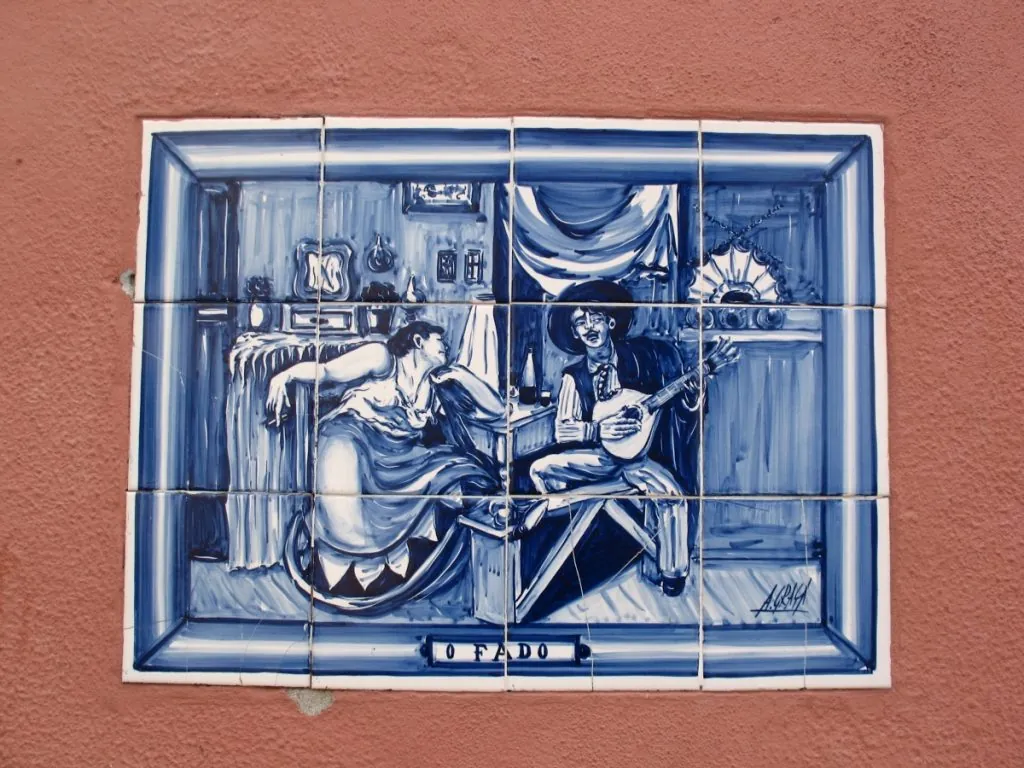
Fado is part of Portuguese culture and if you want to experience the captivating traditional music in Lisbon, it might be wise to look in neighborhoods like Alfama or Bica. It's best to choose an intimate bar and book a table in advance. Silence is required during the performances.
Lisbon in 2-3 days – complete day-by-day itinerary
Day 1 – Alfama and the historic heart of Lisbon
- Morning: Explore Alfama with its narrow alleys, viewpoints and the Lisbon Cathedral (Sé de Lisboa).
- Lunch: At a traditional Portuguese restaurant in Alfama.
- Afternoon: Stroll via Praça do Comércio and continue through Baixa and up to Chiado.
- Evening: Dinner in Bairro Alto and end the evening with live fado music.
Day 2 – Belém and Portugal’s history of discovery
- Morning: Visit the Jerónimos Monastery and the Belém Tower.
- Lunch: Taste the classic pastries Pastéis de Belem and have lunch in Belém.
- Afternoon: Visit the Monument to the Discoveries (Padrão dos Descobrimentos) or stroll along the Tagus River.
- Evening: Dinner by the water or return to the center for an evening stroll.
Day 3 – Views and local experiences
- Morning: Take a ride on the classic tram 28 and stop at some of the city's most popular viewpoints (miradouros).
- Lunch: At a café in Chiado or Príncipe Real.
- Afternoon: Stroll through the charming neighborhoods or take a day trip to Sintra with its fabulous castles and palaces.
- Evening: End your trip with dinner at one of the city's many restaurants and enjoy the relaxed atmosphere.
Where to stay in Lisbon?
So, where to stay in Lisbon? Here are three areas that will suit most visitors.
Alfama – historic and authentic
Alfama is Lisbon's oldest district and a perfect choice for those who want to stay amidst narrow alleys, historic buildings and charming viewpoints. There are many small restaurants, fado houses and a genuine Portuguese atmosphere. Just be aware that the area is hilly and the cobblestone streets can be steep.
Baixa and Chiado – central and convenient
Baixa and Chiado are among the most popular areas for first-time visitors. Here you live centrally, within walking distance of many of the city's main attractions, shopping, restaurants and public transport. These areas are suitable for those who want to be close to everything and appreciate a lively city life.
Belém – quiet and close to the sights
Belém is located a little west of the city center and is suitable for those who want to stay in a quieter area. It is home to several of Lisbon's most famous attractions, such as the Jerónimos Monastery and the Belém Tower, as well as pleasant walking paths along the Tagus River.
Are you travelling by motorhome?
There are several campsites and motorhome parks in the Lisbon area, but most are located a bit outside the city center. The most common way is to park your campervan at a campsite and then take the train, tram or bus into the city center, which is often much easier than driving and parking inside Lisbon.
The Lisbon earthquake
The devastating earthquake of 1755, when two-thirds of Lisbon was reduced to rubble and 20-30,000 people died, was a major disaster for all of Portugal. The earthquake, which is believed to have reached almost nine on the Richter scale, occurred in the Atlantic Ocean and lasted for six minutes. It was followed by a tsunami from the Algarve coast, which devastated large parts of the coast.
The earthquake, along with Brazil's independence in the early 19th century, led to a period of economic decline. It was only in the early 20th century that the city began to recover, and today it is a charming and beautiful capital.
More city guides nearby
There are of course many more exciting cities to experience in Portugal:

Tips in Lisbon – our best tips for your trip
- Walk more – Lisbon is a city that is great to explore on foot.
- Take tram 28 – This classic line is iconic for sightseeing.
- Don't miss the viewpoints – You can get fantastic views.
- Eat local – If you move away from the most intense tourist routes, prices will be lower, while the flavors can be more genuine.
FAQ – frequently asked questions about Lisbon
Where is Lisbon located?
Lisbon is the capital of Portugal and is located at the mouth of the Tagus River into the Atlantic Ocean, in the western part of the country. The city is built on seven hills and offers beautiful views of both the river and the city's rooftops.
What is Lisbon famous for?
Lisbon is known for its steep cobblestone streets, yellow trams, traditional fado music and many viewpoints. The city also attracts with its historic districts, good food and proximity to the sea.
How to get to Lisbon?
Lisbon has an international airport with direct flights from many European cities. From the airport, you can easily get to the city center by metro, bus, taxi or shuttle.
How many days do you need in Lisbon?
Three to four days is enough to experience the city's main attractions. If you have more time, you can take day trips to places like Sintra, Cascais or Estoril.
What is there to do in Lisbon?
Visit the Alfama, Bairro Alto and Baixa districts, ride the classic tram 28, enjoy the view from one of the city's miradouros and discover the Belém district with the Belém Tower and the Jerónimos Monastery.
Is Lisbon a good destination for foodies?
Yes, Lisbon is a great destination for foodies, where you can enjoy fresh seafood, grilled sardines, bacalhau and the famous Portuguese pastries, pastéis de nata.
Is Lisbon child-friendly?
Yes, Lisbon is great for families with children. Many children appreciate the classic trams, cable cars, the Oceanário de Lisboa and the many parks and viewpoints.
Do you need a car in Lisbon?
No, quite the opposite. The city center is best explored on foot and by public transport. The metro, trams, buses and elevators make it easy to get between the different districts.
When is the best time to visit Lisbon?
Spring and autumn offer pleasant temperatures and are perfect for sightseeing. Summer is warm and sunny, while winter is mild compared to many other European capitals.
What should not be missed in Lisbon?
Don't miss Alfama, Belém, tram 28, Praça do Comércio and one of the city's many viewpoints. A visit to a fado house and a freshly baked pastel de nata are also part of the experience.
Is it hilly in Lisbon?
Yes, Lisbon is built on seven hills and many of the streets are both steep and cobbled. Comfortable shoes are recommended, but there are also lifts, funiculars and trams to make getting around easier.
Can you combine Lisbon with other destinations in Portugal?
Yes, Lisbon is often combined with Sintra, Cascais and Estoril, all within easy day trip distance. Many also choose to continue south to the Algarve or north to Porto.
You might also like:
 Porto - a gem in Portugal
 Things to do in Goslar - 11 tips for a historic town in Germany
 Things to do in Bamberg - 14 tips for a lovely German town
 Things to do in Bayreuth, Bavaria - our top 11 tips
 Things to do in Naantali – 12 tips for a Finnish archipelago gem
 Things to do in Sopot - 17 tips for Poland's luxurious Riviera



 English (UK)
 Svenska
Steve says:
Lisbon is easy to like and it's fascinating to wander around the different neighbourhoods, of which Alfama is my favourite. If you spend a whole day strolling around, you can feel that the city is built on seven hills. All the beautiful monuments on the waterfront are also something that stuck in my mind.
Perhaps a day of rest was just what you needed right now. Keep up the good work on your journey.
03 January 2015 - 8:49
Aila says:
Looks wonderful. A city to put in the car. Travel to the list.
You seem to be doing well...
/Aila
03 January 2015 - 9:44
Bosse och Gerd says:
Boa tarde!
Lisbon is and has always been our favourite city in Europe !
Try to get a ride over the 25 April bridge and then turn off the motorway towards Costa da Caparica (if we're not mistaken, it's the first exit after the bridge) and sit on an outdoor terrace and eat small clams in garlic sauce...!
(in this town there are also 3 campsites)
Take a trip to the fishing village of Sesimbra, 40 kilometres south of Lisbon. It serves giant crabs and has a special way of serving them - you can park right outside the Hotel de Mar (the hotel is at the bottom of the seafront - turn right when you reach the sea).
03 January 2015 - 11:14
Lennart says:
Nice car Super Lotus 7 you have photographed.
03 January 2015 - 11:29
Marina says:
Lisbon is one of those unexplored cities in Europe that lies in wait for us, but eventually, it...
03 January 2015 - 12:14
admin says:
Steve, you do notice the hills! We were in several neighbourhoods, but I can't say which one I liked best...
Aila, Lisbon is definitely worth a visit!
Bosse and Gerd, many thanks for all the great tips! Nice with seafood restaurants! Do not know if we take the time for it right now though, as we would like to fix the gas, which is further south.
Lennart, is that what it was?
Marina, please visit here sometime! The city did not feel so insanely big either and not so stressful, like some other capitals. Nice city to stroll around in!
03 January 2015 - 13:34
Ditte says:
We like Lisbon too, but then we like a lot of cities, and especially the old neighbourhood, Alfama, is well worth a visit too. If you have time, go to a club and listen to fado singing.
It's nice to have the sun and some warmth and to sit outside and eat.
Enjoy and stay well
03 January 2015 - 18:28
Ama de casa says:
I like Lisbon! A lovely city, with swimming areas within commuter train distance.
🙂
03 January 2015 - 18:42
Ulla & Torgny says:
Yes, we liked Lisbon too, even though it was raining when we were last there. We went on the old tram, but didn't see much because all the windows were fogged up with all the people coming in from the rain...... but we liked it anyway.
Hugs and drive carefully!
03 January 2015 - 19:41
admin says:
Ditte, you can't do everything, but we still feel very happy with our Lisbon visit!
Ama de casa, we saw some of the beaches outside Lisbon - super nice!
Ulla & Torgny, the weather always affects part of the experience... glad you still liked Lisbon despite the rain!
03 January 2015 - 22:42
Deciree says:
You seem to be having a good time. That's what you should have when you are travelling:-)) So keep it up.
04 January 2015 - 19:55
FANTASYDINING-En blogg om temarestauranger och resor says:
Looks fantastically cosy 🙂
06 January 2015 - 13:09