



Writer: Helena Bergström
Updated: September 2026 | Noto in southeastern Sicily is a city where it is almost difficult to know where to point the camera. Churches, palaces, grand staircases and imaginative balconies follow each other along the streets. Behind the beautiful baroque city there is also a dramatic history. The old Noto was destroyed in an earthquake in 1693 and a completely new city was built on another site.
 Tweet
 Share
 Share
 Pin
 Share
 Share
Table of contents
Noto in Sicily
Noto is located in the southeastern part of Sicily, south of Syracuse and a short distance from the coast. The city is best known for its uniform Baroque architecture and is sometimes called the capital of Sicilian Baroque.
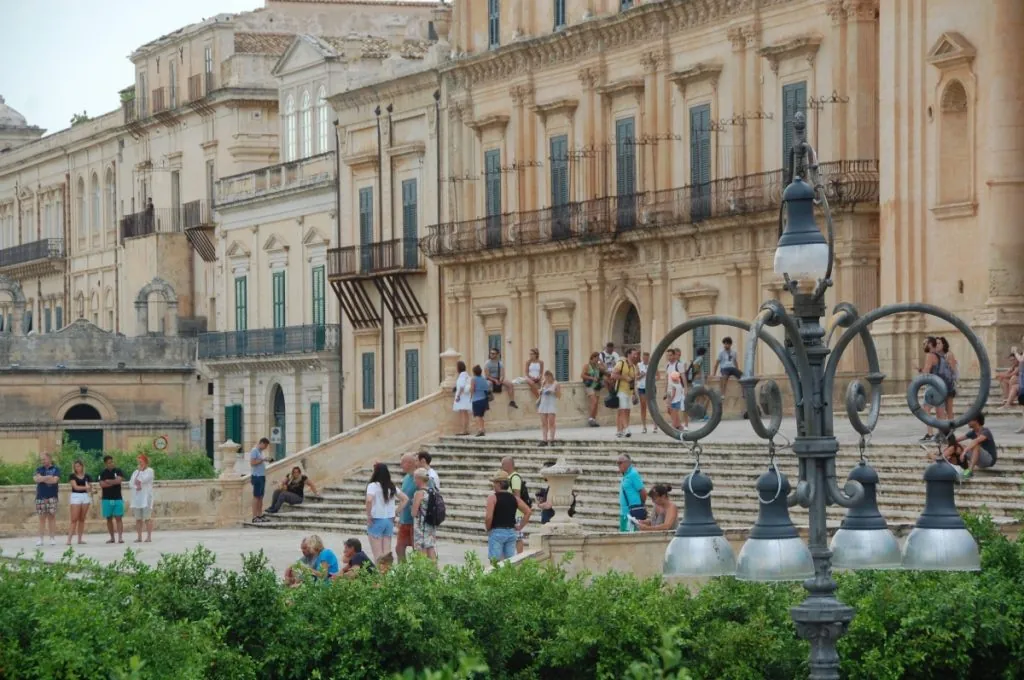
What is special is that large parts of the city were built during the same period. After the catastrophic earthquake of 1693, they chose not to rebuild old Noto on the same site. Instead, a completely new city was built about ten miles away.
Architects and city planners were thus given the opportunity to create something new, with wider streets, squares, churches and palaces in the Baroque style that was fashionable at the time. The warm golden-colored limestone contributes to the city's special character.
When we walked around here for the first time, we were almost overwhelmed by all the grand buildings. Wow, what cities there are in Sicily!
Noto is a World Heritage Site
Since 2002, Noto has been a UNESCO World Heritage Site. Late Baroque Towns of the Val di Noto along with seven other cities in southeastern Sicily: Caltagirone, Militello Val di Catania, Catania, Modica, Palazzolo Acreide, Ragusa and Scicli.
What the cities have in common is the extensive reconstruction after the earthquake of 1693. The result was an extraordinary concentration of late Baroque architecture and at the same time new ideas about urban planning.

Noto differs from many of the other cities in that the new city was built on a completely new site, which helped create an unusually cohesive cityscape.

1. Enter Noto through Porta Reale
A nice way to start the discovery of Noto is at Royal Gate, the monumental city gate in the eastern part of the center. One might think that the gate is part of the original Baroque city, but it is much younger. Porta Reale was built in the 19th century for King Ferdinand II's visit to Noto.

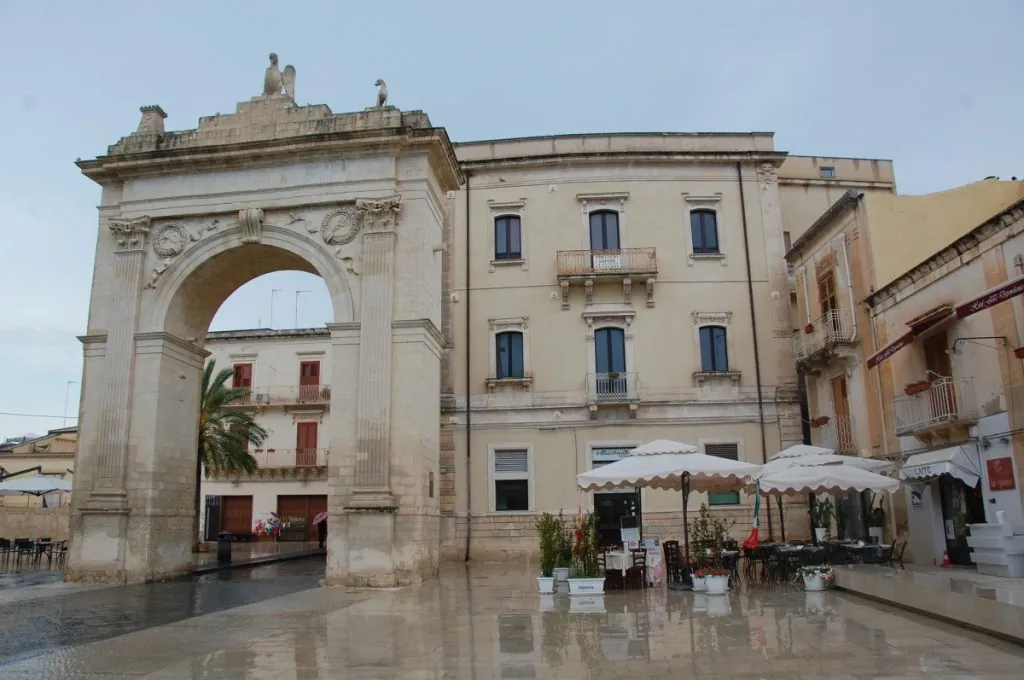
Once you've passed the gate, you'll enter Corso Vittorio Emanuele, and from there you can just start walking.
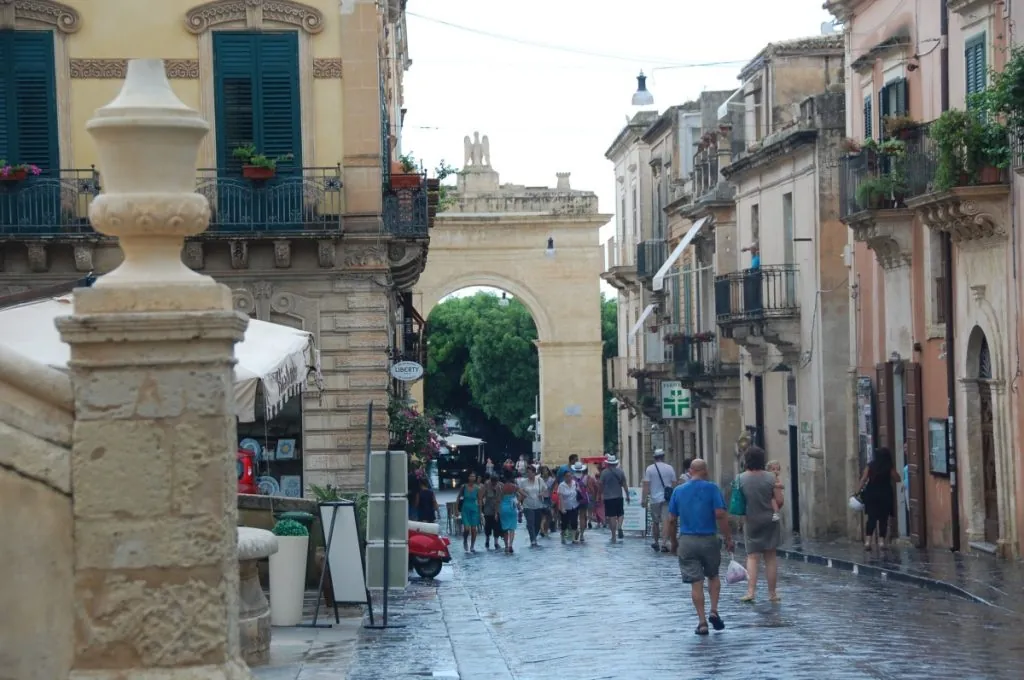
2. Stroll along Corso Vittorio Emanuele
Corso Vittorio Emanuele is the main thoroughfare through the historic city center and passes several of Noto's main attractions. It's also here that you really begin to understand what's special about the city. Churches, palaces and squares form a well-thought-out whole, and along the way one impressive facade after another appears.
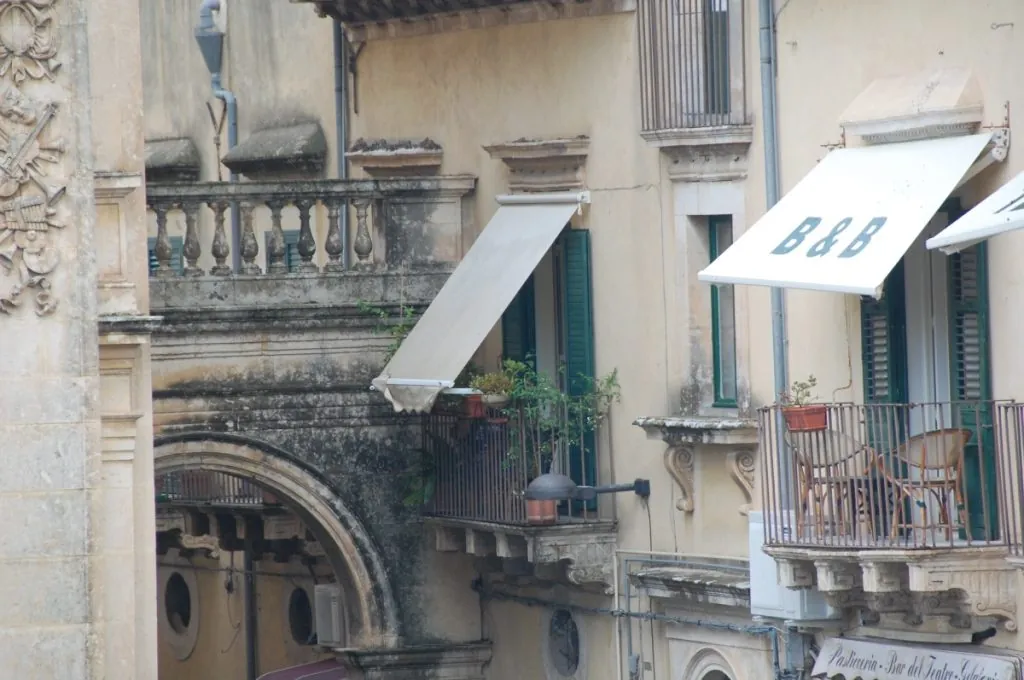
Noto is also a convenient city to explore on foot. You don't need to hunt around between the sights with a map and a timetable. Much of the experience lies in walking, looking at details and turning off into smaller streets when something looks interesting. And look up! The balconies are almost sights in themselves.

3. See Cattedrale di San Nicolò
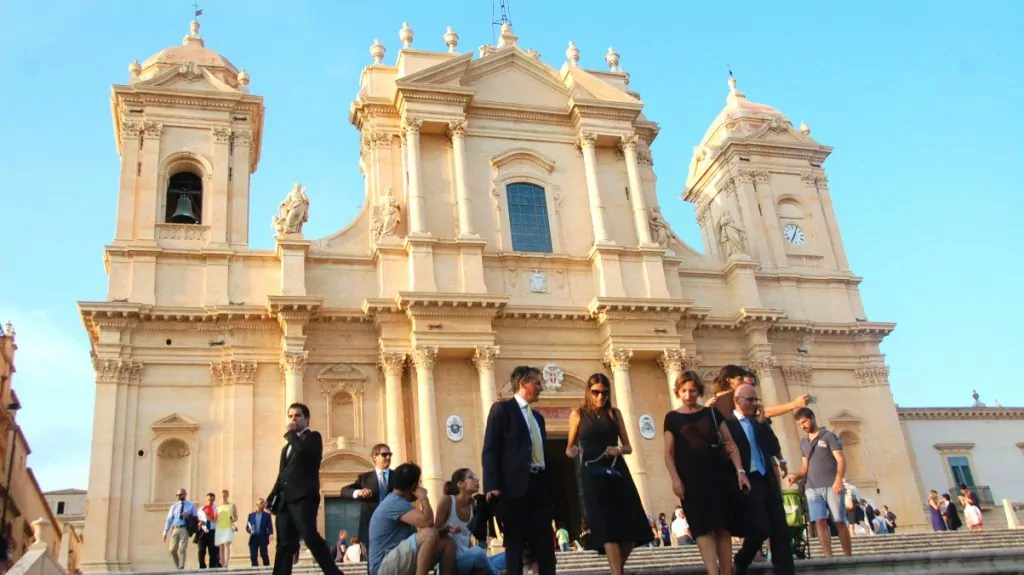
In the middle of Noto lies the large Cathedral of San Nicolò, also called Cattedrale di Noto. The church sits at the top of a monumental staircase and is one of the city's most famous landmarks.
Construction of the cathedral began shortly after the 1693 earthquake and continued throughout the 18th century. It was part of the new Baroque city that emerged after the disaster. But the building's history took a dramatic new turn much later.
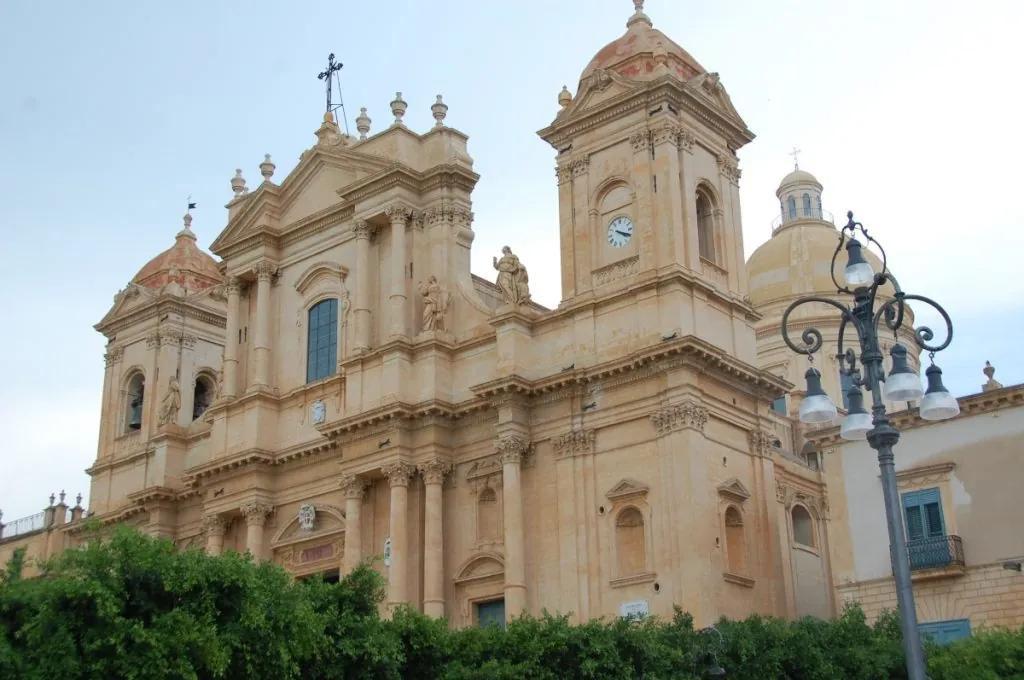
After damage and weakening, including in connection with an earthquake in 1990, large parts of the cathedral collapsed in 1996. The dome collapsed along with parts of the roof and nave. Extensive reconstruction work followed, and the cathedral was re-consecrated in 2007.
In a way, it thus summarizes the entire history of Noto: destruction, reconstruction and a stubborn will to preserve the city.
4. See Palazzo Ducezio
Just opposite the cathedral is Palazzo Ducezio, which today serves as the town hall. The palace began construction in the 18th century and the elegant, curved facade with its columns helps to make Piazza Municipio one of Noto's most beautiful city spaces.
It's also a good place to stop and see how Baroque architects worked on the entire cityscape. The cathedral, the stairs, the palace and the square are not isolated sights but parts of a larger composition. It's much of this that makes Noto so impressive.

5. Admire the balconies of Palazzo Nicolaci
If there's anywhere you should really look up, it's at Via Nicolaci. Here is Palazzo Nicolaci di Villadorata, a baroque palace known for its spectacular balconies. Under the balconies are fanciful stone figures including animals, people and grotesque faces.
When we visited Noto, we were captivated by all the fantastic balconies around the city. They are filled with ornaments and details that make you stand for a long time and wonder what the stonemasons were really up to.
Via Nicolaci is also the center of one of Noto's most famous traditions, Infiorata of Noto. During the flower festival in spring, the street is covered in large works of art created from flower petals and other natural materials.
It's a completely different Noto than the one we saw during our summer visit, but the festival has become one of the city's major annual events.

6. Visit the Church of San Domenico
Church of San Domenico is one of Noto's most important Baroque churches and was designed by Rosario Gagliardi, one of the most important architects behind the reconstruction of the cities in southeastern Sicily.
The church is located in Piazza XVI Maggio and has the typical curved Baroque facade that you begin to recognize after a while in Noto.
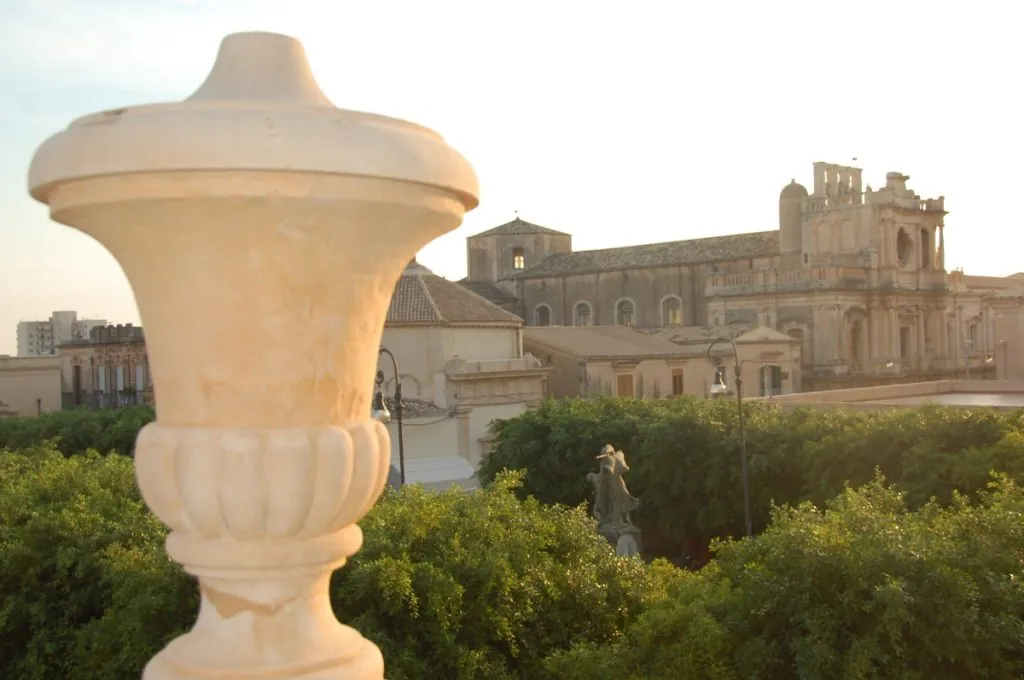
Opposite the church is the green Villa d'Ercole, which makes the square a nice break from all the golden stone. After a few hours in Noto there is a certain risk that you start to become baroque blind. Then a tree can be nice.
7. Settle down for an aperitivo
After our walk through Noto we started to feel both thirsty and hungry. The solution was a classic Italian aperitivo.
We sat down at an outdoor terrace and ordered a beer each. Along with the drink came a large plate of various small snacks. When we traveled here in 2015, the whole feast cost five euros per person. Of course, you shouldn't go around demanding that price from the restaurateurs in Noto in 2026. But the idea itself still holds up.
Aperitivo is not just about a pre-dinner drink, but also about sitting down, having a bite to eat and watching the city go by. After an afternoon among baroque churches and palaces, it's a great way to change the pace.

8. Experience Noto when the sun is low
If you have the opportunity to stop later in the day, it's worth it. The light limestone used in so many of Noto's buildings takes on a warmer tone when the sun is low. Facades, ornaments and balconies appear differently than in the middle of the day. Plus, it's much more pleasant to walk around when the worst of the summer heat has subsided.
We visited Noto during a trip where Sicily surprised us time and again with its historic cities. Noto, Syracuse and Taormina are completely different, but all three gave us the same feeling: around the next corner, another building is waiting to be photographed.
Why does Noto look the way it does?
To understand Noto, you need to go back to the earthquake of 1693. The disaster affected large parts of southeastern Sicily and destroyed or damaged a large number of towns. Old Noto was so badly affected that it was decided to abandon the site and build a new town on other land.
This meant that the architects and urban planners of the time were given a rare opportunity. Instead of trying to fit new buildings into an old medieval street grid, they could plan a new city according to the ideals of the time.
The result was wider and straighter streets, monumental perspectives and a clear connection between churches, palaces and public spaces.
This is also why Noto can feel so unusually unified. Much of the center is the result of the same enormous reconstruction project. UNESCO describes the reconstruction of the Val di Noto as an exceptional collective effort and an expression of the last great flowering of the late Baroque in Europe.
Noto Antica – the old town
Old Noto did not completely disappear when the inhabitants moved. On the site of Noto Antica, about ten miles from today's city, there are still ruins and traces of the city that was destroyed in 1693. Here you can see remains of walls, buildings and other remains from the city's long history.
It makes an interesting contrast to today's Noto. On one side are the ruins after the disaster. On the other side is the magnificent baroque city that was created in response to it. For those who are particularly interested in history, it can therefore be exciting to visit both.
Noto with a campervan
We traveled around Sicily by camper and stayed overnight at Noto Parking outside the city.
When we were here in 2015, the campsite was too far away for us to walk into the centre, but the staff drove us there and back at no extra cost. Communication was sometimes a challenge as our Italian was non-existent and our English wasn't very good, but the staff did their best to help us.
It was another one of those nice meetings that we remember from the camper trip in Sicily.
Noto Parking is still there in 2026 and current information includes places for motorhomes, electricity, water and the possibility of emptying. However, our experiences with shuttle service and other details from 2015 should not be seen as information about what is offered today. Check current prices and service directly before your visit.

Is Noto worth a visit?
Yes, definitely. Noto is not a city where you need to tick off a long list of attractions to feel satisfied. It's the whole that is the experience: the warm stone, the churches, the palaces, the sumptuous balconies and the streets that were planned as parts of the same great Baroque city.
We came here for a walk and were impressed by how much history and architecture can be found in a relatively small area. Then we settled down with a beer each and a large plate of snacks. Baroque and aperitivo. It's actually a pretty good combination.
More to see and do near Noto
There are several exciting places nearby if you want to use Noto as a starting point to discover southeastern Sicily.
Noto Antica is the obvious choice for anyone who wants to understand the city's history better. Vendicari Natural Reserve on the coast attracts with nature, birdlife and beaches, while Marzamemi is an old fishing village that has developed into a popular excursion destination with restaurants and beautiful surroundings.
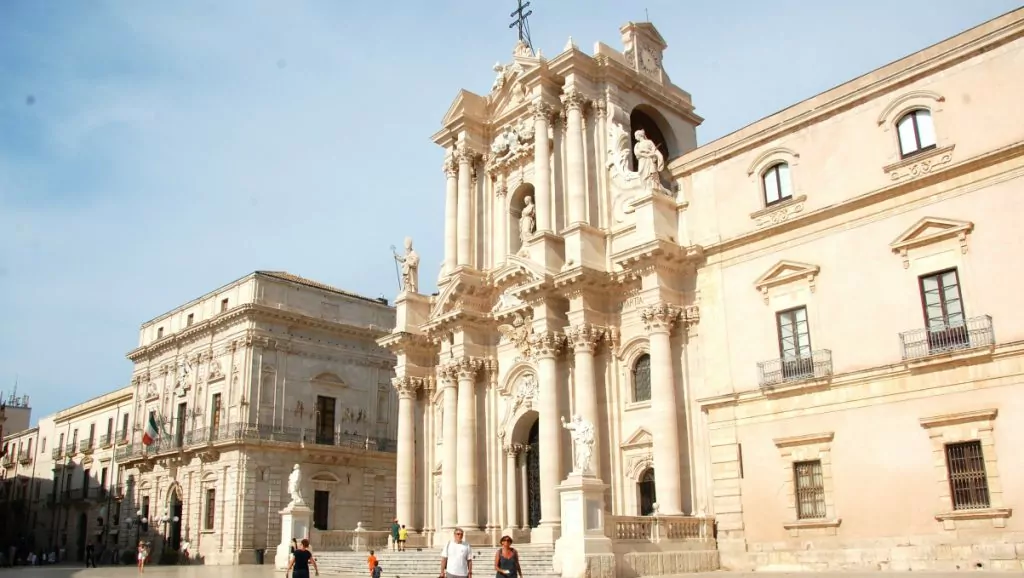
A little further away is Syracuse, where the historic island of Ortigia and the remains of the ancient Greek city await. In other words, it is easy to combine baroque, ancient history, nature and swimming during a few days in this part of Sicily.




 English (UK)
 Svenska
Steel city anna says:
Amazingly beautiful! Love the balcony.
05 August 2015 - 23:03
BP says:
Noto - sounds like "nota" as well. Love it:-) Reminiscent of Valetta in Malta actually (second and third picture). Nice that you timed a wedding too. Remember that we managed to do it a number of times in Tel Aviv:)
Oh that big beer with all the Italian "tapas" I just say MUMS to:-)
05 August 2015 - 23:13
admin says:
Steen city Anna, each balcony has different figures. Very beautiful and special!
BP, can perhaps agree that it reminds of Valetta in some places, although the sea is closer in Valetta. Like this idea mef that you order drinks + snacks for a cheap money!
05 August 2015 - 23:45
Rantamor på näthinnan says:
You keep finding your gems, so beautiful.
And nice pitches with a generous staff and free WiFi, that's not bad.
But aren't you beginning to long for home???
We spent 22 days travelling to beautiful Northern Norway with Kottebobil, but then we became homesick,
We are probably amateurs, perhaps.
Keep on travelling, it's so nice to follow you.
Tjingelingen from Rantamor and Rantafar.
06 August 2015 - 2:35
Inga M says:
Fantastic details in the buildings! And so much effort has been put into the balconies!
06 August 2015 - 5:40
Kjell says:
But so cool. How nice! Have been to Sicily a lot of years ago. Now I just want to go back when I see your pictures ðŸ™'
06 August 2015 - 7:01
admin says:
Rantamor, we feel at home in the motorhome! So no, we are not longing for home 😉 Lovely trip you made in Northern Norway, I have followed! 🙂
No M, the balconies were amazing, and everyone was different!
Kjell, nice that you have also been here! The cities are beautiful and interesting and we have been very well received at the campsites! Less good in Sicily: all the rubbish and the bad roads...
06 August 2015 - 8:09
Ama de casa says:
What a service with a free ride into town! It's perfect 🙂
Looks nice - but hilly in places. It tends to be hard enough even when it's NOT so hot 🙂.
06 August 2015 - 10:16
admin says:
Ama de casa, it's enough to make you sweat with your feet and slow walking... 😉.
06 August 2015 - 10:44
Steve says:
A beer with snacks in those neighbourhoods looks tempting. More plus points in Sicily too. Fun!
06 August 2015 - 11:16
JoY says:
You find good places and it seems like you got something good to eat too, even if it's just snacks hihi.
You asked what kind of Italian food we liked. Because we have been more in the north and we like their home cooking. I was not a lover of minestrone soup until I had one last year in the Dolomites, where my old mum cooked it, yum. Chicken with lemon, Osso Buco that is veal, Salsiccia you have already eaten, Saltimbocca thin slices of veal with sage, Jakob likes Gnocchi which I am not so fond of, Polenta we like to eat with the meal instead of chips. It may be that this is food that is mostly served in the northern parts of Italy. The south certainly has its dishes. We look for the small restaurants that are not on the tourist streets. When we drive on the roads, we stop at a large gravel field where trucks are parked and there is a small restaurant next to it, where there is usually good food. Maybe not the most cosy places but the food and the people are good and nice.
Hugs Yvonné
06 August 2015 - 12:04
admin says:
Steve, yes now Sicily gets a few more plus points! 🙂
Yvonne, oh thank you for your reply! Sounds like great dishes! It may well be that we have ended up in somewhat touristy places (we always eat in the car if it is nearby, only in a restaurant when we are on an excursion far from the car...). Then there is probably a difference between south and north as well. The site owner's son (last place) told us that Calabria is the birthplace of pizza and pasta and that they are very proud of their pizza and pasta there. But nice to hear! If we see some of the dishes you talked about when we eat out, we'll probably have to try them! 🙂
06 August 2015 - 12:35
Anna, New York – My Bite of the Big Apple says:
How beautiful and cosy it looks! I was in Sicily in the early nineties (in August) and remember it as very hot and very nice!
06 August 2015 - 15:30
Matts Torebring says:
I like these nice posts, without an overload of pictures, (so you get tired), I like Peter's menu and the cityscape. You are really cosy. Have a good time
06 August 2015 - 19:25
Rantamor på näthinnan says:
But come on....we can't wait to get home between our travels....
06 August 2015 - 21:40
admin says:
Anna, New York, it's very hot! Some places are very nice, other places are not so nice...
Matts, thank you, it's nice to get feedback on what you do. It helps you to continue in the right direction!
Rantamor, 🙂
07 August 2015 - 16:07