


Writer: Helena Bergström
Updated: August 2026 | Kalamaja is one of Tallinn's most exciting neighborhoods, with colorful wooden houses, old industrial environments and a creative atmosphere. It is also home to popular areas and attractions such as Telliskivi, Balti Jaam and Noblessner. We have visited this part of Tallinn several times – and seen how the area has changed over the years.
 Tweet
 Share
 Share
 Pin
 Share
 Share
Table of contents
Kalamaja in Tallinn
It's easy to get caught up in Tallinn's beautiful Old Town, but it's definitely worth exploring the neighborhoods on the other side of the railway. Here, a completely different side of the Estonian capital awaits, with wooden houses, old factories, street art, markets, designer shops, restaurants and modern seaside environments.
Kalamaja is located just outside the Old Town and is easily accessible on foot. The area has become one of Tallinn's most popular neighborhoods, both among locals and visitors.
The first time we discovered Kalamaja we did it with a guide. Since then we have returned several times and visited Balti Jaam, Telliskivi and Noblessner, among others.
READ MORE: Things to do in Tallinn – attractions and experiences

From fishermen and factory workers to popular neighborhood
The name Kalamaja roughly means ”fish house”, and many fishermen and fishmongers lived in the area from the 14th century onwards. The big change came in the 19th century, especially when the railway between Tallinn and St. Petersburg opened in 1870. Factories were established and housing needed to be built for all the workers who moved here.
It's a history that's still clearly visible in the cityscape. There are both old industrial buildings and lots of wooden houses that were once built as housing for workers.

Today, many of the factories are filled with completely different businesses and Kalamaja has become known for restaurants, cafés, culture, design and creative companies.
Stroll among colorful wooden houses in Kalamaja
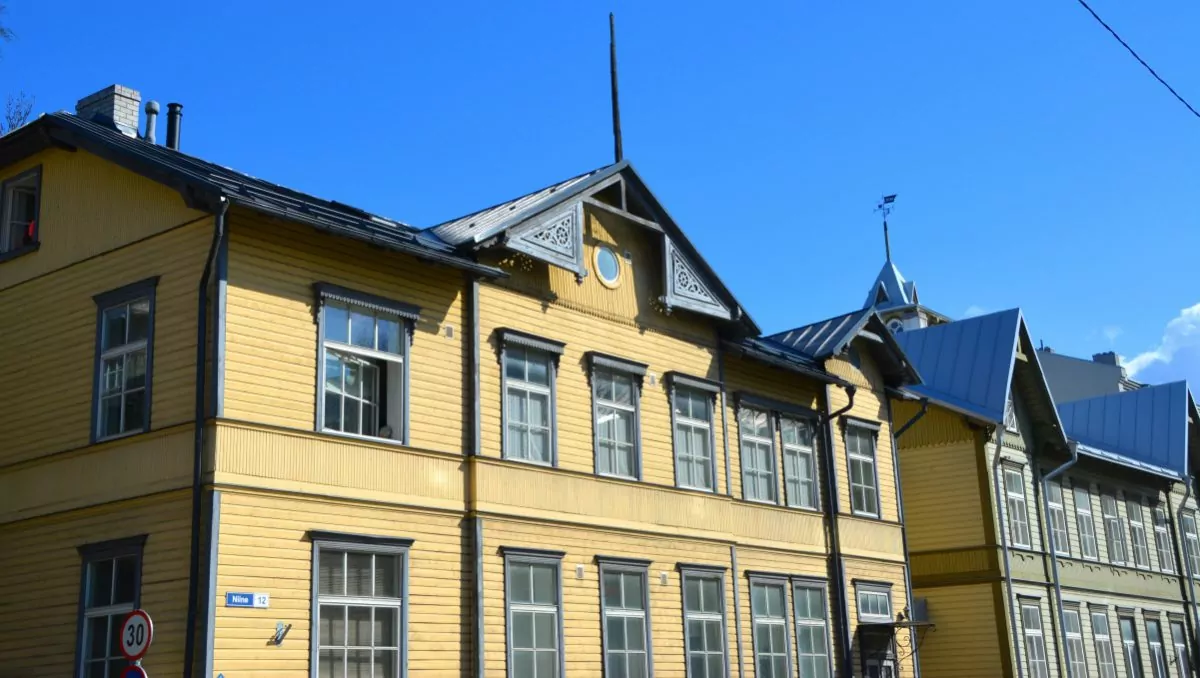
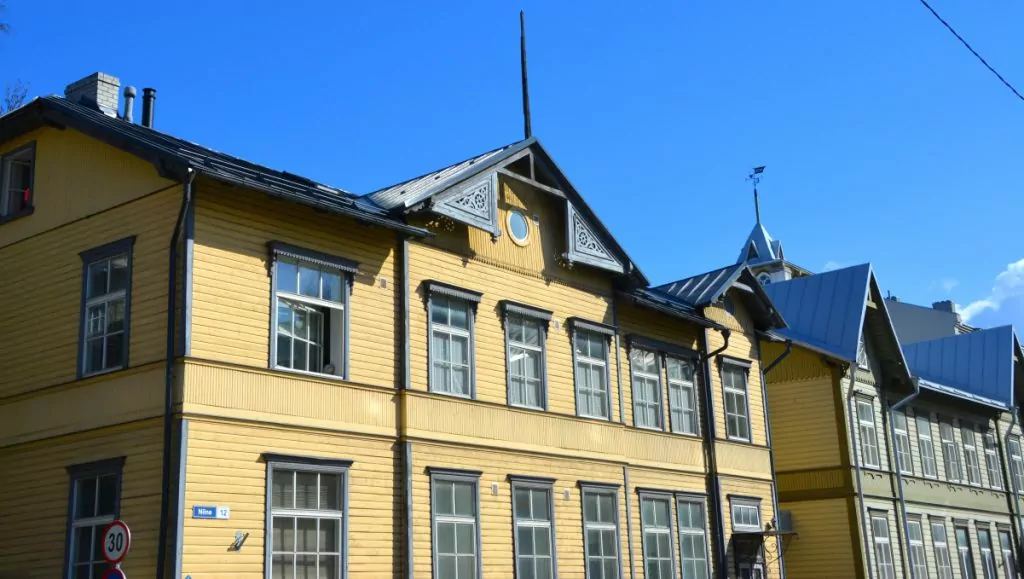
One of the most charming things about Kalamaja is all the wooden houses. Many were built in the late 19th and early 20th centuries, and along the quieter streets you will come across houses in all sorts of colors.

A special type of house is the so-called Tallinn houses, which were built mainly in the 1920s and 1930s. They are recognizable by their wooden facades combined with a central stone staircase. Around 500 such houses still exist in Tallinn.
When we first came here with a guide, it was the wooden house neighborhoods that we spent the most time in. Our guide lived in Kalamaja himself and could tell us about life in the area and how it has changed.
She also spoke perfect Swedish. The reason was a bit unexpected – as a child she had become fascinated with We at Saltkråkan and Ronja the Robber's Daughter and decided to learn the language!

Balti Jaam – market at the railway station
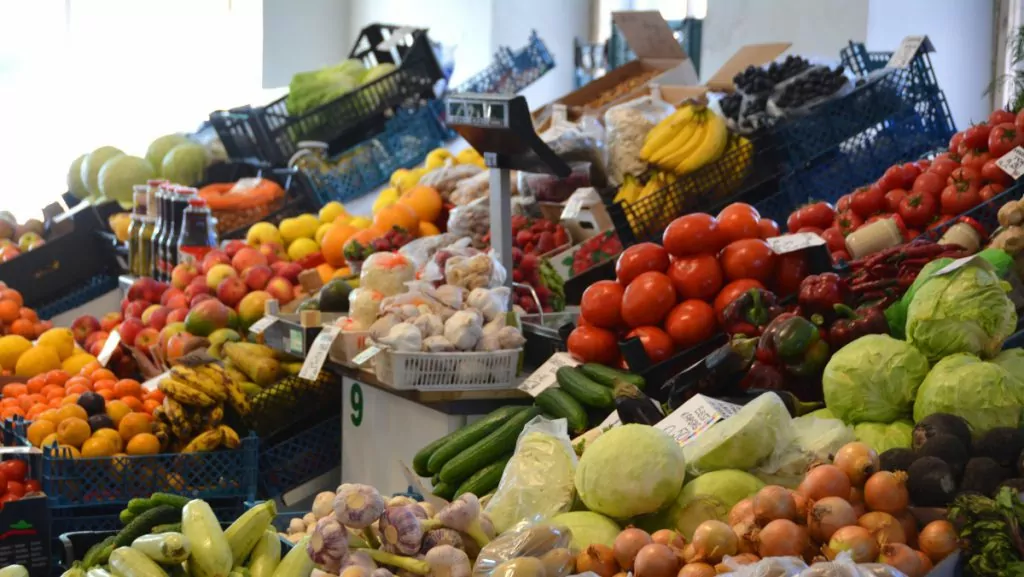
Right next to Tallinn Central Station is Balti Jaama Turg, a market that is well worth a visit. Here, fresh produce and food coexist with street food, clothes, antiques and miscellaneous gadgets.
The first time we were here, the market had a much rougher feel. We remember older vendors selling everything from old toys to military paraphernalia, and an environment that felt far removed from the more touristy neighborhoods of the Old Town.

Since then, the area has changed considerably and the market is now much more modern, while still retaining some of the old market feel. Balti Jaam and the area around the railway have historically had a major impact on the development of Kalamaja and the surrounding industrial districts.
Telliskivi Creative City – old industry meets creativity
Right next to Balti Jaam is Telliskivi Creative City, or Telliskivi Loomelinnak. Here, an old industrial area has been transformed into a creative center filled with restaurants, cafes, shops, art and various events.
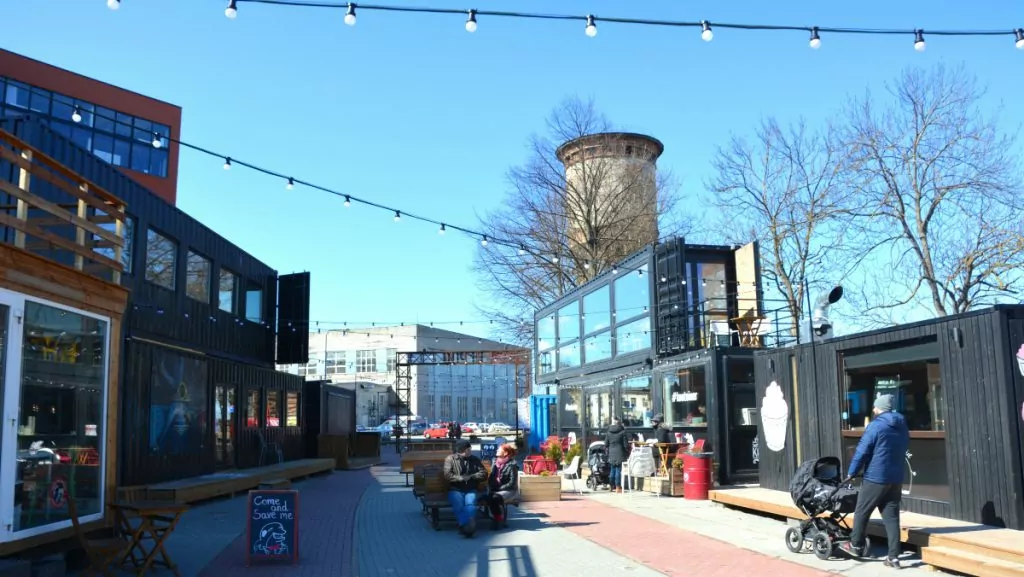
The development of the area took off in the 2000s and the first permanent tenant moved in in 2009. Since then, more businesses have been added and today Telliskivi is one of Tallinn's most well-known creative meeting places.
We especially like the contrast between the raw industrial buildings and all the new things that have moved in. Here you can stroll around among street art and design shops, sit down at a café or eat at one of the restaurants.

Photographic Tallinn
In Telliskivi there is also Photographic Tallinn, sister museum to Fotografiska in Stockholm. The museum opened in 2019 and shows various photography exhibitions in an old industrial building.
Even if you don't go into the museum, Telliskivi is a fun area to walk around. There are plenty of large murals and other street art among the industrial buildings.

Noblessner – from submarine shipyard to modern port area
Continuing through Kalamaja towards the sea, you will eventually come to Noblesse oblige, an area that has changed enormously in recent years.

A large submarine factory was started here in 1912, founded by businessmen Emanuel Nobel and Arthur Lessner. Emanuel Nobel was the nephew of Alfred Nobel, and it is from the surnames of both founders that the area was named Noblessner. Before the First World War, twelve submarines were built here for the Russian Empire.
The shipyard business continued in various forms throughout much of the 20th century. Today, the old industrial environments have been given a whole new lease of life.

Restaurants, art and sea views in Noblessner
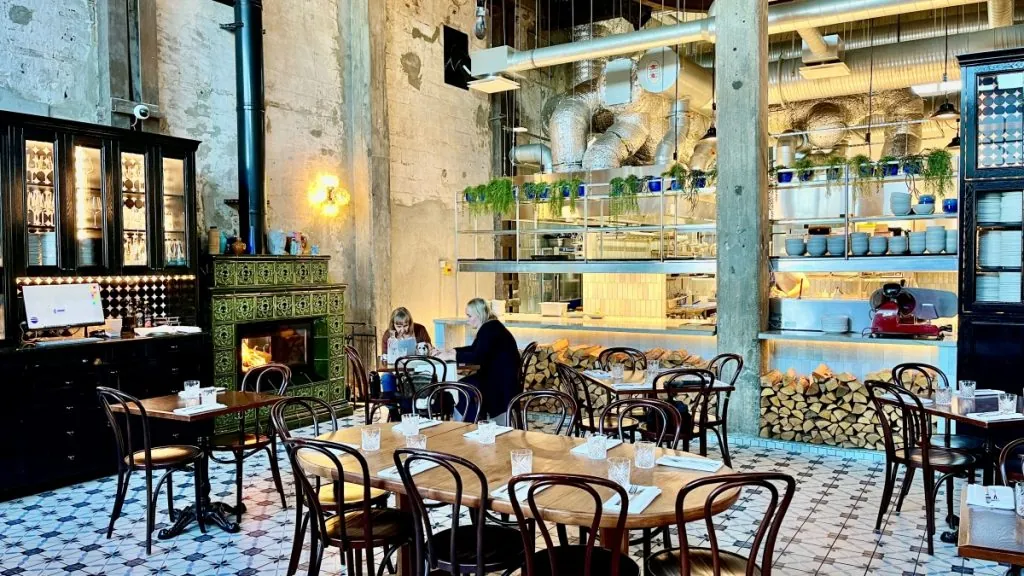
Noblessner is today a modern area with a wonderful mix of old and new. Historic factory premises stand side by side with modern architecture, and along the water there is a marina and promenade.
Here you will find restaurants, cafés, shops, art and various experiences. Among other things, there is PROTO Invention Factory and Kai Art Center in the area. Also nearby is the popular maritime museum Lennusadam, Seaplane Harbour.
We think Noblessner is especially nice for a walk along the water. It's hard to imagine that this was once an industrial area where ordinary Tallinners had no business.

Kalamaja then and now
Perhaps it is the change that makes Kalamaja and the surrounding neighborhoods particularly interesting to us. When we first came here, we encountered wooden houses, a rather rough market and old industrial environments. On later visits, we have seen how new restaurants, cultural activities and modern housing have moved in.
Some of the old part still remains, but the area has also become much more popular and polished. This is for better or worse – but above all, the mix of old and new makes the area very different from the Old Town.

A walk through Kalamaja, Telliskivi and Noblessner
If you have a few hours to spare in Tallinn, it's easy to combine the different areas into a walk. Start at Balti Jaam and continue to Telliskivi before continuing through the wooden house district of Kalamaja towards Noblessner and the sea.
It is a nice contrast to the medieval surroundings of the Old Town and shows a completely different side of Tallinn. Those who wish can also continue to Lennusadam and take an even longer excursion.
Is Kalamaja worth a visit?
Yes, we absolutely think so. Above all, we recommend Kalamaja to those of you who have already seen the classic sights of Tallinn and want to discover a little more of the city.
Here, it's not a single attraction that's the point. Rather, it's the mix that makes the area interesting – the wooden houses, the industrial history, the market, the food, the art and all the new businesses that have sprung up in old factory premises.
And since Kalamaja is so close to the Old Town, you don't need to set aside a whole day. A few hours is enough to get a completely different picture of Tallinn.
In Tallinn, it is of course most common to take a guided tour inside the Old Town, but we actually went with a guide to a completely different neighbourhood. We start by showing pictures from the Old Town. Then you can also go to the Kalamaja neighbourhood.
More to see and experience in Tallinn
There is of course much more to see and do when you visit Tallinn – and around Estonia. Here you will find tips and reports.

Frequently Asked Questions about Kalamaja in Tallinn
Where is Kalamaja located?
Kalamaja is located just north of Tallinn's Old Town. You can easily walk here from the city center and the area is also accessible by public transport.
What is there to see and do in Kalamaja?
Kalamaja is known for its colorful wooden houses and old industrial environments. In and around the area are the Balti Jaam market, Telliskivi Creative City, Fotografiska, Noblessner and the Lennusadam maritime museum.
Is Telliskivi part of Kalamaja?
Telliskivi is located next to Kalamaja, on the border with Pelgulinn. The areas are so close to each other that they are easy to combine during the same walk.
What is Noblessner?
Noblessner is an old shipyard and industrial area on the Bay of Tallinn that has been developed into a modern district with restaurants, art, culture, housing and a marina.
How much time do you need in Kalamaja?
Allow a couple of hours if you mainly want to walk through the area and visit Balti Jaam, Telliskivi and the wooden house quarter. If you also want to continue to Noblessner, have lunch or visit a museum, you can easily spend half a day or more here.
You might also like:
 Hospital Kuks in the Czech Republic - an unusual attraction
 Kinnekulle on the shores of Lake Vänern - a springtime excursion
 Visiting Kastelholm Castle - Åland's only medieval castle
 Visiting Nämforsen's rock carvings - a fascinating site
 Shakh-i-Zinda in Samarkand - The Legend of the Living King
 Visiting the Yerebatan Cisterns in Istanbul - the Sunken Palace


 English (UK)
 Svenska
Lena - gott för själen says:
Hahaha, I think it was cool at the old pharmacy in Malmö from the late 1800s. It's a dizzying thought to have the same business for 600 years!
Hug Lena
16 April 2017 - 6:47
Helena says:
Yes, it is dizzying! Incredibly fascinating!
16 April 2017 - 9:17
Lennart says:
A tour is a good start in a new city.
This gives you a good overview and allows you to return to different places.
16 April 2017 - 6:52
Helena says:
Agree! Always good to get an overview, get things explained and ask questions 🙂 .
16 April 2017 - 9:17
Marina says:
Thanks for the trip! And yes, it is tempting to go there in the future. Definitely agree that the "boot tube" was disgusting!
16 April 2017 - 7:32
Helena says:
Recommended for a weekend or similar!
16 April 2017 - 9:18
Britt-Marie Lundgren says:
Really agree that a good guide can make you see a place with completely different eyes. Seems like the weather is starting to be on your side and everything is even more beautiful with a blue sky as a background. Nice photos!
16 April 2017 - 7:37
Helena says:
Yesterday we had really nice weather. Cold in the air indeed, but so nice in the sun that we could sit for a few hours on an outdoor terrace at lunchtime 🙂
16 April 2017 - 9:19
Matts Torebring says:
A guided tour gives it all, wandering around on your own doesn't give you the same Enjoy!
16 April 2017 - 8:20
Helena says:
Really agree! Wishing you a nice Easter weekend!
16 April 2017 - 9:19
Ninnie says:
Of course it is good to have guided tours, you probably miss a lot when travelling on your own. In larger cities there are usually "hop-on-hop-off" buses, great to go around with and then choose what you want to see more of.
Tallinn seems nice! Have never been there, but have heard others who also liked that city very much. Happy Easter!
16 April 2017 - 8:25
Helena says:
Guiding adds another dimension, and hop on hop off buses can be good too. Wishing you a nice weekend!
16 April 2017 - 9:20
Ama de casa says:
Haha! That was also a reason - as good as any! - to want to learn a language 🙂
How nice it is there!
But 600 years? And I thought that today's 8th anniversary for me was a long time? Haha! Talk about ANOR! 😀
Have a nice Easter day!
16 April 2017 - 8:30
Helena says:
Yes, you can really talk about ancestry. A dizzying thought with a shop that has been around for 600 years!!!
16 April 2017 - 9:21
Geddfish says:
I love guided tours, but they have to be in Swedish. So you were lucky!
I like to hear the story behind everything and have it explained.
You offer nice pictures, which are tempting.
Easter Sunday hug this Easter Day ?
16 April 2017 - 9:01
Helena says:
We think that guided tours in English are good as well, but it was of course nice to be guided in Swedish 🙂 It may not be so easy in all countries, but here in Tallinn it is fine.
16 April 2017 - 9:22
Ditte says:
Tallinn is a nice city and perfect with a guided tour to know and see more. And not going in a group is a clear advantage but being able to stop and look extra where you want.
We have had the advantage of having family here in the city and over the years there have been many visits to Tallinn, but now it is a few years since I was there. But this summer there will definitely be a trip again.
16 April 2017 - 11:20
Helena says:
Well, do you have relatives in Tallinn? Yes, when you know someone there, you always get an insight in a different way 🙂.
17 April 2017 - 6:14
Anette says:
I recognise some things even though it was almost 25 years since I was there,
If I remember correctly, there had been copper thieves on the move, and copper gutters and downpipes were stolen.
They seem to have been replaced long ago.
16 April 2017 - 12:30
Helena says:
I was also here 20-25 years ago. The city is similar in many ways, but much has changed enormously. For example, the range of restaurants and the prices 😉 Copper thieves ... oops!
17 April 2017 - 6:16
Steve says:
Thankfully, not much of today's charming Tallinn is reminiscent of the former Soviet Union.
16 April 2017 - 13:12
Helena says:
No, it's not the Soviet Union you're reminded of when hanging out in the Old Town, rather the Middle Ages 😉 And modern times of course 😉.
17 April 2017 - 6:17
BP says:
Thank you for letting me join the guided tour in glorious sunshine. Wonderful pictures. And one thing I know - I have been to Tallinn twice, but god how nicely they have "restored" the city, especially the old tree houses.
Definitely worth a return visit after your post.
16 April 2017 - 13:16
Helena says:
Tallinn is a nice city! Not so big, but perfect for a weekend 🙂 .
17 April 2017 - 6:20
Biggeros says:
Guided tour is a safe card so you do not miss anything in passing. Perfect that the guide spoke Swedish too:)
Impressed that the pharmacy is still open after 600 years....
Probably worth a visit to Tallinn. I have only been to Riga. We made a quick visit there when we lived in Moscow as we had to leave the country after 3 months in Russia:)
16 April 2017 - 14:52
Helena says:
Isn't the old pharmacy fascinating? If we compare Riga and Tallinn, we perceive Riga as larger and with more Art Nouveau and Tallinn as smaller and more medieval ...
17 April 2017 - 7:09
Kors och Tvärs says:
Very nice to see everything nice from Tallinn. We have talked about taking a long weekend there, but have not come to a conclusion. But now you present the city so well that we can go elsewhere instead?
No, they are even more keen to experience the city themselves.
Have a nice weekend
16 April 2017 - 20:32
Helena says:
Haha, it's still a bit different to experience the city on site yourself 😉.
17 April 2017 - 7:10
Henny says:
One of my visits to Tallinn was due to the fact that the school I worked in had a co-operation with a school in Tallinn. A group of teachers and students visited our exchange school a couple of times and students from there came to our Swedish school later.
We went to an orphanage and I was invited to the home of the girl who guided us in Swedish. Talk about different worlds. She told me that living in Estonia was so hard that she had chosen to give Swedish lessons, guide tourists and work on a cruise ship in the Caribbean during the winter. The alternative, she said, was to become a prostitute. We later learnt that she had fallen overboard during one of these trips and I wonder what happened to her two little girls. Her husband was Russian, which was not popular even in those days.
17 April 2017 - 10:09
Marias Memoarer says:
Oh, getting hungry for Tallinn again! 🙂
20 April 2017 - 9:45