

Writer: Helena Bergström
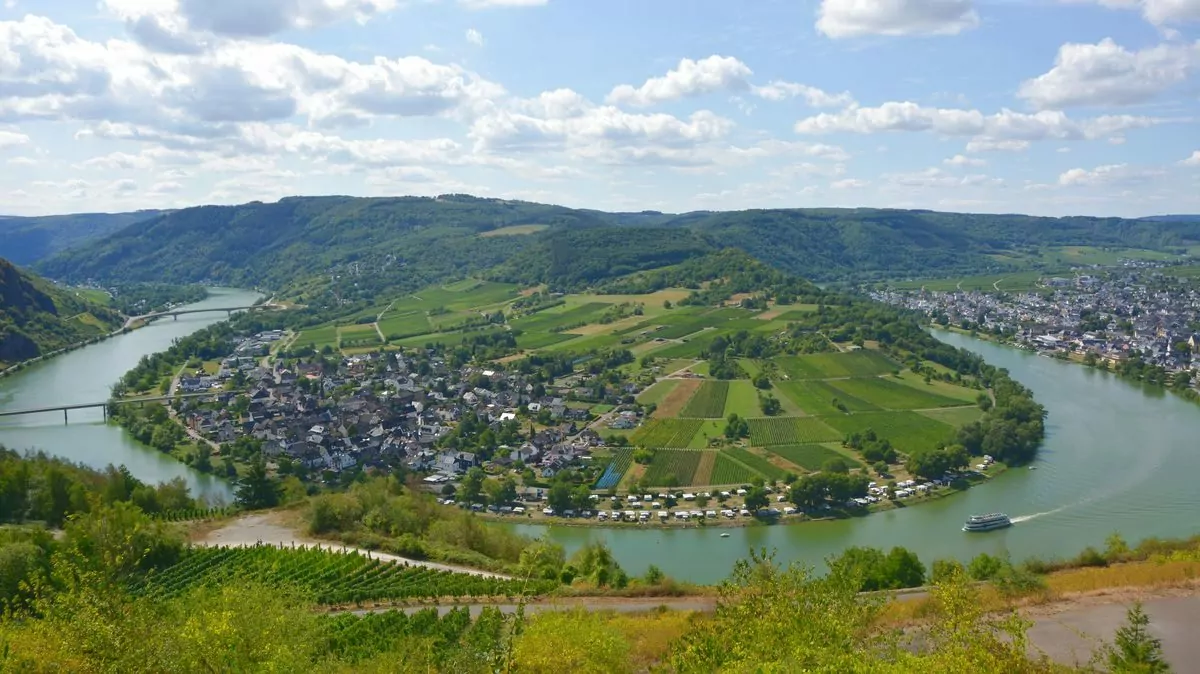
Updated: August 2026 | The Moselle Valley in Germany offers vineyards on dizzyingly steep slopes, fairytale castles and small towns with half-timbered houses. The Moselle River winds through it all, and along the banks there are cycle paths, vineyards, campsites and parking spaces. We have traveled here by motorhome and share our experiences and best tips for a trip through the Moselle Valley.
 Tweet
 Share
 Share
 Pin
 Share
 Share
Table of contents
The Moselle Valley is one of Germany's most beautiful wine regions
The Moselle flows from the Vosges Mountains in France, through Luxembourg and on through western Germany before flowing into the Rhine at Koblenz. The German part is perhaps best known for its dramatic wine landscape, where vines climb steep slopes on both sides of the river.
It's also a landscape that's perfect for a road trip. The road often follows the windings of the river, and around the next bend, a new wine village, a castle on a mountaintop, or another hillside full of vines awaits.
We have traveled through the Moselle Valley by motorhome several times and it is an area where you like to slow down. Here the journey is as much about the journey as the destination.

Riesling is the big star in the Mosel Valley
Wine and the Mosel have been linked for a very long time. The Romans already cultivated wine in the area around 2,000 years ago, and to this day, the vineyards still characterize both the landscape and life along the river.
Above all, the Mosel is known for Riesling. The grapes often grow on very steep slopes with slate-rich soil, where the exposure to the sun and the warmth from the slate help them ripen despite the relatively northern climate.
Mosel wine is sometimes associated with sweet white wines, but Riesling from here can range from crisp and fresh to semi-dry, fruity or downright sweet. In other words, it's well worth trying out.

And it's not particularly difficult. Vineyards, wineries and small producers are everywhere along the Moselle, and in many places you can stop for a tasting and buy a few bottles to take home.

We tried Mosel wine in Traben-Trarbach
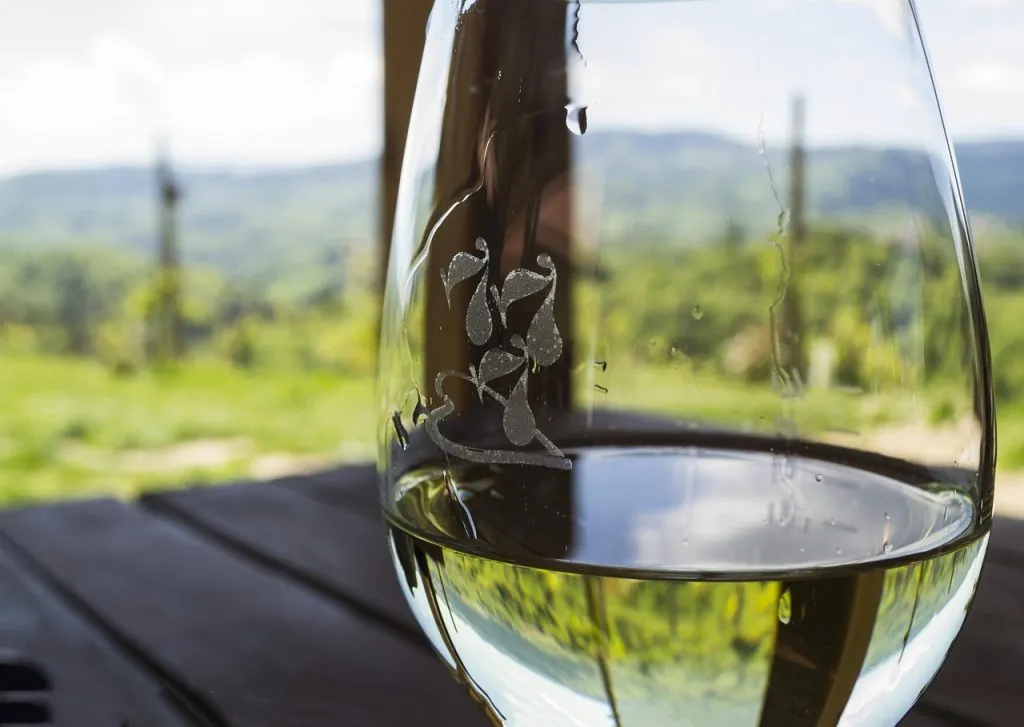
When we visited Traben-Trarbach, we went into a wine cellar in the middle of town. We had a long and pleasant chat with the owner and of course took the opportunity to try some different Moselle wines.

We settled on a semi-dry wine, not too sweet, but not completely dry either, and a number of bottles were taken back to the camper.

It's precisely these spontaneous stops that are part of the charm of the Moselle Valley. You don't have to book the whole trip. Drive along the river, stop in a town that looks nice and pop into a wine producer. And if you're travelling by motorhome, of course the wine tasting will have to wait until the car is parked for the day.

Wine festivals are a part of life along the Moselle
During late summer and autumn, numerous wine festivals are held along the Moselle. The small towns are filled with market stalls, music, food and of course local wine. For those who enjoy this type of folk festival, this can be a fantastic time to travel here.
If you instead want quieter villages and easier access to campsites and parking spaces, it may be wise to check the event calendar before choosing your travel dates.
READ MORE: Wine festivals in Germany - experience autumn wine festivals
Traben-Trarbach offers wine, Art Nouveau and underground cellars
One of the places we stayed at is Traben-Trarbach, located on both sides of the Moselle. This is an interesting wine town that is a little different from many of the small half-timbered villages along the river.

Around the turn of the century, Traben-Trarbach was one of Europe's most important centers for wine trade – according to the city's tourist organization, the second largest after Bordeaux. The wine trade created great wealth and many magnificent Art Nouveau buildings were built in the city.
But perhaps the most exciting thing is underground. To store the enormous quantities of wine traded here, extensive wine cellars were built under large parts of the city. Some vaults are more than 100 meters long and today guided tours are arranged through what is called Traben-Trarbach Underworld. We actually missed that when we were here. A reason to return!

Mont Royal offers history above Traben-Trarbach
Above Traben-Trarbach lies the hill of Mont Royal, where we drove to enjoy the view of the surroundings.
Here are also the remains of an enormous fortress that began construction in 1687 on the orders of the French Sun King Louis XIV. The architect was none other than the famous fortress builder Vauban, and the facility was designed for 12,000 soldiers and 3,000 horses.
However, the story was short-lived. The French destroyed the fortress itself in 1698 after the Peace of Rijswijk. Today, ruins, casemates and cellar vaults remain to be discovered.
Bernkastel-Kues is one of the Moselle Valley's most romantic towns
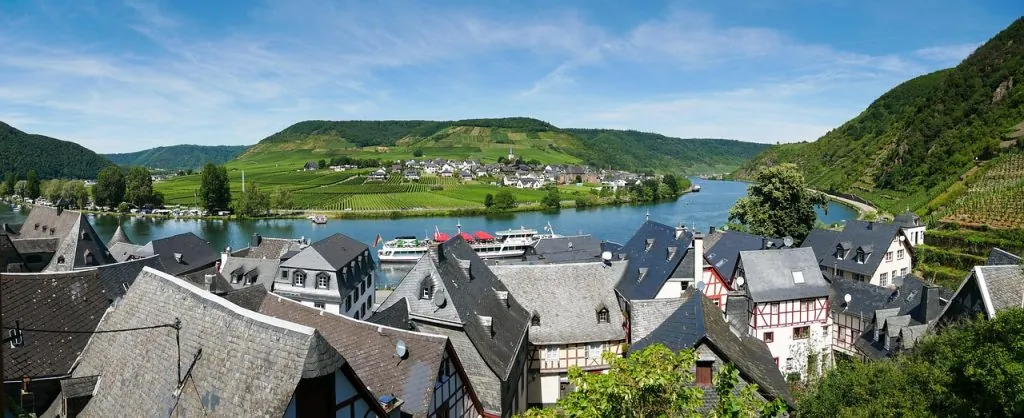
Another classic along the Moselle is Bernkastel-Kues, which is primarily known for its beautiful old town with half-timbered houses and narrow alleys.
The centerpiece is the historic square of Bernkastel, surrounded by centuries-old half-timbered houses. Here you will also find the famous Spitzhauschen, a narrow and almost improbably crooked half-timbered house from the 15th century. Above the town lies the ruin of Burg Landshut, overlooking the Moselle Valley.
We tried to get into Bernkastel-Kues ourselves with the camper van during our trip, but couldn't find any suitable parking at the time. In retrospect, we thought it might have been smarter to get here by boat or bike.

Zell is famous for the black cat
If you continue along the Moselle, you will come to the wine town of Zell. Here a black cat appears on signs, labels and souvenirs. It's about Zeller Schwarze Katz, the name of one of the town's famous wine regions and a brand that has become strongly associated with Zell. There is even a fountain with the black cat at the town hall.
Zell is also well-located for those who want to cycle along the Moselle. From here it is about 36 kilometers along the Moselradweg to Cochem, including Bremm and the dramatic vineyards along the way.

Bremm is located on Europe's steepest vineyard.
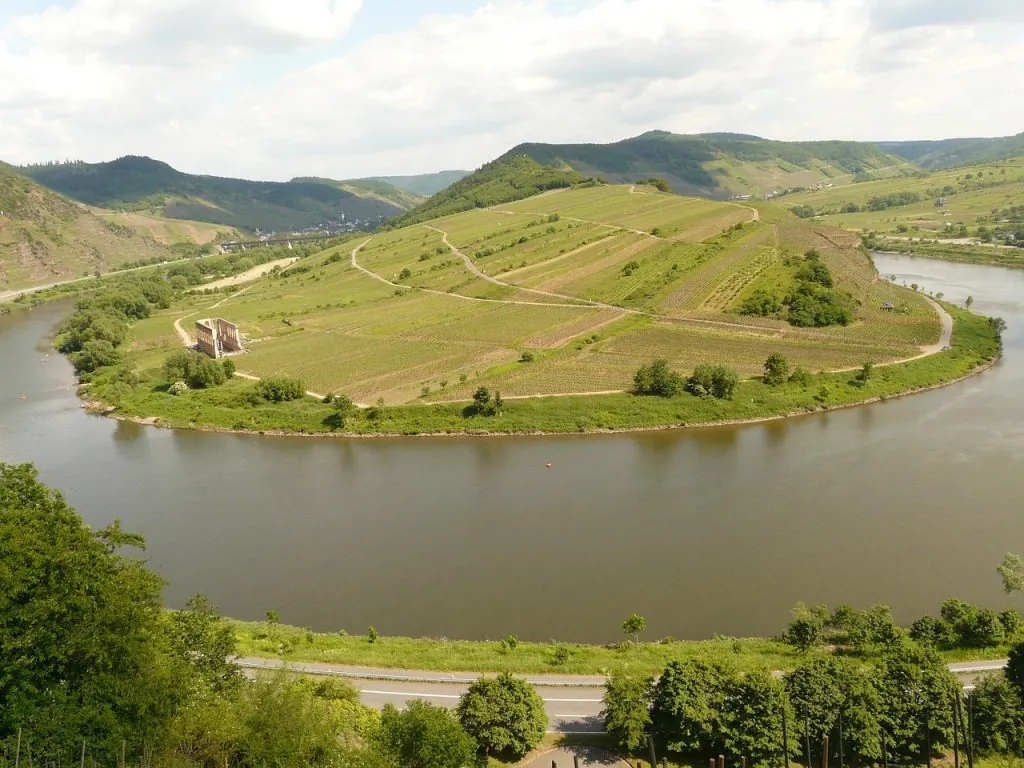
At the small wine village Bremm The Moselle makes a dramatic curve around the landscape. Above the river rises the Bremmer Calmont, which is usually described as Europe's steepest vineyard.
Riesling is mainly grown here and the slopes are so steep that working in the vineyards can hardly be described as comfortable.
For those who want to experience the landscape on foot, there is Calmont Via Ferrata, a demanding trail through the vineyard with ladders, steps and secured sections. The reward is a fantastic view of the Mosellingan far below. The trail should only be hiked when it is dry.
Cochem offers a real fairytale castle
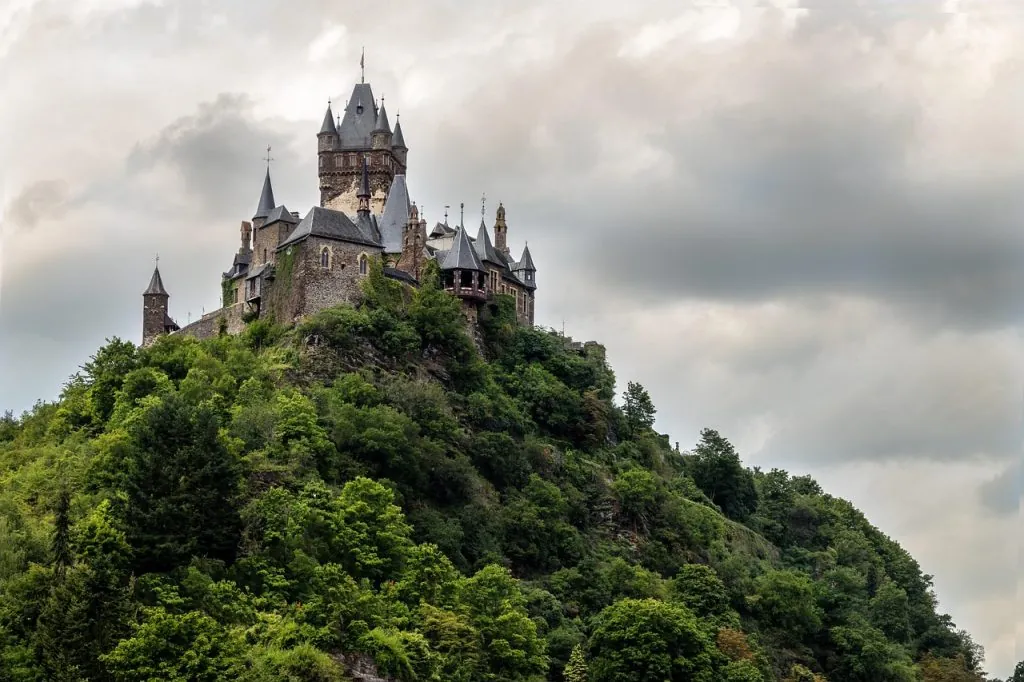
Cochem is one of the Moselle Valley's most well-known towns and here it is above all a building that attracts attention: Reichsburg Cochem.
The castle towers high above the city and looks almost suspiciously fairytale-like. The explanation is that the old castle was in ruins when wealthy Berliner Louis Ravené bought it in 1868 and had it rebuilt into a magnificent summer resort in neo-Gothic style.
Cochem is touristy, of course, but it is also a good starting point for excursions. From here you can take boat trips on the Moselle or continue to smaller towns nearby.
Beilstein is a little gem along the Moselle
If you want something smaller than Cochem you can Beilstein be a nice stop. There is a small historic town center with a medieval street network, squares and remains of the city walls.
Above the settlement lie the ruins of Burg Metternich, while the Baroque Church of St. Joseph and the former Carmelite monastery lie on the slope above the village. A classic way to get here is actually by boat from Cochem.
Trier tells the story of the Roman Moselle Valley
In the upper part of the German Moselle Valley lies Trier, which is usually considered Germany's oldest city. Here it becomes very clear that the history of the Moselle Valley began long before today's vineyards and tourist boats.
Trier was one of the most important cities of the Roman Empire north of the Alps and today there is an impressive collection of Roman remains. The Porta Nigra, the Kaiserthermen, the amphitheater and the Römerbrücke are just a few examples.
We even drove the camper over the Römerbrücke, whose Roman columns were built in the 1st century AD. It's a bit special to roll over a bridge with almost 2,000 years of history under your wheels.
READ MORE: Things to do in Trier – 15 attractions in Germany's oldest city

The Moselle meets the Rhine in Koblenz
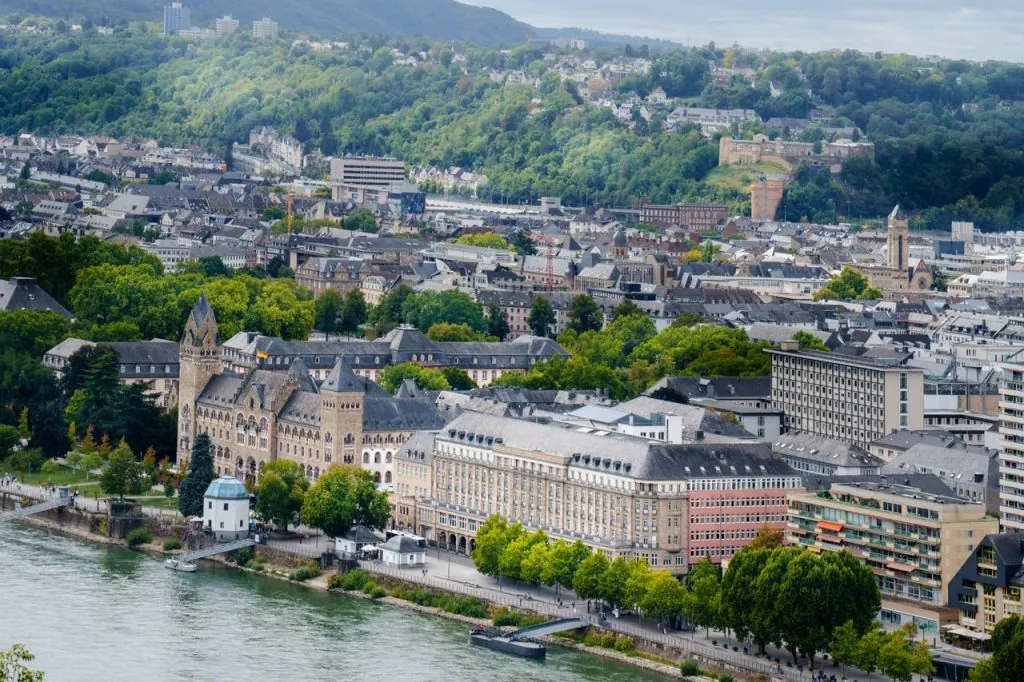
If you follow the Moselle all the way downstream, you will eventually come to Koblenz. Here the Moselle Valley ends and the river merges with the Rhine at the famous cape German Corner.
This makes Koblenz a natural ending point for a road trip along the German part of the Moselle – or starting point if you choose to travel in the other direction. The last part before Koblenz is usually called Terrace Moselle, roughly terraced Moselle. The valley becomes narrower and the vines are grown on steep terraces held up by stone walls.
The Moselle Valley is perfect to discover by motorhome
If Germany is a campervan country, then the Moselle Valley is almost a campervan valley. At least that was our feeling when we traveled here. Campers are everywhere and there are plenty of campsites and parking lots along the river. The advantage is that you can travel quite spontaneously and stay a few nights where you feel comfortable.
For us, the motorhome is particularly suitable here because the distances between the sights are short. You don't have to drive far every day – and it would almost be a shame to do so. The Moselle Valley is an area for slow travel.
A good plan might instead be to find a parking lot or campsite you like and then use the bikes for excursions.

We stayed at the campsite at Traben-Trarbach
We stayed at Traben-Trarbach Moselle campsite Rissbach, just outside the city and right next to the river.
We chose camping that time because our fridge was completely empty and it was Sunday, when many German shops are closed. The campsite had both a small shop and a restaurant, which solved the situation. We each had a hamburger for dinner – and of course Mosel wine.
It may not be the most advanced gastronomic experience you can have in a famous wine region, but sometimes a burger, a glass of local wine and a view of the Moselle is just what you need.

Not all campsites became favorites
On another occasion we stayed at the Ferieinsel campsite in Winningen. We were looking forward to a long hot shower, but the stay didn't quite go as planned. The hot water required tokens, the wifi didn't work and the camper was full of hundreds of flies.
It can't be right every time. Of course, a lot may have changed since our visit, so see this more as a memory from the trip than as an up-to-date review.

The Moselle Valley is fantastic to experience by bike.
Bicycles are almost as obvious a means of transport here as motorhomes. The German Moselle Cycle Path runs 248 kilometers from Perl on the Luxembourg border to Koblenz. The trail largely follows the river and passes vineyards, historic wine villages, castles and Roman remains.
In addition to the Mosel Cycle Path, there is a large network of signposted cycle paths in the region. Of course, you don't have to cycle the entire route. For those travelling by motorhome, it is convenient to stay in one place and take shorter cycle trips along the river.
Moselsteig offers hiking above the river
If you prefer to use your hiking boots, there is the long trail. Moselle Trail, which runs through the landscape between vineyards, forests and viewpoints.
One of the most spectacular stretches runs through Bremmer Calmont. The stage between Neef and Ediger-Eller is just over eleven kilometers long, but offers 425 meters of elevation gain and magnificent views of the Moselle.
This is one of the reasons why the Moselle Valley works so well even for a longer holiday. You don't really have to "do" very much. One day can be spent in a city, the next cycling and the next hiking or wine tasting.

Boat trips are a relaxing way to see the Moselle Valley
The Moselle can of course also be experienced from the river itself. Boat trips depart from several towns along the way and can be a nice alternative to driving. We ourselves have taken a one-hour boat trip from Trier, during which we glided under the city's old Römerbrücke, among other things.
From Cochem, for example, you can take a boat to little Beilstein, and there are also boat trips around Traben-Trarbach and Bernkastel-Kues. The great thing is that the perspective is completely different from the water. Only then do you really see how steep the vineyards actually are.

How much time do you need in the Moselle Valley?
The Moselle Valley can be both a two-day stop and an entire vacation.
Do you have 2–3 days We would choose a limited part of the valley and not try to do everything. Traben-Trarbach, Bernkastel-Kues and Cochem, for example, can be combined with wine tasting and a bike or boat trip.
Med 4–7 days There is time to travel more slowly and also catch up with Trier, some smaller wine villages, hiking and maybe Koblenz.
Do you have a week or more you can really let the Moselle set the pace – stop when you find a nice spot, cycle between villages and sample wine without having to think about the next long drive.

8 great stops in the Moselle Valley
If we were to put together a first trip along the Moselle today, some of the most interesting stops would be:
- Trier – Roman history and Germany's oldest city.
- Bernkastel-Kues – half-timbered houses, wine and classic Moselle romance.
- Traben-Trarbach – wine, Art Nouveau architecture and huge underground wine cellars.
- Zell – the vineyard with the black cat.
- Bremm and Calmont – dramatic vineyards and stunning views.
- Cochem – the classic Moselle town with Reichsburg.
- Beilstein – small historic wine village that is perfect for an excursion.
- Koblenz – where the Moselle finally meets the Rhine.
Traveling along the Moselle – practical tips
The roads along the river are often winding, so don't just count kilometers when planning your day. The official tourist organization also recommends taking it easy and following the Moselle through the valley instead of rushing. For us, a few things are especially good to keep in mind:
- Take it slow. The Moselle Valley gets better the less rush you have.
- Bring bicycles if you are traveling by camper. Then the camper can stay while you explore the villages.
- Avoid driving a large camper into the smallest old town centers.
- Check out wine festivals and other events. They can be a reason to come – or mean that there will be significantly more people.
- Have cash on hand. Smaller businesses in Germany may still prefer cash payment.
- Don't forget good shoes. If you want to go up among the vineyards, it quickly becomes significantly steeper than down by the river.
When is the best time to visit the Moselle?
The Moselle Valley has different charms during different parts of the year. Spring offers greenery and relatively quiet villages. Summer is perfect for cycling, boat trips and long evenings by the river, but is also popular with visitors.
Late summer and autumn is perhaps the most special period for wine lovers. The grapes ripen, the harvest approaches and wine festivals follow one another.
Also winter may be interesting. Traben-Trarbach, for example, has an unusual Christmas market that is held in the town's historic underground wine cellars.
The Moselle Valley is made for slow travel
The Moselle Valley is actually exactly the kind of area we like best with a motorhome. You don't need a detailed plan and no long lists of attractions to check off. The river shows the way.
Then you just have to choose whether the next stop will be a half-timbered town, a vineyard, a castle, a bike ride – or maybe just a place on the Moselle where you can sit down and watch the boats glide by. And then a glass of Riesling when the camper is parked for the evening, of course.
More to see and do in Germany
Of course, there is much more to see and experience around Germany. Here you will find tips and more reports:
FAQ – frequently asked questions about the Moselle Valley
Where is the Moselle Valley located in Germany?
The German Moselle Valley stretches along the Moselle River from the area on the border with Luxembourg via Trier, Bernkastel-Kues, Traben-Trarbach and Cochem to Koblenz, where the Moselle flows into the Rhine.
Which cities are the nicest in the Moselle Valley?
Bernkastel-Kues, Traben-Trarbach and Cochem are among the most popular. Smaller towns such as Beilstein, Bremm and Zell are also worth discovering. Trier is an obvious stop for anyone interested in Roman history.
Is the Moselle Valley good for motorhomes?
Yes, a lot. The Moselle Valley is popular with campervan travellers and there are plenty of campsites and pitches along the river. Cycling is a good complement to getting from the pitch to smaller towns and vineyards.
What is the Moselle Valley famous for?
The Moselle Valley is primarily known for its steep vineyards and Riesling wines, but also for romantic wine villages, half-timbered houses, castles, cycle paths and the Moselle River.
Can you cycle through the Moselle Valley?
Yes. The Mosel Cycle Path follows the German Mosel from Perl to Koblenz and is approximately 248 kilometers long. There are also many other signposted cycle paths in the region.
Can you go boating on the Moselle?
Yes. There are passenger boats and excursion tours from several towns along the river, including Trier, Bernkastel-Kues, Traben-Trarbach and Cochem.
What wine is the Mosel Valley famous for?
Especially Riesling. The steep, slate-rich slopes along the Mosel provide good conditions for the grape, and Riesling is produced here in everything from dry to very sweet styles.




 English (UK)
 Svenska
Deciree says:
Wow, it is so beautiful in the Moselle. ☺️?Hugs
29 August 2018 - 6:12
Helena says:
Isn't it? Fantastically nice! 🙂
29 August 2018 - 9:35
Lena - gott för själen says:
Ohhh, the Moselle Valley is on my wish list too! The perfect mix of beautiful nature, great hiking and wine! What can go wrong, right?
Hug Lena
29 August 2018 - 6:27
Helena says:
I think you would like this Lena! Nice for hiking I can think! 🙂
29 August 2018 - 9:36
Anette says:
Of course we have been here too. When the children were small, we camped outside Cochem. We have also hiked in the area. done. Very beautiful area.
29 August 2018 - 7:14
Helena says:
Glad you were here Anette! We have not had time for Cochem, but it seems nice!
29 August 2018 - 9:37
Backe says:
We are often in the Moselle over the Easter holidays but also at other times of the year. Perfect for cycling and hiking. There is nothing wrong with the wine either. The Moselle valley can only be recommended to all motorhome drivers. Good luck on your travels. I myself work full time so it will be the holidays and some weekends you can go.
29 August 2018 - 7:35
Helena says:
Truly a great destination for motorhome drivers! I recognise that with work! I actually work full time too, but have taken two months of leave this summer.
29 August 2018 - 9:38
Reiselinda says:
We were able to enjoy the Moselle Valley for a few days this summer before we cancelled and moved on to solve the problems we had with the water tap. Very nice, and we will be back!
29 August 2018 - 8:04
Helena says:
Too bad about the problems with the water tap, but that is also included when travelling in a motorhome. and you just have to deal with the problems when they come!
29 August 2018 - 9:50
Rolle o Carina says:
Lovely place, hope to go there when we have finished working! 🙂
Have a good time and keep enjoying yourself...
29 August 2018 - 8:13
Helena says:
Super nice! 😉
29 August 2018 - 11:09
Lennar says:
We have visited the Moselle valley a few times and will hopefully go there again.
29 August 2018 - 8:19
Helena says:
Great! Very nice place! 🙂
29 August 2018 - 11:09
Nils-Åke Hansson says:
The Moselle is a bit of a favourite with lots of cosy pitches
29 August 2018 - 8:43
Helena says:
Really plenty of pitches and campsites!
29 August 2018 - 11:27
Henny says:
In the summer of 2011 we travelled slowly through the Moselle valley with our motorhome. A wonderful experience. We stayed with a wine grower in the village of Ernst, had a private wine tasting in another village, and as you say, it was never a problem to find pitches and campsites. A great place was the campsite in Trier. Both pleasant and well-organised with walking distance to the city itself.
29 August 2018 - 8:47
Helena says:
Oh what a wonderful experience it sounds like! Nice to travel in peace and quiet and nice with wine tastings! The place you are talking about we have just stood on! 🙂
29 August 2018 - 11:31
Ditte says:
It is very beautiful. I've only just passed through but would love to take a boat trip on the Moselle as well as the Danube. I really understand that you are staying here for a while.
Keep up the good work and enjoy seeing pictures and reading more from you about the Moselle Valley.
29 August 2018 - 9:25
Helena says:
Very nice indeed! Great to see a bit more of Germany during this trip! 🙂
29 August 2018 - 11:33
Eli Karin says:
We also have a few days in the Mosel Valley on our slow way back to Mo i Rana, Northern Norway. Came in from Luxembourg and got a day in Trier. Now standing on the riverside in Mehringen and heading down to Koblenz. Our second visit to this beautiful valley that invites you to rest and relax ?
29 August 2018 - 9:27
Helena says:
How nice that you also chose to travel here! We have also visited Trier, we will write about it soon! What did you think of Luxembourg?
29 August 2018 - 11:37
Bara brittiskt says:
Yes Germany's oldest city Trier is fantastic with all its Roman remains. Hotel Blesius Garten with its own brewery and vineyards outside is fine for us without a motorhome.
29 August 2018 - 9:33
Helena says:
Trier is beautiful and historically interesting! We'll write about the city on the blog soon!
29 August 2018 - 11:38
Monet says:
The Moselle valley is really beautiful. I see that you have just been sniffing around Luxembourg. Have you been there? Can't find a report on this little country that most people don't know much about. Since we have family there, we have been there repeatedly and for many years. Fantastically beautiful, the city of Luxembourg as well, wonderful surroundings. Worth visiting!!!
29 August 2018 - 10:15
Helena says:
Yes, it is true that we have been very close to Luxembourg! We really wanted to go there, but unfortunately we don't have the time. It will be next summer! So until then, we are happy to receive tips 😉.
29 August 2018 - 11:41
Steve says:
I have never visited the Moselle valley, but I have always thought of it as extremely beautiful. Moselle wine is not one of my favourites.
29 August 2018 - 11:01
Helena says:
Green and beautiful! We bought a semi-dry Mosel wine that we liked. But of course you should choose the wines you like best!
29 August 2018 - 11:43
Anna | Boihusbil says:
It will probably be the Moselle Valley for us on our way to Sweden this spring. Down we take the Atlantic coast. Drove through the Moselle many years ago, then the focus was the goal in Paris and we drove late in the evening so basically saw nothing at all. Such a miss!
29 August 2018 - 11:20
Helena says:
We have also many times just "passed" Germany. Nice to see a little more this time, Germany has a lot to offer and the Moselle Valley is definitely worth a visit!
29 August 2018 - 11:45
Husisblogg says:
How beautiful it seems to be in the Moselle Valley. No wonder that many other motorhome friends go there and all say that they love the area. Unfortunately, I have not been able to visit this but I say as I usually do, who knows what the future holds.
I really understand that you want to soak up the last of these months, and you're doing the right thing by visiting this lovely valley!
29 August 2018 - 12:03
Helena says:
Who knows what the future holds? It feels just right to spend a few days here, and the Moselle Valley is recommended!
29 August 2018 - 21:44
Lars Ove Wangensteen says:
I have lived in Mosel Valley 1 year in the 80's and I come back almost every year. The last time was in Easter 2018 with our first owned motorhome. A great place you never get tired 🙂 We have a little about the trip on our website. http://www.wangensteen.net
29 August 2018 - 12:16
Helena says:
How nice that you have lived here! I took a look at your website. Nice trip!
29 August 2018 - 21:48
Britt-Marie Lundgren says:
The Moselle is undoubtedly one of our favourites.
Lovely pitches, short distances (cycling distance), beautiful surroundings and good wines.
Our favourites are probably Minheim, with a site right on the riverbank, and Trier, where we stayed on a vineyard, with vines between caravan sites and a nice cycle path into town.
Cochem is also worth a visit...
29 August 2018 - 12:38
Helena says:
A bicycle is probably a good fit here! I will remember Minheim. How cosy it sounds with the campsite at a vineyard, we missed it!
29 August 2018 - 21:50
Bosse says:
Travelled through the Moselle Valley a couple of weeks ago and stopped at a campsite in Cochem. Have travelled through here a couple of times before and love this beautiful area. So peaceful although it can be a bit too crowded in places.
29 August 2018 - 13:25
Helena says:
Agree that it is peaceful! We have also experienced some congestion, as we got the last spot at a campsite and a wine tour we tried to book was full.
29 August 2018 - 21:51
Kors och Tvärs says:
There has been at least one stop (sometimes two) when we have holidayed in France and Spain. This year we have not been there.... Yet.... ? It is calm and relaxing to sit and watch the barges rumble by.
29 August 2018 - 19:44
Helena says:
Must be a perfect stop on the road! 🙂
29 August 2018 - 21:52
BP says:
Great pictures!
Have actually visited Cochem, the wine festival in Zell and canoeing on the Moselle. The latter I will never forget when the waves of a large tourist boat made our canoe overturn. Luckily it was summer and the water was warm;-)
I am not so fond of the wines as they are far too sweet for my taste. It will be exciting to read what you think.
29 August 2018 - 20:28
Helena says:
How nice that you have been here! But oh how dramatic it sounds with the canoe!!! We actually asked not to taste the sweet wines, but only the dry and semi-dry ones. And they fell into our taste! 🙂
29 August 2018 - 21:54
Arne Lindh says:
We are travelling to the Moselle on Tuesday. First we are going to Ahr, the wine valley just north of the Moselle. Then there will be a number of vineyards and sites along the Moselle. We have been there before. The favourites at that time were Ernst, Bremm, Wintrich and
Piesport. There is much more to discover. When we were last there, Jappe's book had not been published. We have it with us now.
29 August 2018 - 21:49
Helena says:
Oh but what fun that you are on your way here! That's great! Kappes book ...? I have no control over it at all ...
29 August 2018 - 21:55
Znogge says:
The Moselle Valley is very beautiful and there are many cosy and nice towns. When we were there, we visited Trier, which is one of Germany's oldest cities and was founded in 16 BC.
30 August 2018 - 8:26
Helena says:
Trier is an amazing city! The next post is about it 🙂
31 August 2018 - 14:19
Resfredag says:
Well, the wine doesn't really appeal to me - but the views do. Germany really has many fine gems!
30 August 2018 - 8:56
Helena says:
Germany has more to offer than you might think! 🙂
31 August 2018 - 14:20
Ann-Louise says:
How incredibly beautiful it looks to be there! The very first wine I ever drank was actually from Mosel. Strange thing to remember really, especially since it was so many years ago, but some things apparently stick 🙂 .
30 August 2018 - 11:23
Helena says:
Glad that Moselvin was the first wine you drank! 😉 It is super nice here!
31 August 2018 - 14:20
Lisa says:
Very nice - we spent a few days in the Moselle this summer. Bernkastel Kues and Cochem are our favourites. In Cochem we stayed at a cosy campsite within walking distance of the town.
01 September 2018 - 10:47