


Writer: Helena Bergström
Updated: September 2026 | All Saints' Day, All Souls' Day, All Saints' Day and Halloween – during a few days in the autumn, several holidays and traditions come together that are easy to confuse. What is the difference, when do the days fall and why do we light candles on graves? Here we figure out how it all connects.
 Tweet
Tweet Share
Share Share
Share Pin
Pin Share
Share Share
ShareTable of contents
What is All Saints' Day?
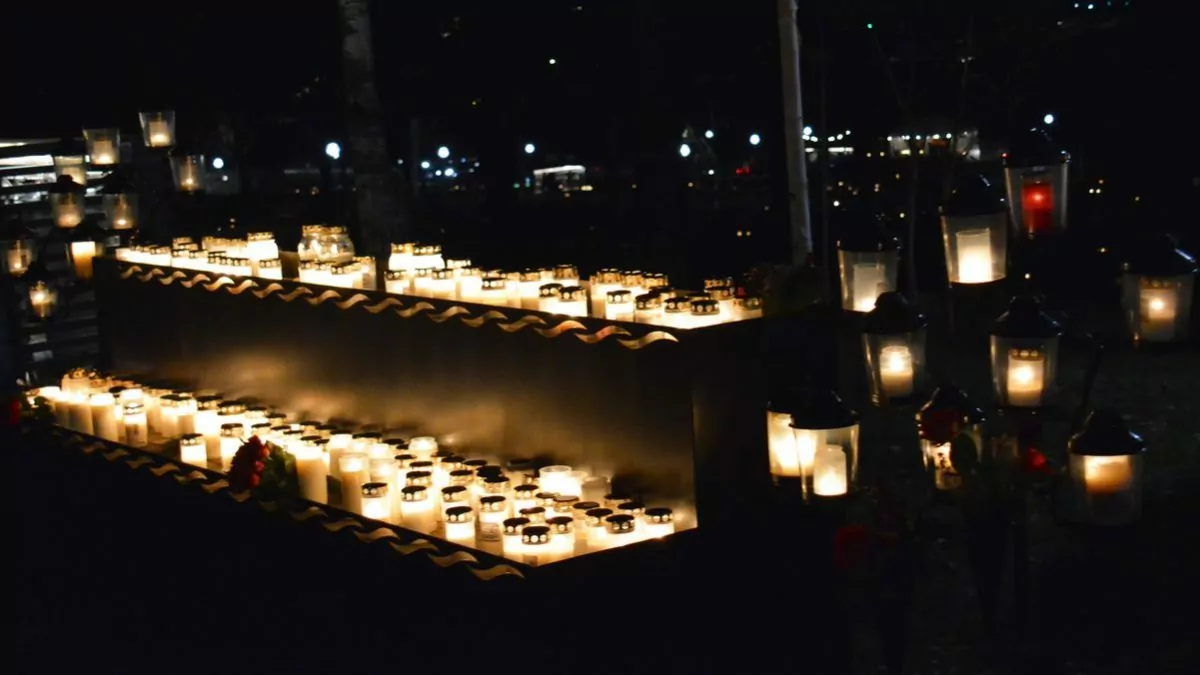
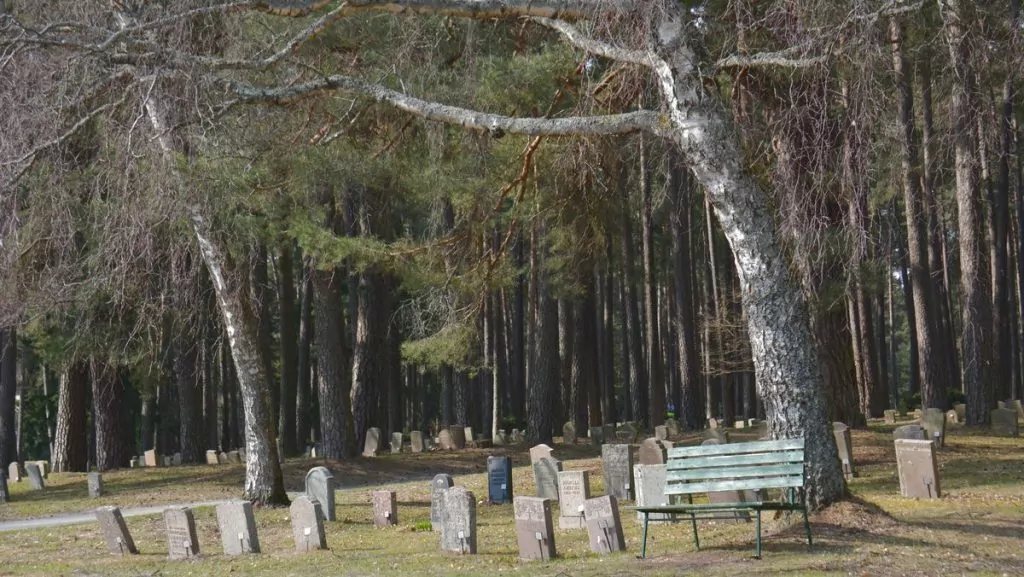
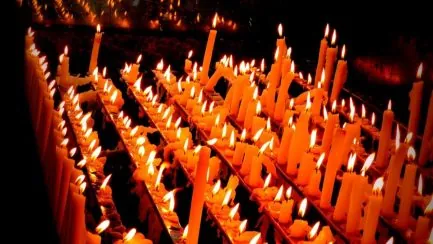
For many in Sweden, All Saints' Day is a weekend when we remember people who are no longer with us. The cemeteries are filled with people and when darkness falls, thousands of grave candles shine between the graves.
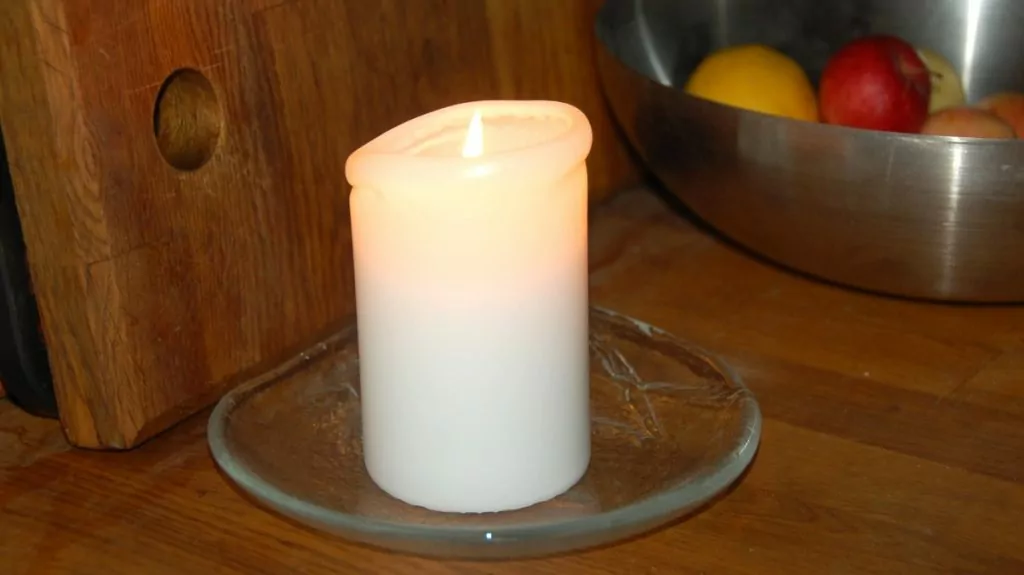
We usually celebrate All Saints' Day by meeting with family and visiting the cemetery. We light candles, put up grave decorations and then usually have dinner together. It's a nice tradition, in the middle of the dark part of the year.
But which day is actually which? All Saints' Day and All Souls' Day are two different church days., and there's also All Saints' Day on November 1st. And Halloween just happens to be right next door. No wonder it gets spooky!
All the days – quickly explained
| Day | When does it fall? | What does it mean? |
|---|---|---|
| Halloween | October 31 | A holiday that today is associated with, among other things, dressing up, pumpkins and trick-or-treating. |
| All Saints' Day | November 1 | The old fast day for the celebration of All Saints |
| All Saints' Day | Saturday between October 31 and November 6 | Swedish holiday with a focus on saints and Christian role models |
| Day of All Souls | The Sunday after All Saints' Day | Church day when the dead are especially remembered and honored |
In practice, the traditions partly merge. This is especially true in All Saints' Day, that is, the Saturday, when many Swedes visit cemeteries and light candles for dead relatives and friends.
All Saints' Day – a day for the saints
The tradition of celebrating saints and martyrs has ancient Christian roots. Over time, a common feast day developed for all saints, even the many saints who did not have their own day in the calendar.
In Sweden, All Saints' Day was celebrated for a long time on November 1, but after the Reformation the importance of saints in the Protestant Church changed. In 1772 a holiday reform was also carried out when a number of church holidays disappeared as non-working days.
The All Saints' Day we have today was introduced in 1953 and placed on Saturday between October 31 and November 6. That's why the date varies from year to year.
All Souls' Day – a day for the dead
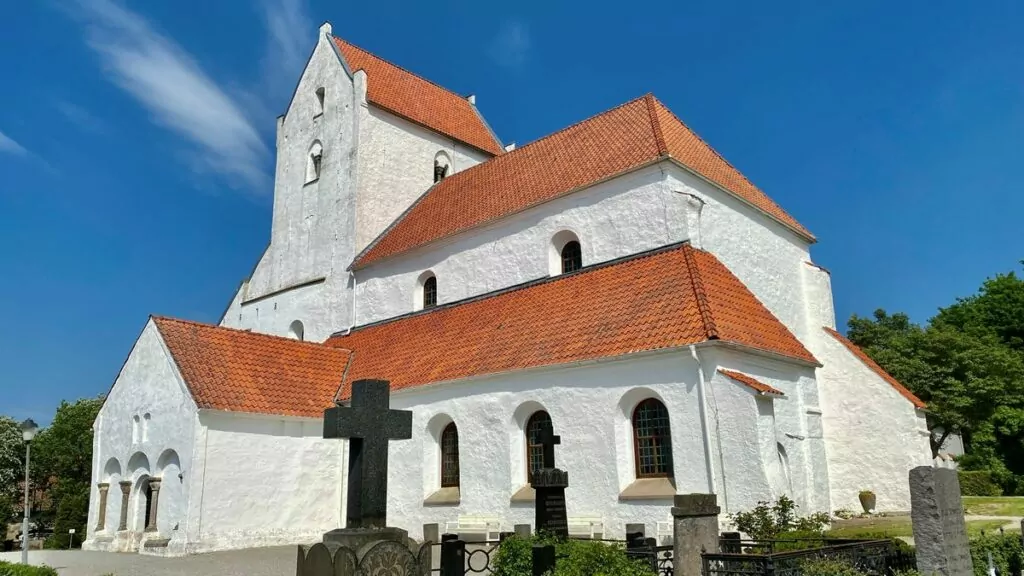
All Souls' Day also has its roots in the medieval Catholic Church. The traditional day is November 2nd and was a day when people prayed for the souls of the dead.

After the Reformation, the celebration disappeared from Swedish church tradition for several hundred years. During the 20th century, the idea of a special day to commemorate the dead returned, and today the Church of Sweden celebrates All Souls' Day on the Sunday after All Saints' Day.
There is therefore a difference between the two days: All Saints' Day is about the saints and their role models, while All Souls' Day is specifically about remembering those who have died.
In people's own celebrations, the line is of course not as sharp. Many simply think of the entire All Saints' Day weekend as a time for remembrance, grave visits, and lighting candles.
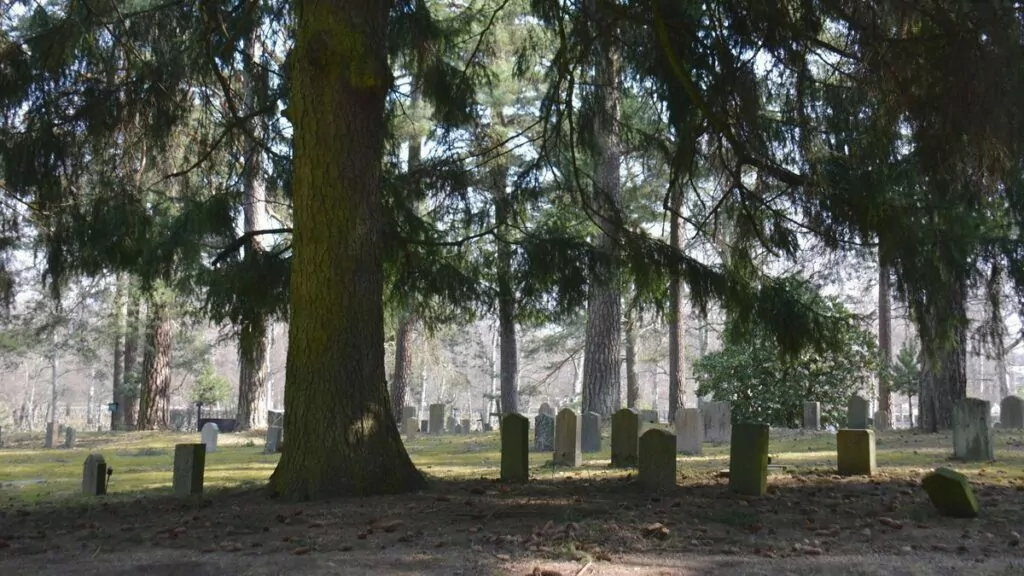
So what is All Saints' Day?
Here is another concept that easily explains it: All Saints' Day.
All Saints' Day always falls on November 1. It is the old fixed day for All Saints' Day. When the modern All Saints' Day was placed on a Saturday in the 1950s, November 1 remained in the calendar under the name All Saints' Day.
Therefore, you can find both All Saints' Day, November 1 and All Saints' Day on a moveable Saturday in the calendar. The names sound almost the same and have the same historical origin, but today they are two different calendar days.
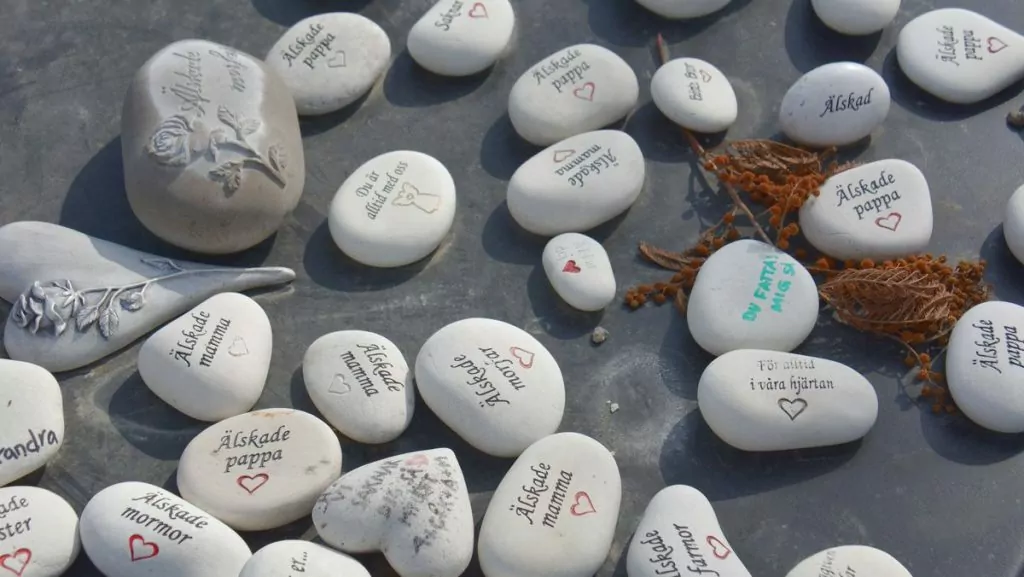
Why do we light candles on graves?
Visiting the cemetery and lighting candles is so strongly associated with All Saints' Day that the tradition can easily feel ancient. But the custom in its current form is actually much younger than that.
As early as the late 19th century, people in Swedish cities would light candles on graves, but this was mainly done at Christmas. It was also common for candles to be lit on the graves of deceased children.
During the 1930s, special grave candles began to be sold for All Saints' Day, but it was primarily after World War II as the custom of lighting candles on graves during All Saints' Day had its big breakthrough in Sweden. The tradition had then received inspiration from Catholic countries in Europe.
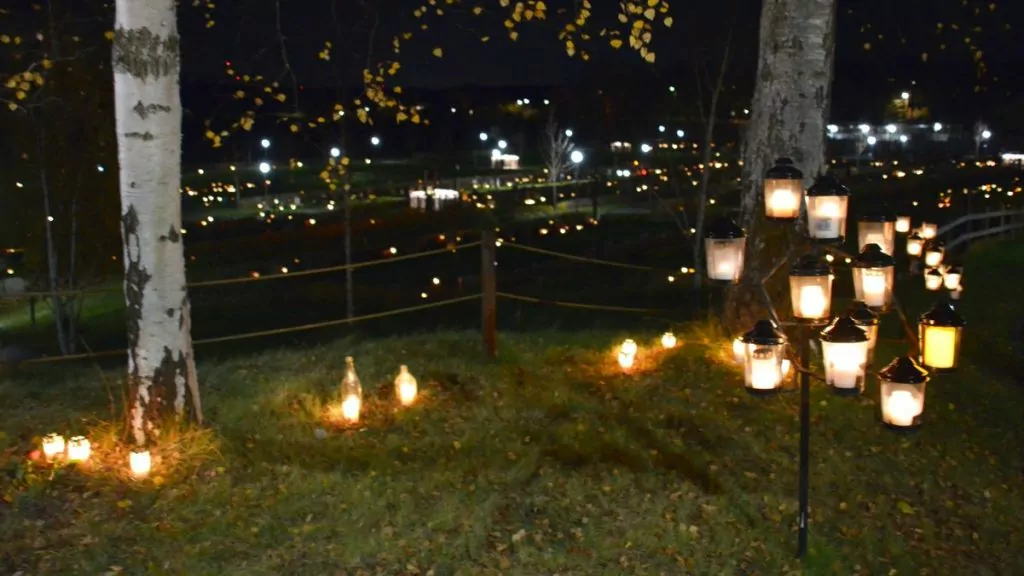
Today, candles are perhaps the most clearly associated with the Swedish All Saints' Day holiday. When darkness falls, large cemeteries can be lit up by thousands of small flames.
Our traditions during All Saints' Day
For us, All Saints' Day is all about family and remembering those who are no longer with us. We usually meet my (Helena's) family and visit the cemetery, where we light candles and place a decoration on my father's grave.
There are usually a lot of people moving around in the cemetery, but at the same time the atmosphere is peaceful. When all the candles are burning in the autumn darkness, it is very beautiful.
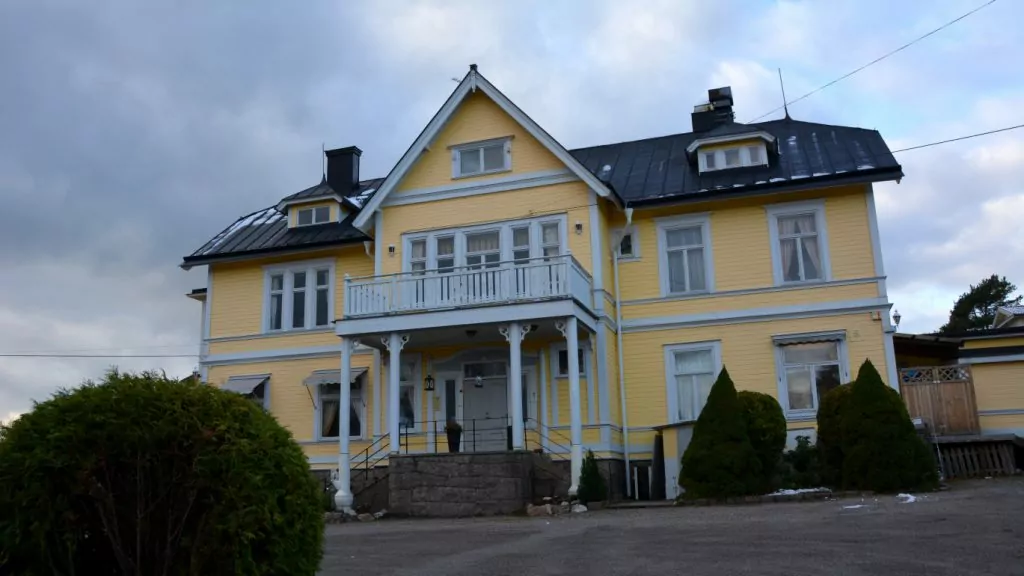
Afterwards we often have dinner together. This way the weekend becomes both a time for memories and a reason to actually meet up – which is perhaps also a nice part of the tradition. For several years in a row we ate at the cozy Skänkstugan in Täby, where they often have nice menus, such as special autumn or Christmas menus.
All Saints' Day in the past – when winter was approaching
Not all older traditions around this time of year were church-related. In the old farming community, the beginning of November was also an important turning point between summer and winter.
All Hallows' Eve was associated with the beginning of the winter months, and just like many other old holidays, there were beliefs that the weather could tell us something about what was to come.
It also reminds us that many of our holidays are at important turning points in the year. As the days grow shorter, the harvest is over, and winter approaches, people in different times and cultures have created traditions around darkness, death, memories – and light.
How is Halloween related to All Saints' Day?
Halloween is always celebrated on October 31. The name comes from the English All Hallows' Eve, roughly "All Saints' Eve", i.e. the evening before All Saints' Day on November 1st.
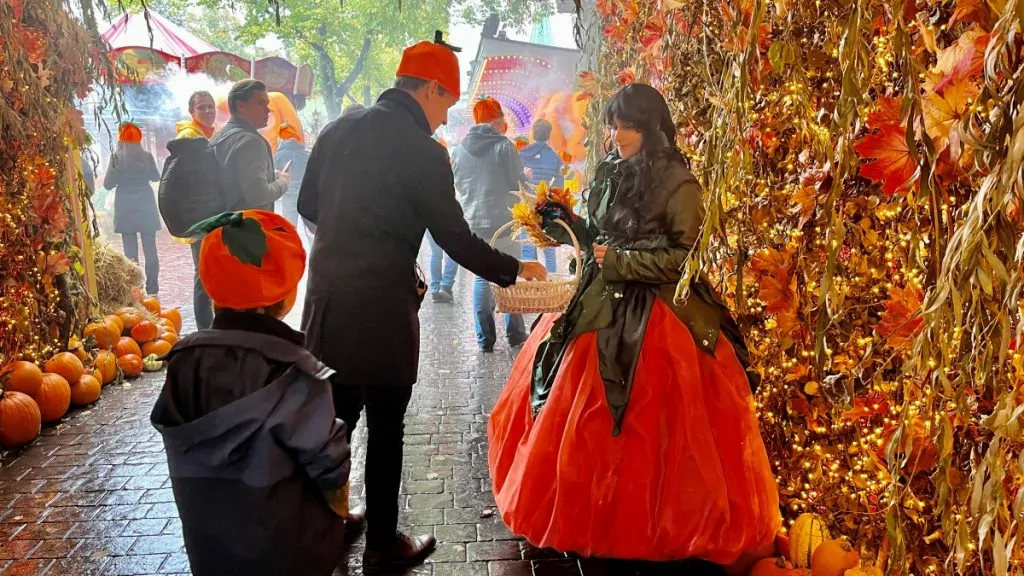
But Halloween has a much more varied history than that, with influences from Ireland and Scotland, among others, and traditions that have changed considerably over the centuries. Today we associate the holiday with pumpkins, costumes and "trick or treat", while the Swedish All Saints' Day has a completely different character.
READ MORE: Why do we celebrate Halloween in Sweden?
When is All Saints' Day?
All Saints' Day always falls on Saturday between October 31 and November 6. The date therefore varies from year to year.
- 2026: October 31
- 2027: November 6
- 2028: November 4
- 2029: November 3
- 2030: November 2
All Souls' Day falls in the Church of Sweden the following day, that is, on Sunday.
A weekend of memories and light
It's not surprising that people confuse All Saints' Day, All Souls' Day, and All Saints' Day. The days have common historical roots and are also located close to each other on the calendar.
For many people in Sweden today, the exact names are perhaps less important than the tradition itself. All Saints' Day has become a time to pause, remember people who are no longer with us, and light a candle in the autumn darkness.
Do you visit a cemetery and light candles during All Saints' Day?
You might also like:
 Christmas rhymes - 25 tips for Christmas presents with rhymes
 Celebrate New Year's abroad - 10 memorable New Year's on trips


 Aunt Anna and death - All Saints' Day and cemeteries of the world
 Christmas trees through the ages – Aunt Anna and the Christmas trees
 Lucia in the past, present and future – a tradition in constant change


 English (UK)
  Svenska
Ruth i Virginia says:
What a nice tradition to gather the family and come
remember those who have passed away. Wish we had the great All Saints' Day here.
instead of Halloween.
But Halloween is fun when there are children in the neighbourhood.
04 November 2018 - 6:24
Helena says:
Yes it is nice! Can certainly be nice with Halloween too in its own way. Especially in the US where there is more tradition.
04 November 2018 - 15:19
Matts Torebring says:
Thank you for your exhaustive post. For most of us, the walk to our cemeteries, perhaps on Friday evening, is the biggest part of the weekend. If I remember correctly, there are 39% of us who visit a cemetery during the weekend. That makes All Saints' Day the weekend. when most people go to church. As a family, we have no memory of All Souls' Day. Halloween, we think, is really unpleasant.
04 November 2018 - 8:43
Helena says:
I was hoping you would comment today Matts! It can certainly be true, very many people visit the cemeteries! Interesting that you have no memory of All Souls' Day. Neither do I really, but that's what it says on the Church of Sweden's website.
04 November 2018 - 15:21
Maria/ Magnolia Magis says:
How nice to have a community on that day! We celebrate by lighting a candle at home, unless we are near someone's grave. We have them in different parts of the country ...
We don't celebrate Halloween! I have a bit of a problem with that... If we celebrate Christmas? Yes, but without presents. Or yes to the small children one each. ?
04 November 2018 - 10:59
Helena says:
Yes, it has become a nice and pleasant tradition! But it sounds nice to light candles at home too! When it comes to Christmas, we are like you. No presents, except possibly for a child in the family.
04 November 2018 - 18:15
Emma, Sol som sol? says:
Messy is just the beginning! Couldn't they have called them by more distinctive names? Is it not strange that we go to the cemetery to honour those who have gone before on the day when all the saints were lumped together and not on All Souls' Day?
As a child, I thought going to the cemetery was a pain in the arse, boring and cold and messy. Maybe a little scary too. Standing in a cemetery in the dark, people slowly walking the aisles, a lot of lights flickering, going out ...
But now I can look back on it and think it was beautiful.
04 November 2018 - 11:29
Helena says:
But really, isn't it unnecessarily cluttered? I can understand how you felt as a child, but now when I was at the cemetery I thought it was a nice and warm atmosphere with many families and lots of candles.
04 November 2018 - 18:17
Ama de casa says:
It's always complicated... I don't think it helps to read again, I won't understand anyway. Here in Spain they celebrate the 1st of November so much that it is even a national holiday. What is it called? Can't be bothered... 😉
I myself celebrate hello wine. But not this year... But I'm going to take it out retroactively! 😀
04 November 2018 - 11:32
Helena says:
Of course you should celebrate hello wine retroactively! Get well soon!
04 November 2018 - 18:19
Emma, Sol som sol? says:
(I suspect she probably celebrated it in advance too...)
04 November 2018 - 18:23
Ama de casa says:
No! Not at all, Emma! Before that, I was busy celebrating the birthday month 😀.
05 November 2018 - 10:30
BP says:
I have never heard of All Souls' Day. The only thing I know is that, at least in Catholic countries, 1 November always falls on 1 November. And it is always a public holiday. So no coddling of saints and souls there.
04 November 2018 - 18:26
TravelAnna says:
Good that more people are clarifying the concepts! I've done the same several times on my language blog (Falkblick), so this year too.
So nice to visit your father's grave together and so beautiful with all the candles.
I have never celebrated Halloween. But we usually visit Helgesta church, which has a special place in our hearts. Since last summer, my father is also buried there. The loss is heavy.
We also attended a memorial service in Strängnäs Cathedral.
05 November 2018 - 7:50
Annette Nilsson says:
I go to the cemetery on the Friday before All Saints' Day. Then I light a lantern and lay a moss wreath on my mother's and father's grave. In years when someone close to me has died, I go to the memorial service they have on All Saints' Day. That's when they light a candle for those who have passed away during the year.
Sure, it's confusing which day is which. But there are many good pages to read about how it works.
All Souls' Day is just a name within the church, just like Palm Sunday. All Saints Day was a very old holiday. From what I have read, the day dates back to the 5th century. Where I read, it was abolished sometime in the middle of the 18th century. It was mainly when Sweden was Catholic.
The day was reintroduced sometime in the 1950s but then became All Saints' Day and always falls on a Saturday. The custom of lighting candles for our loved ones comes from Germany when they started lighting candles on the graves after World War II.
To make matters worse, Halloween 31/10 can fall on All Saints' Day, just as All Saints' Day can fall on All Saints' Day.
That's because Halloween and All Saints' Day are always on the same date. While All Saints' Day is always the same day of the week.
05 November 2018 - 17:13