



Writer: Helena Bergström
Updated: September 2026 | There are plenty of odd Christmas traditions in the world – at least if you look at them from the outside. In Catalonia, children are given a log to poop on Christmas presents, in Wales a horse skull can appear at the door and in Mexico they create works of art from giant radishes. But before we marvel at others, let's start at home. How normal is it that large parts of Sweden stop at three o'clock on Christmas Eve to watch Donald Duck?
 Tweet
 Share
 Share
 Pin
 Share
 Share
Table of contents
Odd Christmas traditions – or completely normal?
What constitutes a strange Christmas tradition depends on who you ask, of course. Traditions that you grew up with often feel completely self-evident, even if they can seem highly puzzling to someone from the outside.
We Swedes bring a tree into the living room, eat pickled herring and watch the same cartoons year after year. Elsewhere, Christmas is celebrated with saunas, roller skating, scary figures or illuminated boats.
Here we have collected 15 different Christmas customs from different parts of the world. Some are old traditions that are still alive, others are about folk beliefs and legends – and they all tell us something about the place where they belong.

1. Sweden: Donald Duck at three o'clock
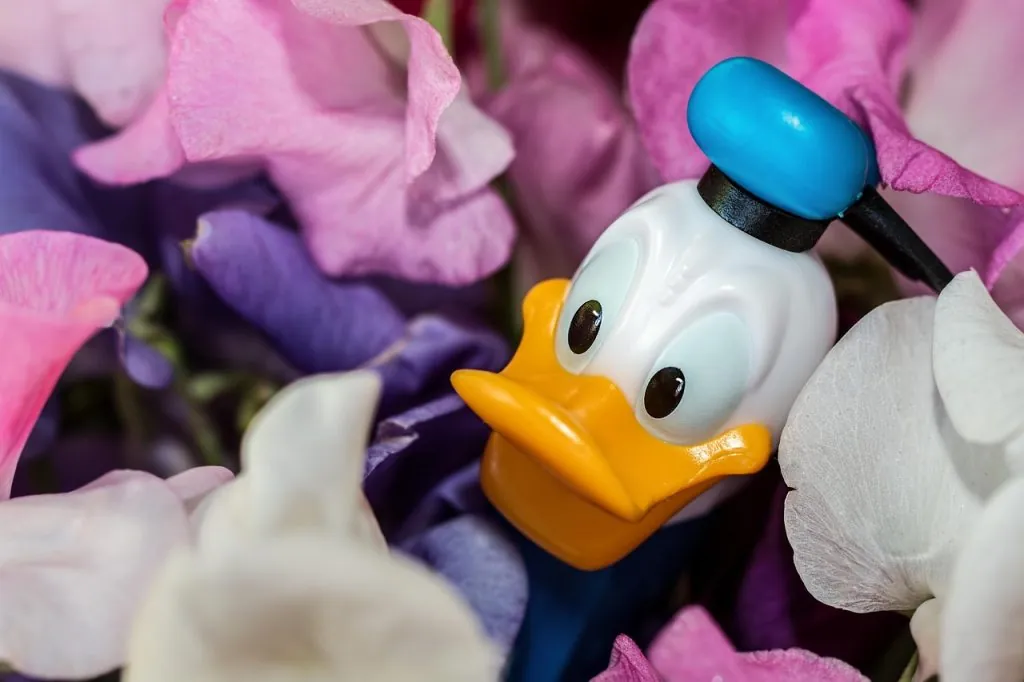
We start at home in Sweden. At 3 p.m. on Christmas Eve, something happens that to an outsider probably seems quite strange: a large part of the population settles down in front of the television to watch Donald Duck and his friends wish you a Merry Christmas.
The program has been broadcast on Swedish television every Christmas Eve since 1960 and has become one of our most established Christmas traditions. Many know the episodes almost by heart, but still watch year after year.
Why? Well, that's pretty much how traditions work. For many Swedes, Donald Duck is simply a part of Christmas Eve – just like Christmas ham, Christmas trees and presents. And with that insight in our pockets, we can go out into the world and look at other people's Christmas traditions with a little humility.

2. Finland: Christmas starts with a sauna
It hardly comes as a surprise that Finns like saunas, but the sauna also has a special place in Christmas celebrations. The Christmas sauna, Christmas sauna, is for many an important ritual on Christmas Eve.
Traditionally, the sauna was heated early so that the family could bathe before Christmas dinner and the evening's celebrations. The idea is not primarily about partying and noise, but rather the opposite. The Christmas sauna should be characterized by calm and provide an opportunity to wash away everyday life and get in the right mood for Christmas.

It actually doesn't sound particularly crazy at all. Maybe more like a tradition to import?

3. Iceland: 13 Christmas spirits come down from the mountains
Why settle for one Santa Claus when you can have thirteen?
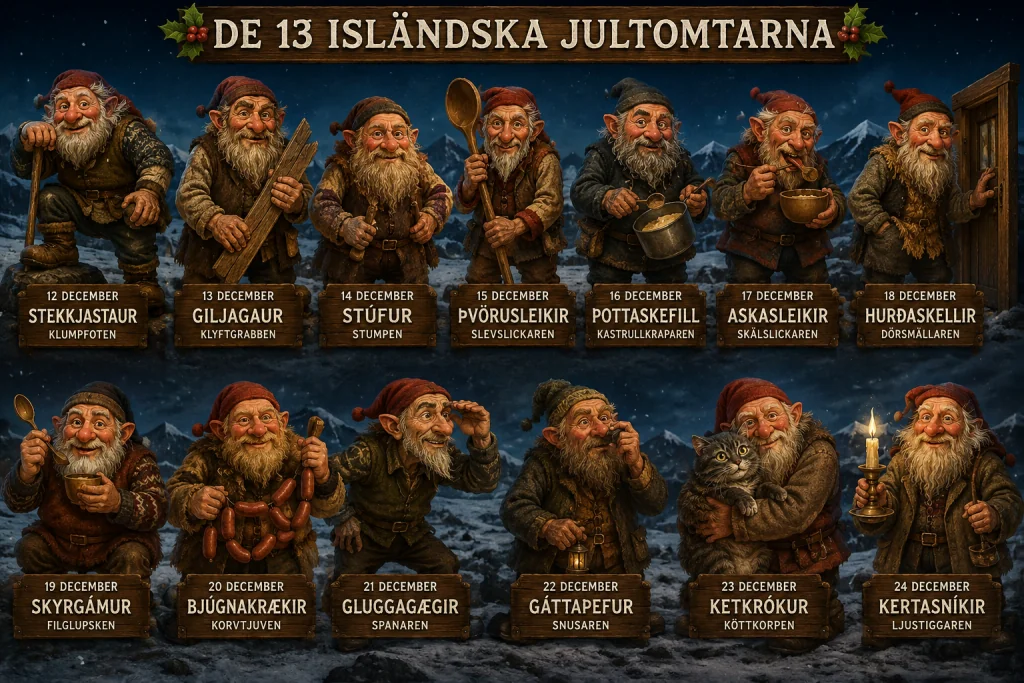
In Iceland there is the Santa Clauses, 13 figures from Icelandic folklore. One by one they come down from the mountains during the thirteen nights before Christmas. In older stories they were rather troublesome characters who stole food and caused trouble. The names reveal their specialties – one slams doors, one licks bowls and another tries to get at sausages.
Over time, they have become much kinder and today function more like Icelandic Santa Claus. Children place a shoe in the window and can receive a small gift from the visiting Santa Claus.
I (Helena) have lived in Iceland and for many years had a calendar with all the Santa Claus figures, so these figures almost feel like old acquaintances.
READ MORE: There are 13 Santa Clauses in Iceland - meet the Santa Clauses
4. Austria: Krampus comes with horns and fur
Saint Nicholas is celebrated on December 6th in many parts of Europe. In Austria, however, the friendly Saint Nicholas can be joined by a much more terrifying figure.
Krampus is usually depicted with horns, fur, a scary mask and large bells. While Nikolaus rewards good children, Krampus is the darker companion.
In several parts of Austria, events are still being organized Krampus runs, where costumed Krampus figures parade through the streets. The tradition is especially strong around December 5th, the night before St. Nicholas Day.
However, the exact origins of Krampus are not as easy to pin down as is sometimes portrayed online. There are various theories about older models and winter rites, but the story is more complicated than Krampus being just a preserved ”pagan demon.” He is scary in any case.

5. Greece: The Christmas boat competes with the Christmas tree
Christmas tree or Christmas boat? In seafaring Greece, the boat has long had a natural place in Christmas celebrations.
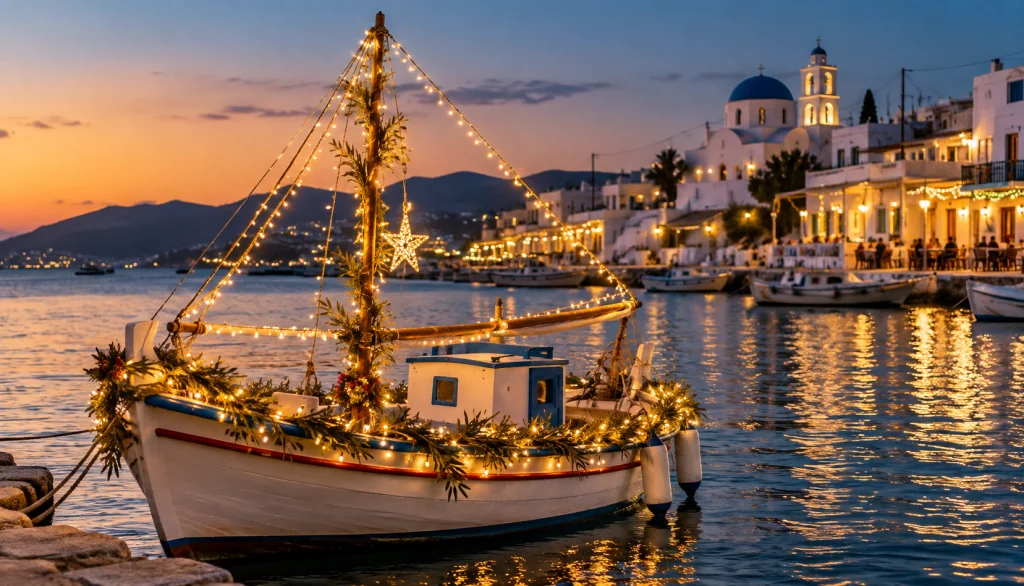
Small decorated boats, Karavakia, is decorated with lights and can be seen in both homes and public spaces during the Christmas season. Today, of course, there are also plenty of Christmas trees in Greece, but the illuminated boat lives on as a characteristic Greek Christmas symbol.
Considering the country's long relationship with the sea, the tradition actually makes sense. And doesn't a little shining Christmas boat sound quite charming?
6. Czech Republic: Fasting – and hoping to see a golden pig
Czech Christmas is full of old folk beliefs and different ways of trying to find out what the future holds. One of the more imaginative traditions says that those who fast on Christmas Eve may see a golden pig, golden pig. Seeing the little golden pig is supposed to be a good sign.
How many people actually manage to fast for a whole day when all the Christmas goodies are within reach is another question.
Czech Christmas folklore also contains many exciting traditions. For example, you can cut an apple crosswise and interpret the core, or let small walnut shells with candles float like boats to predict the future.

7. Venezuela: Roller skating is part of Christmas
In Venezuela, there is a Christmas tradition that at least provides exercise between the treats: patina, gatherings where people roller skate during the Christmas season.
The tradition has been particularly associated with Caracas and with the early morning masses, Christmas Eve Masses, the days before Christmas. Roller skating became popular during the 20th century and developed into a social Christmas pastime with families, children, music and food.

8. Portugal: A place at the Christmas table for those who are missing
Not all unusual Christmas traditions are fun or spectacular. Some are rather beautiful and a little wistful.
In parts of northern Portugal, there is a tradition of saving a place at the Christmas table for family members who have recently passed away. Another old custom is to leave the table set and the fire burning overnight to provide warmth and comfort to the souls of the dead.
The Christmas meal is called Consoada and is eaten on Christmas Eve. The name is connected to the Latin more consoling – to comfort. A tradition that reminds us that Christmas is not just about those sitting around the table, but also about those we remember.

9. Catalonia: A firewood tree poops out Christmas presents
And from the quiet Portuguese Christmas table, we plunge straight into one of Europe's more... down-to-earth Christmas traditions.
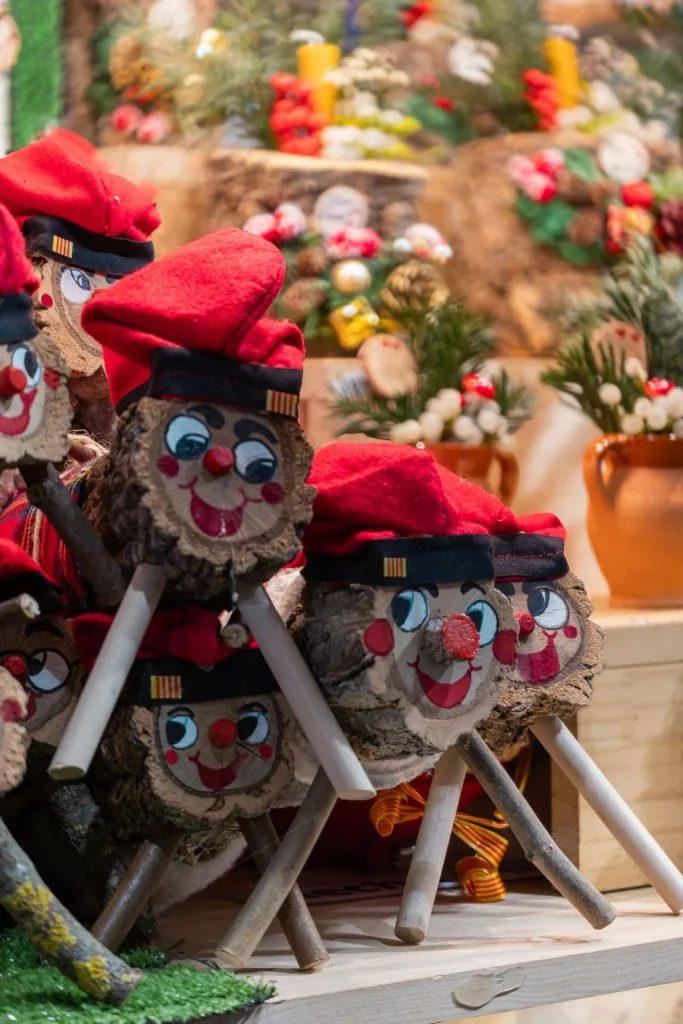
In Catalonia there is Christmas Eve, a firewood tree that has now often been given a happy face, small legs and the Catalan hat barretina. During the time before Christmas, the children take care of their tió, feeding it and making sure it stays warm under a blanket.
Then comes the big day. The children beat the wood with sticks and sing a special song. When the blanket is finally lifted, Tió has – if all has gone according to plan – pooped out sweets and presents.
It's easy to get caught up in the comical detail, but the tradition has older roots in Catalan peasant society, where firewood and fire were associated with home, nature and abundance.
10. Wales: A horse skull knocks on the door
Imagine a knock on the door during the Christmas holidays. Outside, a group of people are singing – along with a person carrying a real horse skull with ribbons, bows and a long white cloth. Welcome to Wales.
The figure is called Mari Lwyd, roughly "the grey mare", and the tradition was particularly common in South Wales during the 19th century. The group would go from house to house during the Christmas and New Year period, trying to sing their way into the house.
A particularly fun part is pwnco, a kind of musical word duel where the group outside and the people inside the house respond to each other in verse.
The tradition declined in the 20th century but has been revived in several places. So yes – under the right circumstances, you can still come across a singing horse skull in Wales around Christmas.

11. Spain: An entire country follows the Christmas lottery
On December 22nd, something special happens in Spain. Then Sorteo Extraordinario de Navidad, the big Spanish Christmas lottery.
The lottery is so strongly associated with Christmas that for many the draw marks the beginning of the Christmas celebrations themselves. The winning numbers are sung out by children and people follow the hours-long draw on television, radio and other media.
The most famous win is called The Fat One, "the fat one", but the special thing about the lottery is that the winnings are spread across many lottery numbers. Families, work colleagues, bars and associations can buy tickets together.
Sitting and listening to children sing lottery numbers for hours may sound strange to us. But… as I said, we're watching Donald Duck.

12. Iceland: The Christmas cat can eat you
We have to go back to Iceland. The thirteen Jólasveinar are not alone in the rather dark gallery of characters of Icelandic Christmas. There are also The Christmas Cat.
In folk belief, this is not some cute little cat that lies and purrs under the Christmas tree, but an enormous and menacing creature. The Christmas cat is associated with the belief that anyone who does not receive new clothes for Christmas risks coming to harm.
Behind the story is a connection to working with wool. Those who had done their work properly before Christmas could be rewarded with a new garment – while those who had not done so risked falling into the eyes of Santa Claus.
The Christmas cat has over time been linked to Grýla and Leppalúði, the trolls who in Icelandic folklore are the parents of the Santa Claus. In short, the Icelandic Christmas universe is not just cozy.
READ MORE: The Yule Goat, the Yule Witch and the Yule Cat – meet Europe's Christmas spirit

13. Italy: Befana comes flying on a broomstick
When Santa Claus has done his thing and Christmas begins to feel over in Sweden, Italian children are still waiting for another visitor.
The night between January 5th and 6th will La Befana, an old woman who, according to tradition, flies around on a broomstick. She fills children's stockings with candy and small gifts – or symbolic coal for those who haven't been very good.
Befana is associated with the Epiphany, Epiphany, and the tradition contains a mixture of Christian stories and older folk beliefs.
January 6th is also usually considered the end of the Italian Christmas season. A famous Italian saying goes that ”with Epiphany all holidays disappear.” But first comes an old woman flying on a broomstick.

14. Catalonia: A pooping figure hides in the Christmas crib
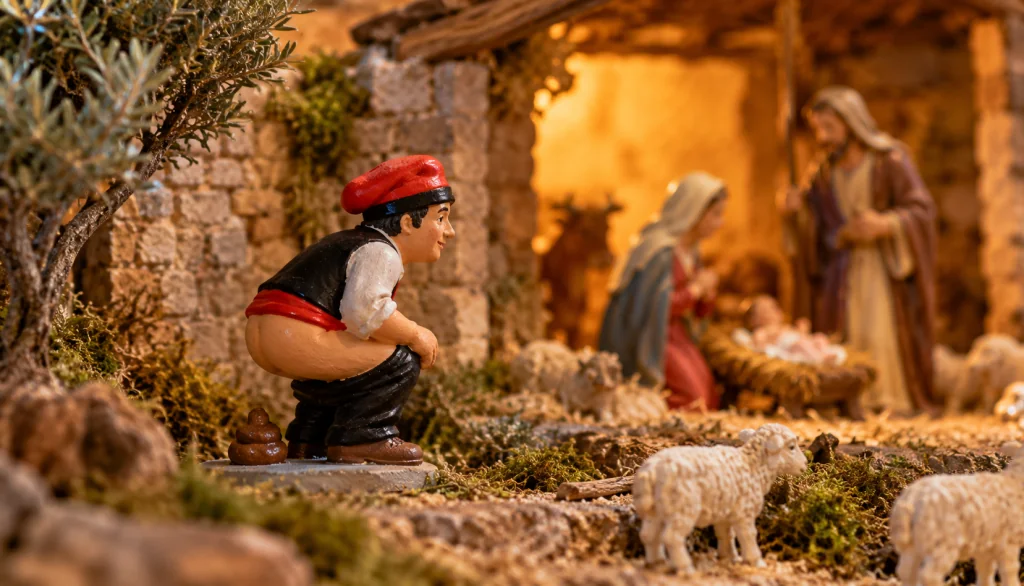
We might have thought that Catalonia had filled its quota of Tió de Nadal. No. In Catalan nativity scenes you can find caganer, a small figure squatting with his pants down and relieving himself.
The traditional caganer depicts a peasant, often wearing the red Catalan cap. barretina, and is placed somewhat out of sight among the other figures in the nativity scene. Nowadays, there are also caganers depicting celebrities, politicians, sports stars and other public figures.
The figure is not just a joke. It has been interpreted as a symbol of fertility and fertilizing the earth for a new year. But yes. It is still a pooping figure in the Christmas nativity scene.
15. Mexico: Night of the Radishes
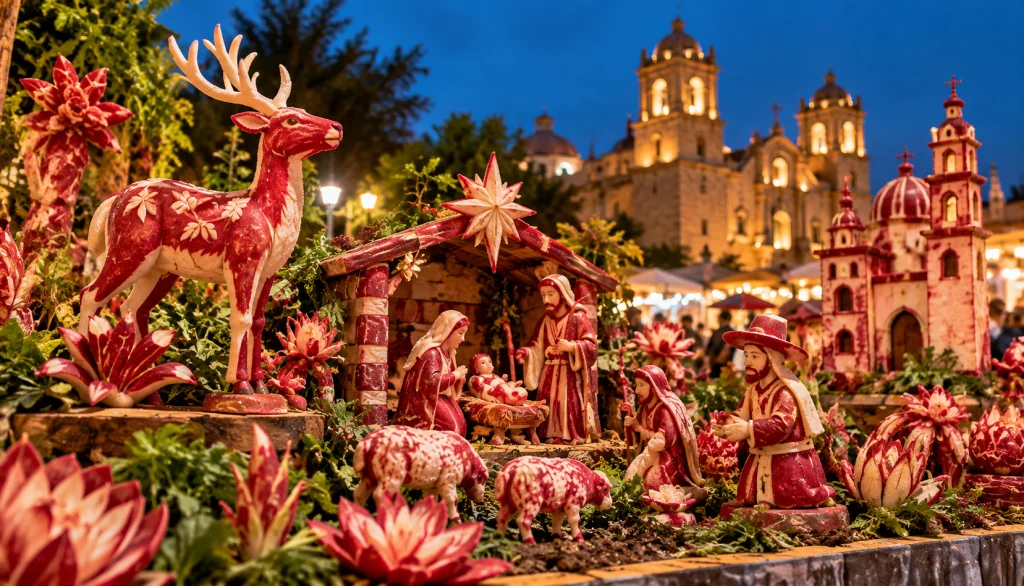
We end with a tradition that sounds like something we made up. Noche de Rábanos – Night of the Radishes. Every year on December 23rd, central Oaxaca, Mexico, is filled with works of art created from radishes. And we're not talking about a little radish with two eyes and a hat.
Local growers and artisans create elaborate figures and entire scenes using large radishes, often combined with other natural materials. The motifs can depict nativity scenes, people, animals, buildings, local traditions, and scenes from Oaxacan life.
The tradition emerged in the late 19th century, when growers used imaginatively cut radishes to attract customers at Christmas markets. Eventually, it developed into a competition and a large annual folk festival.
Today, Noche de Rábanos is one of Oaxaca's most characteristic Christmas traditions. And suddenly, Donald Duck at three o'clock doesn't feel so strange anymore.
Christmas traditions become normal when we grow up with them
A horse skull in Wales, a Christmas sauna in Finland, a pooping firewood in Catalonia or giant radishes in Mexico – from the outside, almost any tradition can seem strange.
But perhaps that is what is so fascinating about traditions. We repeat things that people have done before us, while at the same time customs change and take on new meanings. What seems completely incomprehensible to one visitor may be the very definition of Christmas to someone else.
And we Swedes should probably be a little careful with judging. Donald Duck starts at three o'clock.
READ MORE: Christmas traditions - why do we do what we do?

Odd Christmas traditions in the world
Of course, what is odd, different or strange depends on what you are used to. If you think about it, many traditions are quite strange in general, like dancing little frogs, cutting down a tree and putting it indoors, or walking around in a nightgown with burning candles in your hair.
But when you get used to a tradition, it becomes quite a tradition. normal. We've sniffed out some different Christmas customs and quirky Christmas traditions around the world that you might not have known about. Or did you?

You might also like:
 Facts about lussekatter - 12 things you (maybe) didn't know?
 13 dishes on the Christmas table - the history of Christmas food
 European cities in Christmas splendor – 12 beautiful cities to visit in December
 Christmas markets in Sweden – 12 cozy Christmas markets to visit
 Christmas rhymes - 25 tips for Christmas presents with rhymes
 Christmas trees through the ages – Aunt Anna and the Christmas trees



 English (UK)
 Svenska
Anette says:
What interesting and funny posts, both this one and the last one.
The Christmas costumes are wonderfully crazy. ?
They must be a great addition to Christmas. In fact, I think Peter would look great in all of them.
05 December 2018 - 8:15
Helena says:
Glad you like the posts! 🙂 Haha, not really sure I want to see Peter in one of those 😉.
05 December 2018 - 11:21
Ama de casa says:
The Christmas pyjamas look very cuddly! Wonder if you are "allowed" to go out in them?
Many Christmas traditions are apparently about scaring people. One of my earliest memories is that I was terrified when a Lucia train came to our home in the small village where I was born and lived for the first few years. A very early memory - we moved from there when I was 3...
Nowadays, I'm not as scared of Lucia at all 😀.
05 December 2018 - 9:28
Helena says:
I would probably stay at home in my Christmas pyjamas, regardless of whether I was "allowed" to go out in them or not, haha 😉 Good to hear that you are not as afraid of Lucia anymore! 😉
05 December 2018 - 12:17
Ditte says:
What fun to read about these different Christmas traditions! How different it can be. A lovely post! Many thanks also for the link. And very nice to see you yesterday in "Aruba".
05 December 2018 - 13:45
Helena says:
There was great information about Spanish Christmas traditions on your blog, so thank you for that! And yes, great fun to see you! 🙂
05 December 2018 - 19:44
Emma, Sol som sol? says:
How odd we humans should do everything! And so we laugh at other people's foolishness, ours is completely normal! Because they are, aren't they? Surely our traditions can't be strange?
I mean, of course there should be an almond in the porridge because how else would you know who's next to get married?
05 December 2018 - 15:05
Ruth i Virginia says:
That's right, Emma! Rice pudding with ONE almond 🙂 .
Is rice pudding still part of the Swedish Christmas meal?
Regarding. Kalle Anka - Sweden did not have TV, when I travelled to
USA (1951), so wonder, when and how he became part of Swedish Christmas?
There is no connection there - or is there?
05 December 2018 - 16:11
Helena says:
Ruth, rice pudding may still be included as part of the Christmas meal sometimes, but it may not be the most common, i.e. not on every Christmas table. Donald Duck at Christmas has been shown since 1960 according to Wikipedia ... but the connection to Christmas? It's not entirely clear to me 😉
05 December 2018 - 19:48
Helena says:
Emma, haha yes exactly! That was a bit what I meant in the introduction as well. You have got used to the traditions of your own country, but they are probably at least as odd! 🙂 That with the porridge yes, I have never really been involved, but I have heard about it!
05 December 2018 - 19:45
Renates Reiser says:
Haha, so many strange and funny (and somewhat creepy) Christmas traditions! I could never celebrate Christmas in Ukraine if they decorate their Christmas trees with spiders and spider webs... Help! We have the tradition of Christmas pyjamas in my family too. Very cosy. 🙂
05 December 2018 - 17:51
Helena says:
How nice that you also wear Christmas pyjamas! Is it common in Norway, or just a tradition in your family?
05 December 2018 - 19:49
World by tina says:
So, damn what exciting Christmas traditions you have encountered. Personally, I think the whole thing with dressing up a fat man in red clothes is really strange:)
05 December 2018 - 20:11
Ruth i Virginia says:
Hahahaha! Really!
Which also comes from the North Pole.
05 December 2018 - 20:23
BP says:
What a lovely post:-) I have always associated Christmas with the Christmas tree, warmth, love and not least gifts when I was a child. But when I now read the traditions of different countries, Christmas may not be so positive at all. Strange how you can celebrate Christmas in so many different ways that are "normal" for those who keep the traditions.
Also, I can tell you that the Spanish Christmas lottery is absolutely hysterical. Long queues at the sales points until well into the small hours.
In addition, "Christmas dressing" in the form of pyjamas has arrived in Sweden. Saw an absolutely hideous outfit at Mango in Täby Centrum today. The picture was blurred so I have to retake it before the photo ends up on the blog;-) Even at Lindex there will be Christmas pyjamas.
05 December 2018 - 20:18
Marianne - Glimt av verden says:
I have never heard of anyone hiding their brooms to prevent the witches from travelling to Bloksberg 😀.
05 December 2018 - 21:42
Annika says:
Nice to be linked here, Helena!!! Thanks for that! Now these costumes are really everywhere. AND also used at Christmas parties etc.
HAHA!
Ugly Christmas jumpers are classics too. AND nowadays also dresses. Will write a little about it in the future.
Kalle Anka at Christmas in Sweden, there is always a magazine HERE in the US that writes about this phenomenon at Christmas time. A little fun too 🙂
06 December 2018 - 14:52
Lena - gott för själen says:
Hahaha, so much fun to read. Yes, our traditions are certainly really tricky for others. But then again, pooping logs!? And those pyjamas and suits!!!
Hug Lena
07 December 2018 - 7:41
Helena - Oh darling, let's be adventurers says:
What a fun post. So fun to read about all the different Christmas traditions around the world.
10 December 2018 - 16:39