


Writer: Helena Bergström
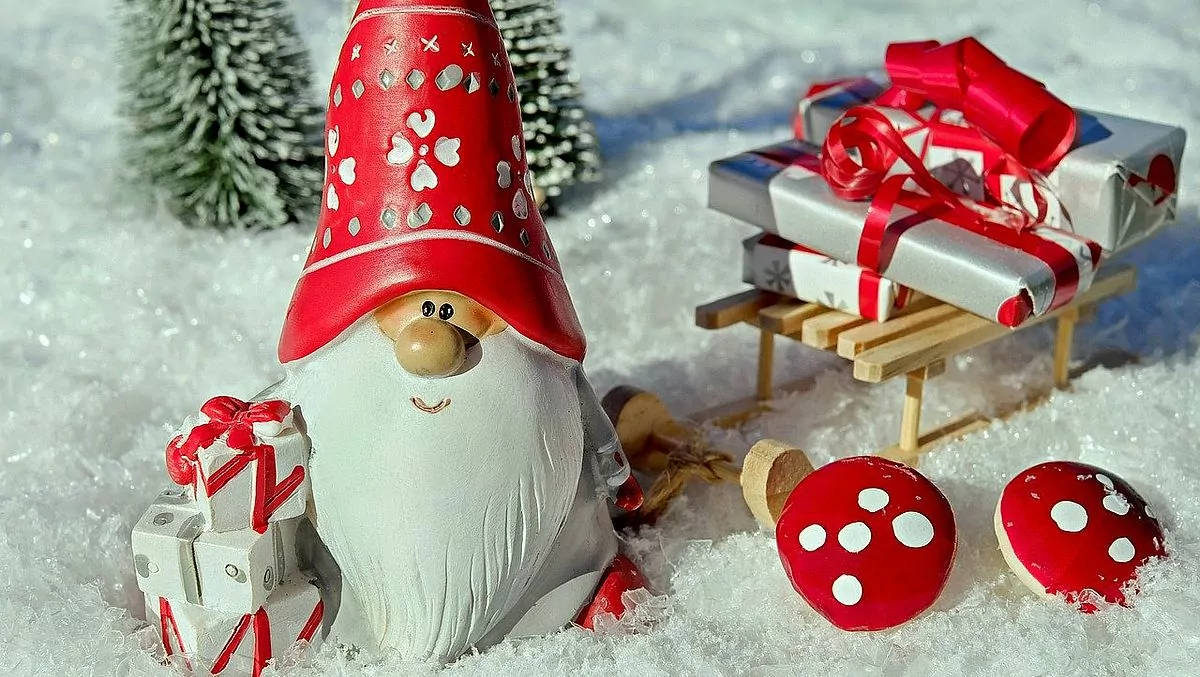
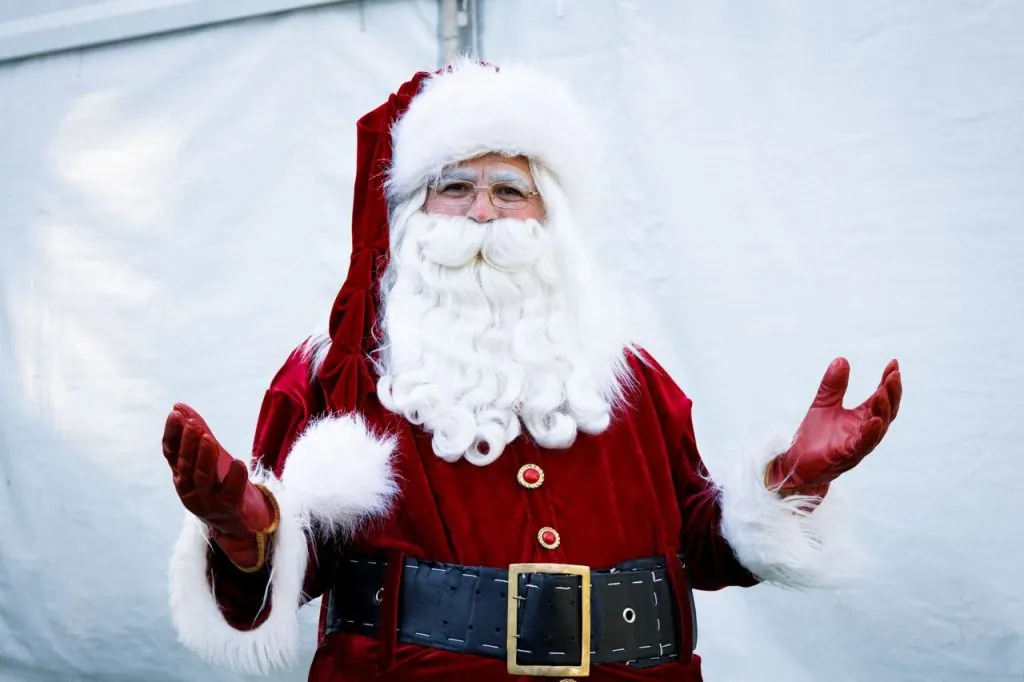
Updated: September 2026 | Who is Santa Claus really? A canonized bishop from modern-day Turkey, a little Swedish farm elf or a big bearded American who flies around with reindeer? The answer is actually: a little bit of everything. Today's Santa Claus is a strange international mix of old traditions, literature, illustrations and advertising. Here are 15 facts about Santa Claus – from Saint Nicholas and the Yule Goat to Rudolf and Iceland's 13 Christmas elves.
 Tweet
Tweet Share
Share Share
Share Pin
Pin Share
Share Share
ShareTable of contents
1. Santa Claus does not have a single origin
It's easy to imagine Santa Claus as an ancient figure who has changed little over the centuries. It's not that simple. The Santa we know today has emerged through the blending of several completely different traditions.
Here you will find the Christian saint Saint Nicholas, the Dutch Sinterklaas, the Nordic farm gnome and the Swedish Christmas goat, among others. Then add American poems and illustrations, Viktor Rydberg and Jenny Nyström, Coca-Cola commercials and a bunch of flying reindeer.
The result was the red-clad, white-bearded figure that now feels natural at Christmas.

2. Saint Nicholas became a role model for the generous Santa Claus
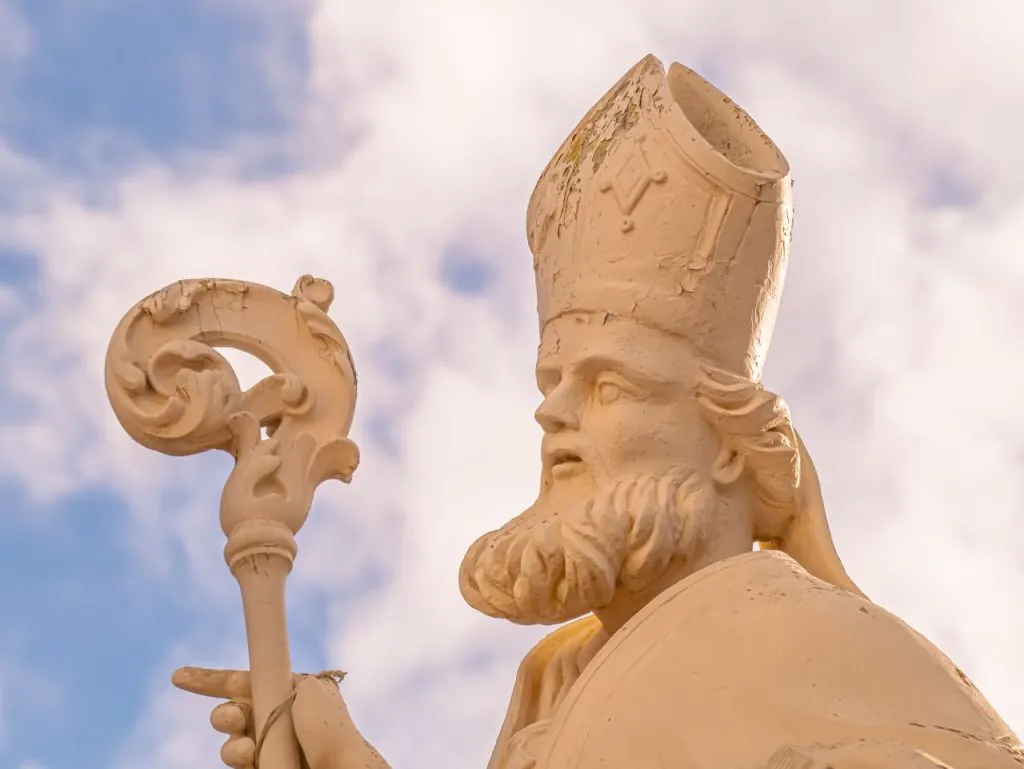
One of Santa Claus' most important predecessors is Saint Nicholas, a Christian bishop who lived in the 4th century in Myra in Lycia, in present-day Turkey.
There are many legends about his generosity. The most famous tells of a poor man who could not afford dowries for his three daughters. Nicholas is said to have secretly given the family money. Of course, exactly what really happened is impossible to know this long after, but the stories helped to make Nicholas a saint associated with children and gifts.
Saint Nicholas Day is celebrated on December 6th, and in several European countries traditions surrounding the saint still survive.

3. Sinterklaas became Santa Claus in America
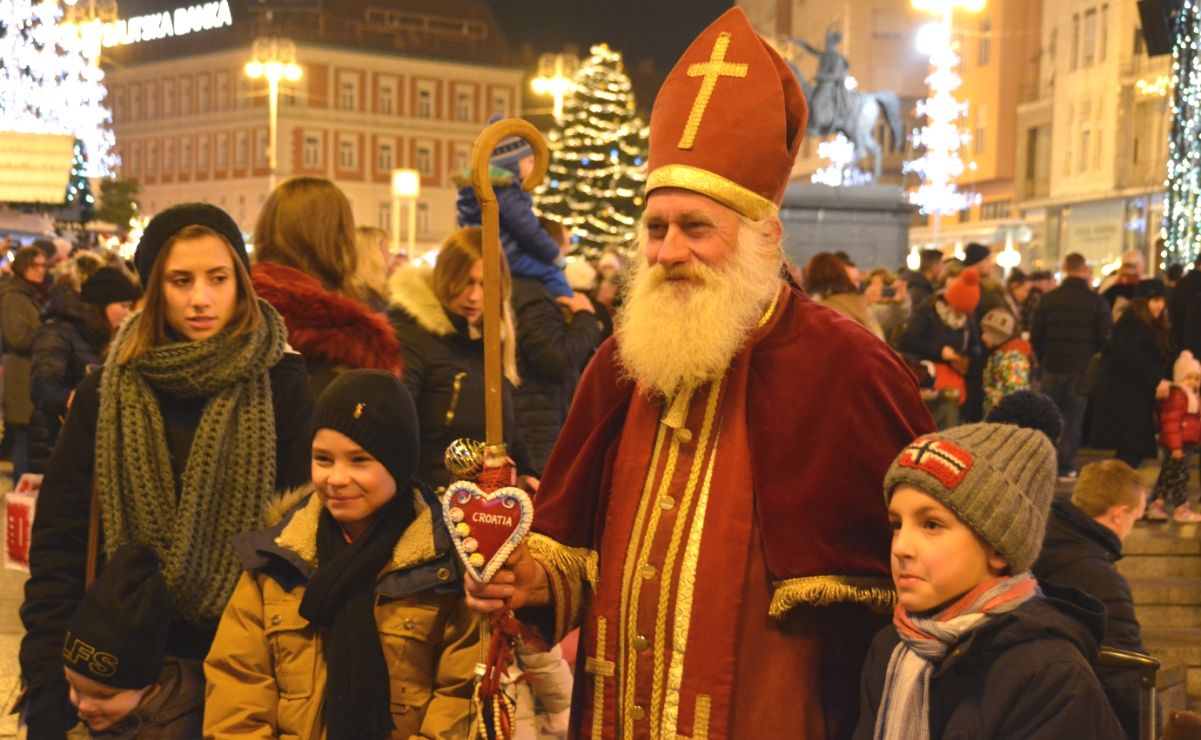
In the Netherlands, Saint Nicholas developed into Santa Claus, a bishop-like figure who brings gifts to children in early December.
Dutch immigrants brought the traditions to North America, where the name Sinterklaas eventually changed to Santa Claus. But the American Santa Claus would eventually take on a rather different appearance than the solemn European bishop. It is therefore no coincidence that Santa Claus and Saint Nicholas sounds a bit similar.

4. A poem gave Santa eight reindeer and a chimney
In 1823 the poem was published A Visit from St. Nicholas, also known as ’'Twas the Night Before Christmas. The poem had enormous significance for how the American Santa Claus came to be imagined.
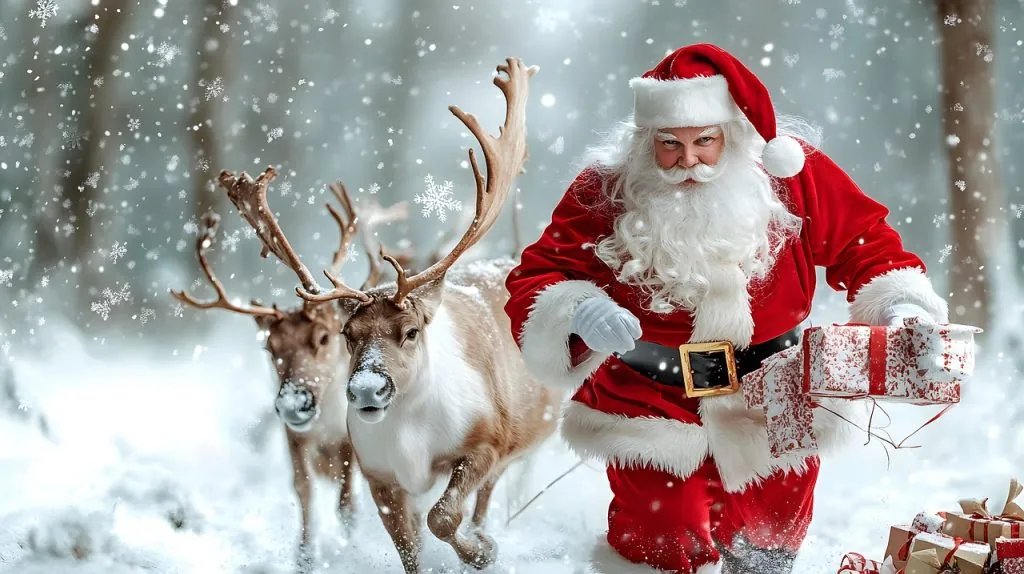
Here Saint Nicholas arrives in a flying sleigh pulled by eight reindeer, comes down the chimney and fills the Christmas stockings with gifts. The reindeer also have names. In modern versions they are usually called Dasher, Dancer, Prancer, Vixen, Comet, Cupid, Donner and Blitzen. What about Rudolf? No, we have to wait more than a hundred years for him.
5. An artist placed Santa's workshop at the North Pole
During the second half of the 19th century, the American plot continued to develop through the cartoonist Thomas Nast.
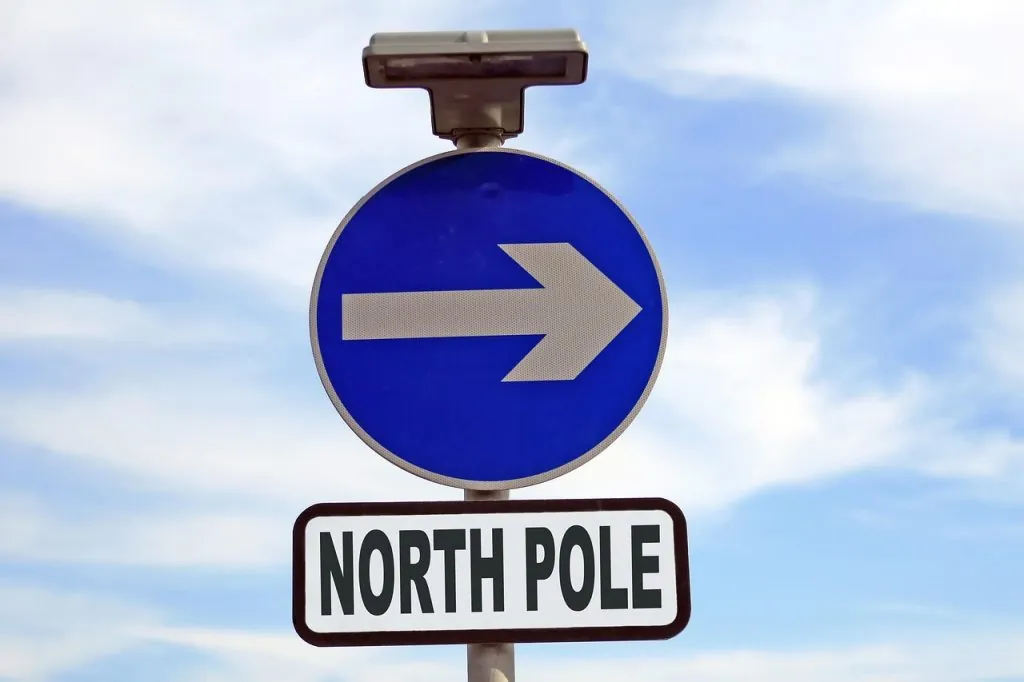
In his popular illustrations, Nast built on the story of Santa Claus and contributed, among other things, to the notion that Santa lives and has his workshop on North Pole. It was a practical choice. The North Pole was far away, mysterious, and belonged to no single country. There, a magical Santa Claus could work undisturbed.
Since then, other places have of course laid claim to Santa Claus. In Finland, Korvatunturi and Rovaniemi are primarily associated with him, while the Danish Santa Claus is often placed in Greenland.
6. The Swedish farm elf didn't give any Christmas presents – he wanted porridge
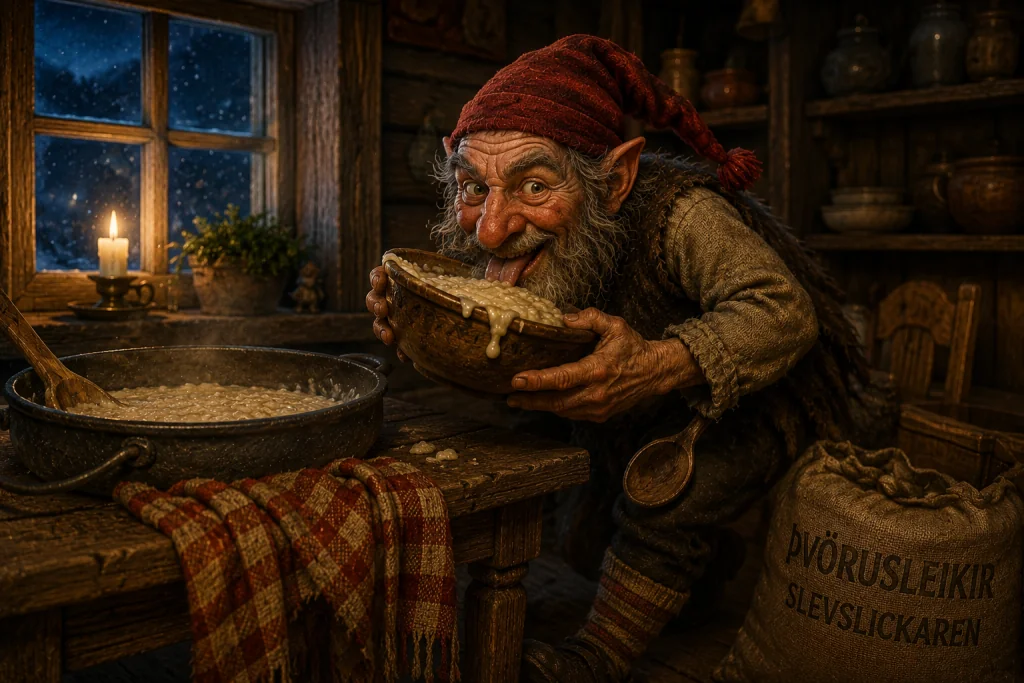
The Nordic the farmyard, or farm gnomes, were originally something completely different from today's Santa Claus.
He was thought to be a small supernatural creature who kept a watchful eye over the farm and the animals. If the people behaved well, he could help – but if he was mistreated, it could have unpleasant consequences.
So it was important to keep up with Santa. For Christmas he could get a bowl of porridge, and according to later tradition the porridge would have a generous dollop of butter. However, he didn't bring any packages.
7. The Christmas goat had the job before Santa Claus
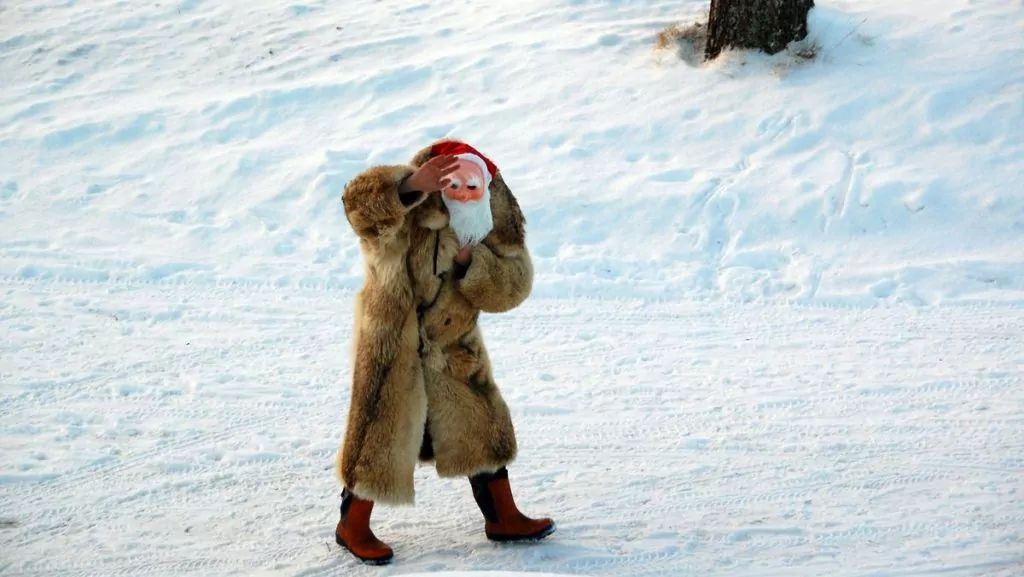
Before Santa Claus took over, Yule goat bring Christmas presents in Sweden. The Christmas goat has a long and rather checkered history and has appeared in several different roles in Nordic Christmas celebrations. During the 19th century, it became common in bourgeois homes for someone to dress up as a Christmas goat and hand out presents.
Eventually, the goat was outcompeted by Santa Claus. Nowadays, he has been demoted from Christmas gift-giver to Christmas decoration – unless he happens to be a giant straw goat in Gävle, of course.

8. Viktor Rydberg and Jenny Nyström shaped the Swedish Santa Claus
Two people were particularly important for the image of the Swedish Santa Claus: the author Viktor Rydberg and the illustrator Jenny Nystrom.
Rydberg wrote, among other things, Little Vigg's adventures on Christmas Eve and the famous poem plots, which begins with the words ”Midwinter's night's cold is fierce.” Jenny Nyström illustrated his stories and then continued for many years to draw elves on Christmas cards and other items.
Her elves were often small, bearded figures in a Nordic setting – much closer to the farm elves than the American Santa Claus. Neither Rydberg nor Nyström ”invented” the Swedish Santa Claus, but they contributed greatly to how we came to imagine him.
9. The Swedish Santa Claus became a mixture of several figures
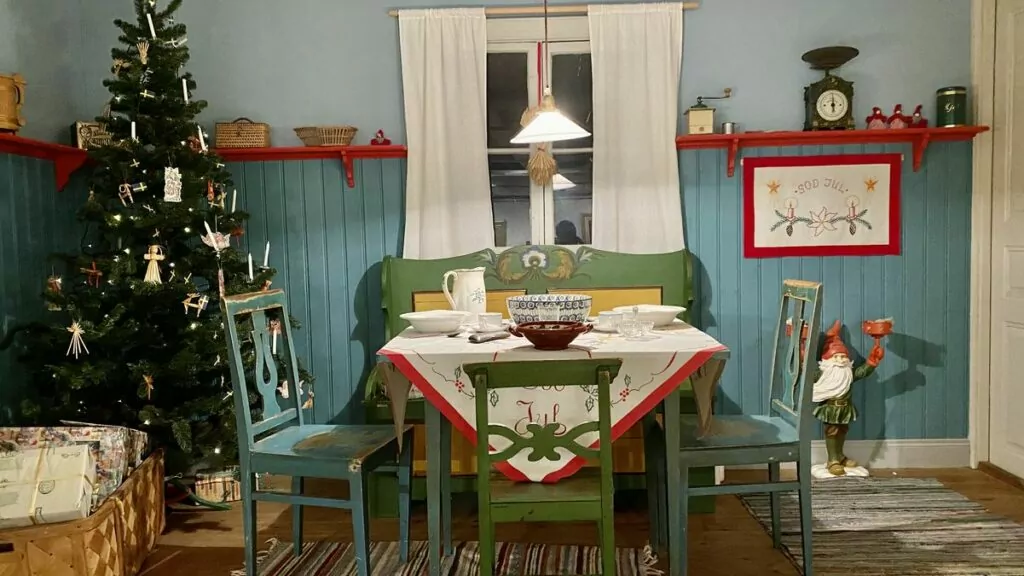
When Santa Claus became popular as a Christmas present-giver in Sweden around the turn of the last century, several traditions came together.
We had our old farm gnome. We had the Christmas goat. From the continent came the traditions of Saint Nicholas, and from the English-speaking world came the increasingly popular Santa Claus. The Swedish Santa Claus therefore became something of a hybrid.
Maybe that's why he can feel both like a little elf who belongs on a Swedish farm and like a big red-clad gentleman who travels through the air with reindeer.
10. Coca-Cola didn't create the red Santa Claus
A persistent myth says that Coca-Cola invented the modern, red-robed Santa Claus. The company didn't. Santa Claus had been depicted as a round, bearded figure—sometimes in red—long before Coca-Cola's famous advertising campaigns began in the 1930s.
However, the advertisement received very wide distribution and helped to solidify the version of Santa Claus that we know so well today: big, cheerful, dressed in red, rosy cheeks and with a substantial white beard.
11. Haddon Sundblom made the Coca-Cola Santa world famous
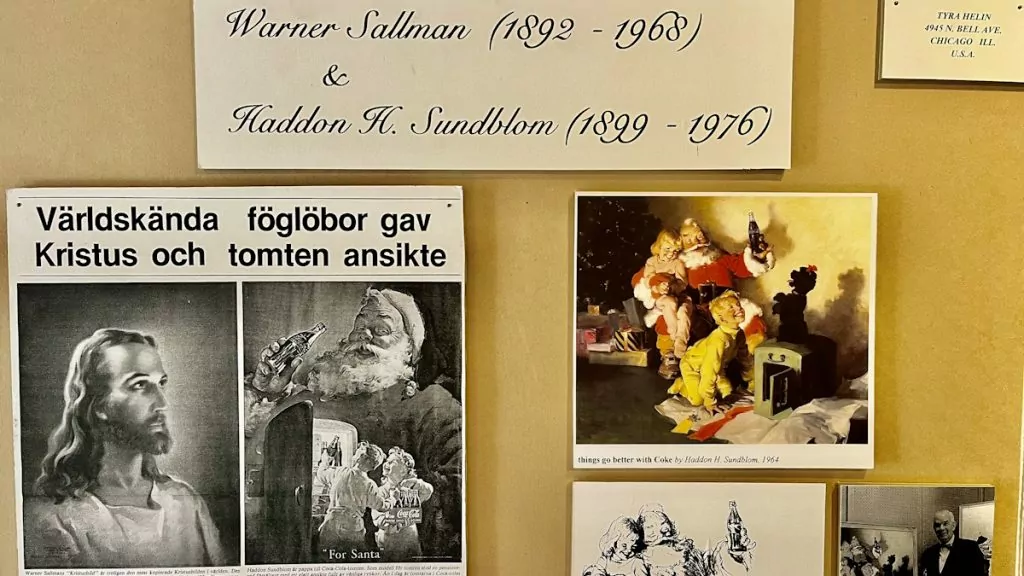
The man behind Coca-Cola's famous Santa Claus images was named Haddon Sundblom. He was born in the United States in 1899 and had Nordic roots: his mother was Swedish and his father came from Åland.
From 1931 and for several decades, Sundblom painted Coca-Cola's Santa Claus. The images were enormously popular and became an important part of the visual history of the modern Santa Claus.
And Haddon Sundblom actually has a small personal connection to us at FREEDOMtravel. I (Helena) worked with him for many years. Elinor Sundblom, a relative of Haddon, who lives on Åland. Sometimes the world – and apparently also the world of elves – is quite small.
12. Rudolph the Red-Nosed Reindeer was created as an advertisement
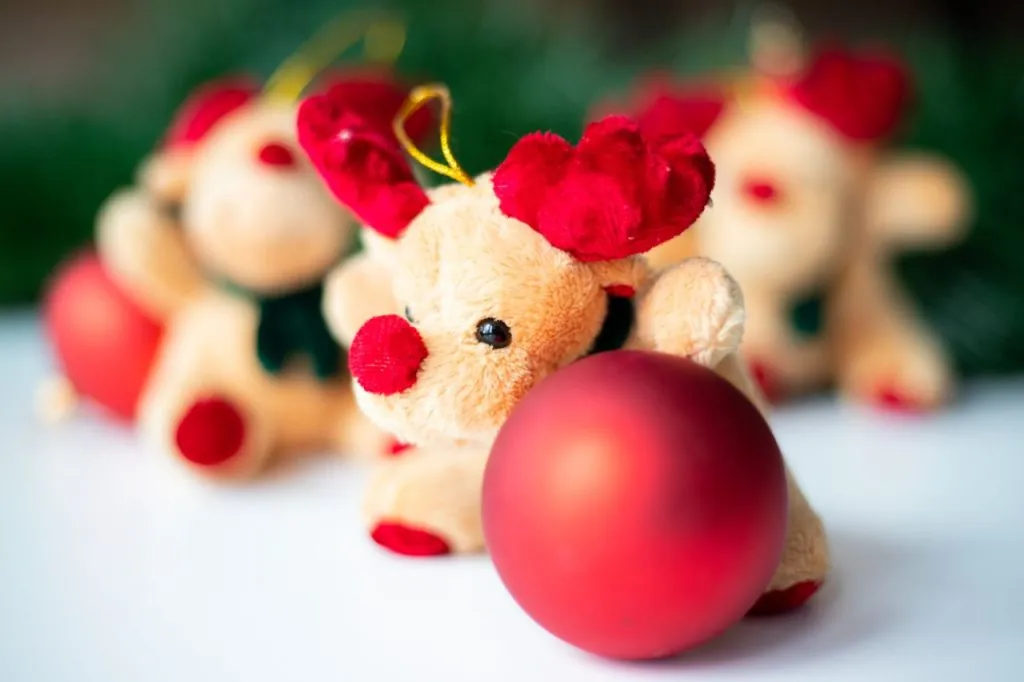
The most famous of Santa's reindeer was not among the original eight. Rudolph the Red-Nosed Reindeer, or Rudolph the Red-Nosed Reindeer, was created in 1939 by Robert L. May on behalf of the American department store Montgomery Ward. The story was published as an advertising product for children and became a huge success.
There were several name suggestions before Rudolf received his final name – including Reginald and Rollo.
Later, May's brother-in-law Johnny Marks wrote the song Rudolph the Red-Nosed Reindeer, and when Gene Autry recorded it in 1949, Rudolf became a serious part of Christmas popular culture. Suddenly, Santa had nine reindeer.
13. Santa's reindeer can be female – even Rudolph
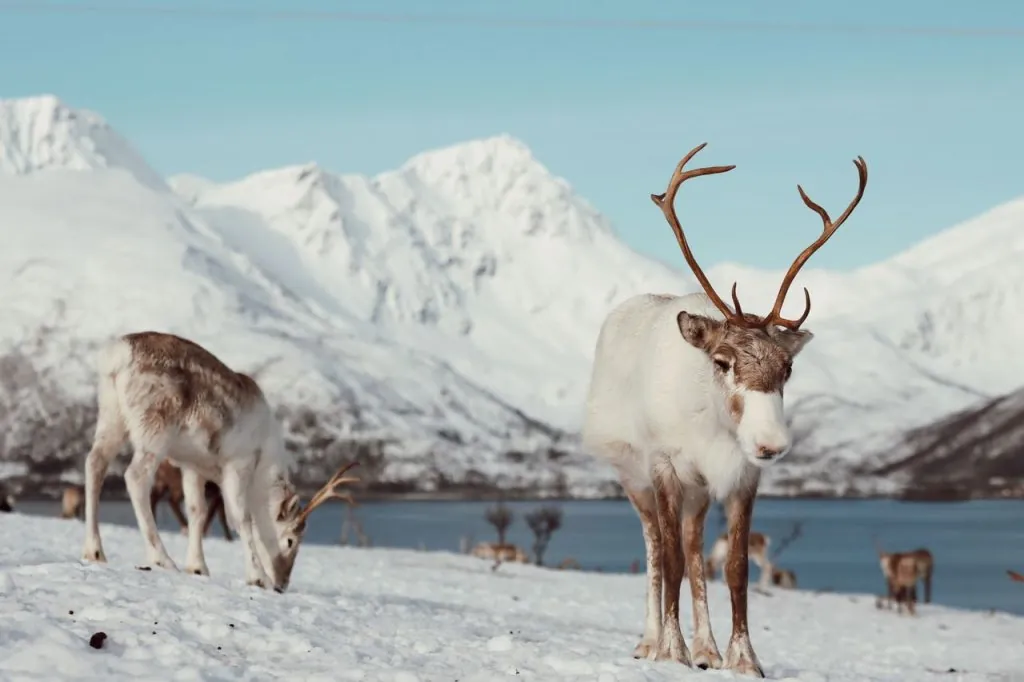
Here is a biological detail that makes Santa's reindeer even more interesting. Reindeer get both male and female horns. Adult males usually shed their antlers after the autumn rut, often before or around winter, while pregnant females normally retain their antlers longer and only shed them in the spring.
This means that reindeer running around with big antlers on Christmas Eve could very well be females.
Of course, this can't be used as evidence for the gender of a bunch of fictional flying reindeer, but the next time you see Rudolph, Dasher, and Blitzen depicted with magnificent antlers on Christmas Eve, you can at least think about it.
READ MORE: 25 facts about reindeer - beautiful animals in the mountains
14. Santa Claus can be called Santa Claus – or Santa Claus
Santa Claus is not called the same everywhere. In Finnish Swedish, the word is often used Santa Claus, which corresponds to Finnish Santa Claus. The Finnish word literally means ”Christmas goat” – another trace of older Nordic Christmas traditions.
In Åland you can also come across the dialectal word Christmas Eve. In Finland, Santa Claus is associated with Korvatunturi in Lapland, while Rovaniemi has built up an entire Santa Claus world where you can meet him all year round.
15. In Iceland, 13 Santa Clauses come to Christmas
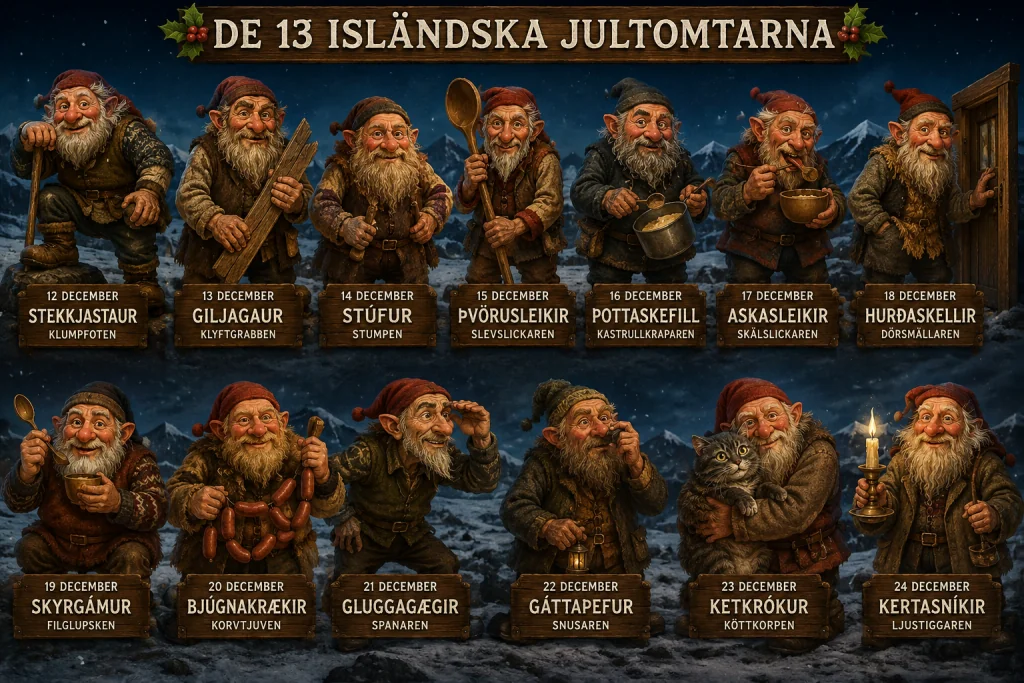
In Iceland, one Santa Claus is not enough. Here there is 13 Christmas gifts, Christmas figures that descend from the mountains one by one in the run-up to Christmas. The first one arrives on December 12th and then another one arrives every day until Christmas Eve. They are named after their various quirks and antics – like licking bowls, stealing sausages or slamming doors.
Their mother is also the sorceress Grýla, who according to old folk belief is not a particularly pleasant acquaintance.
We know the Icelandic jólasveinar a little bit better. Helena has lived in Iceland and for many years had a calendar with all thirteen elves. In our separate report we tell you more about them, their names and the Icelandic Christmas traditions.
READ MORE: There are 13 Santas in Iceland
Who is Santa Claus really?
So who is he, the man with the white beard? There really is no simple answer. Today's Santa Claus bears traces of a bishop who lived about 1,700 years ago, Dutch traditions, American poems and drawings, Nordic folk beliefs, the Swedish Yule goat, Viktor Rydberg, Jenny Nyström and Haddon Sundblom's Coca-Cola commercials.
And somewhere along the way he got a flying sleigh, a workshop at the North Pole, eight reindeer – and finally a ninth one with a bright red muzzle.
In other words, Santa Claus is not an old tradition. He is many old and new traditions that have merged into one and the same figure. And perhaps that is precisely why he has managed to become such an obvious part of Christmas in so many different parts of the world.

You might also like:
 Christmas rhymes - 25 tips for Christmas presents with rhymes
 Facts about Lucia - 15 things you (maybe) didn't know



 13 dishes on the Christmas table - the history of Christmas food
 Christmas trees through the ages – Aunt Anna and the Christmas trees
 The Yule Goat, the Yule Witch and the Yule Cat – meet Europe's Christmas creatures



 English (UK)
  Svenska
Nils-Åke Hansson says:
Merry Christmas to you
24 December 2019 - 8:37
Helena says:
Thank you very much, wishing you a Merry Christmas!
24 December 2019 - 11:10
Kiwi says:
Some believe in Santa Claus and Some don't believe in Santa Claus
I believe in Santa Claus 🎅🎄
07 December 2023 - 6:50
Ama de casa says:
Then there are those who claim that Santa Claus does not exist??? 😉 .
Have a great Christmas Eve and a Merry Christmas! 🙂
Hugs to you both
24 December 2019 - 9:40
Helena says:
Haha, right? Wishing you a very Merry Christmas!
24 December 2019 - 11:11
Ninnie says:
Merry Christmas!
24 December 2019 - 11:13
Elisabeth says:
A Merry Christmas to you!
24 December 2019 - 12:48
Kiwi says:
Christmas is the best
Wishing you a Merry Christmas 🎅🎅🎄🎄👍👍👍
07 December 2023 - 6:52
Ditte says:
Wishing you a very Merry Christmas! And we are now almost at Santa's house in Rovaniemi. But we cancelled a visit...
24 December 2019 - 12:49
Monica says:
Merry Christmas to you all
24 December 2019 - 16:33
BP says:
Wishing you also a very Merry Christmas!
PS. There was a lot I didn't recognise about gnomes. I'm not a big fan of either garden gnomes or Christmas gnomes, but it's fun to read different stories about them.
24 December 2019 - 16:56
Emma, Sol som sol? says:
Imagine how much there is about a single person, so many variants, so different that then become the same - more or less. The funny thing is how similar it is to religion really. And you choose to believe or not.
Fascinating.
26 December 2019 - 12:18
Maria / MagnoliaMagis says:
Merry Christmas! We now live in the magic forest and there are many goblins here...;)
26 December 2019 - 14:18
Lena - gott för själen says:
Fun to read.
St Nicholas also exists in Germany, but is not depicted. He only exists as a patron saint, according to my in-laws. If we remember correctly, he comes on the night of 6 December and leaves presents for the children. The in-laws brought this tradition to Sweden for their children and grandchildren. So A has grown up receiving presents on the morning of the 6th.
Hug Lena
26 December 2019 - 18:23
Jnas says:
??????
26 November 2020 - 13:23
Isabel says:
Hello all viewers I just want to say have a Merry Christmas.
Wishing Isabel .
30 November 2021 - 7:29
Damir says:
Merry Christmas everyone and Happy New Year år♥️♥️
07 December 2021 - 13:41
Henry says:
Merry Christmas👌
20 December 2021 - 8:39
Tomten says:
Merry Christmas
13 December 2022 - 13:38
Alicia Mors says:
Hi I love Santa and I want to wish you all a Merry Christmas and a Happy New Year greetings Alicia
20 December 2023 - 9:00
Atle Rodendahl says:
The fact that Santa Claus is called "Julgubben" in Finnish-Swedish is a minor variation... In Ostrobothnia, for example, he is called Santa Claus. And Rudolf is still called Rudolf and nothing else. The deviations mentioned by you occur locally in southern Finland.
03 January 2024 - 15:40