


Writer: Helena Bergström
Updated: September 2026 | Why is it really called Christmas present? Why did Swedish children in the past receive packages from a Christmas goat, why do people hang Christmas stockings by the fireplace and why was the very first Christmas present of the year not a big success? Here we have collected 15 interesting facts about Christmas presents – from old joke gifts and Christmas gift rhymes to Tomteboda and modern packages.
 Tweet
 Share
 Share
 Pin
 Share
 Share
Table of contents
15 interesting facts about Christmas presents
Giving gifts is an obvious part of the Christmas celebration for many, but the tradition has changed a lot throughout history. What today can be an expensive piece of technology sometimes started out as something much simpler – and maybe even as a joke.
1. The Christmas gift is called a Christmas gift because people knocked on the door.
The word Christmas gift has a rather literal background. In the past, someone who wanted to give a gift could sneak up to the recipient's house, knock hard on the door, throw the gift in, and quickly disappear from there.
So it was themselves the knocking on the door which gave the Christmas present its name. This type of anonymous Christmas present has been known at least since the 17th century.

2. The Christmas present could have originally been a joke gift
Anyone who received a Christmas present in the past could not be sure that the package contained something longed for. The gift could be a humorous object made of wood or straw, for example, and often included a verse that teased the recipient a little.
The point wasn't necessarily to give away something precious. The joke itself, the surprise and the mystery surrounding who had given the gift were an important part of the tradition.

3. Christmas gift rhymes have a long history
The old joke could be given a verse or rhyme, and the tradition of writing rhymes on Christmas presents lived on even when the gifts became more serious. The rhyme could provide clues to the content without revealing too much – just like today.

Old collections of Christmas gift rhymes also show that our ancestors were not always so solemn around Christmas. The rhymes could be both humorous and quite cheeky.
READ MORE: Christmas rhymes - 25 tips for Christmas presents with rhymes

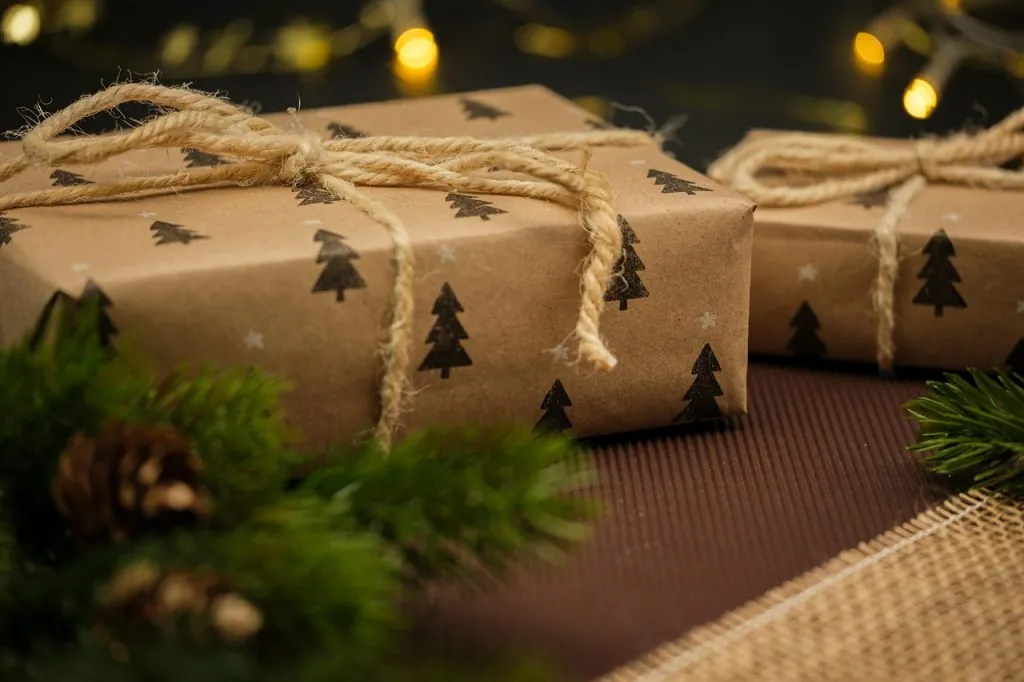
4. A Christmas present didn't have to be a toy in the past
Old stories about Christmas celebrations show that children could receive much more practical Christmas presents than today's toys and electronics. New shoes and clothes could be appreciated gifts, as could apples, candy, and other treats.
In the archives of the Institute of Language and Folklore there is also a story about a boy who was not very helpful in carrying firewood. On Christmas Eve he received an unusually large package. In the package was a log of firewood. The message must have gotten through…
5. The Christmas goat handed out presents before Santa Claus
Before Santa Claus got the job, the Christmas goat could bring Christmas presents in Sweden. During the 19th century, someone could dress up as a goat and show up with gifts, especially in bourgeois environments.
The Christmas goat of that time was not necessarily the modest straw goat we place under the tree today. The figure could be messy, scary, and play various tricks on people.
Towards the end of the 19th century, Santa Claus began to take over the role of Christmas present giver. If you want to know how our modern Santa Claus actually came about, you can read more in our article about Facts about Santa Claus.

6. Saint Nicholas became a role model for the modern gift giver
One of the role models for today's Santa Claus is Saint Nicholas, a Christian saint who lived in the 4th century and over time became known for his generosity.
A famous legend tells of a poor man who could not afford dowries for his three daughters. Nicholas then secretly gave the family gold. The story has several variations and should be considered just a legend, but it contributed to the image of Saint Nicholas as a secret giver.
His name also lives on in Dutch, among other places. Santa Claus, which in turn is linked to American Santa Claus.

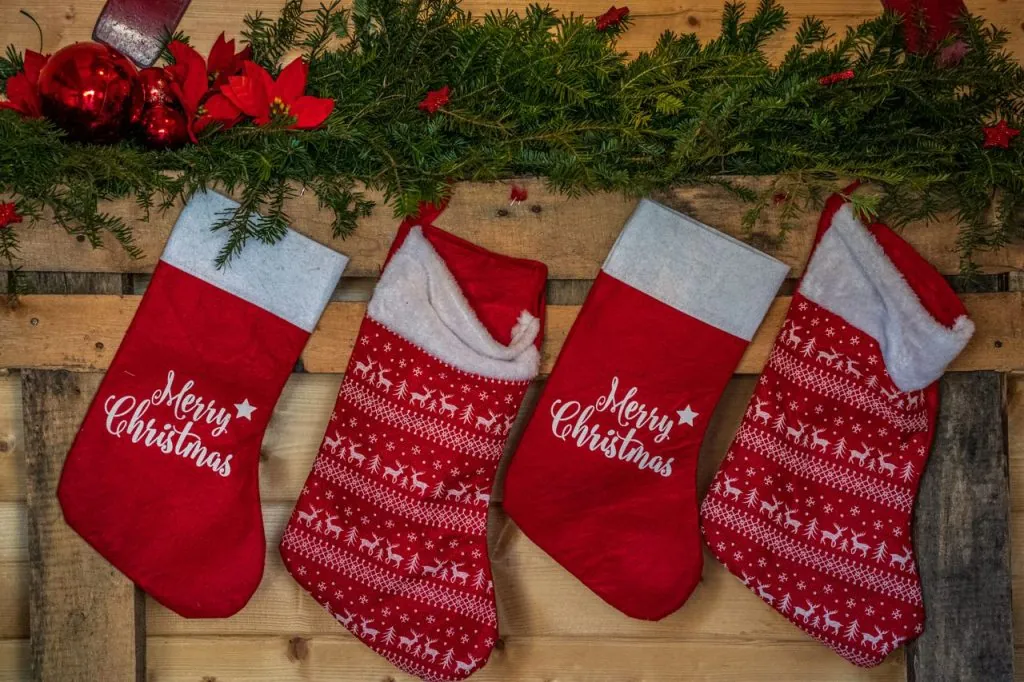
7. The Christmas stocking has its own history
The Christmas stocking has also been linked to the legend of Saint Nicholas. In one version, the gold that Nicholas gave away ended up in stockings that were hung to dry by the fire.
Regardless of how the legend went, the Christmas stocking eventually became an established part of Christmas celebrations in countries such as the UK and the US. During the 20th century, the tradition also spread to Sweden.
The advantage of a Christmas stocking is, of course, that there is a natural limit to how big the Christmas presents can be.
8. Christmas presents are not given out on the same day everywhere
For us Swedes, it goes without saying that Christmas presents are handed out on Christmas Eve, December 24th, but that's not the case everywhere.
In several Nordic and Central European countries, the big parcel distribution takes place on Christmas Eve, while Christmas presents in the UK and the US, for example, are traditionally opened on Christmas Day. Elsewhere, children may receive presents on St. Nicholas Day in early December.
In Spain, the three wise men, or the three kings, have traditionally brought gifts on Epiphany on January 6. Traditions change and mix, of course, and even within the same country, families can celebrate in different ways.
9. Swedish children have been writing wish lists to Santa for over 130 years
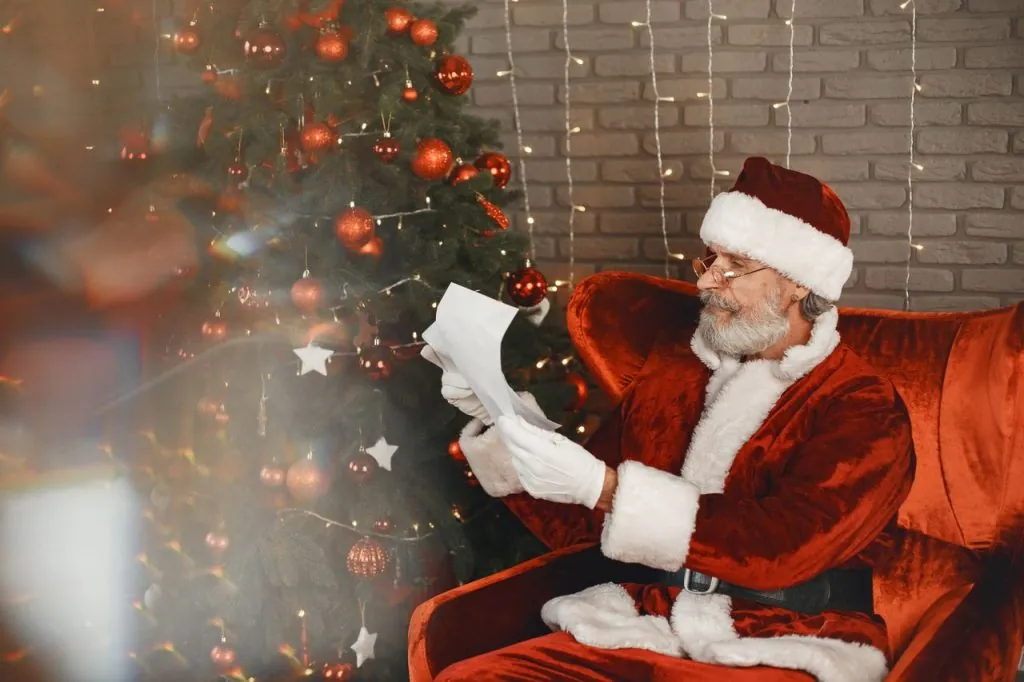
In 1891, the newspaper began Santa Claus is published for Swedish children. Soon children also began sending letters to the newspaper's Santa with questions and requests for Christmas presents.
When the newspaper eventually ceased publication, the letters continued to arrive. Santa's mail had simply become a tradition in its own right.
Many of the old letters have been preserved and today constitute an exciting cultural history. Through them, it is possible to see both what children wished for and how their everyday lives have changed over the generations.
10. You can still write to Santa Claus in Tomteboda
The tradition actually lives on. Every year thousands of letters from children arrive at Santa Claus, and PostNord takes care of them. The classic address is:
Santa Claus
173 00 Tomteboda
Some of the letters are also saved for the future and thus become small time documents of children's thoughts, dreams and wishes.

11. Children surprisingly want the same things now as they did in the past
Technology is changing, but children don't seem to be quite as different today as one might think.
When old letters to Santa are compared to more recent wish lists, things like toys, books, and even pets recur across generations. However, modern wish lists tend to include more items.
A mobile phone or game console would have been hard to come by in the 1890s, of course, but the principle itself – Please Santa, I would really like to have... – are quite similar.

12. The Christmas Gift of the Year has been named since 1988
Since 1988, HUI Research has appointed each year Christmas present of the year. To be chosen, the product must reflect the times we live in and meet one or more criteria, such as newly aroused interest and sales.
The very first Christmas present of the year was the baking machine. Since then, everything from mobile phones and GPS receivers to spike mats and emergency kitchens have received the award.

13. The first Christmas present of the year was not a great success
You might think that the title Christmas Gift of the Year guarantees sales success. It's not that simple.
The baking machine was thus named the very first Christmas Gift of the Year in 1988, but sales did not quite live up to expectations. After Christmas, many baking machines were sold off.
In other words, it was a historically important Christmas present – but not necessarily the Christmas present all Swedes dreamed of.

14. This year's Christmas gifts tell the story of the times we live in
Looking back at previous Christmas Gifts of the Year is almost like browsing through contemporary Swedish history. Some examples are:
- 1988: The baking machine
- 1994: The mobile phone
- 1996: The Internet package
- 2007: The GPS receiver
- 2009: The nail mat
- 2010: The tablet
- 2017: The electric bike
- 2020: Storm kitchen
The mobile phone and the internet package say something about the technological shift of the 1990s, while both the electric bicycle and the emergency kitchen reflect completely different parts of their time.
And the spike mat? Yes, anyone who remembers 2009 might also remember that it suddenly felt like all was on one of those.

15. A Christmas present doesn't have to be a thing
Christmas presents have changed many times throughout history and of course there is nothing that says a gift has to be a newly purchased item.
It could be something edible, something used, an experience, something you made yourself or time together. Another option is to donate money to an organization or cause that the recipient appreciates.
Maybe it is, after all, the idea of the gift itself that is the tradition that has changed the least?

How important are Christmas presents to us?
We think Christmas presents can be fun, but for us they are far from the most important thing about Christmas. Children are of course welcome to receive packages, but when it comes to adults, we often think that something small and edible, that actually gets used, can be at least as nice as an expensive gadget.
Another option is to spend your Christmas gift money on someone or an organization that needs it more. We simply like the idea of focusing a little less on buying things just because you ”have to.”.
And if we're traveling over Christmas, it could be anything. Then there might not be any Christmas presents at all – and that's perfectly fine too.
Christmas gift ideas for those who like motorhomes, caravans and outdoor activities
Are you looking for a physical Christmas gift for someone who enjoys motorhome life, caravanning, boating or outdoor life? Our webshop has various products with motifs and themes for those who enjoy life and adventures outdoors.
See our Christmas gift ideas in the webshop

You might also like:
 Christmas markets in Sweden – 12 cozy Christmas markets to visit
 Christmas rhymes - 25 tips for Christmas presents with rhymes


 9 places associated with Lucia
 Christmas trees through the ages – Aunt Anna and the Christmas trees
 The Yule Goat, the Yule Witch and the Yule Cat – meet Europe's Christmas creatures



 English (UK)
 Svenska
Matts+Torebring says:
A memory from a Christmas in the mid-fifties, which I will never forget, especially in a time like this, with all the abundance. I had managed to save up five kronor, which I spent on baubles... The most expensive Christmas present was a table decoration for my mother, consisting of a few glass balls on a branch. When mum opened the package, one of the glass balls was broken. I remember that it was painful for a six or seven year old. In my adult life, this is my 45th Christmas rush in retail. Never before have we experienced a Christmas trade like this year and already had to say no to a lot of orders,.
29 November 2020 - 8:11
Helena says:
What a special memory, as if taken from a book! And what a change in your life around the Christmas rush!!!
29 November 2020 - 19:51
Monica says:
When I was a child, we always varnished all the Christmas presents. Rhymes were written for each parcel! We also got a Christmas present in a Christmas stocking in the morning. Dad had been to the USA and was inspired. I would say that it is the number one country for Christmas stockings, there is no home without them. Happy Advent!
29 November 2020 - 9:52
Helena says:
How nice to paint the Christmas presents! We didn't do that, but I thought the rhyme was fun to write! Wishing a continued nice 1st Advent!
29 November 2020 - 19:52
Ama de casa says:
Here in Spain, Santa Claus seems to come through the balcony, you can see how he clings to every other balcony at Christmas time. Probably due to the lack of chimneys or too narrow ones 😀.
The children get their presents on the 13th of July when the Kings (the wise men) bring the presents. More right really if you look at the original story 😉 But the children seem to have adopted the traditions of other countries and get presents even on the "real" Christmas. Smart kids!
However, we have stopped buying Christmas presents many years ago, which makes Christmas more peaceful and less stressful 🙂.
29 November 2020 - 10:11
Helena says:
Yes, in southern Europe we have seen lots of Santas along balconies and facades! Smart of the kids to get Christmas presents both now and then 😉 A less stressful Christmas sounds nice by the way!
29 November 2020 - 19:54
Marias memoarer says:
3 reminds me of my childhood, but we threw in Christmas cards instead, and the "little Christmas" that we celebrate in Finland? It was very important not to be seen and nobody would know who the cards were from.
I love Christmas gifts (both to plan and give, and also fun to get some gifts myself), even though I am 30+ and should realise that it is not so sustainable... ? But a Christmas gift can be as sustainable as you make it of course, it does not have to consist of unnecessary gadgets that no one uses ?
29 November 2020 - 13:59
Helena says:
But how interesting that you had such Christmas traditions when you were little!!! I know Little Christmas well, as one of my closest colleagues lives in Åland 😉 And of course you can make a Christmas gift sustainable! Wishing a continued nice 1st Advent!!!
29 November 2020 - 19:56
Maggan och Ingemar says:
1948 is probably the Christmas I remember most. Then, as a 5-year-old, I was still sucking my thumb, which my parents didn't like. I was promised the biggest doll available if I stopped by Christmas Eve. I did and the last package that was handed out was for me and as big as I was (tall). Inside was an incredibly beautiful cellophane doll and clothes made by my grandmother. There were small underpants with lace, a bodice (as they had in those days), a pleated skirt with matching blouse with small pearl buttons, a fur jacket with a hat, knitted socks and shoes made of oilcloth. All homemade and knitted by my grandmother. I was probably the happiest 5 year old that Christmas and there was no more thumb sucking. ? Later on, the Christmas presents have escalated and become many expensive things. Today, we grandparents can hardly buy anything for our grandchildren....they have almost everything and it's mostly computer games that the schoolchildren crave. ? This year it will be a quiet Christmas and we are looking forward to that. Christmas is mostly for the little ones, we think. Have a continued nice advent with lots of candles.
29 November 2020 - 15:45
Helena says:
What a nice and special memory!!! How fun that you wanted to tell us! 🙂 Certainly it has escalated with Christmas gifts and a little difficult to handle. Nice with gifts, but it should feel positive in the long run!
29 November 2020 - 20:12
BP says:
Oh I believed Ama who wrote a few days ago that Santa Claus lives in Torrevieja up in a palm tree during the summer. From there he comes down and distributes Christmas presents, but only on Epiphany...?
A fun read about how the Christmas gift came about.
We stopped buying Christmas presents a long time ago. We focus on extra good food instead.
29 November 2020 - 18:31
Helena says:
Who knows? Haha! We also like good food. Since we are currently on a diet, we are thinking about seafood 😉.
29 November 2020 - 20:13
Ruth i Virginia says:
The only Christmas present I remember as being very special,
was a gramophone that was for me and my 4 year old brother.
And that was the only clap, but who needed more?
It was a black suitcase with a crank. We must have got some discs,
but do not remember. The discs went 3-4 minutes and the spring
started to slow down after about 10 minutes.
Common gifts were flannel pyjamas for my sister and woollen socks, which
Mum knitted, and earlier when my feet grew, I got new ones
ski boots. The "Girls' Christmas Book" and some marzipan pigs were extra.
Now he has adopted US habits but Swedish Christmas ham and red cabbage
it should be. And when the kids were home, we baked thousands...
gingerbread Christmas presents have never been very important in our family.
I now subscribe to magazines for those who want them.
It must be said that in the last ten or so years, Christmas has been ruined...
It starts at Halloween. When the real Christmas comes, you are
totally out-Christmased. We don't know what it will be like this year.
30 November 2020 - 7:03