


Writer: Helena Bergström
Updated: August 2026 | Suomenlinna, or Suomenlinna in Finnish, is a mighty sea fortress on the islands outside Helsinki. Here, Swedish, Russian and Finnish history meet among bastions, cannons, tunnels and old buildings. We visited Suomenlinna in the middle of winter and spent several hours exploring the fortress in brilliant sunshine, snow and bitter cold.
 Tweet
 Share
 Share
 Pin
 Share
 Share
Table of contents
Suomenlinna – a sea fortress outside Helsinki
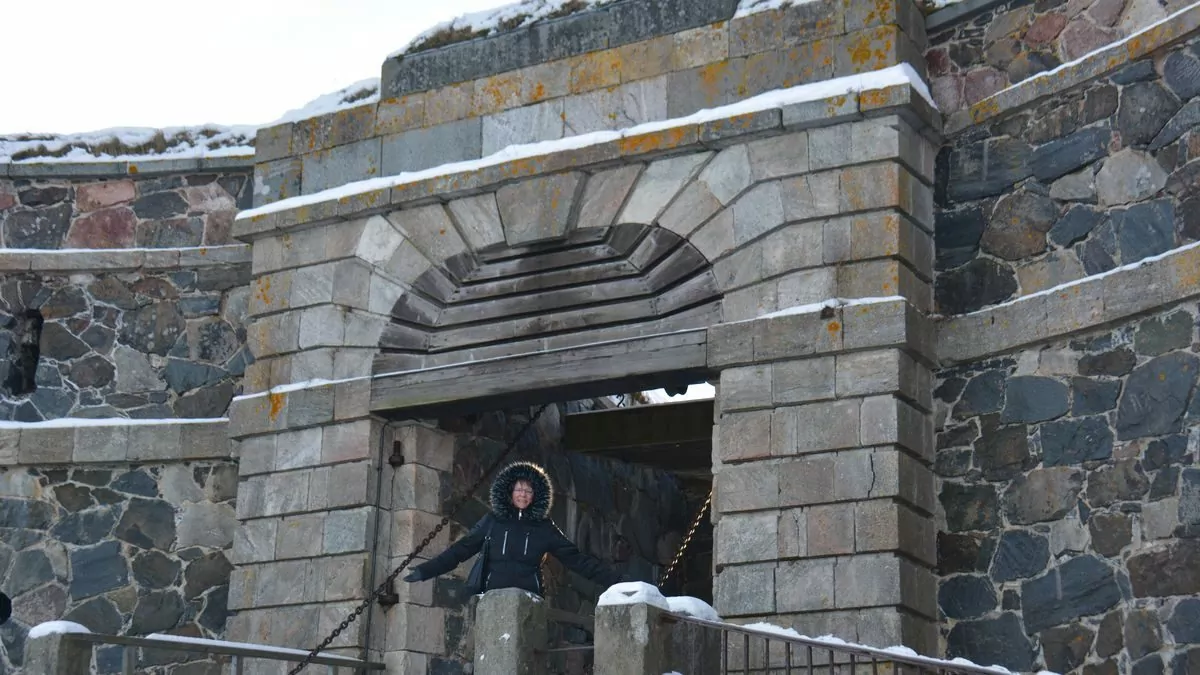
Located on a group of islands just outside central Helsinki, Suomenlinna is one of the city's most interesting sights. The fortress began construction by Sweden in 1748 and has since been held by both Sweden and Russia.
Since 1991, Suomenlinna has been included on the UNESCO World Heritage List as a significant example of European military architecture adapted to the special conditions of the islands.
But Suomenlinna is not just a historical area or a museum. It is also a vibrant part of Helsinki, with homes, workplaces, restaurants, cafes and services. And it is all located out in the sea, just a short boat ride from the Market Square.
Take the ferry to Suomenlinna
The easiest way to get to Suomenlinna is by HSL ferry from the Market Square in central Helsinki. The ferry runs all year round and the crossing takes about 15 minutes. During the summer season, there are also water buses that stop at other piers on Suomenlinna.
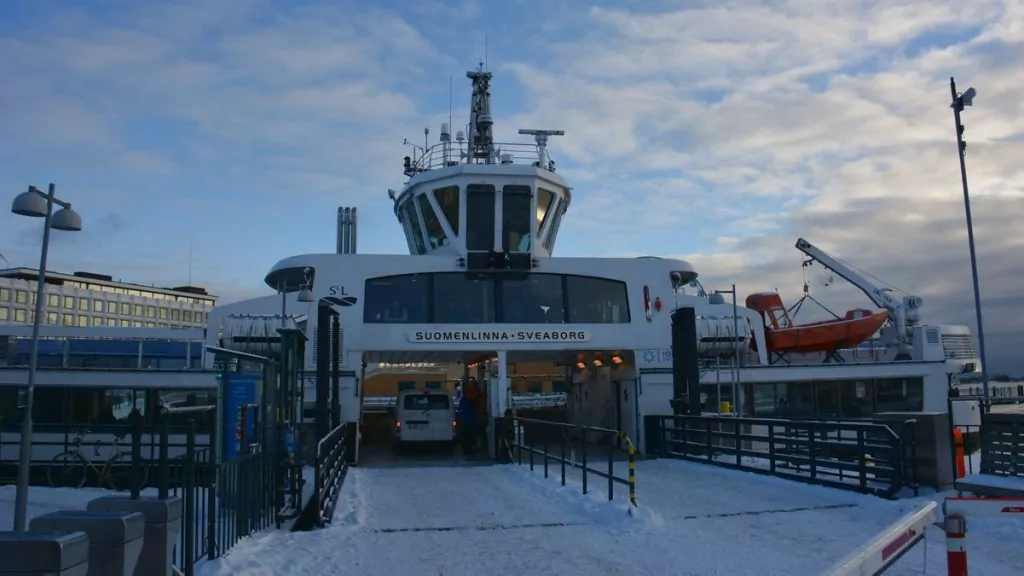
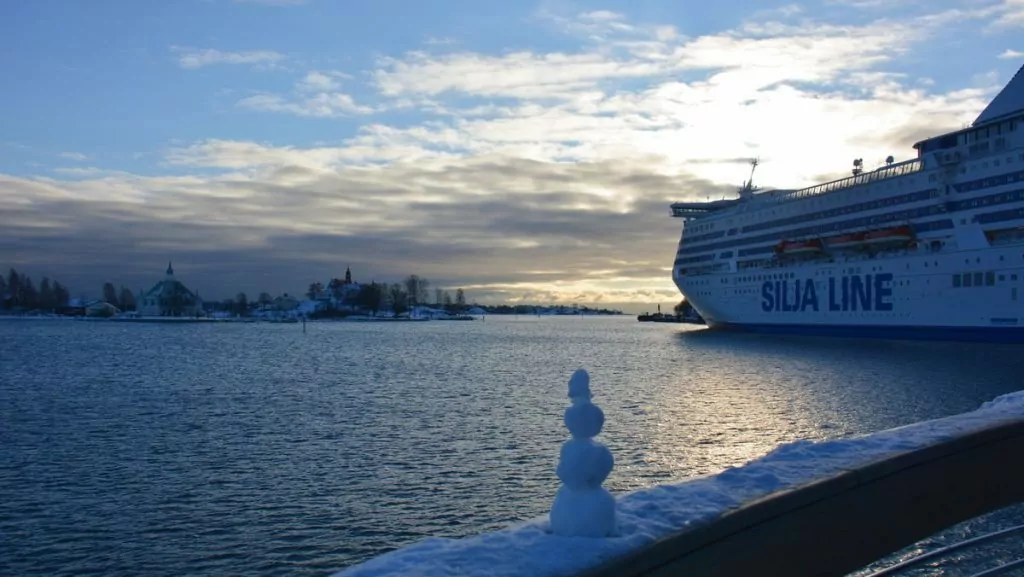
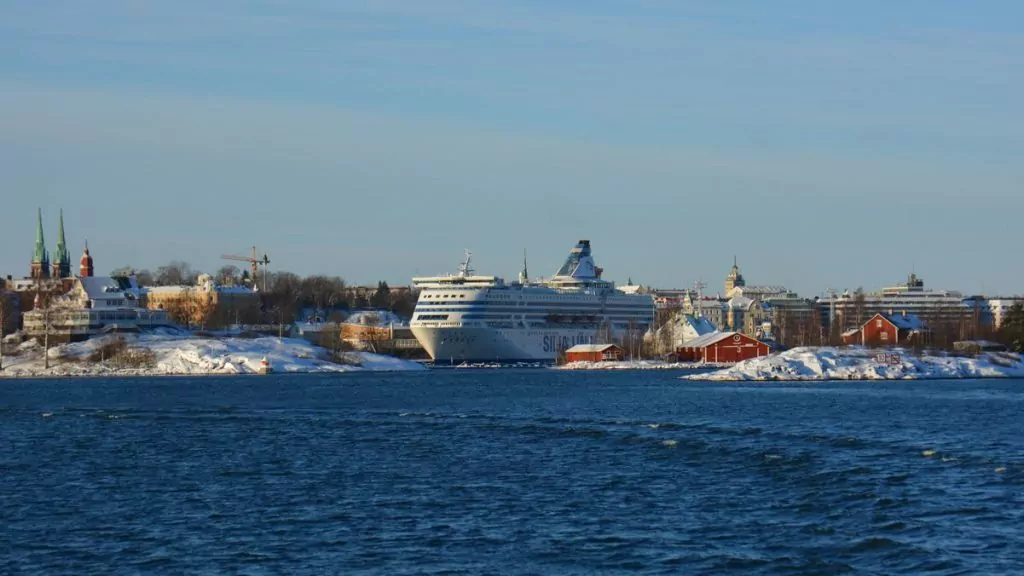
When we visited the fortress, it was winter and really cold. We walked from the train station to the Market Square, bought a ticket and headed out to sea with a bunch of other well-dressed passengers.
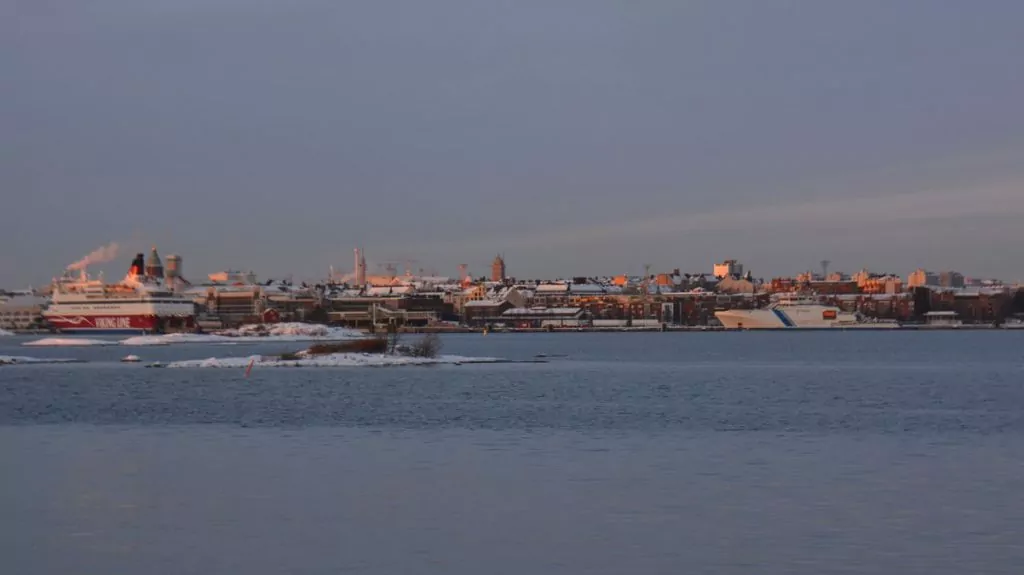
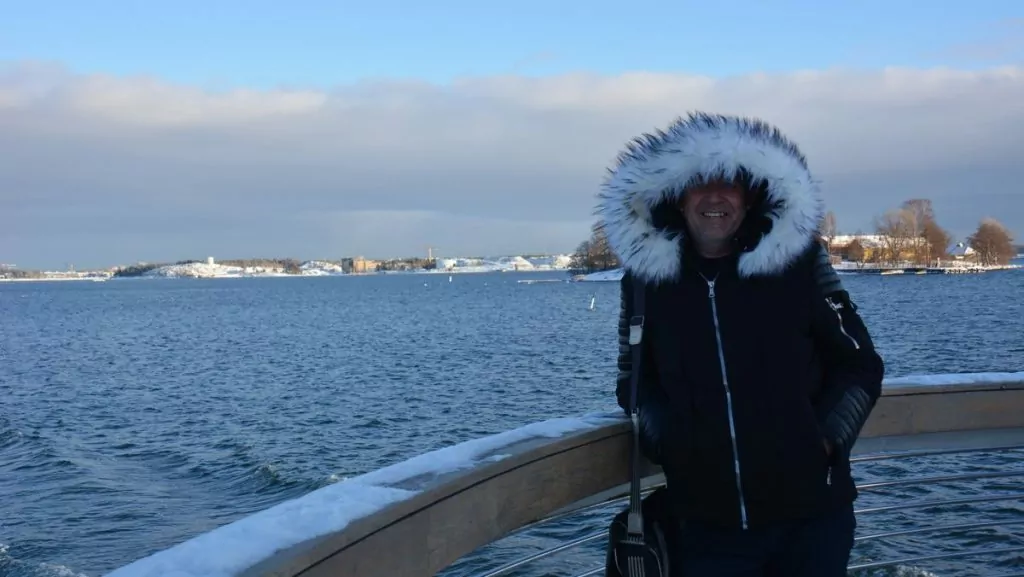
It was a very beautiful little boat trip. We passed islands, skerries, wooden houses and large Finnish ferries while the sun shone over the wintry landscape. The boat trip alone almost made the trip worth it.

Suomenlinna was built by Sweden
When the construction of Suomenlinna began in 1748, present-day Finland was part of Sweden. The background was Sweden's weakened position after the wars with Russia in the first half of the 18th century. The defense in the east needed to be strengthened, and the Swedish parliament therefore decided to build a large naval fortress and naval base outside Helsinki.
The work was led by Augustin Ehrensvärd and became one of the Swedish state's largest construction projects of its time. Thousands of people participated in the work and the fortress was named Sveaborg in 1750.

The plans were enormous – and much larger than what ultimately became reality. The fortress was never fully completed according to the original plans.
Suomenlinna served as a base for the Swedish navy during Gustav III's war against Russia from 1788 to 1790. However, no actual battles were fought at the fortress itself during the war.
The dramatic capitulation of 1808
Perhaps the most talked about event in Suomen's history occurred during the Finnish War between Sweden and Russia in 1808–1809.
Russian forces besieged the fortress in 1808. After relatively limited fighting, the commander Carl Olof Cronstedt made the decision to surrender and in May Suomenlinna, with ships and military equipment, was handed over to Russia.
Why such an important and strong fortress was surrendered has been debated ever since. Cronstedt has been both accused of treason and defended based on the difficult circumstances. There is no simple and certain answer to why he surrendered.
The following year, Finland became an autonomous grand duchy within the Russian Empire, while Suomenlinna continued to be a Russian military base.
Suomenlinna during the Russian era
The Russian period lasted for over a hundred years and left a clear mark on the fortress. New buildings were erected, the area was expanded, and a large Orthodox garrison church was completed in 1854.
During the Crimean War, Suomenlinna again became a scene of drama. In August 1855, the fortress was bombarded for two days by a British-French fleet. The bombardment caused extensive damage, and traces of the Russian period are still visible in many places.

From Russian fortress to Finnish Suomenlinna
Finland declared independence in 1917, but the Russian troops did not leave Suomenlinna immediately. It was not until the spring of 1918 that the fortress was transferred to Finnish administration.
In the same year, it was named Suomenlinna, which roughly means ”Finland’s Fortress”. But the first period under Finnish rule was dark. During the Finnish Civil War, a prison camp was established on the islands for Red prisoners and people suspected of belonging to the Red side. In total, around 8,000 people were taken to the camp.
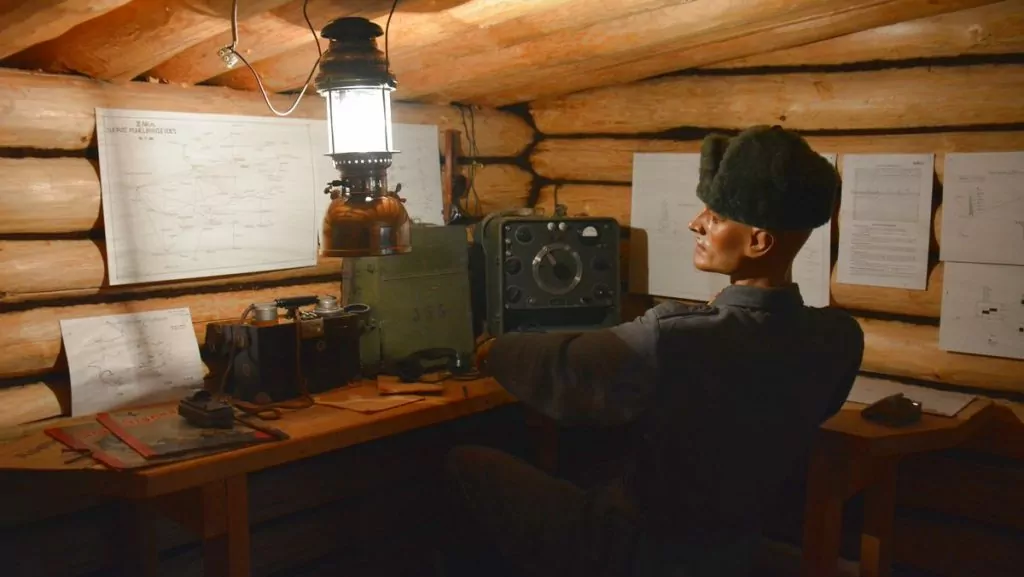
Many died, mainly from hunger and disease under the harsh conditions, and prisoners were also executed. During World War II, Suomenlinna was used, among other things, by coastal artillery and anti-aircraft guns, and as a base for the Finnish submarine fleet.
In the 1970s, large parts of the area were transferred to civilian administration. However, a military presence still exists through the Finnish Navy's Naval Academy.
Attractions at Suomenlinna
There is a lot to see on Suomenlinna and you can easily spend half or a whole day on the islands. An easy way to discover the area is to follow the so-called Blue Route, which leads past several of the most important sights.
The distance from the ferry terminal to Kungsporten is about 1.5 kilometers one way. But expect to walk considerably more than that if you want to take a closer look at the buildings, museums and fortifications along the way.
Suomenlinna Church and Lighthouse
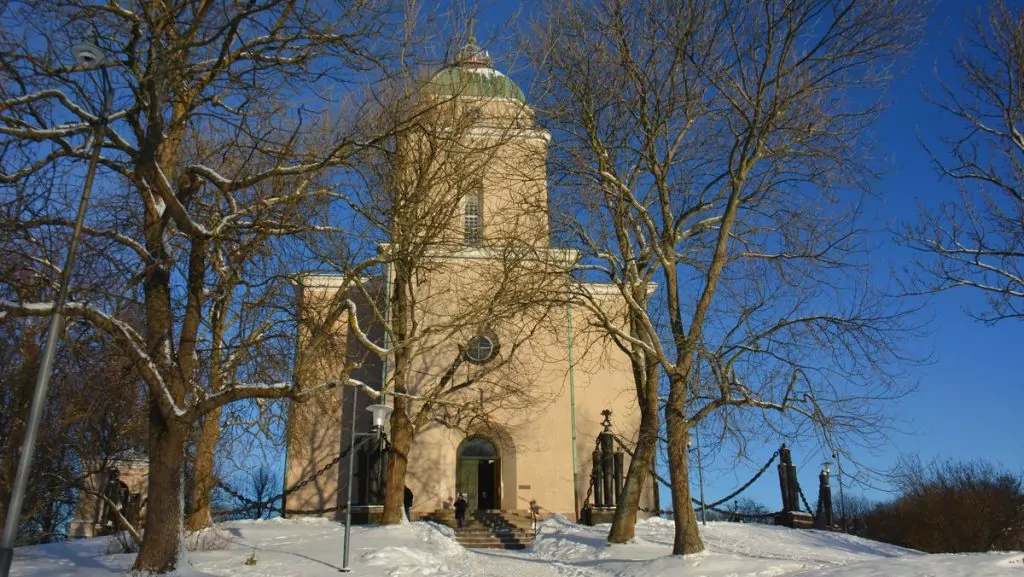
One of the first large buildings you encounter is Suomenlinna Church. Built in 1854 as a Russian Orthodox garrison church, it looked completely different then, with onion domes typical of Orthodox architecture.
After Finland gained independence, the church was rebuilt and became Lutheran. An unusual detail is the church tower, which also serves as a beacon for both sea and air traffic. The beacon flashes the letter H for Helsinki in Morse code.
The Great Courtyard and Ehrensvärd's Tomb
The Great Courtyard was created during the Swedish period and was once the administrative center of the fortress. It also houses the tomb of Augustin Ehrensvärd, the man who led the construction of Suomenlinna.
If you are interested in Swedish history, this is one of the places where you really feel that Suomenlinna was once a huge Swedish project far out in the eastern parts of the kingdom.
The dry dock
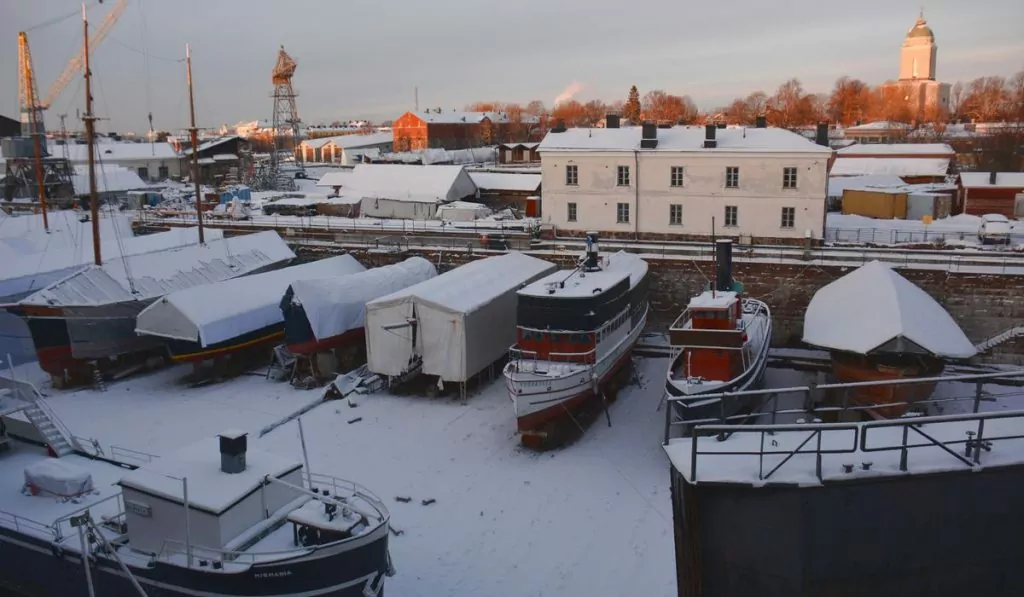
The old dry dock of Suomenlinna is another impressive relic from the Swedish era. Construction began in 1750 and in the 1760s ships were built here for the Swedish archipelago fleet under the leadership of the famous shipbuilder Fredrik Henrik af Chapman.
The dry dock is one of the oldest in the world still in use. Today, traditional wooden and sailing ships are mainly restored here. The dock area itself is a work area and is off-limits, but there is a viewing platform where you can look down over the facility.
Gustav's sword, cannons and fortifications
Further south you come to Gustavssvärd, in Finnish Kustaanmiekka, where the fortress landscape is at its most distinct.
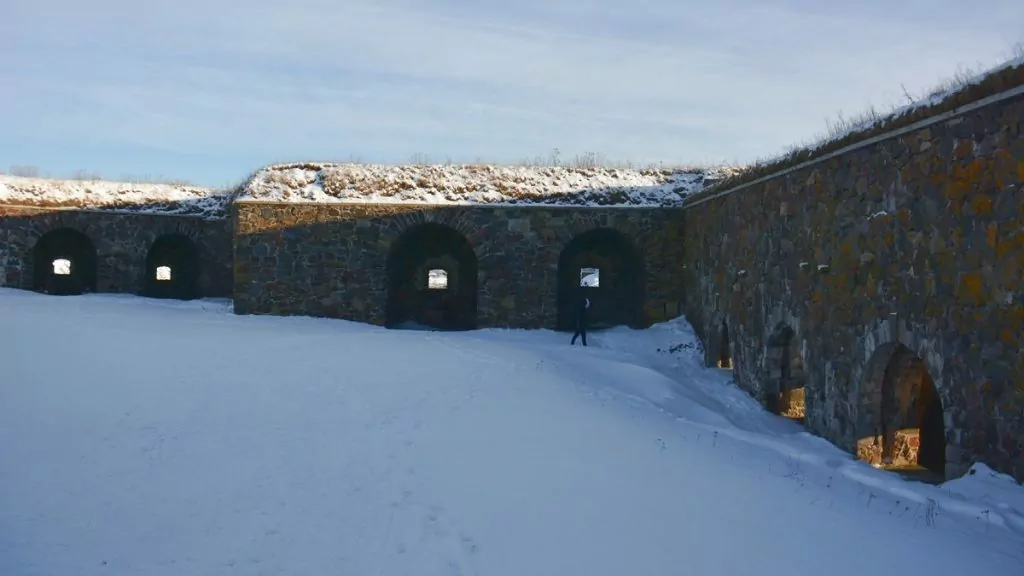
Here you will find ramparts, tunnels, cannons and fortifications from different periods. The large cannons that stand in the landscape today are mainly associated with the Russian period in the 19th century. It is also here that you really get the feeling of Suomenlinna as a sea fortress, with the sea right next to the walls and ramparts.
Kungsporten
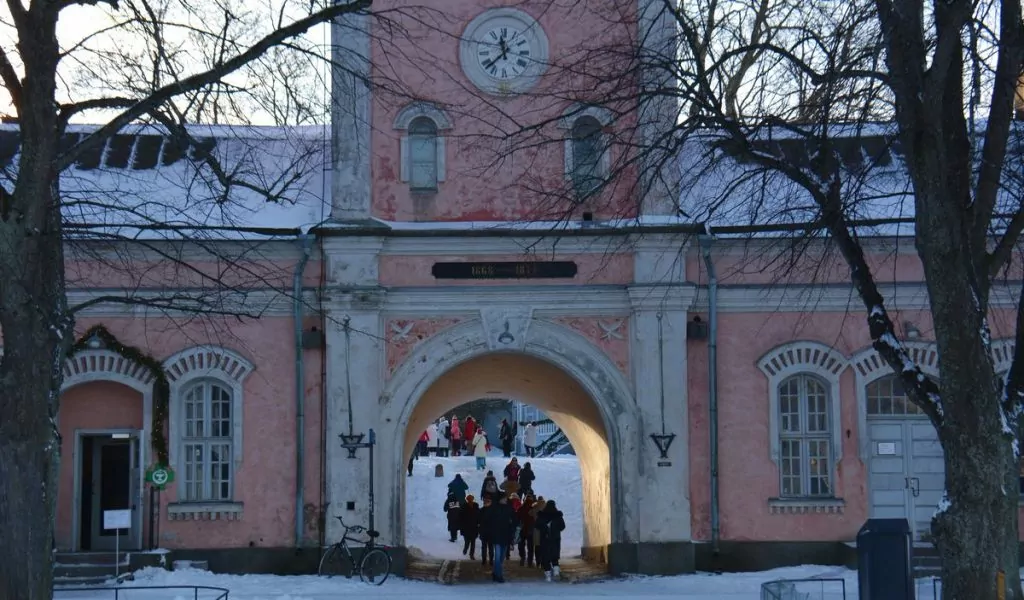
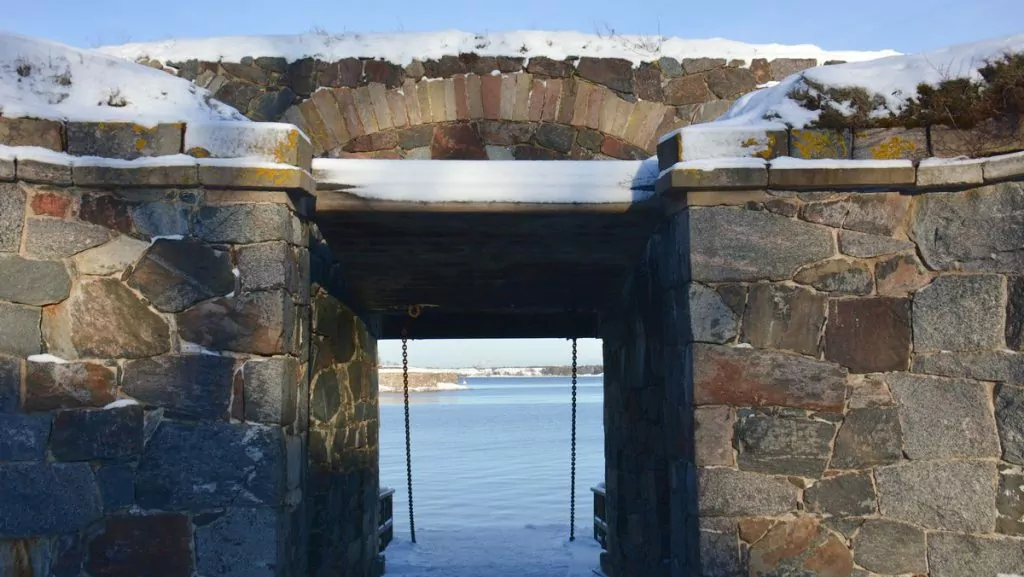
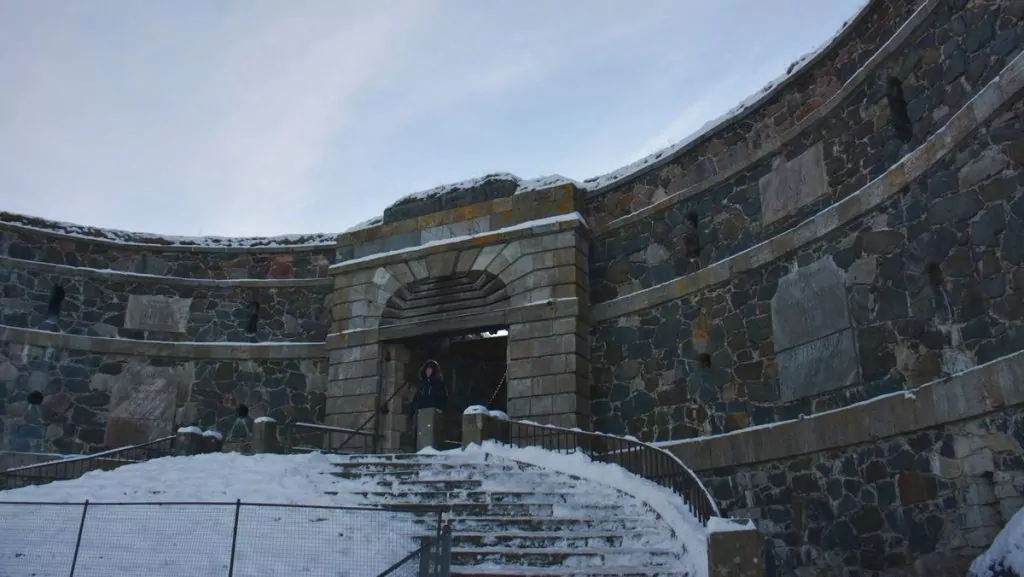
The King's Gate is one of Suomenlinna's most famous symbols. The gate was built in the 1750s as a ceremonial entrance to the fortress, at the place where the Swedish King Adolf Frederick had docked with his ship when he visited the construction work in 1752.
It's a grand end to the walk through the historic fortress – and a reminder that all of this was once built as part of Sweden.
Museums in Suomenlinna
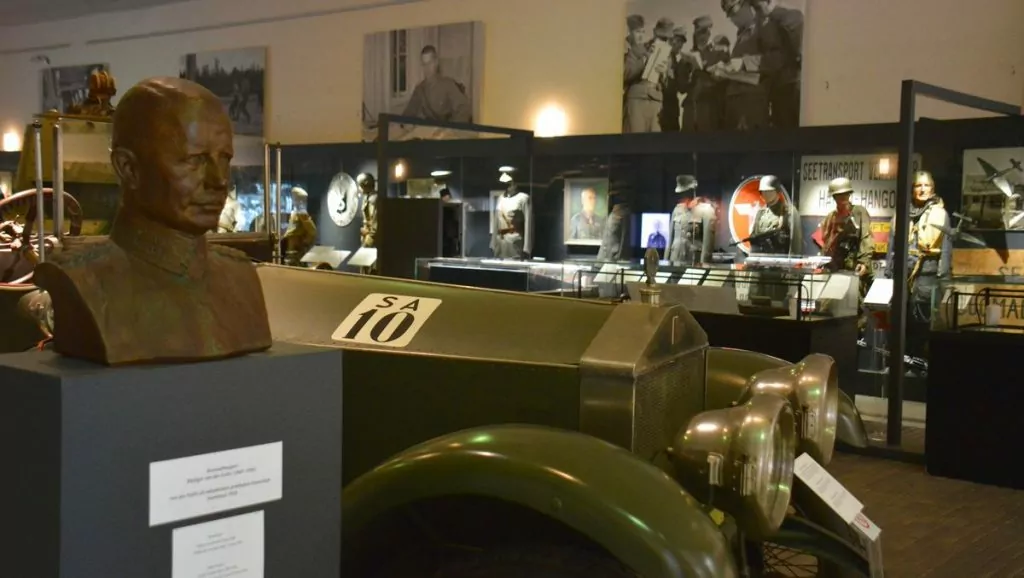
There are five museums on Suomenlinna. Two of them – the Suomenlinna Museum and the War Museum – are open year-round, while the others are open seasonally.
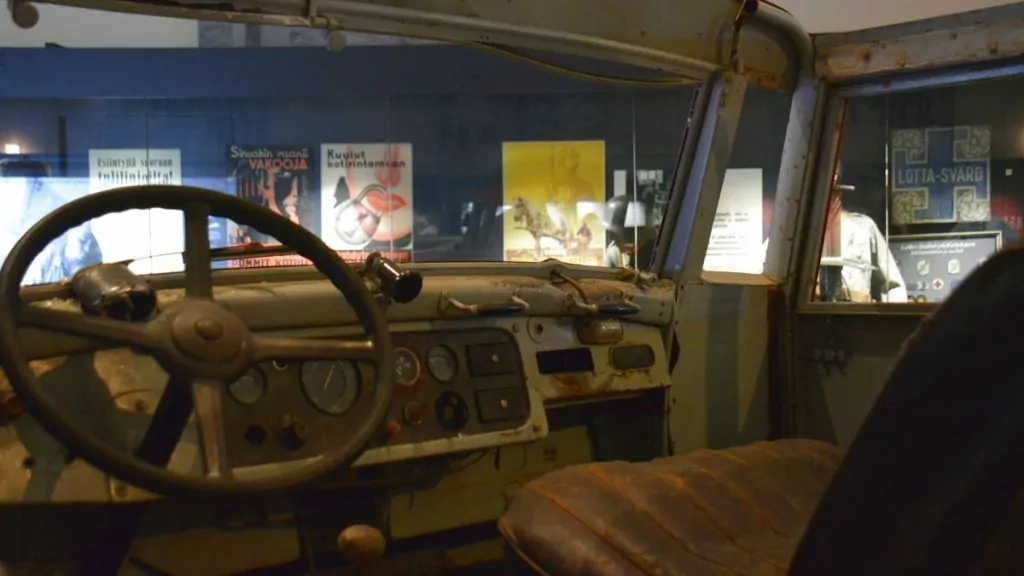
We visited the Suomenlinna Museum and the War Museum during our winter excursion. At the Suomenlinna Museum we got a good introduction to the fortress's long history, while the War Museum told us more about Finland's military history. During the summer season, you can also visit the Ehrensvärd Museum, the Customs Museum and the submarine Vesikko.
Suomenlinna in winter
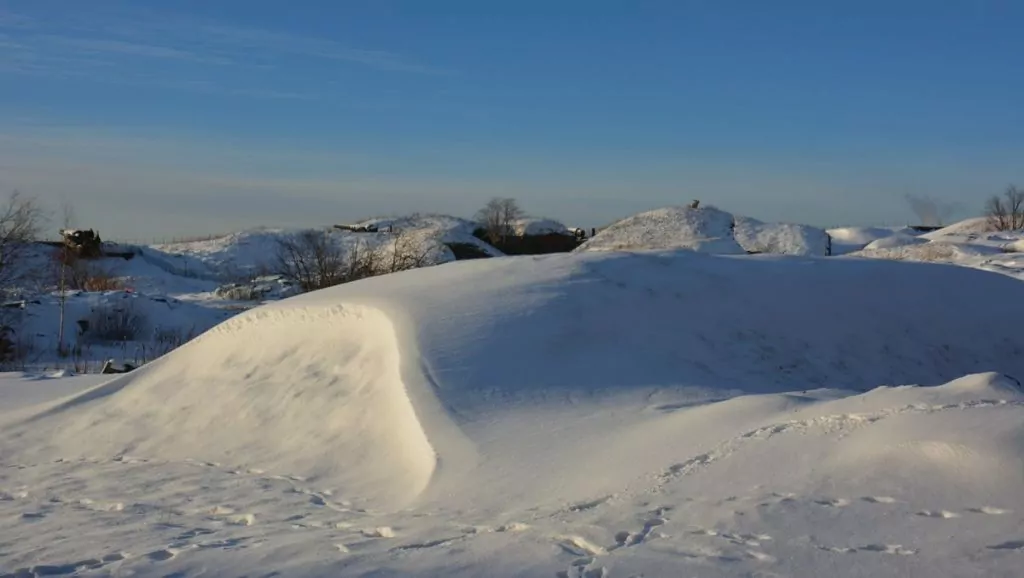
Most people probably visit Suomenlinna during the warmer part of the year, but we can attest that the fortress is very atmospheric even in winter.
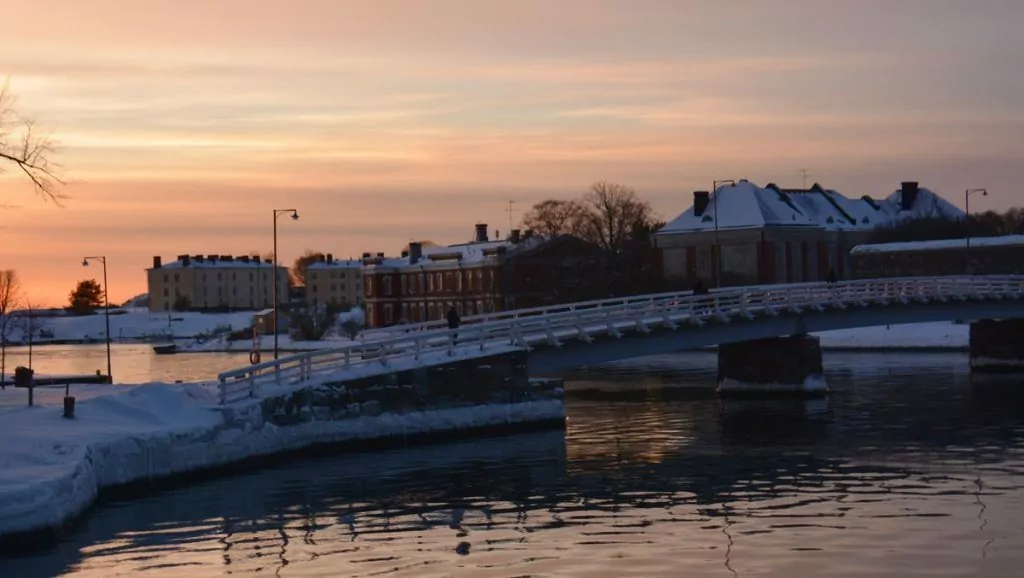
When we were here, the snow lay over the embankments and the sea, and the low winter sun made the environment almost unreal. The downside? It was cold. Really cold. We had to make several stops for coffee just to thaw out again.

In winter, fewer museums, restaurants and other activities are open than in summer. At the same time, it is quieter and the wintry landscape gives the entire fortress a special atmosphere. Good shoes and proper clothing are recommended.
Practical information about Suomenlinna
- Was: On islands outside central Helsinki.
- Getting here: The HSL ferry leaves from Salutorget all year round. The boat trip takes about 15 minutes.
- Entrance: There is no charge to visit the fortress area itself, but there is a charge for the ferry, museums and some other attractions.
- How much time is needed? Allow at least 2–3 hours. If you want to visit several museums, have lunch, and explore the area thoroughly, you can easily spend half or a full day here.
- Walking: The recommended Blue route between the main bridge and Kungsporten is approximately 1.5 kilometers one way.
- Basis: Suomenlinna is a historic area with cobblestones, gravel roads, hills and uneven sections. There is a slightly more accessible route for those who have difficulty walking.
- All year round: Suomenlinna is a city district and the area itself is open all year round. However, museums, restaurants and other businesses may have seasonal opening hours.
Is Suomenlinna worth a visit?
Yes, absolutely. For us, Suomenlinna is one of the most interesting sights in Helsinki.
Here you don't just get a single building or a museum, but an entire landscape filled with history. During the walk you literally walk through the traces of three different countries and several centuries – from Sweden's great fortress construction in the 18th century, via the Russian era to today's independent Finland. What's more, the experience already begins on the boat from Helsinki.
We made the trip in the middle of winter and found Suomenlinna with snow, bright sun and biting cold. Next time we would love to come back in the summer and experience the same islands in a completely different way. But we would miss the excuse to drink coffee all the time.
More to see and do in Helsinki
Suomenlinna is just a short boat ride from central Helsinki and is easy to combine with other attractions in the city. Don't miss the Market Square, Helsinki Cathedral, Temple Square Church and the city's beautiful waterfront settings.
READ MORE: Things to do in Helsinki – our best tips
You might also like:
 Visiting Bomarsund Fortress - interesting history in Åland
 Visiting Kastelholm Castle - Åland's only medieval castle
 Visiting Turku Castle - Swedish and Finnish history
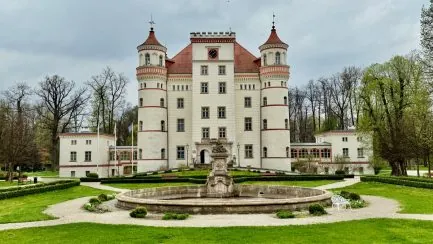 The Valley of Palaces and Gardens at Jelenia Góra in Poland
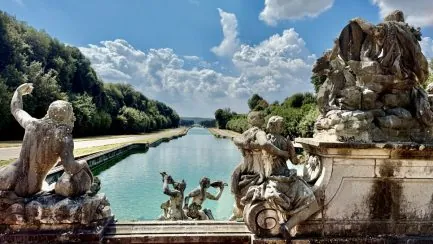 Visiting the castle of Caserta in Italy - one of the largest castles in the world



 English (UK)
 Svenska
Hanna says:
Not only visited many times, but also got married in the church and celebrated a wedding party in a venue on the island. Even we Finns love Suomenlinna and it's a must to visit at least once a year, preferably in summer of course.
17 January 2019 - 7:18
Helena says:
But oh how fun with weddings in the church and everything! 🙂
17 January 2019 - 13:34
Emma, Sol som sol? says:
Really like the first photo with Helena! Looks like she has a skirt on, haha! The gate is really magnificent.
Never been there, looks very nice. I'm impressed with how much can fit on the island.
17 January 2019 - 9:18
Helena says:
Haha, I actually had a skirt, but maybe not like that 😉 Yes, there is a lot on the islands!
17 January 2019 - 13:35
Britt-Marie Lundgren says:
Let's face it and admit that we have never been to that side of the Baltic Sea, neither in Finland, Estonia, Latvia or Lithuania. We probably live on the wrong side of Sweden, but the advantage is that we have many destinations to explore in the future....
17 January 2019 - 9:26
Helena says:
No need to be ashamed of that, I think. But just as you say, a lot of nice things left to explore! 🙂
17 January 2019 - 13:47
BP says:
A lovely and interesting post with great pictures! Have seen the fortress many times, but never visited it. So now I had to do it:-)
17 January 2019 - 16:42
Helena says:
Glad you liked it! It was a nice visit! 🙂
18 January 2019 - 5:15
Lena - gott för själen says:
It seems like a big island there, with all the museums! Exciting place with a lot of history.
Hug Lena
17 January 2019 - 19:12
Helena says:
Indeed! Interesting to make an excursion here! 🙂
18 January 2019 - 5:16
Maria / Magnolia Magis says:
Interesting history! I have actually never been to Finland at all. Sometime you have to go there! But I never go by ferry...;D ps: What lovely jackets you have!!!
17 January 2019 - 20:22
Helena says:
Sometimes you miss the closest thing 😉 And thank you, we bought the jackets last autumn in Brussels! 🙂
18 January 2019 - 5:18