

Writer: Helena Bergström
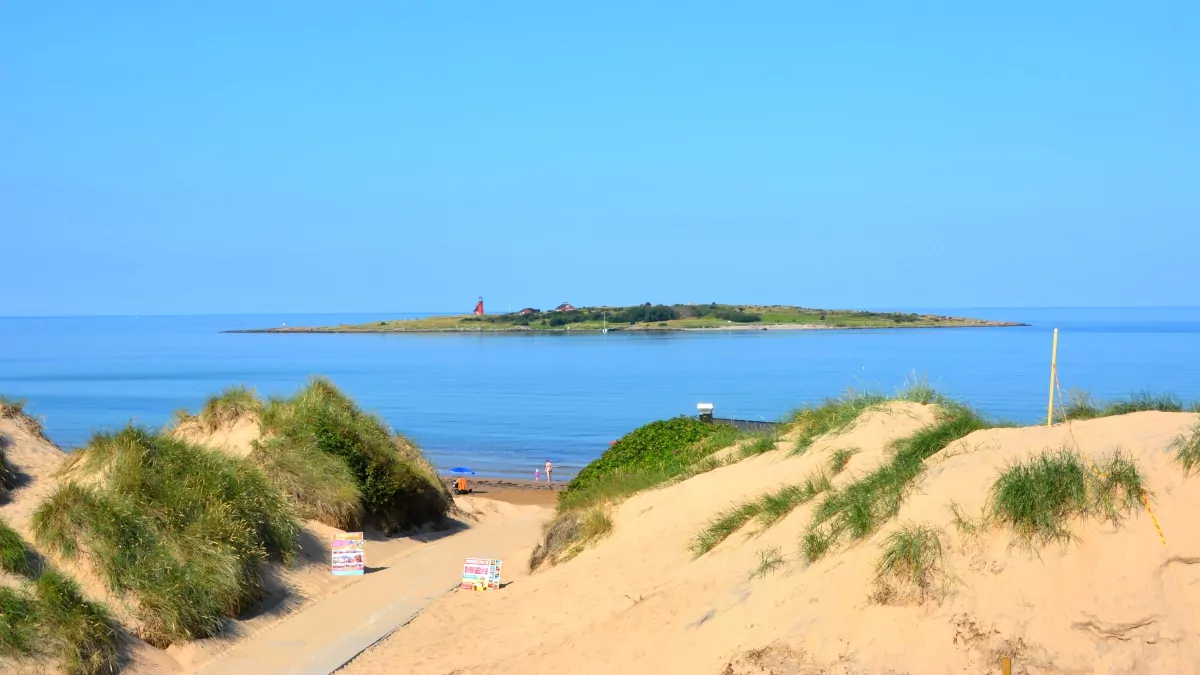
Updated: October 2026 | What can you do in Tylösand? Here, of course, one of Sweden's most famous beaches awaits, but also hiking, nature, art and a surprising amount of history. For me, Tylösand is also a place that has followed my family since 1945 – and in this guide we mix our best tips with stories and photographs from more than 80 years by the sea.
 Tweet
Tweet Share
Share Share
Share Pin
Pin Share
Share Share
ShareTable of contents
Tylösand – more than just a beach
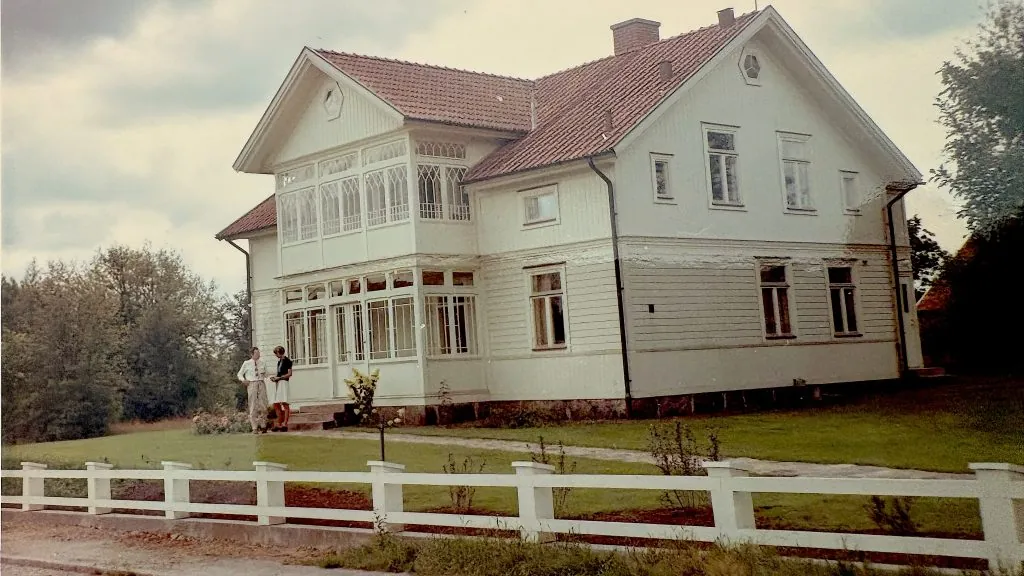
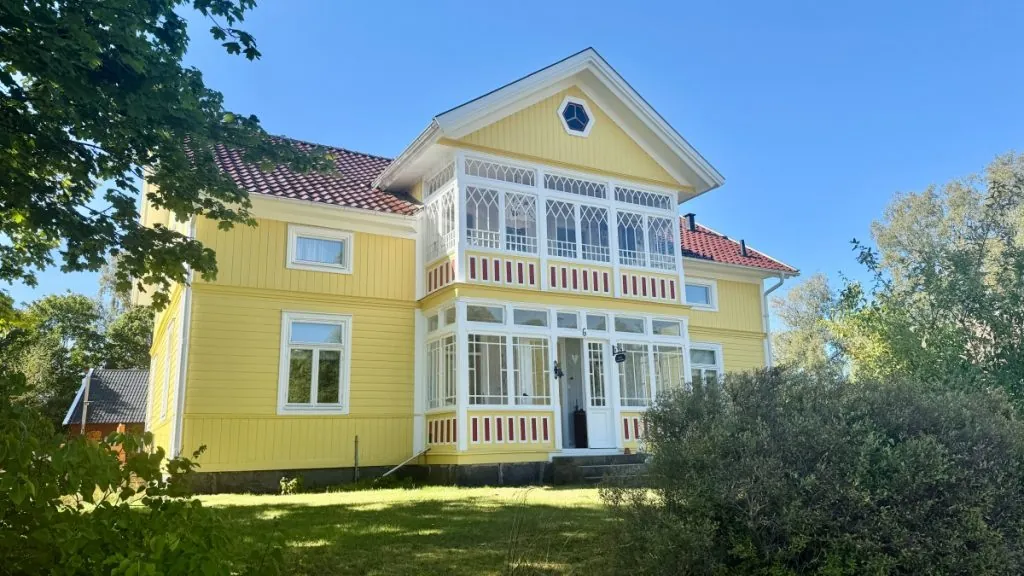
For many, Tylösand is synonymous with the long sandy beach, Hotel Tylösand and summer days by the sea. For us, the place is also filled with family history. My grandparents bought the family's summer house here back in 1945, and the house is still in the family.
In the early years, the family didn't have a car. When they went from their home in Halmstad to their summer house in Tylösand, they had to cycle with food, clothes and luggage. My mother Karna, who was born in 1940, was still a small child when the family started spending summers here.
More than 80 years later, the house still stands and is still used as a summer home by the family. Through old photo albums, we have now also been able to follow Tylösand back to the 1940s and 1950s – long before the place looked like it does today.
We have spent a lot of time here ourselves over the years, but when we started digging through our family's old photographs, we discovered that Tylösand had far more stories than we knew. Some of them are in places you could easily walk past without realizing what once happened there.
Quick guide: Top 5 in Tylösand – our best tips
- Tylösand beach – Experience the long sandy beach and the classic beach life that has made Tylösand famous.
- The Swearing Man's Lair and the Thief's Lair – Find the smaller bathing coves and discover a Tylösand with both family memories and an old smuggling history.
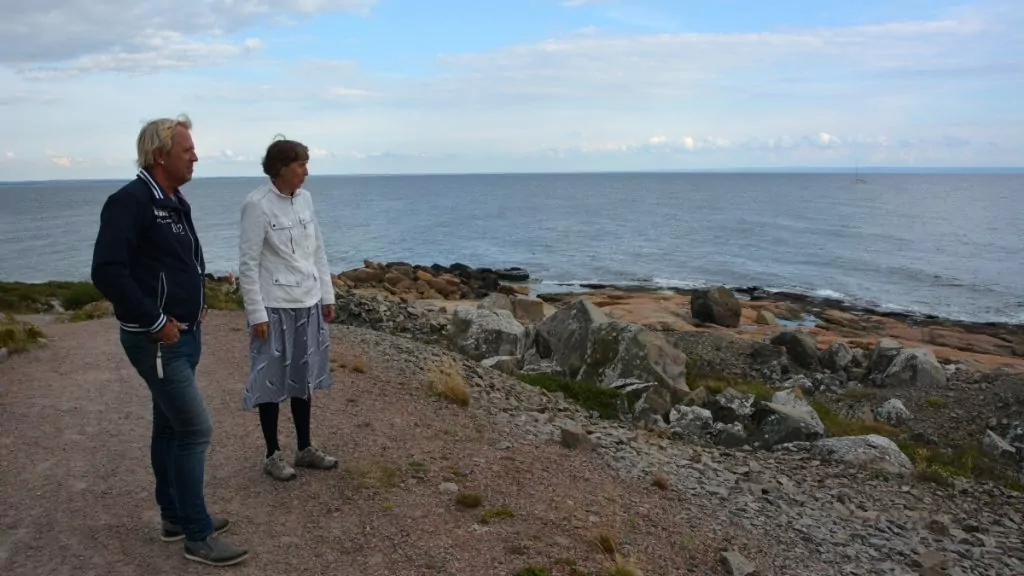
- The path of Prince Bertil – Follow the coast between beaches, cliffs, forests and small bathing coves through some of Tylösand's finest environments.
- Hotel Tylösand – Look at the art, experience the environment or stop for food and drinks on the much livelier side of Tylösand.
- St. Olaf's Chapel – Visit the rebuilt 18th-century church, parts of which were once scattered from Lidhult all the way to the USA.
1. Experience the famous beach of Tylösand
The long sandy beach is the image many associate with Tylösand, and of course you should experience it. The beach stretches along Tylöbukten and continues towards Frösakull and Ringenäs. Here you can expect soft sand, open sea and during the summer a beach life that can be the exact opposite of the quiet Tylösand that we also like so much.
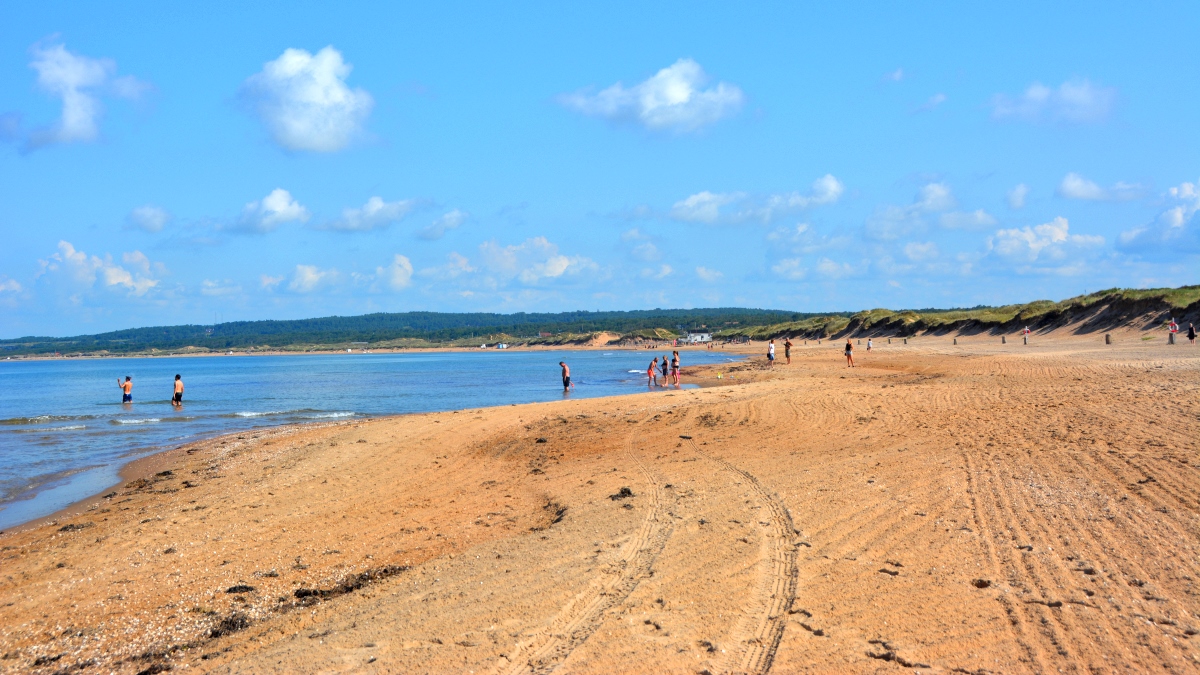
For me this was always The main beach. Even though the family's summer house was in Tylösand, it was almost a small excursion to go here. Sometime during the summer, swimwear, towels and everything else needed were packed into a trunk and dragged to the beach. The rest of the summer, the family bathed much closer to the house more often.

The same beach – two generations and 41 years between the photos
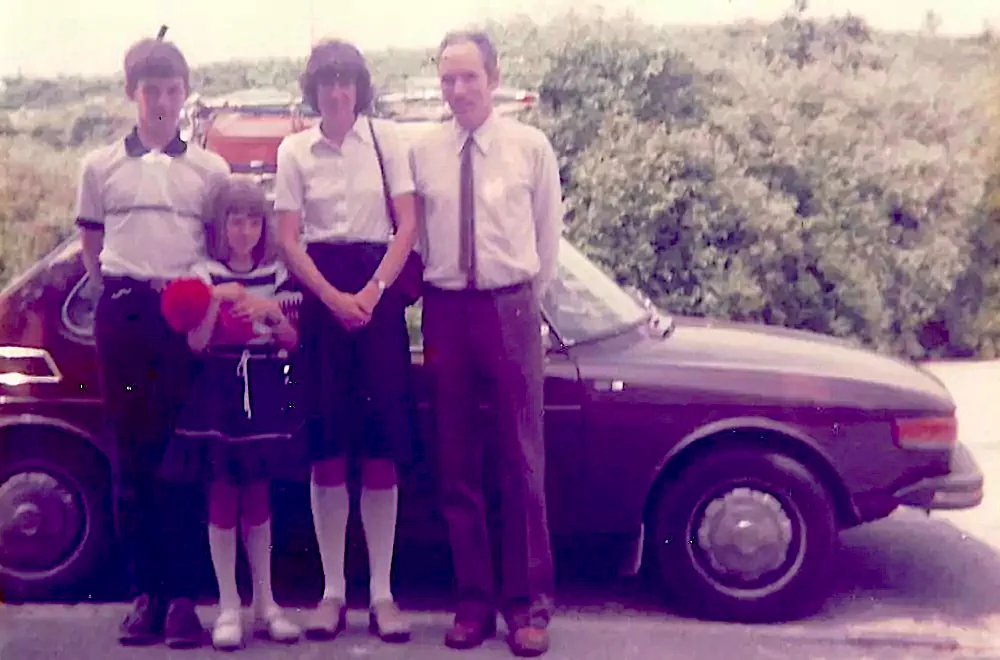
When we recently started going through my mother’s old photo album, a picture emerged that made the family’s long history in Tylösand very tangible. The photograph is from 1948 and shows Karna, eight years old, sitting on the beach with two other children. At the time, my parents had owned the family’s summer house in Tylösand for only three years.
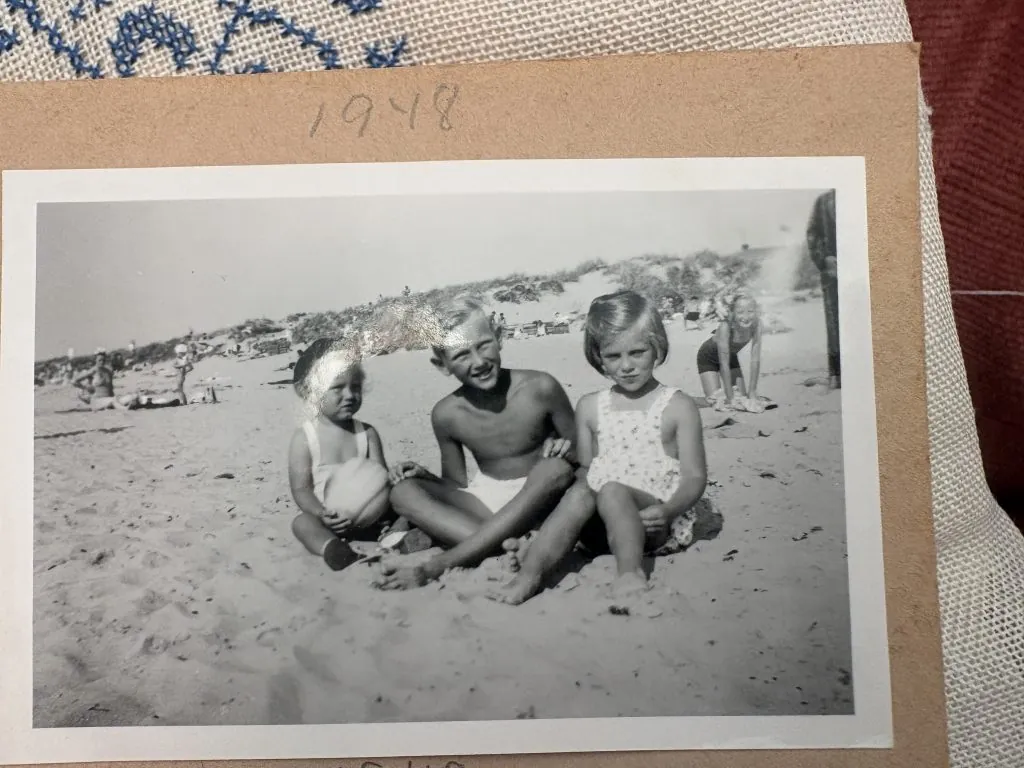
41 years later, in 1989, I was photographed on the same beach. I was 14 years old at the time. And another 37 years later, we still return here. The clothes, the hairstyles and the people on the beach have changed, but when we look at the two photographs side by side, it is almost the beach that has changed the least.

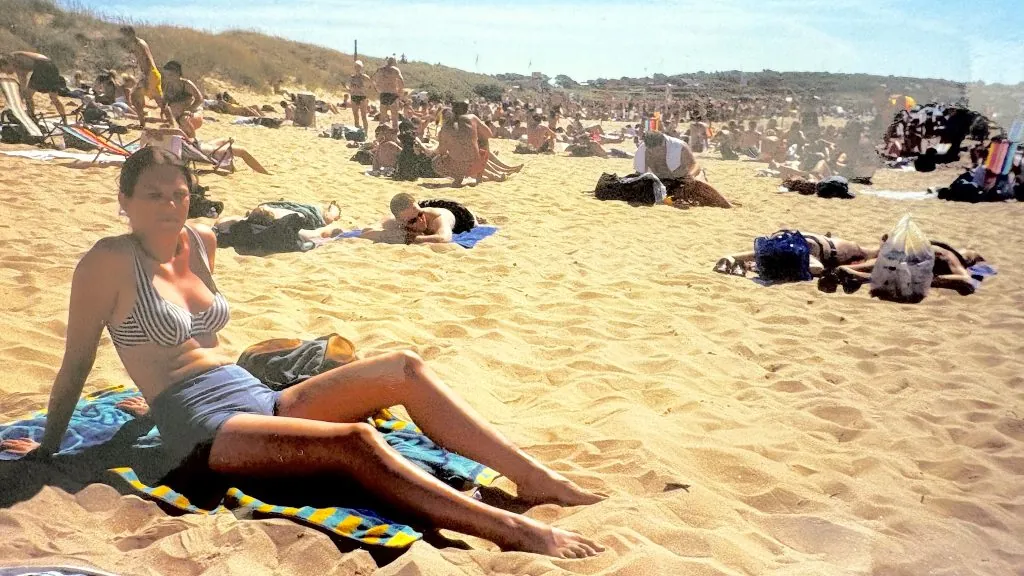
For us, the pictures also do something with the perspective of Tylösand. This is a beach that people travel far to experience, but for me and my family it has been there through the generations. Karna swam here as a child, I did after her, and the family's summer house from 1945 is still there.
Our tip: Experience Stora stranden, but don't stop there. It is an obvious part of Tylösand and here you get the sand, the sea and the classic summer life. But if you continue along the coast you will find smaller swimming areas and cliffs that show a completely different side of Tylösand.
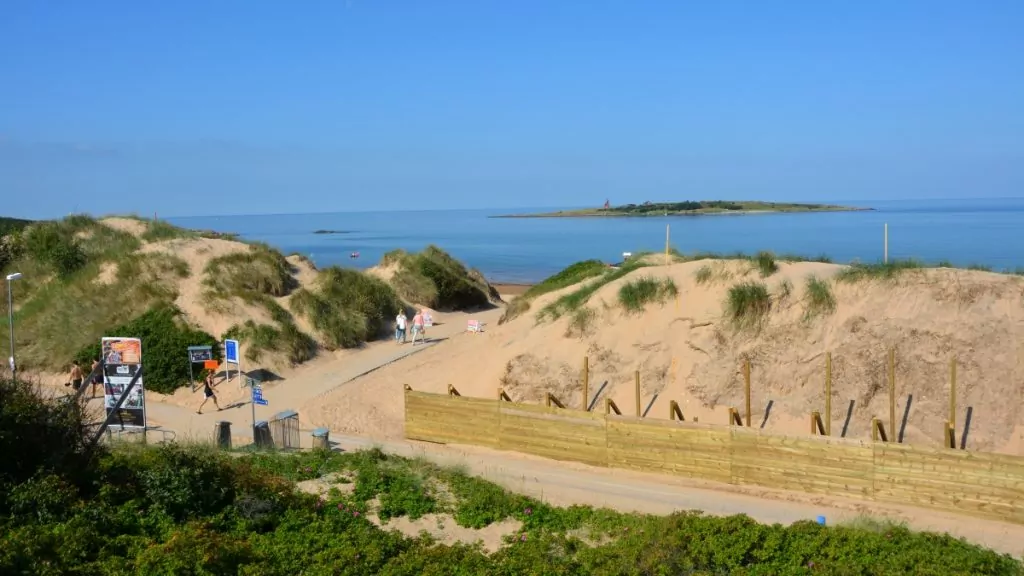
2. Find the smaller beaches at Svärjarehålan and Tjuvahålan
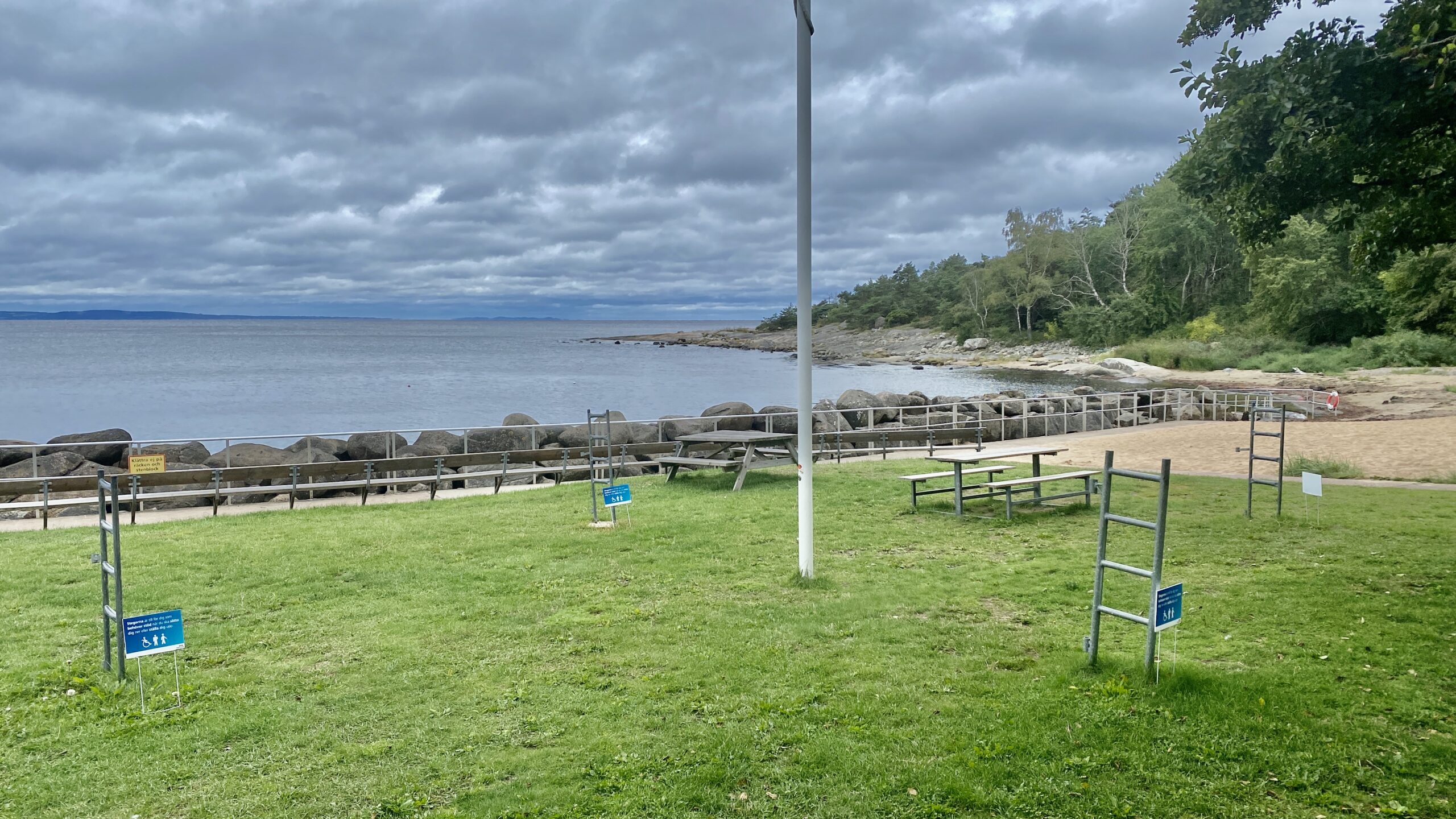
This is where we start to leave the Tylösand that most people know. The Swarjarehålan, which I still think of as Little beach, is closer to the family's summer house and was one of the bathing places during her childhood. Back then, the place was much easier than it is today, when the bath has been developed and made accessible to people with disabilities.
But when we started digging into Tylösand's history, it turned out that Svärjarehålan had been a bathing place long before I started coming here. An older name is Colony Bay, and as early as 1905, colony operations started here.
Children from Halmstad were allowed to go out to the sea during the summer, long before Tylösand developed into the seaside resort we know today. The current accessible swimming area opened in 1991.
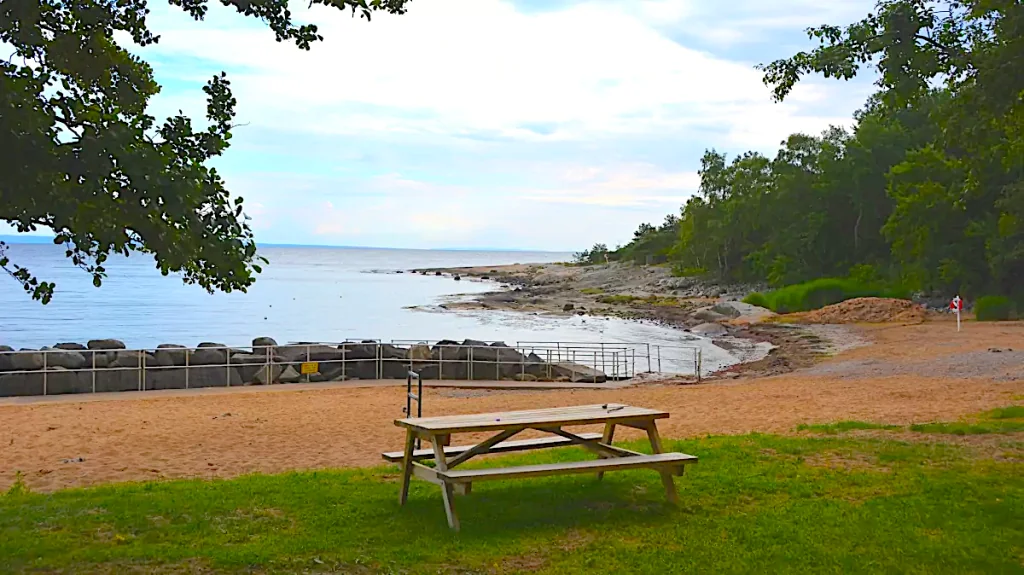
From snails to the smugglers of Thieves' Den
Continuing along the coast, you come to Tjuvahålan. For me, it was another of my childhood bathing spots, with a sandy beach, rocks and a jetty. I especially remember picking shells here, which I took home and painted.
But the name Thief's den is not the only thing that suggests that the place has had a much less innocent history. In the late 18th century, the bay was used as a landing place for smugglers. The location was sheltered and the area was difficult to access from the land side, which made the place suitable for bringing goods ashore without too much attention. Around 1870, the authorities had had enough and a customs post was established here.
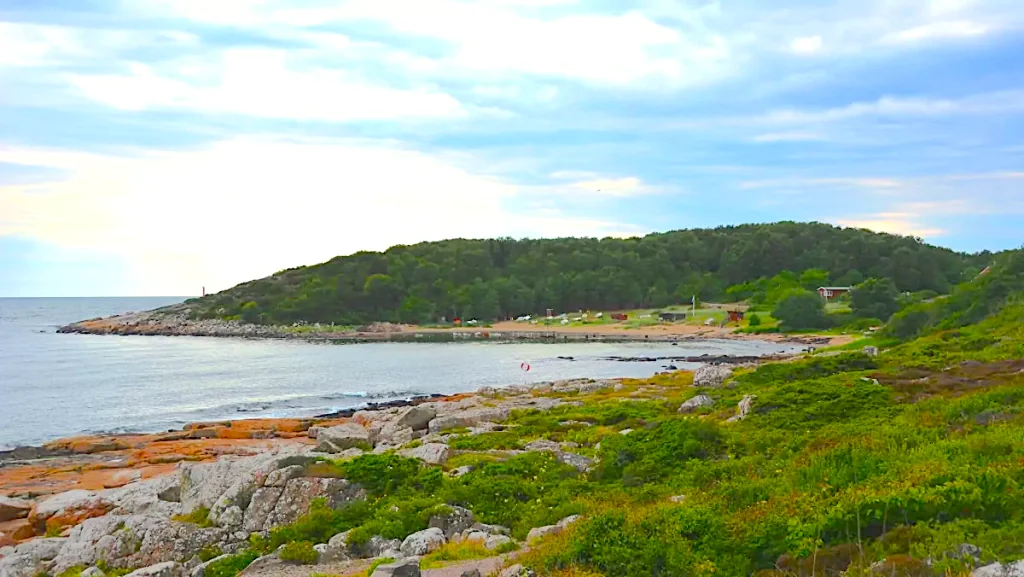
It's hard to imagine today. Now people come here to swim, walk and enjoy the sea, and Destination Halmstad still recommends Tjuvahålan as a small swimming bay with its exciting smuggling history. For me, however, it wasn't smugglers who were responsible for the most unexpected encounter.
When I almost collided with a seal
One autumn when I was in Tylösand the beach was almost empty. Autumn can be fantastic here, with fewer people and a much wilder sea than in the summer. When I was walking by Tjuvahålan, a large seal was hidden behind a sand dune. I didn't see it until I was about a meter away from it. They were about as surprised. It is still unclear who was most frightened.
3. Find the Cliffs – our Tylösand beyond the sandy beach
When I think of my childhood swimming in Tylösand, it's actually not the famous sandy beach that I see in front of me. I think of The cliffs, which we simply called our favorite pool between Svärjarehålan and Tjuvahålan.
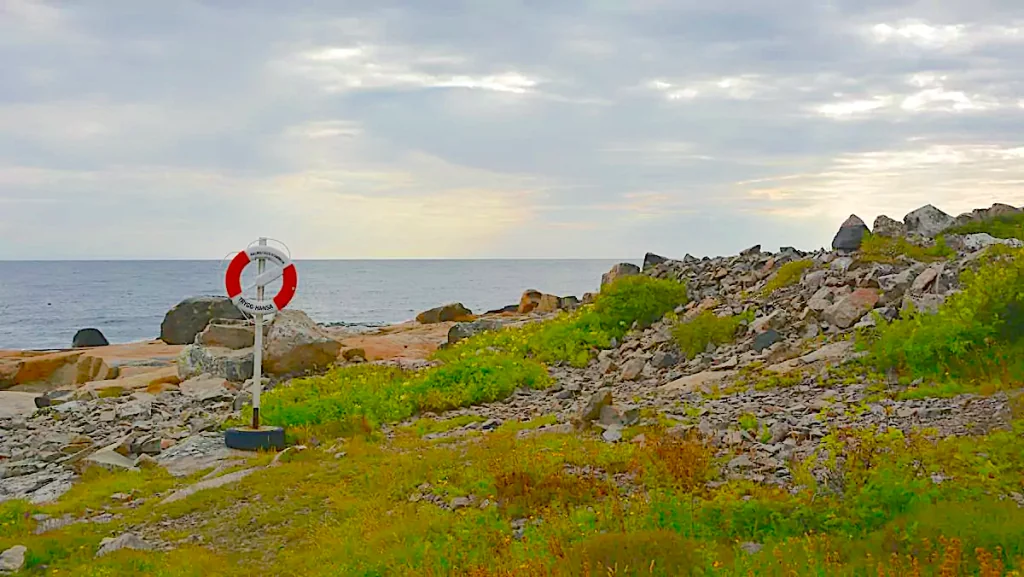
To get there we walked along a path through the forest. It was not a place where the large numbers of tourists sought out, but above all a swimming spot that we who lived in the area knew about. Here we swam from the rocks, played and could sit and look out over the sea.
I especially liked Klipporna when the sea showed a different side. When it was windy and the waves were crashing against the shore, we could go here just to look at them. To this day, I still like Tylösand in the fall, when the summer crowds have disappeared, the beaches are quieter and the sea takes up more space.
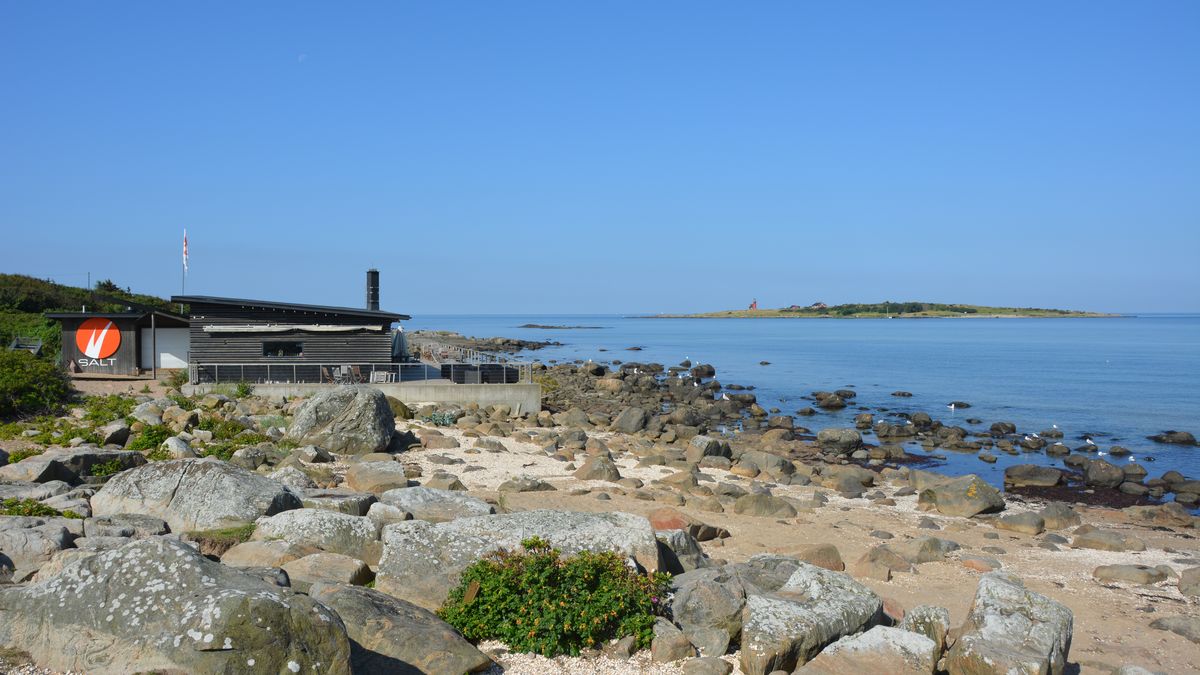
The long sandy beach is fantastic and should be experienced. But if you want to discover more of Tylösand, I recommend that you also head towards the smaller bathing areas and cliffs along the coast. That's where a lot of my own Tylösand was when I grew up – and that's still the side of the place I'd like to show you.
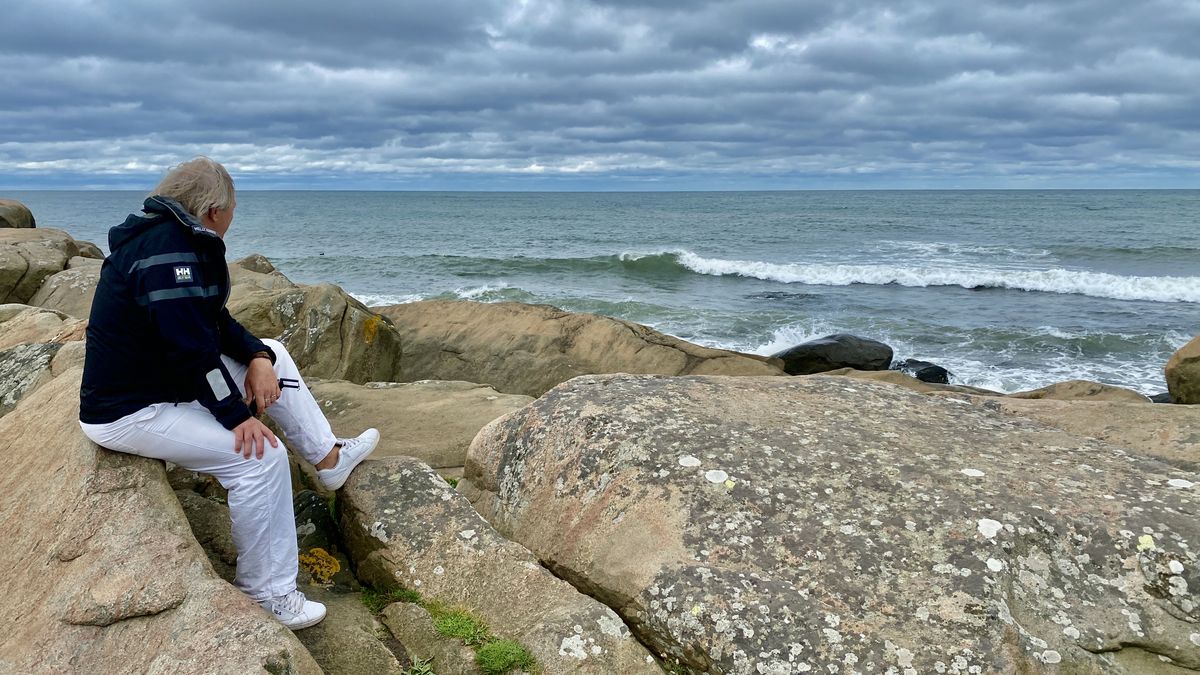
4. Discover the Rhododendron Park when it is in bloom
One of my favorite places in Tylösand as a child was the Rhododendron Park. I remember it not as a neat little park, but as an almost wild place where large rhododendron bushes spread out in all directions and exploded in color when they bloomed.
It was at its most beautiful in early summer. Then you could walk among the large flowering bushes and almost disappear into the greenery. Somewhere in the park I also remember a stone that told about the people behind the facility. Tylösand
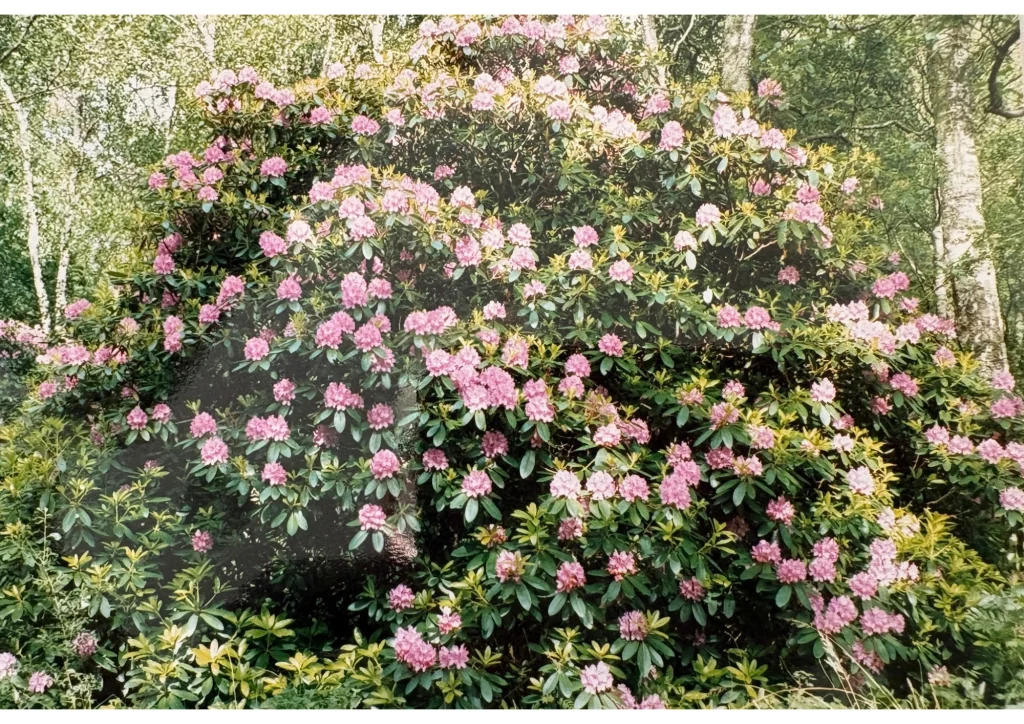
30 unemployed young people created the park in 1933
The Rhododendron Park did not start as a typical municipal park project. In 1933, youth unemployment was high in Sweden and Halmstad organized a work camp in Tylösand. Thirty young men were assigned to drain the then swampy and overgrown valley and transform it into a park. The city architect Fredrik Wetterqvist and the city gardener Gunnar Svensson were behind the drawings.
This means that some of the large rhododendron bushes I remember from childhood have their roots in a project that started more than 90 years earlier. The park was extensively restored in 2013–2014, including new plantings, paths and seating areas, but the natural character was preserved.
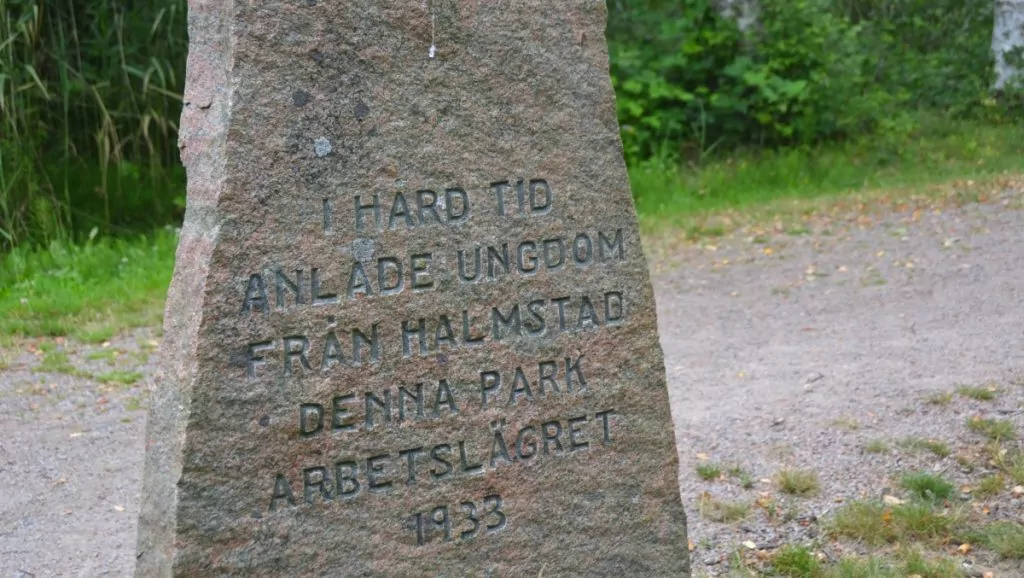
We have returned here even as adults, and if you visit Tylösand in early summer we still think the Rhododendron Park is worth a detour. It is also close to Tjuvahålan and Prins Bertils stig, so it is easy to combine the blooms with a walk along the coast.
Forest, mushrooms and moose
For me, Tylösand was not just about the sea. We walked a lot in the forest, where we picked mushrooms and sometimes came across moose. I picked flowers in the meadows and at home in the garden there were cherries, gooseberries and elderberries. Mom made elderflower juice from the flowers, and it is still one of the flavors I associate with my childhood summers here.
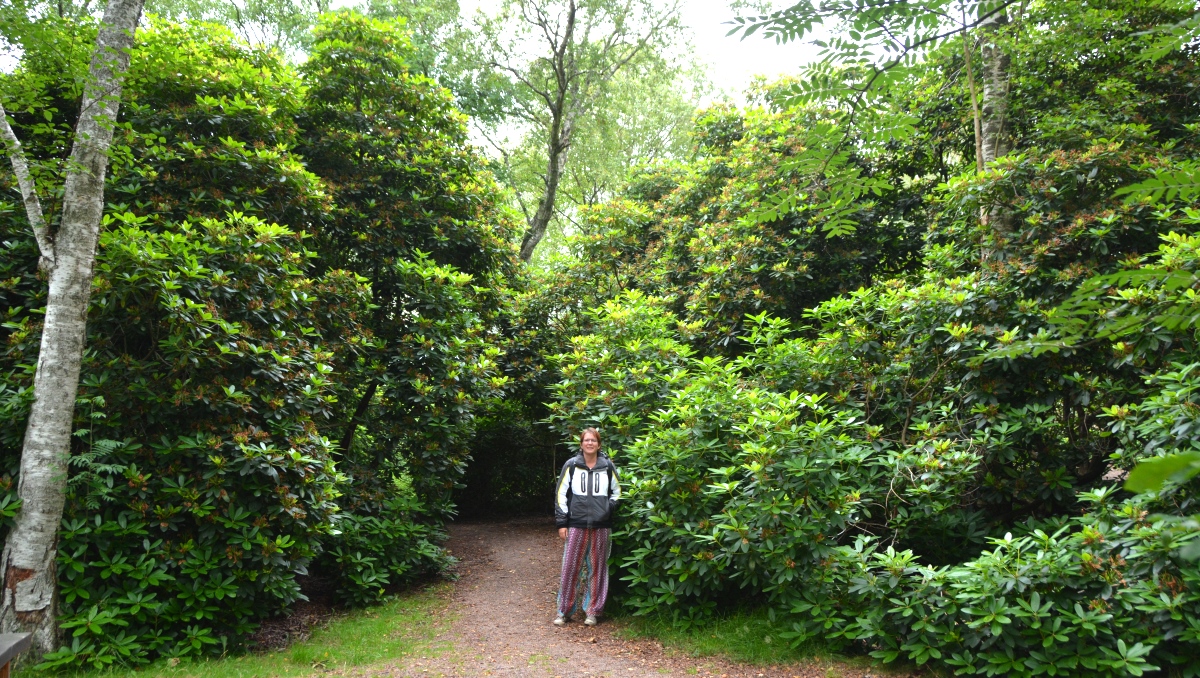
5. Visit Hotel Tylösand – even if you don't stay here
Hotel Tylösand is today an obvious part of the image of Tylösand, but when the first restaurant opened here in 1915, the place looked completely different. The area was described as barren and desolate, and visitors could come by boat from Halmstad to swim and eat. The big breakthrough came in 1929, when Tylösand developed into a seaside resort for the finer people.
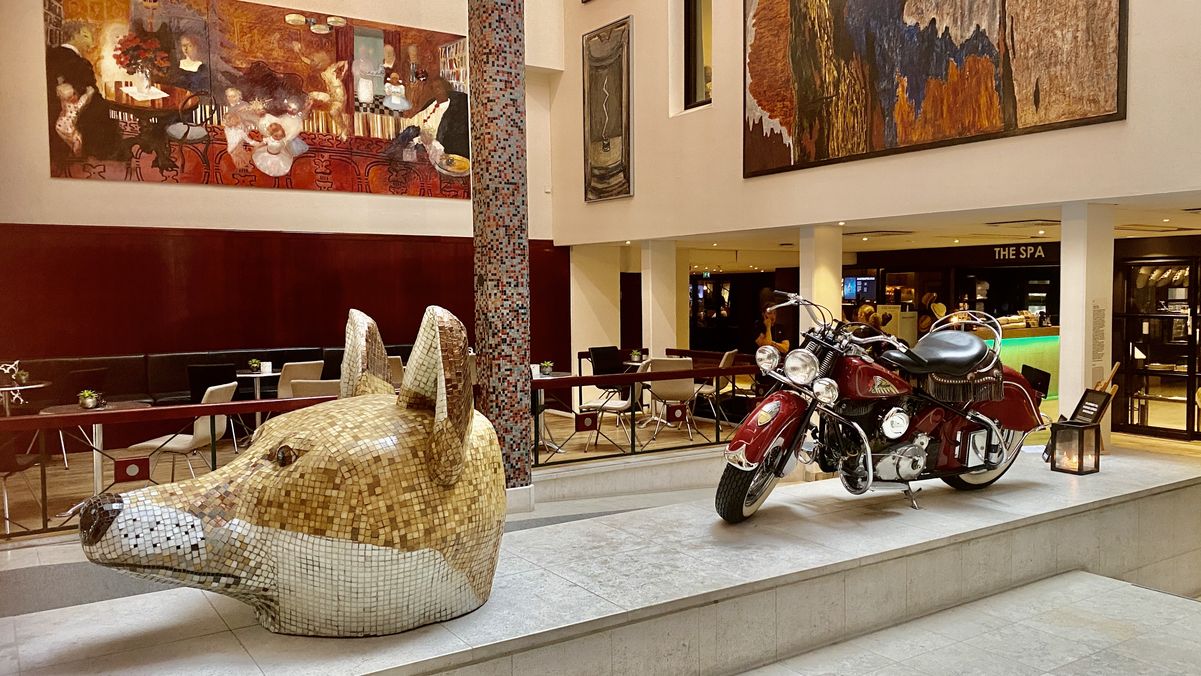
For me, the hotel has always belonged to the livelier side of Tylösand. When I was a child, my family would sometimes walk here in the evenings. We could look at art, buy liquorice because my mother liked it, and sometimes play mini golf somewhere along the way.
From seaside resort to Gessle, art and after beach
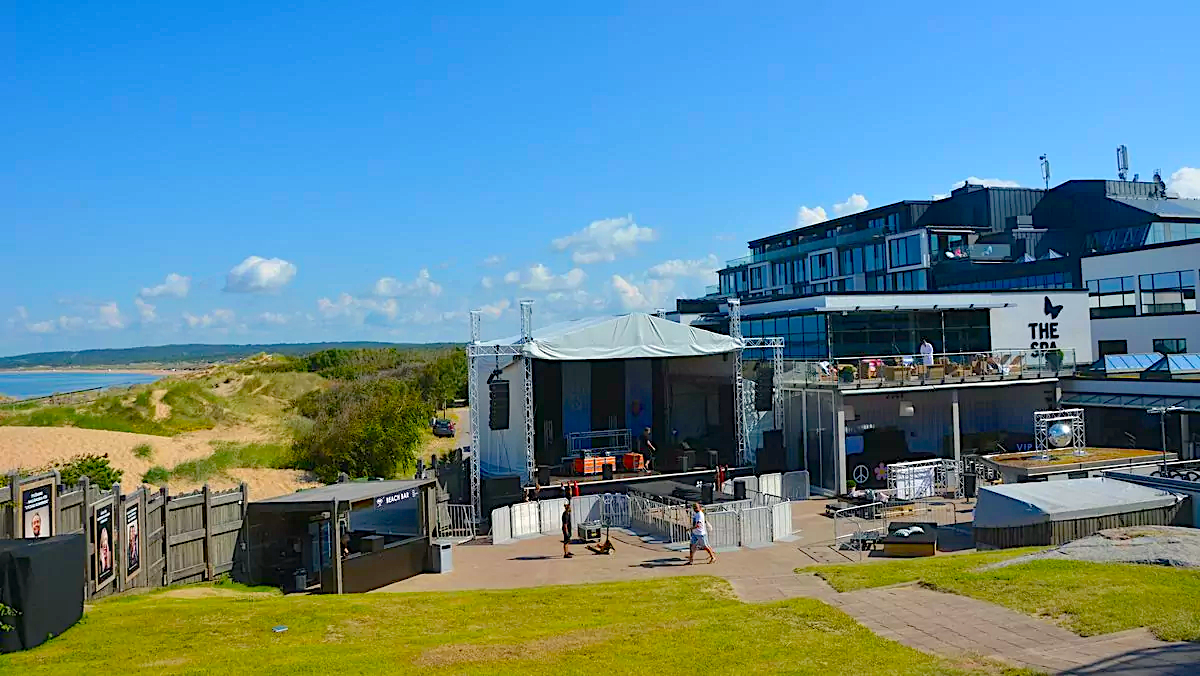
In 1995, Per Gessle and businessman Björn Nordstrand took over Hotel Tylösand. Since then, the facility has continued to develop and today includes spas, restaurants, concerts, after-beach and art. Tres Hombres Art comprises around 400 works and is described by Destination Halmstad as Sweden's largest gallery in terms of surface area.
When Peter and I were here last time, we walked around and looked at the art. Peter is a big David Bowie fan and also found a really nice book with illustrations about Bowie that he got to take home. There is a lot of art and photography here with a connection to the music and pop world, and with Per Gessle as one of the owners, it doesn't feel particularly strange that music is noticeable in the hotel.
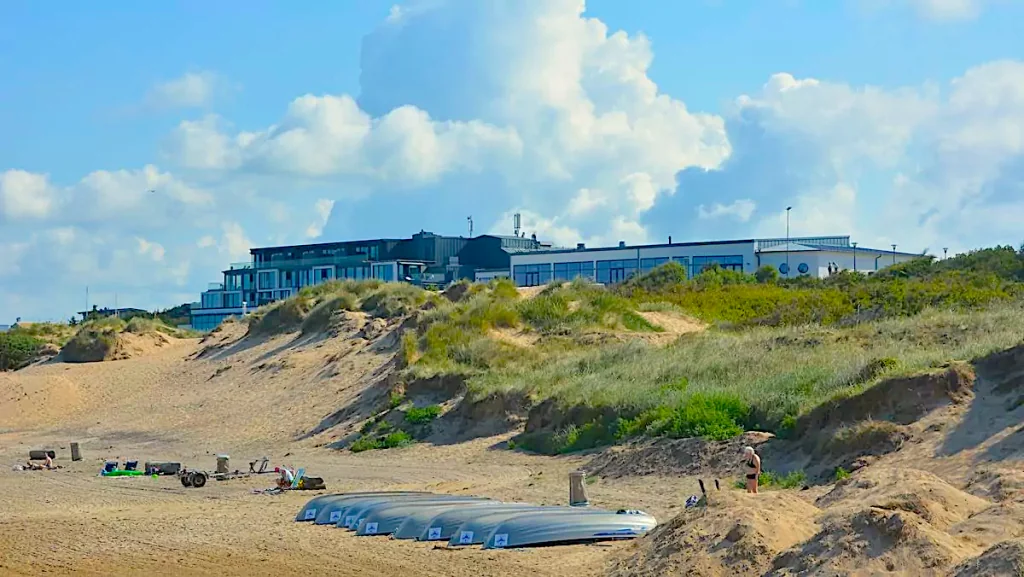
The contrast to the Tylösand I grew up with near the summer house is still great. There were the smaller swimming pools, the cliffs and the forest. Here was the people's life – and today that side has grown with restaurants, music, after beach, spas and a significantly larger range of entertainment.
That's also why we think Hotel Tylösand is worth a visit even for those who live somewhere else. Come for the art and the environment, sit down for something to eat or drink and experience the part of Tylösand that is the exact opposite of a lonely cliff by the sea.
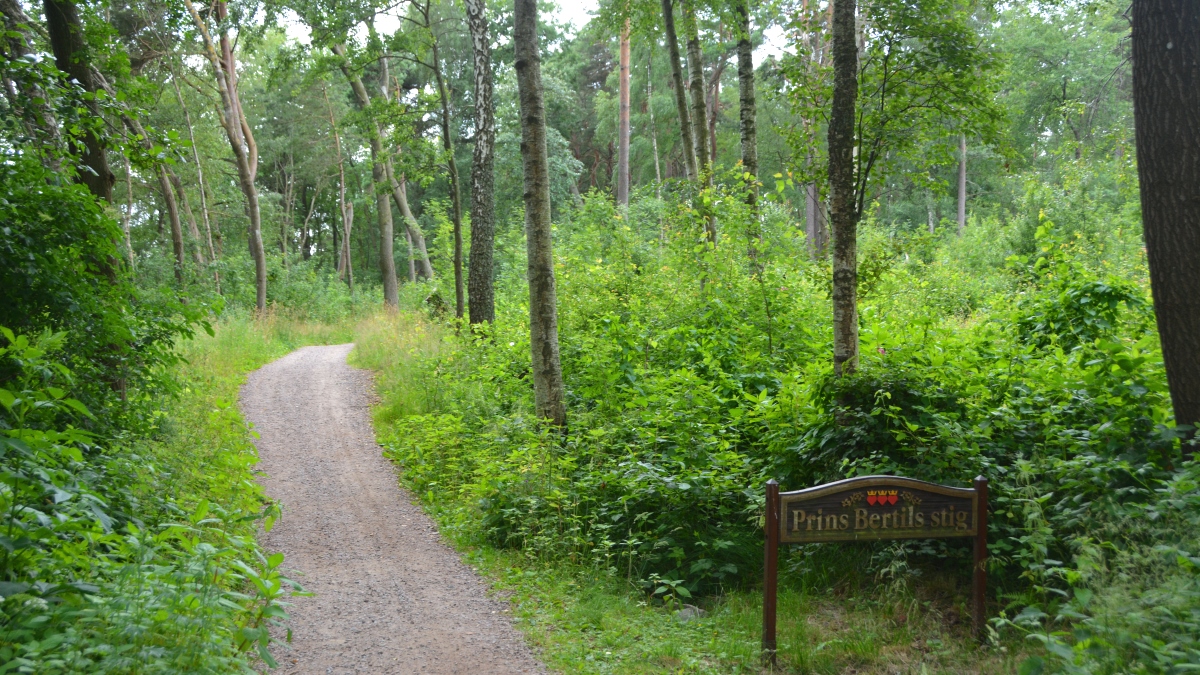
6. Hike along Prince Bertil's path through Tylösand
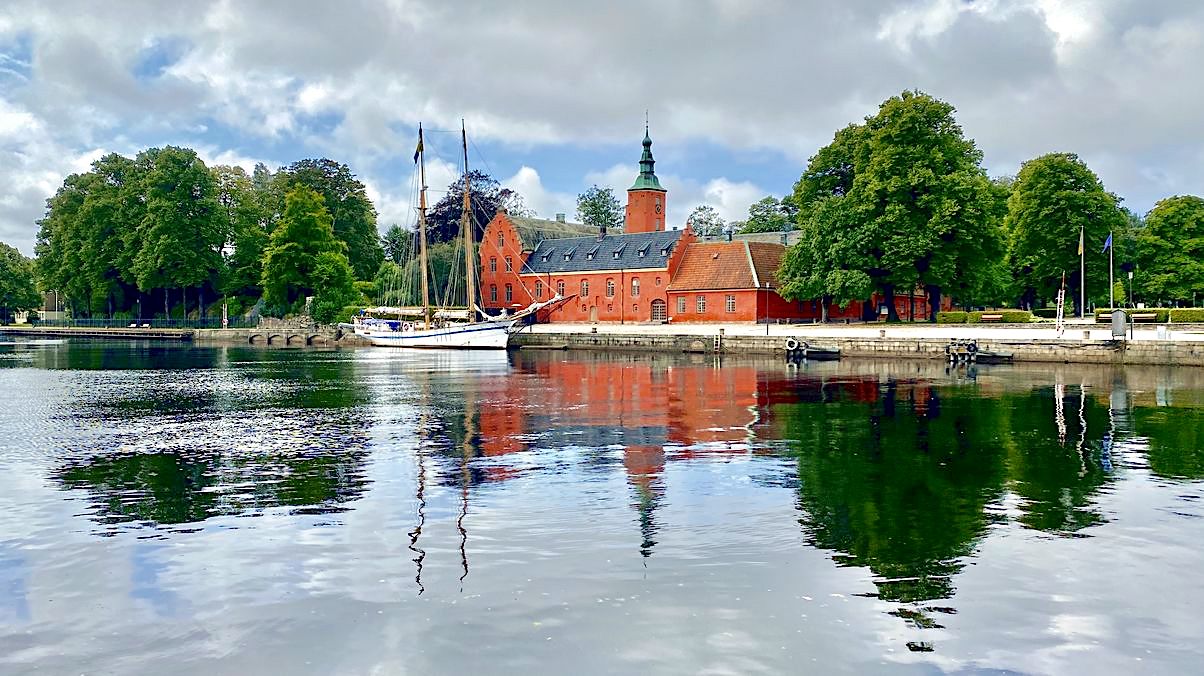
Prince Bertil's Path is an 18-kilometer coastal trail that runs from Halmstad Castle, through Tylösand and on to Möllegård. Along the way, you pass sandy beaches, coastal forest, cliffs, old quarries, marinas and several of the places we have already told you about in this guide.
For me, there is something a little strange about the fact that the area is now connected by a hiking trail. When I was growing up, there was no Prince Bertil's Trail. The Thief's Den, the Infidel's Den, the Rhododendron Park, the forest and the cliffs were just places where the family swam, walked and played.
The path first came in 1998
Prince Bertil was Duke of Halland and spent many summers with Princess Lilian at the couple's summer home in Tylösand. After his death in 1997, the coastal path was named after him, and on May 17, 1998, Prince Bertil's Path was inaugurated by Princess Lilian.
That's almost what we like best about the trail. It hasn't created Tylösand's cliffs, swimming coves and forests – it's made it easier for more people to find their way between them.
Walk without being in a hurry
You don't have to walk all 18 kilometers. Choose a part of the trail through Tylösand and make detours when something looks interesting. Go down to Tjuvahålan, stop on the rocks or continue into the rhododendron bushes when they are in bloom.
Don't accumulate kilometers just to be able to say you've walked the whole trail. This is a hike where the journey is the destination, and where the road between the places can actually be at least as nice as the places you had planned to see.
7. Paddle out to Tylön
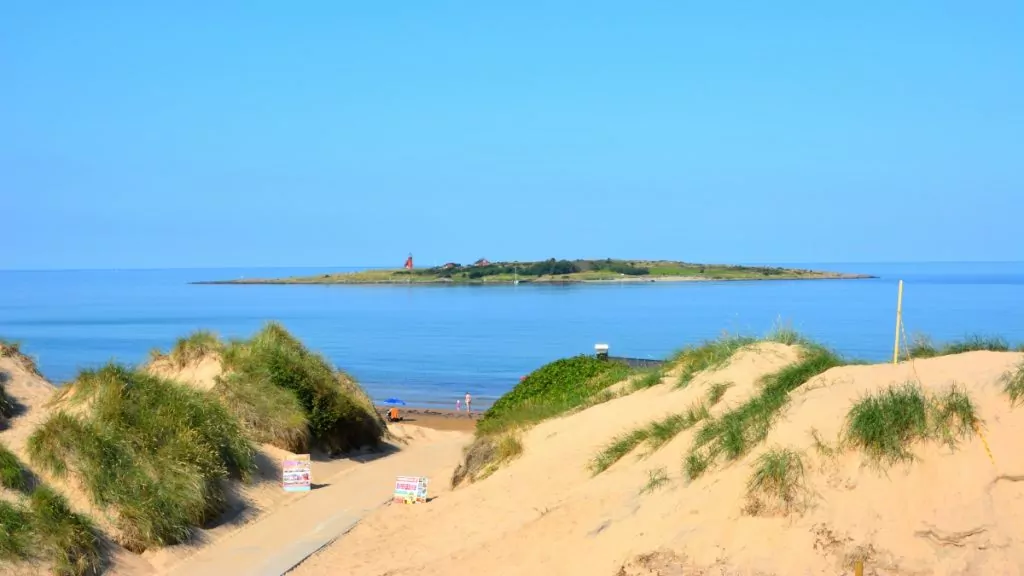
Just outside Tylösand lies Tylön, and for me the island is associated with one of the bigger adventures of my childhood. We did a lot of canoeing when I was growing up, and at one point we made it all the way out to the island.
I still remember the trip as exciting. From the beach, Tylön looks like it's just off the coast, but when you're in a small canoe paddling across open water, the distance suddenly feels completely different.
Tylön is home to a lighthouse and lighthouse keeper's quarters, and is a nature reserve with a rich birdlife. During parts of the year, access is prohibited to protect nesting birds, so always check what applies before planning a trip here. When I was a child, I remember my parents telling me that the island was originally called Tulle. I also remember that we wrote Tylösand with an e – Tyle Sand.
8. Celebrate Midsummer
Midsummer is one of my strongest memories from my childhood summers in Tylösand. The celebration was well organized and people gathered on the golf course for traditional dancing around the Midsummer pole. I remember how we danced in several large circles and how the whole area was filled with people. Tylösand But one year we got a spectator that no one had expected.
In the middle of the celebration, a moose came halfway out of the forest. It stopped there and looked at us. It stood there for a long time while the people continued to dance around the Midsummer pole, and I have sometimes wondered what it was really thinking. We probably looked much stranger to the moose than the moose did to us.
It is also one of the memories that reminds me of how many different sides Tylösand has. Here there is today's beach life, concerts and folk life around the hotel, but in my childhood memories there is just as much forest, family traditions and Midsummer celebrations. And sometimes a moose on the edge of the forest just standing there trying to understand what the people are doing.

9. Visit St. Olof's Chapel – the church that was resurrected in Tylösand
St. Olof's Chapel is a place that has followed my family through generations. My brother was confirmed here and we have been to the chapel for weddings and other celebrations. But when we started going through mother Karna's old photo albums, we found something that took the family's relationship with the chapel much further back.
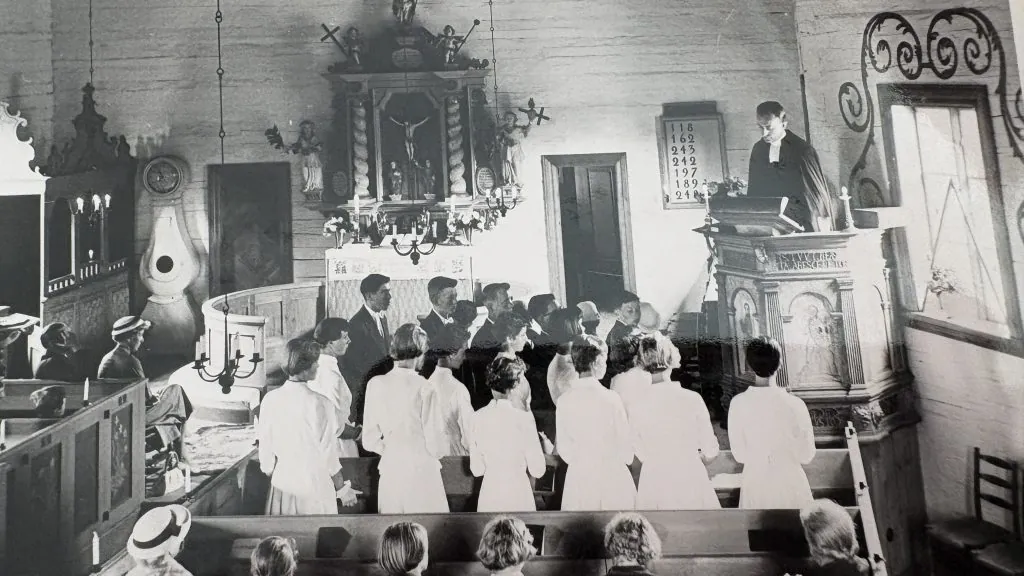
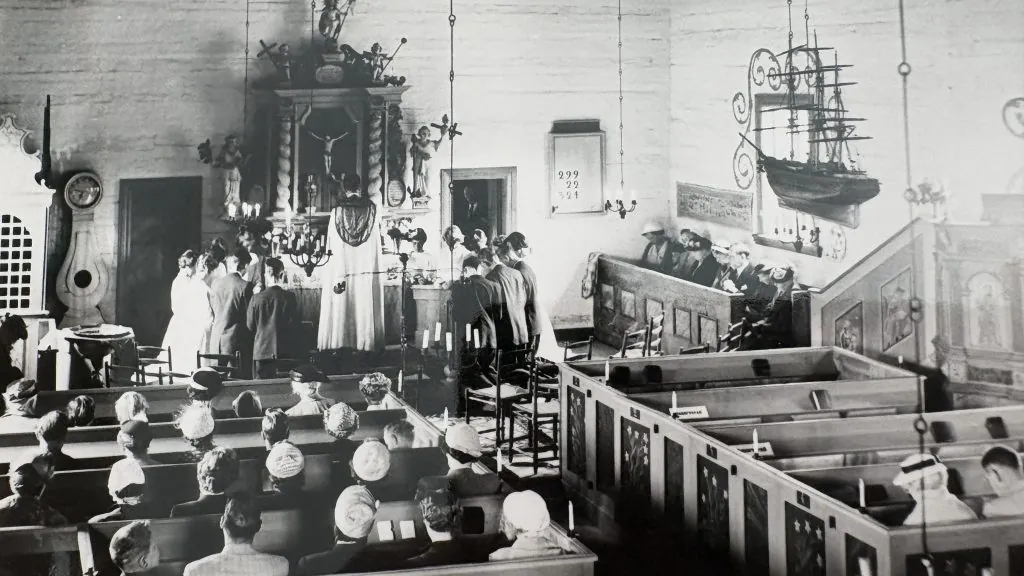
There were three photographs from 1954, taken at a relative's confirmation. In the pictures we see the confirmands gathered in front of the altar, the priest in the pulpit and the group outside the chapel after the ceremony. At that time, St. Olof's Chapel had only been in its place in Tylösand for four years. The strange thing is that the church was already several hundred years old at the time.
The church that was taken apart and disappeared
The story does not begin in Tylösand but in Lidhult in Småland, where the church was built in 1721. When a larger stone church was completed in 1879, the old wooden church was demolished. The timber was sold and used for a residential building, while the furnishings and other parts of the church were scattered in different directions. The story could have ended there.
But in 1931, the county antiquarian Erik Salvén heard what had happened and began trying to trace the parts of the old church. It developed into an almost improbable cultural-historical detective work. An old gentleman's bench had become calfskin on a farm, while spiral columns from the altarpiece had ended up all the way to the United States, where they were used as flower pedestals. Pasted text Bit by bit, the church began to come back.
St. Olaf's Chapel was resurrected in Tylösand
In the end, it was decided that the church would be rebuilt in Tylösand. The foundation stone was laid in 1947, and on September 3, 1950, St. Olof's Chapel was inaugurated in its new location. Old photographs from before the demolition became important when the building was to be recreated to its former appearance. And this is where our own photographs suddenly take on a completely different meaning.
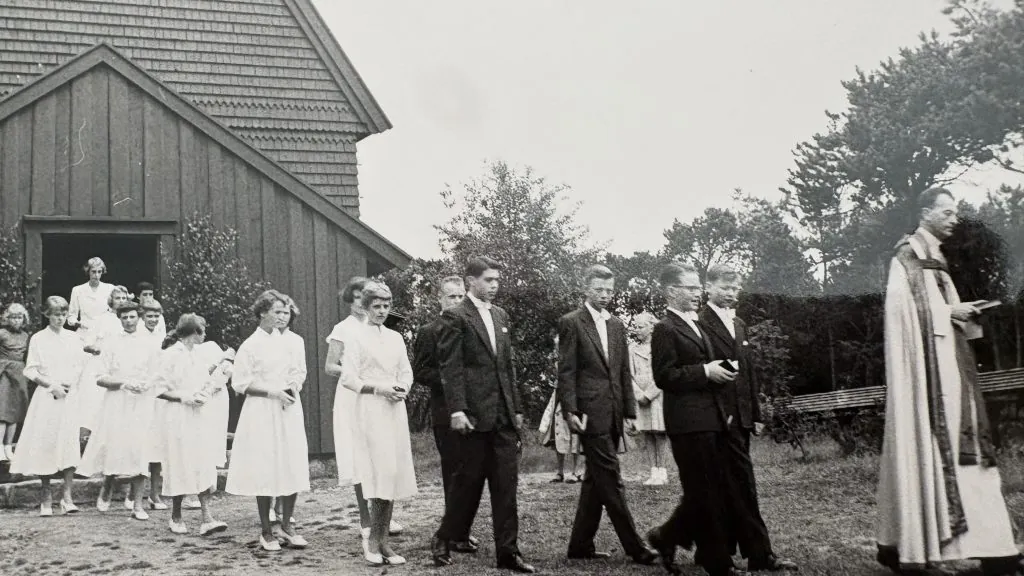
Just four years after the inauguration, part of my family sat inside the rebuilt chapel for a confirmation. In the photographs from 1954, we see the church room almost at the beginning of its new life in Tylösand – but with altar, pulpit and other parts that carry a history from long before both Tylösand and the family's summers here.
A church between two parts of my childhood
For me, there is also a strange family connection that we didn't think much about when I was a child. St. Olaf's Chapel originally stood in Lidhult – the same small town in Småland where my grandparents later had a house and where we celebrated our Christmases.
We spent our summers in Tylösand. We spent our Christmases in Lidhult. And between the two places, an entire church had moved. It is only when we now sit with the old family photographs in front of us that we realize how strangely everything is connected.
10. Taste Tylösand
Today there are plenty of restaurants in Tylösand, but the food memories from my childhood summers in Tylösand are not about restaurants. They are about fishing boats, mushrooms from the forest, fruit from the gardens and things that my mother cooked at home in the summer house.
We ate a lot of fish, sometimes buying it directly from the fishing boats as they came in. Other times we bought it from a small temporary stall where the boats docked. My favorite was mackerel, which my mother used to cook with dill and, as I recall, milk or maybe cream.
The forest around Tylösand also provided food. We picked mushrooms and the chanterelles were of course a highlight, but the harvest was not always very impressive. There were plenty of other people who had exactly the same idea and often someone had already gotten there before us.
Other goodies awaited us at home. We had a cherry tree and gooseberry bushes, we could pick plums from our neighbors, and my mother made elderflower juice from the elderflowers. I loved it.
And so there was the ice cream boat. I remember that sometimes a boat would come where you could buy ice cream. And when the ice cream boat came, of course we would buy... Ice cream boat. Some childhood memories actually don't need to be more complicated than that.
And what do you eat in Tylösand today?
Today, the food scene is of course completely different. Around Hotel Tylösand and in several other places there are restaurants, bars and summer spots, and it is great to combine a day at the beach with lunch or dinner out.
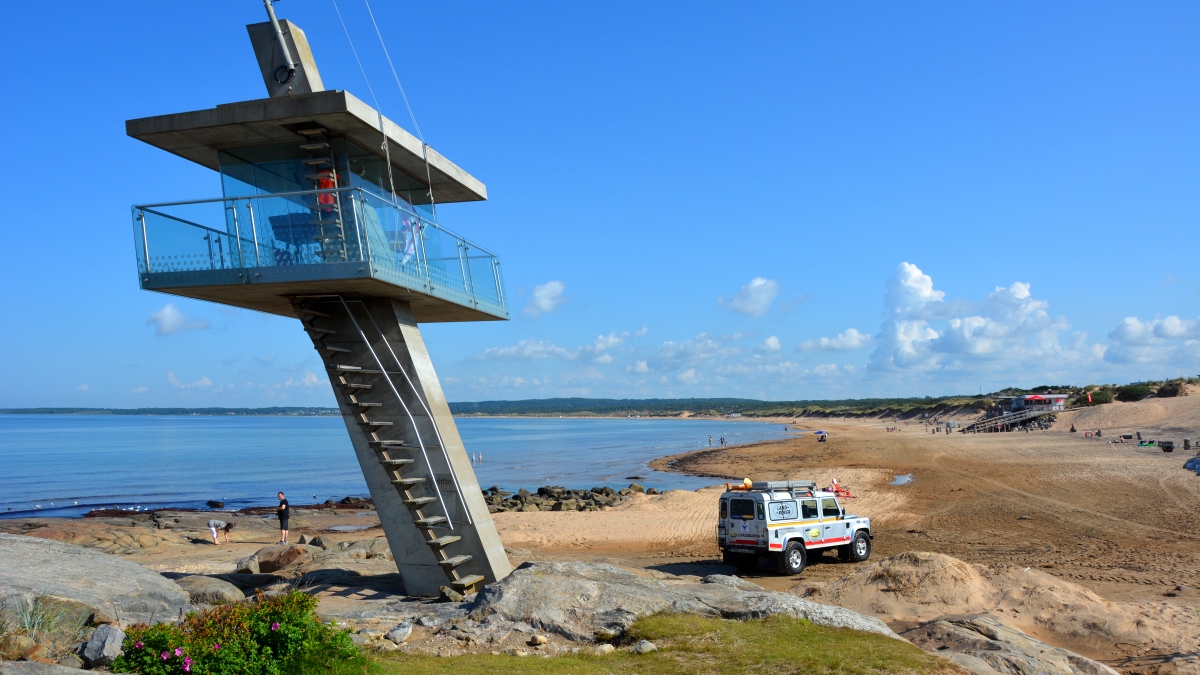
11. Experience the lifeguards – one of the highlights of the summer
When I was a child, Lifeguard Day was one of the big highlights of the summer in Tylösand. We didn't miss it as a family. On the beach and out in the sea, the lifeguards demonstrated different rescue situations – boats capsized, people were rescued from the water and we got to see how to swim back with a person who needed help.
It continued on land with different ways of caring for and rescuing people after they came out of the water. For me as a child it was of course exciting to watch, but behind the displays there was a seriousness. The sea along the west coast can be rough and conditions can change quickly.
Tylösand in 2 days - perfect itinerary day by day
Two days are more than enough to experience Tylösand. You'll have time to see both the famous beach and the much quieter side of the area with small swimming coves, cliffs, nature and a few places that tell more about Tylösand's history.
Day 1: The beach, the hotel and the sunset
- Start where you almost have to start: at The main beach. Take a morning swim, stroll along the sand and enjoy the beach before it fills with people on a hot summer day.
- Then continue to Hotel Tylösand. You don't have to stay here to go in and look at the art and the environment. Feel free to stop for lunch or a drink before returning to the sea.
- In the afternoon you can do just as little as you sometimes do at a seaside resort: swim, read a book and let a few hours pass. End the day by the sea and stay as the sun sets over the Kattegat.
Day 2: Discover our other Tylösand
- On the second day you leave Stora stranden and follow part of The path of Prince Bertil. Head towards the Rhododendron Park, Svärjarehålan and Tjuvahålan and make detours down to the cliffs and the smaller swimming spots along the coast.
- Here you can swim, walk or just sit on the rocks for a while. If you visit Tylösand in early summer, the Rhododendron Park is especially beautiful when the bushes are in bloom.
- Continue to St. Olaf's Chapel, the old wooden church that once stood in Lidhult and was rebuilt in Tylösand.
- Then end the day with dinner or something nice to drink – and if you still have the energy to run, there's always the sea for a last evening walk.
Do you only have one day in Tylösand?
Then we would choose The main beach, Hotel Tylösand and a walk along The path of Prince Bertil to the smaller bathing coves. Then you get both the classic Tylösand and the side of the place that many visitors miss.
Best time to visit Tylösand: June-September
Where to stay in Tylosand?
Tylösand is small, so you don't have to think too much about different neighborhoods. If you want the beach, restaurants and summer life close by, the area around the beach and Hotel Tylösand is the natural choice. If you want to stay quieter, there are alternatives towards Frösakull and along the coast, and Halmstad works well if you want to combine beach days with city life.
Stay at Hotel Tylösand
Hotel Tylösand is the classic choice for those who want to stay in the middle of the environment we talked about earlier in the guide. It combines hotel accommodation with spa, restaurants, art and entertainment, while the beach is right next door.
However, we don't think you have to stay at the hotel to experience it. If you live somewhere else, you can still come here for the art, the food or just to experience the livelier side of Tylösand.
Camping and motorhome in Tylösand
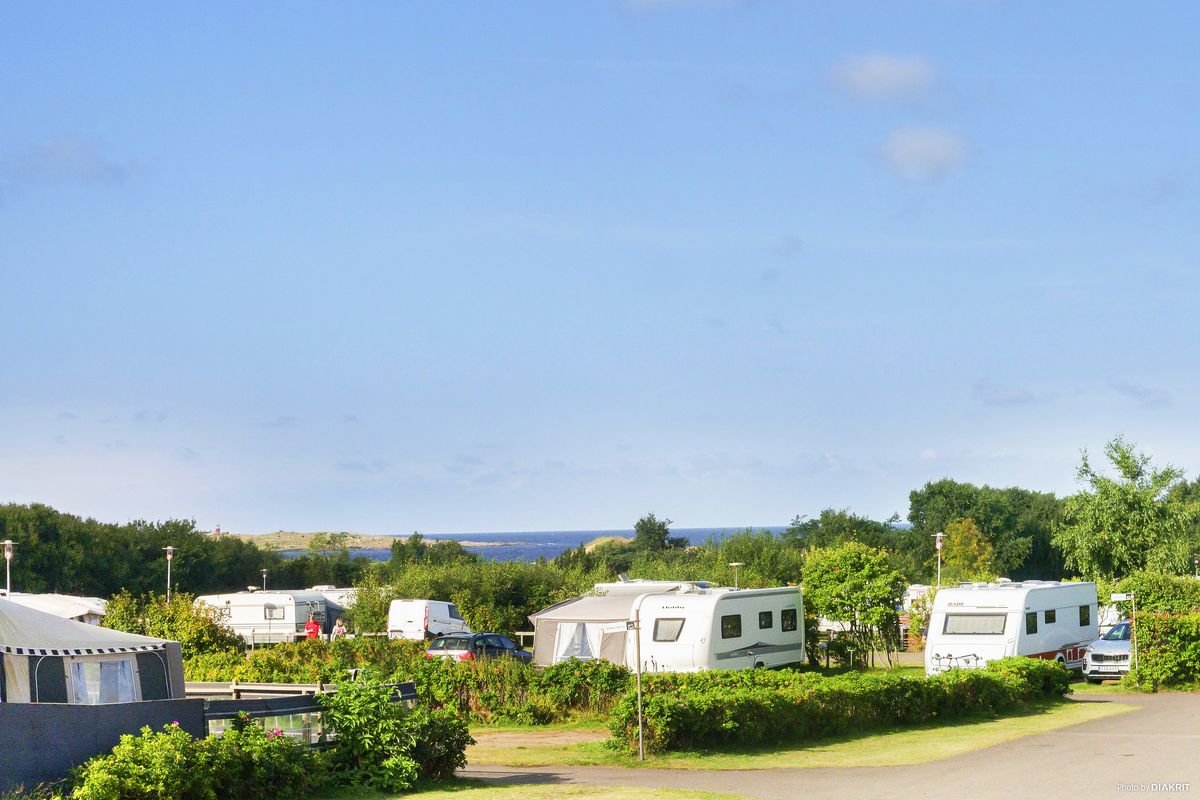
For those of us traveling by campervan, First Camp Tylösand – Halmstad is the obvious choice if you want to stay close to the beach. The campsite has pitches for campervans, caravans and tents as well as cabins, and some campsites are just a short walk through the forest from the dunes. The campsite is now open all year round.
Another option is First Camp Karlstorp – Halmstad, which is a little further from the beach but still close to Tylösand. There are over 200 camping sites for campers and caravans, among other things.
More city guides nearby
Planning to travel around the neighbourhood? Here you will find several guides.
- Things to do on the Bjäre Peninsula
- Things to do in Varberg
- Things to do in Ven
- Things to do in Ängelholm
- Things to do in Halmstad
- Things to do in Falkenberg
FaQ – frequently asked questions about Tylösand
Is there a current in the water at Tylösand?
Tylösand is open to the Kattegat and sea conditions can change depending on wind and waves. During the summer, the beach is guarded by trained sea lifeguards, who have been on Tylösand since 1960. Therefore, keep an eye on flags and lifeguard information and be extra careful when it is windy and the waves are high.
Is it allowed to cycle on Prince Bertil's path?
Yes, cycling is allowed on Prince Bertil's Trail, but the trail is primarily designed as a hiking trail and pedestrians should be treated with respect. Some parts are also hilly or go over rocks and uneven terrain, so cycling is not always the easiest way to follow the entire trail exactly.
Do you need a car or bicycle to get between the beaches in Tylösand?
No. Several of the swimming spots and coves, including Tylösand, Tjuvahålan and Svärjarehålan, are located along or near the Prins Bertils stig and can be combined well on foot. So you don't need to rent a bike to discover the Tylösand we describe in this guide. If you want to walk longer distances, you can also use the bus to get back from several places along the trail.
Is St. Olaf's Chapel open to the public?
Yes, during the summer season you can go in and visit St. Olaf's Chapel. For 2026 the chapel states that it is open May 11–September 13, every day 9 am–8 pm. The rest of the year there are church services, concerts and other events, so check current opening hours before visiting.
Where can you park your campervan in Tylösand?
First Camp Tylösand–Halmstad has camping sites for motorhomes in several sizes, and from the area closest to the sea it is only a short walk through the forest to the dunes and the beach. For those of us traveling by motorhome, it is a convenient option if you want to be able to leave the car and then discover Tylösand on foot.
You might also like:
 What to do in Strömstad - 17 tips for Sweden's westernmost town


 Things to do in Luleå - 15 tips for great experiences
 What to do in Örnsköldsvik - 15 sights and experiences
 Things to do in Ljusdal in Hälsingland - 12 tips



 English (UK)
  Svenska
Lena - gott för själen says:
I have never been there, I think. But I've heard a lot about it, of course. It attracts some, because it seems so nice. At the same time, I imagine that there would be so many people (if you do not go off season then). But maybe. sometime ...
Hug Lena
25 February 2023 - 7:20
Helena says:
Tylösand is nice! And yes, there can be a lot of people! Then it depends a bit on where you are. The beach is long and there are always a lot of people around the hotel, but much less if you move away.
25 February 2023 - 8:21