



Writer: Co-operation partner
The casino was once a place of risk, money and festivities. Rich guests gathered here to play roulette, show off and listen to music. Today, the same building has become a museum that tells the story of gambling before the era of online casinos and apps.
 Tweet
 Share
 Share
 Pin
 Share
 Share
The casino in Romania was once one of the most exclusive places in the country where rich people from many different countries came to socialise, gamble and participate in a life far from everyday life. Today, the same building is a museum showing what gambling looked like before online casinos and apps took over.
Table of contents
When gambling was exclusive and expensive
Today's gambling landscape looks very different from what it used to be. Today, it's very simple and pretty much anyone can get started within minutes at online casinos. But in the past, it was more formal. You needed to travel to the venue, dress up, follow rules of behaviour and have enough money to even sit at the tables. Gambling was slow, social and often linked to full evening programmes of dinner and entertainment.
Casino Constanta offered classic casino games such as baccarat, roulette and various card games. The staff were dressed in uniform and ran the tables, and guests moved between the different rooms with drinks in their hands.
For many, it was largely about the environment, not about winning money. It was about being seen, socialising and being part of something exclusive. At the time, casinos were expensive, exclusive and linked to physical locations, unlike online casinos that have no deposit welcome bonuses, and are completely disconnected from physical locations, allowing anyone to play.

A casino is born on the Black Sea
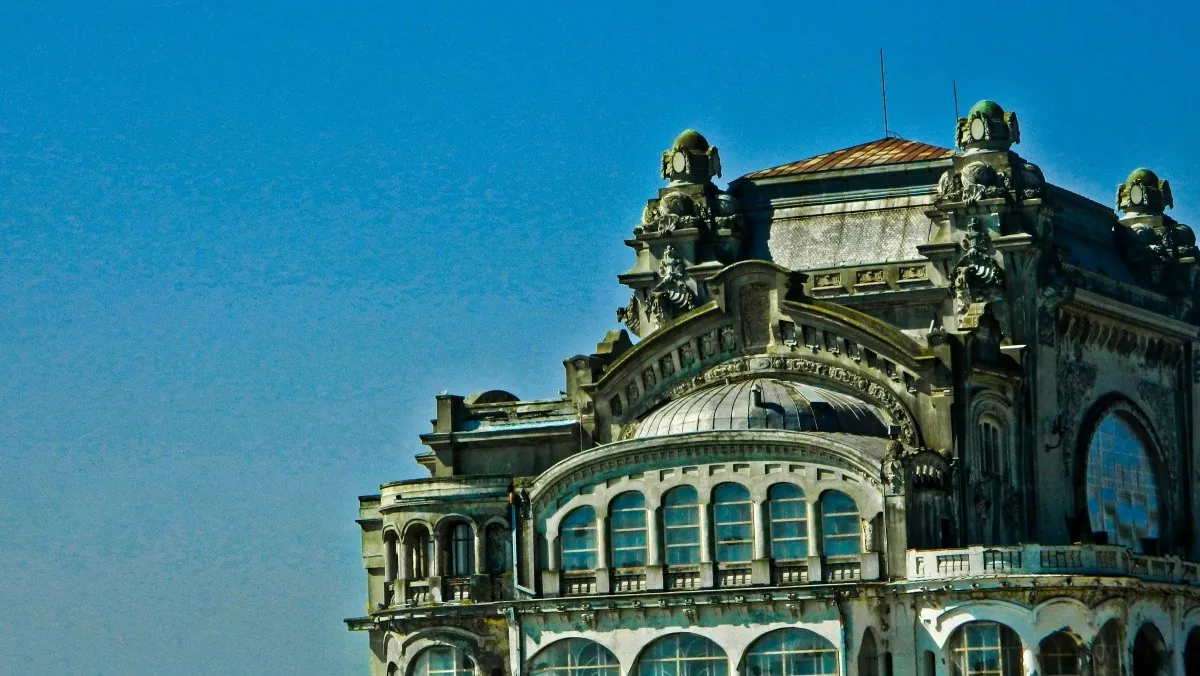
I Romania Casino Constanta is located on the Black Sea and was opened in 1910. The city wanted to attract tourists and business travellers, and a large casino was seen as an effective way to raise the city's status. The casino was placed right on the seafront, where it quickly became a landmark.
Back then, casinos were often strongly linked to hotels, resorts and holidays. People travelled there for the whole experience, not just the gambling. Casino Constanta was more than just a gambling house, there were restaurants, ballrooms, concerts and social events. It simply became a gathering place for the city's upper class, as well as for guests from all over the world.

It was clear from early on that it was not a place for the common man. The environment, dress codes and stakes made the casino a place for a smaller but wealthier audience.

War, politics and the end of the casino
However, Casino Constanța's heyday was shorter than you might think. During the First World War, the building was partly used as a hospital. During the Second World War, the area was bombed and the casino was badly damaged. But the real end of gambling came after the war, when Romania became a socialist state.

When the country became socialist, the new government chose to ban casino activities, seeing gambling as immoral and linked to capitalism and class differences. The building was then closed down as a casino and given new functions, such as a cultural centre, event venue and restaurant. Over time, the building began to fall into disrepair, and eventually the casino became largely abandoned.
The leaked into through the roof, windows were broken and the interior was damaged by damp and vandalism. Despite this, the building continued to fascinate local people, as it still had an interesting historical connection.

Why the casino never reopened
But how come the casino never reopened? When communism eventually fell in Romania in the 1990s, there was interest in reviving the casino. But the plans were stuck in the idea stage. Not only were the renovation costs very high, but the gambling industry had changed completely. Huge casinos were not as interesting anymore.
The cultural influence of communist rule had shifted views on gambling over time, and there was a much more dynamic discussion around topics such as gambling addiction, economic problems and social consequences, which made many politicians and residents sceptical about reintroducing a casino business in such an iconic building. Instead, the building was seen as a heritage site to be preserved, instead of being commercialised again.
Therefore, they chose to renovate the building and preserve and repurpose it instead.
From ruin to museum
After years of planning, the renovation began in the 2010s, with the aim of restoring the building as close to the original as possible, both on the exterior and the interior. To recreate what was while following modern safety requirements.
Once the casino reopened, it was no longer a casino, but a museum and cultural centre. Visitors could still walk through the old parlours and see how the rooms were laid out, as well as view exhibits on the history of the building and the development of the city as a whole.
There were old photographs to see, drawings and artefacts that told us what life might have been like at that time, about a hundred years ago.
Some of the premises are still used today for cultural events such as concerts and exhibitions.
In conclusion, Casino Constanta shows how the gambling industry has gone from being something exclusive to the upper classes, a formal event with high standards, to something accessible to everyone everywhere, something that was not possible before mobile phones. The casino also shows how a building can be given new life by being revitalised with a new purpose.







 English (UK)
 Svenska