

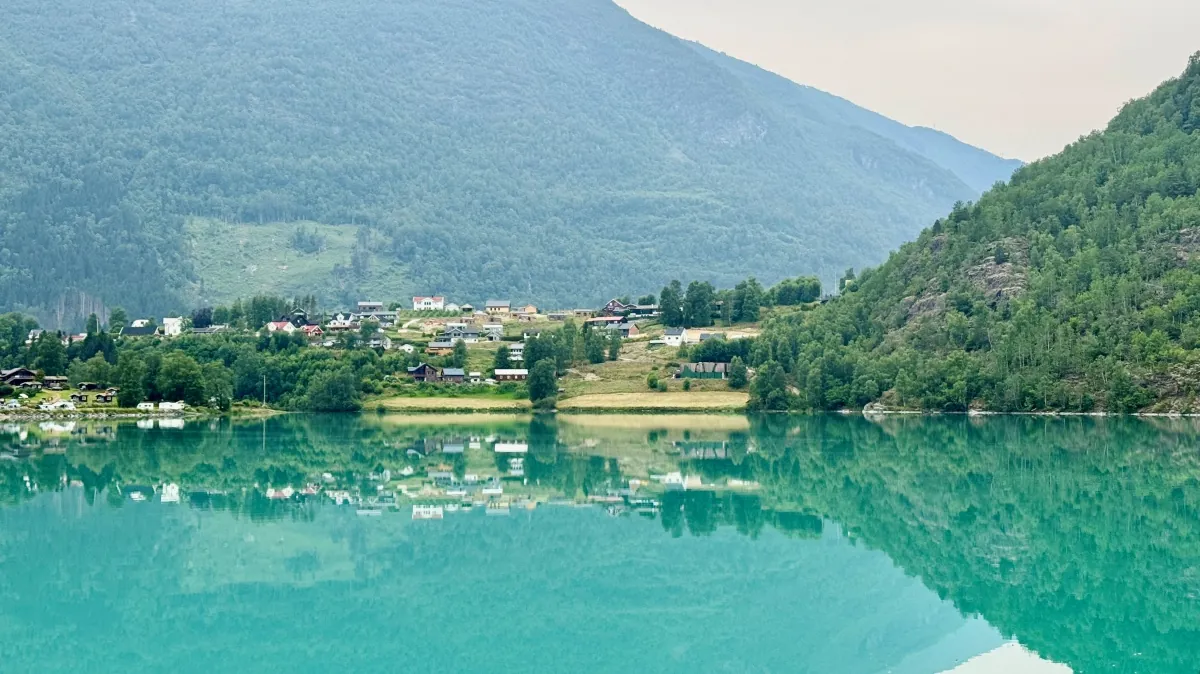
Text and photo: Helena Bergström
The Sognefjord is Norway's longest and deepest fjord – often called the "king of the fjords". We arrived here by motorhome after a trip over the mountains and were greeted by a landscape that felt both powerful and peaceful at the same time.
 Tweet
Tweet Share
Share Share
Share Pin
Pin Share
Share Share
ShareTable of contents
Norway's largest fjord
Considering that the Sognefjord is Norway's largest fjord, with several famous side fjords, there is a lot to experience here. We only saw one corner of the fjord – but it was enough. The nature here is so magnificent that you quickly realize why many people return here again and again.
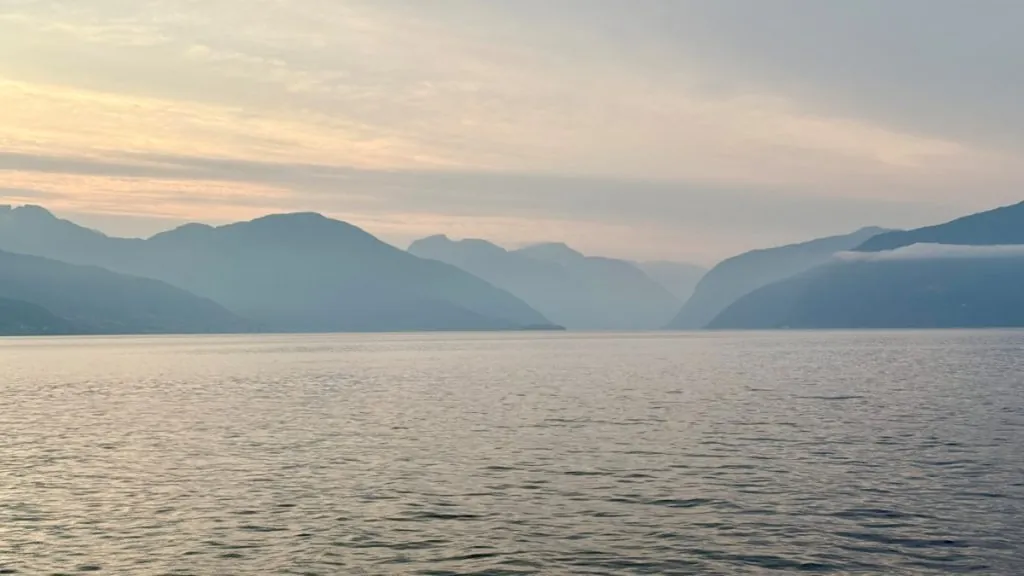
The Sognefjord is located in Vestland county and stretches from Jotunheimen in the east to the coast of Vestlandet.
Facts about the Sognefjord
- Length: Approximately 205 kilometers
- Depth: Up to about 1,300 meters deep
- World Heritage: Around the Sognefjord are two areas designated as UNESCO World Heritage Sites: Nærøyfjord (a dramatic fjord arm) and Urnes Stave Church (a medieval wooden church).
From Lom towards the Sognefjord
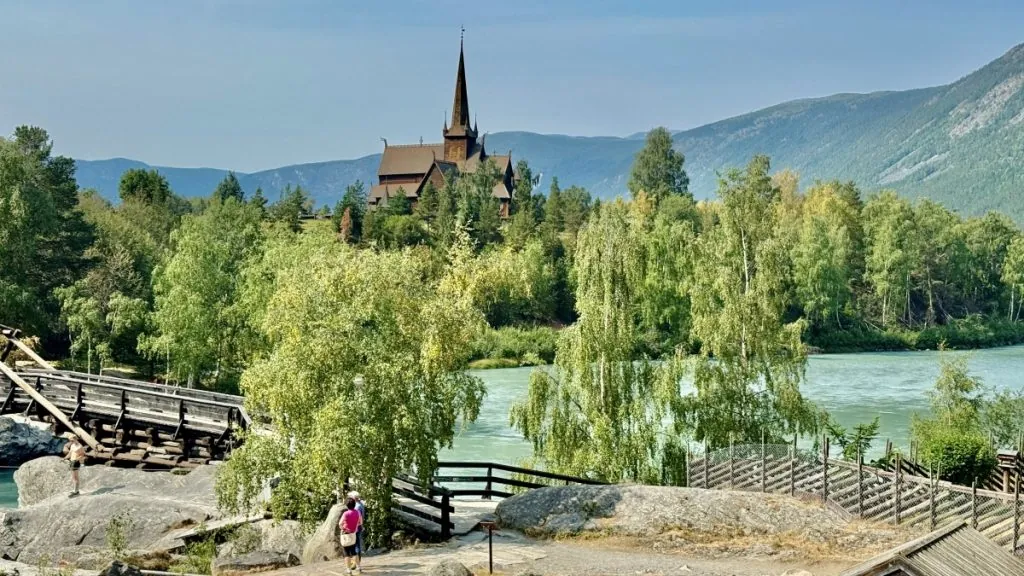
We started this part of the trip at the Geirangerfjord and drove via Lom, to get to the Sognefjord. In Lom we stopped primarily to refuel and stock up on provisions, but the charming location made us choose to see more. Lom's stave church dates back to the late 12th century and is beautifully located in the middle of the town.
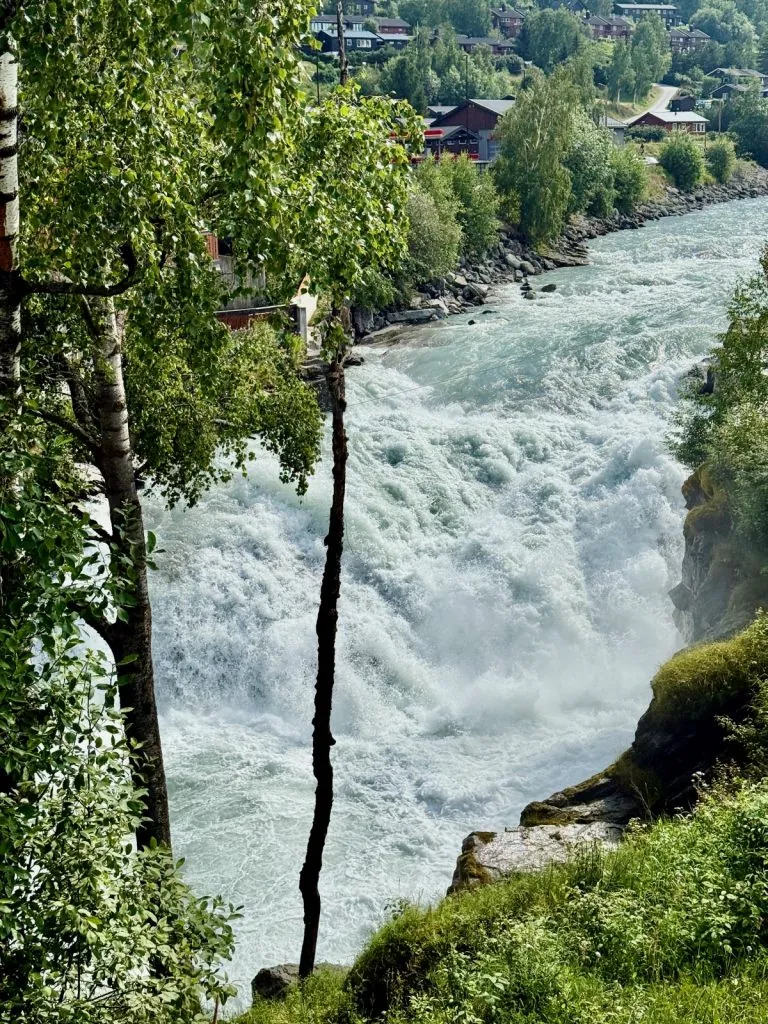
In Lom you will also find a beautiful and wildly roaring waterfall.
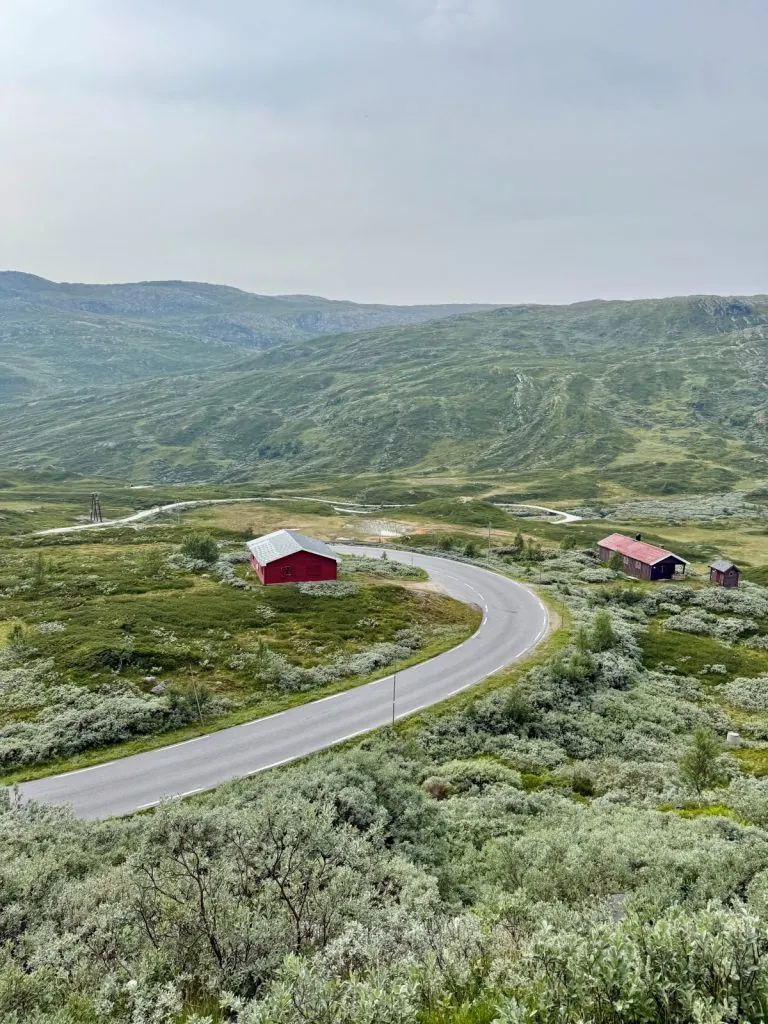
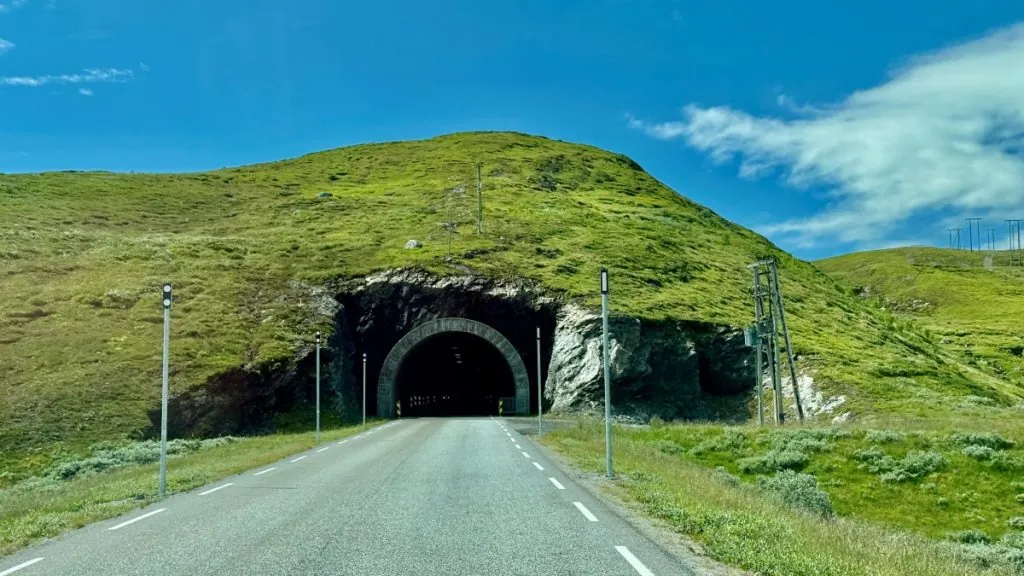
After Lom it was time to head towards Skjolden, which meant we had to take the road over Sognefjellet. The higher we got, the more barren the landscape became. The views here were incredibly beautiful and we saw plenty of snow on the mountain peaks. If we had wanted to stay overnight in the camper, it would have been possible, but the internet coverage is spotty up here, so we decided to continue.
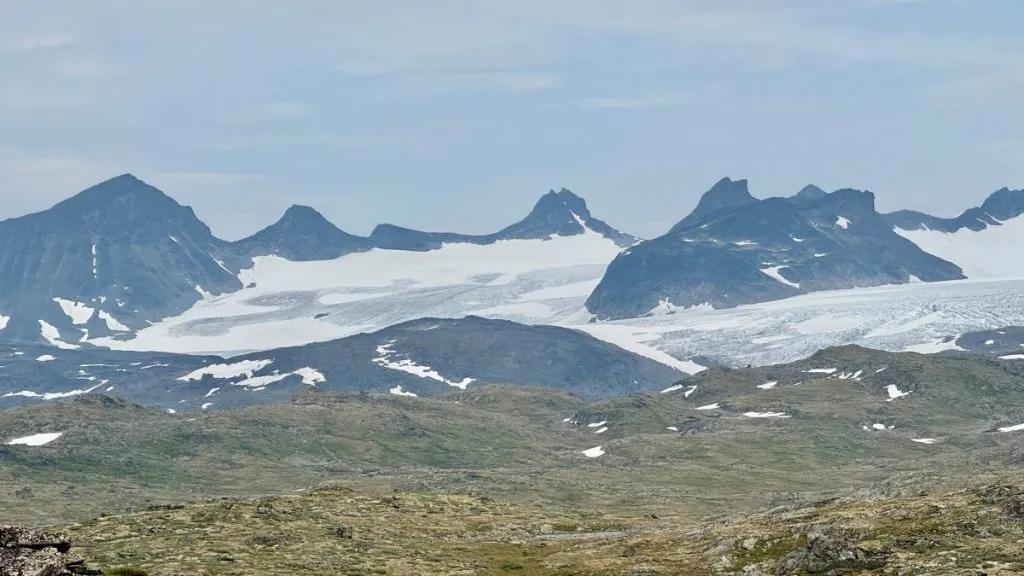
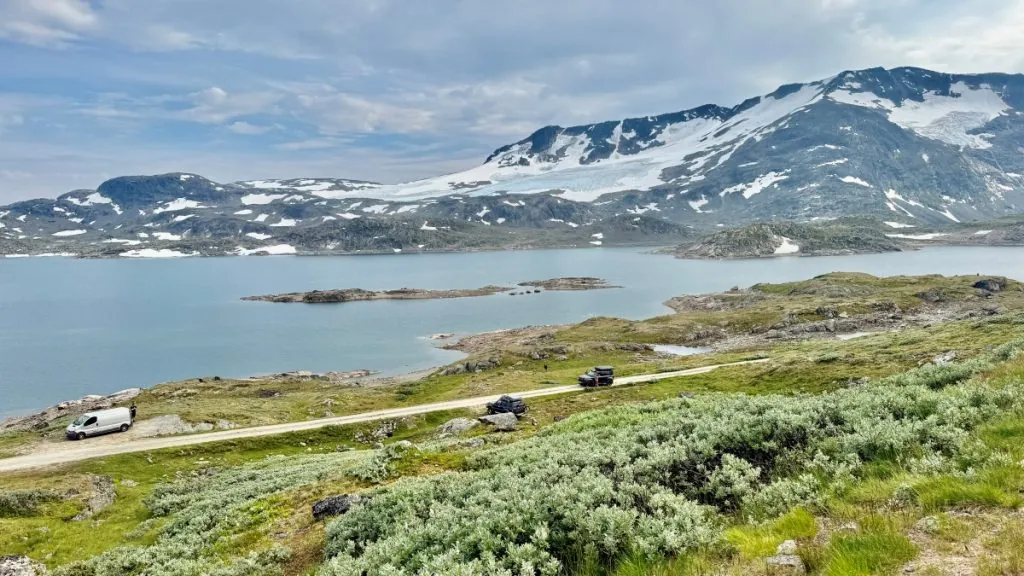
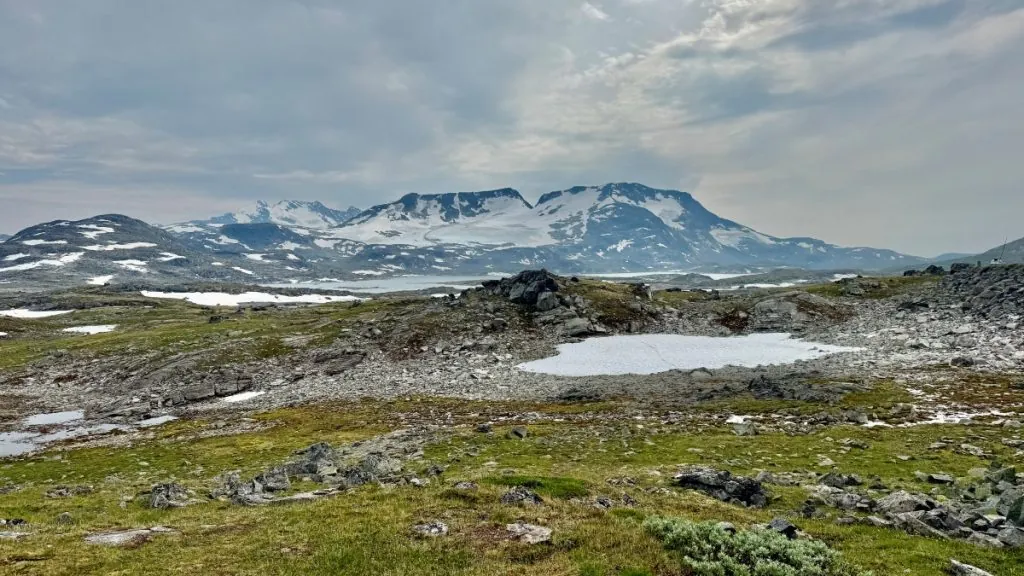
The most demanding part of the road turned out to be the road down from the mountain, as the dramatic slope took a toll on the camper despite low gear and engine braking. We chose to stop for the night at a rest area, halfway down towards Skjolden.

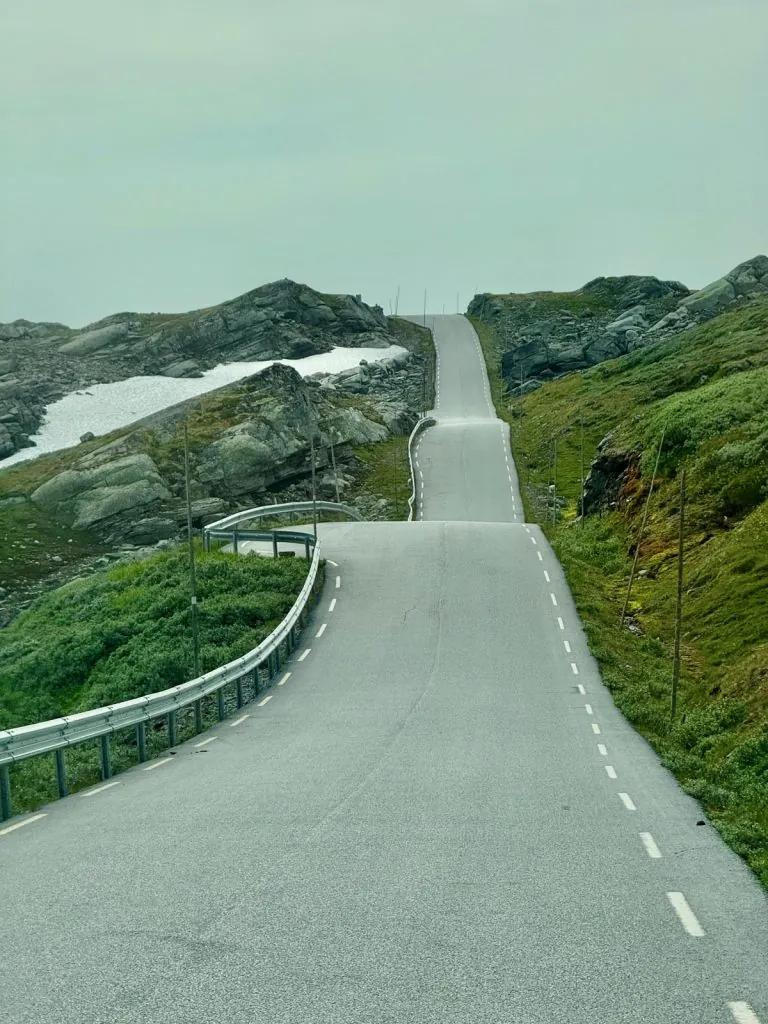
When the fjord appears
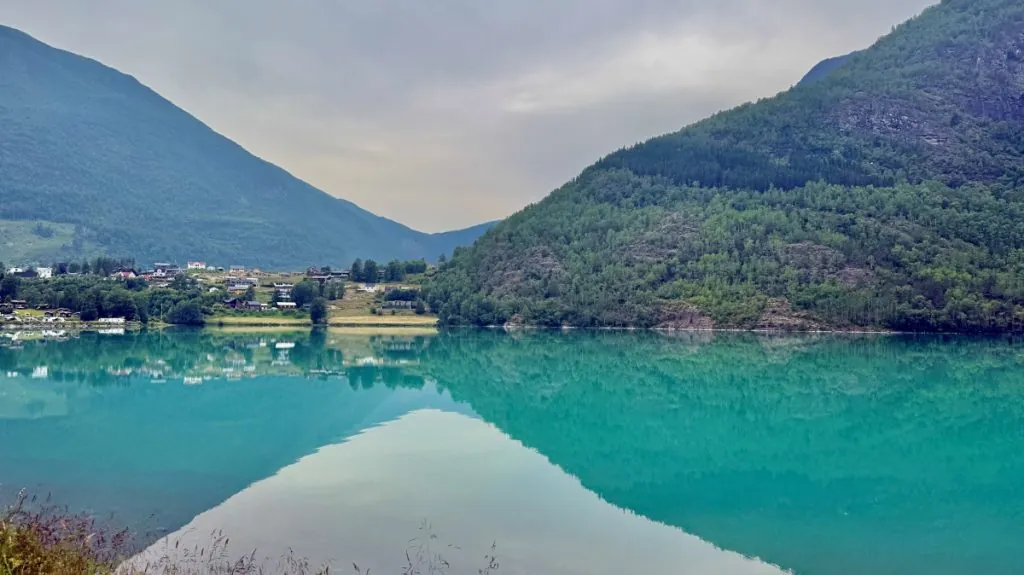
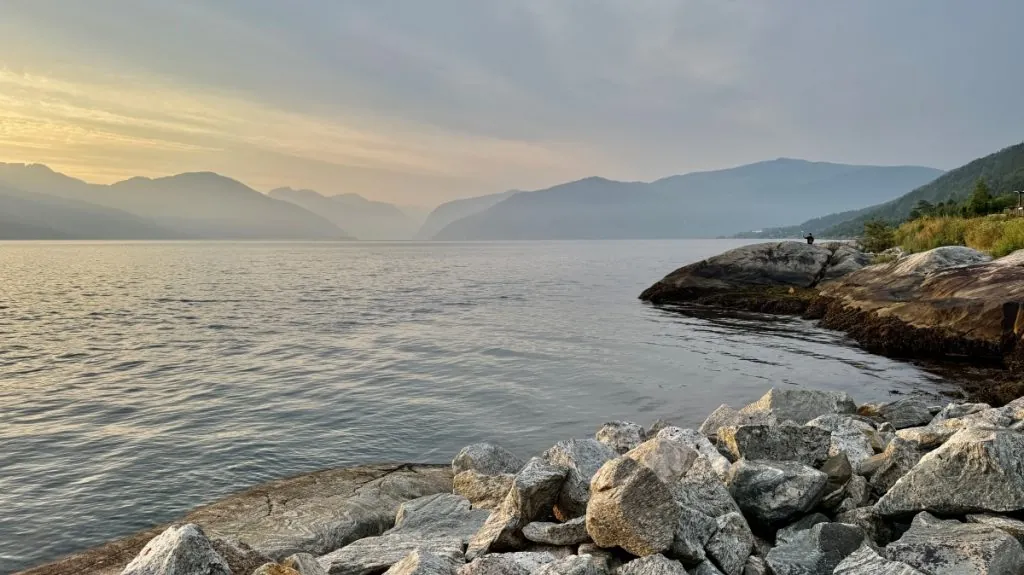
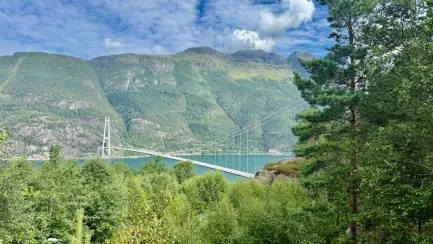
The next morning we continued the last stretch down towards Skjolden and the Sognefjord. And what a beautiful first encounter! The colors were green-blue and the mountains were reflected in the water. We drove along the fjord and gazed intently at the views.
One of Norway's most important naval battles was fought here
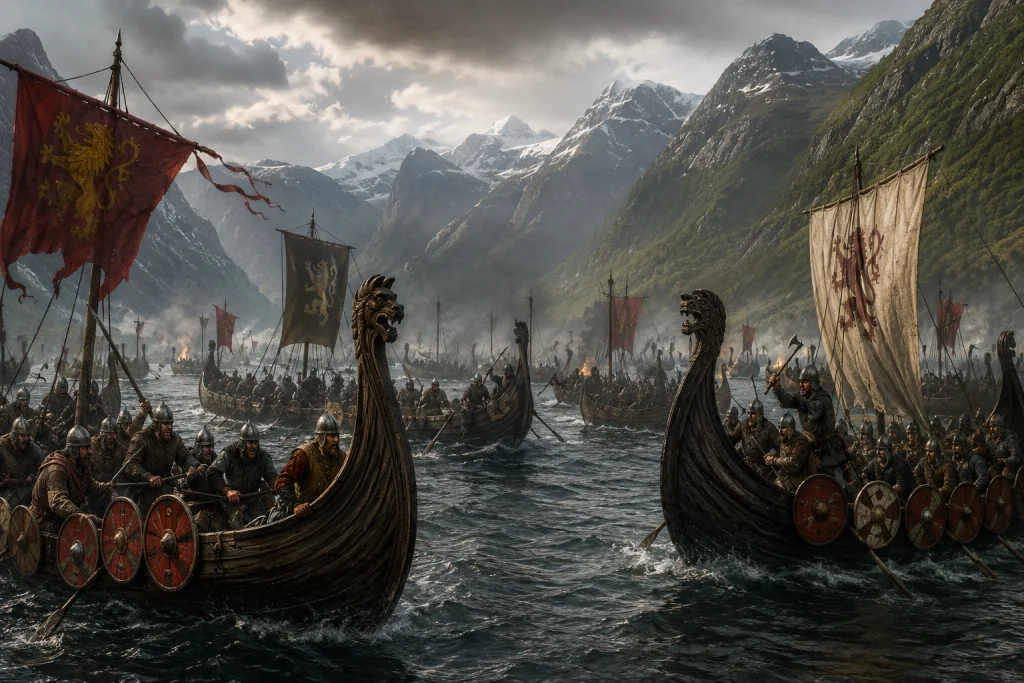
While we were driving along the fjord, we noticed a sign about the ”Battle of Fimreite”. We became curious and read on. It turned out that one of the most important naval battles in Norwegian history was fought here – on June 15, 1184.

Here King Sverre Sigurdsson and King Magnus Erlingsson met with their fleets in a bloody battle that lasted several hours. When Magnus fell and his ship sank, Sverre emerged victorious and became the absolute king of Norway. The battle is considered a decisive event during the Norwegian civil wars and helped shape the country's subsequent history.
As we traveled across the tranquil fjord, it was hard to imagine that these very waters were once filled with longships and thousands of warriors. It added another dimension to the landscape and made the visit even more fascinating.
Ferry across the fjord
We took a ferry across the fjord, from Hella to Vangsnes. This ferry trip took no more than 15 minutes and the ferry is included in EPASS24/AutoPASS, which means it is not more expensive than other ferries.
Djuvik Camping
Shortly after the ferry crossing we found Djuvik Camping. It was almost full, and the girl at the reception more or less apologized that the last place might not be so nice.
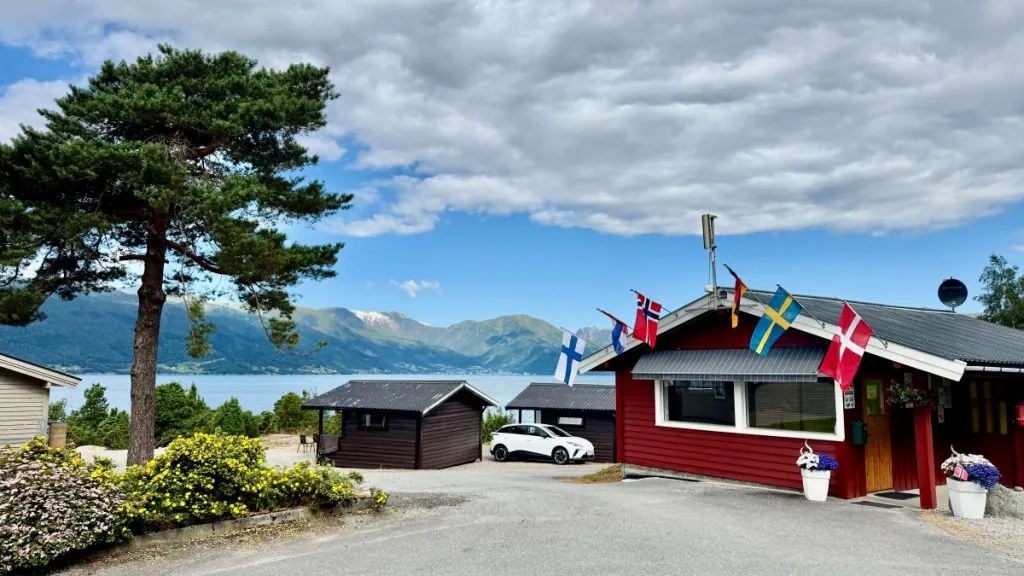
It's true that we didn't get to stand directly by the water, but we were still satisfied with the nice location, the fjord view from the campsite, the fishing opportunities and the nice welcome.
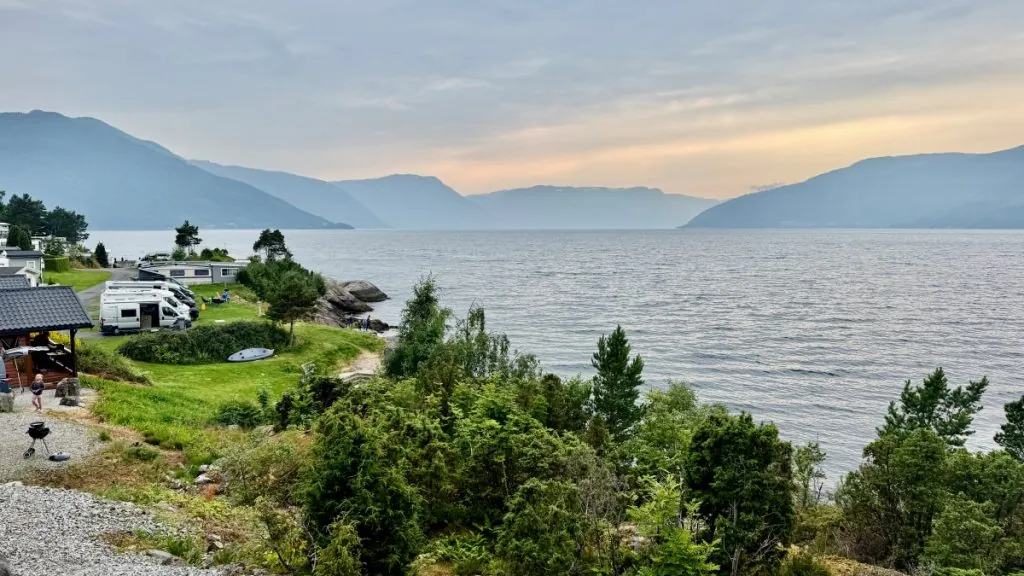
An evening at the Sognefjord – with fishing
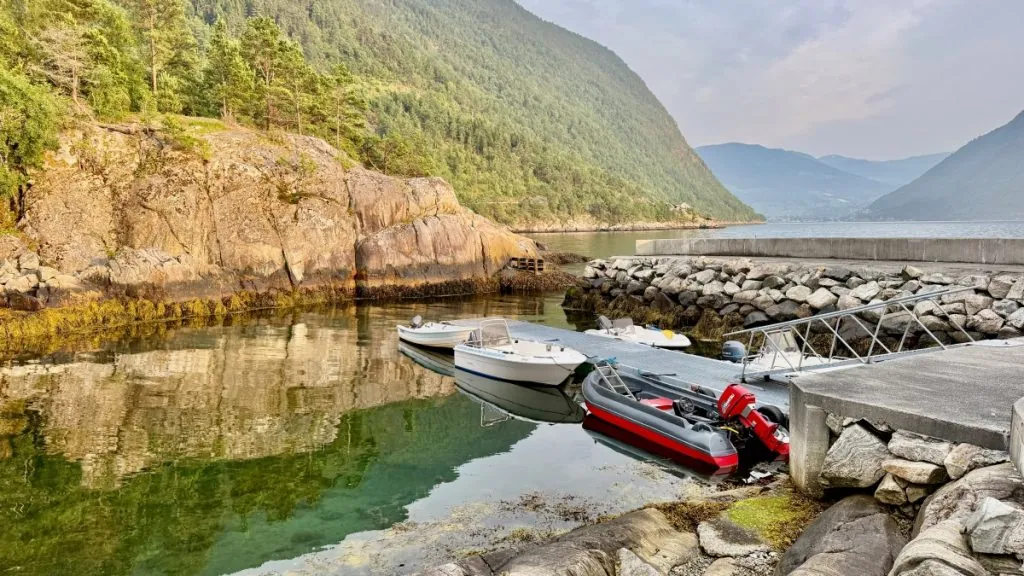
We spent the evening at Djuvik Camping with Peter's youngest son Billie and his girlfriend. It was a nice evening with dinner at the camper and then fishing on the campsite's small pier.
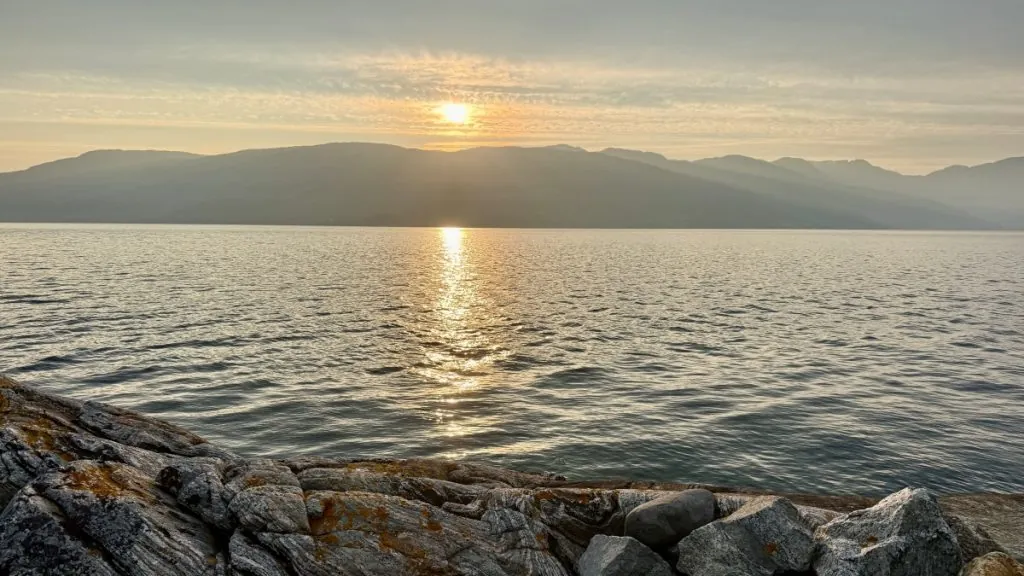
There was no pacifier this time, but it doesn't really matter. The nice thing was that we got to hang out by the fjord and hang out.

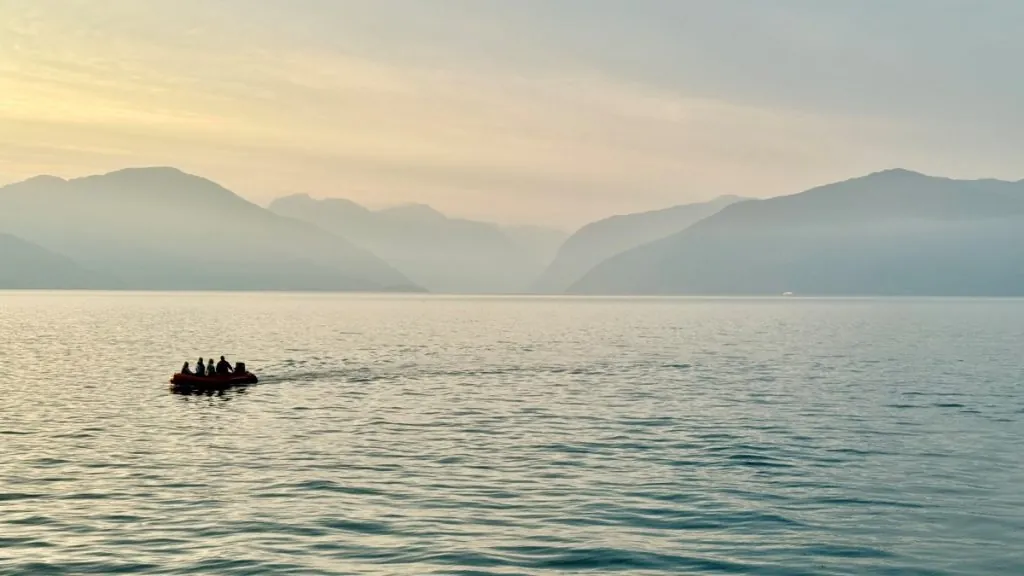
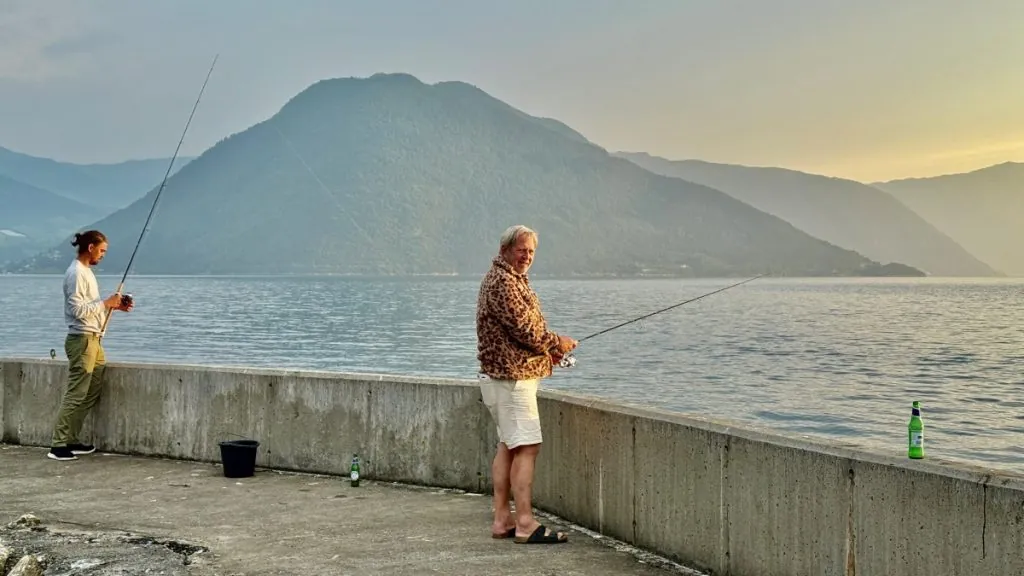
If you want, you can also rent a boat at the campsite, but that will have to be next time, because now we would be moving on.
Onward towards Voss
After our visit to the Sognefjord, Voss was on our list. First and foremost, we needed to come here to fill up the LPG (gasoline) in the camper, but we also knew that Voss offers several beautiful waterfalls.
Our best tips for the Sognefjord
- Check roads and ferry routes in advance, so you can travel the smoothest and most affordable way.
- Bring fishing equipment if you like fishing. There are plenty of opportunities for fishing in the fjord.
- Please book campsites and boat trips in advance., if you are traveling during high season.
More to see in this part of Norway
Are you traveling and want to experience more in Norway? Here you will find more tips and reports:
- Old Strynefjell Road
- Geirangerfjord
- Waterfalls in Voss – Tvindefossen and Skjervsfossen
- Hardangerfjord
FAQ – frequently asked questions about the Sognefjord
Where is the Sognefjord located?
The Sognefjord is located in Vestland county in western Norway. The fjord extends from the North Sea far inland and is surrounded by high mountains, waterfalls and several smaller side fjords.
How long is the Sognefjord?
The Sognefjord is approximately 205 kilometers long and is Norway's longest fjord. It is also considered one of the longest and deepest fjords in the world.
How deep is the Sognefjord?
At its deepest point, the Sognefjord is about 1,300 meters deep. At the same time, the mountains rise over 1,000 meters above the water surface in several places, creating the dramatic views for which the fjord is famous.
How to best experience the Sognefjord?
It depends on what you want to see. Many people choose to drive along the fjord and combine the trip with one of the many ferries. Others discover the fjord from a sightseeing boat or kayak. For us, the car journey and the evening by the fjord were one of the greatest experiences.
Do you have to take a ferry?
If you are traveling by car or camper, it is common for your trip to include one or more ferries. They are a natural part of the road network in the area and make it easy to get between different parts of the fjord.
Can you drive around the entire Sognefjord?
Yes, but since the fjord is very long, it takes considerably longer than many people think. Most people therefore choose to drive part of the way and combine it with ferries to get a more varied trip.
How many days do you need at the Sognefjord?
It's possible to have a great experience in one day, but if you have the opportunity, we recommend staying at least two or three days. That way you'll have time to enjoy the nature, go on excursions and experience the fjord at a slower pace.
Is the Sognefjord worth a visit?
Yes, absolutely. For us, the Sognefjord was a completely different experience than both the Geirangerfjord and the Trollstigen. Here it's less about a single viewpoint and more about the feeling of traveling through a magnificent landscape with high mountains, deep fjords and quiet evenings by the water.
Can you fish in the Sognefjord?
Yes, there are good opportunities to fish in and around the Sognefjord. Keep in mind that there may be local regulations depending on where you fish, especially in rivers and lakes. We took the opportunity to try our luck at fishing during the evening at our campsite.
When is the best time to visit the Sognefjord?
Summer is the most popular time, when roads and mountain passes are open and the days are long. During this period, it is also easiest to combine car travel with ferries, hikes and other activities.
What is the difference between the Sognefjord and the Geirangerfjord?
The Geirangerfjord is smaller and known for its dramatic waterfalls and steep mountain sides, while the Sognefjord is considerably larger and offers a greater variety of landscapes. Here you will find both wide fjord sections, narrow side fjords, high mountains, glaciers and small villages. If Geiranger impresses with its drama, the Sognefjord offers a more varied and large-scale nature experience.
You might also like:
 Vinnufossen in Norway – Europe's highest waterfall
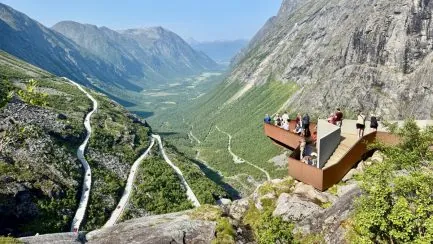 Trollstigen – one of Norway's most dramatic roads
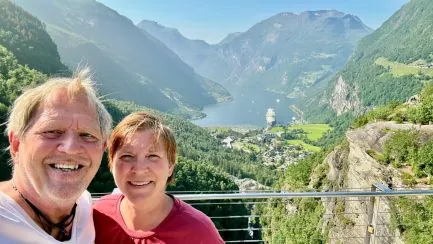 Geirangerfjord – dramatic views from Geiranger to Hellesylt
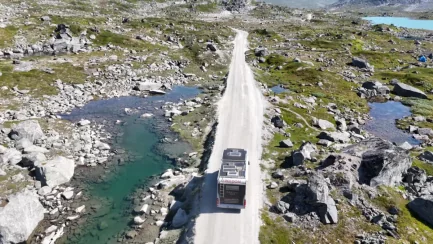 Old Strynefjellsvegen – Norway's historic mountain road
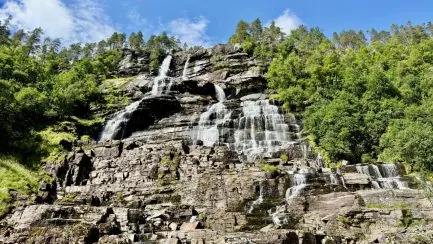 Spectacular waterfalls in Voss – Tvindefossen and Skjervsfossen
 Hardangerfjord with motorhome – Eidfjord, Vøringsfossen and Hardangervidda



 English (UK)
  Svenska
Znogge says:
So interesting to read about your trip in Norway! There are really appealing views and beautiful nature so it feels like an area that we should explore more. Husse has been to Norway many many times but then by plane or car and through work. What you show is something completely different.
26 July 2026 - 20:17
gillasvardag says:
Oh…I feel so good and wish I could just go on a trip to Norway and see and experience these landscapes again…Thank you for sharing!
26 July 2026 - 23:57