


Writer: Helena Bergström
Updated: August 2026 | In Iceland, one Santa Claus is not enough. Here, there are thirteen – and they come one by one during the last thirteen days before Christmas. They steal sausages, lick bowls, slam doors and peek through windows. As if that weren't enough, they have a man-eating troll mother and a giant Christmas cat in the family.
 Tweet
 Share
 Share
 Pin
 Share
 Share
The Icelandic Santas, the Santa Clauses, has fascinated me ever since I lived in Iceland as an exchange student and celebrated a full Icelandic Christmas at Vestmannaeyar. Since then, I have returned to Iceland many times – but the stories of the thirteen strange elves are still among my favorites among all the country's traditions.
Table of contents
I got to know the Icelandic elves at Vestmannaeyar
The first time I came to Iceland wasn't on a regular vacation. I moved there as an exchange student, lived in Vestmannaeyjar and attended high school there for a year.
This meant that I got to experience Iceland in a completely different way than I had during all the trips I later made back to the country. I lived everyday life, went to school and got to know traditions that you don't necessarily come into contact with during a week's vacation.
One of them was the Christmas tradition of the thirteen Icelandic Santas. I had a special Christmas calendar with all the Santas, where every day you would turn to see which Santa it was. I liked it so much that the calendar came home with me to Sweden and came back for several Christmases. And the Santas were definitely not copies of our Swedish Santa.

Iceland has 13 Santas
The Icelandic Santas are called Christmas gifts, roughly ”Christmas boys” or ”Christmas boys”. In today’s tradition, there are thirteen of them and in the days before Christmas they come down from the mountains, one at a time.
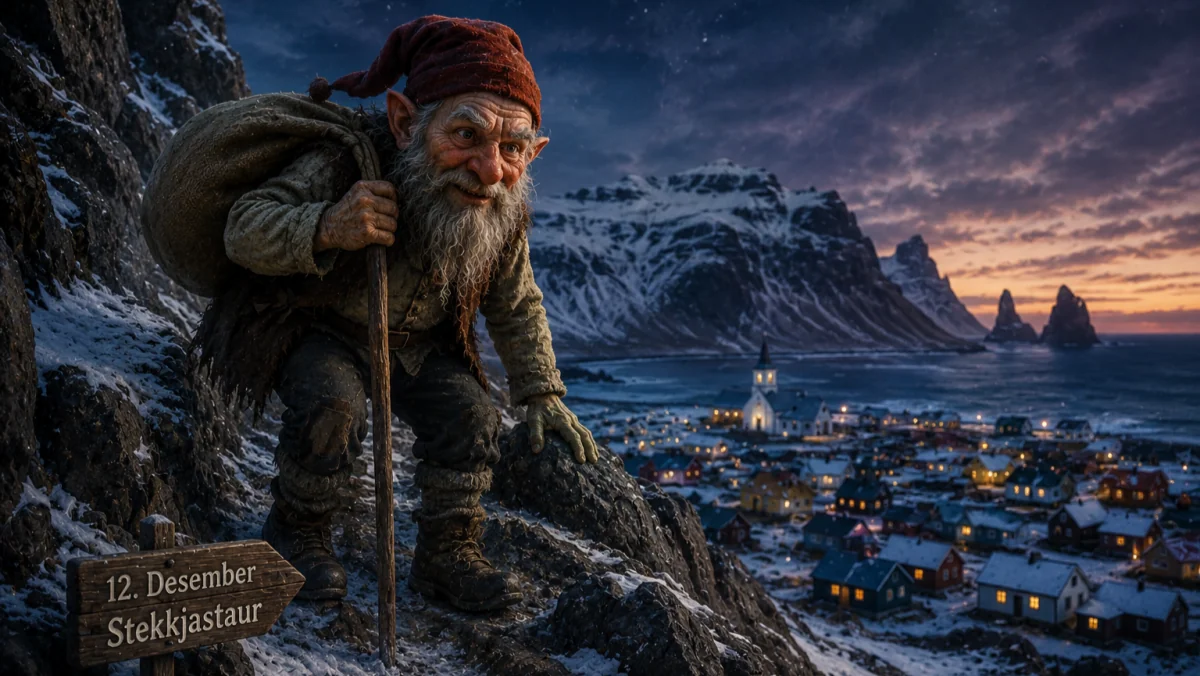
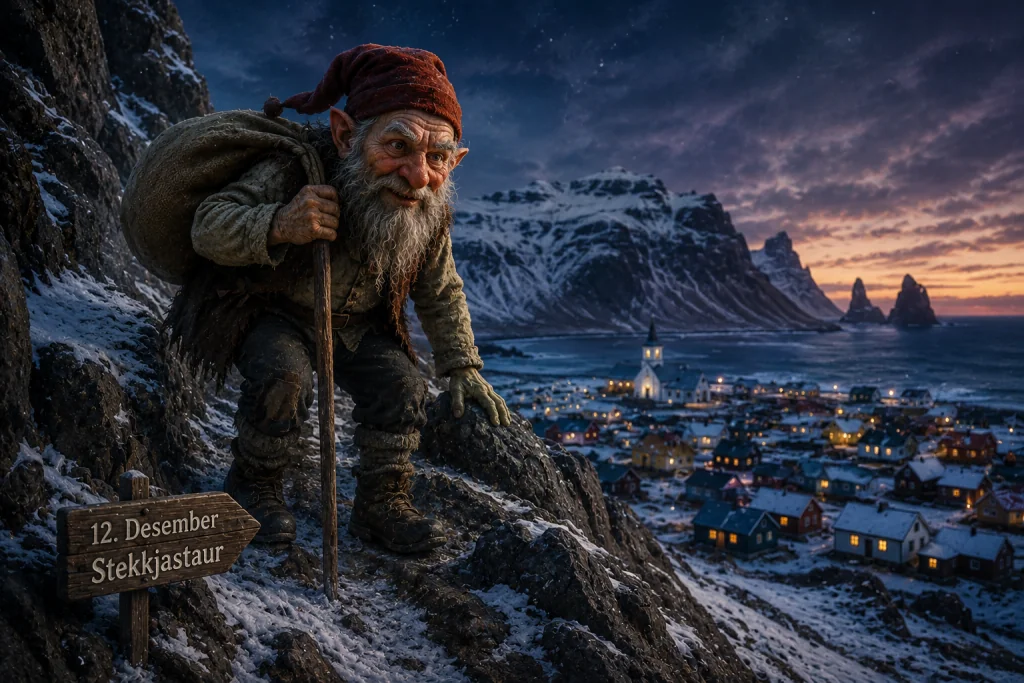
The first, Stekkjastaur, arrives on December 12. After that, a new elf arrives every day until Christmas Eve, when the thirteenth and final one, Kertasníkir, appears.

Then they start to leave again in the same order. Stekkjastaur leaves the human world on December 25th and then disappears one by one a day. On January 6th the last one is gone and Icelandic Christmas is over.
The Icelandic elves weren't very kind
Today's jólasveinar have become considerably more modest than their predecessors. Nowadays, Icelandic children usually place a shoe in the window during the thirteen nights before Christmas. If the child has been good, today's Santa can leave a small gift in the shoe. Those who have not behaved risk finding a potato instead.

But it didn't start out so cutely. In older folklore, the Santa Clauses were troll-like and rather scary figures who came down from the mountains and caused trouble.
They stole food, disturbed people and animals, and all had their own more or less annoying quirks. The much friendlier role of Christmas present-bearer is a more modern development. And their name pretty much reveals what they were up to.
The 13 Icelandic Santas – day by day
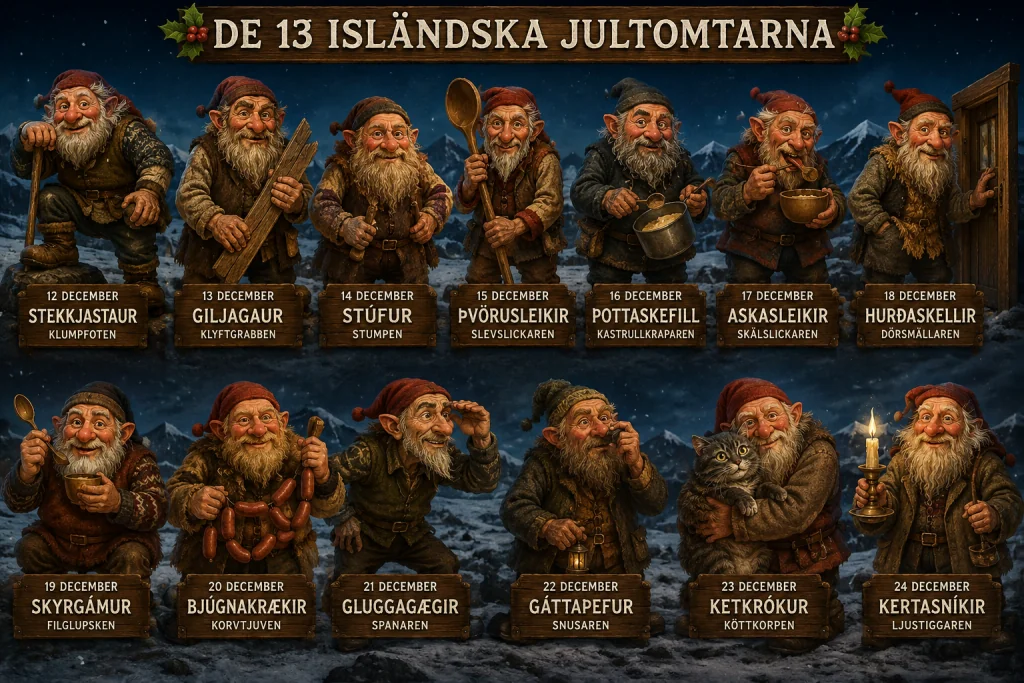
December 12 – Stekkjastaur
The first Santa Claus sets out on the sheep. The name usually translates roughly as "The Sheep Post" or Sheep-Cote Clod. He has stiff legs, which at least makes life a little more difficult for him when he tries to disturb the sheep.
December 13 – Giljagaur
Hiding in ravines and sneaking into barns to get to the milk.
December 14 – Stúfur
”Stumpen” is the shortest of the brothers. He was particularly fond of frying pans and what was left in them.
15 December – Þvörusleikir
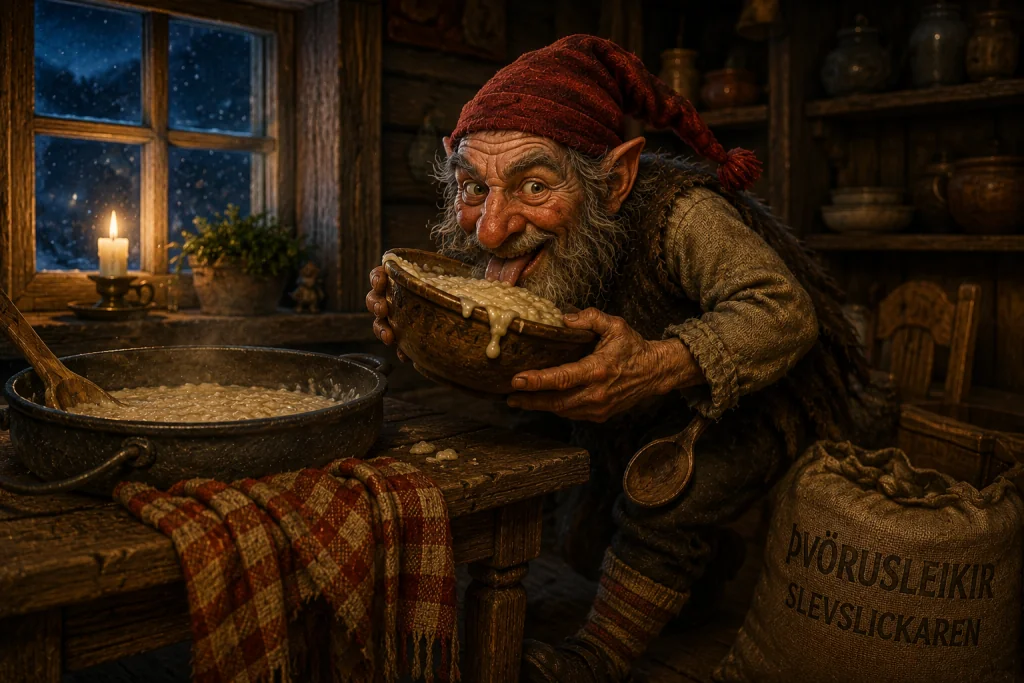
The ladle licker is exactly what the name suggests: a tall and skinny figure who tries to reach ladles to lick them clean.
December 16 – Pottaskefill
The pot scraper steals dirty pots and scrapes up the leftovers.
December 17 – Ashes Games
The bowl licker hides and waits for its chance to seize food bowls and lick them clean.
December 18 – Hurðaskelir
The door slammer enjoys slamming doors – preferably at night when everyone is trying to sleep.
December 19 – Skyrgámur
The skyr eater, of course, loves skyr and eats as much as he can get his hands on.
December 20 – Bjúgnakrækir
The sausage thief is hiding and trying to steal the sausages that were traditionally hung up for smoking.
December 21 – Window-gazing
The window peeper sneaks around outside houses and peeks in through the windows to see if there is anything worth stealing.
December 22 – Gáttaþefur
The door sniffer has a huge nose and an amazing sense of smell, which he uses to sniff his way to food.
December 23 – Ketkrókur
The meat hook tries to steal meat using a long hook.
December 24 – Kertasníkir
The last Santa is the candle thief. In the past, candles were valuable – and also made from tallow and therefore edible – so children's candles were tempting prey.
Grýla is the much nastier mother of the elves
If the thirteen brothers seem a bit awkward, they are still nothing compared to their mother.
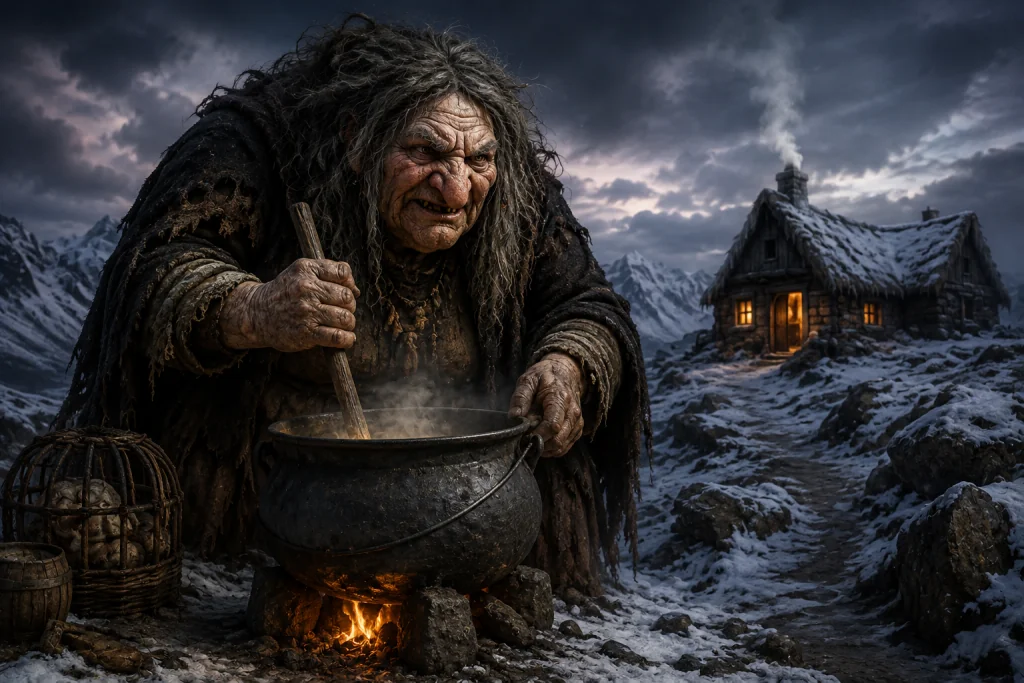
Grýla is an ancient female troll or giant-like creature that appears in Icelandic folklore long before today's Jólasveinar. She leaves her hiding place in the mountains during Christmas and searches for disobedient children - whom, according to the stories, she stuffs in her sack, takes home and cooks in a pot.
Grýla is about as far from Disney's Christmas charm as you can get. Her husband is called Leppalúði and is considerably less energetic. In the stories, he is often portrayed as lazy and rather inept, and is greatly overshadowed by his terrifying wife.
The Christmas cat can eat anyone who doesn't get new clothes
And the family has pets. Of course not some cute little dog. The Icelandic Christmas cat, Christmas meat, is a giant and scary cat that, according to tradition, preys on people who haven't received any new clothes for Christmas.
Behind this strange story are likely connections to the old Icelandic farming community and wool production. Anyone who had done their share of the work with the autumn wool could be rewarded with a new piece of clothing before Christmas – while anyone who had not worked hard enough risked going without.
Threatening with a man-eating giant cat must still be considered quite effective management.

The 13 elves haven't always been thirteen
In older Icelandic folklore, both the number of Jólasveinar and their names varied between different parts of the country. There are accounts of far more figures than the thirteen we know today.
The modern set was given its permanent form primarily by the Icelandic poet Jóhannes úr Kötlum. In 1932 he published the poem The Santa Clauses in the book Christmas is coming, and the thirteen figures from there eventually became the Jólasveinar that Icelanders recognize today. It is therefore an old folk belief – but also a tradition that has changed and been shaped over the centuries.
From scary trolls to Christmas gift givers
Perhaps it's the mix of old and new that makes Icelandic Santas so charming. The Santas of the old stories weren't nice uncles who brought packages. They were thieving trolls who you wouldn't want in your house.
Over time, they have become much friendlier and have also taken on the characteristics of the international Santa Claus. Today, Jólasveinar appear at Christmas events, meet children and leave small gifts in their shoes.
But they still have their names and personalities. The Sausage Thief is still the Sausage Thief and the Door Slammer continues to slam doors. It's hard to imagine them being truly well-behaved.

Celebrating Christmas in Iceland
For me, the stories of the thirteen elves are also connected to my own first time in Iceland. I was young, living in Vestmannaeyar, and for the first time I got to experience an Icelandic Christmas from the inside instead of as a visitor.
Since then, I have returned to Iceland many times and seen the country from many different perspectives – with family, on private trips, on business trips, and with Peter. But that first time gave me a connection to Iceland that is difficult to get as a regular tourist.
And somewhere in that relationship there is still that old advent calendar where every December day I would flip through the next strange figure. First Stekkjastaur. Then Giljagaur. And so it continued, one a day, until Kertasníkir showed up on Christmas Eve.

More reading
- The Yule Goat, the Yule Witch and the Yule Cat – European Christmas creatures
- Facts about Santa Claus
- Things to do in Iceland – our best tips
FAQ – frequently asked questions about Icelandic Santas
How many Santas are there in Iceland?
In Iceland there are 13 Santa Claus, or Christmas gifts as they are called in Icelandic. A new elf comes down from the mountains every day during the thirteen days before Christmas Eve.
When are the Icelandic Santas coming?
The first Santa Claus, Stekkjastaur, arrives on December 12. After that, a new Santa Claus arrives every day until Christmas Eve, when the thirteenth and final Santa Claus, Kertasníkir, appears.
Do Icelandic children get 13 Christmas presents?
Not really. Traditionally, children place a shoe in the window during the thirteen nights before Christmas. If the child has been good, today's Santa may leave a small gift or candy in the shoe. Children who have not behaved risk getting a potato instead.
Why does Iceland have 13 Santas?
The 13 Santas have their roots in ancient Icelandic folklore. Originally mischievous and sometimes scary trolls who caused trouble for people, over time they have become friendlier and have taken on the role of delivering Christmas presents.
Who is Grýla?
Grýla is the mother of the Icelandic Santa Claus. According to folklore, she is a giant troll who comes down from the mountains at Christmas time to look for naughty children. Stories about Grýla have been used for generations to scare children into good behavior.
Who is Leppalúði?
Leppalúði is Grýla's husband and the father of the 13 Santas. In most stories, he is portrayed as considerably calmer than his wife and mostly as a lazy figure who stays in the background.
What is the Icelandic Christmas cat?
The Icelandic Christmas Cat, Christmas meat, is a mythical giant feline that, according to folklore, eats people who did not receive new clothes for Christmas. The legend is believed to have originated in the old farming community where diligent work with wool handling could be rewarded with new clothes for Christmas.
Are the Icelandic Santas the same as the Swedish Santa Claus?
No. Icelandic Santas are distinctly different from Swedish Santas. Each one has their own name and personality, and many of them are known for stealing food, slamming doors, or getting up to other mischief.
Is Christmas celebrated in Iceland the same way as in Sweden?
There are many similarities, but also several differences. The 13 Santa Clauses are one of the most famous Icelandic Christmas traditions. In addition, figures like Grýla and the Christmas cat play a much larger role in Christmas celebrations than they do in Sweden.
Can you meet the Icelandic Santas as a tourist?
Yes, during December there are many Christmas events held around Iceland where the Icelandic Santa Claus appears. Especially in Reykjavík and at various Christmas markets it is common to meet some of the colorful figures.
You might also like:
 Facts about lussekatter - 12 things you (maybe) didn't know?
 13 dishes on the Christmas table - the history of Christmas food
 Facts about Lucia - 15 things you (maybe) didn't know


 9 places associated with Lucia
 Christmas trees through the ages – Aunt Anna and the Christmas trees



 English (UK)
 Svenska
Henny Lindgren says:
I ended up on your site by pure coincidence and couldn't help but "steal" the post about the Icelandic gnomes. I have of course linked back to you. Have a nice Christmas holiday with a nice Swedish Santa 😀.
12 December 2009 - 21:24
Veiken says:
Fortunately, Iceland is an island at a safe distance, so the elves stay where they belong - in Iceland, that is. Have a nice Lucia!
13 December 2009 - 10:50
Johanna SIljehagen says:
How wonderful to have different traditions.
13 December 2009 - 16:55
Emmy says:
Scary with 13 gnomes!? Fun thing otherwise, had no idea about it 🙂 ðŸ™'
15 December 2009 - 22:22
Bára Ragnarsdóttir says:
Hi, just wanted to comment on this story about our Santas. They are not just mean. Today's Santas give the children presents in their shoes which they put in the window in the evening. If they have been good they get a present but if they have been bad they get a potato.
MVH Bára
28 March 2010 - 12:13
admin says:
Thanks Bára, for the addition and clarification!
😉
28 March 2010 - 12:24
s says:
Jólasveinnar heter de á islénsku
14 December 2010 - 23:17
admin says:
S, exactly right. Why do you know?
15 December 2010 - 8:34