



Writer: Helena Bergström
Updated: August 2026 | Iceland has traditions that are unlike any other. There are thirteen Santa Claus, a terrifying giantess who eats children, fermented shark and winter parties where sheep's heads end up on the dinner table. I have celebrated both Christmas and Þorrablót in Iceland myself – and Þorrablót several times, both in Iceland and in Sweden.
 Tweet
 Share
 Share
 Pin
 Share
 Share
Table of contents
Icelandic traditions – a part of my own Icelandic history
When I was 17, I moved to Iceland as an exchange student and lived for almost an entire school year on Heimaey, the largest of the Westman Islands. I attended Icelandic high school, learned the language, and not only got to experience Iceland as a visitor, but also partake in everyday life and traditions.
One of the great experiences was celebrating Christmas in Iceland. I got to know the thirteen Icelandic Santas, Grýla and the Christmas cat and had an advent calendar where a new Santa appeared every day before Christmas. That calendar actually came home with me and went until Christmas for several years afterwards.
I also got to experience Þorrablót, the Icelandic midwinter feast with traditional food like sheep's head, fermented shark and sheep's testicles. Since then, there have been more Þorrablóts – both in Iceland and together with Icelanders in Sweden. So some Icelandic traditions have become almost a bit personal to me.

Christmas in Iceland – Christmas
Christmas is one of the big holidays of the year in Iceland. Just like in Sweden, Christmas Eve is celebrated on December 24th with family, Christmas food and Christmas presents, but many of the traditions around look different.
Above all, it is much more crowded on the Santa Claus front. In Iceland there is not only one Santa Claus but thirteen Christmas trees, or Santa Claus. They come down from the mountains one by one during the thirteen nights before Christmas. Children place a shoe in the window and may receive a small gift in it – or something less pleasant if they have not behaved.
The 13 Icelandic Santas
Icelandic Santas aren't exactly like our friendly, red-robed Santa Claus. Originally, they were much scarier figures, and their names still reveal what they're up to.

Here you will find, among others: Games of chance, The Spoon Licker, Hurdaskellir, The Door Slammer, Bjúgnakrækir, The Sausage Thief, and Window peepers, The Window Viewer.
The first Santa Claus arrives on December 12th, and then a new one arrives every day until Christmas Eve. After that, they leave Iceland in the same order, one per day, until the last one disappears on January 6th. We have a separate article where you can familiarize yourself with all 13 Icelandic Santas and their peculiarities.

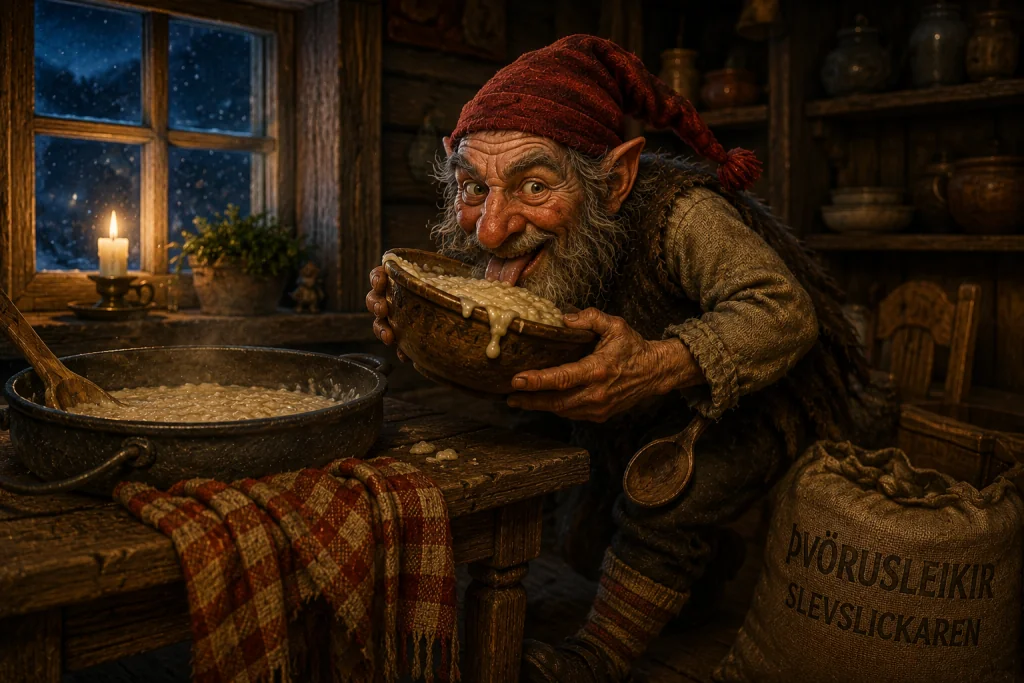
Grýla, Leppalúði and the Christmas cat
As if thirteen strange Santas weren't enough, Iceland also has some considerably scarier Christmas figures.
The Santas' mother Grýla is an old sorceress who, according to the stories, comes down from the mountains to catch and eat disobedient children. Her husband is called Lippalúði and plays a much more hidden role in the stories. And of course the family has a pet: Christmas meat, the Christmas cat.
It's not a cute little kitten lying in front of the fire. The giant Christmas cat is said to eat people who didn't get any new clothes for Christmas. Behind the strange story is a connection to the work with wool: anyone who had done their part of the work before Christmas could be rewarded with a new garment – and thus escaped the Christmas cat.
In other words, Icelandic Christmas folklore is not only cozy. It's also quite dark – and that's part of its charm.

Þorláksmessa – the day before Christmas Eve
December 23rd is celebrated Þorlák's Mass, Saint Þorlák's Day. For many Icelanders, today is a day for final Christmas preparations, shopping and meeting people in town.
A much more peculiar tradition is to eat dear magpie, fermented rockfish. The smell is noticeable to say the least and tends to linger on both clothes and premises. It may not be the right choice in the first place to create a fragrant Christmas atmosphere – but traditions don't always have to be rational.
What do people eat on Christmas Eve in Iceland?
The Icelandic Christmas dinner is quite different from our Swedish Christmas table. Instead of a large smorgasbord, it is common to have a dinner where a main course takes center stage.
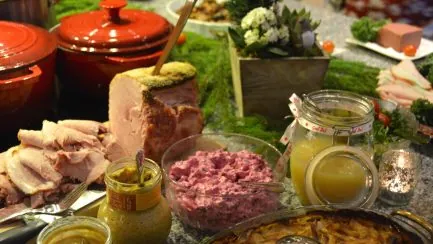
Classic Christmas dishes include: ham, smoked lamb, and hamburger rib, glazed pork roast. Partridge has also traditionally appeared on the Christmas table. The food can be served with, for example, potatoes, gravy and red cabbage.
When I celebrated Christmas in Iceland, we ate lamb with boiled potatoes and red cabbage. So it was both familiar and different at the same time. Another Icelandic Christmas classic is leaf bread, very thin bread that is decorated by cutting elaborate patterns into the dough before frying.
READ MORE: What do you eat in Iceland? – Classic dishes to try

Þorrablót – Icelandic midwinter festival
Once Christmas is over, it won't be long until it's time for the next very Icelandic tradition: Þorrablót.
Þorrablót is celebrated during the old Icelandic winter month Thorri, approximately from mid-January to mid-February. The name has roots far back in Old Norse culture, but the Þorrablót celebrated today have primarily emerged since the 19th century.
Today it's about meeting, eating traditional food, singing, giving speeches, socializing and, of course, drinking the occasional schnapps. And the food is a story in itself.
Þorramatur – sheep's head, shark and sheep's testicles
The traditional food served at Þorrablót is called sørramatur and consists of old Icelandic dishes and preservation methods. Here you can find, among other things:
- Shark – fermented shark
- Svið – seared and boiled sheep's heads
- Súrsaðir hrútspungar – pickled sheep testicles
- Bloody Mary – blood sausage
- Liver sausage – liver sausage
- Chicken meat – smoked lamb
- Hardfish – dried fish
- Rye bread – dark rye bread
- Flatbread – thin Icelandic bread
This is of course suitable for brandy, the classic Icelandic brandy. Þorramatur is still served during Þorri and is a way of keeping older Icelandic food traditions alive.

My own Þorrablót
I experienced my first Þorrablót when I lived in Iceland. I still remember how older Icelandic uncles ate the sheep's heads with much greater enthusiasm than I did, even sucking their eyes out with obvious pleasure. I can personally attest that some parts of Þorramatur are tastier than others.
But I like the tradition. Since my year in Iceland, I have been to Þorrablót several times, both in Iceland and in Sweden, and for me the experience is just as much about the people, the atmosphere and the culture as it is about the food itself.
And perhaps that's exactly how Þorrablót should be viewed. You don't have to long for fermented shark for dinner to appreciate a tradition that tells us something about how people have lived on a barren island where historically they had to make do with what was available and find ways to preserve food through the winter.
Old traditions that still live on
Perhaps that's what I find so fascinating about Iceland. The country is in many ways hypermodern, but at the same time the fairy tales, the language, the food and the old stories are always present.
Children still wait for the thirteen Santa Clauses. Grýla and the Yule Cat still appear before Christmas. And in the middle of winter, people still gather around barrels of hákarl, svið and hrútspungar.
Traditions change over time, of course, just like our Swedish traditions do. But they live on. And after all my trips to Iceland, maybe that's what makes the country still feel so special to me.
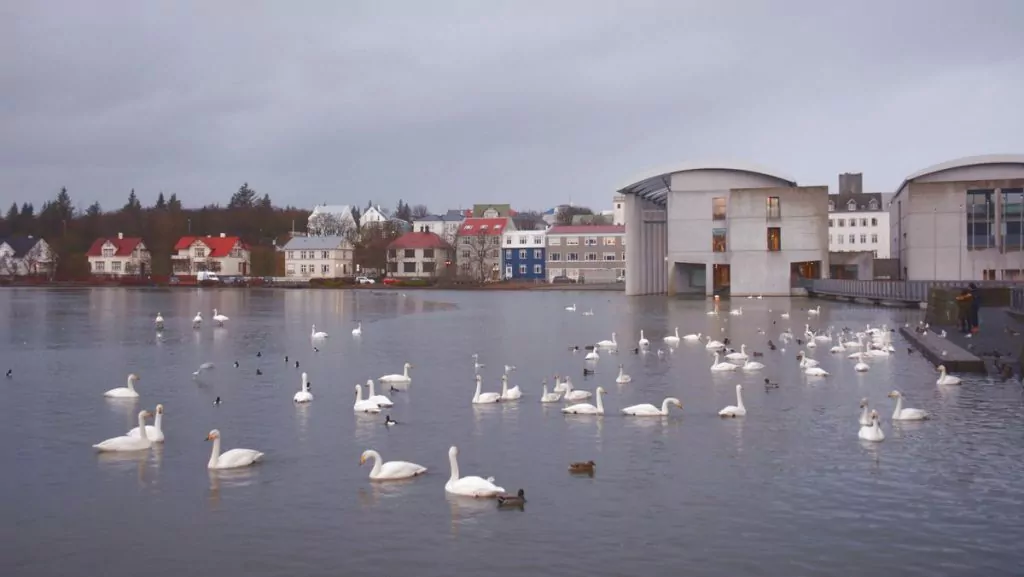
More about Iceland
There is so much more to see and experience in Iceland. Here you will find more tips and reports:
Frequently asked questions about Icelandic traditions
How many Santas are there in Iceland?
In Iceland there are 13 traditional Santa Claus figures, called Christmas gifts. They come down from the mountains one by one during the 13 days before Christmas. The first one comes on December 12th and the last one on Christmas Eve. After Christmas they leave again, one by one, until the last one is gone on January 6th.
Who are Grýla and Leppalúði?
Grýla and Leppalúði are troll figures from Icelandic folklore and the parents of the 13 Santas. Grýla is the much more terrifying of the two and is said to come down from the mountains to catch disobedient children.
What is the Icelandic Christmas cat?
The Icelandic Christmas cat is called Jólakötturinn and is a large and scary cat from Icelandic Christmas tradition. According to the stories, anyone who had not received new clothes for Christmas risked being eaten by the cat. The tradition is usually connected to the fact that anyone who had done their part of the work with the wool before Christmas was rewarded with a new garment.
What do people eat at Christmas in Iceland?
There are different Christmas traditions in Icelandic families, but common dishes include hangikjöt (smoked lamb) and hamborgarhryggur (glazed pork roast). Partridge has also traditionally been present. At Þorláksmessa on December 23, there is also the tradition of eating kæst skata, fermented rockfish.
What is Þorrablót?
Þorrablót is an Icelandic midwinter festival celebrated during the old Icelandic month of Þorri, approximately from mid-January to mid-February. Today's Þorrablót is a celebration where people gather to eat traditional Icelandic food, sing, give speeches, and socialize.
What do you eat at Þorrablót?
The food is called þorramatur and can consist of fermented shark (shark), sheep's head (field), pickled sheep testicles (scrotum), blood sausage (bloodthirsty), liver sausage (sausage), smoked lamb (ham) and dried fish (hard fishing). Rye bread or flatbread is often served with the meal – and sometimes a shot of Icelandic brandy.
How to pronounce Þorrablót?
The letter Þ (þ) is pronounced something like th in English thing. For a Swede, "Thorrablot" is therefore a decent approximation, although the Icelandic pronunciation is of course slightly different.
Top image in the post: Photo: Iceland.is
You might also like:
 Christmas markets in Sweden – 12 cozy Christmas markets to visit
 Christmas in Split – this is how to celebrate Christmas in Croatia
 Facts about lussekatter - 12 things you (maybe) didn't know?
 European cities in Christmas splendor – 12 beautiful cities to visit in December
 The Yule Goat, the Yule Witch and the Yule Cat – meet Europe's Christmas creatures
 Regional specialities on the Christmas table – from Norrbotten to Skåne



 English (UK)
 Svenska
Monet says:
God's twilight! Now you'll have to forgive me, but I couldn't get much of that food down. I have a good friend - Norwegian and used to surströmming - who was served rotten shark and Black Death brandy in Iceland and it was a near-death experience for him. He thought he burped the rotten shark a week afterwards! But thanks for the interesting story!
21 November 2017 - 9:12
Helena says:
How fun that you use the expression "twilight of the gods"! I have a colleague who uses that expression very often 🙂 The shark route is no big deal, possibly an interesting experience ... 😉 Smoked mutton on the other hand tastes good!
21 November 2017 - 12:32
Anonymous says:
I also think so, this page really helps
11 November 2024 - 13:02
Solan says:
Rutten rocka attracts! Good reading Helena ... so much that you have no idea about ?
21 November 2017 - 9:33
Helena says:
Haha right ... a little rotten stingray for the weekend ...? 😉
21 November 2017 - 17:45
Sandra Lifsresor.se says:
Not really my taste in food but fun with 13 gnomes. Why settle for one...? 🙂
21 November 2017 - 10:07
Helena says:
I also don't understand why it has to be only one Santa 😉.
21 November 2017 - 17:45
Steve says:
Very interesting reading you offer.
It seems adventurously worse with the Christmas food in Iceland, but we eat some strange things here at home too.
Those two trolls with their cat were a cruel bunch, but on the other hand they have 13 elves who seem pretty harmless.
21 November 2017 - 11:13
Helena says:
I guess you are referring to the thorramate, which is eaten in February, it is really special if you say so!
21 November 2017 - 17:46
BP says:
What an incredibly interesting post! Love it! Like the story of the 13 elves, no "father Christmas" and baby Jesus in the manger there not;-)
As for the food, it's not exactly eye candy, but since I've eaten sheep's testicles in Morocco, I would probably try most of the Icelandic "Christmas table", but would probably refrain from sucking out sheep's eyes. In France it is a delicacy to eat calf's head and there they also suck out the eyes... So much fun with such traditions that are dying out.
21 November 2017 - 13:15
Helena says:
Glad you like today's post! 🙂 The food is not necessarily super good, but I think it is very interesting and fun with these traditions! Interesting that they eat calf's head in France, I didn't know that!
21 November 2017 - 17:48
annar aas says:
Hi there, nice to hear about Iceland. I'm married to an Icelandic woman who just became a grandmother, so we're going there next week and staying until Christmas. I recognise all the food you write about and I think some of it is OK to eat, but I have also taken a bet where I somewhat boldly indicated that no food is foreign to me. The sour and rotten food I can't handle. If mutton steaks are fried with garlic and wrapped in bacon, they are edible. Let's see if the volcano stays quiet and we'll leave next Wednesday.
22 November 2017 - 14:41
Helena says:
How nice that you are married to an Icelandic woman, Annar! And great that you are going to Iceland soon! I completely agree with you about the food. Some of it is perfectly ok to eat. Others, especially rotten shark, are difficult. Interesting with mutton sticks in bacon 😉 Say hello to Iceland!!!!
22 November 2017 - 17:01
Henny says:
Rutten shark, maybe it tastes like our surströmming? I was told in Hawaii that they also ate a kind of fermented fish. It is probably the necessity of saving food for future days that has made eating habits similar in different parts of the world.
25 November 2017 - 15:39
Anonymous says:
Whaaaaat???
13 March 2018 - 21:38
Marias Memoarer says:
The mullet and sheep's clothing feels like that... But what fun traditions they have in Iceland, I must say, the one with the gnomes was especially interesting, never heard of it before! I think in many countries there are things that the younger generations don't really have a taste for anymore. In Finland, such things might be e.g. lutefisk. But some things can also be things that you only start to appreciate when you get older as well.
23 December 2019 - 10:39