


Writer: Helena Bergström
Updated: August 2026 | Gullfoss is one of Iceland’s most famous waterfalls and one of the three classic stops along the Golden Circle. Here, the glacial river Hvítá plunges into two mighty falls, surrounded by a barren Icelandic landscape. But Gullfoss also has an exciting history – in the early 20th century, there were plans to use the waterfall for hydroelectric power, which led to a high-profile fight to preserve it.
 Tweet
 Share
 Share
 Pin
 Share
 Share
Table of contents
The Golden Circle in Iceland
The Golden Circle, or Gyllene Cirkeln, is Iceland's most classic tourist route and runs through the countryside east of Reykjavik. The route is a great day trip from the capital and can be driven by your own car or experienced on an organized tour.
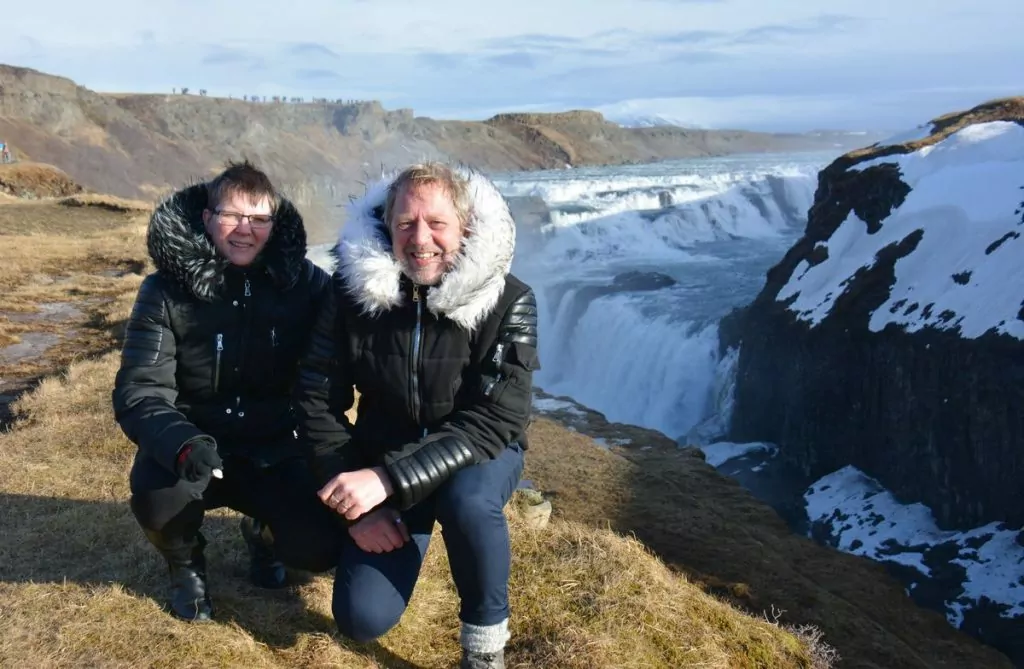
3 stops along the Golden Circle
There are three stops that are almost always included on a Golden Circle tour. In addition to these, you can make other shorter stops, for example at the smaller Faxi waterfall.
- Gullfoss waterfall is an impressively large waterfall, located at the far end of the so-called 'circle'.
- Geysir and Strokkur geysers is located in a geothermal area in the Haukadalur valley. Geysir has given its name to the phenomenon of ”geysers”, but today it is Strokkur that can be seen spouting. Strokkur erupts approximately every 5-10 minutes.
- Þingvellir National Park, or Tingvalla as you can sometimes see it written in Swedish, is located in a geological area where the North American and Eurasian continental plates are sliding apart. In addition to the dramatic nature, this is also the place where Iceland's parliament, the Althing, held its meetings between the years 930 and 1798.
Golden Circle by minibus
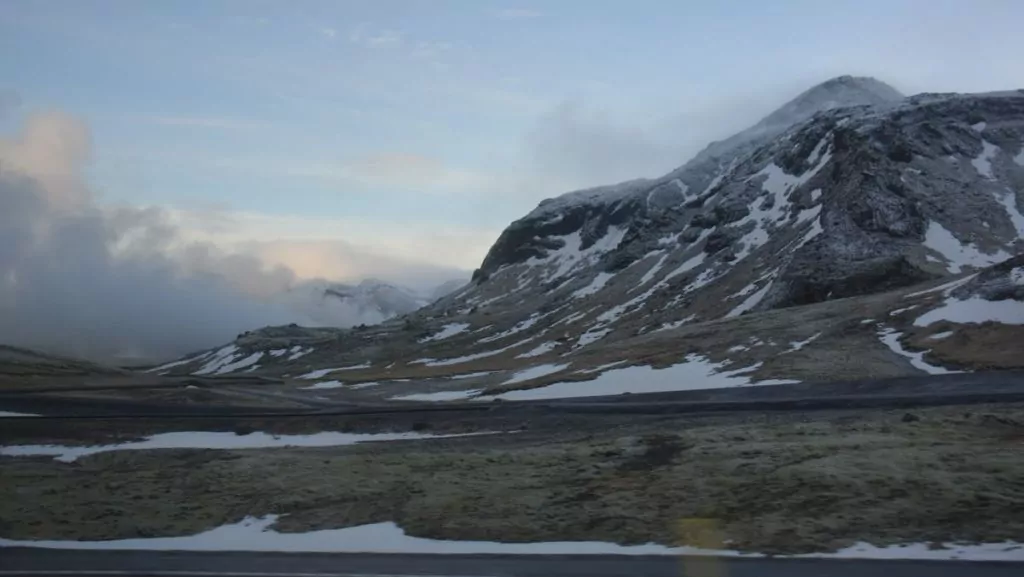
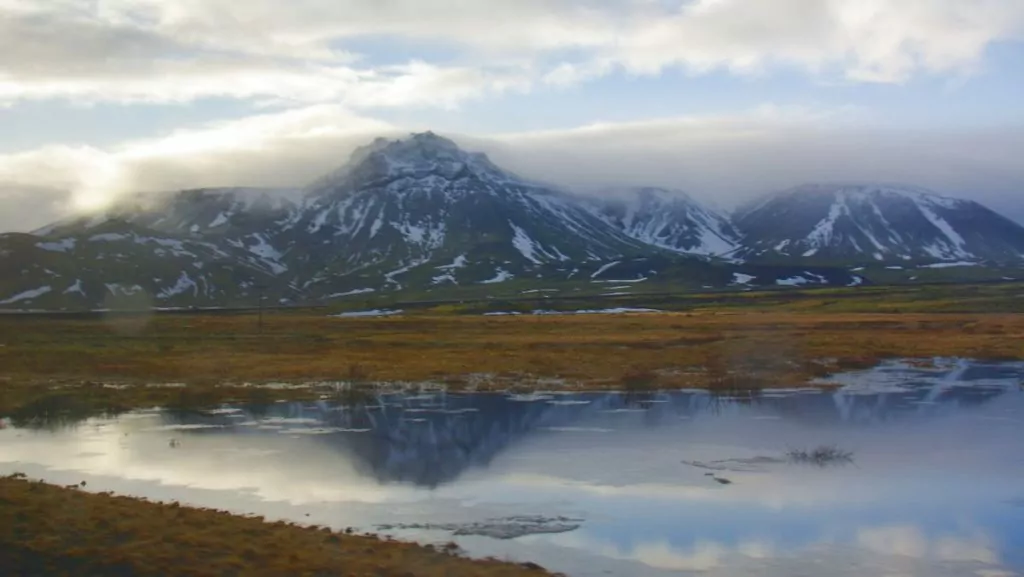
We were a group of about 10 people and did the tour by minibus. We started by driving the longest distance to the Faxi and Gullfoss waterfalls. This bus trip took about an hour, but you really don't get bored. It's completely fantastic to look out at nature through the windows.
Faxi waterfall
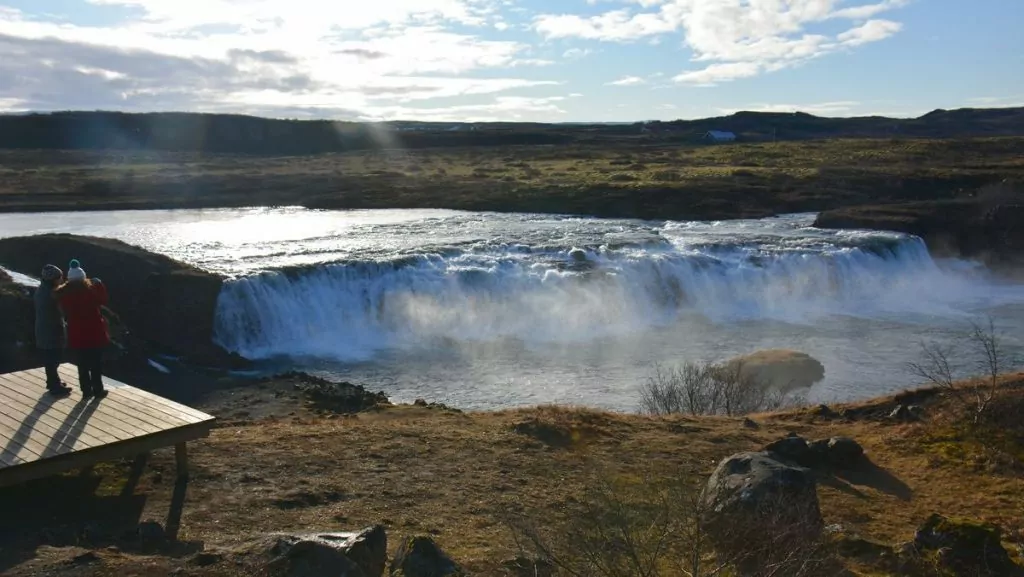
Faxi waterfall was a perfect ”warm-up” for what was to come. This waterfall is located about 12 kilometers from Gullfoss, and is full of salmon. In other words, fishing is popular here.
Gullfoss waterfall
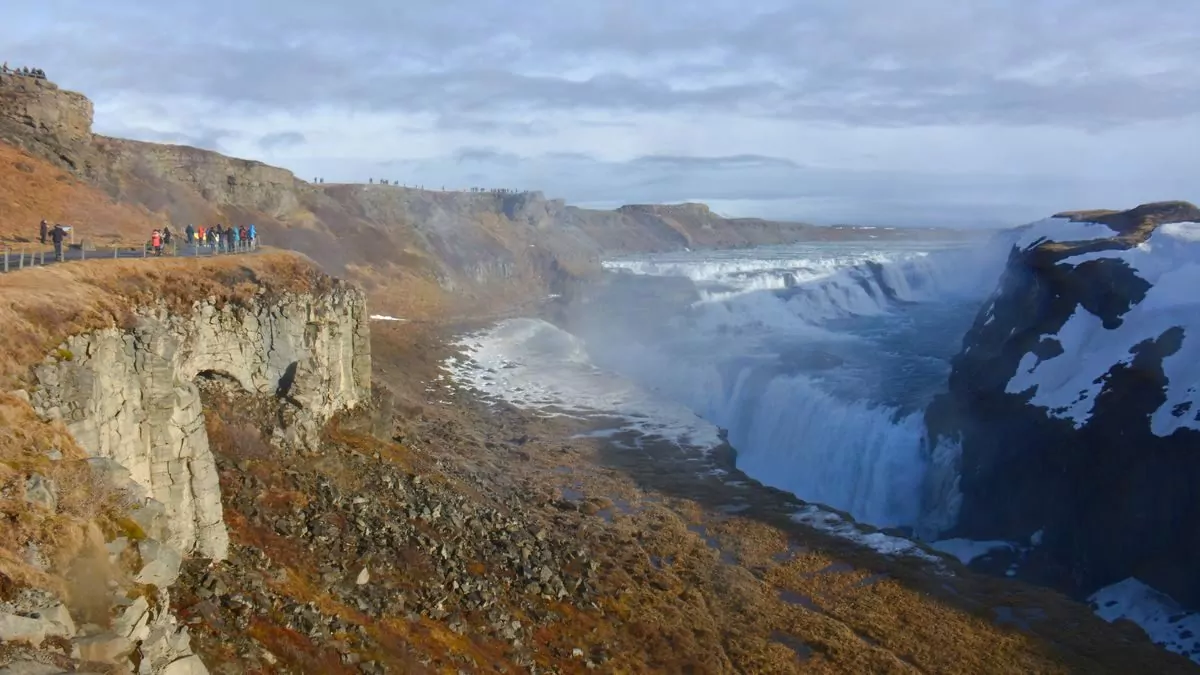
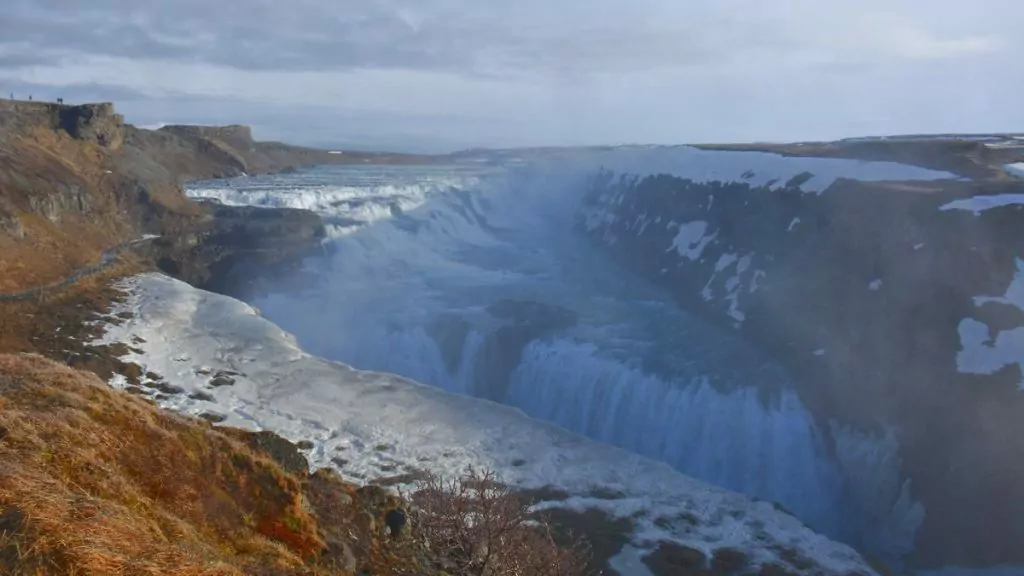
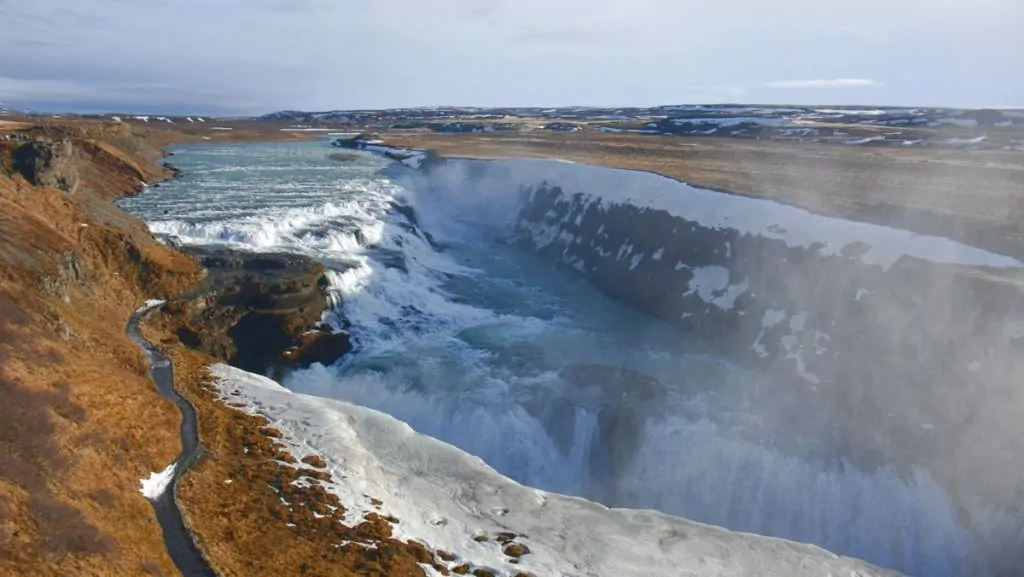
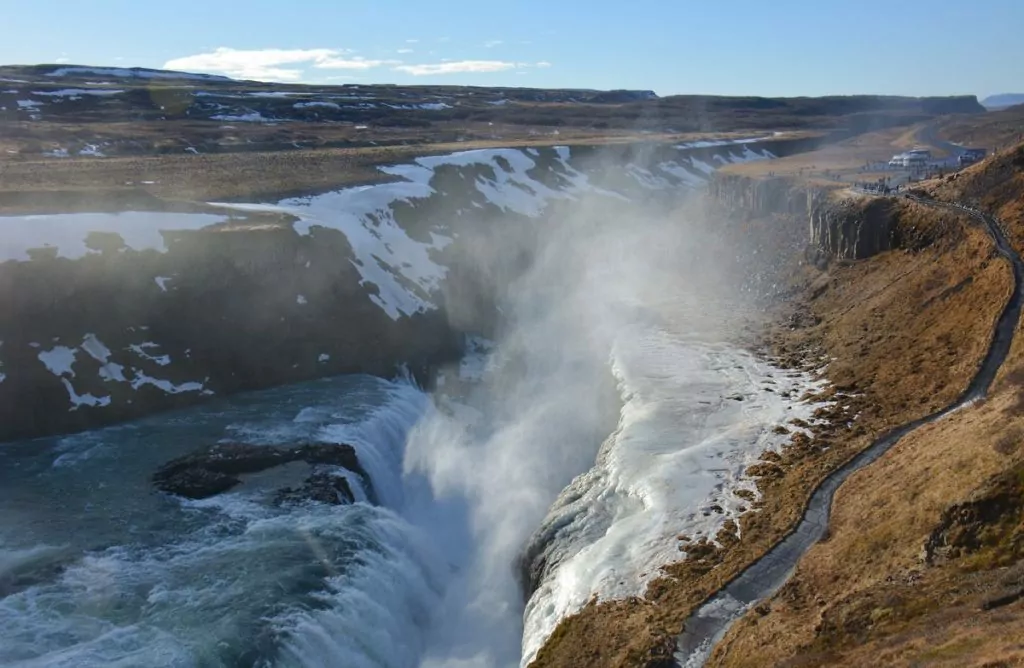
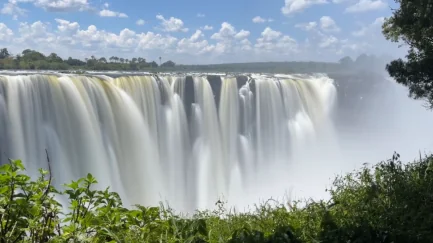
After the visit, it was time for one of the highlights of the tour: Gullfoss. This impressive waterfall is located in the glacial river Hvítá in southern Iceland. The water falls in two stages – first 11 meters and then another 21 meters – before the river continues through the dramatic gorge.
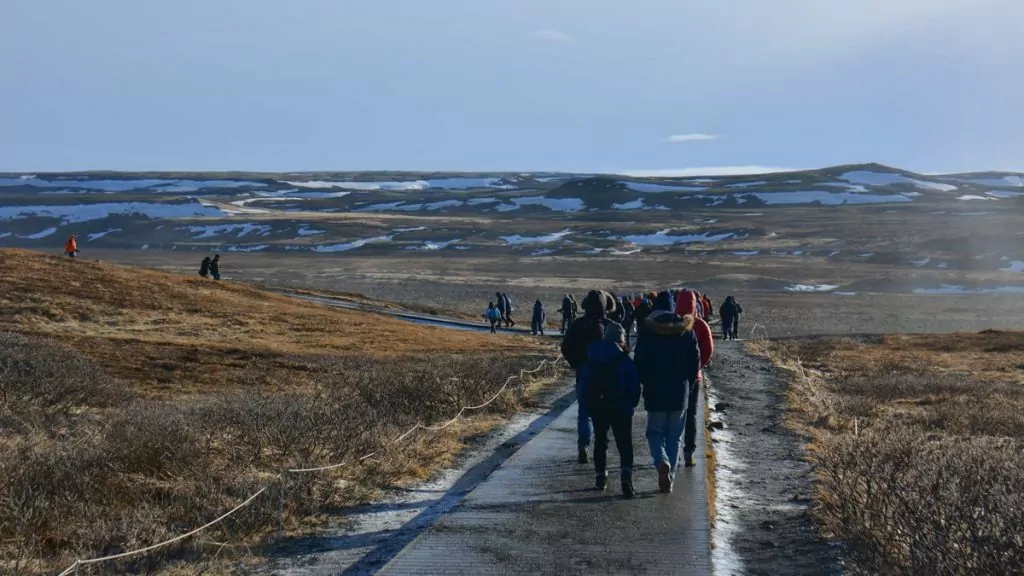
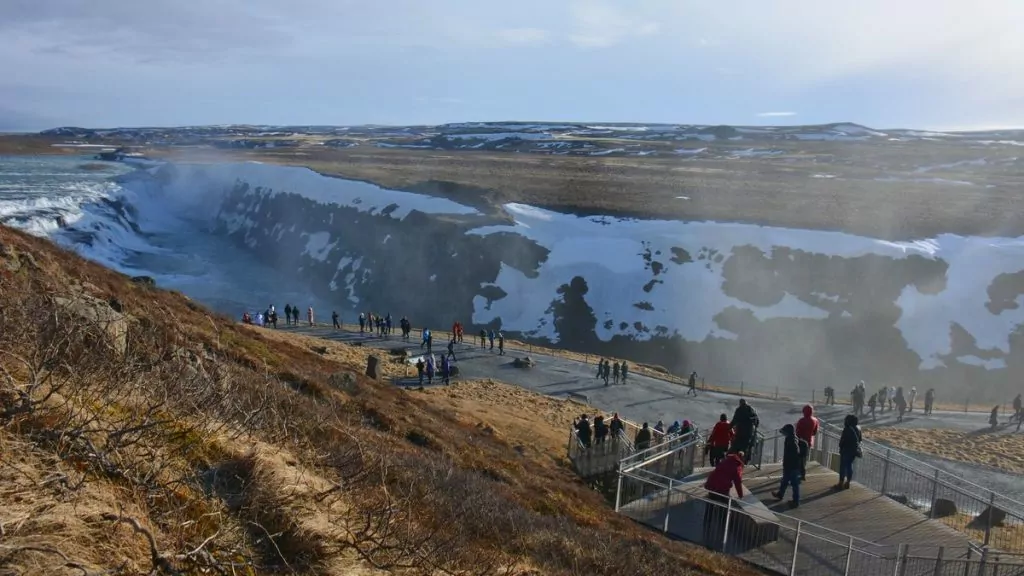
It is primarily the amount of water that makes Gullfoss so powerful. On average, about 109 cubic meters of water passes through per second, and during the summer about 130 cubic meters per second. When you stand at the viewing points and feel the water vapor on your face, it is quite easy to understand why Gullfoss has become one of Iceland's most famous natural phenomena.
17th century love story
It is not possible to wade over the waterfall, nor can you cross it on horseback. However, there is a story from the 17th century about a farmer's son from Brattholt who spent the summer herding sheep by the Hvítá River.

On the other side, a girl from Hamarsholt was herding sheep, and they could peek at each other across the river. Finally, the girl plucked up courage and asked the boy to cross the river to her. He managed to wade across (!) and the couple is said to have subsequently married and had many children.
Sigríður Tómasdóttir and the fight for Gullfoss
In the early 20th century, interest in using Iceland's waterfalls for electricity production grew. In 1907, an Englishman wanted to buy Gullfoss from Tómas Tómasson on the Brattholt farm, but he refused. Later, the rights to the waterfall ended up with people with connections to foreign interests.

Tóma's daughter Sigridur Tomasdottir was strongly committed to preserving Gullfoss. She fought to have the agreements annulled and enlisted the help of the lawyer Sveinn Björnsson, who later became Iceland's first president. Sigríður repeatedly traveled the long way to Reykjavik to push the issue and became so committed that she threatened to throw herself into the waterfall if construction of a power plant began.
Sigríður did not win the legal case, but the hydroelectric project never came to fruition. The foreign stakeholders eventually lost interest, payments stopped, and in 1928 the lease agreement became invalid. The Icelandic state purchased Gullfoss in 1945, and in 1979 the waterfall and the area around it were protected.
Sigríður has since become a symbol of Icelandic nature conservation, and there is a memorial to her at Gullfoss today.
Some tips for your visit
Gullfoss is one of Iceland's most visited natural attractions, so expect to be crowded during peak season. However, that doesn't make the waterfall any less impressive. If you want a quieter experience, it may be an advantage to come early or late in the day.
- Check the weather forecast if you drive yourself. It happens that the wind is so strong that you should not go out.
- Please pack a hat, gloves and wind- and rain-proof clothing. It often rains and blows in Iceland.
- Don't stop in the middle of the road. to photograph cute horses but make sure to pull over so you don't get in the way of traffic. Accidents happen sometimes.
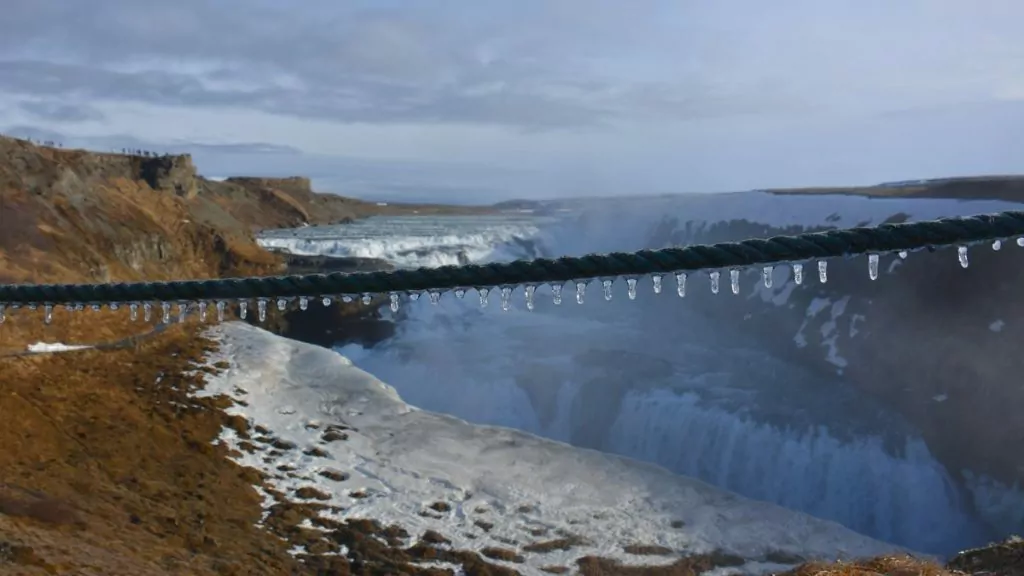
- The walkways closest to the waterfall may be closed in case of bad weather or difficult conditions. Check the current situation before your visit, especially in winter.
More to see and experience nearby
There is much more to see and experience in Iceland and near Reykjavik. Here you will find tips and reports:
FAQ – frequently asked questions about Gullfoss
Where is Gullfoss located?
Gullfoss is located on the Hvítá River in southern Iceland, about 115 kilometers from Reykjavik. The waterfall is one of the three classic stops along the Golden Circle.
How high is Gullfoss?
Gullfoss consists of two falls. The first is 11 meters and the second is 21 meters, giving a total drop height of 32 meters.
Does it cost to visit Gullfoss?
The natural area itself and the waterfall can be visited without an entrance fee.
When is the best time to visit Gullfoss?
Gullfoss can be visited all year round and the experience varies greatly depending on the season. Summer offers long, bright days and large amounts of water, while winter can bring snow and ice around the waterfall. However, weather and road conditions can affect accessibility in winter.
How much time do you need at Gullfoss?
For most people, about 45–60 minutes is enough to see the waterfall from the various viewpoints. If you want to walk more, take photos, or visit the service area, you can of course stay longer.
Can you drive to Gullfoss with a regular car?
Yes, Gullfoss is located on regular roads and under normal conditions a four-wheel drive vehicle is not needed. In winter, you should always check the weather and road conditions before setting off.
Can you combine Gullfoss with Geysir and Þingvellir?
Yes. Gullfoss, the geothermal area with Geysir and Strokkur, and Þingvellir National Park are the three classic stops along the Golden Circle and can be combined during a day trip from Reykjavik.
This trip was a press trip, organised by Icelandair and the Food and Fun Reykjavik festival. All texts, photos and opinions are, as usual, our own.




 English (UK)
 Svenska
Matts Torebring says:
Thank you for your wonderful posts. You tempt us, who love being out in nature, far more than the noise of the big city.
09 March 2019 - 8:19
Helena says:
Nature is amazing! 🙂 Have a nice weekend!
09 March 2019 - 11:43
Ama de casa says:
We then took that route when we had the roads past with the cruise boat. Absolutely fantastic nature! 🙂
Was at Gullfoss and the Geysers in 1985 as well. I had rented a car with a friend and then there were not so many people at all. Hardly anyone besides us if I remember correctly? I remember that we stood and waited for the big geyser to erupt but finally gave up. When we got back to the hotel, we were told that it had apparently been about 30 years since the last time... 😉.
I also remember that in the toilets (simple, in some shed) there were signs that you could not take the soap and throw it in the geysers. Such signs can be extremely inflammatory (especially when there is no witness 😉 ) but I managed to stop myself 😀.
Have a nice Saturday!
09 March 2019 - 10:05
Helena says:
Haha, you have to be very patient if you want to see Geysir erupt! 😉 (It apparently has it sometimes, but only once a year.) And interesting that they dared to write about the soap ... really risk it being the other way round! 😉
09 March 2019 - 11:45
Geddfish says:
Oh, Iceland! A bit of a dream for me. But I have many dreams.
My youngest daughter has been there twice, when her husband had a job there.
Saturday hugs!
09 March 2019 - 11:34
Helena says:
We recognise that with many dreams! 🙂 Iceland is fantastically beautiful! Wishing you a nice weekend!
09 March 2019 - 12:00
Britt-Marie Lundgren says:
What incredibly beautiful pictures (and lucky with the weather too)!
We had planned to go to Iceland this spring, but it doesn't look like it will happen this time either.
Nature is really enticing and this post really adds to it!
09 March 2019 - 11:36
Helena says:
Yes, on this particular day we were really lucky with the weather! 🙂 Hope you have the opportunity to go to Iceland at some point, fantastically nice!
09 March 2019 - 12:01
Ditte says:
Nice to see more of Iceland and somewhat reminiscent of the landscape we experienced in southern Chile and southern Argentina.
09 March 2019 - 16:34
Helena says:
Well, interesting! Yes, I read that there are geysers there too, so maybe there are similarities! 🙂
09 March 2019 - 19:16
BP says:
What amazing and dramatic images. WOW! Oh finally some sun. What luck you had there.
09 March 2019 - 18:26
Helena says:
This particular day was super nice with sun! Lovely! 🙂
09 March 2019 - 19:16
Helena - Oh darling, let's be adventurers says:
So nice pictures! Can imagine that there are a lot of people at that particular waterfall. When I roadtripped around there, we actually chose not to go there a bit because of that. However, I still think it is a powerful experience!
09 March 2019 - 22:37
Helena says:
Yes, it is true that there can be a lot of people here, not least because the case is part of the Golden Circle! I still think it's worth seeing, and now it was also low season so maybe quieter.
10 March 2019 - 9:15
Lena - gott för själen says:
Fantastic nature. What a fighter she was to prevent the construction of the power station!
Hug Lena
10 March 2019 - 11:07
Helena says:
Isn't it? Impressed by her... and grateful! 🙂
11 March 2019 - 6:30
Elisabeth says:
It was a nice trip, but there are many more beautiful and perhaps even more beautiful. When we travelled around for 4 weeks in the summer of 2918, this stretch was the dirtiest on an otherwise very clean and beautiful island! The tourists are not so good at letting the beautiful remain beautiful! I think it's lucky for Iceland that not the whole island is as easily accessible!
11 March 2019 - 14:13