



Writer: Helena Bergström
Updated: August 2026 | The Eagle's Nest, or Kehlsteinhaus, stands dramatically at an altitude of 1,834 meters above Berchtesgaden in southern Germany. The building was built during the Nazi era and is strongly associated with Adolf Hitler, although he himself only visited the site a few times. Today, the Kehlsteinhaus is a historical attraction – and at the same time a place with fantastic views of the Bavarian Alps.
 Tweet
 Share
 Share
 Pin
 Share
 Share
We visited the Eagle's Nest during a campervan trip in southern Germany. Just the journey up, by bus on the narrow mountain road and then by lift through the mountain, is an experience in itself.
Table of contents
The Eagle's Nest is located at an altitude of 1,834 meters.
Kehlsteinhaus is located on the Kehlstein mountain above Berchtesgaden in Bavaria, close to the Austrian border and not far from Salzburg. The location is spectacular to say the least: the house is situated at an altitude of 1,834 meters, with views of mountains, valleys and Lake Königssee.
The Swedish name Örnnästet comes from the English Eagle's Nest. In German, the building is called Kehlsteinhaus.

You take a special bus up to the Eagle's Nest.
It is not possible to drive all the way to Kehlsteinhaus with your own car or camper. We parked at Obersalzberg and continued from there by special bus.
The bus travels on Kehlsteinstraße, a 6.5-kilometer mountain road that was built in just 13 months. The road climbs about 700 meters in altitude, passes through five tunnels and has only one hairpin bend despite the large difference in altitude. The road has been closed to regular car traffic since 1952.
It is a special bus journey to say the least. The road climbs along the mountainside and in several places fantastic views of the landscape open up.

A 124-meter-long tunnel leads to the elevator
The buses stop at a turning platform below the Kehlsteinhaus. From there, you walk through a 124-meter-long tunnel straight into the mountain. At the end, the famous elevator awaits, with its shiny brass and mirrors. It goes 124 meters straight up through the mountain and comes out directly inside the Kehlsteinhaus. The elevator ride only takes about 40 seconds.
It is also possible to reach the house on foot from the bus terminal, but most visitors of course choose the historic elevator.


The view from the Eagle's Nest is magnificent.
Once up there, you are greeted by a magnificent alpine atmosphere. During our visit, the clouds moved quickly over the mountains and at times we were literally above the clouds.
From here you can see, among other things, the mighty Watzmann mountain range and down towards Königssee. In really clear weather, the view can stretch very far over the Alps – according to Kehlsteinhaus' own information, up to around 200 kilometers.
From the house you can also continue along the paths on Kehlstein. At the summit cross, Summit cross, you get further nice views of both the building and the mountains.

Kehlsteinhaus has a restaurant
Today, part of the Kehlsteinhaus serves as a mountain restaurant, where you can eat or have a drink while looking out over the Alps.

We settled down with beer and schnitzel – a rather special lunch considering both the altitude and the history of the place.

Kehlsteinhaus was built during the Nazi era.
The Kehlsteinhaus was built in 1937–1938 on the initiative of Martin Bormann, one of the highest-ranking figures in the Nazi regime. The house was intended as a representative place where foreign diplomats and other guests could be received. It was completed for Hitler's 50th birthday in 1939 and is usually described as a gift to him, although the story is somewhat more complicated than is often portrayed.
The building was part of the much larger Nazi power center that emerged on Obersalzberg. Hitler had his Berghof residence further down the mountain, and several other leading Nazis also had residences and buildings in the area.
Obersalzberg was not just a place for recreation. It was, alongside Berlin, an important center of power for the Nazi regime. Hitler spent more than a quarter of his time in power here, and decisions regarding persecution, war, and genocide were made and prepared at the Berghof.

Hitler visited the Eagle's Nest relatively rarely
Despite the strong connection between Hitler and the Eagle's Nest, he himself used the building quite little. The official historical information for the Kehlsteinhaus describes its importance during the Nazi era as limited, noting that Hitler only went up there on a few occasions.
However, the house was used by people in the circle of the Nazi leadership for meetings and recreation. It is therefore a bit misleading when the Kehlsteinhaus is sometimes presented as ”Hitler’s headquarters” or his main holiday home. The much more important place was the Berghof on the Obersalzberg.
Kehlsteinhaus survived the bombings in 1945
On April 25, 1945, the British Royal Air Force carried out an extensive bombing raid on Obersalzberg. Large parts of the area were destroyed, but the Kehlsteinhaus escaped destruction.
After the war, the area was taken over by American and French forces. Many of the remaining Nazi buildings and ruins on Obersalzberg were later demolished or blown up, partly to prevent the site from developing into a pilgrimage site for Hitler supporters. However, the Kehlsteinhaus was preserved.
Documentation Obersalzberg tells more about the history
Anyone visiting the Kehlsteinhaus and wanting to better understand the history of the place can also visit Documentation Obersalzberg.
The museum is located at the Obersalzberg and has a permanent exhibition about the Nazi regime, Hitler's presence in the area and the role Obersalzberg played as a center of political power. It also contains parts of the extensive bunker system built during the Nazi era.
The Eagle's Nest combines dark history with magnificent nature
A visit to the Eagle's Nest is special in several ways. There is an almost strange contrast between the stunningly beautiful alpine environment and the dark history that the building represents.
For us, the journey up was also a big part of the experience – first the winding bus ride along the mountainside, then the tunnel straight into the mountain and the historic lift for the last 124 metres. And once you reach 1,834 metres, the Alps await in almost every direction.

More to see and do near the Eagle's Nest
While you are in Berchtesgaden, there is much more to discover in the area. Lake Königssee is a beautiful alpine lake surrounded by high mountains, while Berchtesgaden Salt Mine offers visits down into a historic salt mine.
On the Austrian side of the border are, among other things: Gollinger Waterfall, and not far from there is Salzburg.
Film enthusiasts can also visit Hohenwerfen Castle in Austria. The fortress was used as a filming location in the film Where Eagles Dare from 1968 with Richard Burton and Clint Eastwood – the film which in Swedish was titled Eagle's Nest. It should not be confused with the real Kehlsteinhaus.
In addition, you are relatively close to Salzburg in Austria.

FAQ – frequently asked questions about the Eagle's Nest in Germany
Where is the Eagle's Nest located?
The Eagle's Nest, Kehlsteinhaus, is located on the Kehlstein mountain above Berchtesgaden in Bavaria in southern Germany, near the border with Austria.
How high is the Eagle's Nest?
The Kehlsteinhaus is located on 1,834 meters above sea level.
Can you drive a car or camper to Örnnästet?
No. Kehlsteinstraße is closed to regular traffic. Visitors park at Obersalzberg and normally continue up the mountain road by special bus.
How do you get from the bus to Örnnästet?
From the bus's final stop, you walk through a 124-meter-long tunnel to an elevator that goes another 124 meters up the mountain to Kehlsteinhaus. It is also possible to walk up to the building.
Did Hitler live at the Eagle's Nest?
No. Hitler's residence in the area was the Berghof on Obersalzberg, further down the mountain. The Kehlsteinhaus was primarily a representative building and Hitler visited it relatively rarely.
Does Hitler's house Berghof still exist?
No. The Berghof was severely damaged in the bombing of Obersalzberg in 1945 and the remains were blown up in 1952. The history of the area is told today at Dokumentation Obersalzberg.
Is there a restaurant at Örnnästet?
Yes. Today, there is a mountain restaurant in the Kehlsteinhaus.
When can you visit the Eagle's Nest?
Kehlsteinhaus is a seasonal attraction as the high mountain road is affected by snow and weather. Exact opening dates may vary from year to year and there may also be temporary closures due to weather conditions, so please check for current information before visiting.
You might also like:
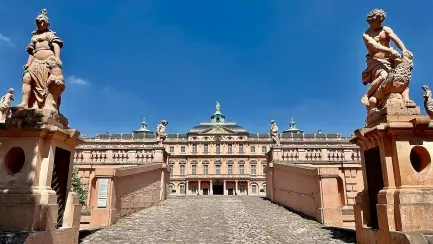 Rastatt Castle in Germany - 18th century baroque castle
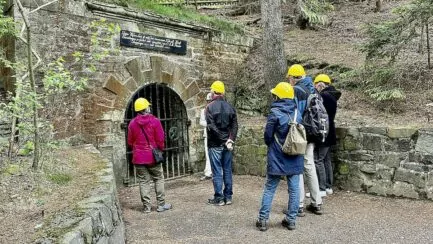 The Rammelsberg Mine – a UNESCO World Heritage Site in Goslar
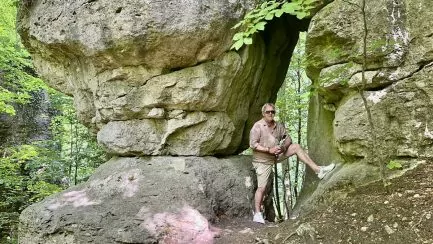 Sanspareil rock garden and Zwernitz castle in Bavaria
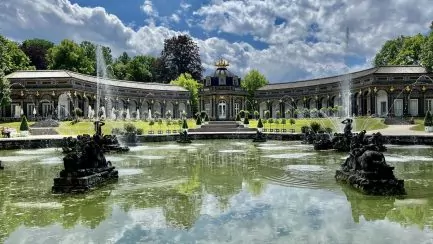 Hofgarten Eremitage in Bayreuth - amazing park in Bavaria
 Bergpark Wilhelmshöhe in Kassel – guide to Germany's unique water spectacle



 English (UK)
 Svenska
Lennart says:
Thank you for these pictures!
I've thought about visiting this place but haven't found it very interesting.
Now I know it is worth a visit. What an amazing view and how lucky you were with the weather to fully experience it.
Have a great trip.
Lennart
16 August 2011 - 10:25
Anders och Birgitta says:
We have also been there, it was really an experience. There were a lot of people but still it was completely silent. Large birds were sailing in the air. It was powerful.
16 August 2011 - 17:58
husbilen says:
Was there two years ago on the way home from Croatia. Really beautiful even for someone who easily gets vertigo at high altitudes/ Monica
16 August 2011 - 18:51
Agneta says:
we talked about going there this year but the weather put a stop, have been up there in my youth but only saw a lot of fog. thank you for nice pictures, and the next time we come down we will really make it happen!
16 August 2011 - 21:34
admin says:
Lennart, we really thought the Eagle's Nest was worth a visit! It was an experience to get up there.
Anders and Birgitta, agree, it was powerful! We were also fascinated by nature and the weather. For a while we saw thick dark clouds in one direction, but then they sailed over the mountain top and the weather changed to blue and clear, in just a few minutes!
The motorhome, I also get dizzy easily, but found this fascinating and beautiful!
Agneta, sad if you don't see much because of the weather. I definitely think you should go there next time!
17 August 2011 - 7:58
Carita says:
Wow, what lovely places you visit. Someone else may think otherwise, but I think the place looks wonderfully exciting. Just the right amount of drama.
04 September 2011 - 16:10
Lena & Jan says:
Amazing building/facility, we were there in the early 70's, remember the breathtaking bus ride that seemed to go straight up and the gold lift, not to mention the view of the valley above!
26 February 2014 - 11:17
Dryden - Traveler's Edition says:
When I was little and on a car journey to Italy, we camped below. My parents didn't realise at first what the lights on the top of the mountain were, when they stood down at the campsite and looked up. A flight to Salzburg perhaps? Nope, it was Eagle's Nest! Unfortunately, we never came up, we came to the bus parking lot just as the last bus left so we must have missed something there. Will gladly return.
31 March 2016 - 8:52