


Writer: Helena Bergström
For many people, caravans are strongly associated with freedom, holidays and the opportunity to take their home with them on the road. But the journey to today's modern caravans with kitchens, bathrooms and smart solutions has been long and fascinating. Here we take a look at the history of the caravan – from the first simple wagons to today's high-tech recreational vehicles.
 Tweet
 Share
 Share
 Pin
 Share
 Share
Table of contents
The first steps - 19th century travellers
As early as the 19th century, various forms of caravans were used by travelling groups, including Roma and market travellers in Europe. These caravans were hand-built, often richly decorated and served as permanent residences rather than holiday vehicles. They were usually pulled by horses and were adapted for long-term living rather than comfort on shorter journeys.
However, it was only when leisure travel began to take shape that the idea of the caravan, as we know it today, began to emerge.
Early 1900s - leisure travel takes off
The early 20th century saw a growing interest in nature, outdoor activities and holiday travel. In the UK, the 1910 caravan built by the Bristol Carriage Company is often considered one of the first holiday caravans. It was exclusive, heavy and mainly available to the upper classes, who could pull it by car or still by horse.
When the car became widespread in the 1920s and 1930s, conditions changed rapidly. Suddenly, more people were able to travel longer distances, and the demand for simpler, lighter and cheaper caravans increased.
Post-war - the great breakthrough of the caravan
After the Second World War, the caravan industry took off in earnest, especially in Europe. A shortage of materials and housing meant that many people saw caravans as both a holiday home and a temporary residence. In the 1950s and 1960s, caravans became a popular holiday option for families with children.
In Sweden, interest grew rapidly with increased prosperity, more cars and longer holidays. Campsites were expanded and adapted for caravans, and Swedish manufacturers like Polar and Solifer became household names.

1970s-1990s - more comfort and better technology
During the 1970s and 1980s, caravans evolved significantly. Insulation got better, fixed beds often replaced convertible seating, and kitchens got cookers, fridges and better storage. Electricity, water and heating systems became standard rather than luxury.
At the same time, safety and driving comfort became more important. Lighter materials, improved chassis and better braking systems made caravans both safer and easier to tow.

2000s to today - the rolling home
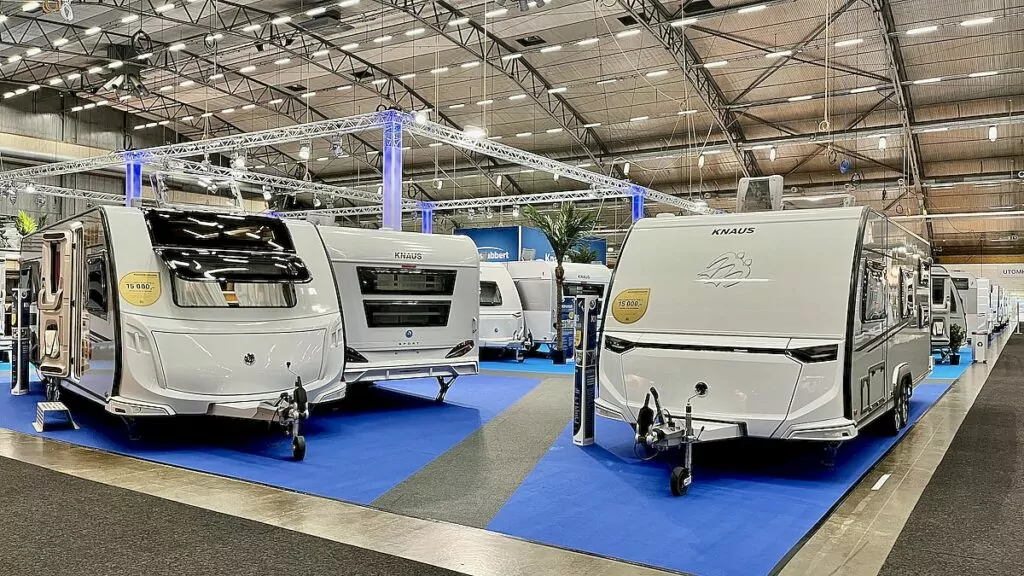
In many cases, today's caravans are fully comparable to small holiday homes. Bathrooms with showers and toilets, underfloor heating, air conditioning and smart storage are now commonplace. Design has also changed, with light-coloured materials, well thought-out floor plans and a focus on both function and aesthetics.
Technological developments have made caravanning more flexible. Solar panels, lithium batteries and connected systems allow for longer periods of free camping. At the same time, interest in sustainable travel has contributed to a renewed focus on energy efficiency and environmentally friendly materials.
The role of the caravan today
Despite competition from motorhomes and other forms of travel, the caravan has retained its popularity. For many, it offers a unique combination of security and freedom - the ability to have your own accommodation with you, yet travel at your own pace.
In many ways, the history of the caravan reflects the development of society: from exclusive pleasure to popular holidays, and on to today's modern, technologically advanced leisure accommodation. It's a journey that continues, in step with new travel habits and future demands for sustainability.

READ MORE: Caravan-themed furnishings and gadgets




 English (UK)
 Svenska
Maggan och Ingemar says:
Many people now go from caravan to motorhome or from boat to motorhome.
I have actually slept in one of those simple caravans from the 1950s. There were only mattresses, which were laid out on the floor, a bench with cabinets above for storage of food and possibly crockery, nothing else could fit. I think it was only 2.30 L and 1.80 W and in masonite and actually really cosy. Really another word for our fine motorhomes and caravans today. Fun to read the article.
14 June 2012 - 8:54
Annika says:
Great that the caravans have been around for so long!
14 June 2012 - 10:32
Katarina i Asien says:
Funny!
14 June 2012 - 11:47
Krönikören says:
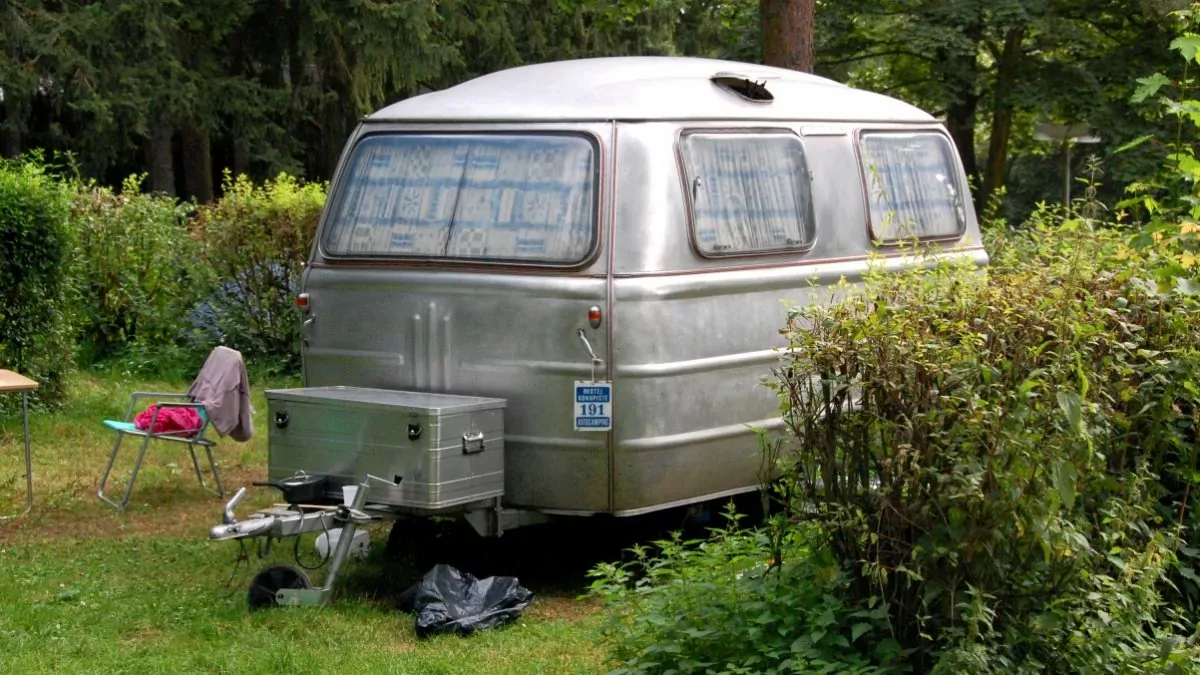
I wonder what the very first caravans looked like. The Czech one looks like something UFO-ish 😉.
14 June 2012 - 23:07
admin says:
Maggan and Ingemar, interesting to try such an older model of caravan! Must be a great contrast to today's luxurious vehicles with all the amenities...?
Chronicler, they were probably very simple, and quite small, in comparison with today's luxurious caravans... Yes, in the Czech Republic it was common with somewhat simpler and slightly older caravans than here, but this one really stood out...!
15 June 2012 - 7:00
Pumita says:
What a cute little thing! Maybe not so practical but adorable. 🙂
Now I have read more about you and seen your world map. Wow, how much red there was... but in Latin America it is all grey. You need to do something about that....
16 June 2012 - 10:15
admin says:
Pumita, yes you are absolutely right... We have talked about South America sometimes and have had some plans sometimes, have talked about Peru, Venezuela etc... At some point we have to do something about the blind spot on the car!
😉
16 June 2012 - 12:36