


Writer: Helena Bergström
Updated: September 2026 | What is actually traditional New Year's food in Sweden? Lobster, oysters, beef fillet and champagne seem obvious on many New Year's tables, but it hasn't always been that way. The fact is that our Swedish New Year's food traditions are considerably younger – and freer – than you might think.
 Tweet
 Share
 Share
 Pin
 Share
 Share
Table of contents
What is traditional New Year's food in Sweden?
Say "Christmas food" and most Swedes come up with roughly the same things: herring, Christmas ham, meatballs, Jansson's temptation and maybe rice porridge.
But say ”New Year’s food” and the picture becomes much less clear. Maybe you think of lobster and oysters? Toast Skagen and salmon roe? Beef fillet with potato gratin? Or a three-course dinner ending with chocolate fondant?
There is actually no such strong Swedish food tradition on New Year's Eve as there is on Christmas, Easter and Midsummer. What primarily characterizes today's New Year's food is that it should feel festive and a little more luxurious than usual. And it hasn't always been that way.

New Year's food of the past - when Christmas food was allowed to reappear
Well into the 20th century, New Year's Eve was not the gastronomic holiday that it is for many today. According to the Nordic Museum, people often simply ate Christmas food on New Year's Day. It's not really that strange. Christmas food had been prepared in large quantities and the Christmas season was far from over just because Christmas Eve had passed.
Even in the 1970s, the view of New Year's food could be considerably more mundane than today. The Nordic Museum highlights that in 1970, chef and restaurateur Tore Wretman suggested Beef Stroganoff as a New Year's dish.
Nothing wrong with Beef Stroganoff, of course. But would anyone be a little surprised if it appeared as the main dish at a lavish New Year's Eve dinner today?


When did New Year's Eve dinner become a luxury dinner?
While many Swedes ate Christmas food on New Year's, there was a different type of New Year's celebration in more affluent circles.
Already in the early 20th century, upper-class New Year's dinners could include things we still associate with New Year's: oysters, lobster, salmon roe, fine meats, and elegant desserts. So dressing up and eating a lavish feast was nothing new – but it was far from a tradition for everyone.


During the latter part of the 20th century, this changed. Living standards rose, exclusive ingredients became more accessible to more people, and restaurant food found its way into Swedish homes. Especially during the 1980s, the more luxurious New Year's dinner gained wider acceptance. New Year's Eve became an opportunity to treat yourself to things you might not eat on a daily basis.
In this way, much of what we today perceive as ”traditional New Year's food” is actually a fairly modern tradition.

Lobster and seafood became a New Year's classic
Lobster has almost become a symbol of New Year's food. Add oysters, shrimp, scallops and salmon roe and the New Year's spirit starts to set in right away.
Seafood long had the status of an exclusive festive food and appeared early on the New Year's tables of the more affluent. When the more luxurious New Year's dinner later spread to more people, seafood followed suit.

Lobster also fits well into the idea of New Year's dinner. It feels exclusive, takes a little time to eat, and is something many people don't treat themselves to very often.
We like both lobster and oysters ourselves and enjoy eating them when it's a little extra festive. Sitting at the table for a long time and picking at seafood is also perfect for an evening when dinner can take a while.
READ MORE: 25 facts about lobster - did you know this?
READ MORE: Oysters - how to open them, tips and facts

Beef fillet – a Swedish party classic
Beef tenderloin has also found an almost obvious place on many Swedish New Year's tables. During the latter part of the 20th century, beef tenderloin became strongly associated with parties and restaurant food.
In the 1970s, fillet of beef Provençale was a great restaurant classic, and restaurateur Thomas Drejing has described how during this period it was almost difficult to imagine any other main dish on New Year's Eve than fillet of beef.
Today, of course, there are many more options. Lamb, game, duck and various fish dishes can feel just as festive.
The interesting thing is perhaps not exactly which meat or which fish is served, without the idea itself: on New Year's Eve, many people like to choose an ingredient that feels a little fancier than what they usually cook on a regular weeknight.

Starter, main course and dessert – preferably several courses
It's not just the ingredients that distinguish New Year's dinner from everyday food. The form is also part of the party. New Year's is one of those occasions when many people who would otherwise be content with just one dish suddenly start planning a starter, main course and dessert. Sometimes there are even more servings.
A small appetizer of salmon roe, seafood, or something else festive can start the dinner. This is followed by the main course and eventually dessert – perhaps chocolate, crème brûlée, panna cotta, or something else that feels a little extra.

We have gone quite far in that direction over the years. There have been four-course, five-course, six-course, seven-course and dinners with a whole range of small dishes.
Why settle for three dishes when you can make eight? That's at least a question we've apparently asked ourselves a few times...
READ MORE: Luxury starters - 11 recipes for the party
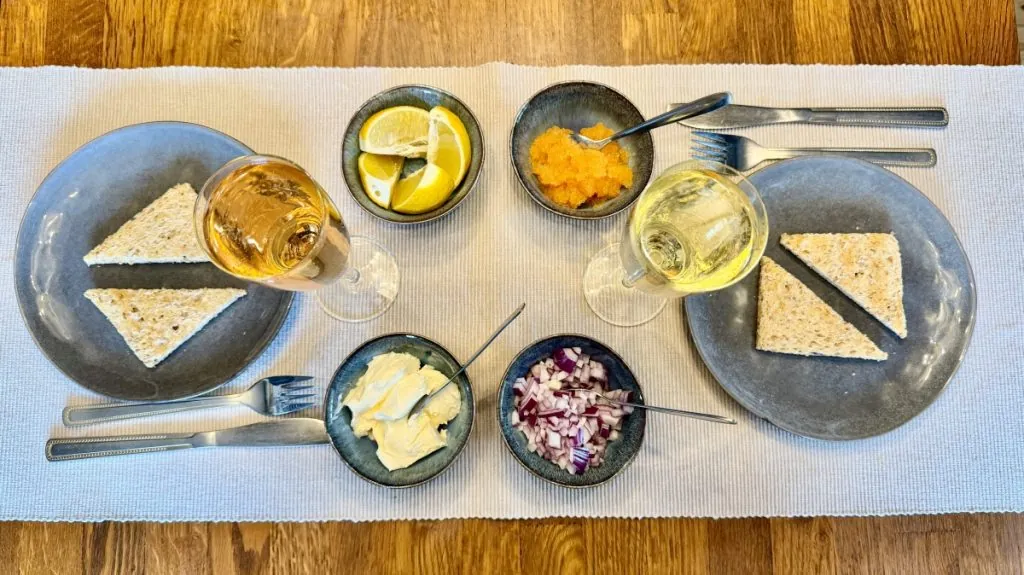
Champagne and bubbles are part of New Year's Eve
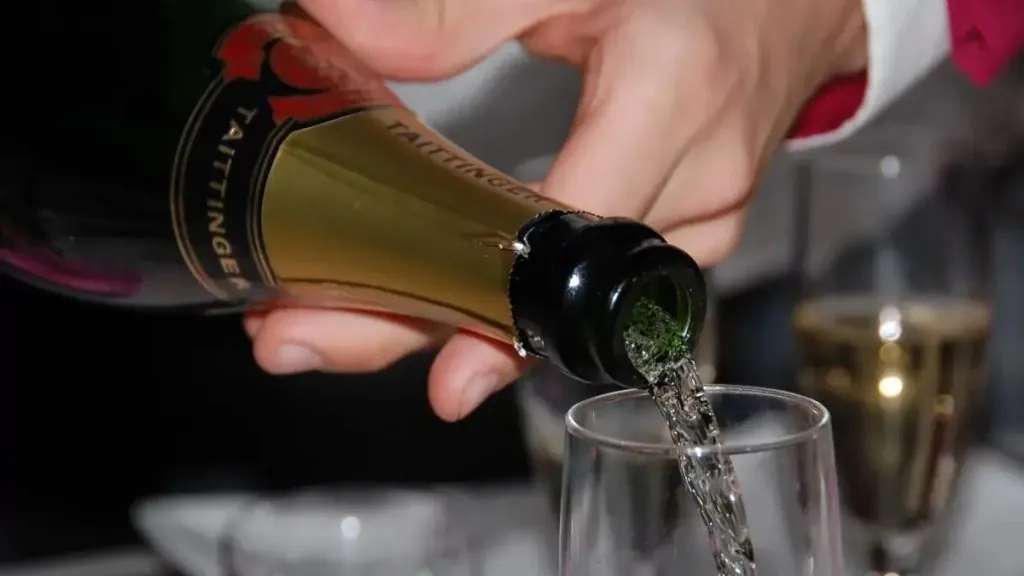
The food is only half the story. Few drinks are as strongly associated with a holiday as champagne is with New Year's Eve.
Toasting champagne on New Year's Eve was common in Swedish bourgeois circles as early as the turn of the century, but the tradition spread more widely during the second half of the 20th century.
Today, of course, it doesn't have to be real champagne from Champagne. Sparkling wine in various forms has become an obvious part of many New Year's celebrations, not least as the clock approaches midnight.
Perhaps the glass of bubbly at midnight is one of our most distinct modern New Year's traditions?
Does the New Year's meal have to contain meat or seafood?
No. And here again, New Year's food differs from many older Swedish holiday meals.
Since there is no specific dish that "must" be on the New Year's table, it is easy to create a vegetarian or vegan New Year's dinner without actually breaking any tradition.
Mushrooms, truffles, Jerusalem artichokes, asparagus and other ingredients can be just as festive as beef tenderloin and lobster. What's important is the feeling that you've made something special out of the meal.
Perhaps this is precisely the most important characteristic of Swedish New Year's food: luxury does not have to mean a certain ingredient.

New Year's food in other countries may be about luck
Outside of Sweden, there are significantly more specific food traditions around New Year's. And they are often not just about the food being tasty – but about it bringing good luck in the coming year.
In different parts of the world, people eat lentils, grapes, pomegranates or other foods that symbolize money, prosperity, fertility or happiness.
It's quite a contrast to modern Swedish New Year's food, where we seem to have agreed that expensive, delicious and festive is an excellent symbolism.
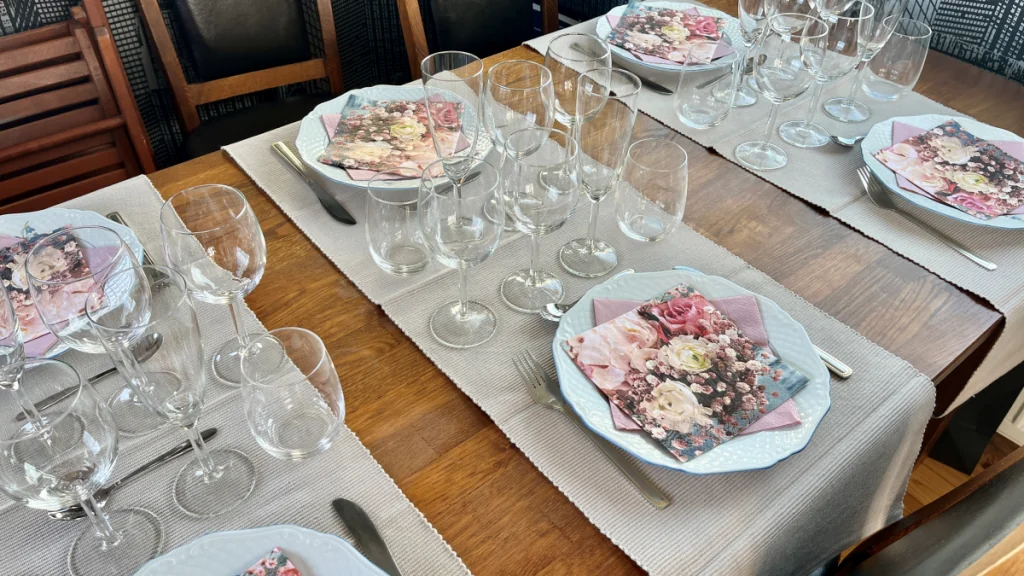
Our New Year's Eve meal has looked very different.
Do we have any fixed traditions when it comes to New Year's food? No. Not really. We enjoy cooking and eating good food, and when we have celebrated New Year's at home or with friends and family, we have sometimes gone all in. Over the years, we have cooked and been treated to long menus with many small dishes, seafood, fine starters and festive desserts.
But New Year has also often meant travel for us, and then the conditions are completely different. One of the clearest examples is New Year's Eve in Eilat, Israel. There, our exclusive New Year's Eve dinner was... fast food and Coca-Cola.
Not very traditional. Not very luxurious. But it was New Year's Eve anyway. And maybe that sums it up pretty well.

So what should you eat on New Year's Eve?
The short answer is: whatever you want. Swedish New Year's food has changed a lot in a relatively short time. From the fact that New Year's dinner could long be a continuation of Christmas meals, we have a modern tradition where lobster, shellfish, beef fillet, champagne and multi-course dinners have become strongly associated with the last evening of the year.
But unlike the Christmas table, there are few must-haves. The most important thing seems to be that the food marks the specialness of the evening. For some, that means lobster and champagne. For others, a vegetarian party menu, a favorite dish with the family, or dinner at a restaurant far from home. And sometimes, apparently, it can mean fast food and Coca-Cola in Eilat…

And the day after? Pizza!
When the elegant New Year's dinner is over, many Swedes await a completely different food tradition. Pizza on New Year's Day has become so common in a relatively short time that the Nordic Museum describes it as one of our newest food traditions.
After lobster, beef fillet, champagne and eight small dishes, it may feel quite reasonable after all. Happy New Food Year!

You might also like:
 New Year is a time for hope for the future – 7 New Year's dishes that represent luck and good fortune
 Facts about lussekatter - 12 things you (maybe) didn't know?
 13 dishes on the Christmas table - the history of Christmas food
 Midsummer food - 15 classics & readers' favourites
 Regional specialities on the Christmas table – from Norrbotten to Skåne
 Aunt Anna cracking nuts



 English (UK)
 Svenska
Lena - gott för själen says:
Well, no special traditions or requirements. But for the third year in a row we start with a picnic lunch in the park with Italian food and champagne. A little more festive / luxurious dinner food usually happens. This year it will be raw shrimp with skagen and rum, beef fillet with potato baskets and liquorice fluff with fresh raspberries.
Have a wonderful New Year's Eve.
Hug Lena
31 December 2019 - 8:42
Helena says:
Your picnic lunch sounds super cosy! And what a tasty menu you are planning, yummy!
31 December 2019 - 9:47
bmlarsreseblogg says:
We have been celebrating New Year here for many years with three other couples. Those we are with provide the main course and the rest of us share a drink with snacks, starter and dessert.
This year we are at a hunter's house, so deer will be served as the main course. Everything will have a game theme, so we'll have funnel chanterelle soup with noble cheese and cognac, while there will be Pavlova with forest berries for dessert....
Then there will be a paltry coma....
31 December 2019 - 14:24
Helena says:
Sounds super nice and delicious, and fun with a theme for the food! Wishing you a really happy new year!
31 December 2019 - 17:43
Znogge says:
We are in a hotel tonight and there is a buffet that starts with lobster soup. Then there is seafood and then various grilled fillets with good accessories. We finish with a cheese tray and then some dessert. Buffets are not my thing, but this one is usually very well prepared with good ingredients. The only risk is that you eat too much 😉.
Good ending!
31 December 2019 - 9:41
Helena says:
But so nice!!! I'm not very fond of buffets either, but some buffets can be fantastic. Wishing you the same! Happy ending and Happy New Year!
31 December 2019 - 9:48
Ama de casa says:
Wow, so much good stuff!
Here we have no tradition whatsoever when it comes to New Year's Eve food, it is what it is, but it is usually good 🙂 .
And speaking of good: Happy New Year! 😀
31 December 2019 - 10:04
Helena says:
Thank you very much, Happy New Year!!!
31 December 2019 - 17:43
Nils-Åke Hansson says:
HAPPY NEW YEAR
We have had a sunny day and we are being served with lots of goodies.
31 December 2019 - 14:49
Helena says:
That sounds wonderful! Wishing you a Happy New Year!
31 December 2019 - 17:43
Anonymous says:
I see.
28 December 2020 - 19:55
BP says:
Yeah, I remember that New Year's Eve meal from 2016. WOW!
I actually feel sorry for all the vegetarians who have to eat "boring food" tonight. Here it will start with oysters, then our "traditional" lobster au gratin, dessert Pannacotta. All done and ready, bought at the local deli. Okay, the lobster is gratinated in the oven, so there will be no work there either;-)
Wishing you and Peter a wonderful New Year's Eve and a very happy and travel-filled New Year.
31 December 2019 - 15:45
Helena says:
Your New Year's menu sounds both luxurious and delicious! Wishing you a Happy New Year!!! ?
31 December 2019 - 17:44
Kors och Tvärs says:
Here we have shrimp in a few different flavours. Cava, of course. And chocolate fondant for dessert. Then we will try to put 12 grapes in us, at noon so we get a happy 2020 🙂 🙂.
31 December 2019 - 16:28
Helena says:
That sounds really good! And fun with the grapes, which I recently learnt about! Wishing you a very Happy New Year!
31 December 2019 - 17:45
Ruth i Virginia says:
Nothing in particular In the 1940s in Sweden, New Year's Eve was the
the day the lutefisk said goodbye.
My most memorable New Year's Eve was in 1949, when me and my
fiancé (in uniform) went to a ball at Rosenbad. Great! What
we ate, I don't remember. 🙂
Happy New Year to you two, who bring me so much joy!
31 December 2019 - 16:54
Helena says:
Oh how lovely it sounds with a ball and a fiancé in uniform! What a memory! Wishing you a Happy New Year Ruth!!!
31 December 2019 - 17:46
Maria/ Magnolia Magis says:
Good end of 2019!!! There will be nothing special tonight, tea and sandwich as usual... But tomorrow there will be a celebration! Dad turns 70! ???
31 December 2019 - 20:04
Maud says:
Here we have surströmming with boiled potatoes and a lot of onions, both red onions, ordinary yellow onions and other onions. Creme fraiche with red rum and flatbread. Yum.
29 December 2024 - 12:56