



Writer: Peter Bergström
Updated: September 2026 | What to see and do in Athens? The Greek capital is of course filled with ancient temples and ruins, but we also discovered cozy neighborhoods, folk life, street art, delicious Greek food and rooftop bars with views of the Acropolis. Here are our best tips after a few intense days in Athens.
 Tweet
 Share
 Share
 Pin
 Share
 Share
This article contains affiliate links. This means we may earn a commission if you book through our links - at no extra cost to you.
Table of contents
Things to do in Athens – our 14 best tips
When we arrived in Athens, it was primarily antiquity that was on our minds. The Acropolis and the Parthenon of course, but also temples, columns and ruins that appear almost everywhere you go. And yes, we got our fair share of ancient pillars.
But we soon discovered that there are many more sides to Athens. We strolled through narrow alleys in Plaka, got into the middle of the nightlife in Psiri, explored street art, ate Greek food and ended the evenings with a view of an illuminated Acropolis.
We did a lot of walking during our days in the city, which turned out to be a great way to discover Athens. Here are the places and experiences we enjoyed the most.
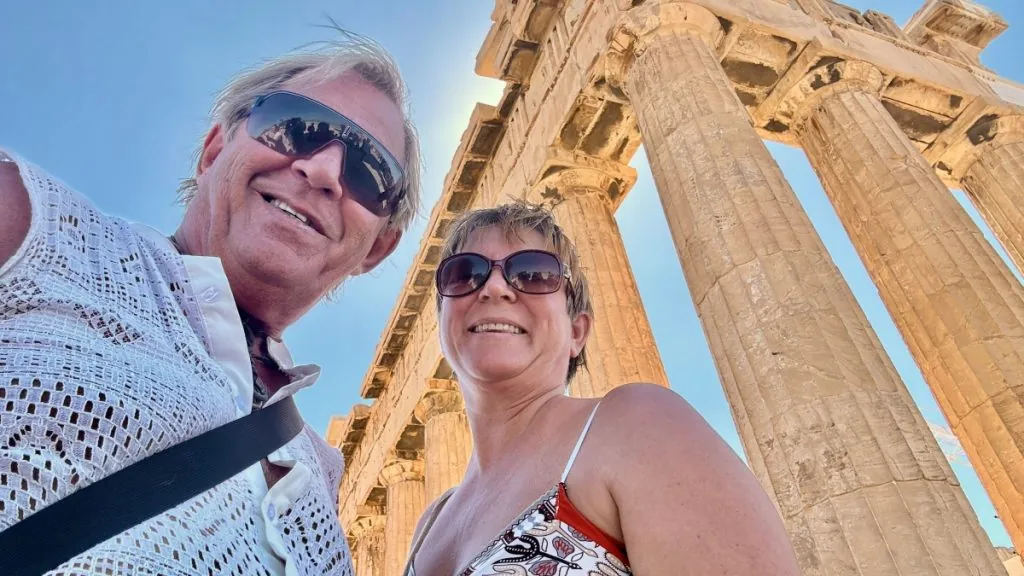
Quick guide: our favorites in Athens
- Don't miss out: Acropolis and Parthenon
- Best ancient experience: Ancient Agora
- Cosiest area: Plaka and Anafiotika
- Most popular: Psiri
- Best evening experience: rooftop bar with view of the Acropolis
- Our best tip: discover Athens on foot
1. Experience the Acropolis and Parthenon
It's hard to come to Athens without visiting the Acropolis. The rocky hill rises in the middle of the city and the Parthenon is visible from a surprisingly wide range of directions.
We started our walk towards the Acropolis in the morning and made our first stop for coffee. It was an unusually expensive coffee, but it was only natural to think that the view and proximity to 2,500 years of history were included in the price.

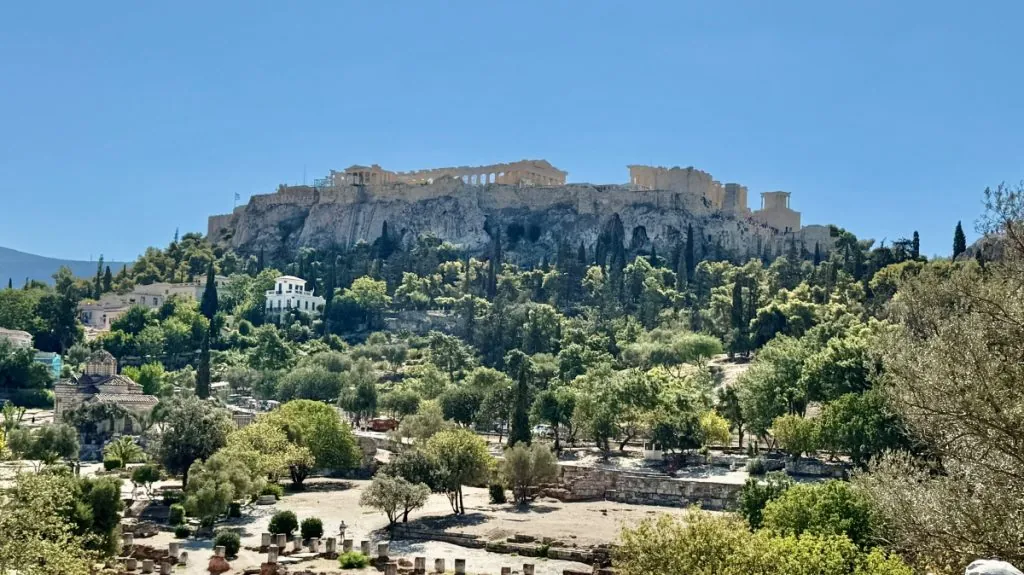
On the way up we made another stop, this time for a beer. You don't have to overdo efficiency just to visit one of the world's most famous sights. And then suddenly there we were.
The Parthenon was built in the 5th century BC and dedicated to the goddess Athena, the city's patron goddess. Over the centuries, the temple has served as a church and mosque, and has been subject to war, explosions and looting.

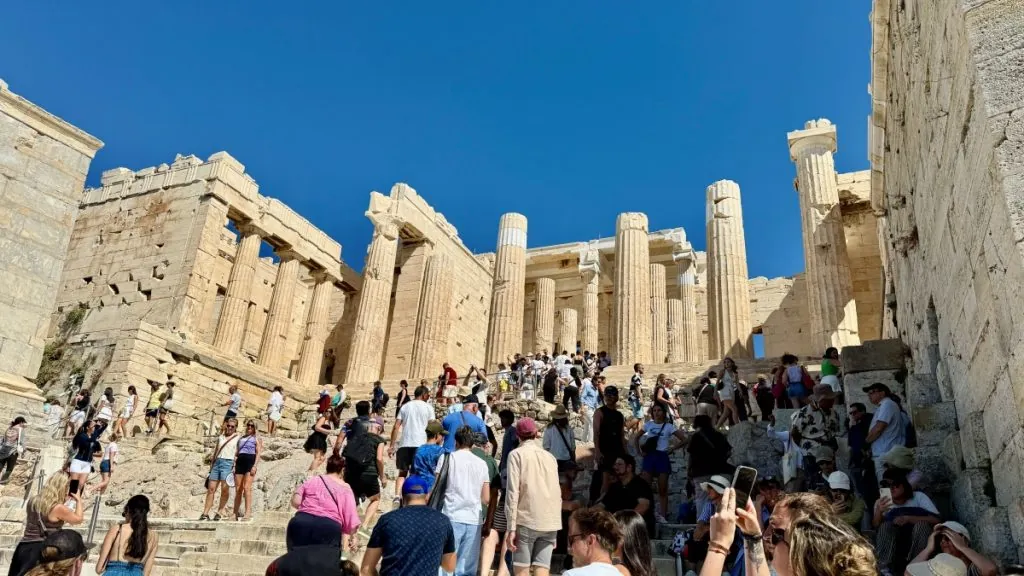
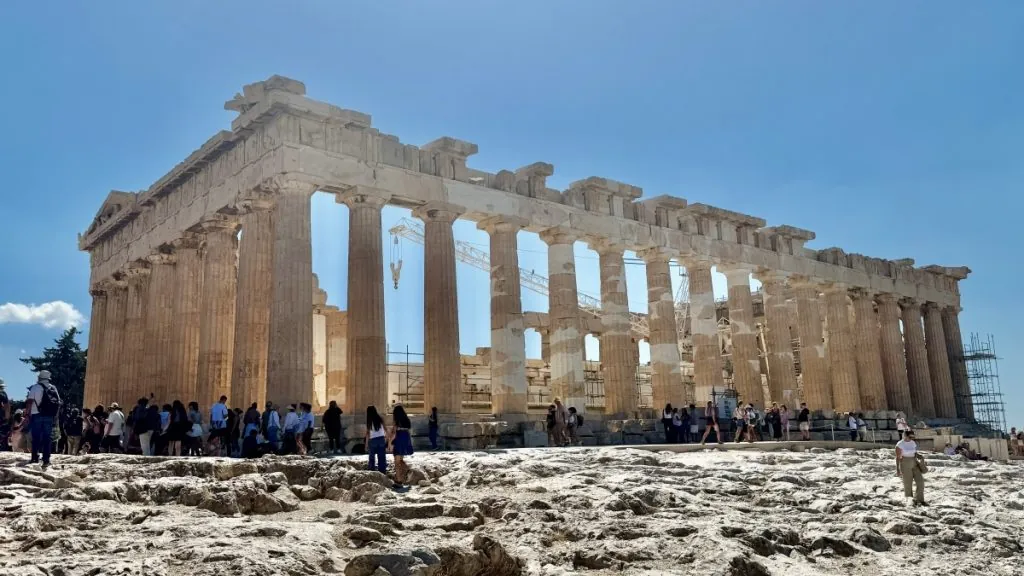
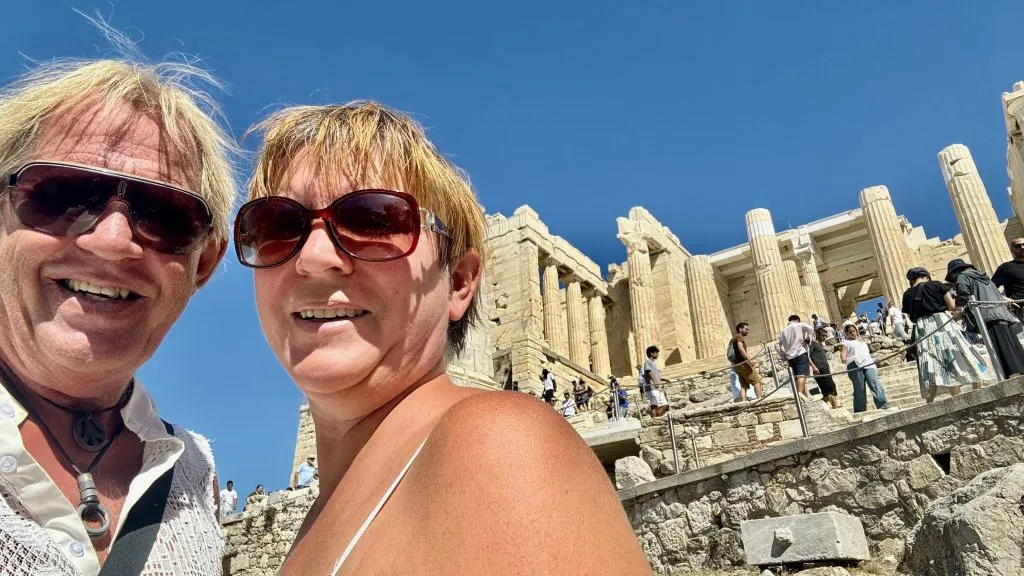
Despite the scaffolding and all the other visitors, it is impressive to stand in front of the building. For us, it was the kind of place that you have seen in pictures so many times that it almost feels strange when it is suddenly there in front of you for real.
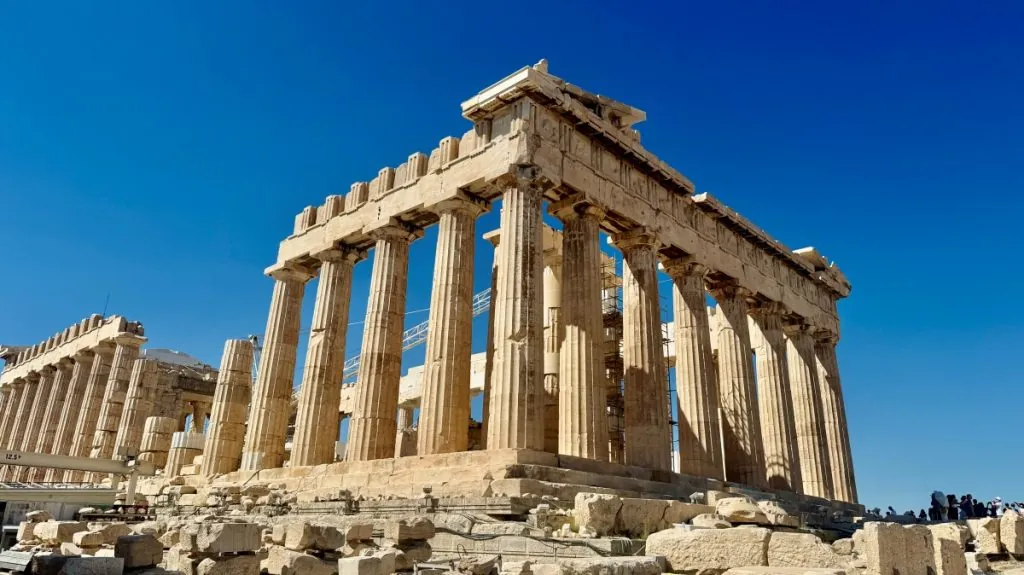
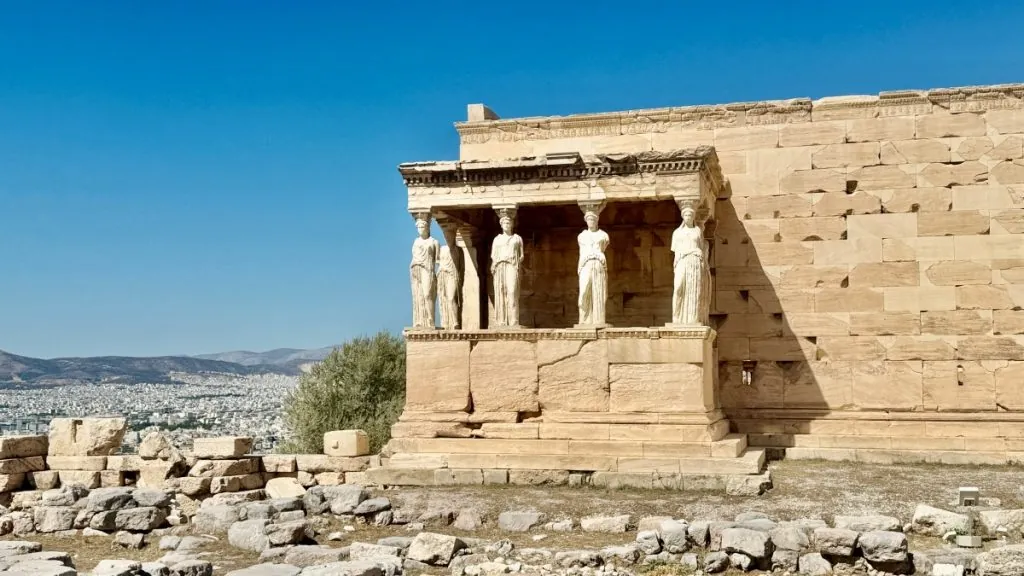
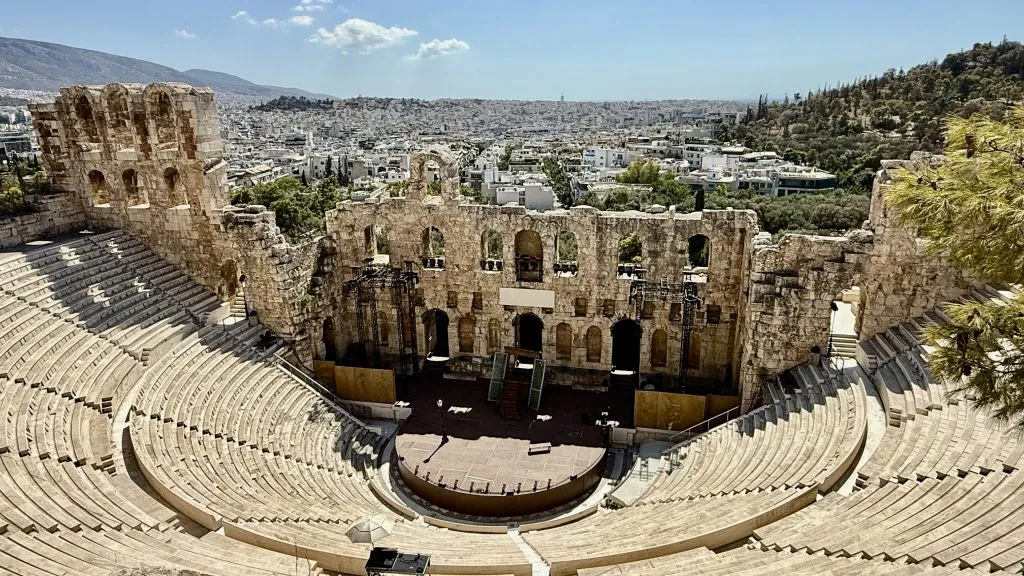
Plus, the view of Athens from here is amazing. The modern city spreads out in all directions, with ancient remains interspersed between the buildings. Our tip is to give the Acropolis time. It’s easy to focus on the Parthenon, but the entire area is filled with buildings, remains and views worth stopping at.
2. Explore the Ancient Agora and the Temple of Hephaestus
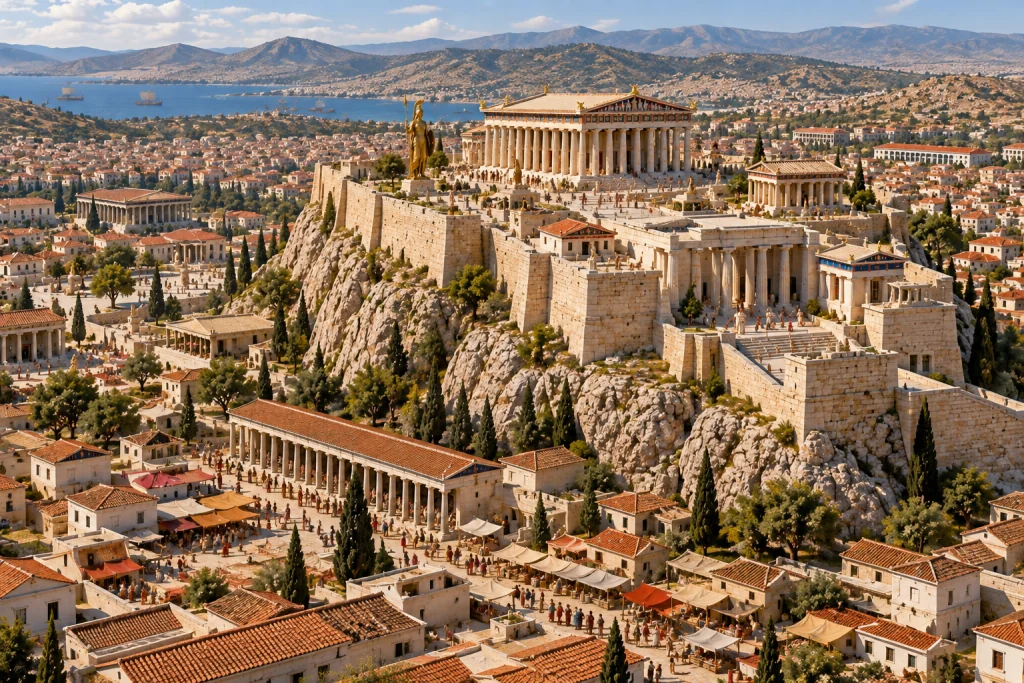
Below the Acropolis lies the Ancient Agora, the ancient city's center for politics, commerce, and everyday life. Here people gathered to discuss, do business, and participate in public life. Today, the area is green and quite pleasant to walk through, which we appreciated after all the stone and marble on the Acropolis.
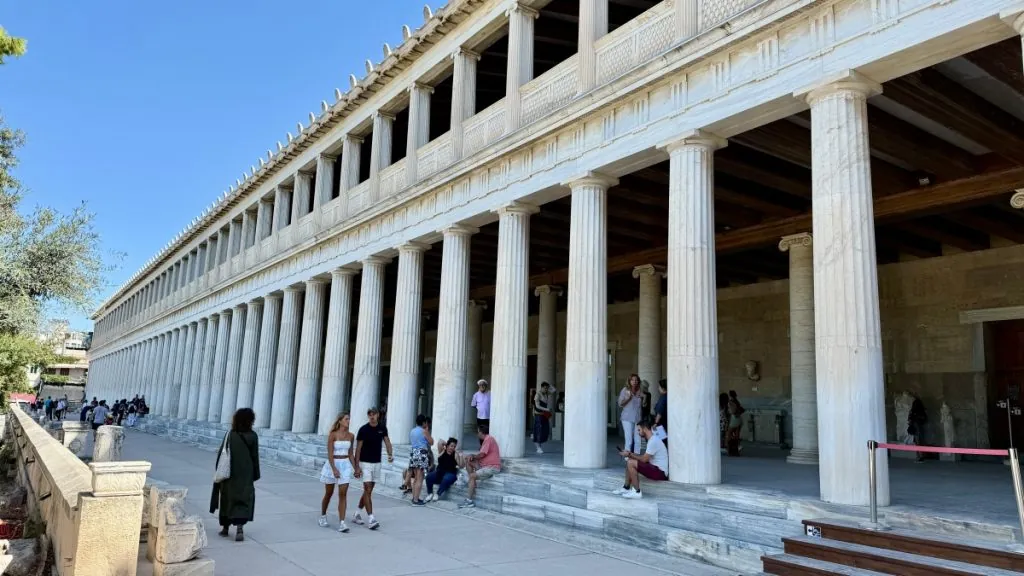
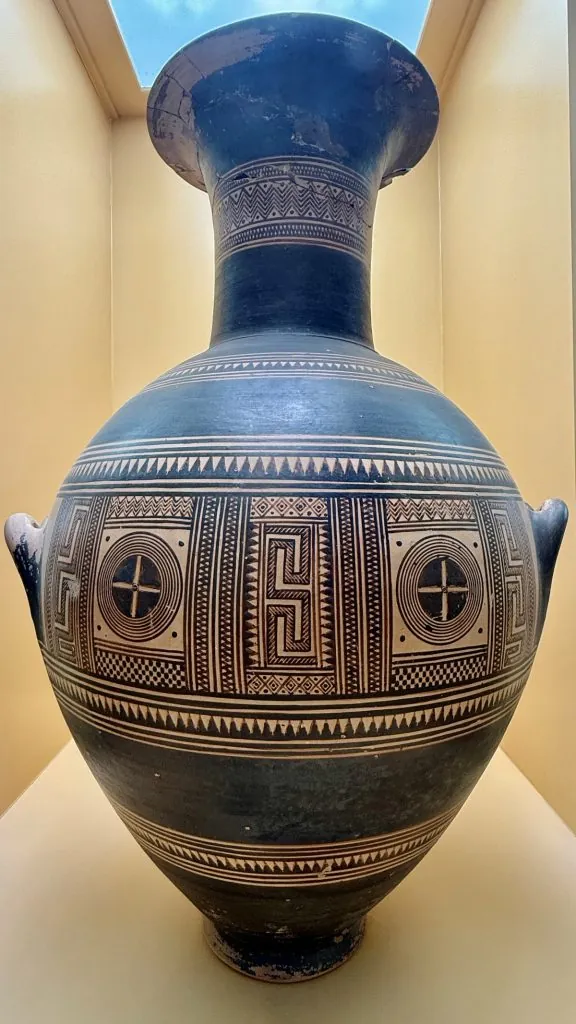
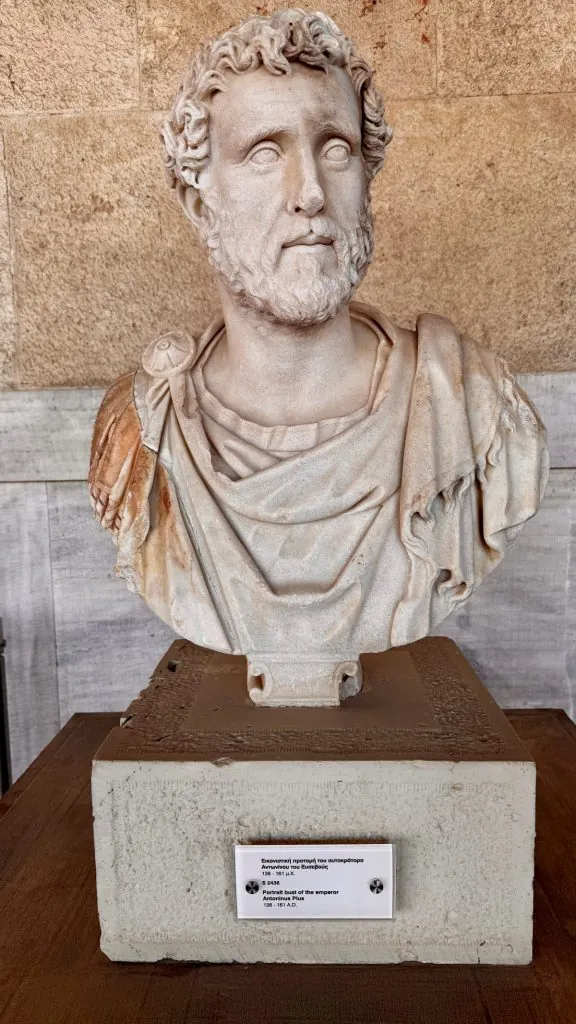
One of the most prominent buildings is the Stoa of Attalos. The current building is a reconstruction of the ancient stoa and houses a museum with finds from the area.
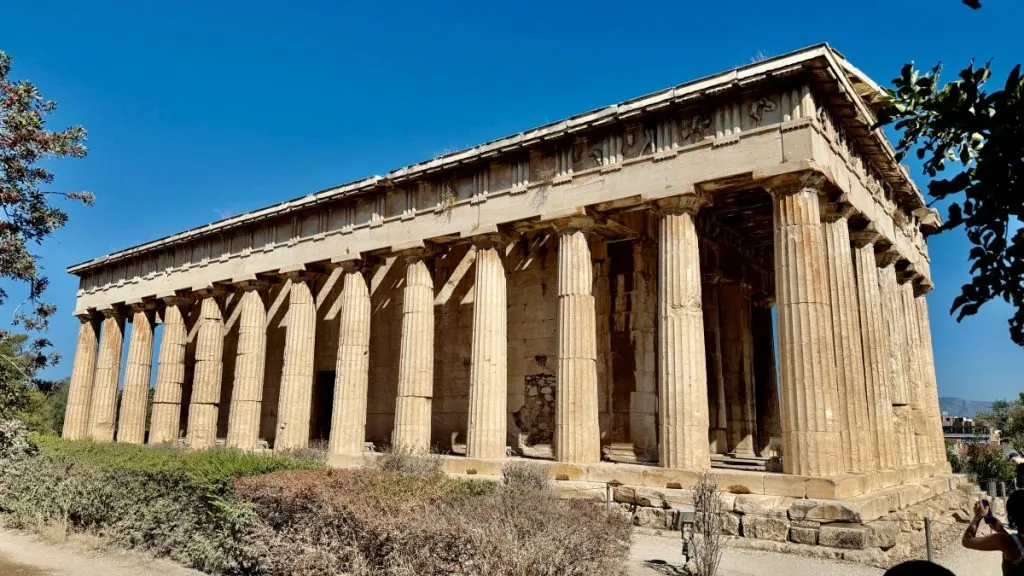
But what impressed me the most was a little higher up. When we saw the Temple of Hephaestus, the spontaneous comment came: ”That devil is still standing!”
And it really does. The temple was built in the 5th century BC and is one of the best preserved ancient temples in Greece. The columns are still in place and the building makes it unusually easy to imagine what Greek temples once looked like. After a number of much more dilapidated ruins, it made an impression.
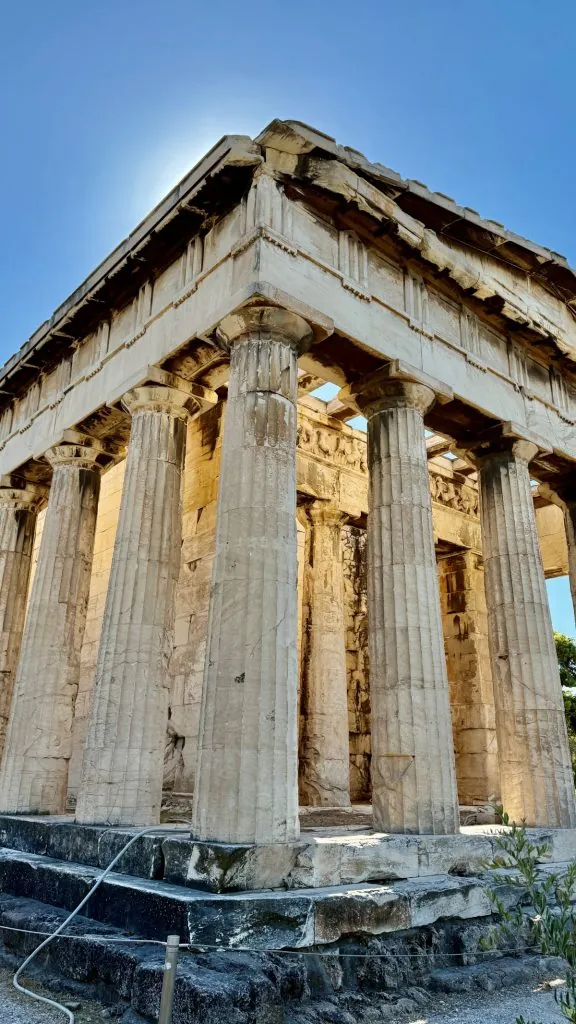
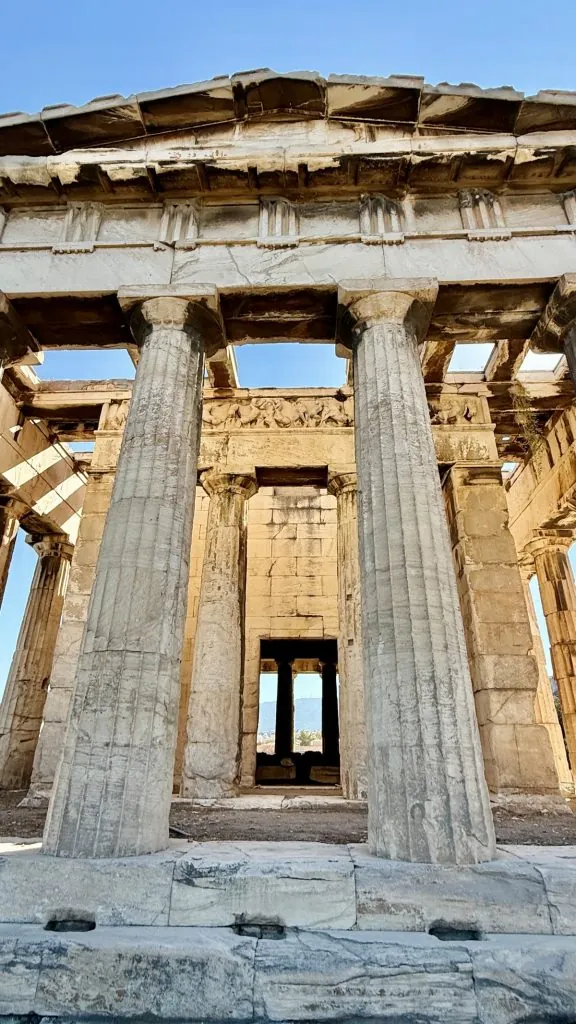
3. See Hadrian's Library
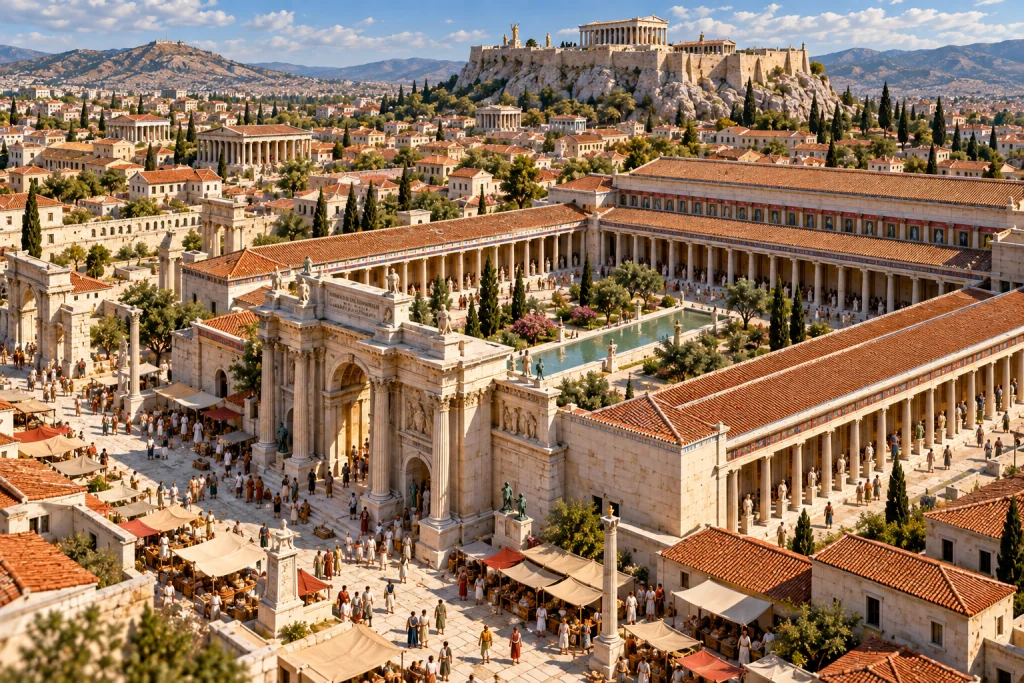
Hadrian's Library was built in the 1st century AD at the initiative of the Roman Emperor Hadrian. The facility was much more than a library and included reading rooms and lecture halls around a large courtyard.
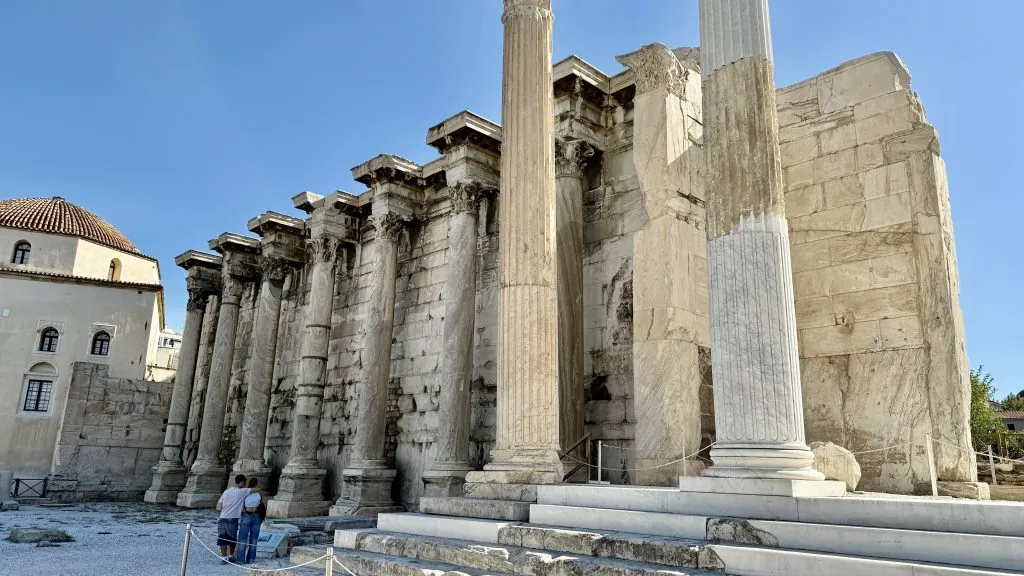
When we got here, some other visitors were standing in front of the ruins and looked as if they understood exactly what each stone had once been. We didn't. That's one of the challenges of Athens. After a while, you stand in front of a few more columns and remains of walls and try, with increasing success, to build an ancient palace in your head.
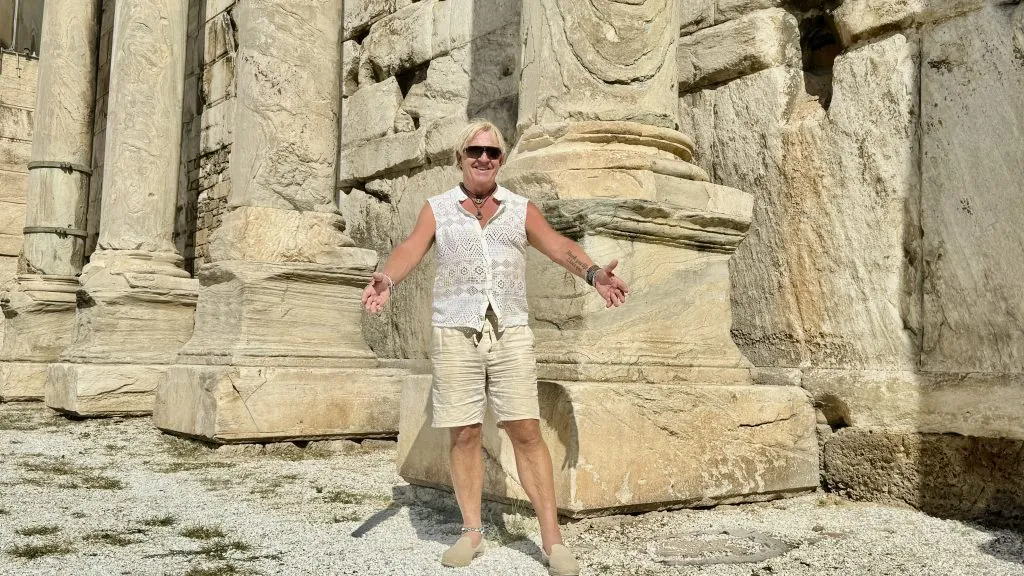
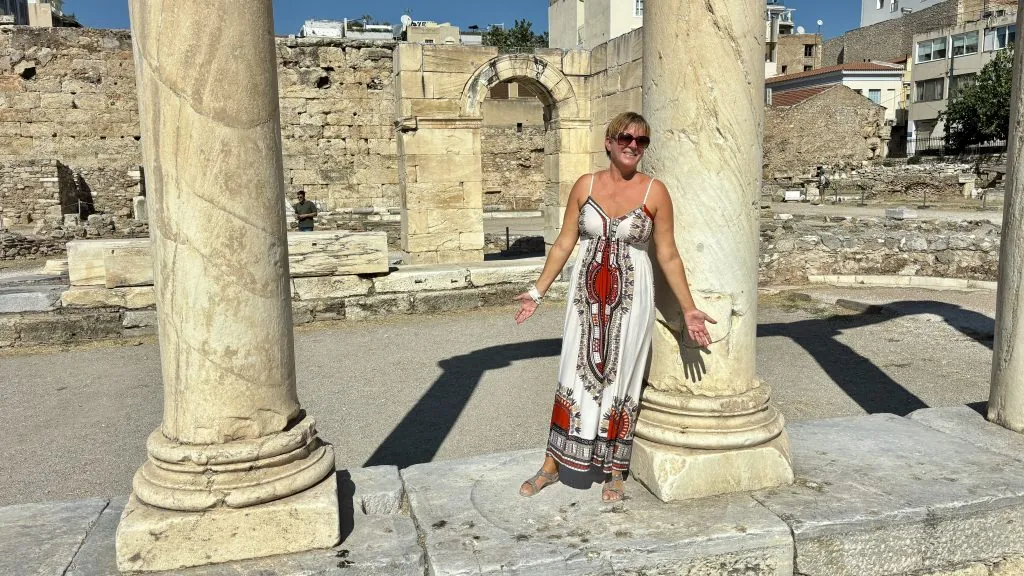
Here, reconstructions and images helped us understand how enormous and lavish Hadrian's Library once was. That's also one of the things we like about Athens: the ruins aren't isolated far outside the city. Hadrian's Library is right in the middle of today's alleys, restaurants, and people.
4. Check out the Tower of the Winds and the Roman Agora
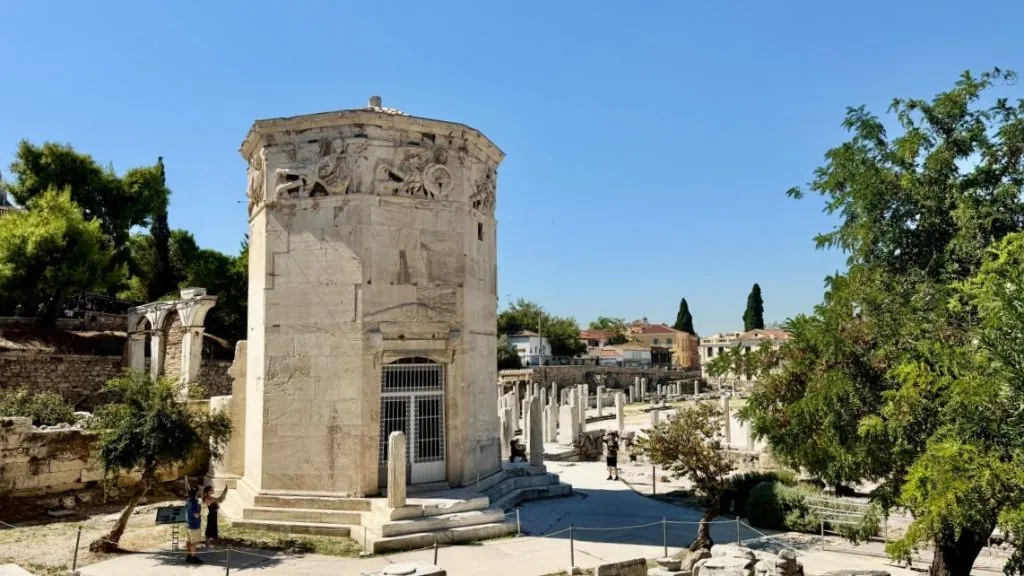
Not far from Hadrian's Library is the Roman Agora, the Roman marketplace built in the centuries before and after the beginning of our era. The most exciting building here, in our opinion, is Tower of the Winds, an octagonal marble tower that functioned as a sundial, weather vane and water clock, among other things.
On the sides of the tower are reliefs depicting the eight wind gods. It's not an attraction that requires half a day, but it's perfect to check out during a walk between Monastiraki and Plaka.
And after the Parthenon, the Agora and Hadrian's Library, it's actually a bit refreshing to have an ancient building that doesn't require several hours of mental processing.
5. See the Temple of Zeus and Hadrian's Arch
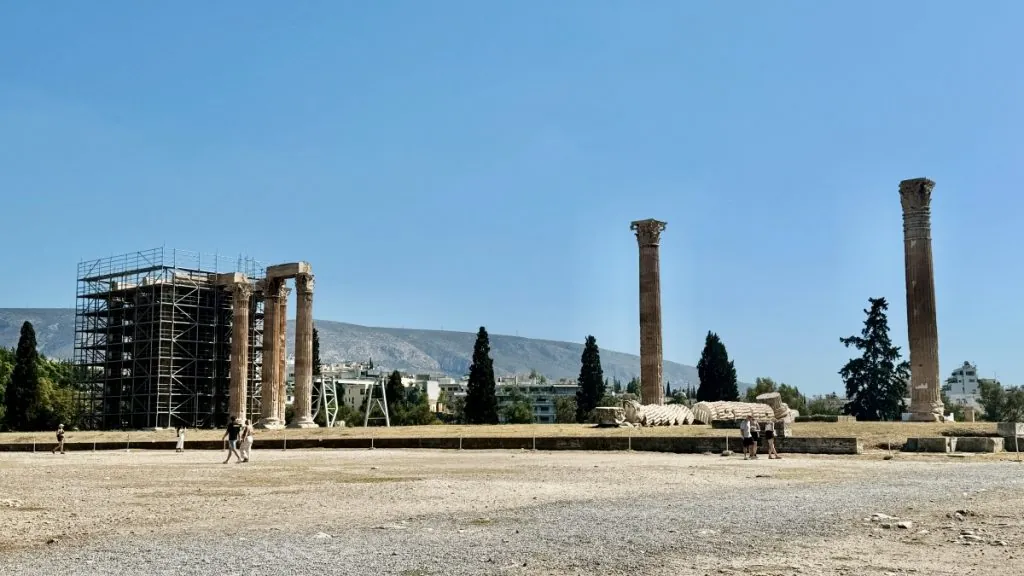
Another of Athens' great ancient sights is the Olympieion, or Temple of Zeus. Construction began several hundred years before Christ, but was not completed until the time of the Roman Emperor Hadrian in the 1st century AD. It once housed over a hundred enormous Corinthian columns.
Today, considerably fewer remain, but the columns that remain still give a sense of the building's enormous proportions. Nearby are also Hadrian's Arch, which was erected in honor of the emperor.
We think the place works well as part of a walk through Athens, not least because here you once again get that special Athens combination: ancient remains in the middle of a modern metropolis.
6. Stroll in Plaka and Anafiotika
After enough temples, columns and ruins, we longed for something completely different. Then we ended up in Plaka. The old town is located below the Acropolis and is full of narrow alleys, small shops, restaurants and outdoor cafes. Sure, the area is touristy, but we still think it is one of the nicest parts of Athens to just stroll around.
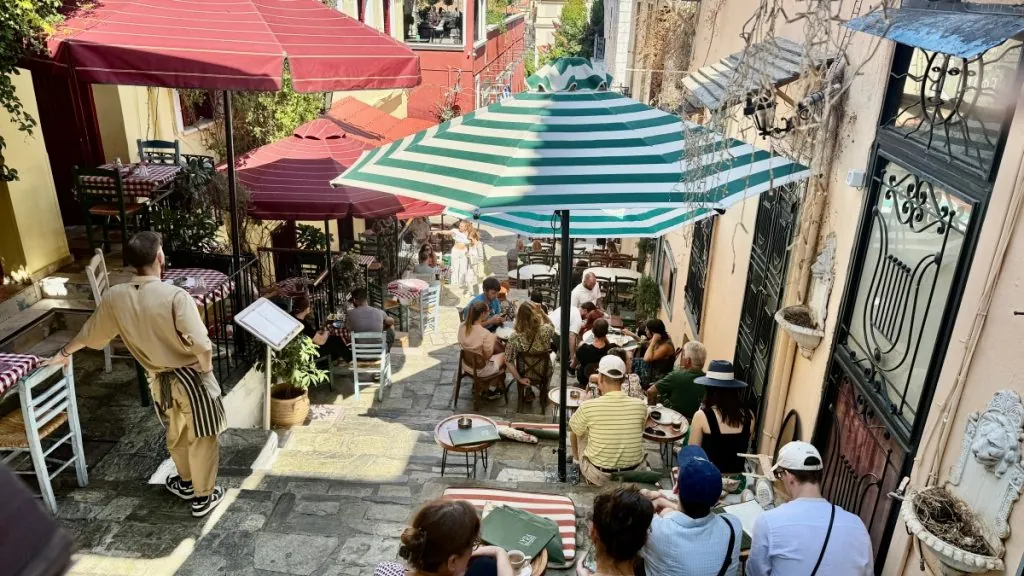
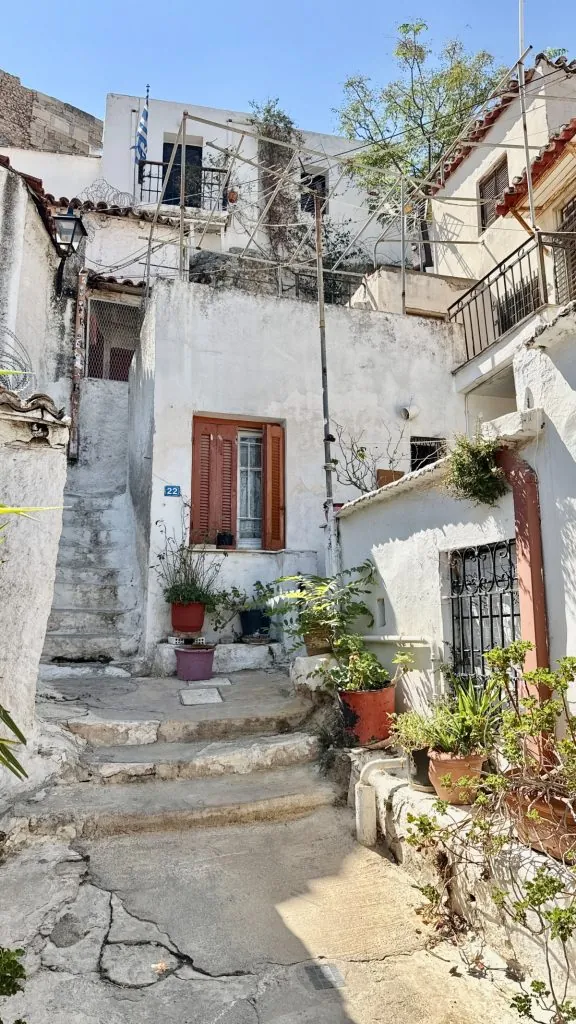
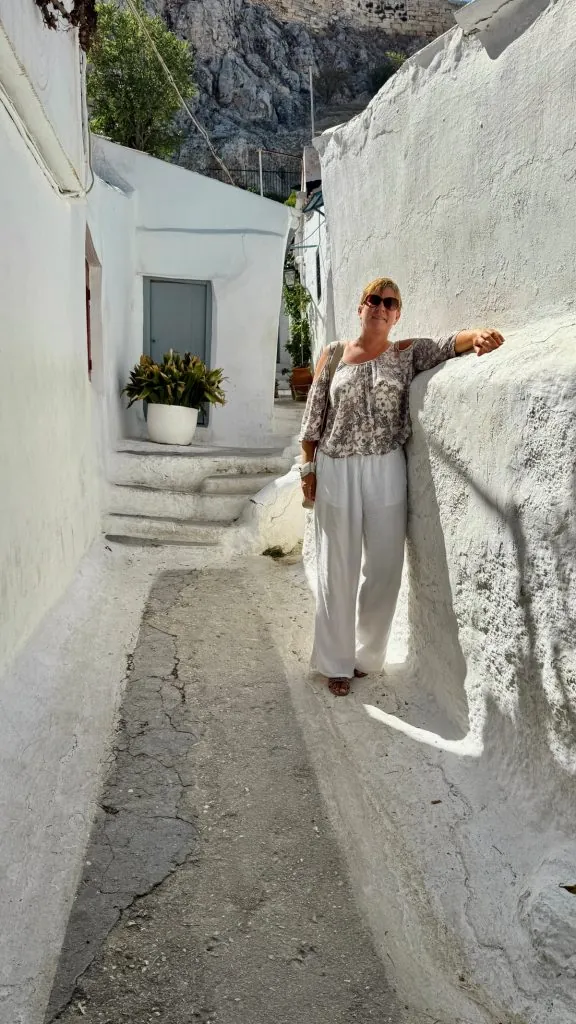
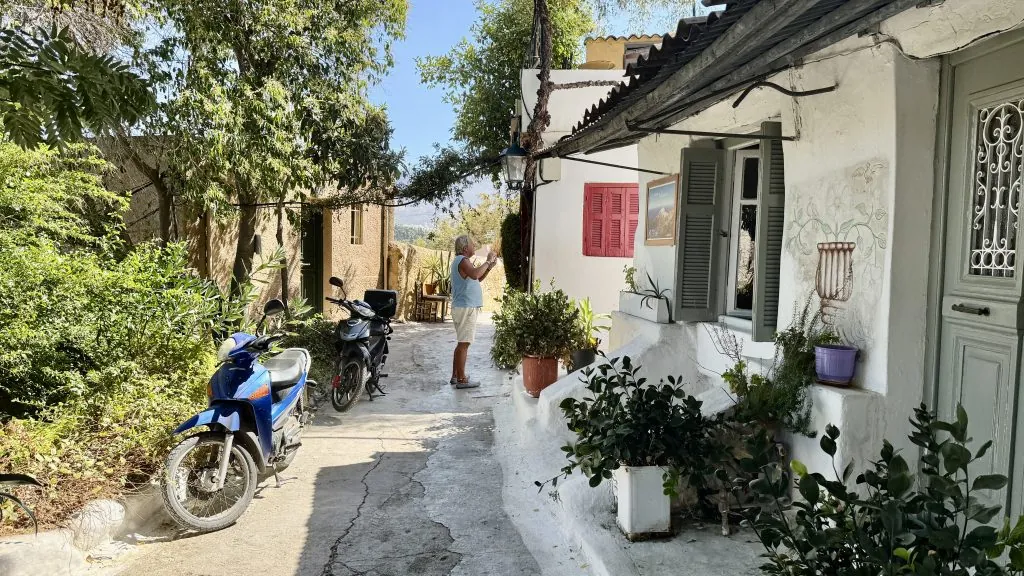
In some places, restaurants climb the stairs between the houses with small tables, chairs and cushions. It's hard not to want to sit down. Even more special is Anafiotika, the small district on the hillside just below the Acropolis. The whitewashed houses, narrow alleys and blue details bring to mind the Cyclades.

And there is an explanation. The area was built in the 19th century by craftsmen from the Cycladic island of Anafi who had come to Athens to work. When we later traveled further out into the Greek archipelago, the connection felt even clearer. Suddenly we had left the big city and ended up on a small piece of a Greek island – right under the Acropolis.
7. Experience Monastiraki
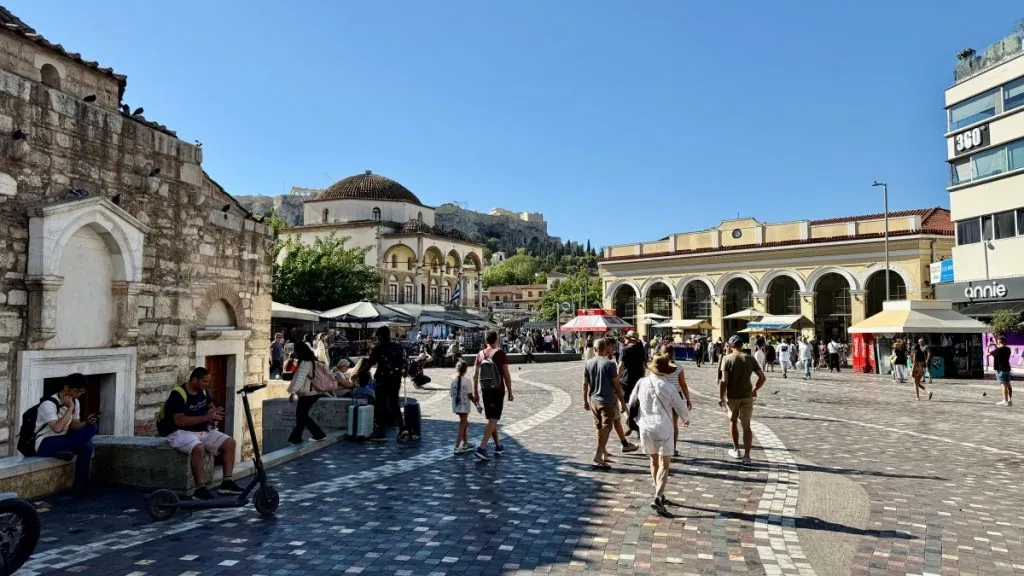
Monastiraki is one of those places where many different parts of Athens come together at the same time. Here you will find a lively square, shops, markets, restaurants, street vendors and crowds of people. At the same time, you can see the Acropolis rising above the rooftops.
We passed Monastiraki several times during our walks and the area also works well as a starting point for exploring parts of central Athens on foot. From here it is close to both the Ancient Agora, Hadrian's Library, Psiri and Plaka.
If you want to shop, there is also the famous flea market in the Monastiraki area. The shopping itself wasn't what attracted us the most – but the people watching did.
8. See Syntagma Square and the Changing of the Guard
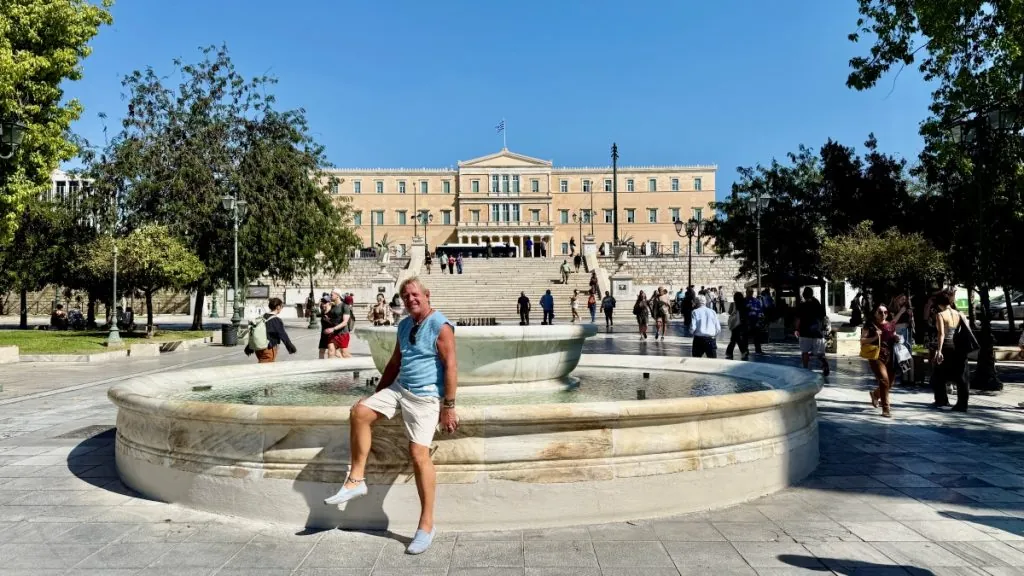
Syntagma Square is one of the most important squares in Athens and is located in front of the Greek Parliament. It is also home to the Tomb of the Unknown Soldier, which is guarded by soldiers from the Presidential Guard, Evzones, dressed in their characteristic uniforms.
The Changing of the Guard takes place regularly and is one of the classic things to see in Athens. The soldiers' slow and almost choreographed movements make the ceremony something much more special than a regular changing of the guard.
Even if you don't catch the Changing of the Guard, Syntagma is worth passing through. The square is a central hub and a good starting point for further walks through the city.
9. Hang out in Psiri
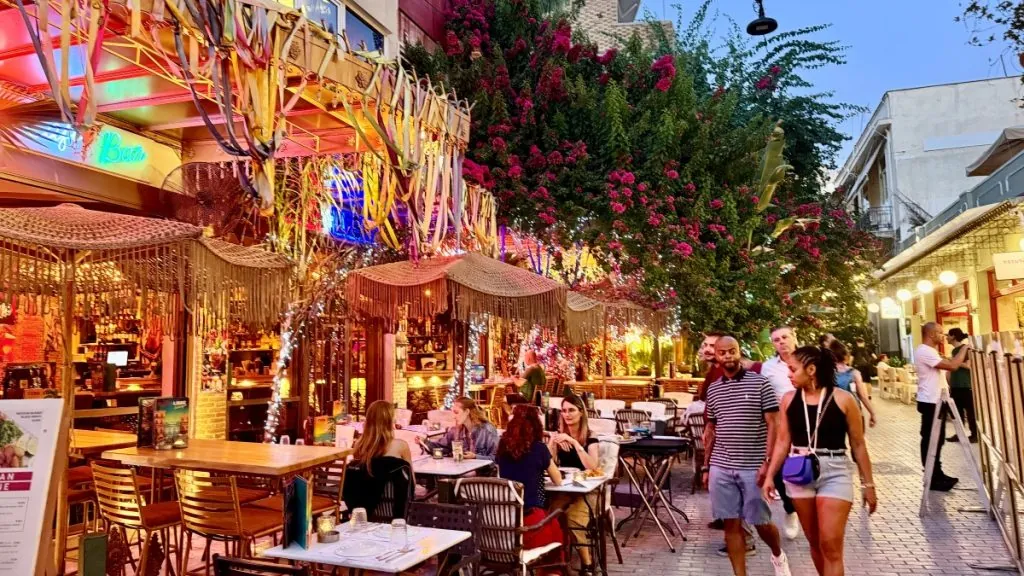
When my brain started to fill up with years, emperors and ancient columns, Psiri was a pretty effective counterbalance. Here, Athens suddenly became something completely different. We also happened to come here when it was carnival time. The streets were full of people, music and life, and the restaurants and bars filled up quickly.
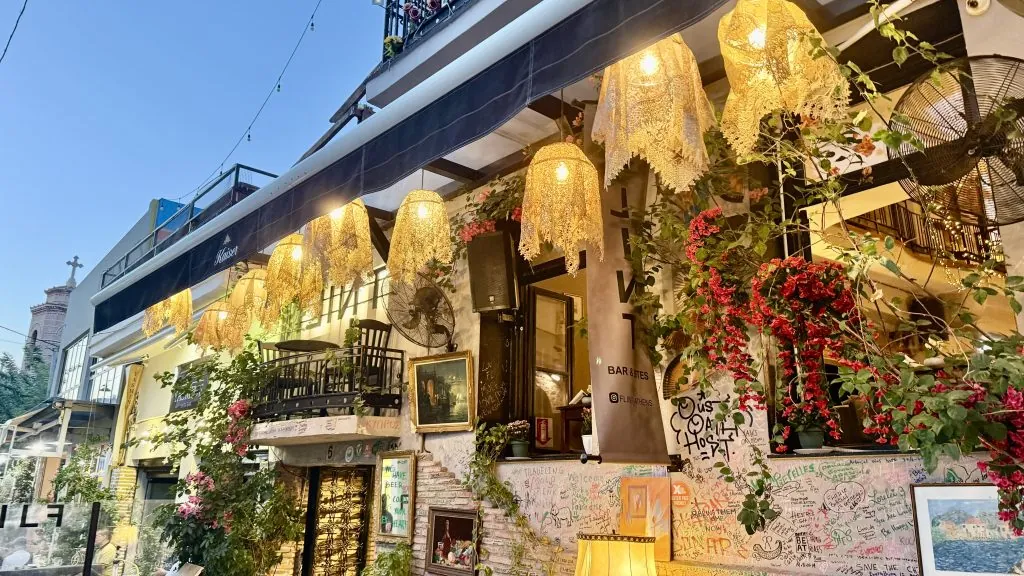
Psiri is known for its restaurant and entertainment scene and we liked the area because it felt so different compared to the big historical sights. It is easy to spend a whole day in Athens trying to understand what people were doing 2,000 years ago. In Psiri we got to see what Athenians were doing right now. It was necessary …
10. Explore Athens' street art
Another side of modern Athens is on the walls of houses. We saw street art in many places during our walks. Some are small paintings and tags while others consist of huge murals that cover entire facades.
Psiri is a good area to start if you want to look for street art, and even in other central neighborhoods, paintings appear when you least expect them.

We love the contrast in Athens. One moment you're photographing an ancient marble column, and a few blocks later you're standing in front of a colorful piece of art that was created very recently. It's also another argument for discovering Athens on foot.


11. Eat Greek food
Discovering Athens is of course not just about what to see. himself. You have to have time to eat too. And it's no big sacrifice.
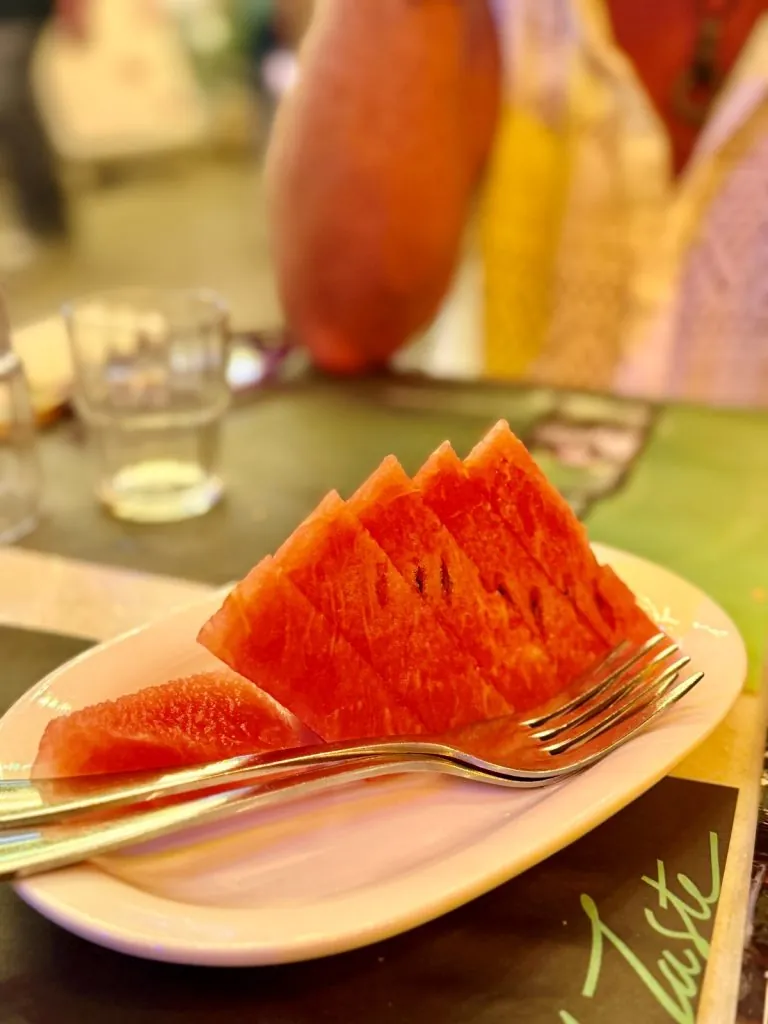
Greek food is one of our go-to dishes, with dishes like tzatziki, souvlaki, moussaka, saganaki and Greek salad. Add fish, shellfish, olives, feta cheese and a glass of Greek wine or ouzo and we're pretty happy.
During our days in Athens, we ate at both small tavernas and restaurants in the busier parts of the city. For us, it is often just as nice to settle down at a simple taverna as to book something more advanced. And there is an obvious advantage to walking several miles through Athens: You can order more small dishes.
READ MORE: 25 Greek dishes – food in Greece to taste

12. Have a drink at a rooftop bar
When darkness falls over Athens, something happens to the Acropolis. The rock and temples are illuminated, appearing as an island of light above the city. One of the best ways to experience this is from one of Athens' many rooftop bars. Of course, we took advantage.
There are rooftop bars in several places in the city center, not least around Monastiraki, and for us the view itself is more important than exactly which bar you choose. After a day among ruins and narrow alleys, it's quite wonderful to come up above the rooftops, order a drink and see the Parthenon shining in the dark. It's hard to get tired of that view.
13. Discover Athens on foot
One of our best Athens tips costs nothing: go. We walked a lot during our days in the city and in retrospect it feels like a large part of the Athens experience was between the numbered sights.
In a single walk you can pass an ancient ruin, a Byzantine church, a modern mural, an alley full of restaurants and a square where everyday life is in full swing.
Many of the sights in this guide are also relatively close to each other. The Acropolis, Plaka, Anafiotika, Monastiraki, Ancient Agora, Roman Agora, Hadrian's Library and Psiri can all be combined on foot. And the great thing is that you always find things you hadn't planned on. For us, that's often exactly how a city is at its best.
14. Continue the journey to Andros
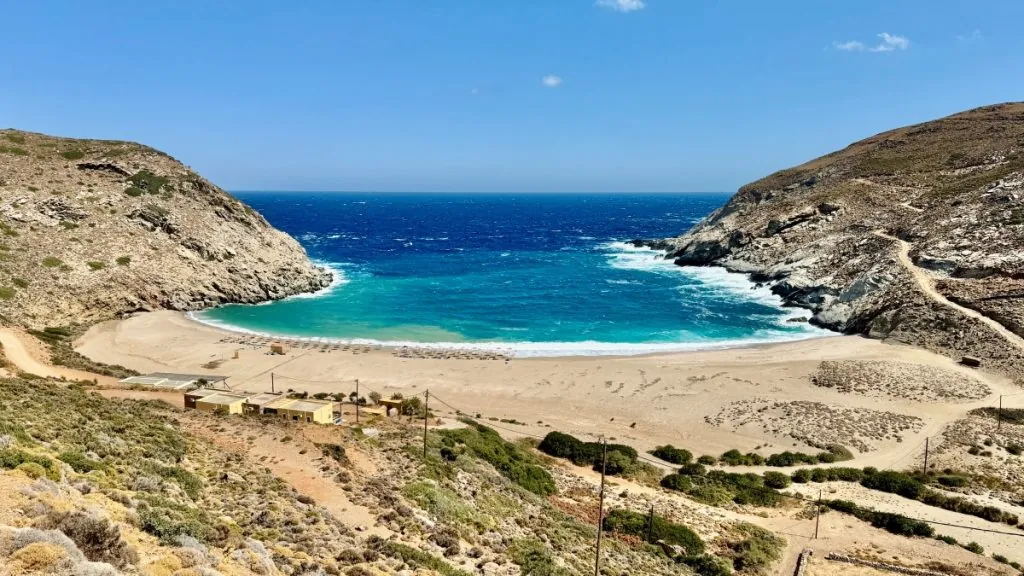
After a few intense days in Athens, we longed for the sea, beaches and a slower pace. So we continued to Andros, a green and mountainous island in the Cyclades. Ferries to Andros depart from Rafina, east of Athens, and the crossing takes just a couple of hours.

On the island we stayed in Batsi and rented a car to explore the beaches, small towns and the dramatic landscape. We also liked the beautiful main town of Chora, with its white houses on a narrow headland between two beaches.
One of our more spontaneous excursions was a hike to the Gerolimni waterfall. Helena was wearing a dress – but at least sneakers – and somewhere along the way there were rocks, water and ropes to hold on to.

The contrast to Athens could hardly have been greater. One day we were standing in front of the Parthenon, trying to take in 2,500 years of history. A few days later we were sitting by a waterfall on a Greek island. We like both parts.
READ MORE: Things to do on Andros in Greece – our 14 best tips
Tips for booking ferry trips
A handy tool for planning and booking ferry trips is Ferry hopper, where you can compare routes between different islands and destinations.
More things to see and do in Athens
Although we managed to see a lot during our days in Athens, there is of course still more to discover. Some places that may be worth checking out – and which we will have to save for another visit – are:
- Acropolis Museum is located just below the Acropolis and displays finds from the area and tells about the history of the Acropolis.
- National Archaeological Museum has one of the world's most important collections of objects from ancient Greece.
- National Garden is a green area in the middle of central Athens, near Syntagma Square, and can be nice when you need a break from traffic, people and ancient stones.
- Lycabettus is the highest hill in Athens and famous for its views of the city. It can be reached on foot or by funicular.
- Cape Sounion and the Temple of Poseidon is located outside Athens and is a popular excursion destination, not least at sunset.
We haven't had time to experience these places ourselves, but some of them are definitely on the list for next time.
Athens in 2–3 days – our suggestion
How much time do you have to do during a weekend in Athens? Quite a lot, since several of the major sights are within walking distance of each other.
Day 1 – Acropolis and Ancient Athens
Start the day at Acropolis and give the area plenty of time. Then continue down towards Ancient Agora and the Temple of Hephaestus.
In the afternoon you can continue towards Monastiraki and Hadrian's Library and then end the day in Psiri, where there are plenty of restaurants and bars.
Day 2 – Plaka, temples and folk life
Start with a walk through Plaka and Anafiotika before the alleys get too crowded. Continue to Roman Agora and Tower of the Winds and further towards Temple of Zeus and Hadrian's Arch. From there it's not far to Syntagma Square.Feel free to end the day at a rooftop bar with view of the Acropolis.
Day 3 – choose by interest
If you have a third day, you can take it a little easier. Visit a museum, look for street art, discover more neighborhoods or take a trip outside the city center. And do you have significantly more than three days? Then the Greek islands start calling. At least they did for us.
Where to stay in Athens?
For a first visit, we find it practical to stay centrally and be able to walk to many of the sights. Areas around Monastiraki, Psiri and Plaka is well located for those who want to be close to both historical attractions, restaurants and nightlife. Plaka is more charming and more touristy, while Psiri has more bars and nightlife.
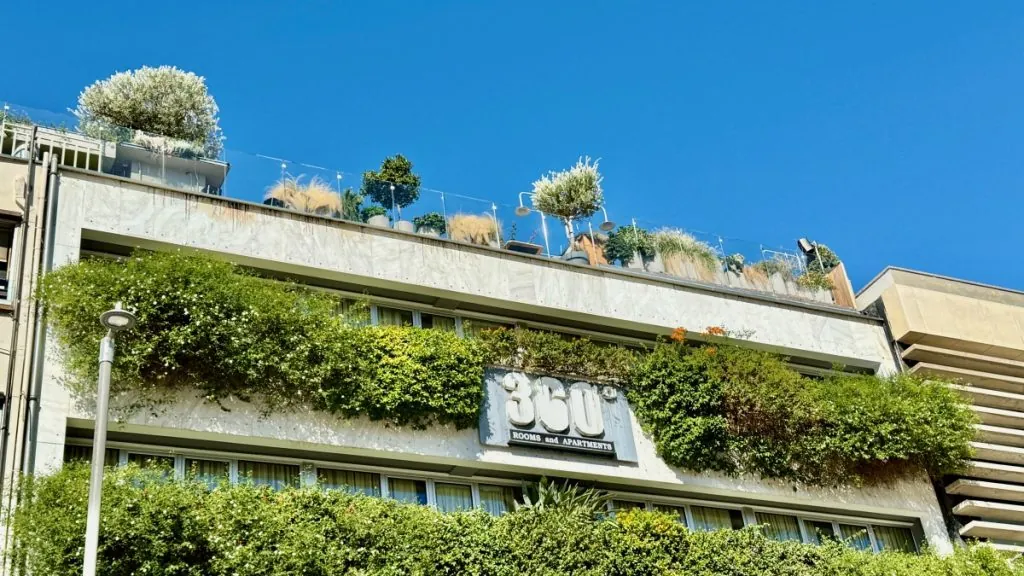
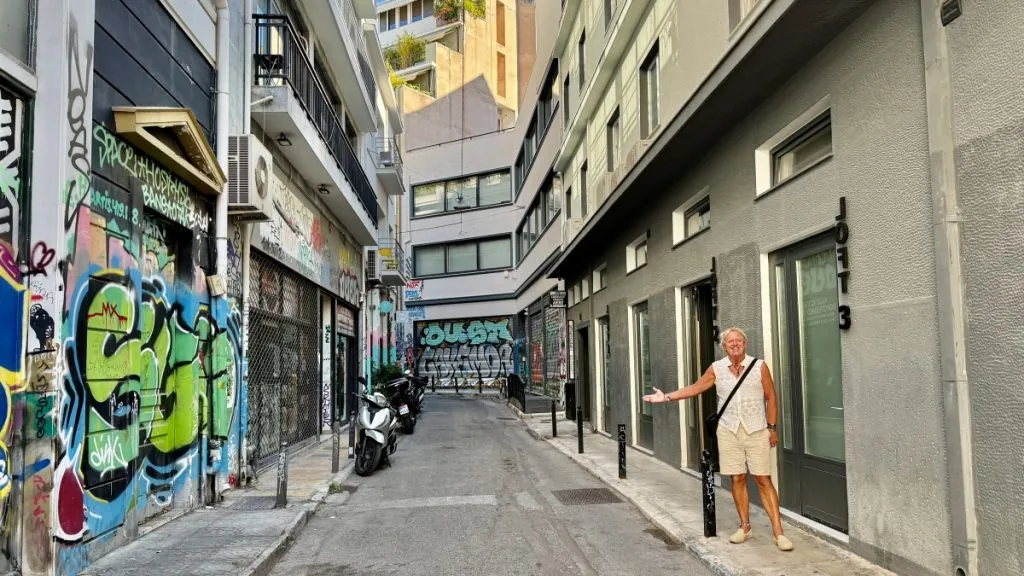
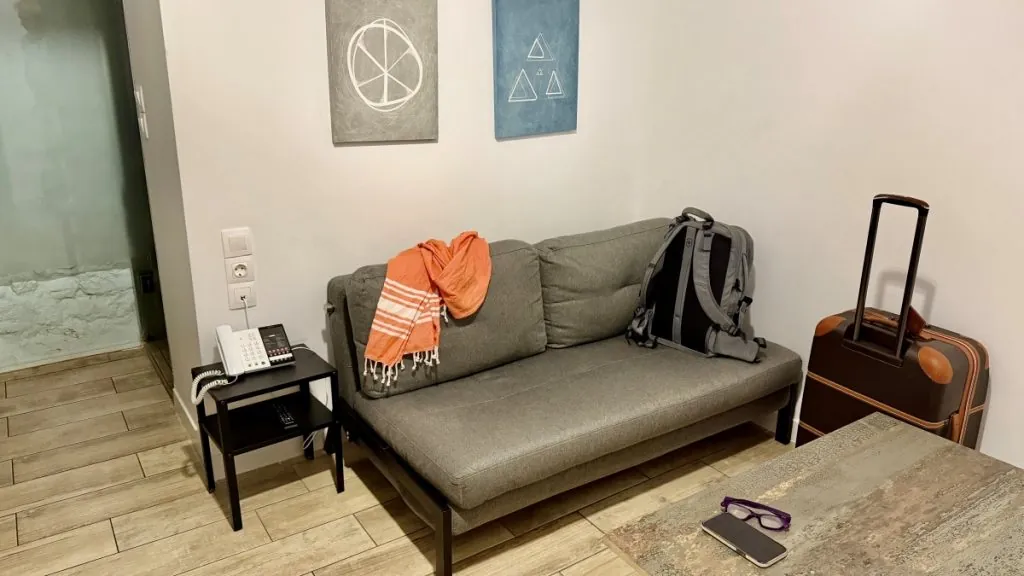
We ourselves lived at Athensotel, on a small street near Psiri and Monastiraki. The hotel was a bit different. Our room had an entrance directly from the street and also a sleeping loft, but we felt good and above all we appreciated the location. From there we could walk to a large part of the places in this guide – which suited us perfectly.
More to see and do on other Greek islands
Athens and Andros are of course just the beginning. We have traveled extensively in Greece and here you will find more of our guides and experiences from the country:

FAQ – frequently asked questions about Athens
Is there water to buy up on the Acropolis?
No, don't expect to be able to buy a bottle of water once you're inside the Acropolis. However, there are drinking water stations where you can fill up your bottle. So bring water from the start, especially on hot days – there is very little shade up on the cliff.
Do you need cash in Athens or do cards work everywhere?
Cards work in most hotels, restaurants, cafes and shops, and Greek regulations require card payments with almost all suppliers of goods and services. However, there are some exceptions, and in smaller markets and kiosks, cash can still be practical. We would therefore not carry a lot of cash around, but would like to have some smaller euro notes in our wallet.
Should you tip at restaurants in Athens?
Tipping is not a fixed percentage that must be added to the bill. The official Athens visitor guide states that 5–15 percent occur when you are satisfied with the service, but at the same time emphasize that it is not a rule. In simpler places you can also round up or leave a few euros.
Can you pay directly with a bank card on the metro and bus?
Yes. In Athens public transport, you can use a contactless debit card, your mobile phone or your smartwatch directly at the ticket reader on the metro, bus, tram and trolleybus. This is convenient for a long weekend as you don't need to buy a separate Athena Ticket for each journey.
Is it hard to climb the Acropolis?
It's not a long hike, but don't underestimate the terrain. It's uphill, parts of the old marble are shiny and slippery, and there's very little shade up on the Acropolis. Comfortable shoes with good grip, water, and sunscreen make a much bigger difference than you might think when looking at the Acropolis from below.
You might also like:
 Things to do in Rauma – 14 tips for a Finnish UNESCO city
 Split in winter – tips for a weekend in Croatia
 What to do in Bukhara, Uzbekistan - 17 tips for the Silk Road city
 Chemnitz, Germany - European Capital of Culture 2025
 Visiting the castle of Rhodes Town - Palace of Grand Master of Knights
 Midyat in southeastern Turkey – where TV series meet a thousand years of history



 English (UK)
 Svenska
BP says:
Fun with some other tips than the usual "tourist traps" in Athens. A few shopping shops that had really nice clothes that were completely in my taste. Even the murals were impressive, especially those on the facades.
18 October 2025 - 17:31
Helena says:
The major sights were of course interesting to see, but we were also pleasantly surprised by the other parts. We found Athens to be a very cosy city in many places!
19 October 2025 - 12:43
Znogge says:
I have never been to Athens but it is on my list. Would love to go there spring or autumn.
21 October 2025 - 20:06