


Text and photo: Helena Bergström
What is there to see and do on Naxos? Actually, a lot! Naxos is the largest island in the Cyclades and here you will find everything from long sandy beaches and charming mountain villages to ancient temples, winding roads and exciting food experiences. Here we tell you about our best experiences and attractions on Naxos – plus a few things we didn't have time to do ourselves.
 Tweet
Tweet Share
Share Share
Share Pin
Pin Share
Share Share
ShareTable of contents
Naxos in the Cyclades
When we arrived in Naxos, we knew that the island was known for its beautiful beaches, but we were still a little surprised by how much more there was to discover. Naxos is both the largest and one of the most fertile islands in the Cyclades, with high mountains, green valleys, historic villages and remains from different eras.

We started our stay with a guided full-day bus tour and then rented a car for the following days. It turned out to be a great combination. The bus tour gave us an introduction to the island and its history, while the rental car gave us the freedom to explore the beaches, villages, churches, and winding mountain roads on our own. Here are 16 things to see and do on Naxos!
1. Discover Naxos Town
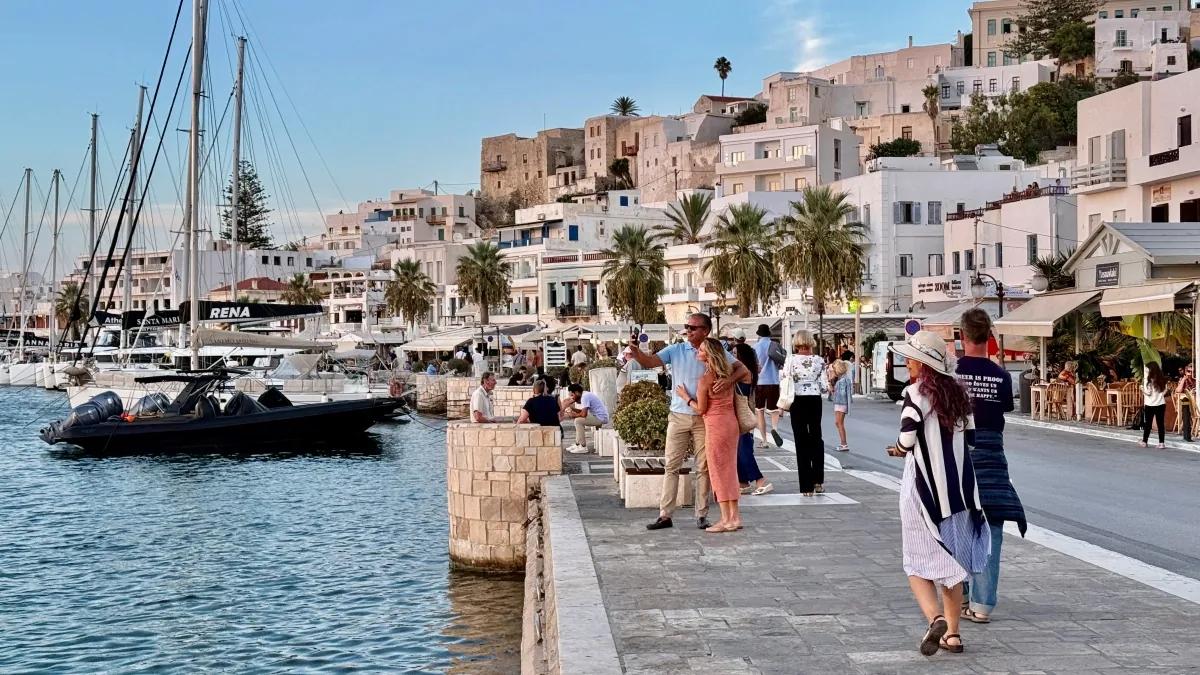
Naxos Town, also known as Chora, is the island's capital and the place where ferries dock. It has a lively harbor promenade with restaurants, cafes and shops, while the old town climbs the slope behind the harbor.
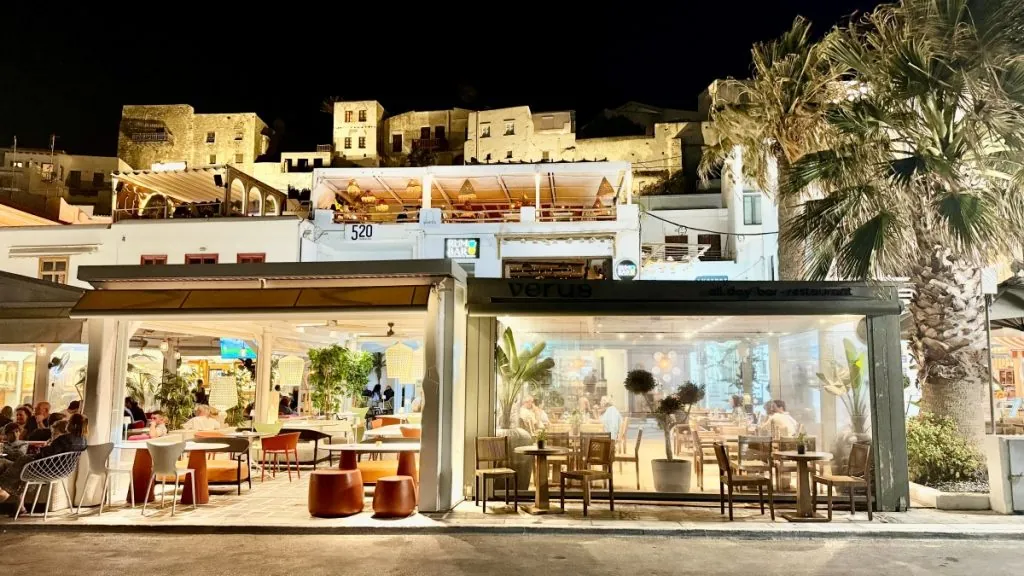
We lived just outside the city center and walked into town almost every evening. Part of the way was along Agios Georgios beach, where there were rows of tavernas and sometimes live music.
Naxos Town feels lively and touristy, but in a rather pleasant way. There are traditional Greek tavernas side by side with cocktail bars, international restaurants and small shops. Above all, it is a lovely town to just stroll around.

2. Get lost in the old town and Kastro
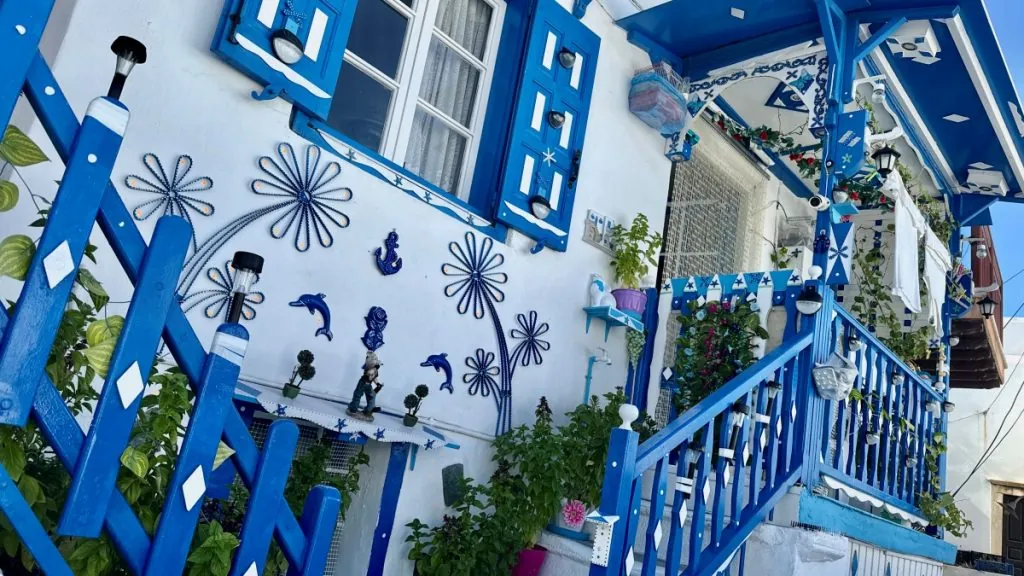
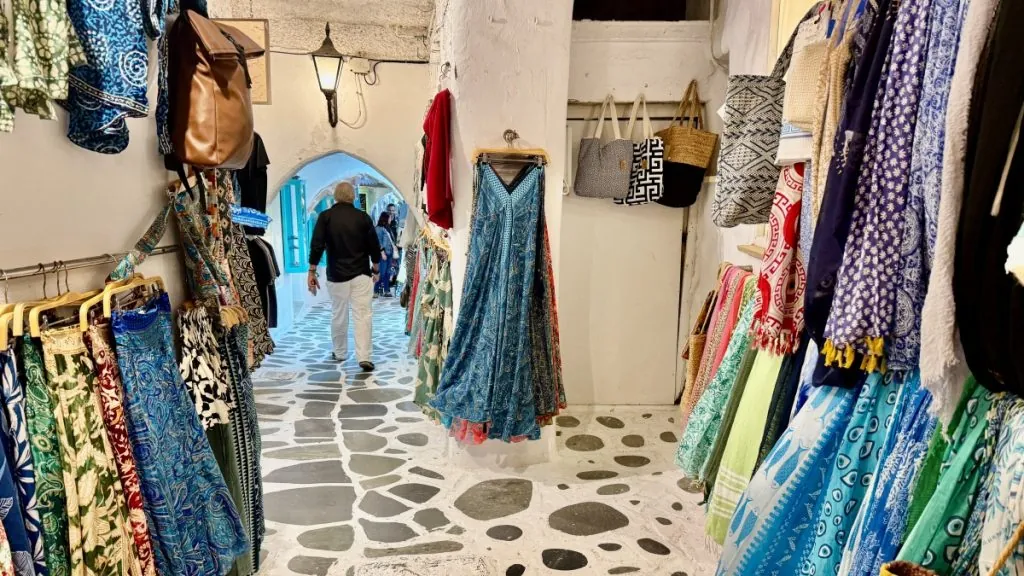
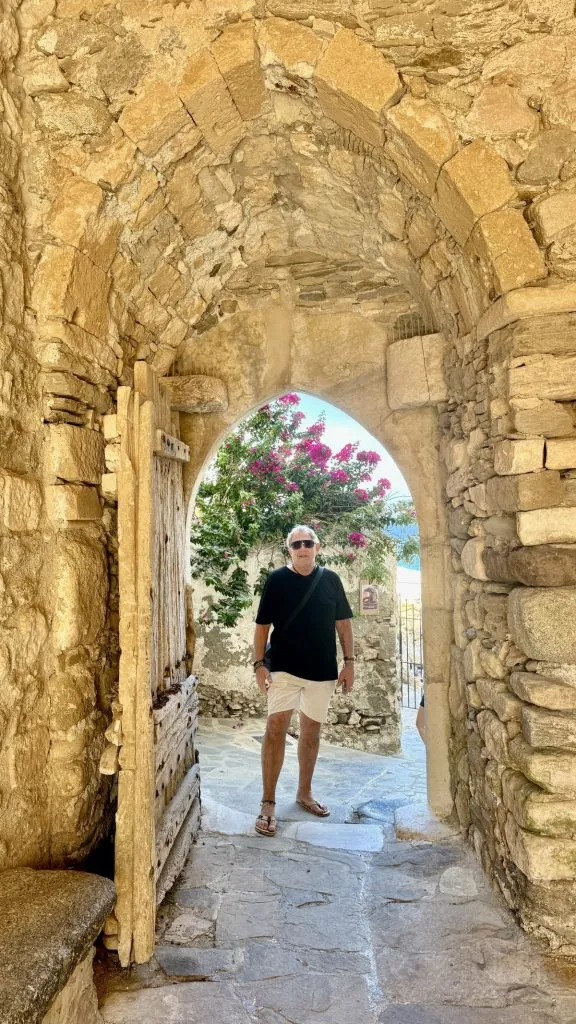
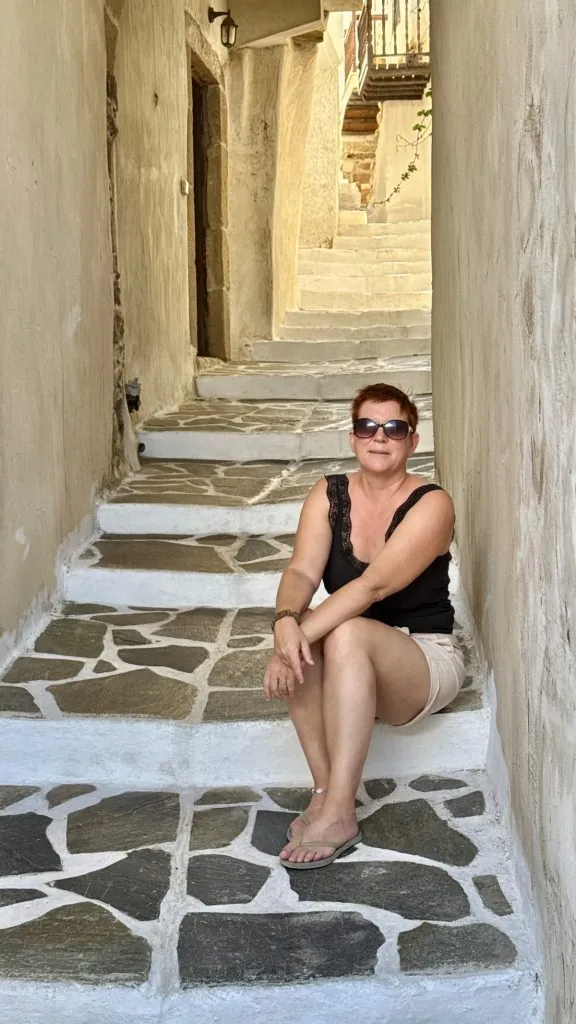
Don't miss leaving the harbor promenade and heading up the alleys of the old town. Here you will find stairs, arches, small steps and winding alleys where it is not always completely obvious where you are going.

At the top is Kastro, the old Venetian citadel. Naxos was under Venetian rule for several centuries and here you can still see old churches, gates, coats of arms and historical buildings.
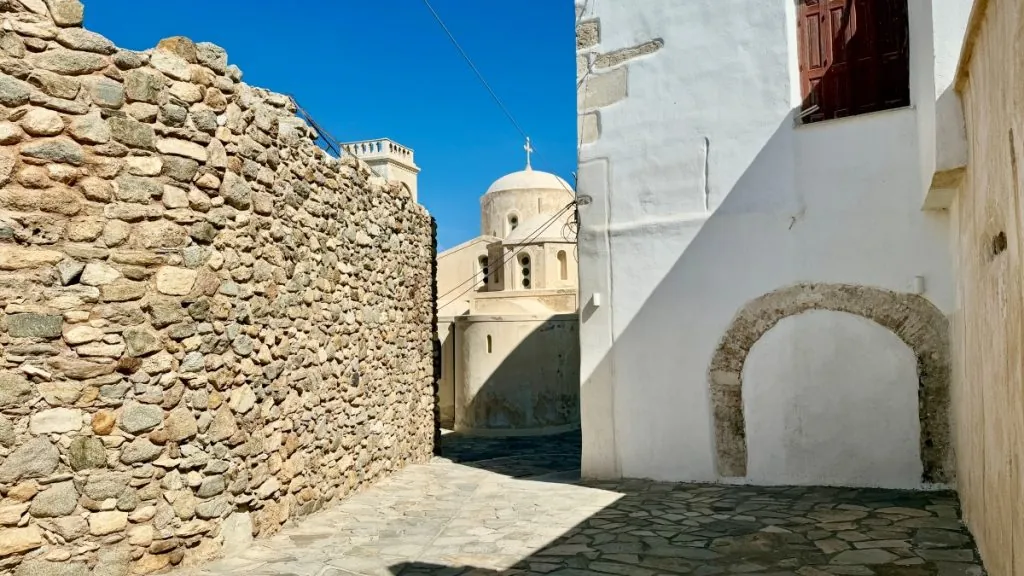
We really enjoyed just wandering around here without any particular plan. It's the kind of environment where it's almost an advantage to go a little wrong sometimes.

Visit the archaeological museum
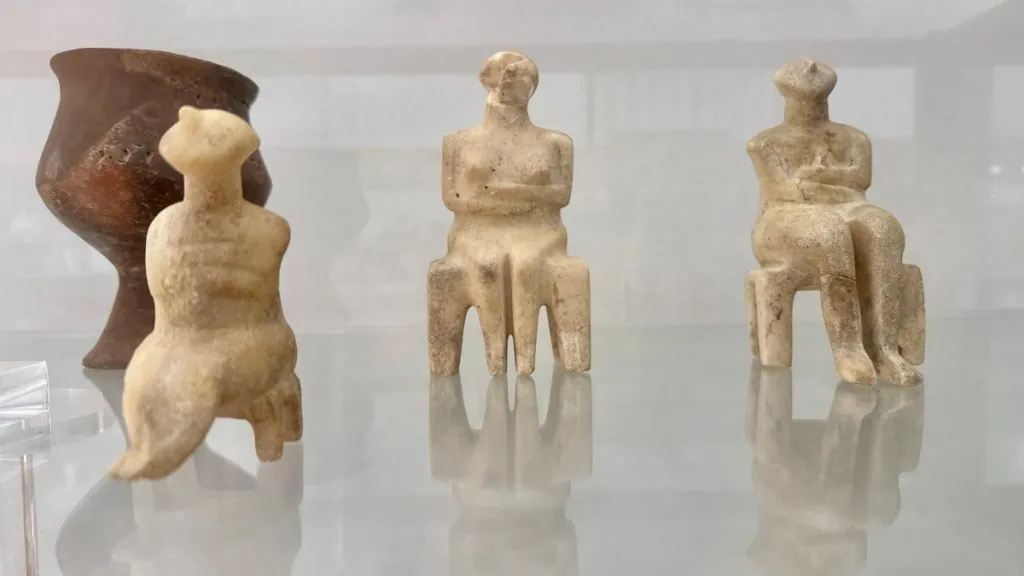
While you are in Kastro, you can take the opportunity to visit the archaeological museum. We visited and found it interesting, even though the museum is relatively small.
If you are interested in Naxos' long history, it is worth a look, but expect to complete the visit in a relatively short time.
3. See Portara – Naxos’ major landmark
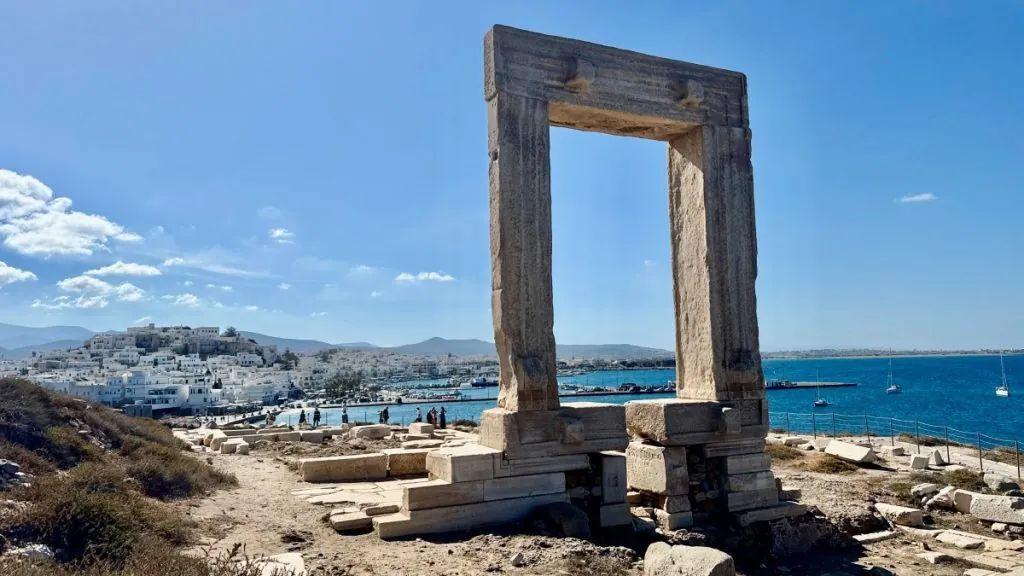
It's hard to miss Portara. The gigantic marble gate stands on the small island of Palatia right by the harbor and is visible as soon as you arrive in Naxos by ferry.
Portara is what remains of a huge Temple of Apollo, which began construction around 530 BC. The temple was never completed, but the monumental gate remains. It consists of four large marble sections, each weighing around 20 tons.
Today, Palatia is reached by foot from Naxos Town. The site is also very popular at sunset, when the sun sets over the sea behind the huge marble gate.
No matter what time of day you come here, we think Portara is one of the attractions on Naxos that should not be missed.
4. Go on a guided tour of Naxos
Our first full day on Naxos we went on a guided bus tour around the island. It turned out to be a very good way to start our stay.
In just one day we got a mix of ancient history, mountain villages, traditional crafts, local food culture, beach life and beautiful landscapes. Between stops the guide told us about the history of Naxos and life on the island, while we enjoyed the beautiful views through the bus window.
Temple of Demeter
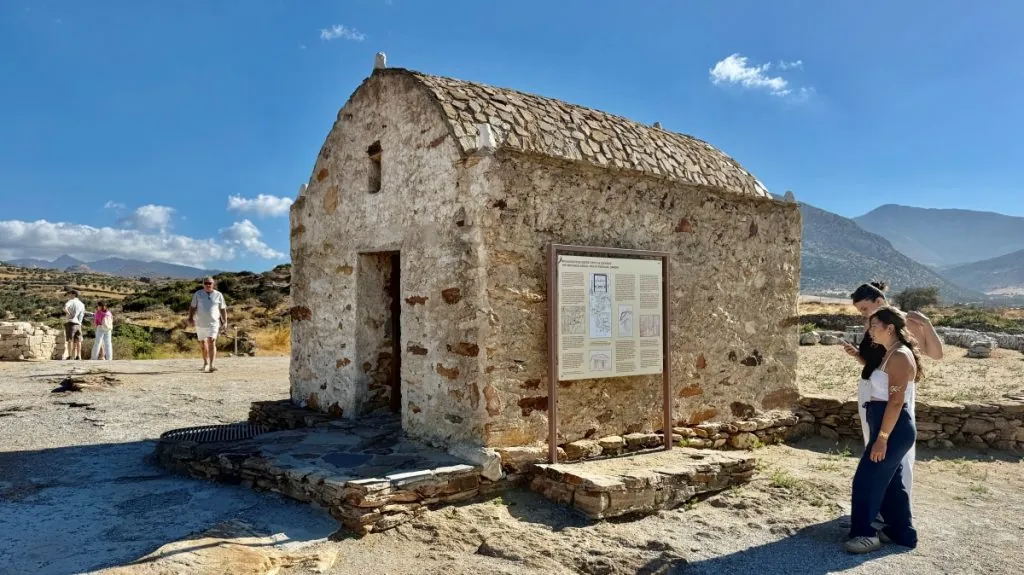
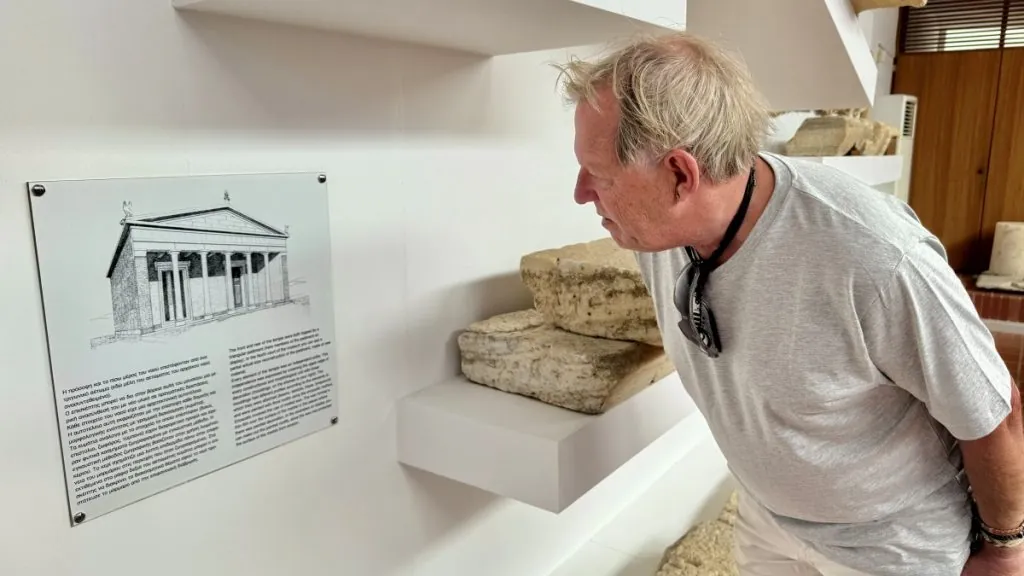
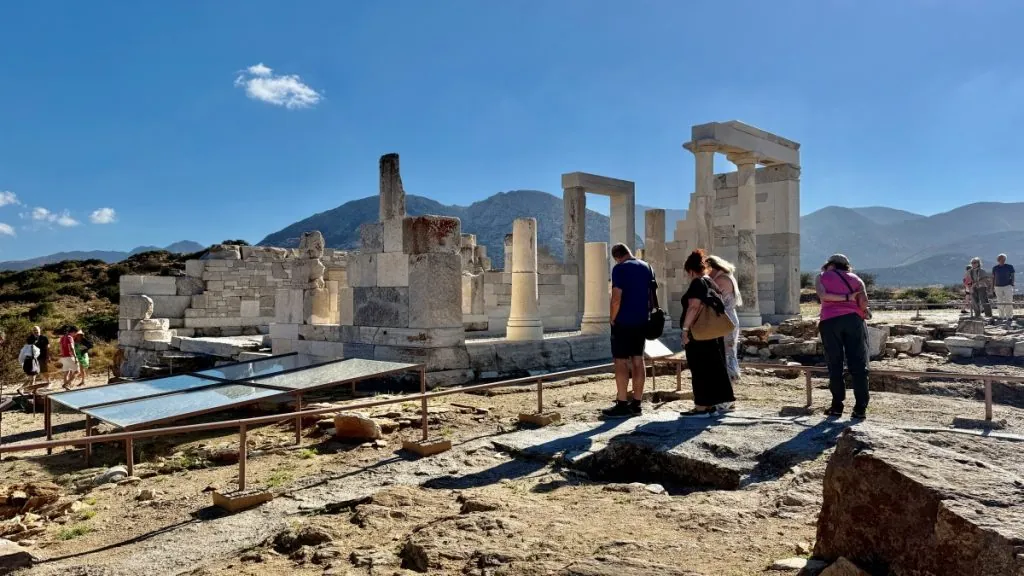
One of the first stops was the Temple of Demeter at Sangri. The temple was built around 530–520 BC and is largely made of marble. Adjacent is also a small archaeological collection with finds from the area.
Both the temple and the museum are relatively small, so for us this was an interesting but rather quick stop. We were lucky with the weekday. The official information states that the area is closed on Tuesdays, and if our turn had been then the program would have looked different.
Olive press and traditional pottery
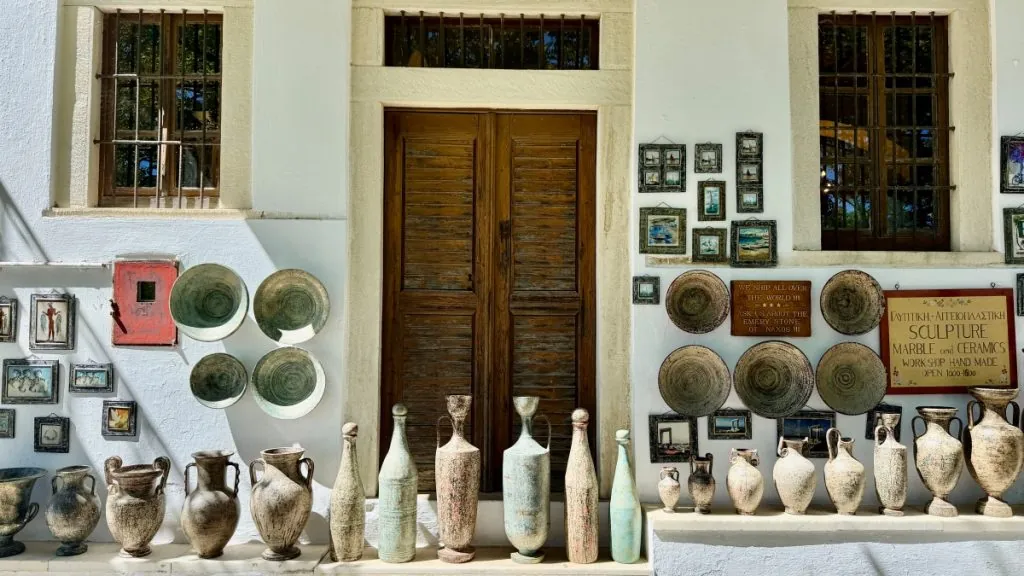
During the bus tour we also got to see an old olive press and visit a traditional pottery workshop.
We found the most interesting thing about the ceramics to be how old objects were constructed for very specific purposes. One example was a so-called Pythagorean cup, designed so that the contents will spill out if you get too greedy and fill it above a certain level.
We also got to see other ingenious ceramic vessels that have historically been used for wine and food storage, among other things. It was a fun example of how traditional craftsmanship is not just about decoration – the objects had well-thought-out practical functions.
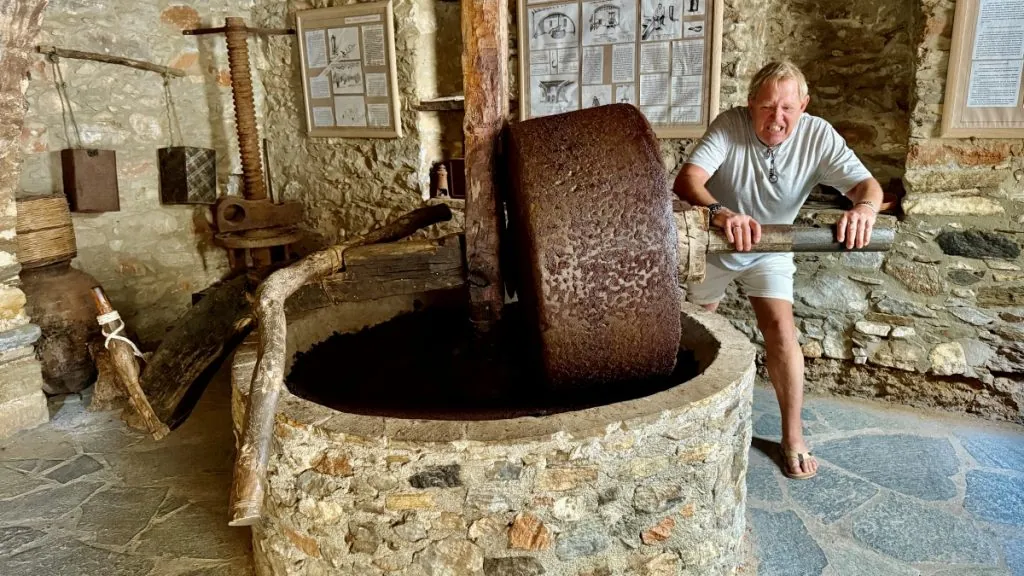
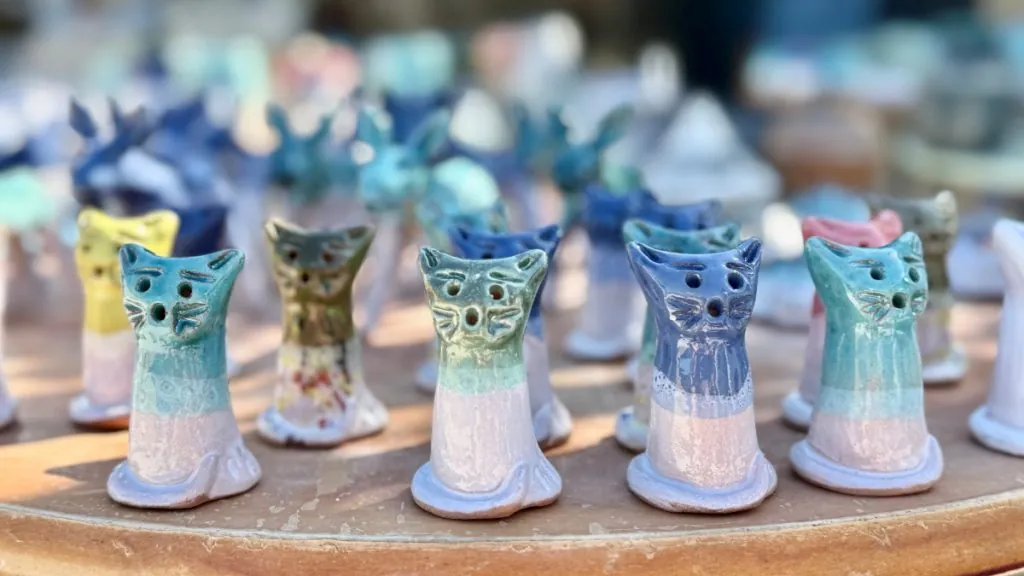

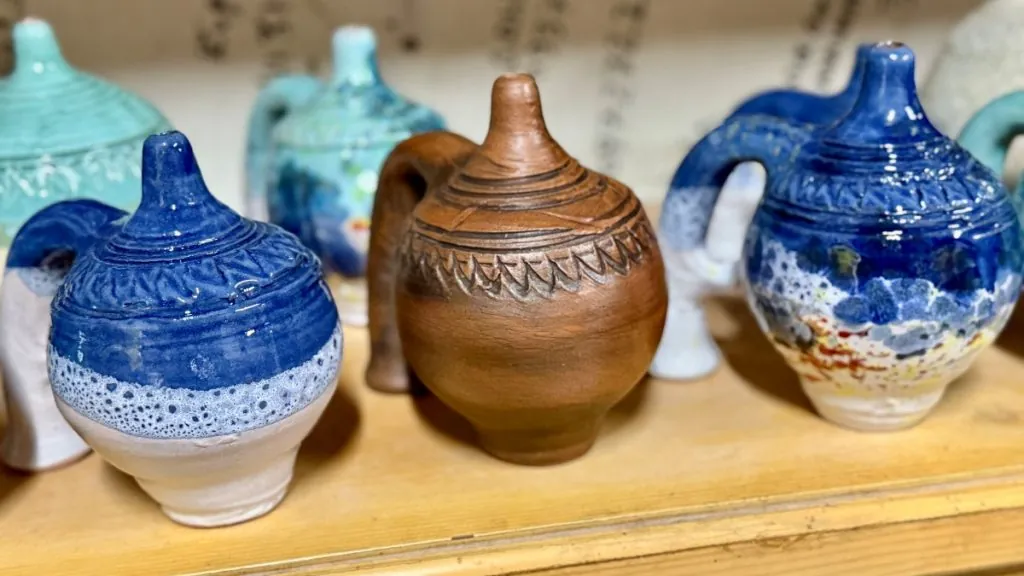
Good to take on the bus trip
Some things we were happy to have – or would have liked to know in advance:
- Cash. When we visited the Temple of Demeter, admission could not be paid by card.
- Swimwear. The tour made a longer stop at the beach in Apollonas.
- Water. Always good to have during a full day on Naxos.
- A thin sweater or shawl. The air conditioning on the bus was really effective!
- Money for lunch. Lunch was not included, so you chose where you wanted to eat.
5. Stroll around Halki
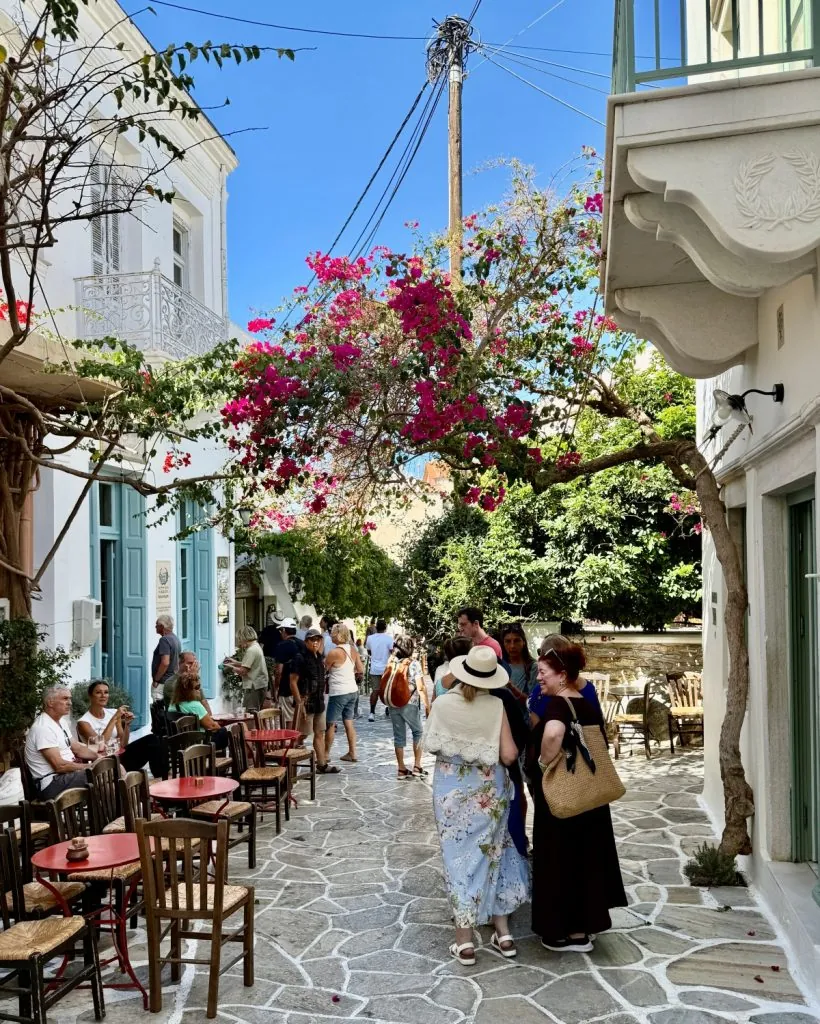
Another stop during the bus tour was Halki, a charming little village in the green Tragea Valley.
There are small shops, art galleries, cafes and beautiful old buildings – and, at least when we were there, plenty of cats. Halki has a much calmer feel than Naxos Town and is nice to just stroll around.
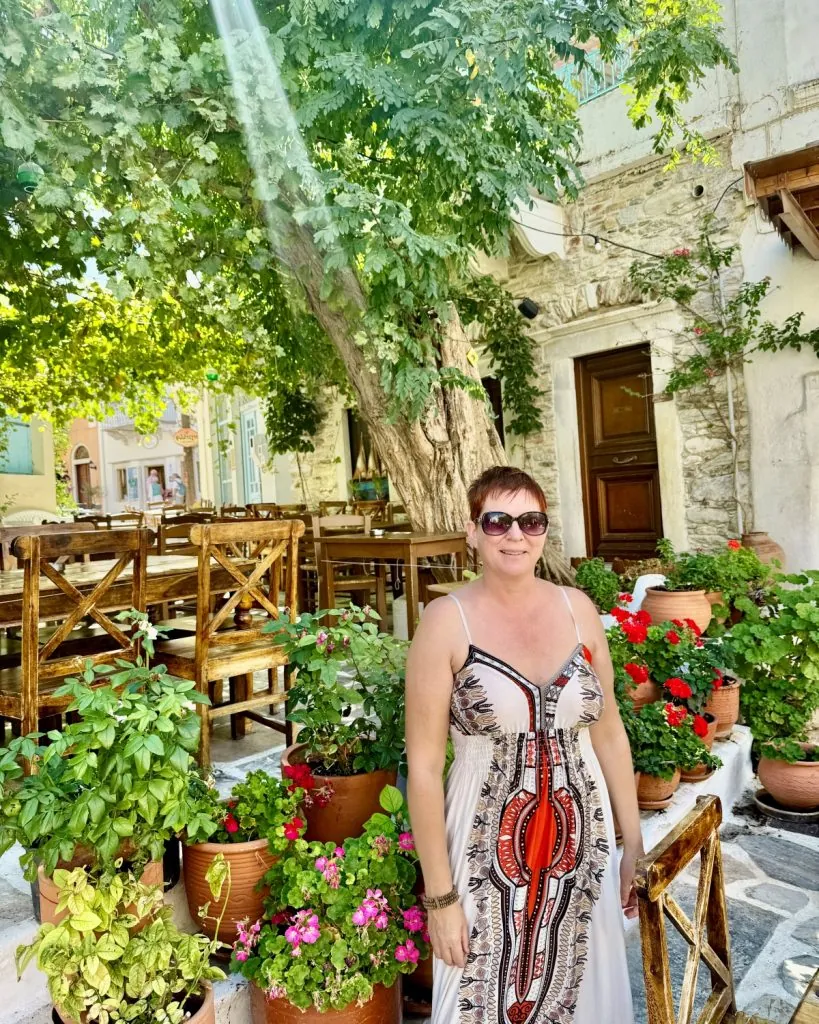

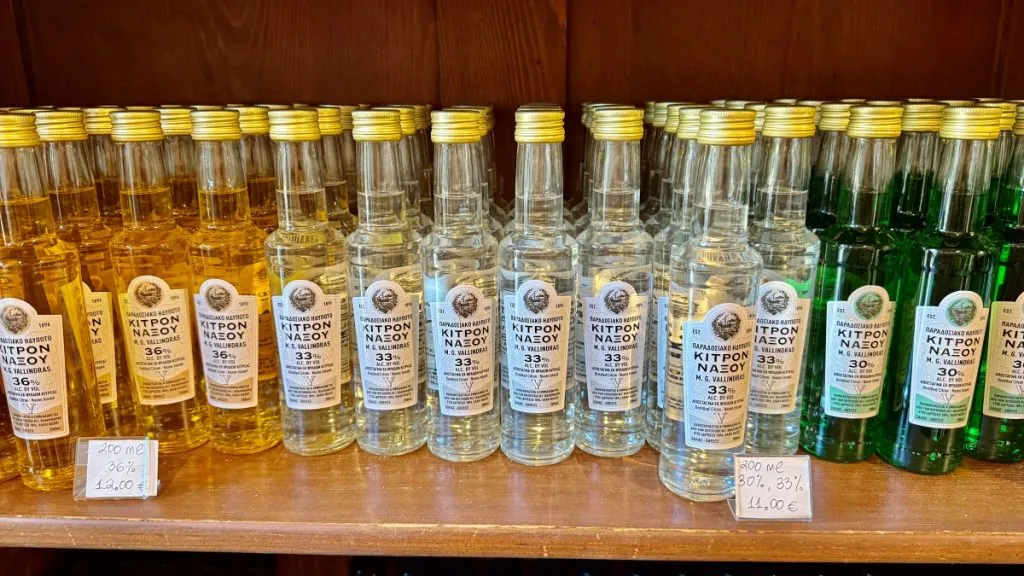
The big specialty here is Kitron, Naxos' signature liqueur. At Vallindra's Kitron Distillery you can see old distilling equipment and try different variations of the drink. We did a tasting of course. Fun, and quite strong!
6. Visit the mountain village of Apeiranthos
Apeiranthos is one of Naxos' most famous mountain villages, located high up in the mountains. The village is particularly famous for its marble-clad alleys, old stone houses and beautiful views. Visit Greece highlights Apeiranthos as one of the traditional villages that characterize Naxos' mountainous interior.
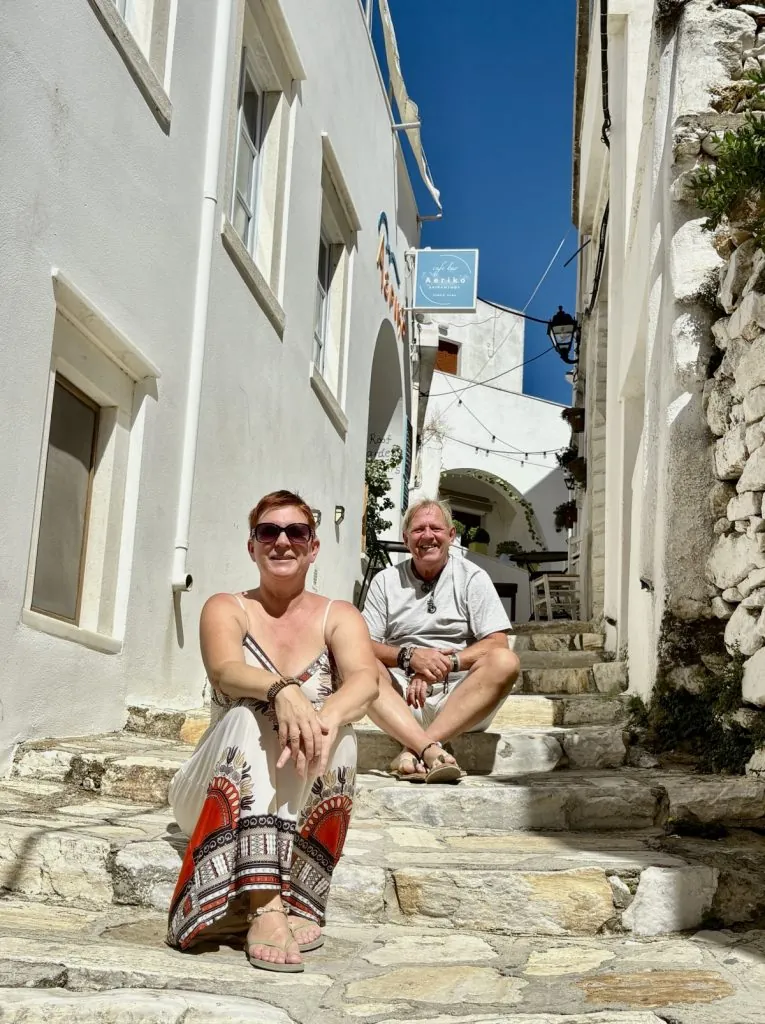
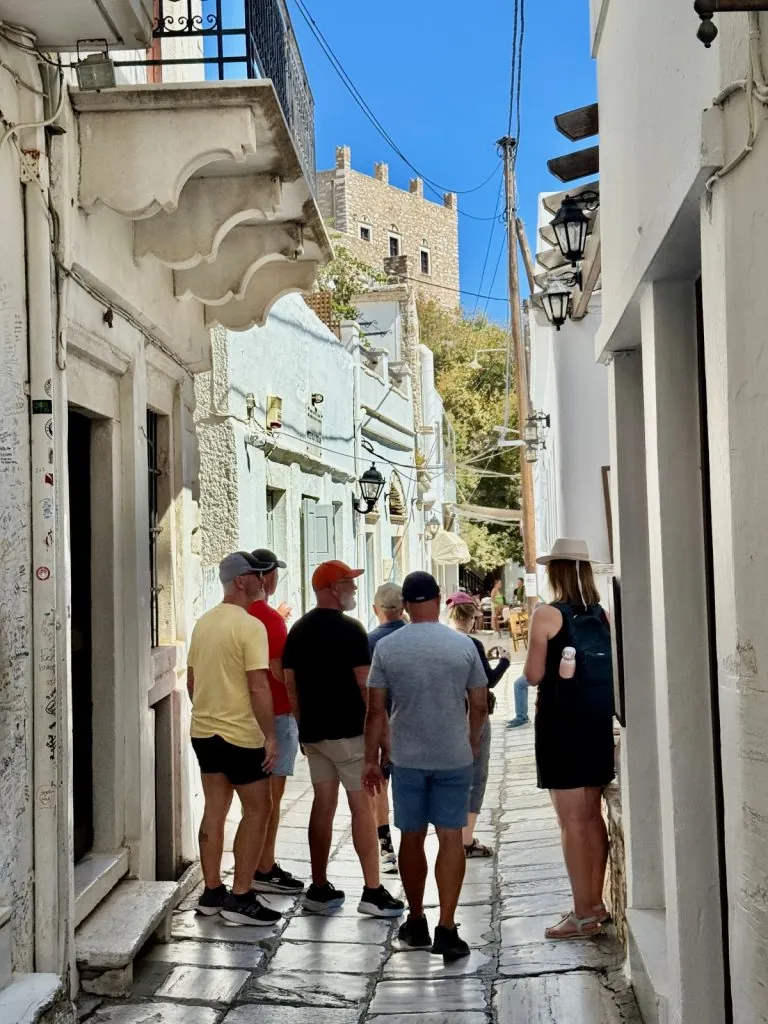
Here we had an hour and a half on our own during the bus trip. We especially took the opportunity to have lunch at the Amorginos restaurant, where we sat with a fantastic view of the mountains.
We ate rosto, a traditional dish particularly associated with Apeiranthos, and also tried the local cheese arseniko. We will tell you more about the food in our separate report on restaurants and local food on Naxos.

7. Take a break by the sea in Apollonas
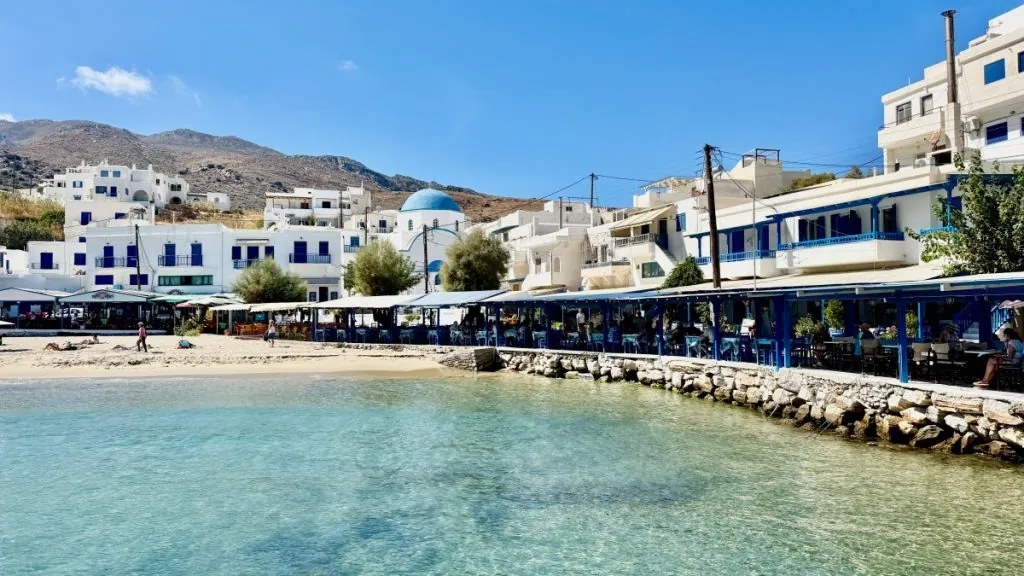
After the mountains, the bus trip continued to Apollonas on the northeast coast of Naxos. Apollonas is a small coastal town with a beach, tavernas and cafes. The town has historically been of great importance as a port for marble from the nearby ancient quarry.
During our stop we had about an hour and anyone who wanted could take the opportunity to swim. We didn't.
Instead we sat down with a view of the beach. I ordered a beer and Peter a glass of white wine – which of course the staff first served the other way around. This happens to us surprisingly often… After a while it was time to hop back on the bus and continue to the last stop of the day.
8. See the giant Kouros of Apollonas
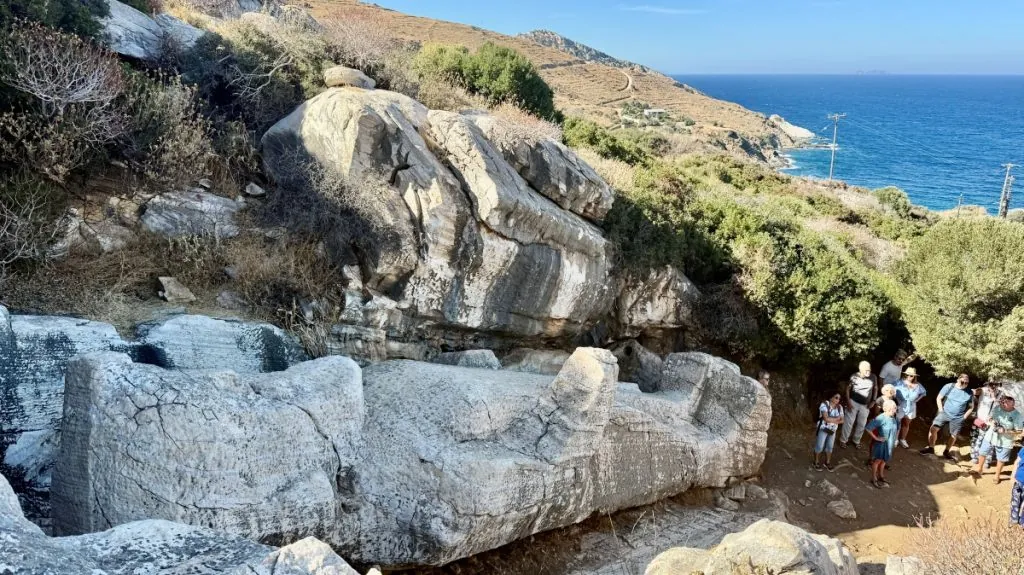
Just outside Apollonas lies one of Naxos' strangest ancient sights: an enormous, unfinished statue that still remains in the old marble quarry.
The Kouros of Apollonas is more than ten meters long and was carved in the 6th century BC. The statue was never completed and scholars are not even sure whether it was intended to represent Apollo or Dionysus. Nor is it known for sure why the work was interrupted.
It is fascinating to stand next to the enormous figure and think about how people more than 2,500 years ago worked to carve it directly out of the rock.
There are more unfinished kouroi on Naxos, including at the ancient marble quarries in the area around Melanes and Flerio.
9. Discover Naxos by rental car
After the bus tour we wanted to explore more on our own and rented a car for several days. We ended up doing about three different road trips around the island, and for us the car was a fantastic way to experience Naxos. Our rental car was bright yellow and of course quickly got the name The lemon …
The advantage of a car is the freedom. In the morning we could throw in beach towels, swimwear, a change of clothes, water and some snacks and then go. The mobile phone was charged during the drive and when we saw a nice beach, a church or a view, we just had to stop.
We also found parking to be surprisingly easy outside of Naxos Town. Many of the places we visited had free parking and we rarely had to worry about machines, apps or other payment systems. For us, the rental car was simply freedom on four wheels.

10. Visit Agios Georgios Diasoritis
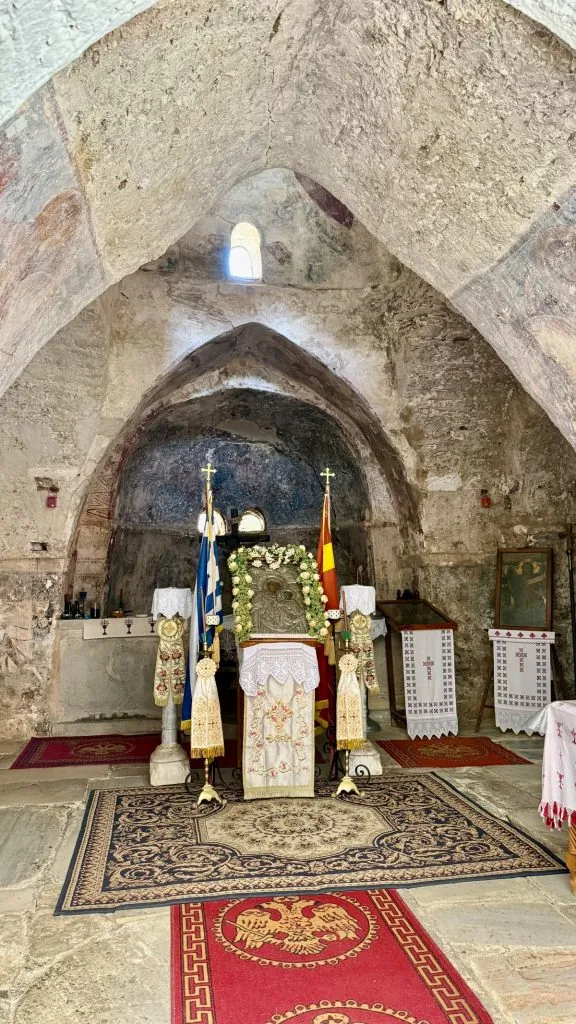
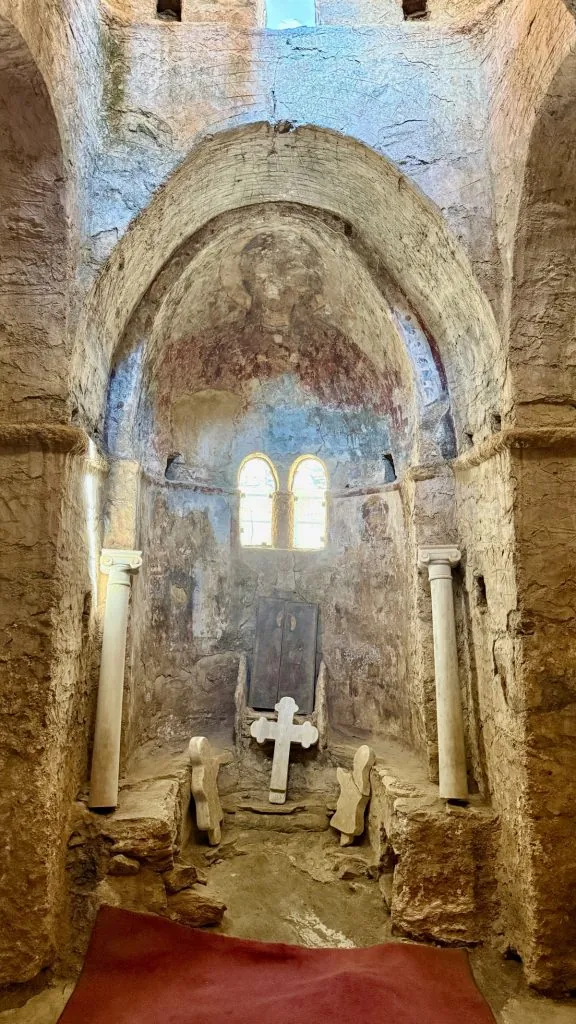
One of the places we went to with Citronen was the small Byzantine church of Agios Georgios Diasoritis in the Tragea Valley. The church is from the Byzantine period and contains old frescoes. It is not large and the visit therefore does not need to take very long, but we really liked the place.
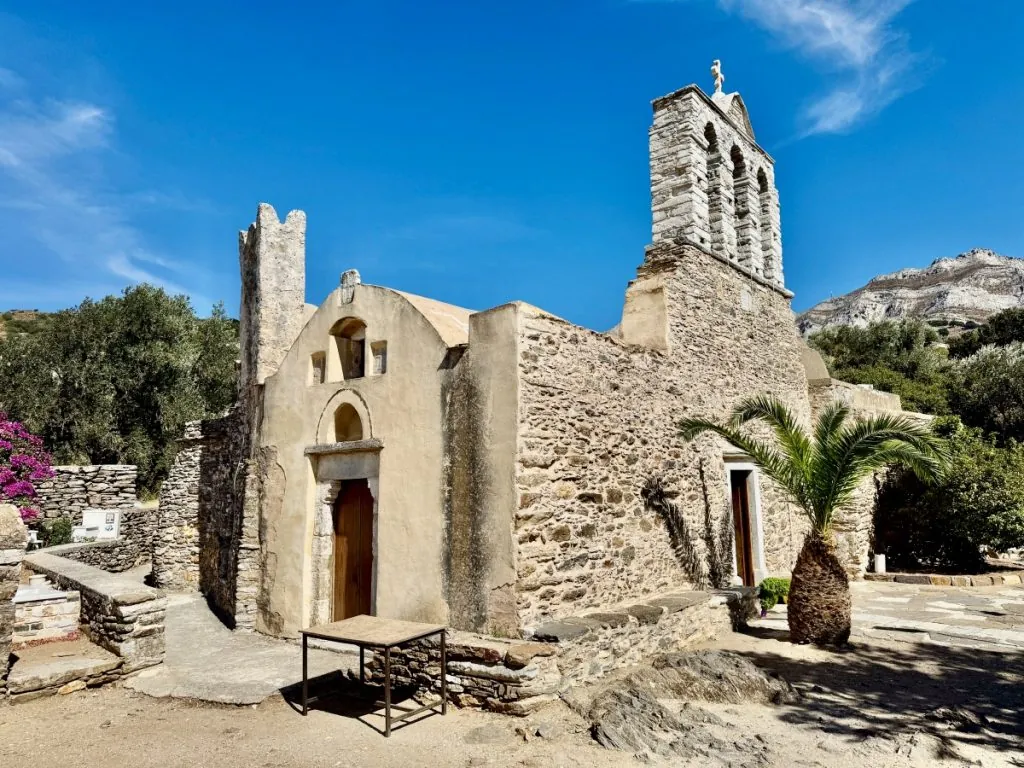
The church really feels old and historic and has a special design that differs from many of the white-and-blue churches you otherwise associate with the Cyclades.
When we were there, cars stopped at regular intervals and a woman was sitting outside selling textiles. It was a nice little stop that was perfect for a road trip.
11. Drive on winding mountain roads
After visiting the church, we decided to take a different route back to Naxos town than the one we had come up with. We were very happy about that.
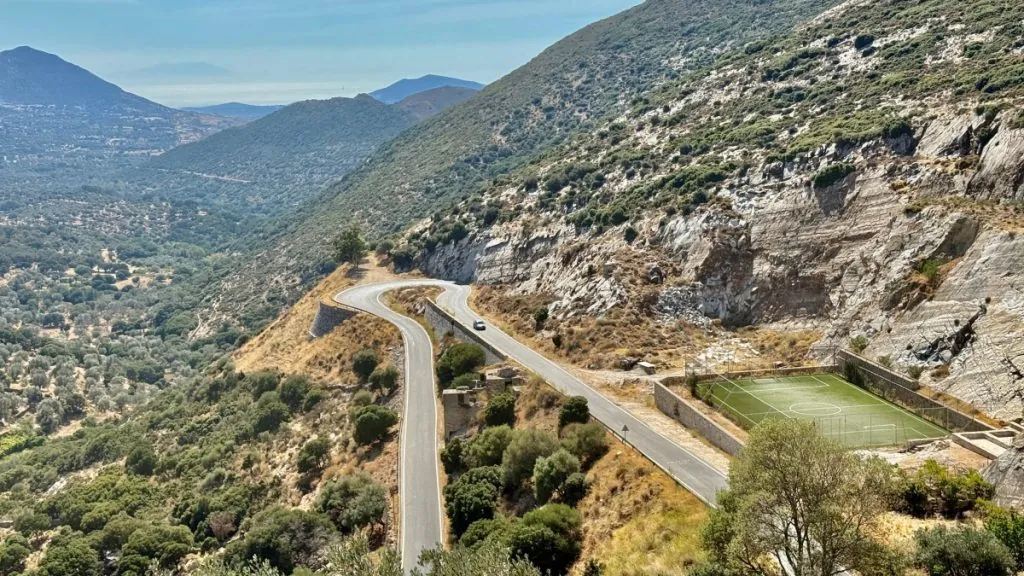
The road wound through the mountains and offered fantastic views. At one point we stopped just to get out of the car and take photos of the serpentine road that wound its way far below us.
It's easy to think of roads as transportation routes between sights, but on Naxos we found that the driving itself became part of the experience. If you have a rental car, our tip might be: don't always drive the same way back.
12. Explore Naxos marble quarries
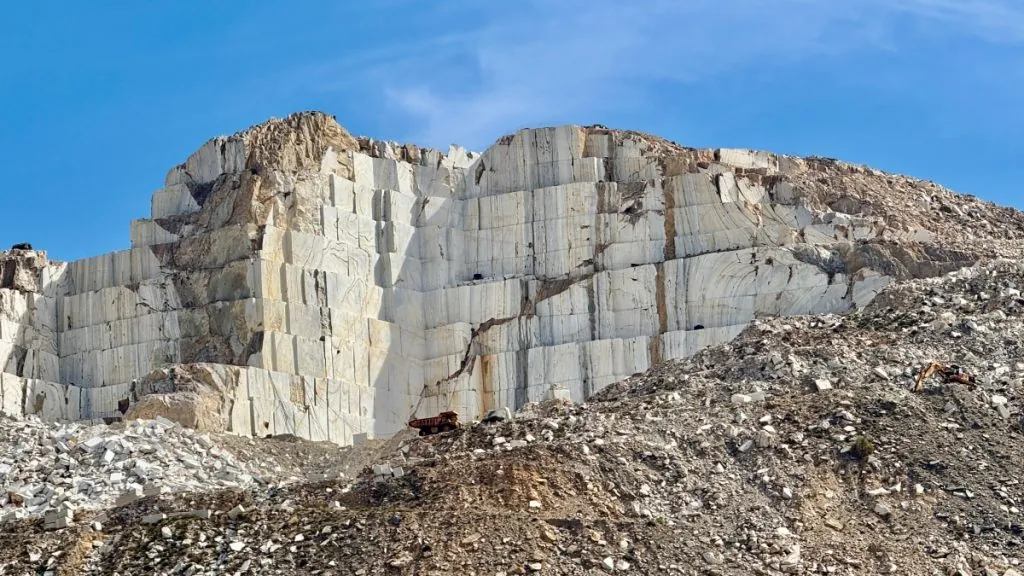
On the same road trip, we suddenly saw something we hadn’t planned to see at all – huge marble quarries. It looked incredibly impressive. Large white blocks had been carved out of the mountainside and it was easy to understand that this was indeed marble and not just any quarry.
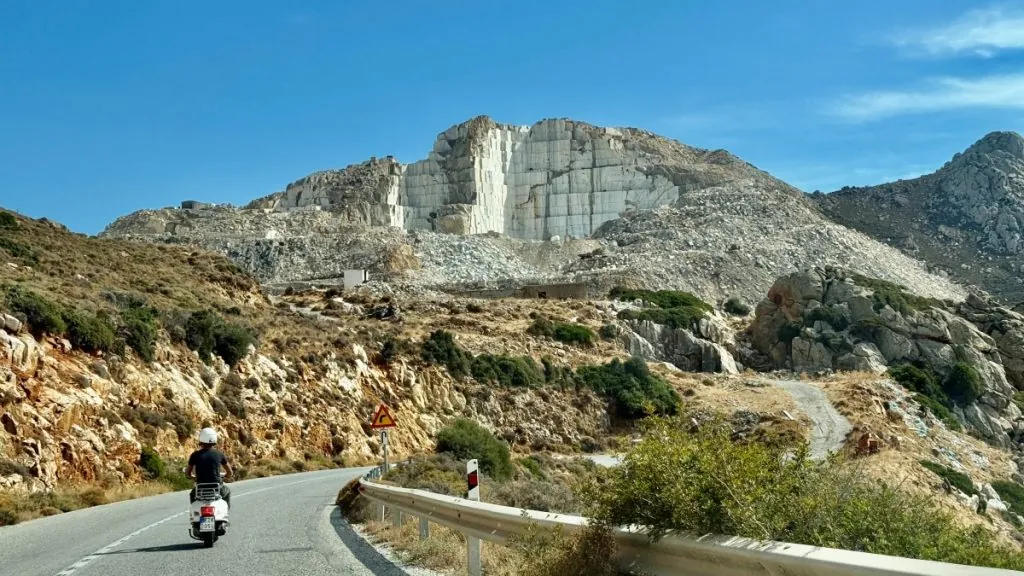
Marble is a common thread throughout Naxos' history. It is seen in the Portara, the Temple of Demeter, the ancient kouros statues and the marble streets of Apeiranthos, and is still quarried on the island today.
It made it extra interesting to suddenly see the modern crimes from the road. Sometimes the unplanned stops are at least as fun as the planned ones.
Did you know that Naxos also has emery mines?
Marble is not the only rock that has been of great importance on Naxos. In the northeastern mountains there are also old mines where emery was mined, a very hard mineral-rich rock that is used, among other things, as an abrasive.
We didn't visit the emery mines themselves, but the mining history is another example of how much more is hidden in the mountains of Naxos than you first suspect.
13. Take a road trip between the beaches of Naxos
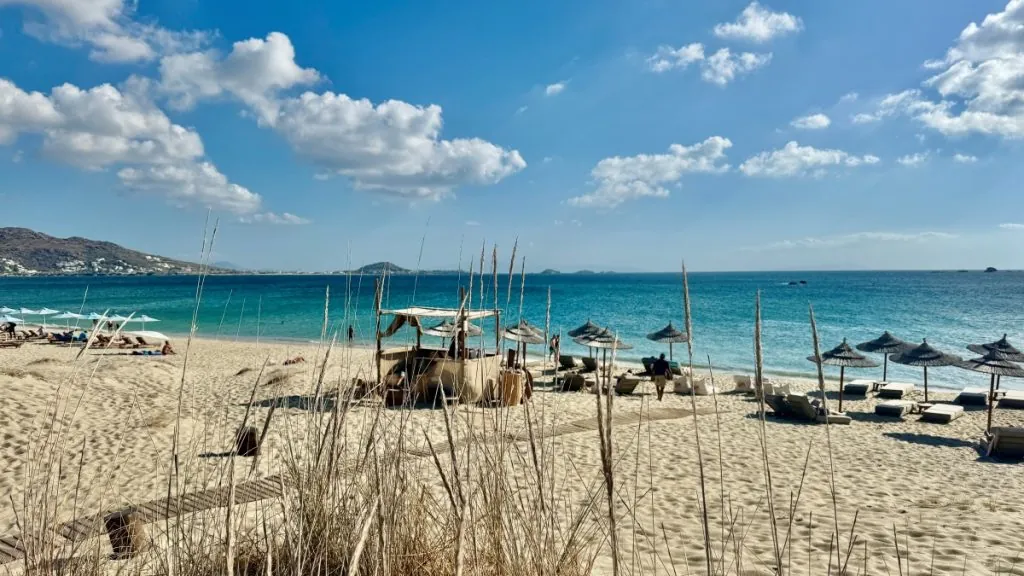
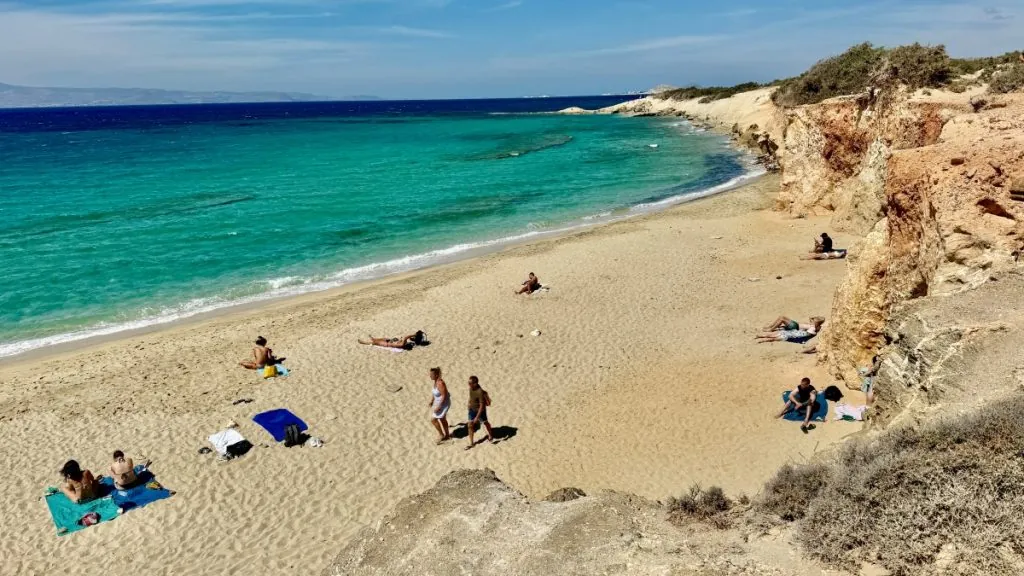
The beaches are of course one of the big reasons to travel to Naxos, and they are surprisingly diverse.
There are popular beaches with beach bars and sun loungers, long sandy beaches where it is easy to find your own spot, beaches for kite and windsurfing and more wild bathing coves where you should bring both water and a picnic. Some beaches with different character include Agios Prokopios, Agia Anna, Plaka and Mikri Vigla.
We did a whole road trip along the west coast and visited a total of nine beaches during our days on the island. Two of our personal favorites were Plaka and little Hawaii Beach at Alyko.
READ MORE: 9 beaches on Naxos – our favorites and best tips
14. Hike on Naxos – maybe up to Zas
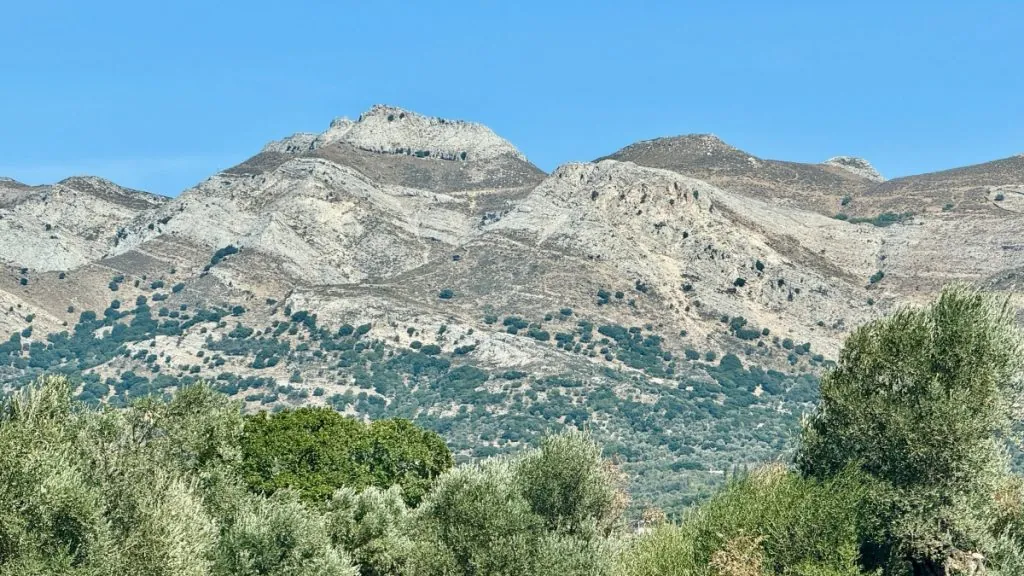
Naxos is also a great island for hiking, with old paths between villages, churches, valleys and mountains. The most famous hike goes up to Zas, the highest mountain in the Cyclades. The mountain rises in the middle of the island and is surrounded by traditional villages such as Filoti and Apeiranthos.
We had actually planned to do a shorter hike and looked into different options. Then we felt the temperature. No… It was simply too hot to make hiking appealing, so we saved that experience for another time.
If you are traveling during a warm period, it is wise to plan the hike early in the morning and take both temperature, sun and access to water seriously. For us, we ended up renting a car and swimming instead. Not so bad either.
15. Try local food from Naxos
Food is of course also an experience – at least we think so! Naxos is unusually fertile for an island in the Cyclades and is famous for potatoes, cheeses, wine and Kitron, among other things. Local specialties include graviera, arseniko and xinotyro, as well as dishes such as rosto and lamb or goat cooked in various ways.
We took the opportunity to try several local flavors during the trip, while also discovering that Naxos Town has a fairly international restaurant scene with everything from traditional tavernas to rooftop bars and restaurants with food from other parts of the world.
READ MORE: Restaurants on Naxos – and local food to try
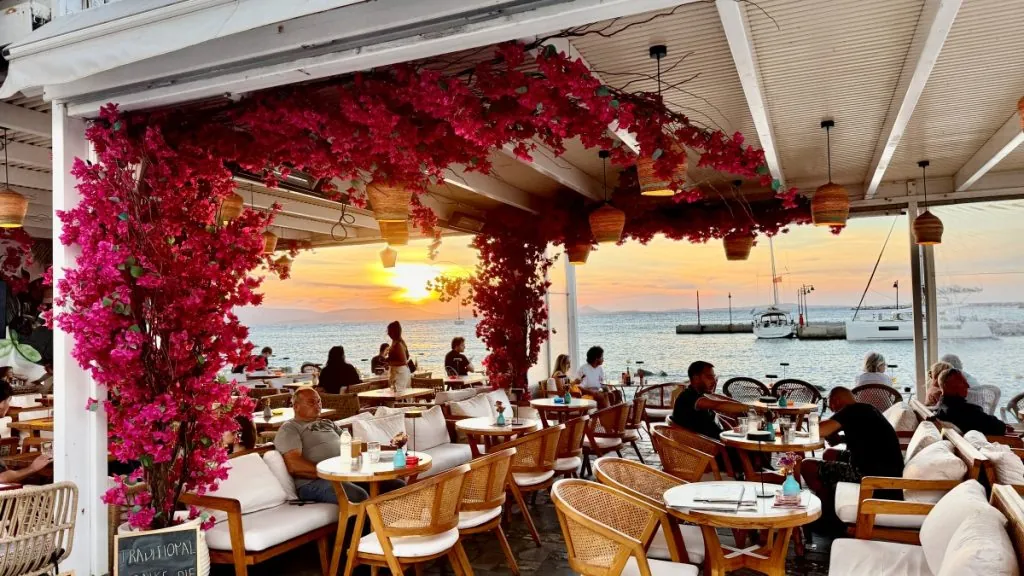
16. Check out the outdoor cinema Cine Naxos
A slightly different tip is the Naxos outdoor cinema. We didn't actually see a movie here ourselves, but we walked by and checked out the place and were particularly impressed by the cool wall with portraits of various movie stars.
Watching a movie outdoors under the Greek evening sky definitely feels like a cozy holiday activity, so next time we might have to plan the movie itself as well.
Check the current program and season before you go there, as outdoor cinema is not a year-round activity.

Getting to Naxos
Naxos can be reached both by plane from Athens and by ferry from Piraeus and other Greek islands. We chose the ferry from Piraeus and traveled with SeaJets.
The ferry was modern and stylish, but the crossing to Naxos was quite bumpy, as it was windy. Arriving by sea is also very nice. As the ferry approaches Naxos town, you can see Portara rising at the entrance to the harbor.

Ferries between islands can take unexpected routes
When we later traveled on from Naxos to Sifnos, we experienced how a ”direct ferry” in the Cyclades does not necessarily mean the most direct route.
Our ferry went Naxos–Paros–Mykonos–Paros–Sifnos. When we arrived in Paros, we asked if we really needed to take the detour to Mykonos. We didn't.
We got off and suddenly had about 90 minutes on Paros. We had a beer in the sun before the same ferry came back and picked us up again.
So a tip is to not only look at the departure and arrival times when booking a ferry between the Greek islands. Also take a look at the route!

Getting around Naxos
Naxos is the largest island in the Cyclades and if you want to discover more than Naxos town and the nearest beaches, you need to think about how to get around.
Guided bus tour: We thought this was a great way to start the trip. In one day we got to see several different parts of the island and at the same time learn more from the guide.
Car hire: This was our favorite. The car gave us the freedom to do our own road trips, stop spontaneously, and bring everything we needed for a full day.
Local bus: Buses run between Naxos Town and several of the island's villages and popular beaches, which can be a good option if you don't want to drive yourself.
Quad bike: We didn't rent a quad bike ourselves, but it was impossible to miss how popular it is. Rental companies are located in many places and the quad bikes are visible everywhere on the roads. For us, the car felt more practical, not least because we could easily bring all our luggage for the day.

Accommodation on Naxos – Astir of Naxos
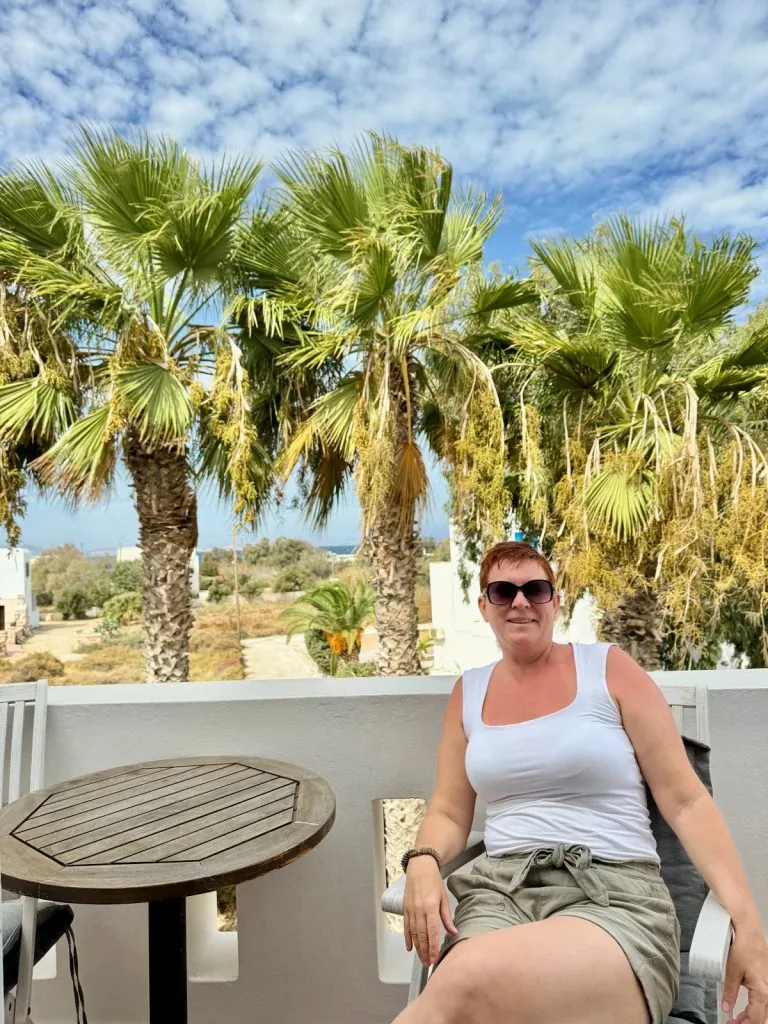
We stayed at Astir of Naxos, just outside Naxos town, and had a great time. The hotel has a personal feel with an incredibly nice owner and friendly staff. We had a nice room with a balcony and above all we liked the nice pool, where the view of the mountains made the environment extra lovely.
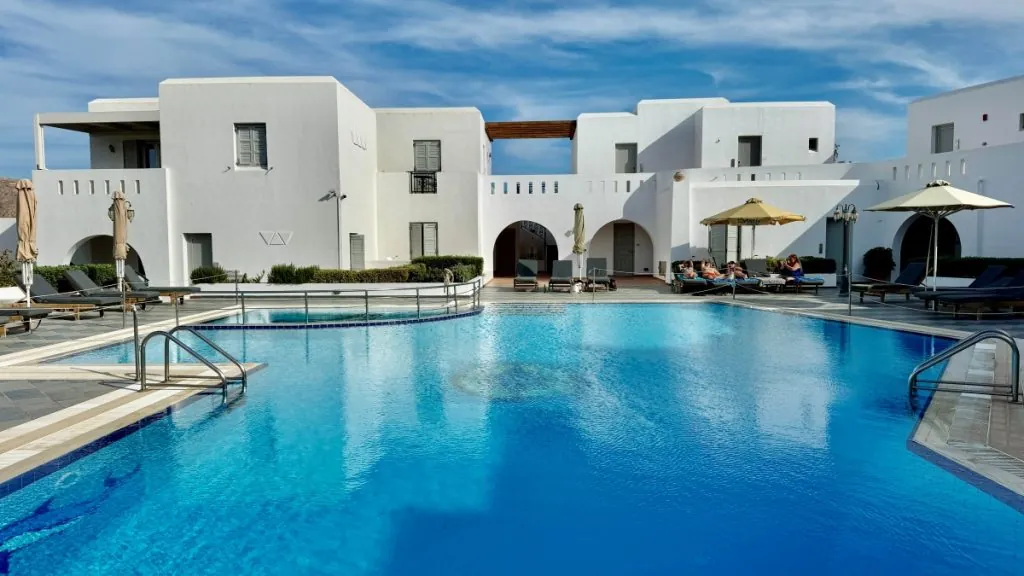
After a few intense days of bus excursions, road trips, beaches and sightseeing, we set aside an afternoon to simply lie in a sun lounger with a beer, swim in the pool and do as little as possible. That's what you need on vacation too!
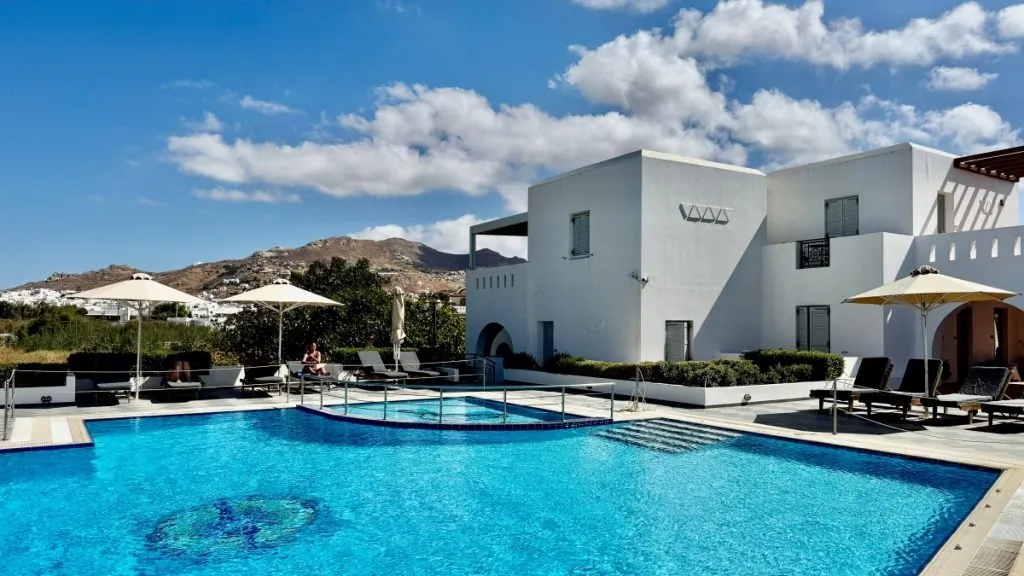
The breakfast was quite okay and there was the option to order lighter food during the day. We ate Caesar salad and spring rolls for lunch and were very satisfied.
When we first saw the hotel's location on the map, we wondered if it was a bit far from the center. In practice, it didn't take more than about 20 minutes to walk into town, and much of the walk was along Agios Georgios beach.
For us, the location was therefore rather an advantage: quieter than in the middle of the city center, but still close enough to walk to the restaurants in the evening.

How many days do you need on Naxos?
Naxos is larger than many other islands in the Cyclades and there is surprisingly much to see.
If you just want to experience Naxos town and lie on the beach, a few days may be enough. However, if you want to take in mountain villages, historical sights, road trips, different beaches and maybe a hike, it is easy to fill significantly more days.
We had limited time and still managed to see a lot by combining an organized full-day tour with several days in a rental car.
At the same time, we left the island with things left on our list. The Zas hike, for example, will have to wait until another time.
When is the best time to travel to Naxos?
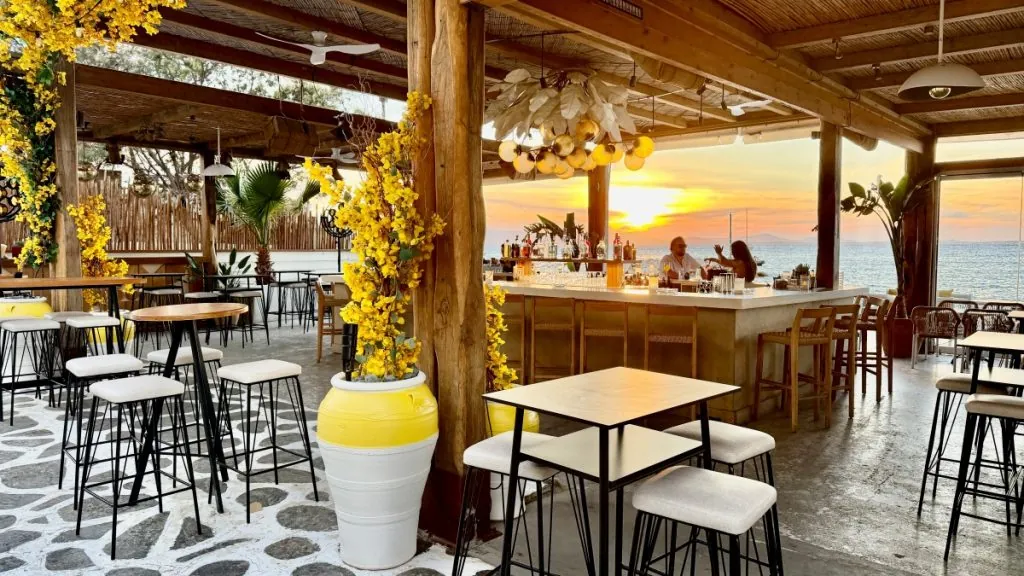
We visited Naxos in September and found it to be a lovely time to be there. It was still warm enough for swimming and beach life and restaurants and tourist activities were up and running.
At the same time, it was really hot in the middle of the day. For car excursions it worked great, but the heat was one of the reasons we opted out of the hike.
If you primarily want to swim and enjoy the summer heat, the summer season is of course attractive. If hiking and active sightseeing are more important, spring and autumn may be interesting – but even then it is wise to check the temperatures as your trip approaches.
Our impressions of Naxos
Before the trip, we probably associated Naxos primarily with fine sandy beaches. And yes – the beaches are indeed a big part of the experience. But after our days on the island, it was rather the variation we took with us.
One moment we were strolling through narrow alleys in the old town, the next the Citron was driving along winding mountain roads. We saw an ancient temple, a giant unfinished statue and modern marble quarries. We ate local cheese and roast beef in a mountain village, tried Kitron in Halki and swam at a small wild beach.
And in between, of course, you could just sit down with a beer by the pool. Perhaps that's exactly the combination that makes Naxos so nice. Here you can fill your days with discoveries – but also not do much at all.

More islands to visit in Greece
Are you curious to discover more islands in Greece? Read more here:





 English (UK)
  Svenska
Madde says:
Tack för tipsen. Älskar verkligen den grekisk övärlden, Så vackert,
September 29, 2026 - 7:14