

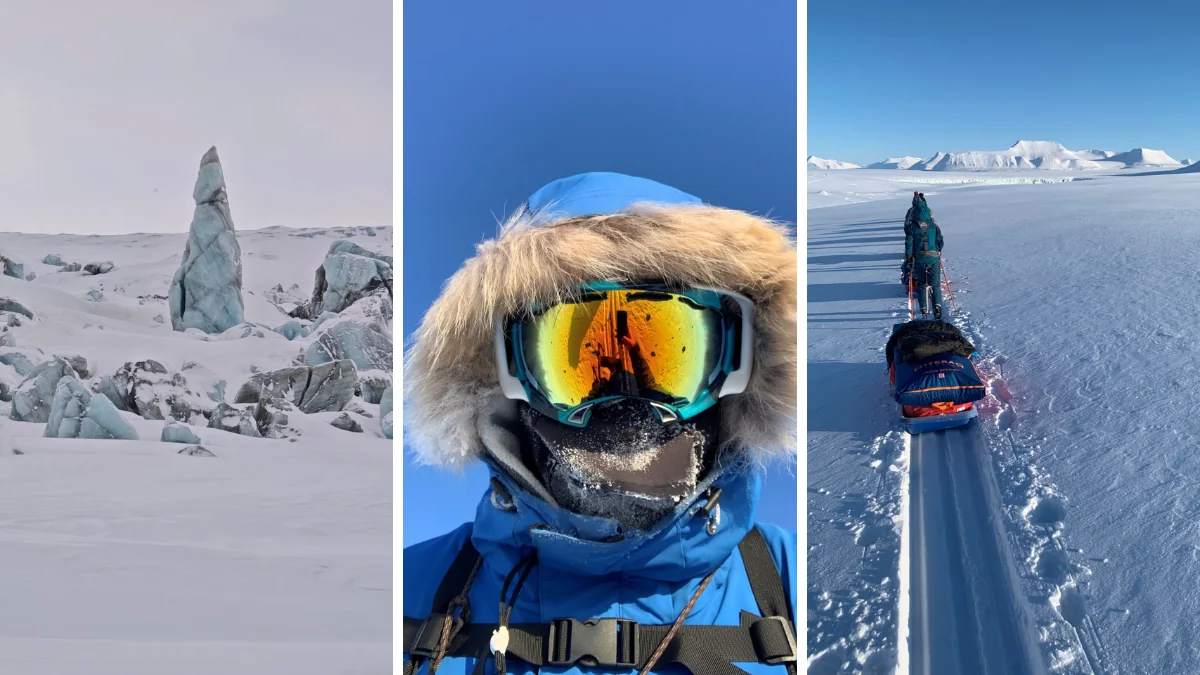
Text: Helena Bergström, Photo: Jesper Skarman
How far are you really prepared to go to get away from everyday life? For Jesper Skarman from Malmö, the answer was 600 kilometers – on skis through storms, whiteouts and the realm of polar bears in Svalbard.
 Tweet
Tweet Share
Share Share
Share Pin
Pin Share
Share Share
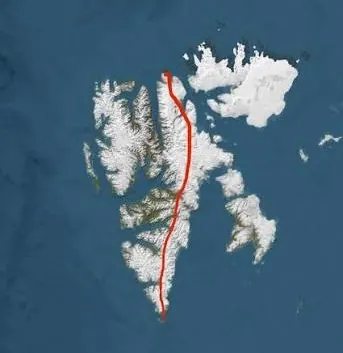
ShareIn the spring of 2026, Jesper crossed the entire archipelago from south to north in an expedition that took 34 days and was carried out entirely unsupported – without external help or depots along the way.
”It was above all the longing for the completely untouched nature and the desire to challenge my own limits both physically and mentally,” says Jesper.
Table of contents
From office chair to the Arctic
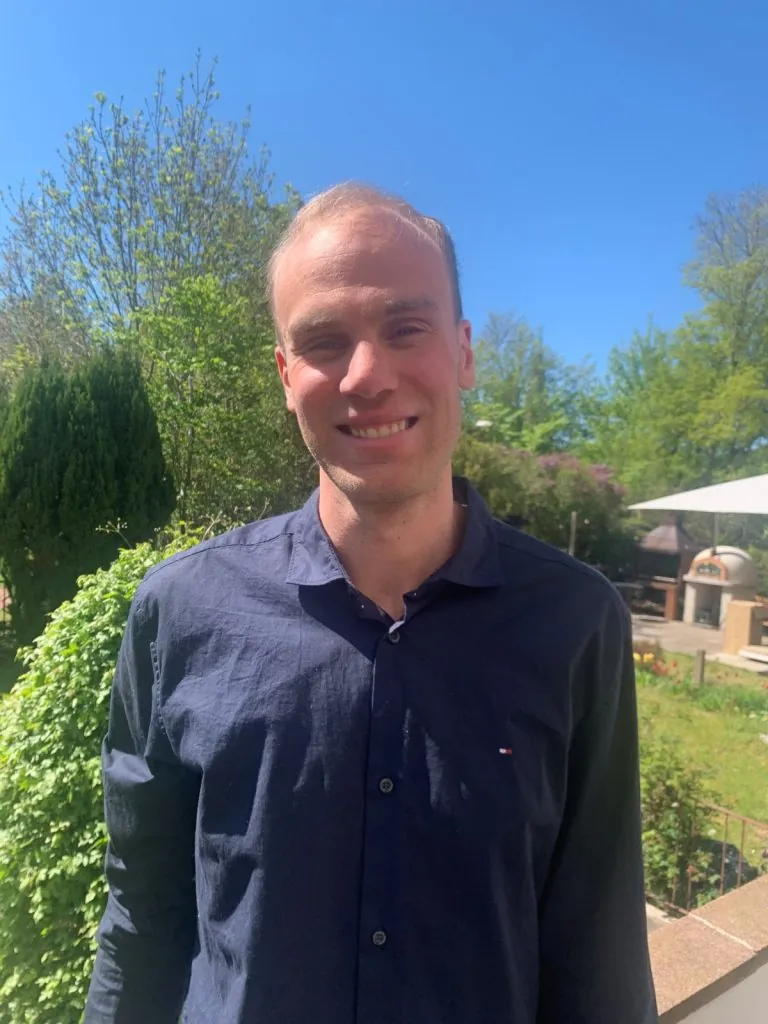
In everyday life, Jesper works as a recruiter at MEKO and lives a family life in Limhamn outside Malmö with his wife and four-year-old son. But at the same time, he has a strong attraction to extreme environments.
He has previously crossed the Hardangervidda plateau on skis, skied across Svalbard from east to west, visited Antarctica and climbed 6,000-meter mountains in South America. But the expedition from Svalbard's southernmost point to its northernmost point was something completely different.
”I visited Antarctica three years ago and was completely spellbound. Svalbard visually acts as a fantastic mini-Antarctica.”
There was also another reason: "I had a strong need to disconnect from the digital, constantly connected everyday life. Swapping the office chair for 34 days in a tent provides a unique mental reset."”

Car tire training in Malmö
Preparing for 34 days in the Arctic requires creativity – especially if you live in Skåne. Jesper trained for a whole year for the expedition. In Malmö, he dragged two heavy car tires along Lernacken to simulate sledding. ”People stopped and wondered if I had a double puncture,” he says with a laugh.
During the winter, training continued in Östersund, where he filled the sled with 60 kilos of road salt to simulate the real load of the expedition. In addition, there was a lot of running and strength training. But the mental preparation was at least as important. ”It was a lot about getting into routines until everything is in your spine.”
34 days on nature's terms
The expedition took place between March 26 and April 29, 2026. The journey began with a flight to Longyearbyen via Oslo. From there, the group traveled by snowmobile to Sørkapp, Svalbard's southernmost point. Then the long journey northward over glaciers and sea ice all the way to Verlegenhuken, the northernmost point.
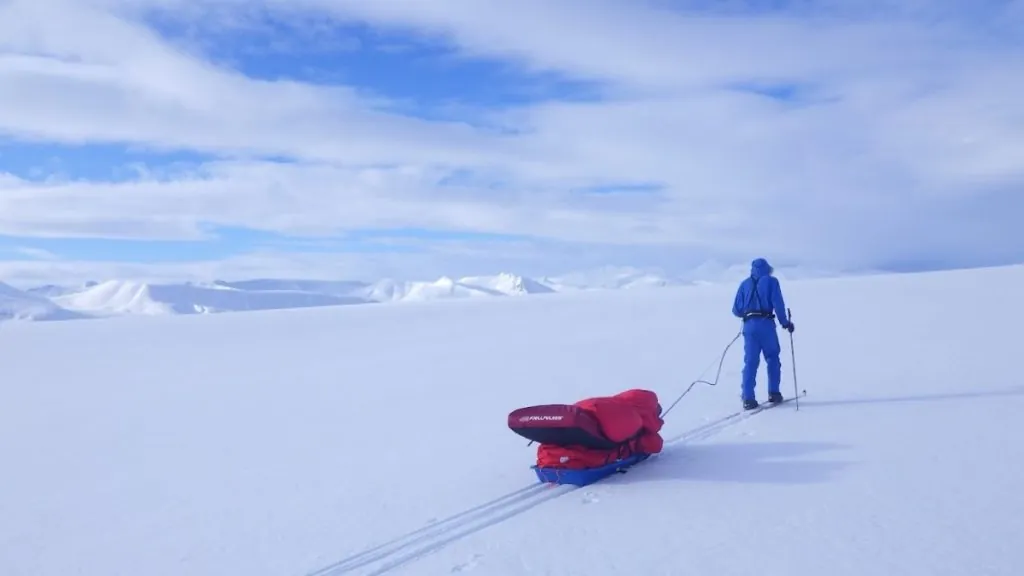
The group consisted of eight participants from Sweden, Norway, Germany and England, led by Norwegian polar guide Morten Rostille. Each participant pulled a sled weighing around 60 kilograms, filled with food, fuel and equipment.
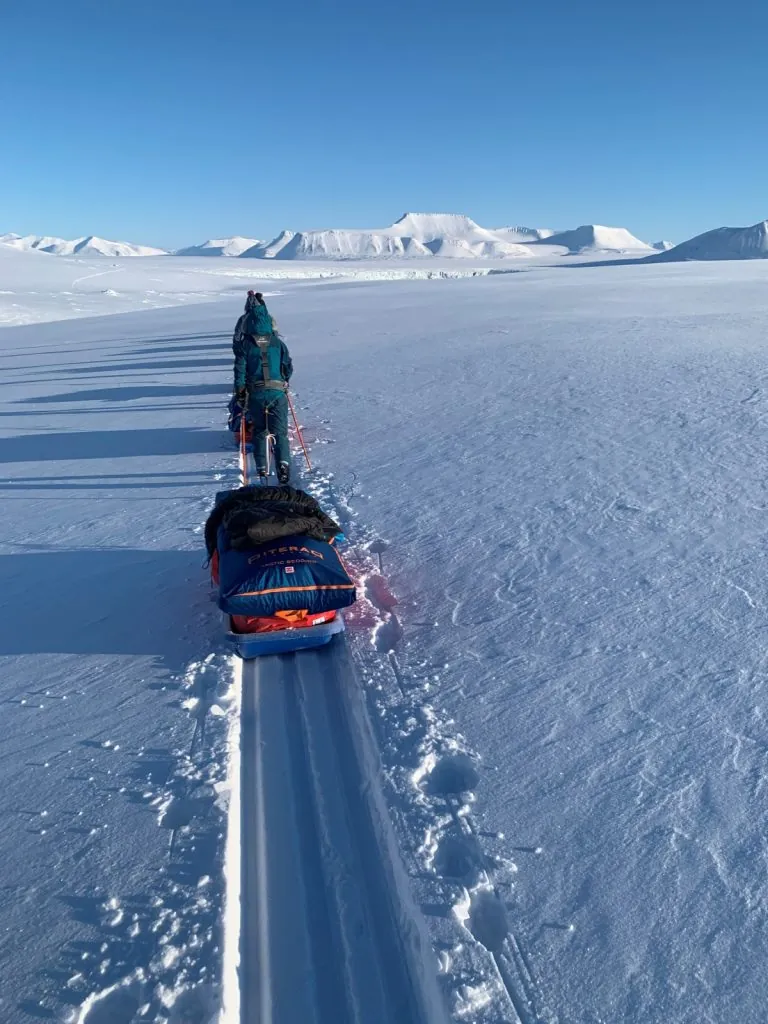
The days followed a strict rhythm: 50 minutes of skiing. 10 minutes of break. Over and over again. A total of between 8 and 12 hours a day.
To keep his energy up, Jesper needed to consume almost 5,000 calories a day. Yet he lost seven kilos during the expedition. When the day of skiing was over, tent building, snow melting and dinner awaited. Then came perhaps the most important task of the night: polar bear watch.
Whiteout – like living in a milk carton
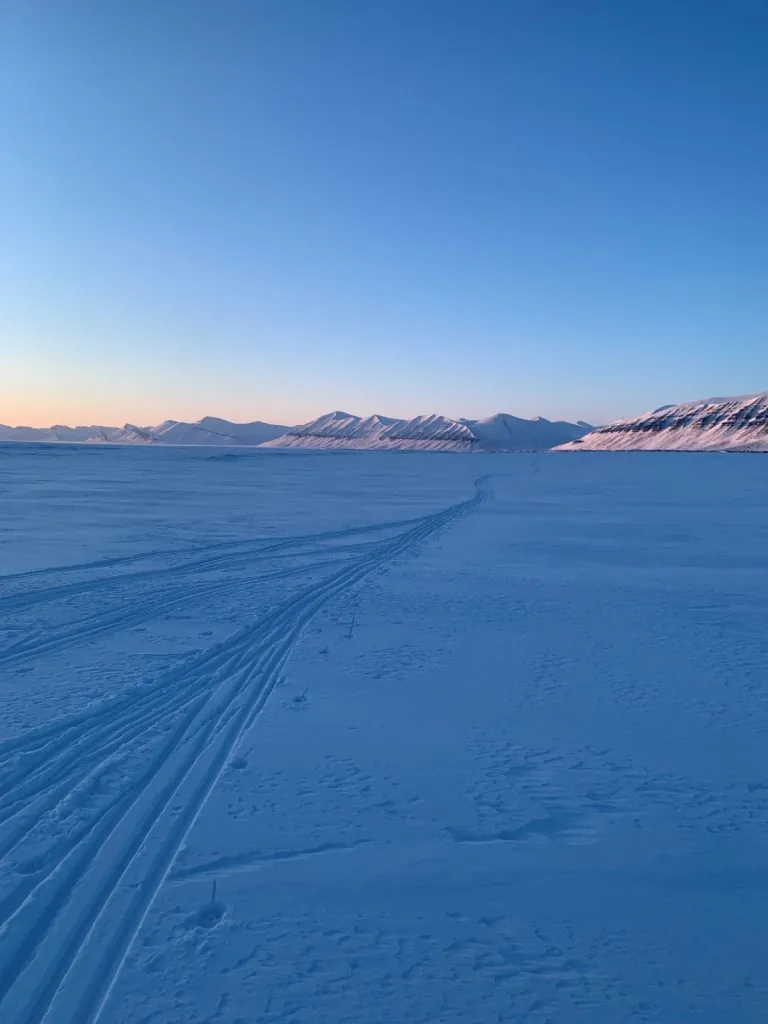
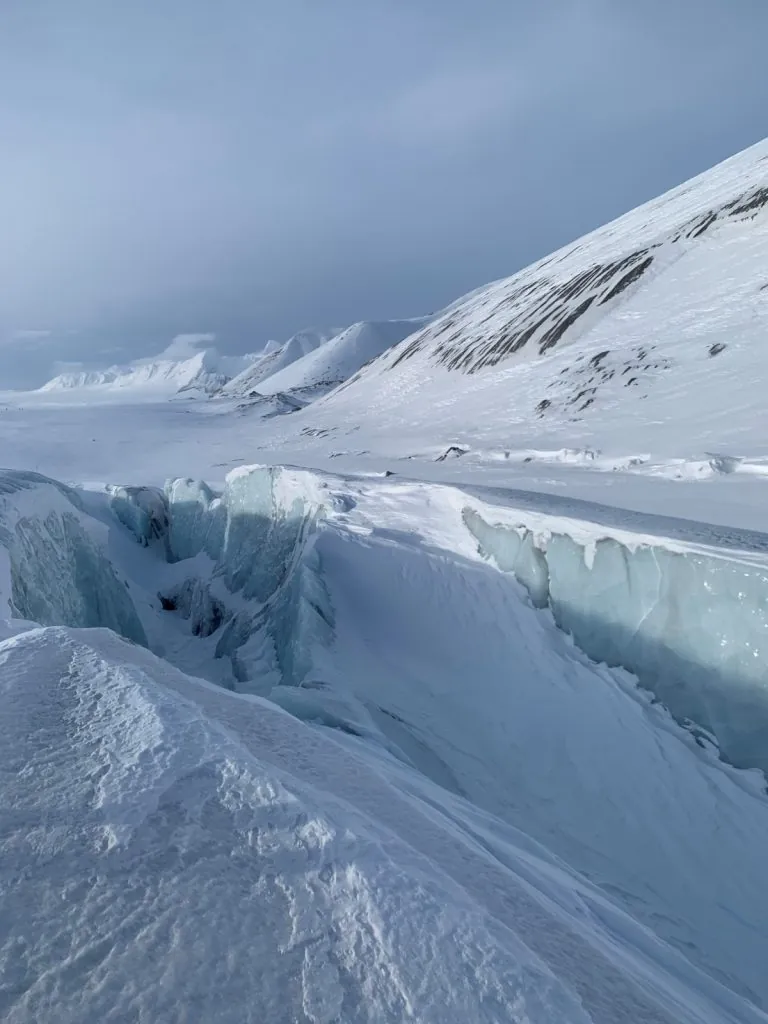
The biggest mental challenge wasn't the cold, but the whiteout. When the sky and ground merge into the same white color, all depth perception disappears. "It feels like walking inside a milk carton. You can't tell if it's going uphill or downhill."”
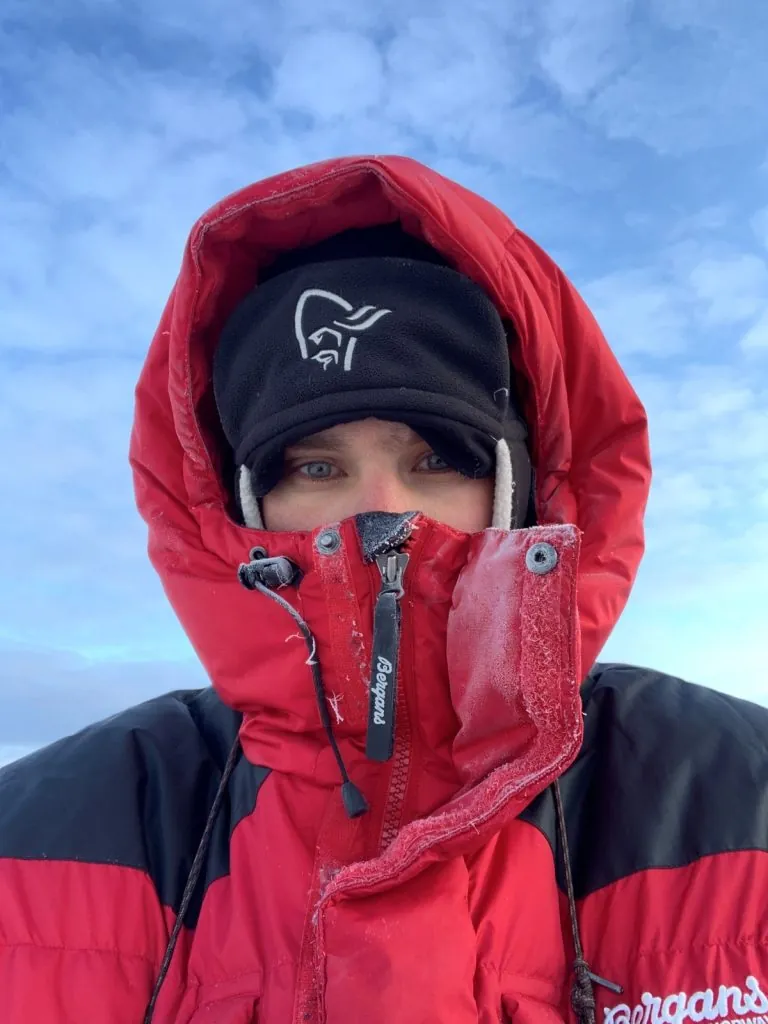
It was mentally exhausting. At the same time, the temperature could drop to minus 30 degrees, with winds of over 35 meters per second. ”There is no room for carelessness. A lost glove or poorly dried socks can quickly lead to frostbite.”
Trapped with a stranger for 34 days
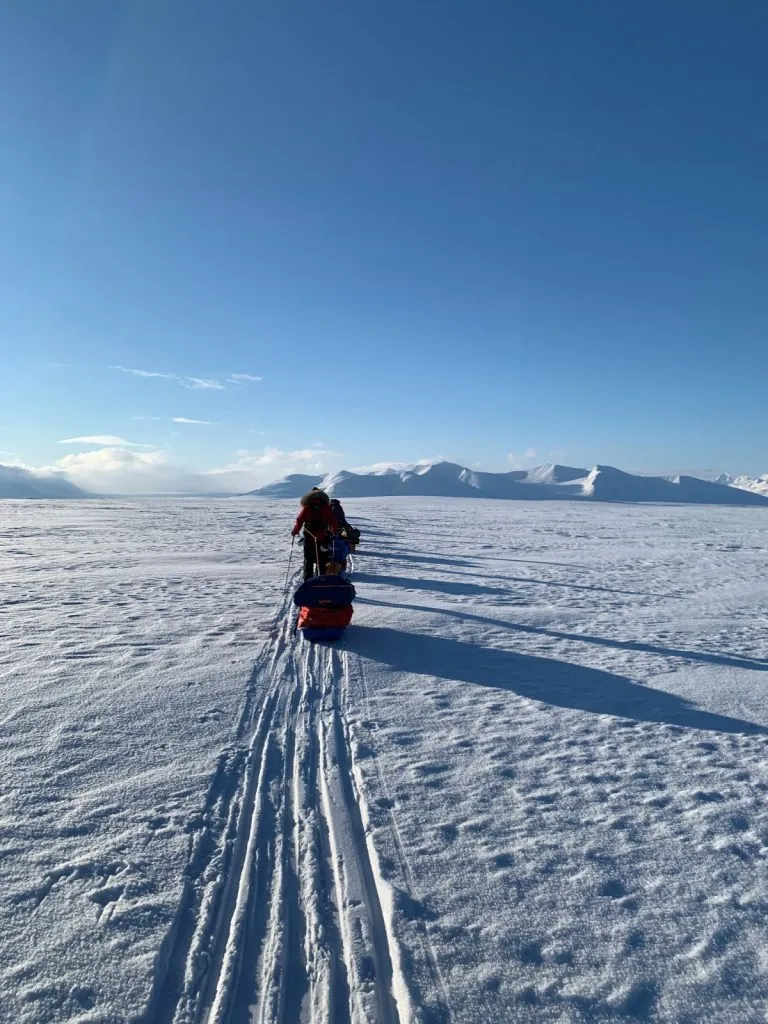
Another unexpectedly big challenge was the group dynamics – and above all, life in the tent. Jesper shared a tent with a person he had never met before. In just a few square meters. For 34 days. ”That’s probably what I’m most proud of. That we worked so incredibly well together.”
He describes it as a collaborative exercise of the highest order. ”It’s an area that would have been illegal to hold prisoners on,” he says with a laugh. But thanks to mutual respect and a common goal, collaboration worked throughout the expedition.
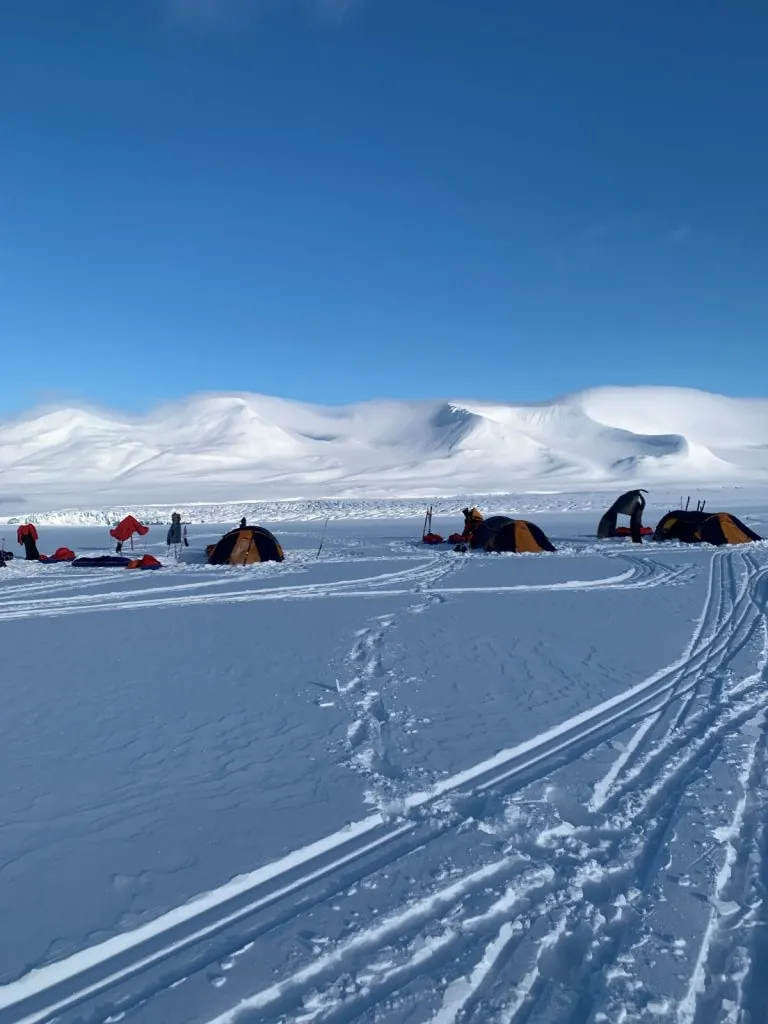
Polar bear watch and stormy nights
Being in Svalbard means you can never really relax. Every night the group took turns doing two-hour shifts as polar bear guards. Armed, with flare guns close at hand. ”Your brain plays tricks on you. I often thought I saw shapes moving in the dark.”
For two days, the group was completely weatherproof in a raging snowstorm. ”That’s when you really feel the power of nature. If the tent breaks, you’re extremely vulnerable.” It was also when nature’s relentless conditions became most apparent. A single mistake can have major consequences.
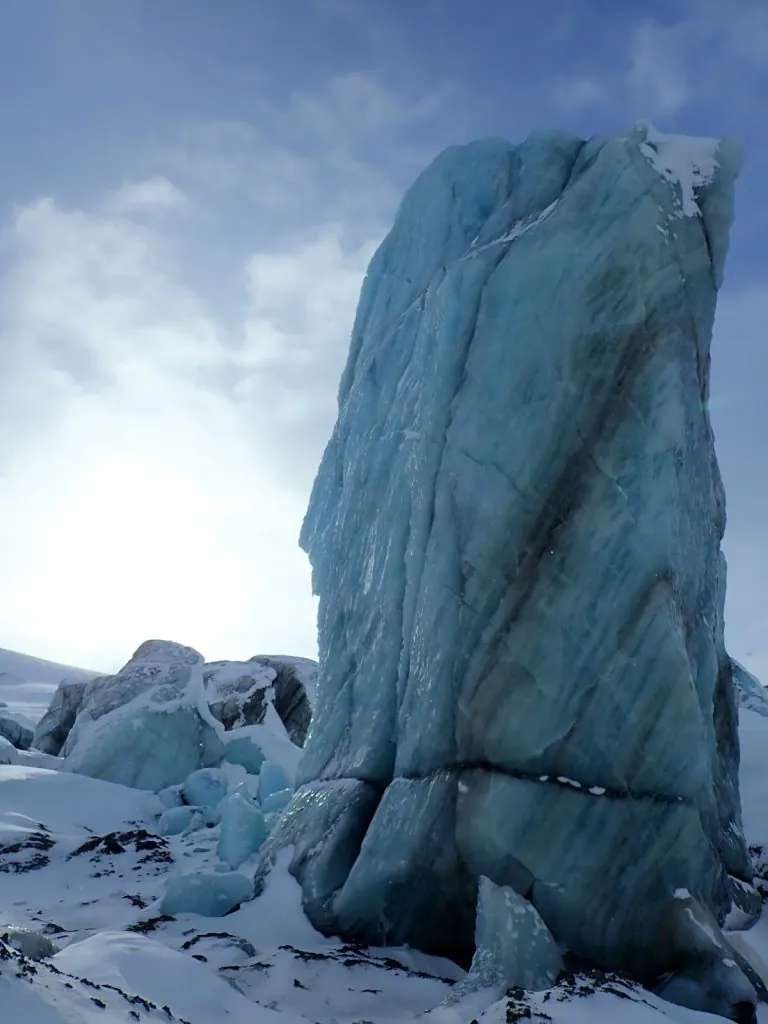
The night the sleeping pad exploded
One of the expedition's most dramatic – and at the same time most absurd – events occurred on night 16. Jesper's inflatable sleeping pad exploded in the middle of the night. "The bang was so loud that we both flew up in panic. My tent mate immediately thought a polar bear had been shot outside the tent."”
In minus 30 degrees, a broken sleeping pad is an urgent problem. Fortunately, Jesper had both repair equipment and an extra foam pad. ”It was an exciting couple of hours of emergency Arctic bed repair.”
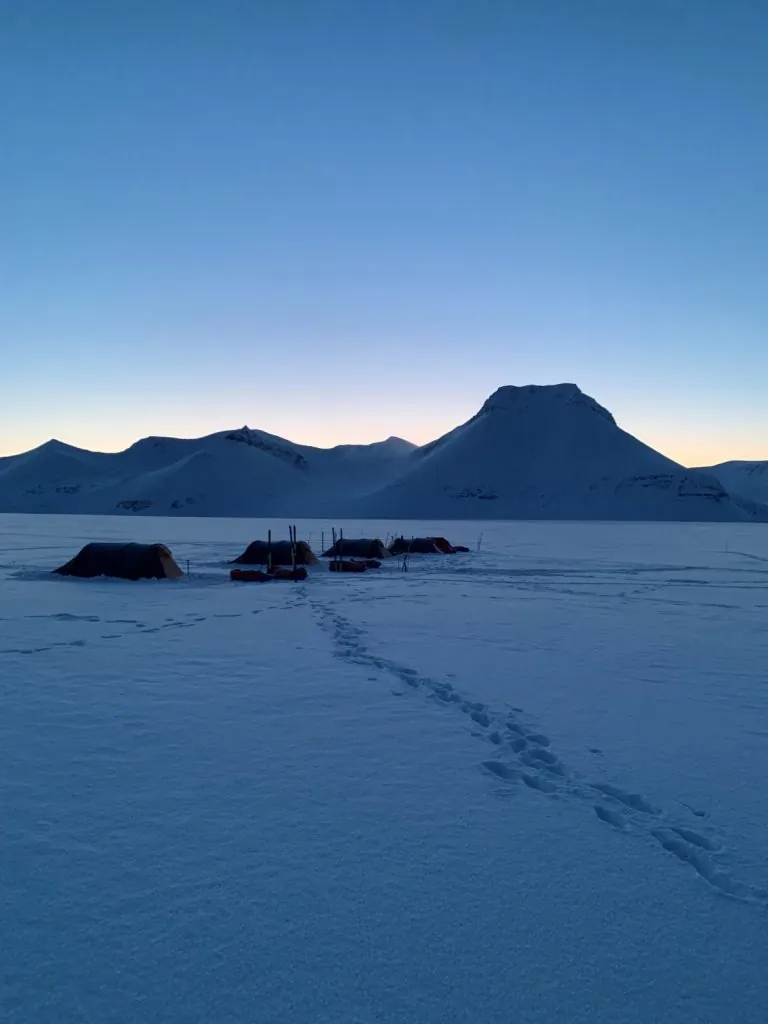
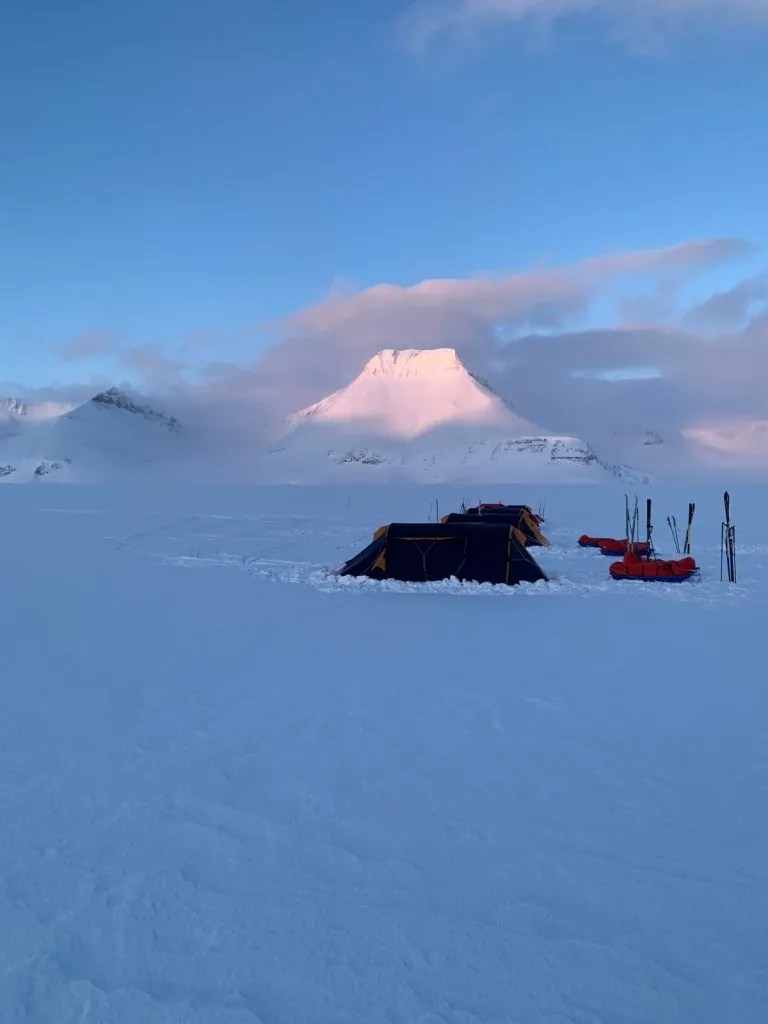
When the storm passed
The most magical moment came after two days of storms and whiteouts. When the wind died down, the landscape opened up and the sun broke through. ”The total Arctic silence gave an indescribable feeling of freedom.”
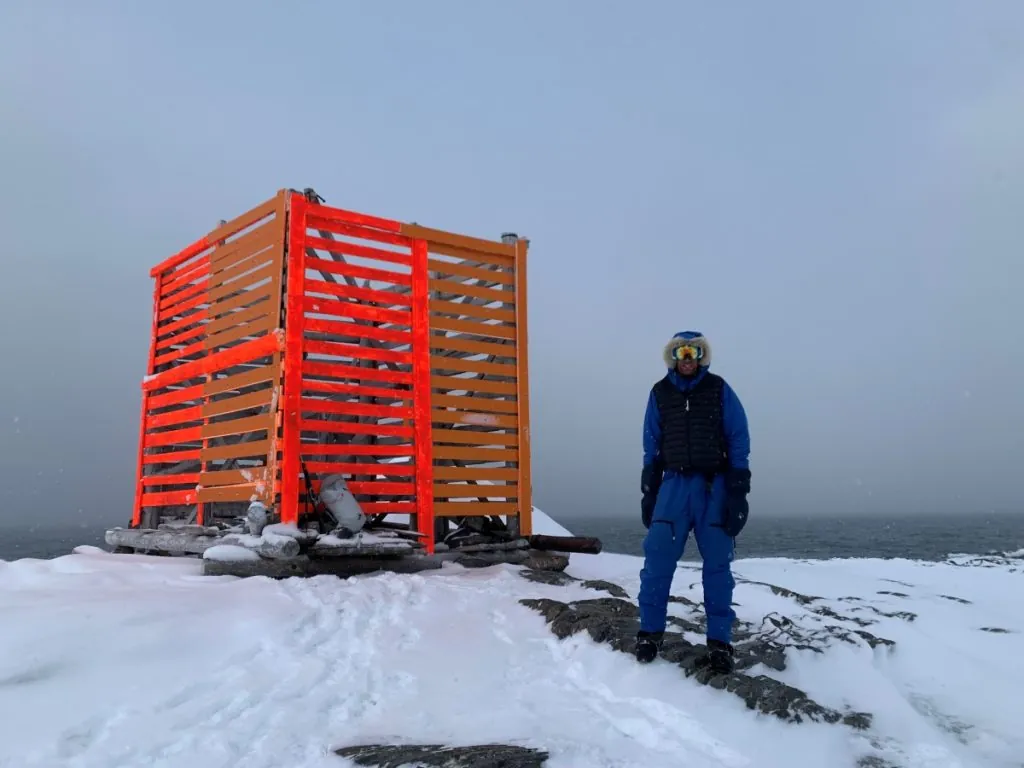
After 34 days, the group reached Verlegenhuken – the northernmost point of Spitsbergen. 600 kilometers and over 7,000 meters of elevation gain later.
But the strongest moment came first at home in Malmö. ”When I got to hug my wife and son, I cried in a way I had never done before.” It was a moment he had imagined many times during the long days in the whiteout.
Finding yourself back
After such an expedition, returning to everyday life is not a given. ”It was difficult to sleep indoors at first. I missed the sound of the wind against the tent.”
And what you miss most during an expedition may not always be what you think. ”Many people think you miss a shower or a toilet the most. But for me it was actually a backrest – to be able to sit on a chair or on a sofa.”
The expedition also gave me greater insights. ”I learned that I can do a lot more than I think. And that we humans often travel to find ourselves, rather than just to see new places.”
And the next adventure? In February 2027, a new ski expedition across Greenland awaits. But the big dream lives on. ”The South Pole beckons.”
About the expedition: Svalbard South–North 2026
- Distance: about 600 km
- Altitude: 7 000+
- Time: 34 days
- Accommodation: Tents
- Temperature: down to -30°C
- Wind strength: up to 35 m/s
- Participant: 8 people from Sweden, Norway, Germany and England
- Guide: Morten Rostille
About Jesper Skarman
- Bor: Limhamn, Malmö
- Family: Wife and son (4 years old)
- Occupation: Recruiter at MEKO
- Previous expeditions: Hardangervidda, Svalbard east–west, Antarctica and South America
- Next expedition: Greenland 2027
- Dream expedition: South Pole
- Instagram: @jesperskarman
You might also like:
 Tromsø in Norway - Aunt Anna and 50 shades of grey
 Boat trip and cable car in Tromso - Aunt Anna on fjord and mountain
 Preparing for a boat trip - an adventure in the Philippines


 Underground river in Puerto Princesa - Unesco heritage in the Philippines
 Iceland - Land of storytelling



 English (UK)
  Svenska
JoY says:
Hats off to such an achievement.
07 July 2026 - 19:44