

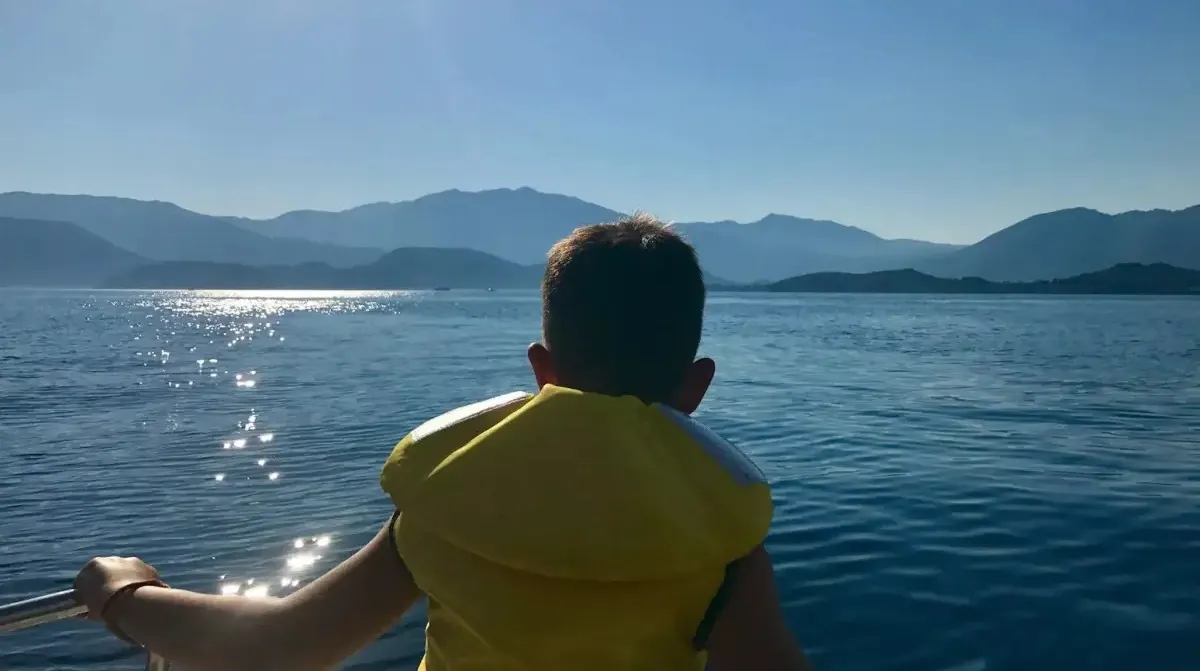

Writer: Co-operation partner
When you're on holiday with your family, you're likely to end up by the water sooner or later. Camping near a swimming bay, a kayaking adventure or a leisurely sailing trip in the archipelago are all great activities for the whole family.
 Tweet
Tweet Share
Share Share
Share Pin
Pin Share
Share Share
ShareIt is therefore smart to always have a prepared pack for an excursion on the water when you pack for your holiday. The most important piece of the pack is the life jacket. Unfortunately, the life jacket is something that is often forgotten even though it is a part of the pack that can save lives. When you get to the water, it turns out that you completely forgot about the life jackets, that the ones you have are the wrong size or too old and worn.
Therefore, it's time to make sure you have a complete set of life jackets for the whole family before your next vacation excursion. There are complete sets of life jackets from Hjertmans for the whole family, including the dog, so you can shop for everything you need online. But since these are purchases that have to do with your family's safety, it's worth taking some time and getting to know exactly what you need.
Table of contents
How should the life jacket be used?
There are several different types of life jackets and what you should choose depends entirely on your needs. An all-round or basic life jacket is probably the first thing that comes to mind. It is an easy-to-use life jacket that you just put on and tighten a few straps to use. Such a life jacket can also be used by children and is ideal to always have in the camper or boat.
There are also specially designed life jackets for paddling and other water sports. They serve the same function as an all-purpose life jacket, but give you better mobility when paddling.
But if you want something that is easier to wear, then an inflatable vest is the one you should look at. Such a life jacket is light and cool to wear all day, which is a great help if you are going rowing on a hot summer day, for example. But the disadvantage is of course that you should be able to swim and know how to inflate the vest. This makes it an unsuitable option for children.
Finally, an alternative for colder weather is a floatation suit. This type of garment keeps you warm and dry and is ideal for those out on the lake when the water is still cold.

For those of you who are only out on calm waters occasionally, an all-round life jacket is fine. However, if you are active out on the lake and engage in many different activities, you may need several different vests to avoid compromising.
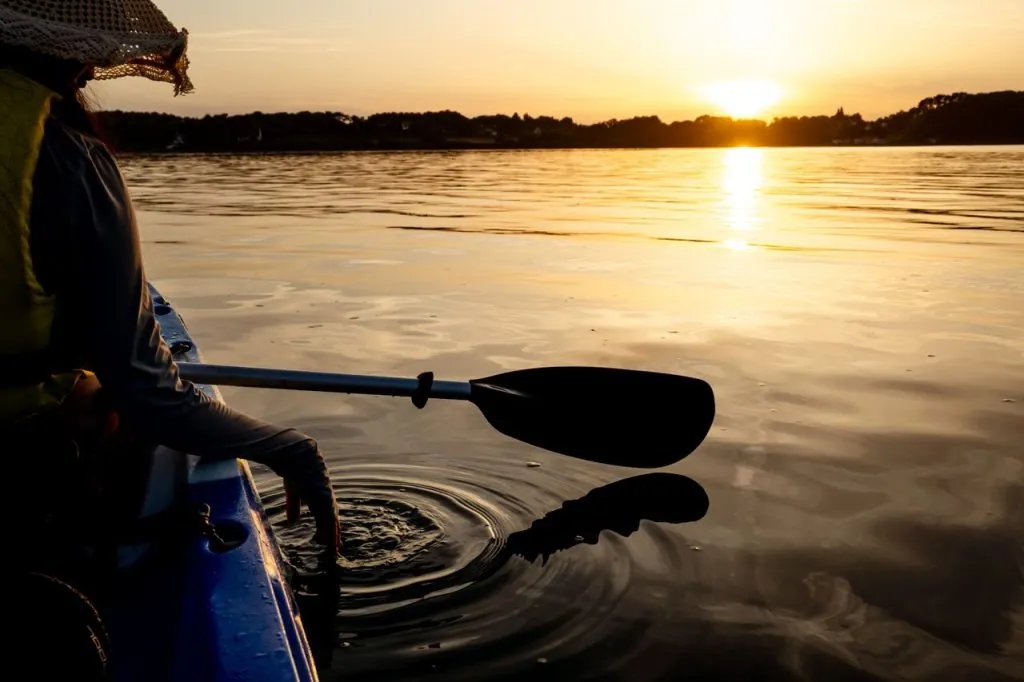
Float classes – What do the numbers mean?
A life jacket's buoyancy is rated according to the ISO standard (ISO 12402), which specifies the buoyancy of the jacket in Newtons (N). How much you need depends on your own swimming ability and the water and weather conditions you plan to use the jacket in.

- 50N: Provides buoyancy assistance to a person who can swim in conditions where rescue assistance is nearby.
- 100N: Provides buoyancy good enough for use on lakes or coastal waters.
- 150N: Is a life jacket that can be used in open water.
- 275N+: For open water and more difficult conditions.
Keep in mind that the buoyancy of the vest only works according to this scale if it is the right size for the wearer's body weight and is worn correctly with all straps and buckles tightened.
Children, juniors and dogs need special equipment
When it comes to children, especially younger children who cannot swim properly yet, there are extra things to consider when choosing a life jacket. You should always make sure that the jacket has straps in the crotch and a proper collar. This prevents it from sliding up over the shoulders. For smaller children, a handle in the neck is also important so that you can lift a child who has fallen overboard. Always test the jacket with the child in a pool or similar before using it in a critical situation.
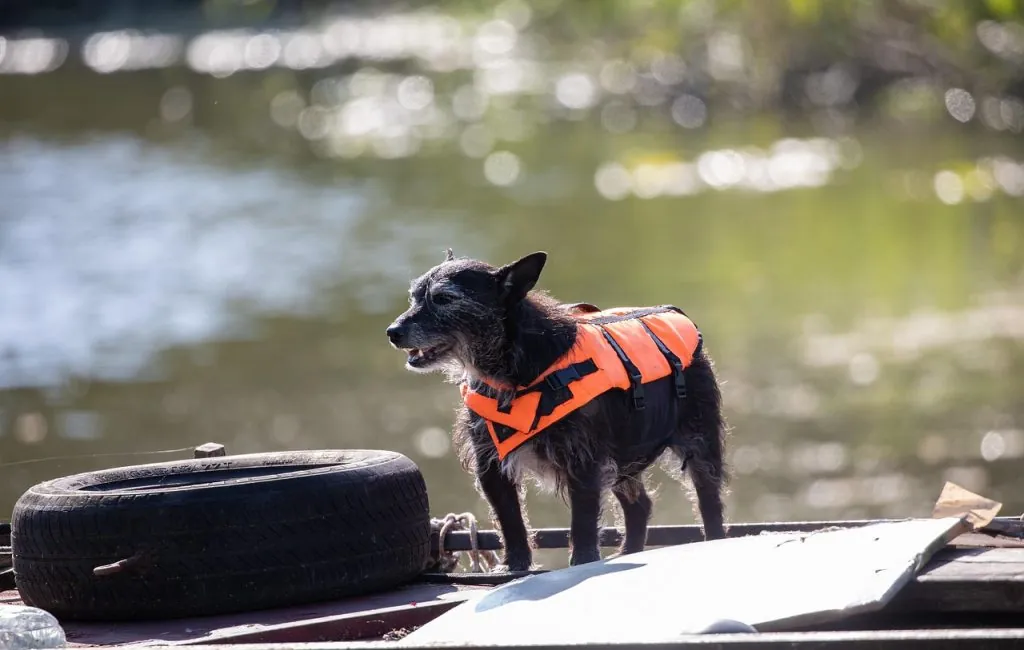
A dog life jacket with a handle may look like a cute toy. But the fact is that many dogs love to swim and can jump into fast water without warning. So it's good to have something to grab when you have to lift your pooch out of the water.
Check your life jackets before packing
But even if you have a complete set of life jackets for all two- and four-legged family members, it is no guarantee that you will be completely safe on the lake.
You should inspect the life jackets each time before they are used:
- Check all seams, straps, zippers and buckles.
- Check gas cartridge and release mechanism for inflatable life jackets
- Make sure the vests are still suitable for everyone's current weight
After use, it is also important that you dry the vests properly before storing them again so that they last as long as possible.
So get the right vests for each family member and occasion, and do a quick routine check before each trip. Then you can relax and enjoy swimming, boating or paddling, knowing that the vest is there in case of an accident.

You might also like:
 Traveller safety - 10 things to consider



 Do you dare to travel in these times?
 In a troubled world... (But we mustn't let worry take over!)
 Things we forgot while travelling... and what happened next!
 Internet on the move - 4 ways to get connected



 English (UK)
  Svenska