


Text and photo: Helena Bergström
Tame rabbits, a sociable donkey, curious goats and a meal where almost everything on the table comes from the farm. Our visit to Loumidis Family Farm was one of the most charming experiences on Sifnos – and at the same time an interesting insight into how people have been farming on the arid Greek island for generations.
 Tweet
Tweet Share
Share Share
Share Pin
Pin Share
Share Share
ShareTable of contents
A farm visit on a Greek island
Our visit to Sifnos was carried out in collaboration with a PR agency and it was through this collaboration that we found Loumidis Family Farm. The farm also welcomes other visitors and it is possible to book a visit directly.
We arrived here at 2pm and were greeted by a small farm with a tiny stone house and the animals right next to it. It didn't take long before we realized that this was going to be an unusually personal farm visit.
Loumidis Family Farm on Sifnos
Loumidis Family Farm is located in the Vlaha area, along the road between Apollonia and Faros. Giannis Loumidis welcomed us here and started by telling us a little about the farm and life here.
Giannis grew up on the farm and said it has been in the family for generations. The farm’s own website describes the site’s agricultural history as more than 300 years old. Over the years, the farm has grown grains, olives, vines, fruit and vegetables, and kept animals for milk and eggs.
When Giannis was growing up, the family lived simply and got a large part of their food from the farm. That's largely how it still works today. The animals provide milk and eggs, there are beehives, and the land is used to grow various crops.
However, it is difficult to make a living on a small farm like this today, Giannis said. That is why he also works as a carpenter. However, they do not need to buy much food. ”Coca-Cola and chocolate,” Giannis joked about what needed to be purchased at the grocery store. Then it was time to visit the animals.

Around the farm among the animals
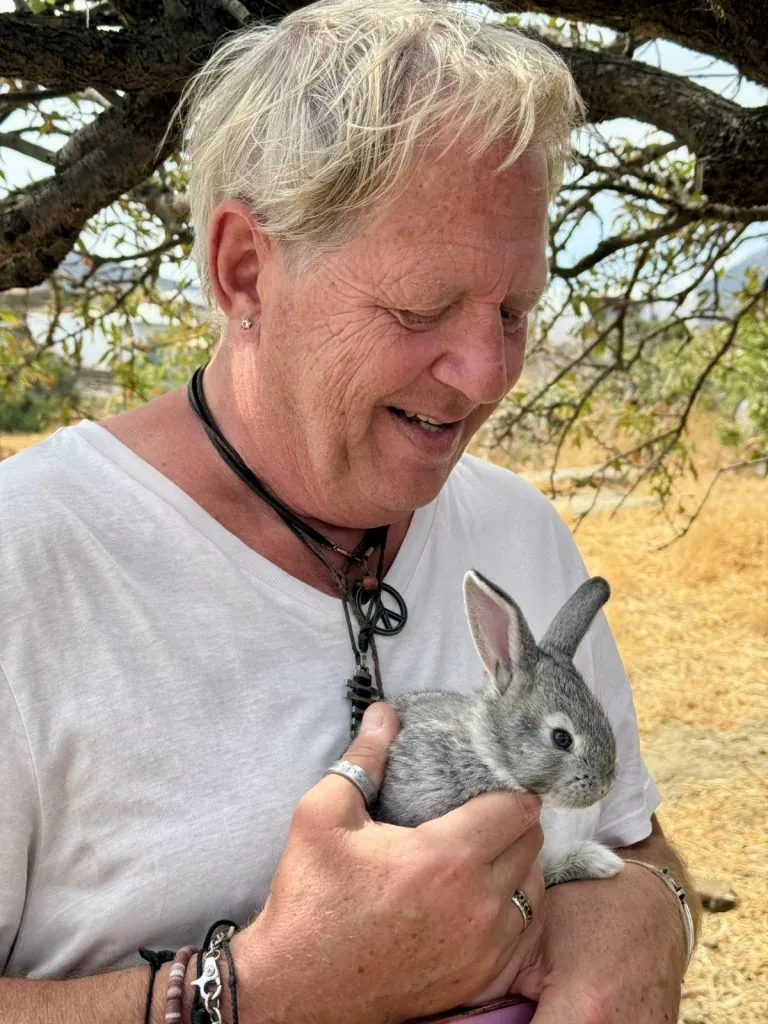
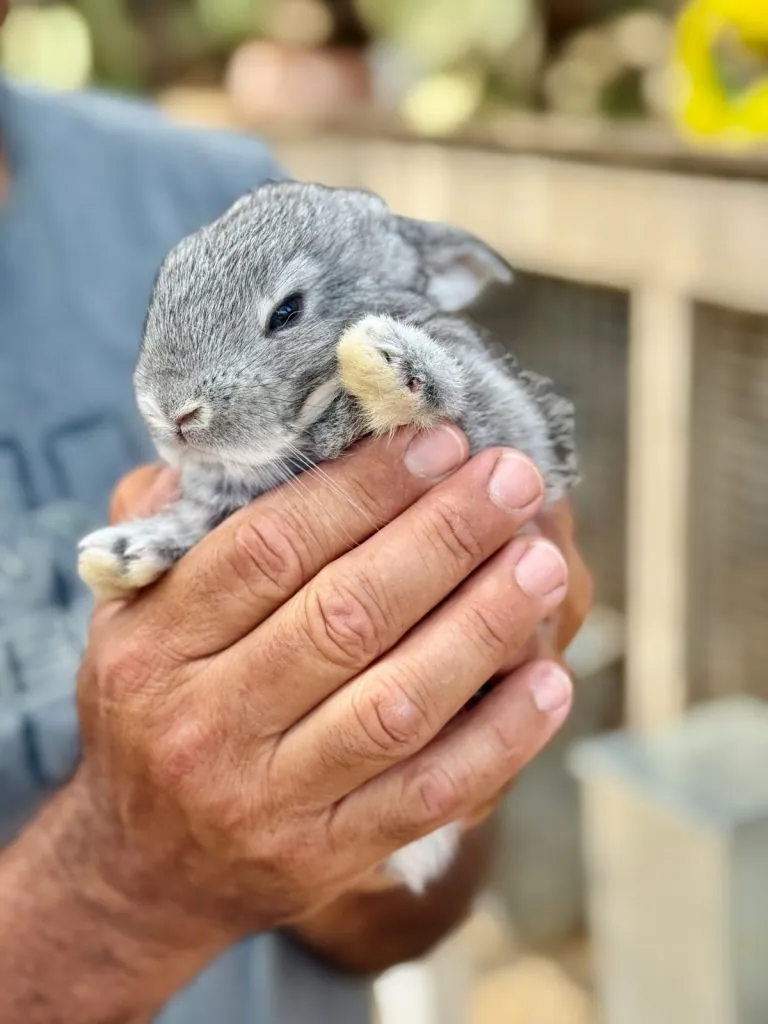
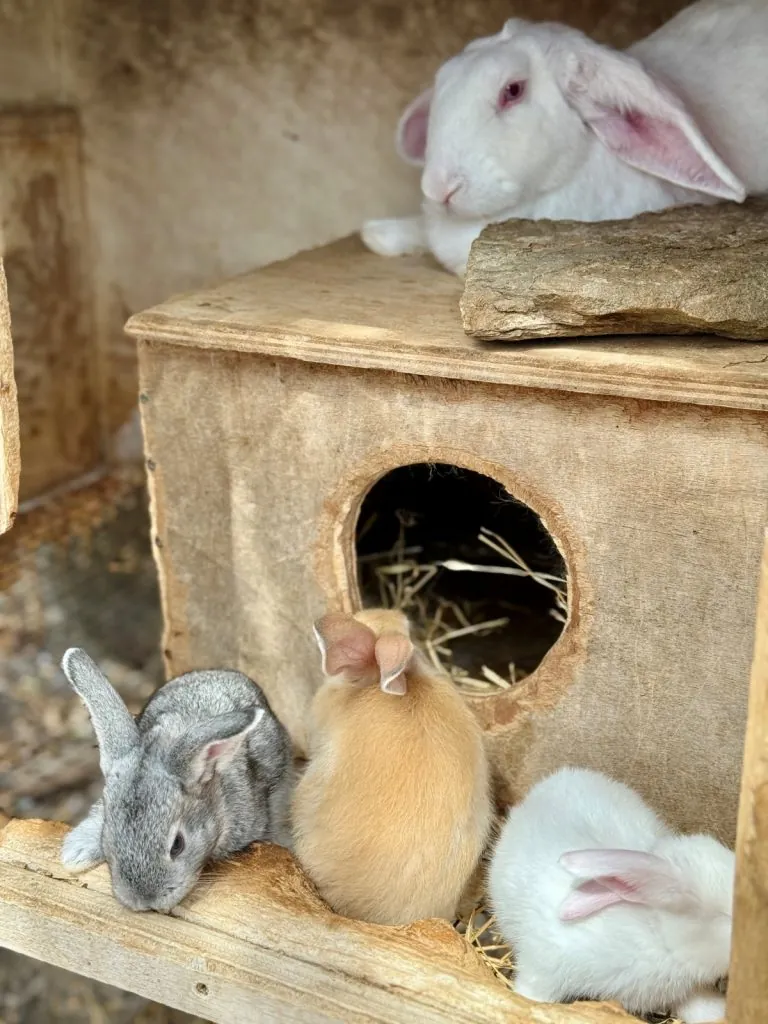
We started with the farm's smallest inhabitants – the rabbits. There was both a mother rabbit and her little babies, and we got to pick them up and hold them. They were incredibly tame and calm, and the mother didn't seem particularly concerned about us petting her babies.
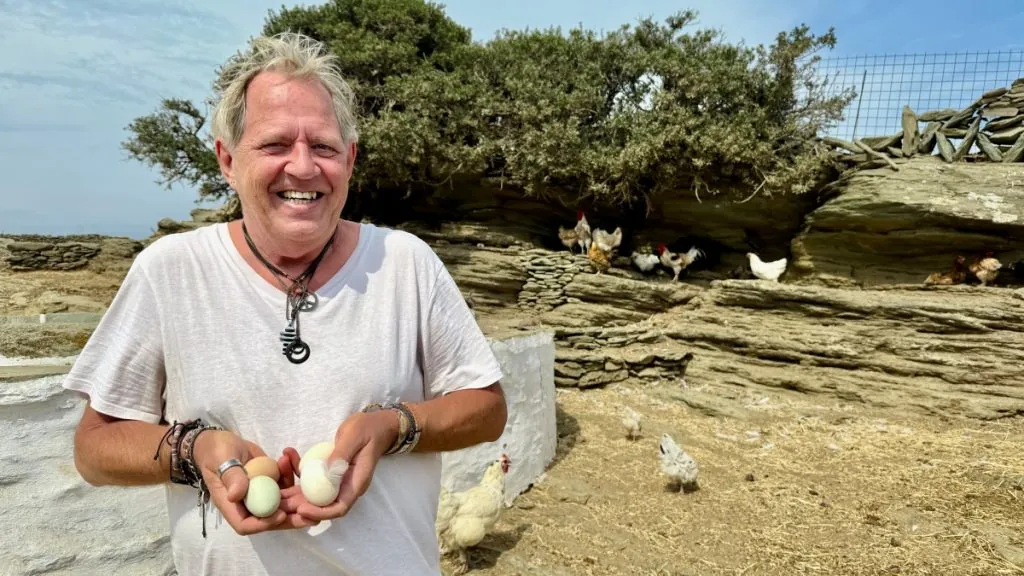
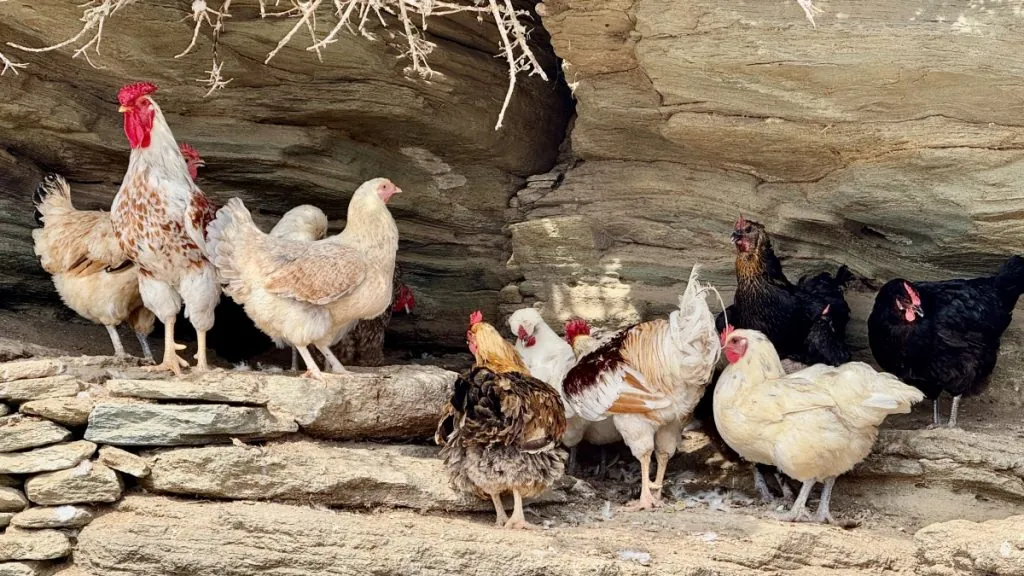
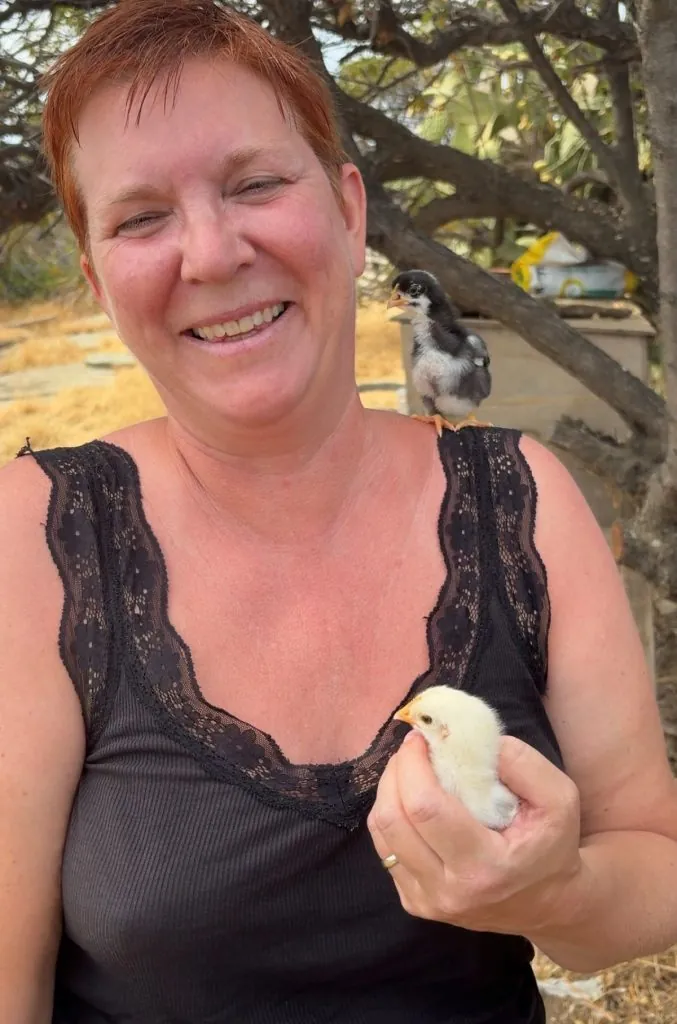
Next stop was the chickens. One ended up in my hand and another Giannis placed on my shoulder. And so it went. We have visited a few farms over the years, but rarely have we met so many farm animals that were so tame, curious and eager to socialize.

A donkey who loves crusts
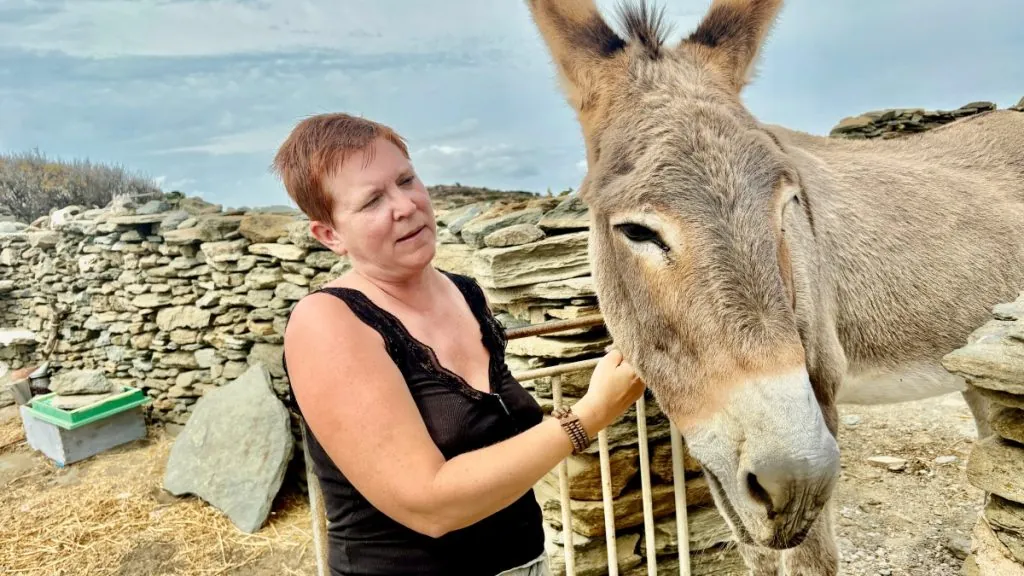
As we continued to the larger animals, we first met the farm's donkey. It also turned out to be very sociable – and also fond of rusks. We were able to feed it and soon had a new four-legged friend.
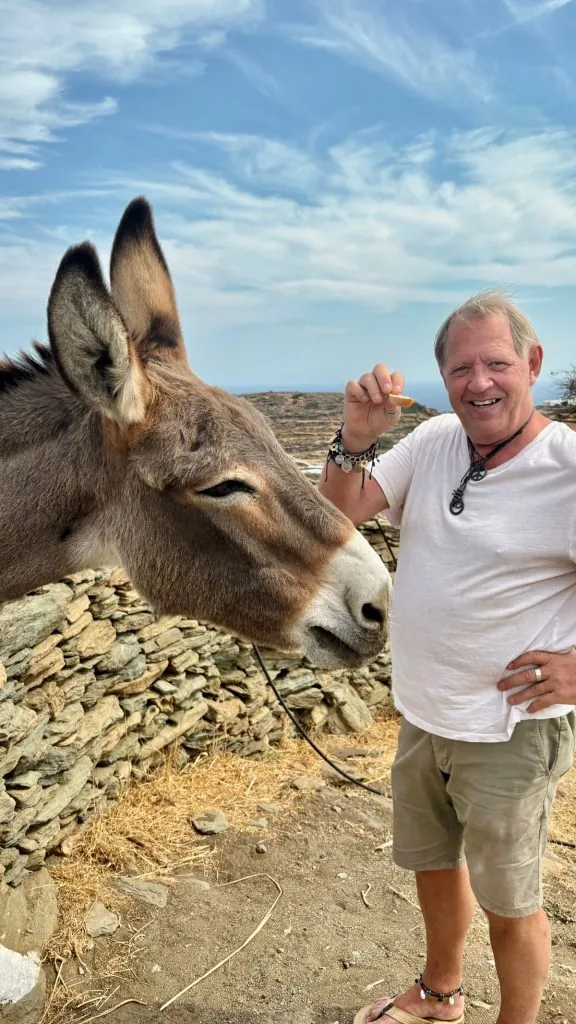
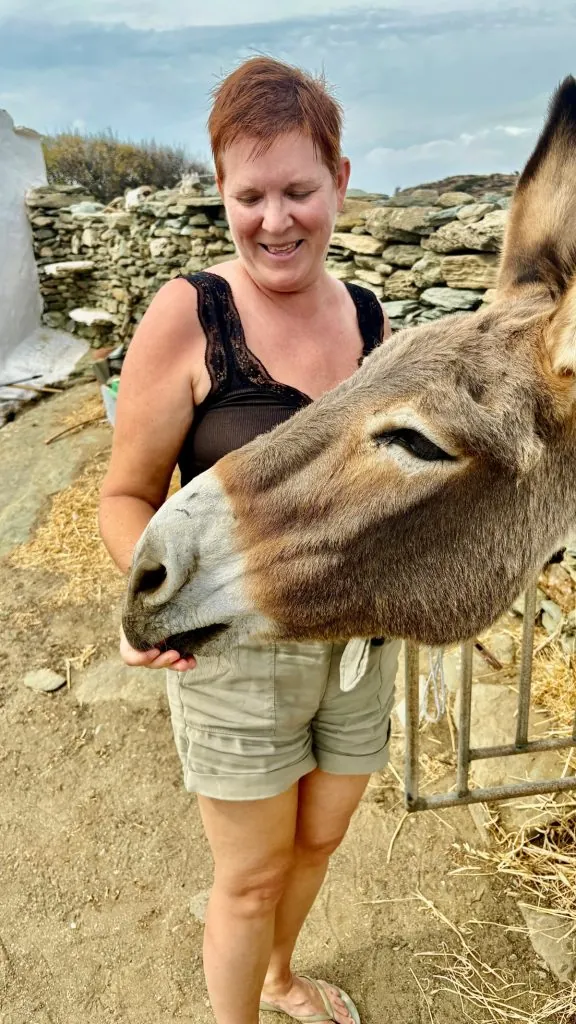
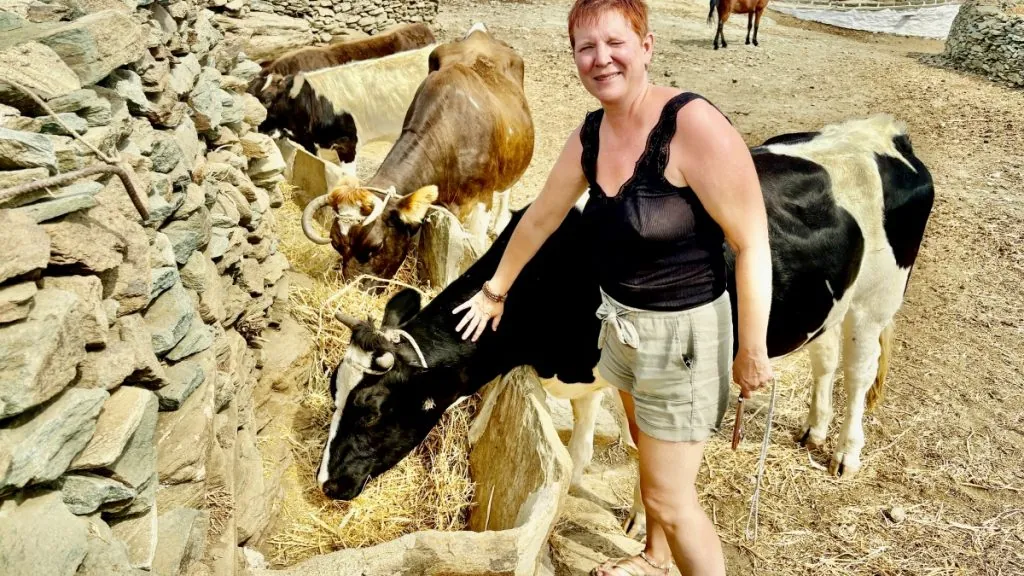
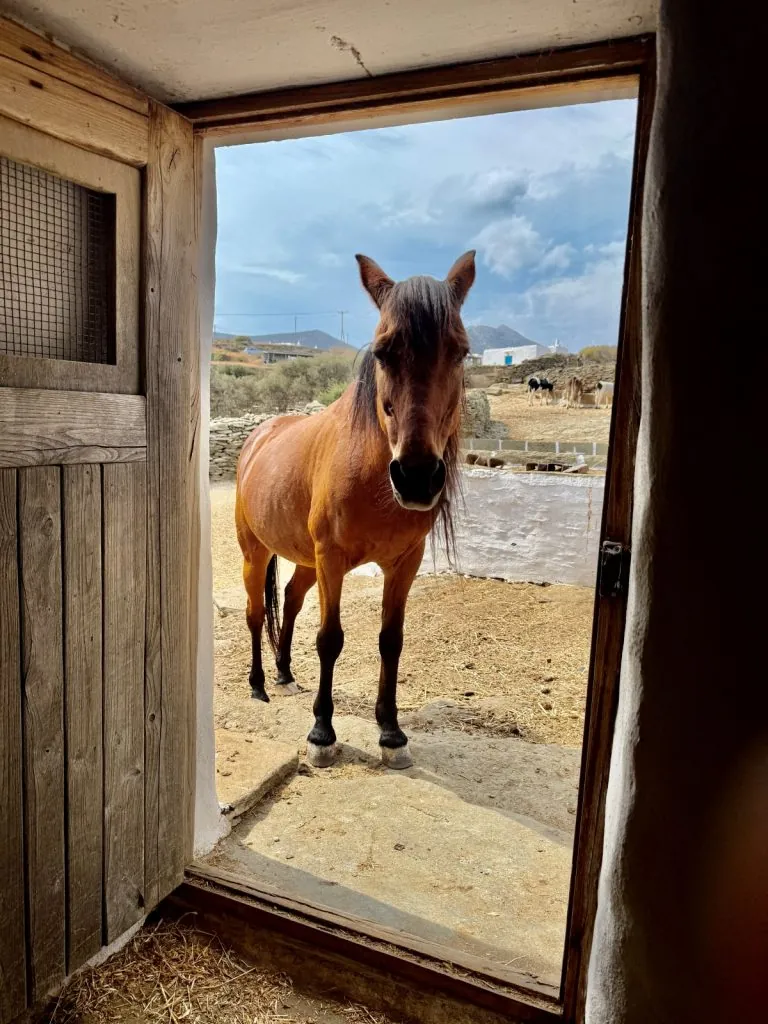
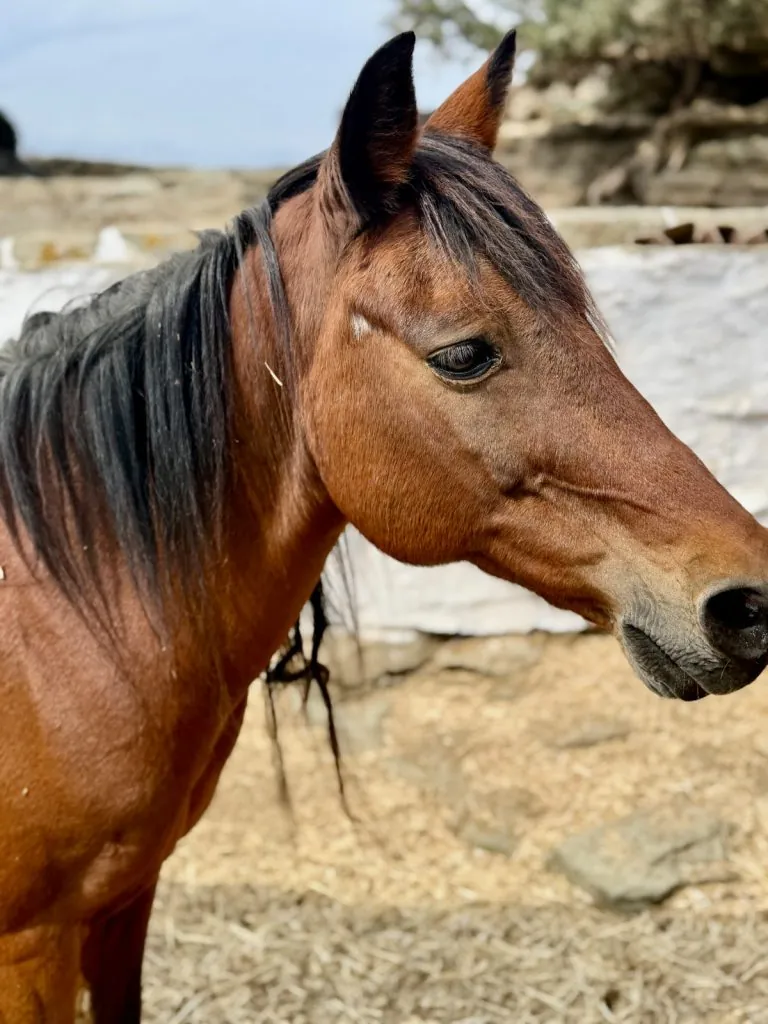
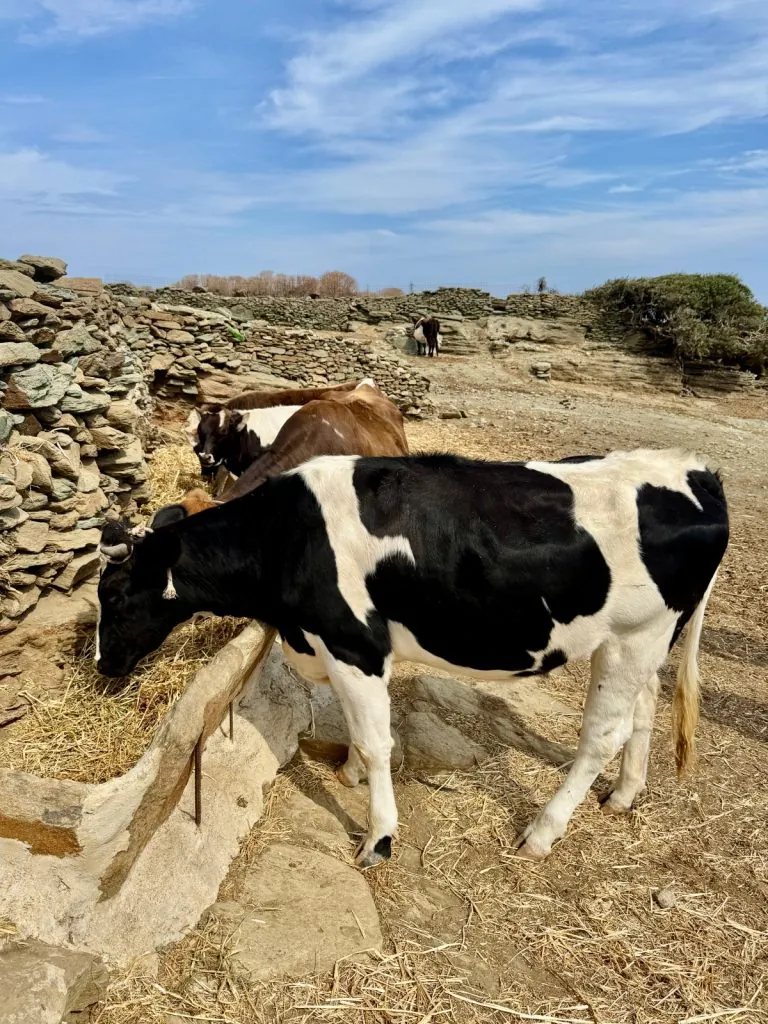
Then we moved on to the cows and a horse that was standing and eating with them. As we continued into a small building, the horse followed. Not all the way in, of course. But its head appeared in the open door time and time again.
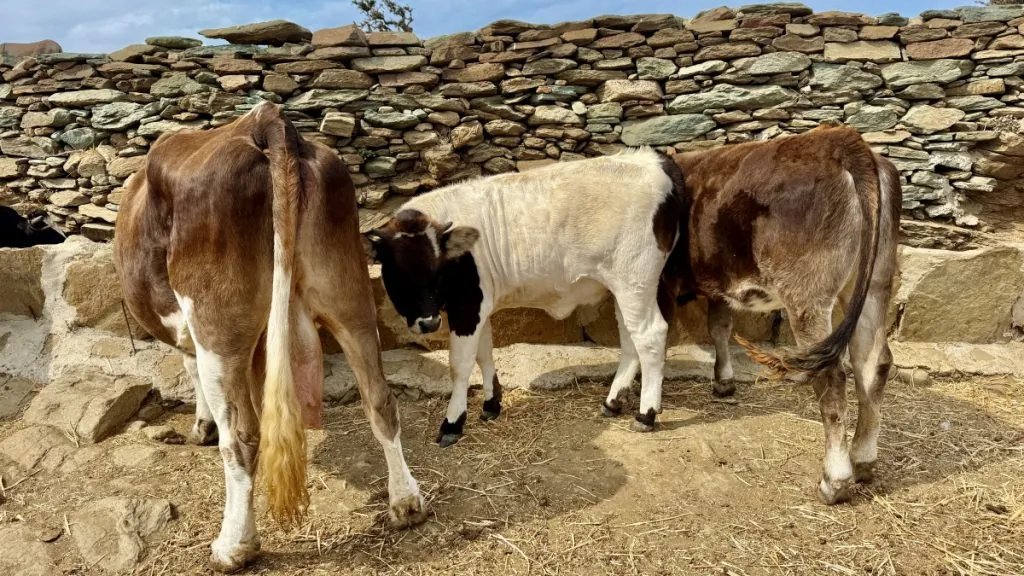
The horse who also wanted to join in
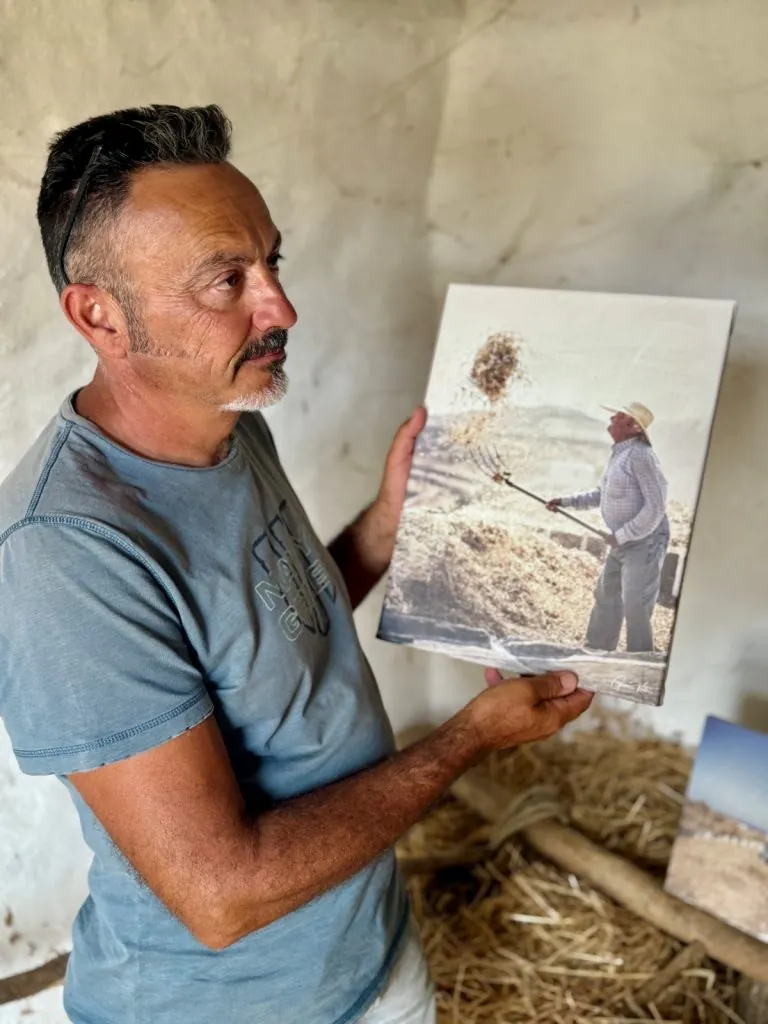
Inside the building, Giannis showed an old photograph of his father and told him about how grain was traditionally handled.
One of the methods was winnowing. After threshing, the grain was thrown into the air so that the heavier grains fell down while the wind helped separate the lighter chaff and plant parts. Traditional threshing and winnowing is something the farm still tells visitors about.
Meanwhile, the horse remained standing in the doorway, looking at us. "What are you doing in there? Can't I come in?" it seemed to be thinking.
Goats, milking and a little kid
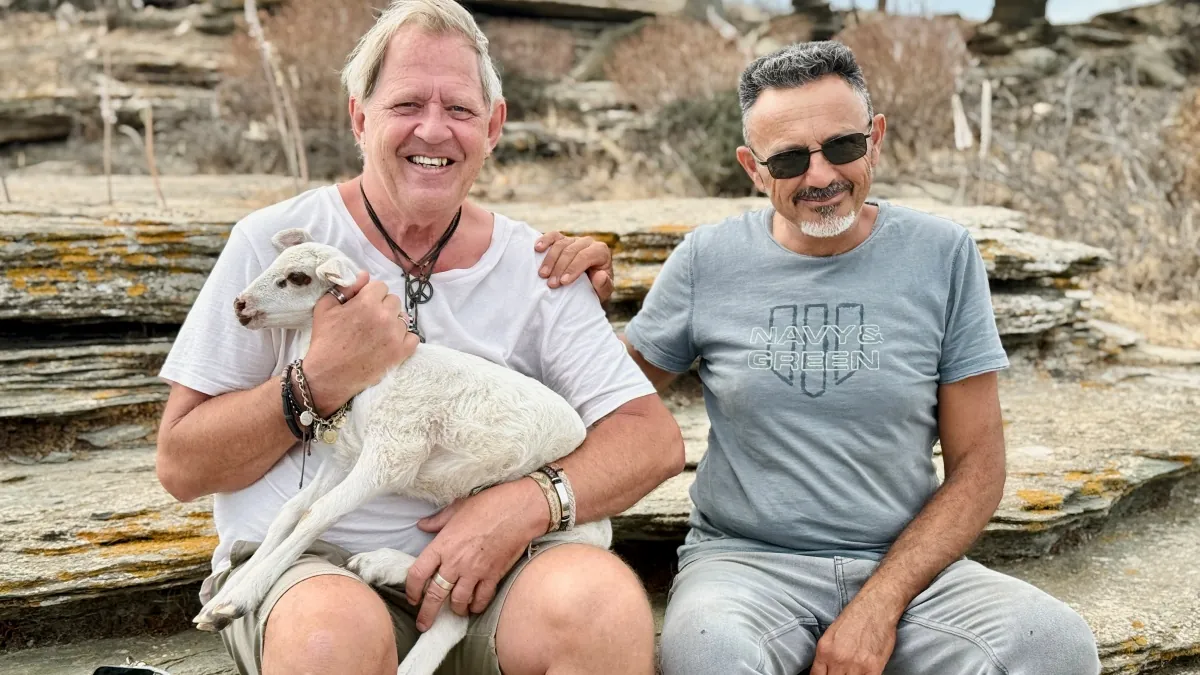
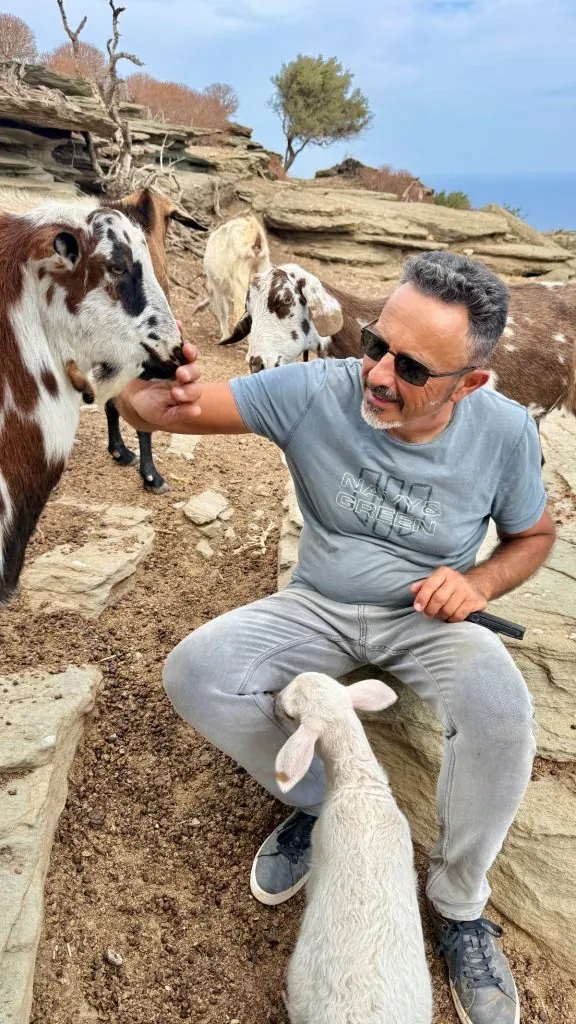
Then we came to the goats – and we stayed here for a good while. There was also a very small lamb on the farm that had been abandoned by its mother. She had had three kids and, according to Giannis, could only take care of two of them. He therefore made sure that the third little lamb got milk from the goats.
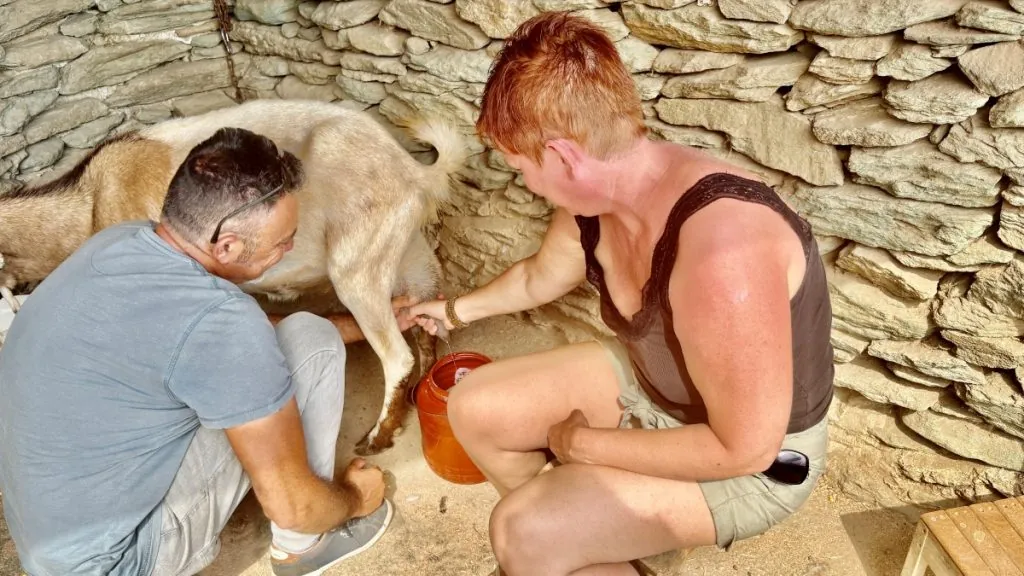
I also got to try milking a goat. That looks a lot easier when someone who can does it does it. At first, not much happened, but after a few tries I started to understand the technique and actually managed to get some milk out. I may not have become a full-fledged goat milker, but I still managed to get some experience.
Goats used for dairy production need to be milked regularly to maintain milk production, so this is of course part of everyday work on the farm.
Curious goats everywhere
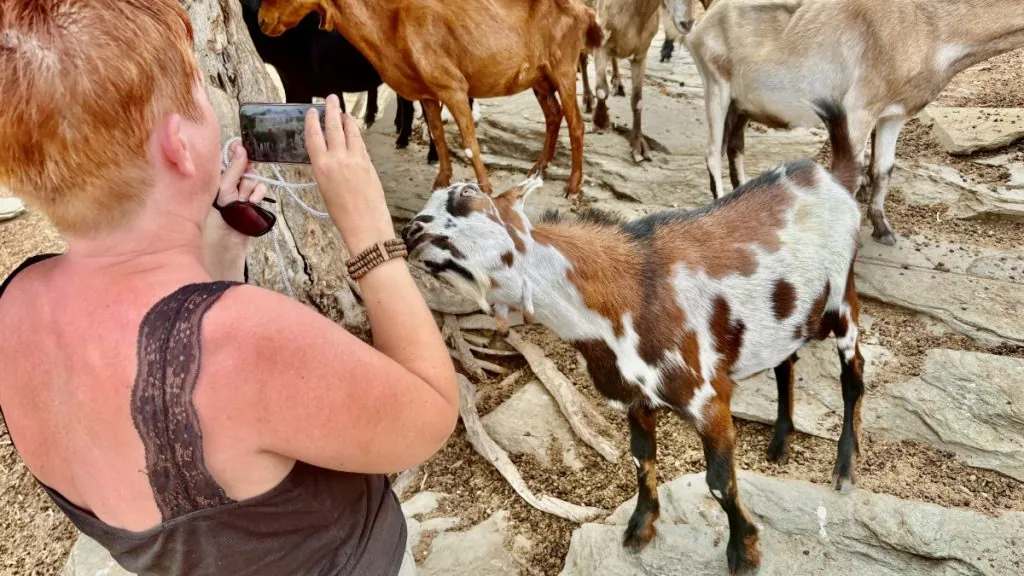
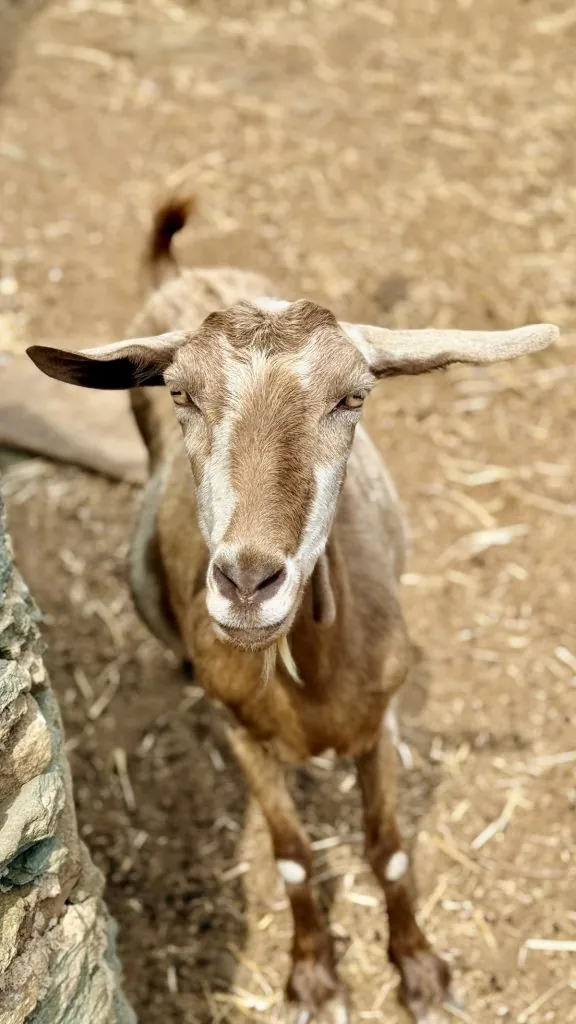
We also got to walk around among the goats, who turned out to be at least as social as the other animals on the farm. One of them was extra curious and wanted to ”shake paws” with me time and again. It also tried to chew on my bracelet and then started on the bow on my shorts. In other words, it was important to keep an eye on both clothes and accessories.
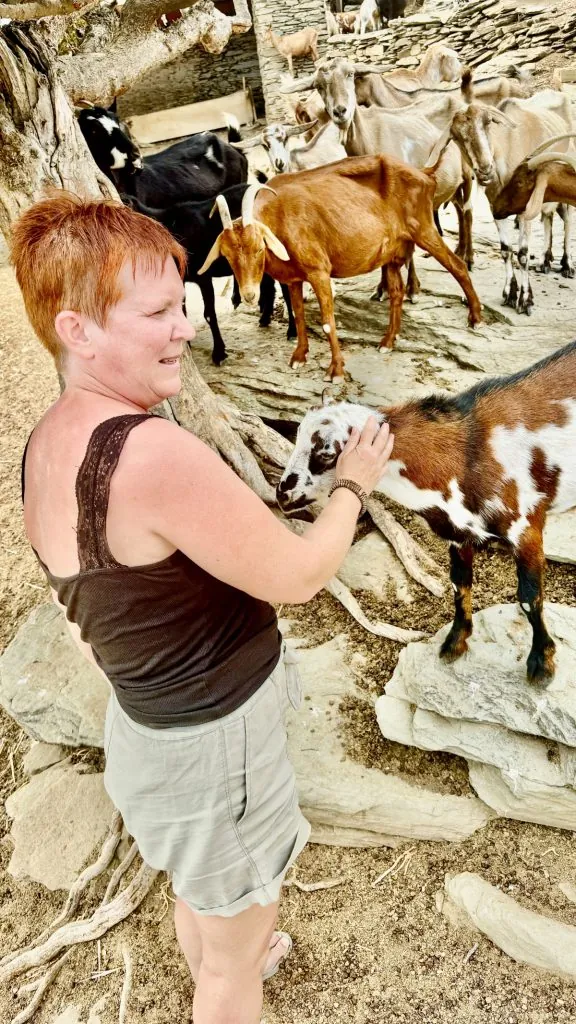
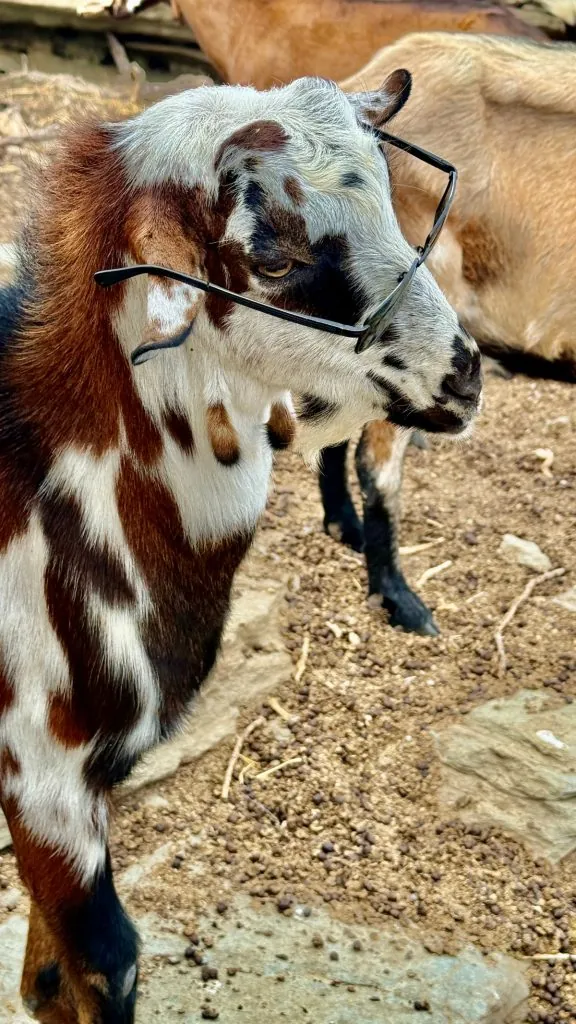
We walked a little further to sit down and enjoy the view. With us came a little goat kid who had also been abandoned by his mother. After a while we got up and started walking back. The kid didn't notice.
When it suddenly discovered that we were leaving, it started shouting and came running after us. ”Wait, wait! Don't leave me!” At least that was our free translation from the goat language.
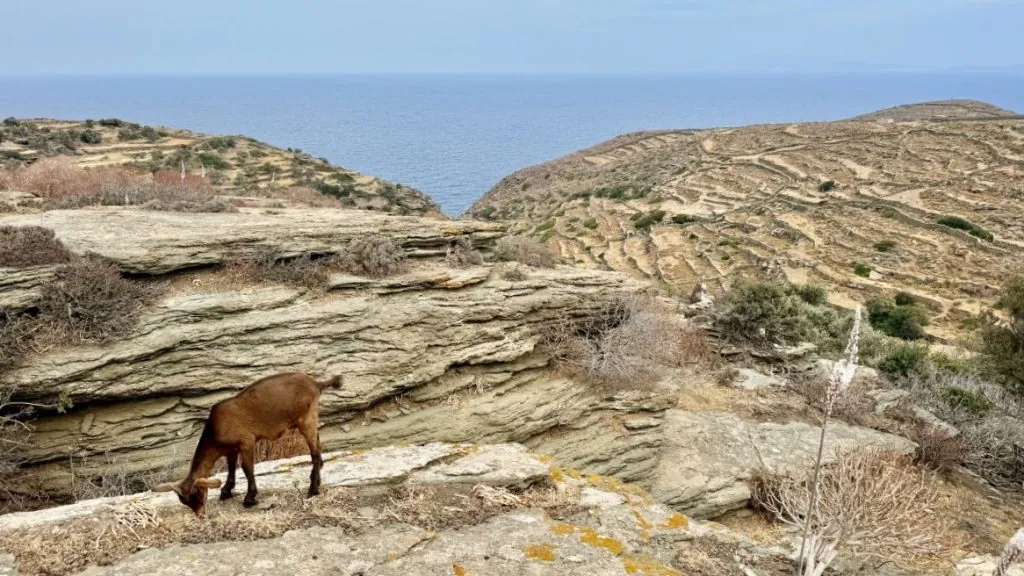
When there's a party among the goats
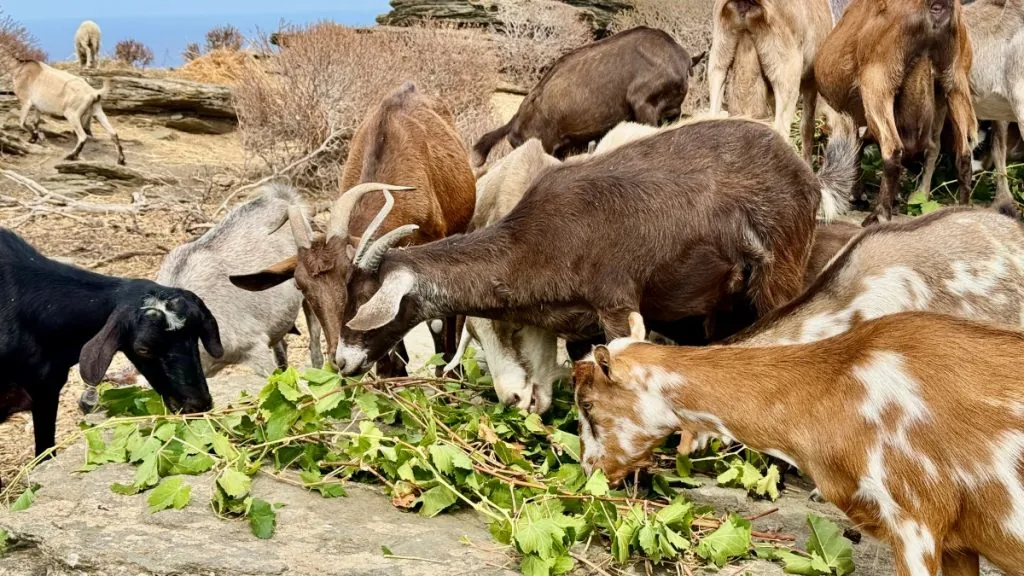
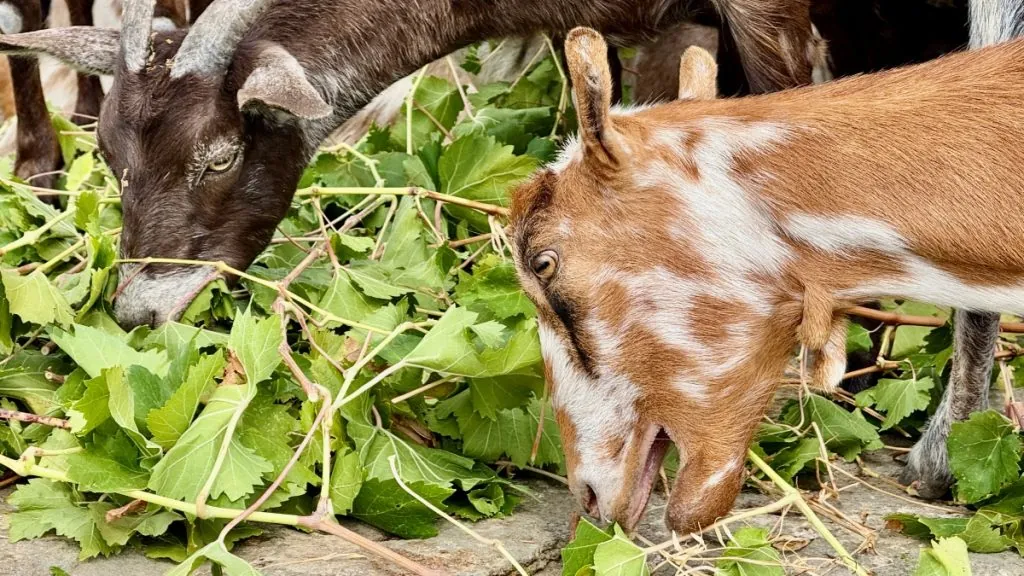
During the visit we also got to see what happens when the food arrives. One of the men working on the farm showed up with large amounts of green twigs and suddenly the goats were much more interested in him than in us. It was a real feast.
Cultivation without pesticides – and without artificial irrigation
The animals are just part of the business. At Loumidis Family Farm, they also grow various crops and Giannis told us that they do not use chemical pesticides. Even more fascinating was hearing about how some of the crops are grown without irrigation.
It sounds almost impossible on an island that can be as dry as Sifnos, but the method is based on taking advantage of the moisture stored further down in the soil after the winter rains. The farm says that tomatoes, potatoes, eggplant and chickpeas, among other things, can be grown this way. They also use manure from the farm's own animals.
This is usually called dry farming, or dry farming, and is a way to adapt cultivation to places where water availability is limited.
When we were at the farm, it wasn't the right time of year for Giannis to show us much of the actual farming, so that part of the visit was quite short. But we found it fascinating to hear about how old methods are still used to produce food in the dry climate of Sifnos.
A feast of food from the farm
After the tour among the animals and crops, it was time for the next highlight. Food! We went back to the little house where a whole feast was set up.
The house is a traditional themonia, a type of farmhouse that belongs to the agricultural history of Sifnos. The old buildings of the farm are built of local materials and are said to be around 300 years old. It was cramped, rustic and incredibly charming.
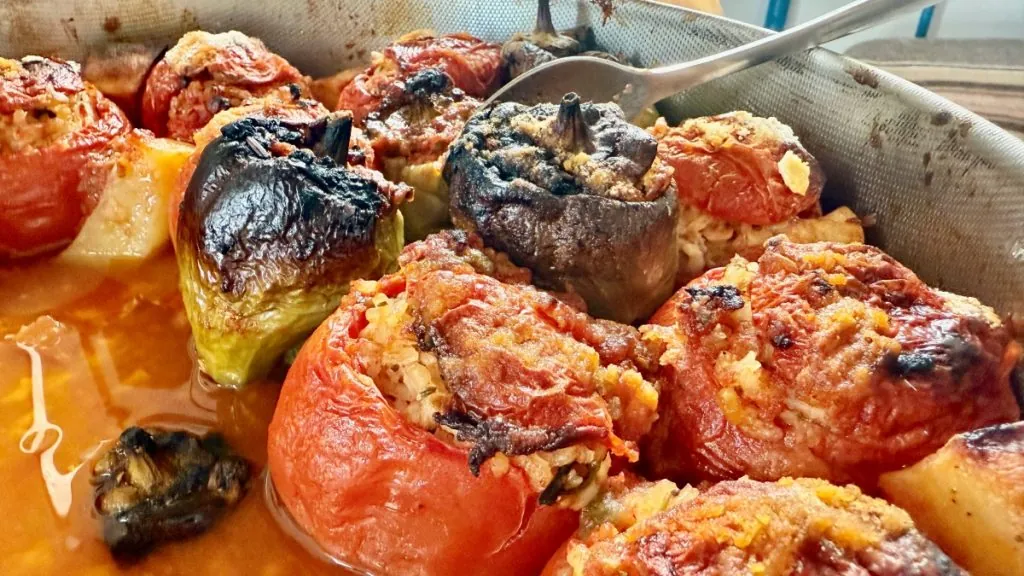
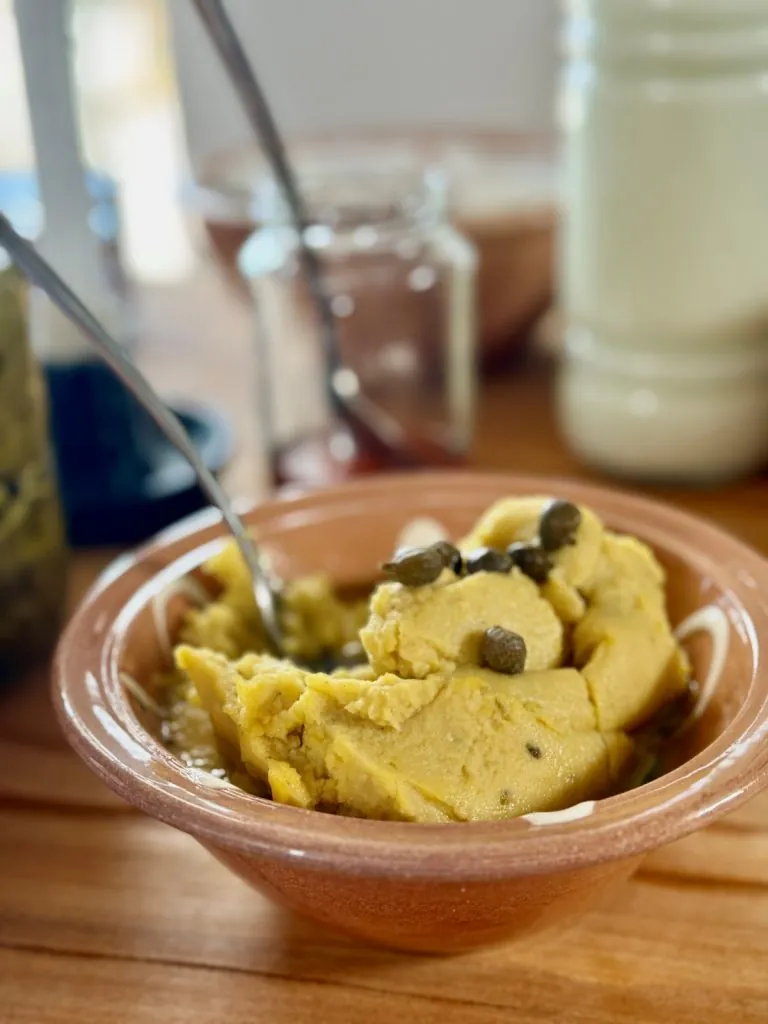
In front of us were stuffed peppers, vine leaf dolmas, fava and other legumes, olives, various cheeses, grapes and bread. We were also given some white wine. Almost everything we ate had been produced on the farm, Giannis said.
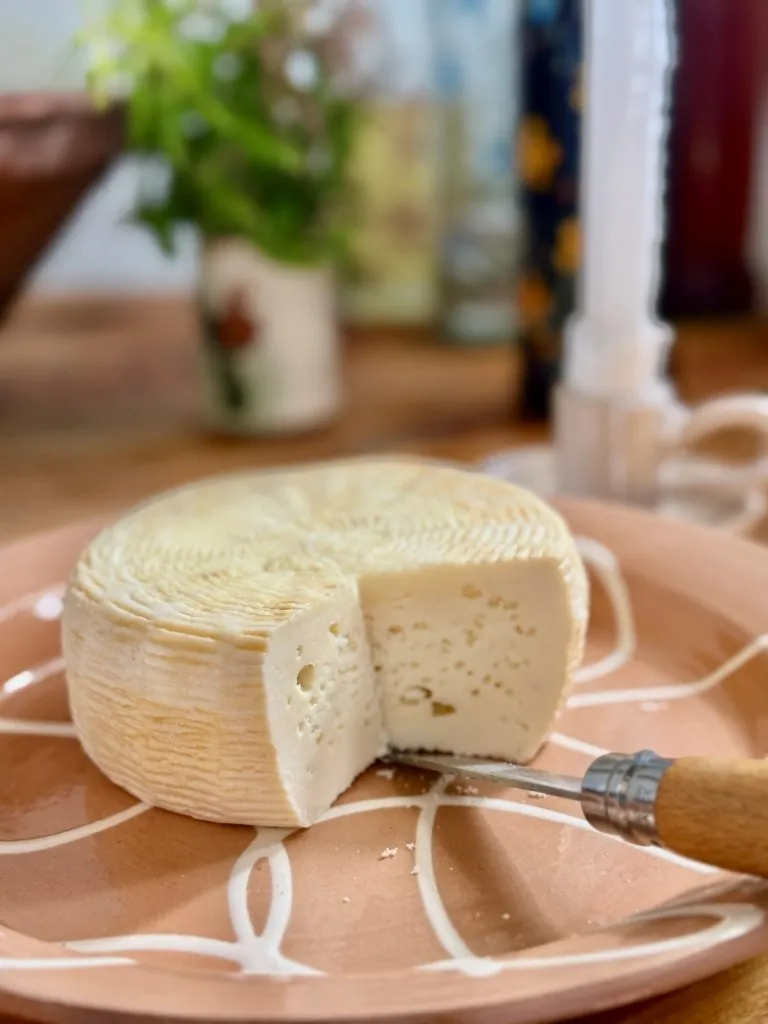
The cheeses are made from the farm's own milk, and since the quantities are small, milk from different animals can be mixed depending on what is available. Goats, sheep, and cows can all contribute to the same cheese. And it was delicious.
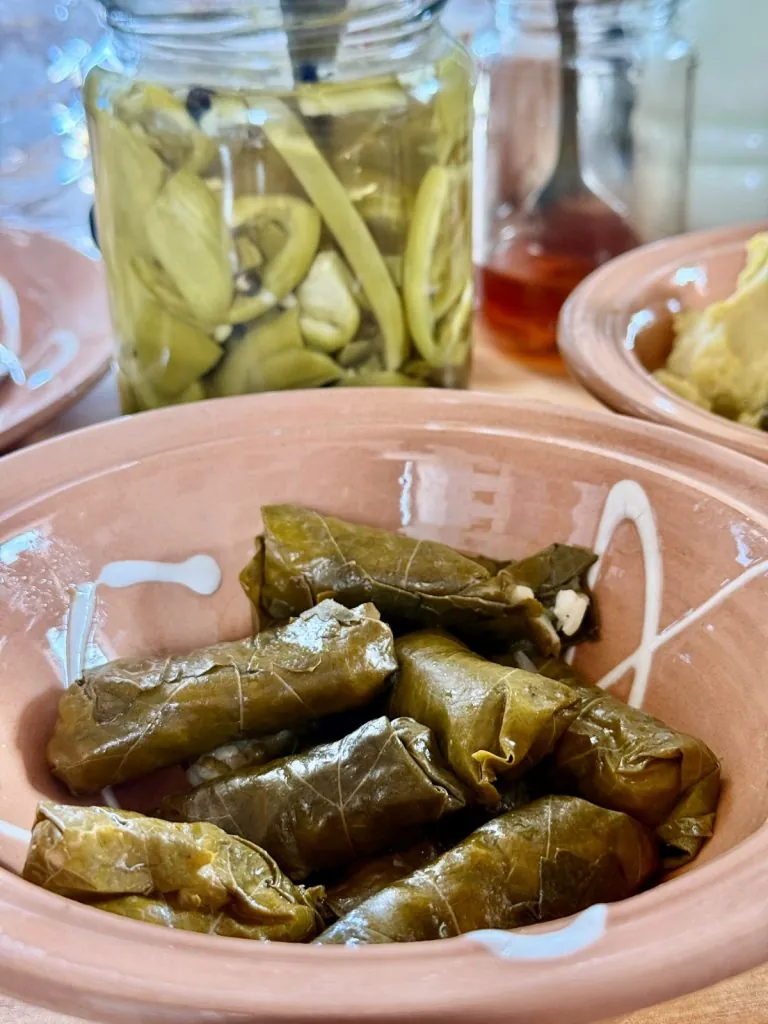
Of course, it's always nice to have locally produced food, but there's something extra when you've just walked around the place where the ingredients are produced and met the animals that are part of the cycle.
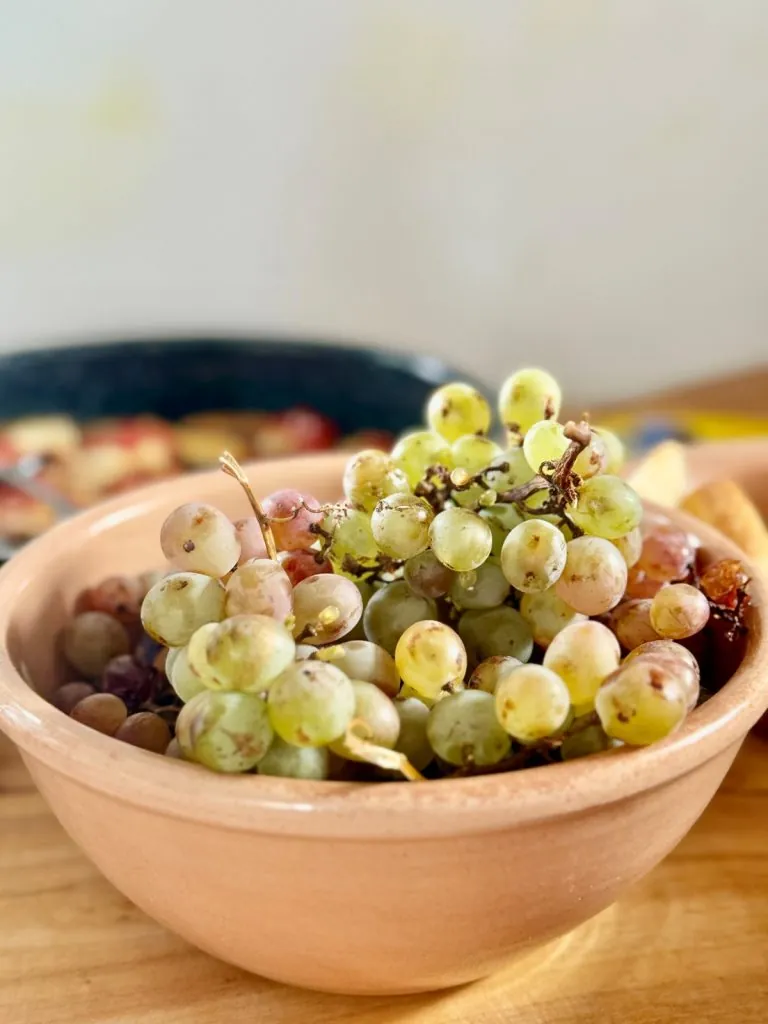
Yogurt and honey for dessert
Finally, yogurt with honey arrived. And of course, there were also bees on the farm. After all the small dishes, the creamy yogurt and sweet honey were a perfect end to the meal.
It was one of those lunches where the food itself is only half the experience. The other half is the place, the people, and the story behind what's on the plate.
A way to keep the farm alive
It's easy to romanticize life on a small Greek farm. Animals, homegrown vegetables, honey from the beehives and views of Sifnos sound undeniably idyllic.
But Giannis also told us about another reality. Running a small traditional farm involves a lot of work and does not necessarily provide enough income to cover daily expenses. That is why he works as a carpenter alongside farming.
Receiving visitors becomes another way to generate income from the farm and at the same time showcase knowledge and traditions that otherwise risk becoming less visible.
For us, that made the visit even more interesting. Loumidis Family Farm didn't feel like a tourist attraction where some animals have been placed for the visitors' sake. This is a small, working family farm where visitors get to get up close to everyday life that is still going on.
Visiting Loumidis Family Farm – practical information
Loumidis Family Farm is located in the Vlaha area of Sifnos, along the road between Apollonia and Faros. Visits must be booked in advance and up-to-date information on schedules, times and prices is available at the farm. At their own website There is contact information for Giannis and the possibility of contacting him via WhatsApp, among other things.
The farm is also on Instagram at @loumidis_family_farm, which was the channel Giannis himself suggested to us when we asked how visitors could most easily find them.
A visit can suit both adults and children. For children who like animals, we can imagine it being a dream come true, but we can assure you that you don't have to be a child to appreciate holding a baby rabbit, feeding a donkey or being chased by a social goat.
Our impressions of Loumidis Family Farm
What perhaps made the biggest impression on us were the animals. They were so incredibly tame and sociable.
The rabbits were cuddly, the donkey wanted to hang out, the horse wanted to know what we were doing, and the goats came over to say hello – or chew on our belongings. And then the little kitten who suddenly discovered that we had left and came running after us.
But the visit was more than just an encounter with charming animals. We also got a little insight into how people have lived and produced food on Sifnos for generations: with the animals close by, with the resources available on the island, and with farming methods adapted to a dry climate.
And to finish, we got to sit in the little old house and eat a whole meal with ingredients that mostly came from the area around us. An incredibly charming visit that we will never forget. And yes – we would have liked to have stuffed the occasional kitten into our suitcase…
You might also like:
 Kolmården - Aunt Anna walks around the world
 Kungsbyn in Västerås - with Grandma Anna and the grandchildren
 Aunt Anna looks for dugongs in Mozambique
 LEGOLAND Billund - the favourite of families with children
 Visiting the castle of Rhodes Town - Palace of Grand Master of Knights
 Things to do on Naxos – 16 experiences and attractions



 English (UK)
  Svenska