


Writer: Peter Bergström
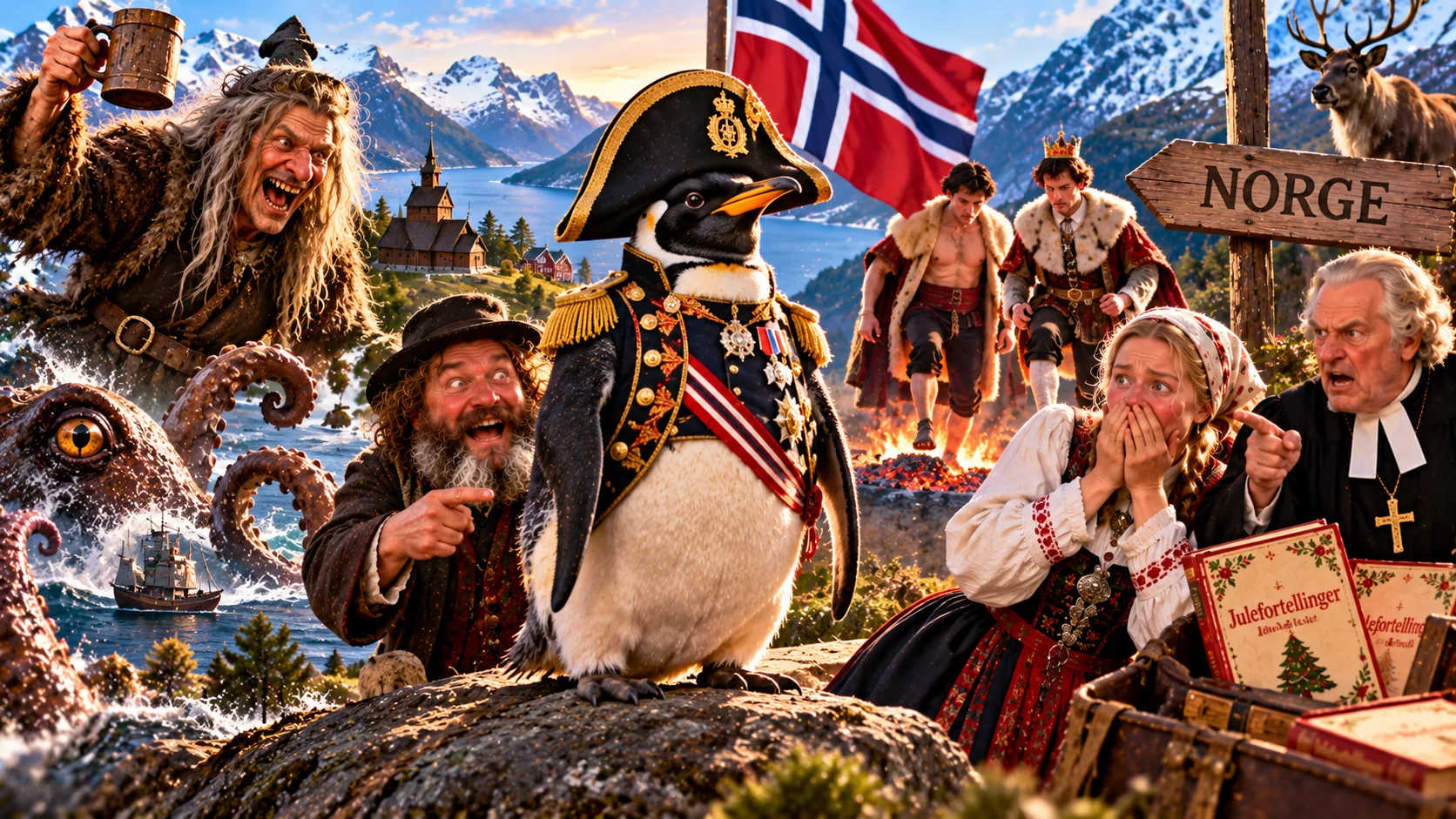
Norway has fjords, mountains and oil. But the country also has a major general who is a penguin, kings' sons who were tested with red-hot irons and an old Christmas monster who demanded alcohol. Here are 30 true stories about Norway that are much crazier than the usual facts.
 Tweet
 Share
 Share
 Pin
 Share
 Share
Table of contents
Facts about Norway – when reality is crazier than we thought
When we started looking for strange facts about Norway, we thought we would find some strange laws, odd traditions and stories that we had not heard before. We had no idea that we would end up in a world with a major general who is a penguin, kings' sons who prove their lineage by walking on red-hot iron, Christmas monsters that require alcohol and a kraken that, according to old tales, fished with its own shit.
And the best thing is that we haven't made up the stories. Behind the 30 points are historical sources, documented traditions and real events. In some cases, they are fairy tales and old folk beliefs, and then we tell them. Because when reality is already this crazy, we don't actually need to make it crazier.

The pictures, however, are a completely different story. Here, together with AI, we have taken the liberty of illustrating how it all works. can have looked like – with a twinkle in the eye and without any ambitions whatsoever to create historically accurate snapshots. See them as little caricatures for the stories. So forget the capital, the population and Norway's highest mountain for a moment. Now we go in search of the other side of Norway. And we start, of course, with the major general who is a penguin.
1. Norway has a major general who is a penguin
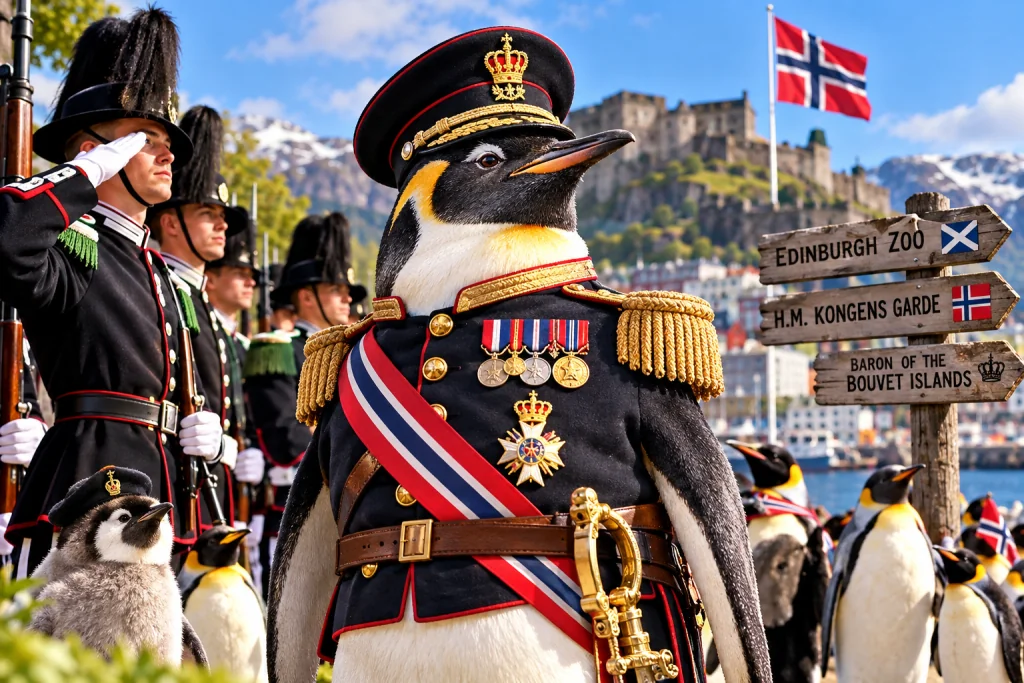
No, we haven't started making up stories yet. Norway actually has a major general who is king penguin. Sir Nils Olav is the mascot of His Majesty the King's Guard and lives at Edinburgh Zoo in Scotland. The tradition began in 1972, and since then the name and military ranks have been passed down between three different penguins. The current one, Sir Nils Olav III, was promoted to Major General 2023. He is also a knight and baron of Bouvet Island.
The promotion took place in front of more than 160 Norwegian guardsmen and Guinness World Records recognizes him as the world's highest-ranking penguin. In 2026, the story got even better: Sir Nils and the female penguin Connie laid an egg together. In other words, the major general also has family responsibilities to attend to.
2. You had to brew Christmas beer – otherwise you could lose the farm
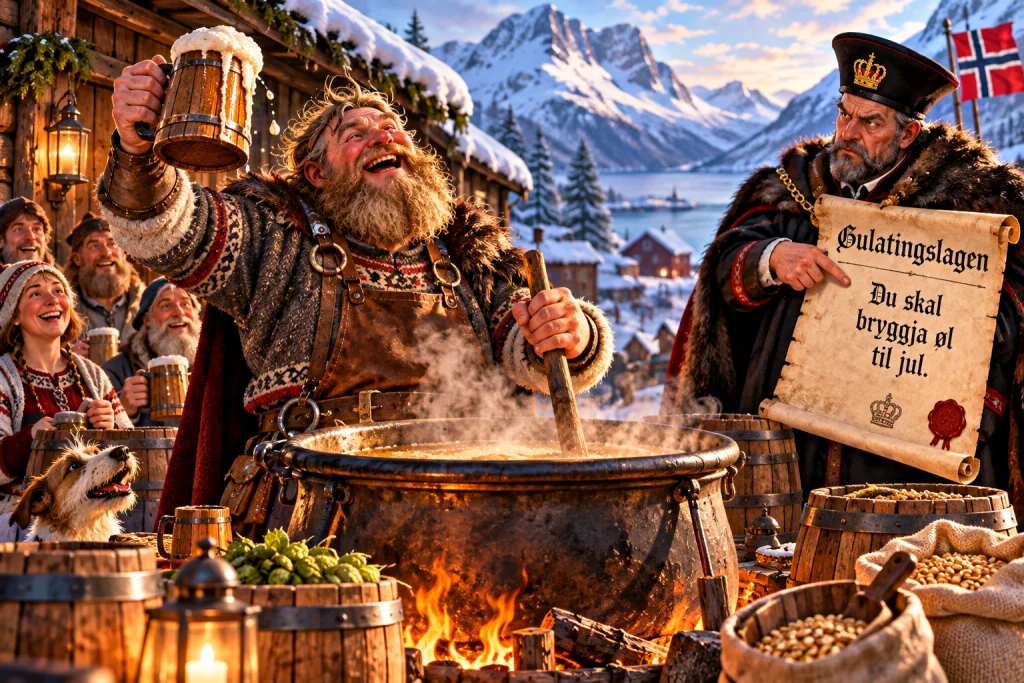
Forgetting Christmas beer used to be much more serious than coming home without schnapps for the Christmas table. As early as the 11th century, Norwegian farmers were required to brew beer for Christmas, and the tradition was later written into the Gulatingslagen. You weren't just supposed to brew – you were also supposed to participate in the drinking and "drink Christmas".

The punishments could be severe. Anyone who did not follow the rules risked a fine and, in serious cases, could lose their property to the king and bishop. As an extreme consequence, banishment is also mentioned. Christmas beer was not just a nice tradition. It was part of the law.
3. Norwegians eat around 50 million frozen pizzas a year
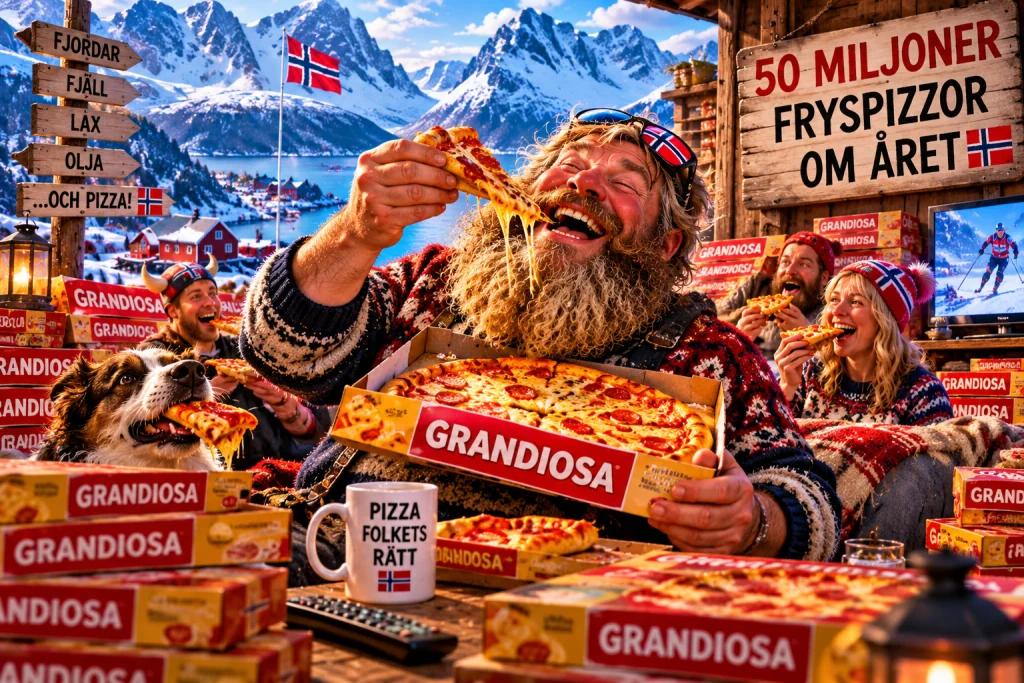
Norway has fjords, fresh fish and fantastic produce – and is also world champion at putting frozen pizza in the oven. Norwegians eat around 50 million frozen pizzas per year, which according to the Store norske leksikon makes Norway the country that eats the most frozen pizza per person. About half is Pizza Grandiosa.

When Grandiosa was developed in the 1970s, pizza was still relatively unknown in Norway. The recipe was therefore adapted to Norwegian taste buds. The result was a frozen pizza that eventually almost gained status as Norwegian home cooking. The Italians have to try to live with it.
4. Norway invented the paper clip – although Norway didn't
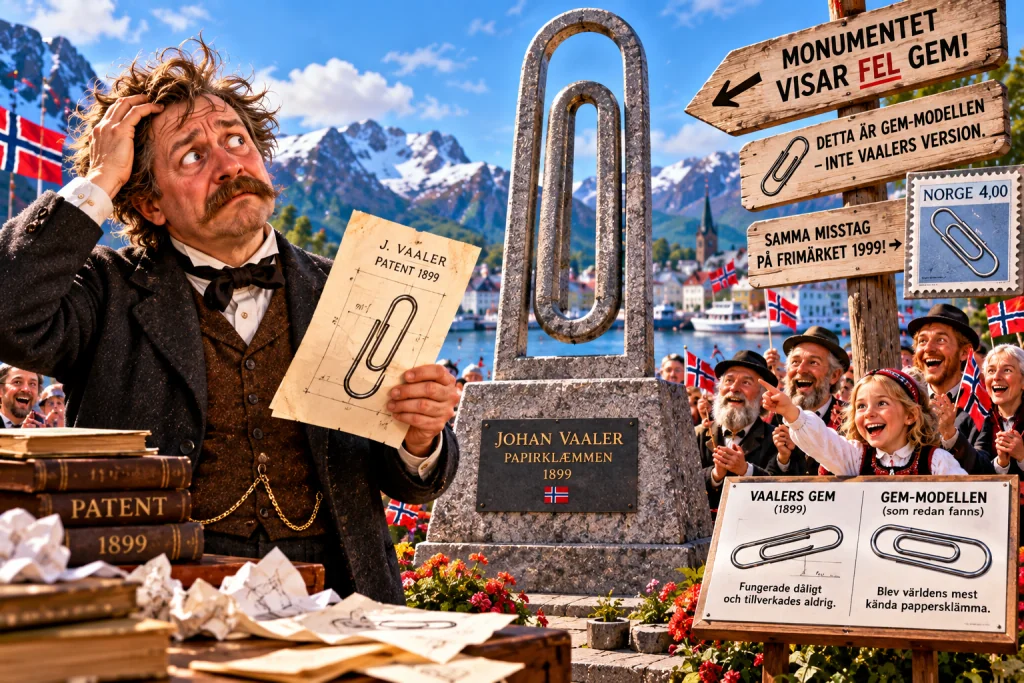
For many years, Norwegian Johan Vaaler was credited with inventing the paper clip. There was just one small problem: he didn't do it. In 1899, Vaaler patented a type of paper clip that was less practical than the Gem model already on the market. His version never went into production. Nevertheless, the story of the Norwegian invention grew.
In 1989, a seven-meter-high paperclip monument was even erected to pay tribute to Vaaler. And here the story becomes perfect: the monument depicts The paper clip model – not even Vaaler's own paper clip. The same mistake was made on a Norwegian stamp in 1999.
5. The Soviets released a giant crab – which invaded Norway and became a delicacy
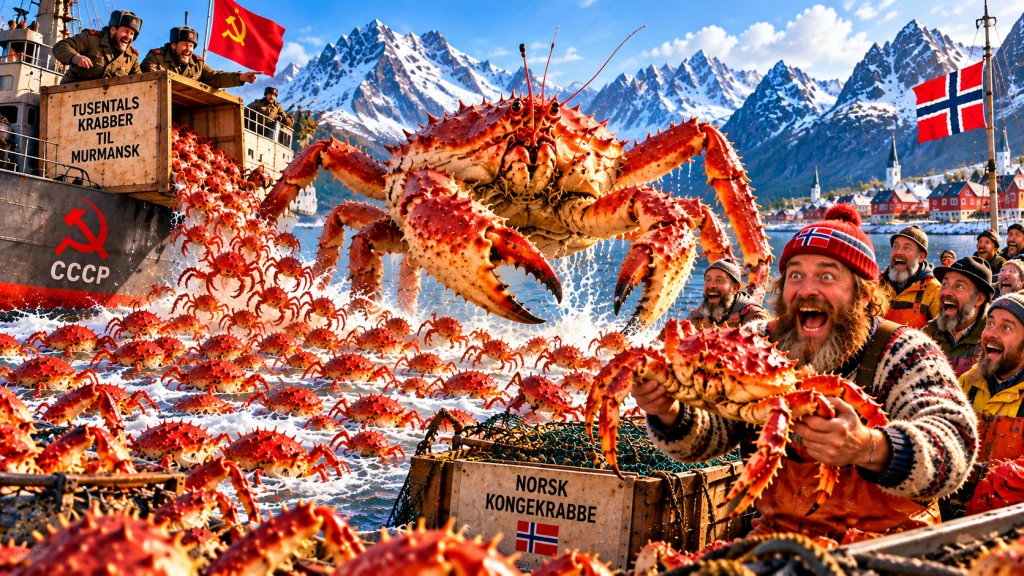
The king crab is actually native to the North Pacific Ocean. But in the 1960s, Soviet scientists decided to move it to the Murmansk Fjord to create a new food resource. They weren’t satisfied with just a few crabs. Over the course of several years, thousands of adult and juvenile crabs and around 1.5 million crab larvae were released. In 1976, the king crab was caught for the first time in Norwegian waters, in the Varanger Fjord.
Today, the king crab is considered an alien species with a very high ecological risk in Norway – while at the same time being a valuable fishing resource and an expensive delicacy. The Soviets thus sent Norway an environmental problem that the Norwegians partly solved by serving it for dinner.
6. Rjukan didn't get any sun – so the city bought one
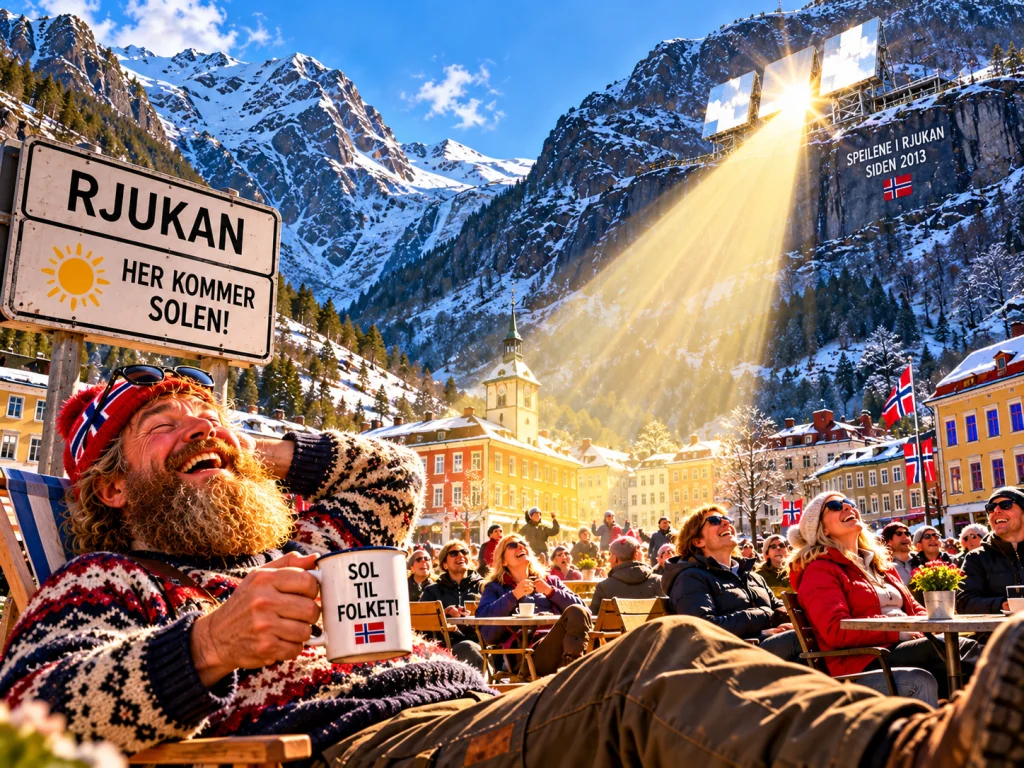
Rjukan is so sandwiched between high mountains that the sun does not reach the city during much of the winter. As early as 1913, Oscar Kittelsen came up with a solution that sounds like something out of a Donald Duck cartoon: Put mirrors on the mountain and send the sun down.
The technology wasn't quite up to par at the time, but a hundred years later the idea became a reality. Since 2013, three computer-controlled mirrors have sat about 450 meters above the city and follow the sun across the sky. They reflect the sunlight down onto Rjukan's square, creating a sunlit surface of about 600 square meters. If the square can't reach the sun, the sun simply has to come to the square.
7. The Viking's packing list for Valhalla: 12 horses, dogs – and two peacocks
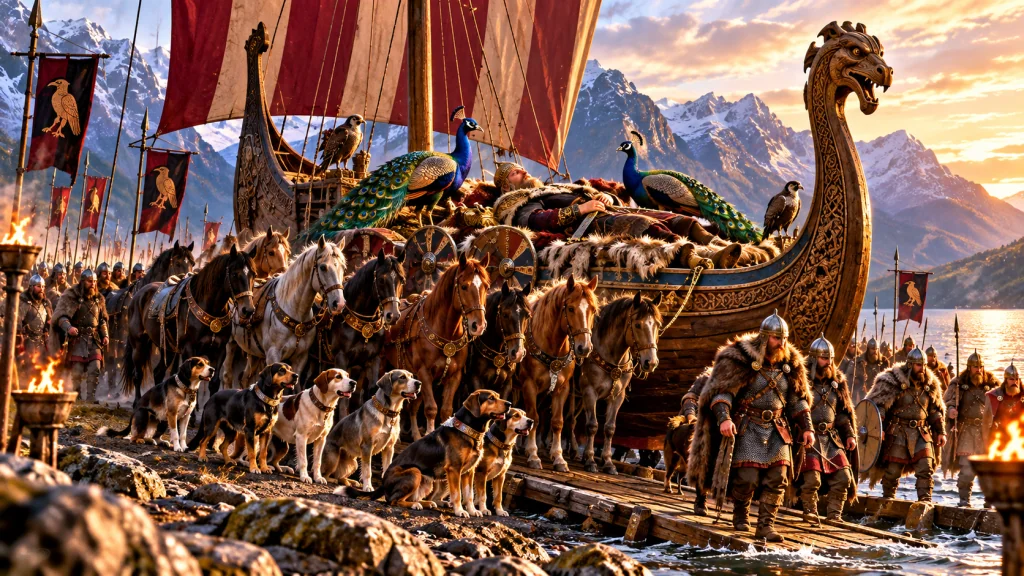
When the Gokstad ship was excavated in Vestfold, a rich Viking grave was found. The deceased had obviously not intended to travel on poorly equipped. Outside the ship was twelve horses and at least seven dogs. In addition, birds of prey were found – and inside the ship two peacocks.
Peacocks are of course not particularly Norwegian. The find therefore tells us something about the status of the buried person and the long-distance contacts that existed during the Viking Age. Horses? Reasonable. Dogs? Absolutely. But two peacocks for Valhalla? Then the packing starts to get ambitious.
8. A cat's skin was worth three fox skins
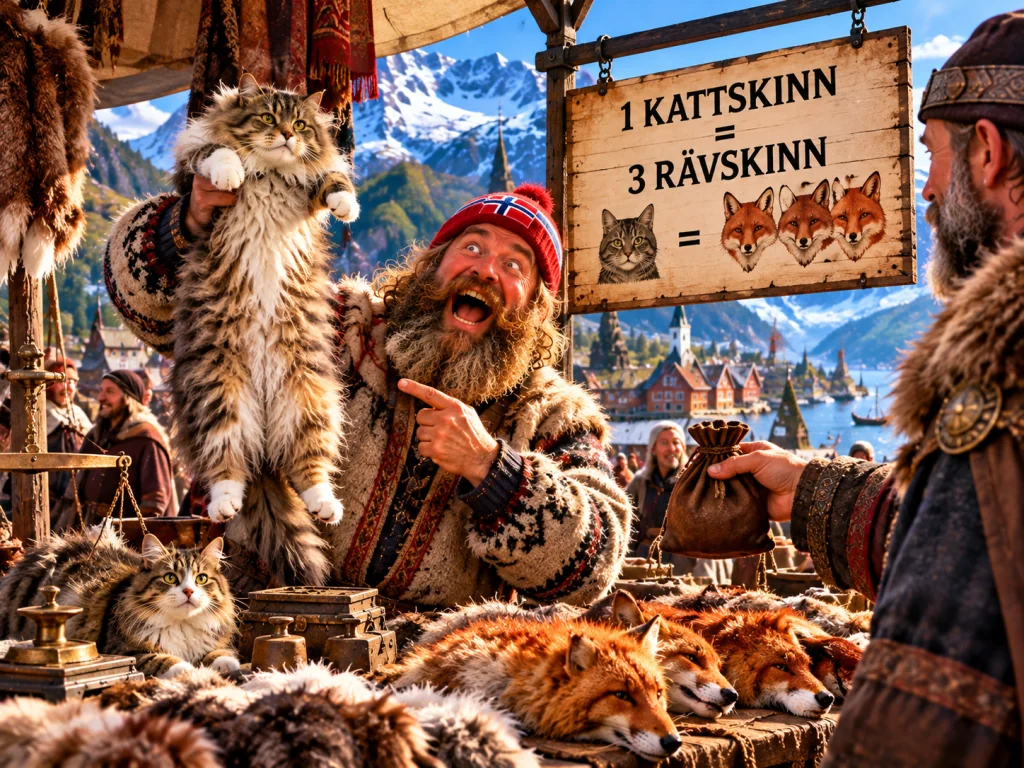
The cat had a completely different economic role in medieval Norway than today's couch cat who wakes up his owner at four in the morning because his food bowl looks suspiciously half empty. Cats were important farm animals because they kept rats and mice away from food supplies. Cat skins were also used for gloves and hats, among other things.
And they were valuable. In Magnus Lagabøte's law book from 1276, the value of a cat's skin is worth the same as three fox skins. So the next time the cat is lying on the keyboard, it might be worth showing some respect for its historical market value.
9. Glowing iron was the medieval Norwegian DNA test
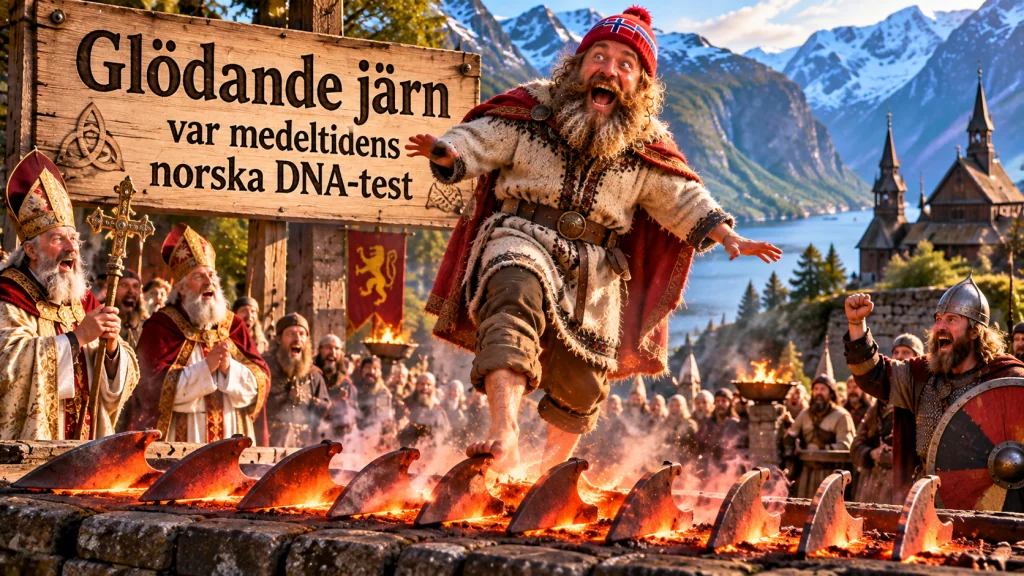
When Harald Gille came to Norway and claimed to be the son of King Magnus Barefoot, there were of course no DNA tests. They had a different method. According to the saga, Harald got walk barefoot over nine red-hot plowshares. If afterwards he did not have the expected burns, it was considered that God had shown that he was telling the truth. Harald passed the iron burden and was recognized as the king's son.
Inga from Varteig also underwent iron birth to confirm her son Håkon's royal lineage. This is how medieval paternity tests worked: red-hot iron, a few bishops, and God as laboratory director.
10. A king's son proved his lineage with a burning candle underwater
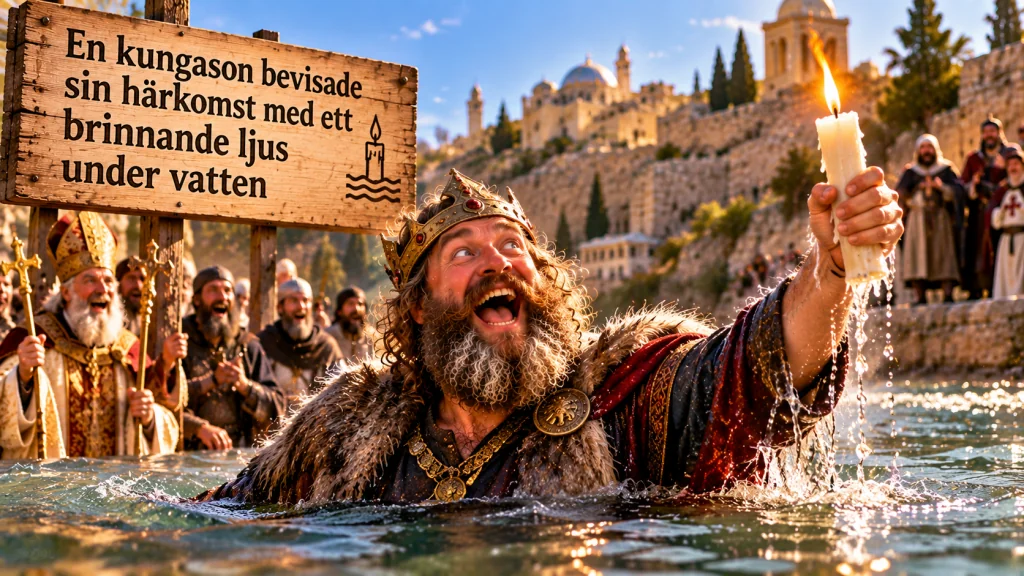
Eirik Sigurdsson claimed to be the son of King Sigurd Munn. And according to Sverre's saga, he had a rather unusual piece of evidence. During a trip to the Holy Land, Eirik is said to have dipped himself in the Jordan River. with a burning candle in his hand – and came back up with the candle still burning. This would show that he was indeed the son of a king.
Apparently the underwater test wasn't enough, because in 1181 Eirik also carried out an iron burial in Nidaros to further prove his lineage. Let's be clear: the story of the light comes from the saga, not from a modern eyewitness report. But as a medieval CV, it's hard to beat.
11. Norway's dead king returned 15 years later
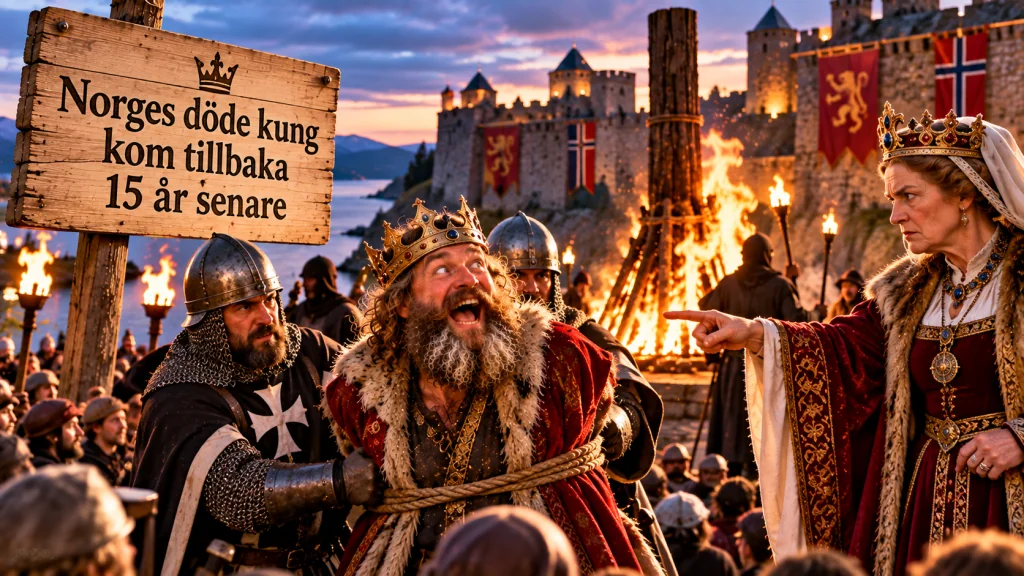
King Olav Håkonsson died suddenly in 1387, at the age of 16. Fifteen years later, a man appeared in the Teutonic Order claiming to be Olav. According to the man, the young king was not dead at all. Queen Margaret was not convinced.
The false Olav was handed over to her, confessed the fraud and was burned publicly. Pretending to be king could be a brilliant career plan – provided the real king hasn't already been dead for fifteen years and his mother is still around.
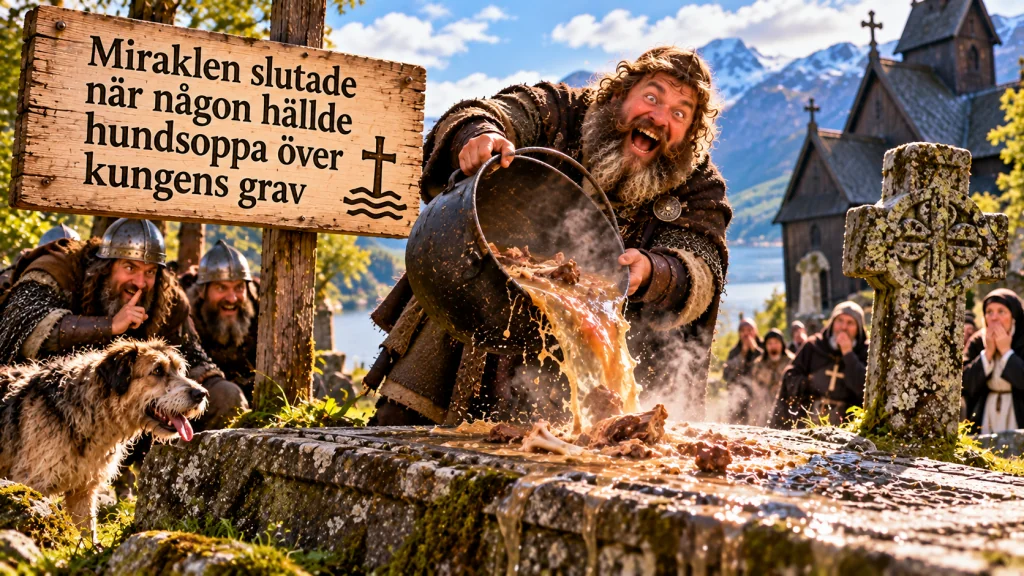
12. The miracle ended when someone poured dog soup over the king's grave
King Øystein Haraldsson was killed in 1157 and after his death began to be considered holy. According to the sagas, springs appeared at the places where he was killed and where his body had been lying, and people were said to have been cured by the water. Miracles were also said to have occurred at his grave. But then the enemies came.
According to tradition, they poured soup cooked with dog meat over the king's grave – and then the miracles ceased. So this is a story from the fairy tale tradition and not something we can verify as an actual event. But somewhere in history there is still a person who must have thought: ”We’re trying dog soup.”
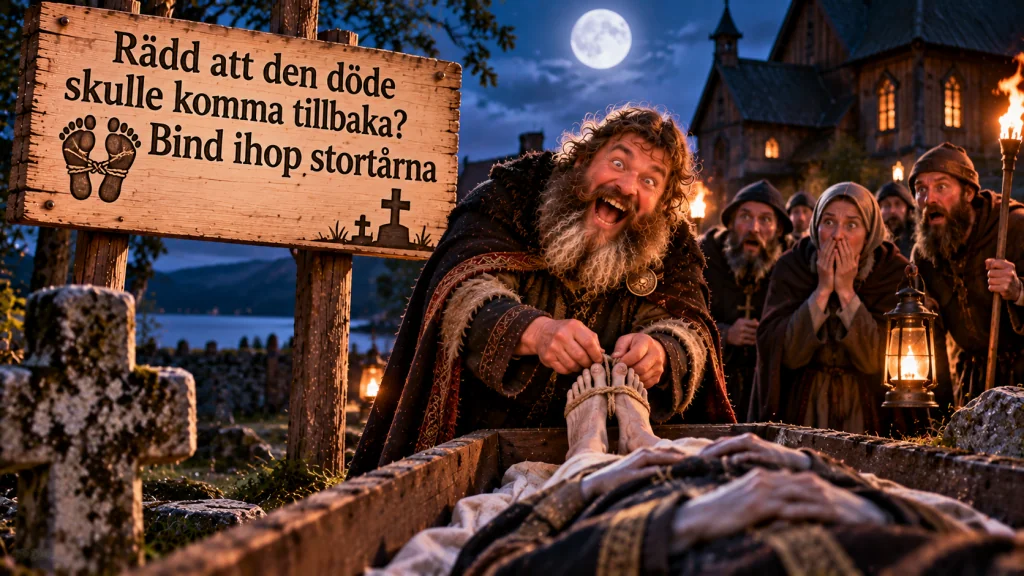
13. Afraid the dead would come back? Tie your big toes together
Ghosts were not something to be taken lightly in old Norwegian folklore. People who died in unusual ways or left behind conflicts could be thought to return and cause problems for the living. Therefore, there were various ways to try to prevent the dead from walking again.
One of the simpler ones was to to tie the corpse's big toe together. If you were still not convinced, there were stronger methods. According to folk belief, you could also drive a stake through the body and the coffin. We probably prefer the big toes.
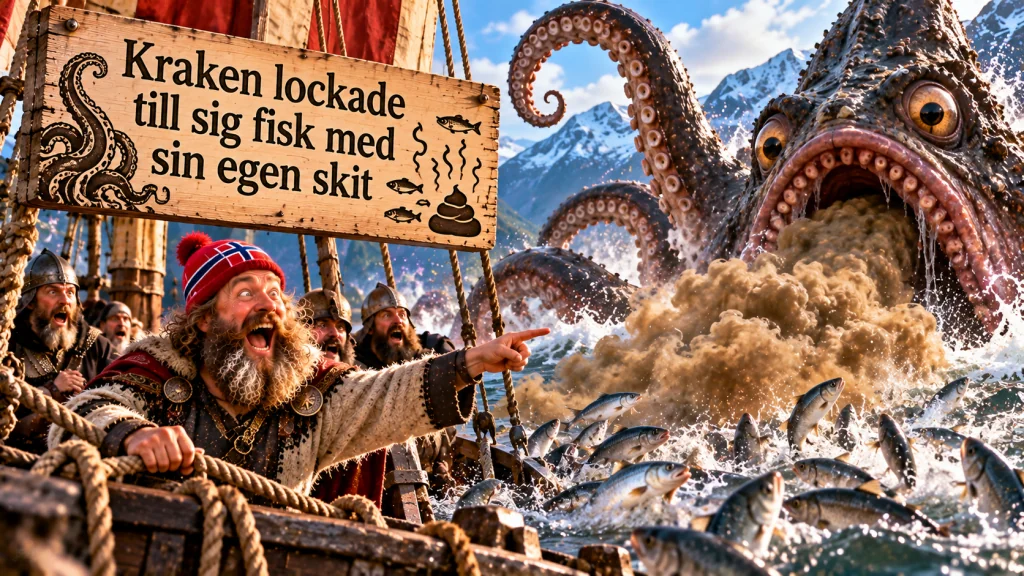
14. The Kraken Attracted Fish with Its Own Shit
The Kraken is a gigantic sea monster from Norwegian folklore that could be mistaken for an island and drag ships into the depths. However, according to 18th-century descriptions, it also had a fairly advanced fishing method.
Erik Pontoppidan wrote in his Norwegian Natural History 1752–1753 that the kraken emptied excrement that made the water cloudy and smelly. The smell would attract hordes of hungry fish. When enough fish had gathered, the kraken would simply open its mouth and eat them. Forget the bait, the lure, and the sonar. The kraken fished with shit.
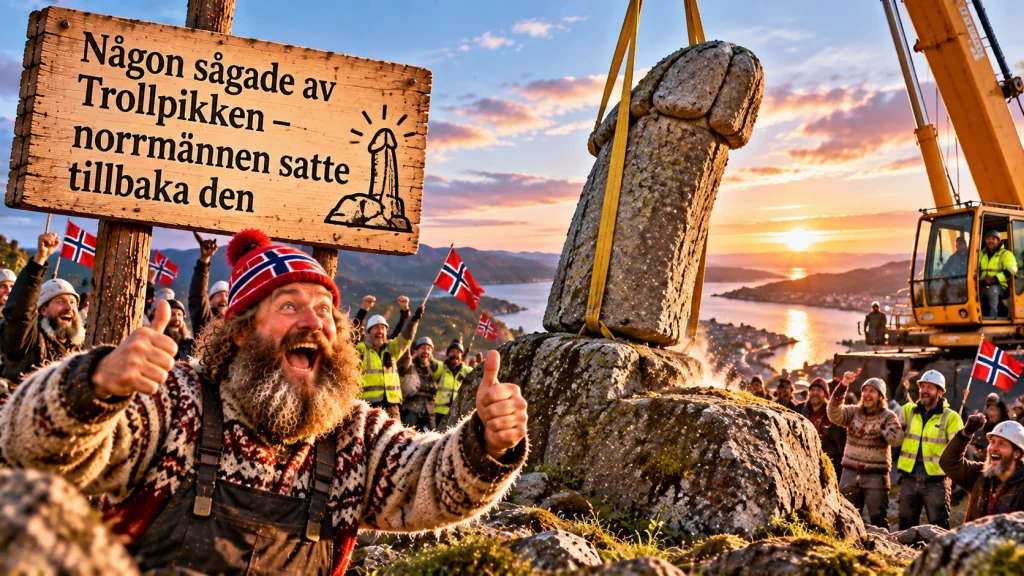
15. Someone sawed off the Trollpikken – the Norwegians put it back
In Egersund there is a rock formation with a name that requires no further explanation: The Troll Dick. In the summer of 2017, it became world-famous when someone sawed off all its glory during the night. The locals did not appreciate the intervention. Money was raised and just 13 days later, Trollpikken was lifted back into place.
It was no small operation either. The sawn-off rock formation weighed about twelve tons. So someone sawed off a twelve-ton stone penis. The Norwegians replied: Not a chance. And put it back.
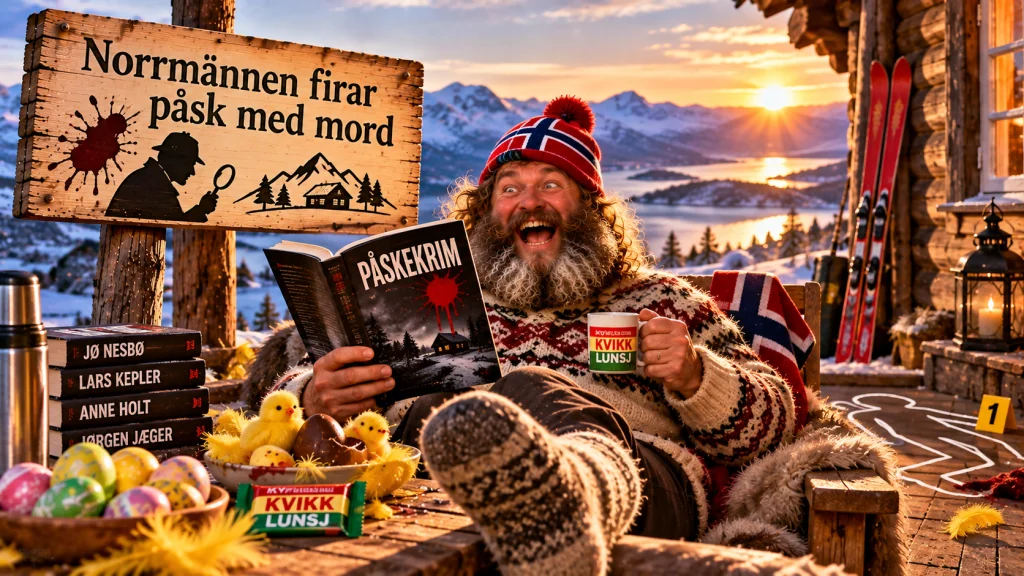
16. Norwegians celebrate Easter with murder
When Swedes think of Easter, we might think of eggs, candy, and Easter bunnies. In Norway, they like to bring up a really nice murder. Easter crime is a uniquely Norwegian phenomenon where crime novels, detective stories, TV series and mysteries have become part of the Easter celebration.
The tradition is usually linked to 1923. That's when the crime novel was marketed The Bergen train was looted! with an ad that looked like a real newspaper article about the Bergen train being robbed. It worked. A hundred years later, a Norwegian Easter can still mean mountain cabins, Kvikk Lunsj – and a few well-chosen murders.
17. Norwegians celebrate graduation before final exams begin
In Sweden, people usually try to finish before the student party explodes. Norway has chosen a different strategy. The Norwegian therussiancelebration traditionally lasts until May 17 – while the final exams come afterwards. The tradition has its roots in older student rituals and eventually developed into today's Norwegian student celebration, with its own clothes, ceremonies and festivities.
In the modern version, it has become overalls, buses, music and parties. So you can party as if school is over. Then go back and write the exams. It requires a self-confidence that we still have to respect.

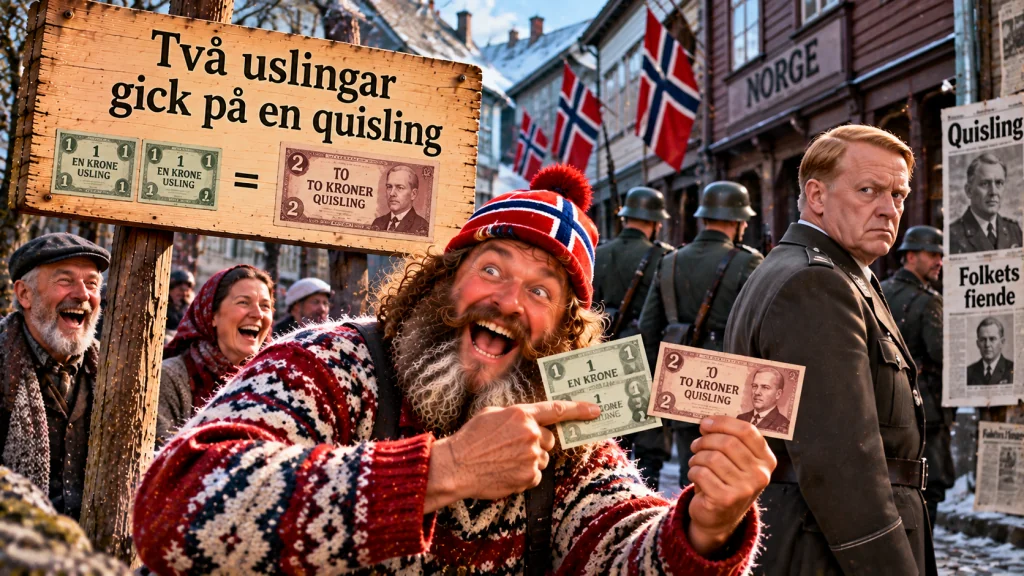
18. Two scoundrels went on a quisling
During World War II, Vidkun Quisling's surname took on a meaning that hardly any family would wish for. The word quisling spread internationally as a term for a traitor or collaborator. But the Norwegians themselves took the story a step further.
During the occupation, Norwegian two-kronor banknotes were popularly called quislings. The one-kronor note was named wretch. And since two one-krona coins were worth the same as a two-krona coin, the joke was born: It takes two scoundrels to beat a quisling. Even during the occupation, there was room for truly black Norwegian humor.
19. Norwegians put cod in corrosive lye – and eat it
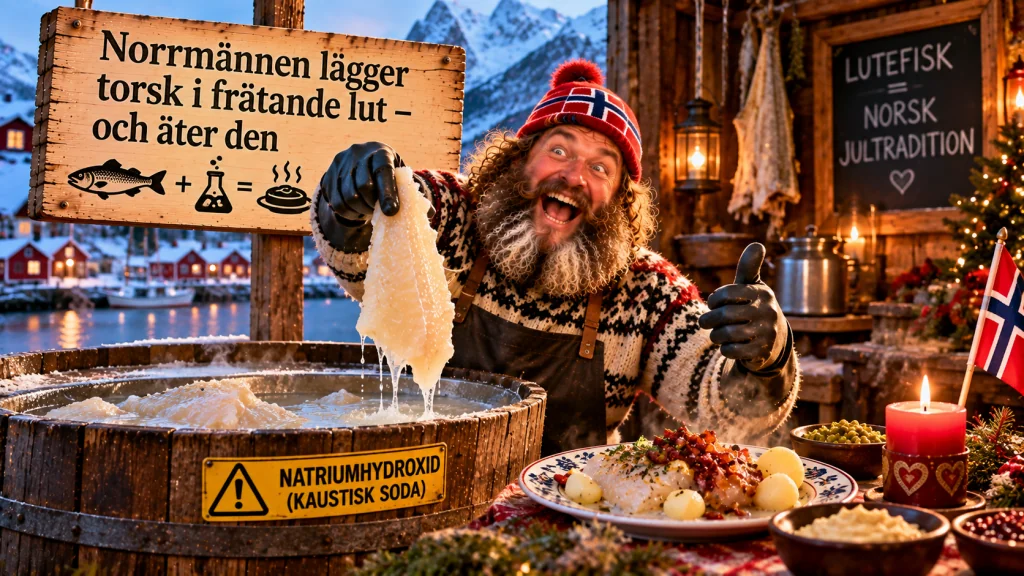
At some point in history, a person must have looked at a dried cod and thought: ”Do you know what this one needs? Lye.” Lutefisk is made from dried fish that is soaked and then treated with lye. In modern production, sodium hydroxide, or caustic soda, is often used. Lye is corrosive, so before the fish ends up on your plate, it must of course be thoroughly leached with clean water.
The result is one of Norway's most famous traditional Christmas dishes. We want to emphasize that finished lutefisk is food. But the manufacturing process still sounds like something that should require safety glasses.
20. When eating sheep's head, start with the ear – then comes the eye
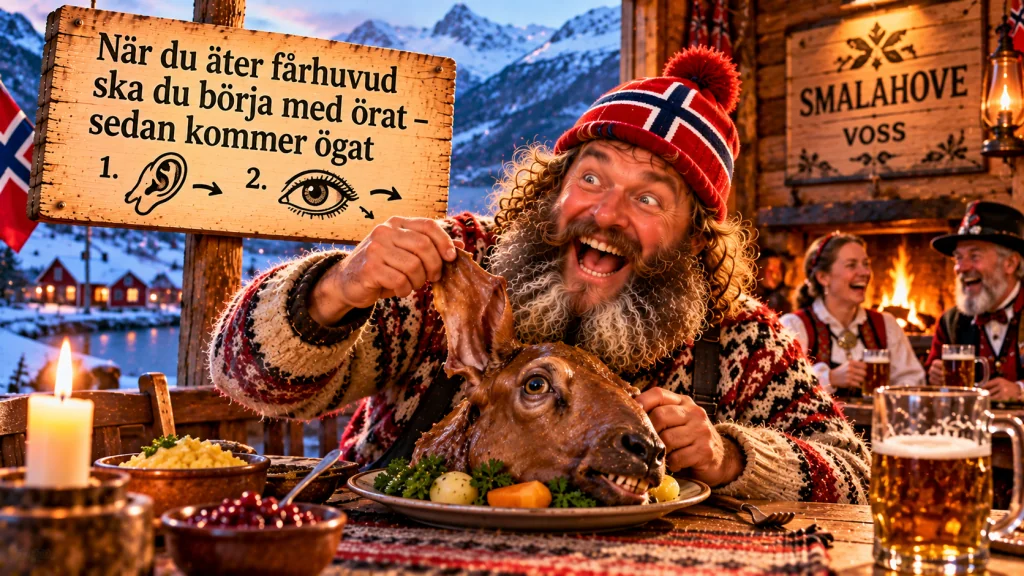
Smalahove is a traditional Norwegian sheep's head, particularly associated with Voss. And should you wonder how to attack a whole sheep's head on your plate, there are actually instructions.
Food Talk recommends starting at the ear, where there is a lot of fat and therefore it is important to eat while it is still warm. After that you can work your way up to the eye. The eye is carefully opened and what remains, the eye muscle, is considered by many to be one of the best pieces of the whole sheep. Suddenly, a frozen pizza Grandiosa feels pretty undramatic.
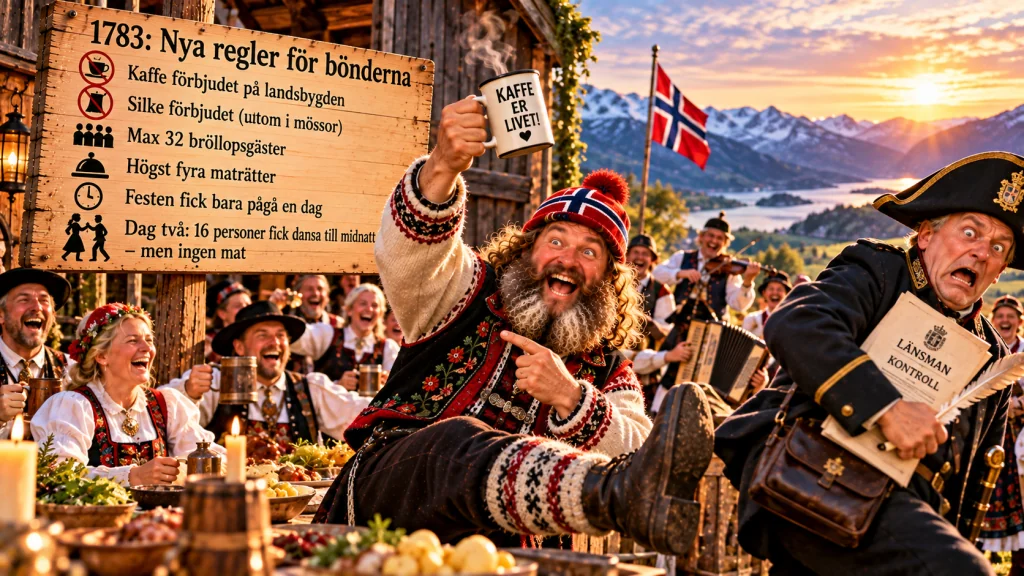
21. Coffee prohibited, maximum 32 wedding guests – and no food on day two
In 1783, the authorities in Denmark-Norway thought that the peasants had begun to live far too luxuriously. All coffee drinking was banned for the rural population. Silk was basically forbidden, except in hats. At weddings, the peasants were allowed to offer max 32 people and serve a maximum of four dishes. The party was only allowed to last one day.
On the second day, 16 people were allowed to come back and dance until midnight. But they were not allowed to be served food. In 1790, a sheriff came to inspect an illegal multi-day wedding in Orkdal. He was chased away and threatened with, among other things, having his arms and legs broken. The farmers apparently had a different idea about who was in charge of the party.
22. The old Norwegian Christmas Santa was a monster who required booze
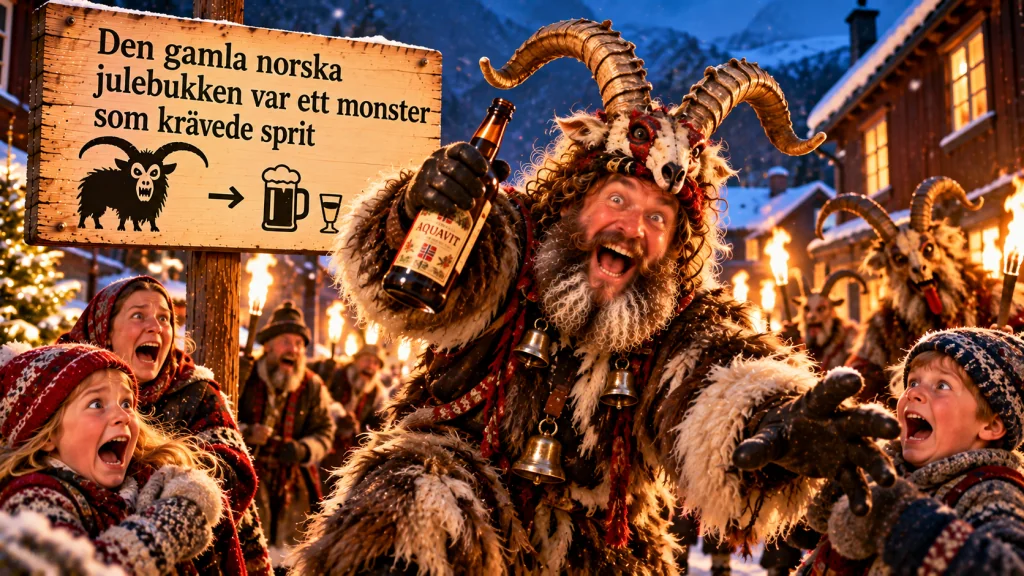
Forget the nice little Santa Claus that children can dress up as. The older Norwegian version could consist of young men dressed in furs, horns, masks or entire animal heads. The Santa Claus was supposed to be scary, could try to stab people and could completely scare children.
And unlike Santa Claus, it didn't come to give gifts. It would have something of its own – preferably beer or a dram. During the 17th century, the Yule goat was linked to the devil in some places and attempts were made to ban the tradition.
23. The Santa Claus could be placed at the door – and pee inside the house
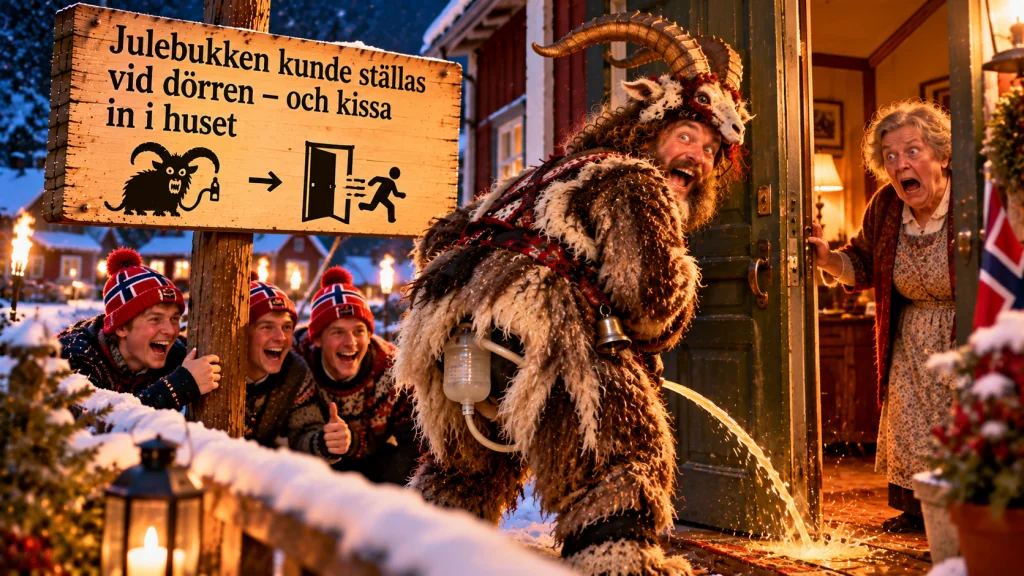
And if you thought the Christmas tree above was bad enough, we haven't even gotten to the youngsters yet. In older Norwegian traditions, you could build a grotesque figure and hide a water bottle with a spout inside it. In the evening, the youngsters would carry the figure to the neighbor's door, open the bottle, knock – and run.
When the neighbor opened the door, the monster was standing there. And peed in the house. This is documented by the Norwegian Folk Museum as an example of the much wilder Norwegian Christmas goat tradition. So Halloween kids have something to live up to.
24. On Christmas Eve, the dead were given the beds – the living slept on the floor
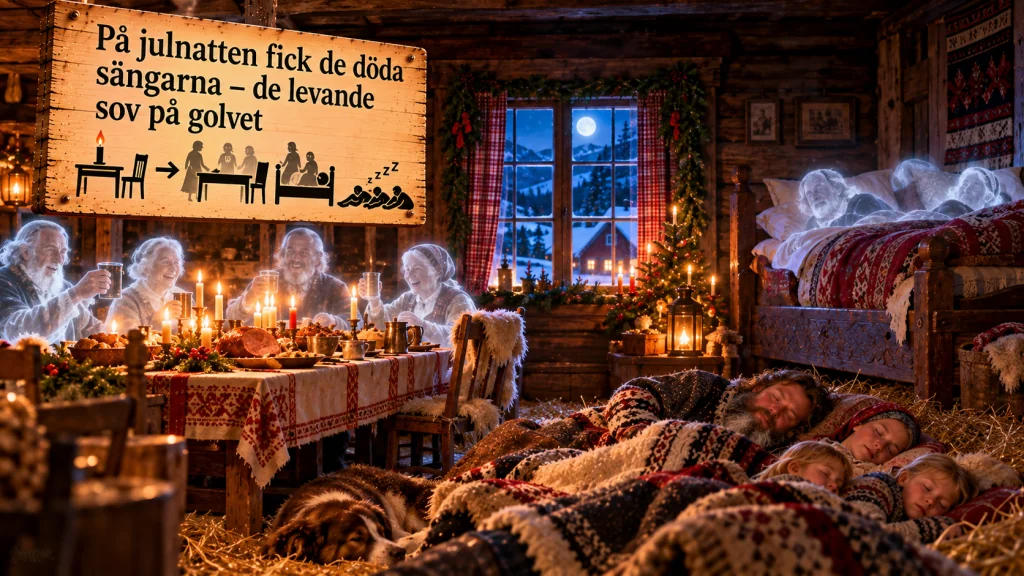
Christmas Eve was not just a celebration for the living in the old Norwegian peasant society. The table could be left set overnight so that dead ancestors could come back and eat. And they were to be treated properly. In some places, the beds were even left for the dead while the people on the farm themselves slept in straw on the floor.
This wasn't just some isolated tale. The Norwegian Folk Museum describes how the tradition survived across large parts of Norway well into the 19th century. In other words, Christmas was a family holiday. The whole family's.
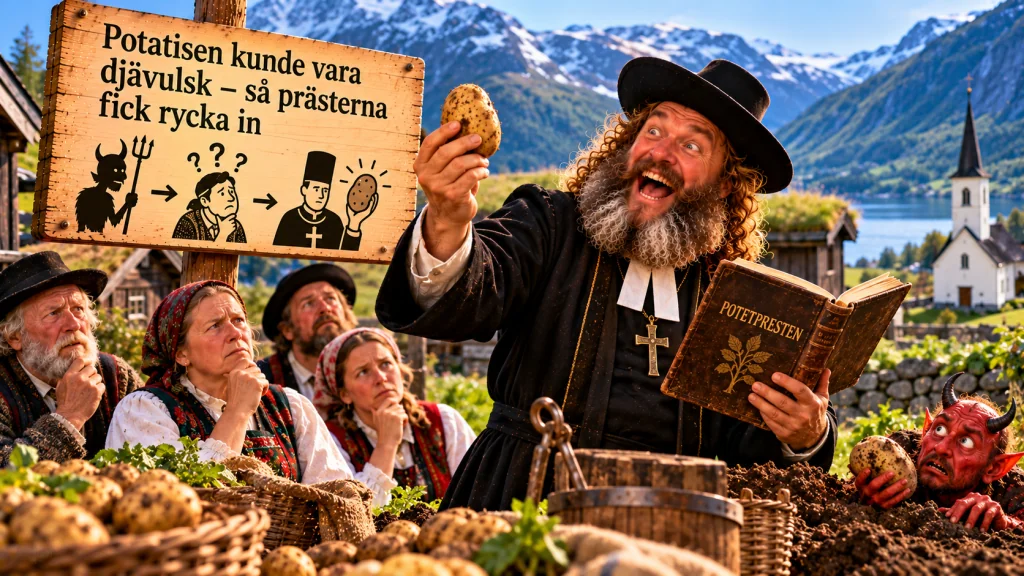
25. Potatoes could be devilish – so the priests had to step in
When potatoes began to spread in Norway in the 18th century, it was not obvious that everyone would start growing the new crop. Many stuck to what they already knew. But potatoes were both nutritious and well suited to Norwegian conditions. Therefore, the priests had to step in and help convince the population.
The so-called potato priests grew potatoes, spread knowledge and taught the farmers how useful they were. Hermann Ruge in Slidre is usually considered Norway's first potato priest. Eventually, the potato won. The fact that it could also be made into brandy is unlikely to have worsened the relationship.
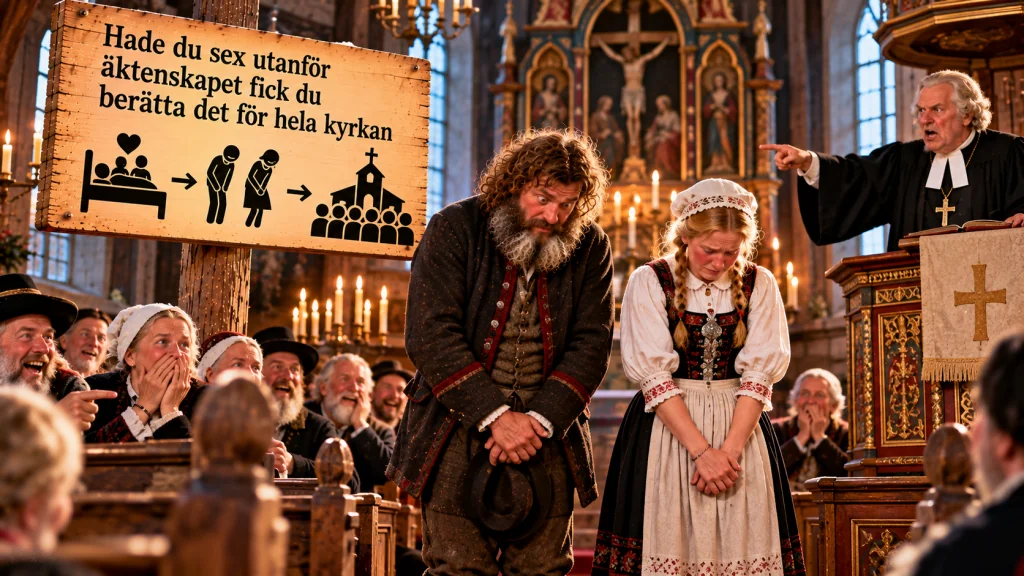
26. If you had sex outside of marriage, you had to tell the whole church.
In the 17th and 18th centuries, sex outside of marriage could be a crime in Norway. The punishment was not only about money. The man and woman could also be forced to public writing target. This meant that they had to stand before the congregation in church, confess their sin and ask for forgiveness while the parishioners listened. That must have made Sunday's service unusually interesting.
The public record of leiermål was abolished in the 18th century, but old church records still contain traces of people who were forced to undergo this very public variant of ”what happens in the bedroom stays in the bedroom”.
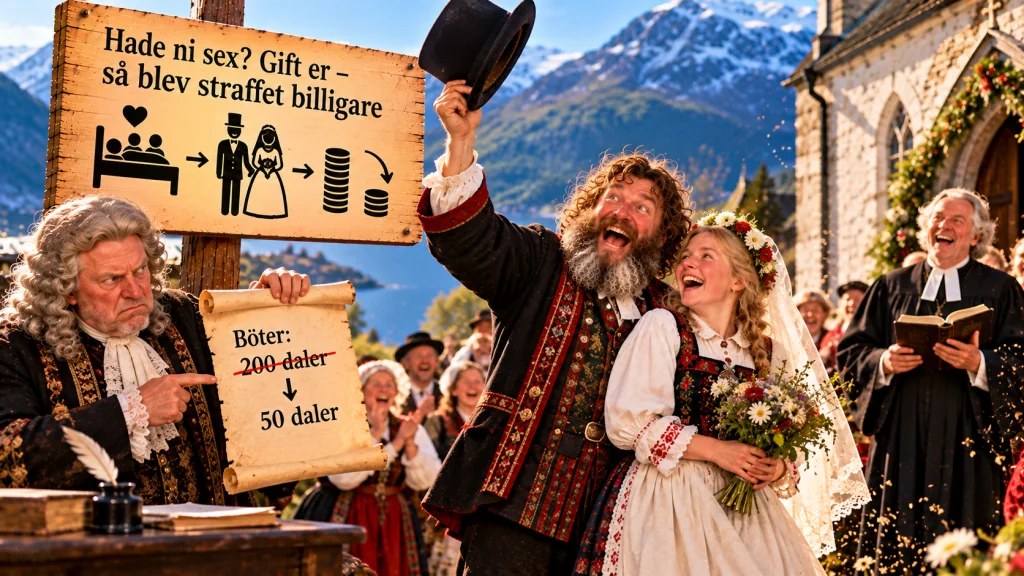
27. Did you have sex? Get married – then the punishment became cheaper
The Norwegian legal system also had a solution for two unmarried people who got a little too enthusiastic before the wedding. According to Christian V's Norwegian law from 1687, both could be fined for sex outside of marriage. But if the couple married each other, the fines were lower.
The rules were later relaxed further. From 1798, parents of a child born out of wedlock were exempt from the penalty of leiermål if they married each other after the birth. The state's message can be simply summarized: Yeah. What's done is done. But get married for the hell of it.
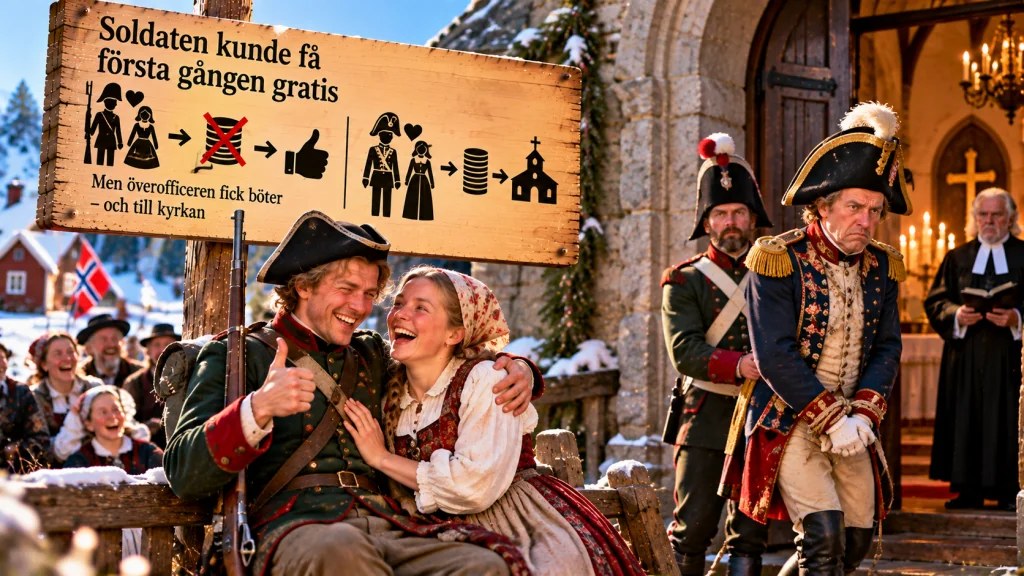
28. The soldier could get the first time for free
And now the law gets even stranger. Soldiers and non-commissioned officers were for a period exempted from both fines and public record charges the first time they were convicted of leier charges, that is, sex outside of marriage. But the same free pass did not apply to the senior officers.
In 1735, for example, the king decided that senior officers who did the same thing would have to pay a fine and be publicly absolved – unless they managed to get a dispensation from the king. So somewhere in 18th-century Norway, a soldier and his officer could do the same thing. The soldier: First time. The officer: Until the church.
29. The third time you cheated could be your last
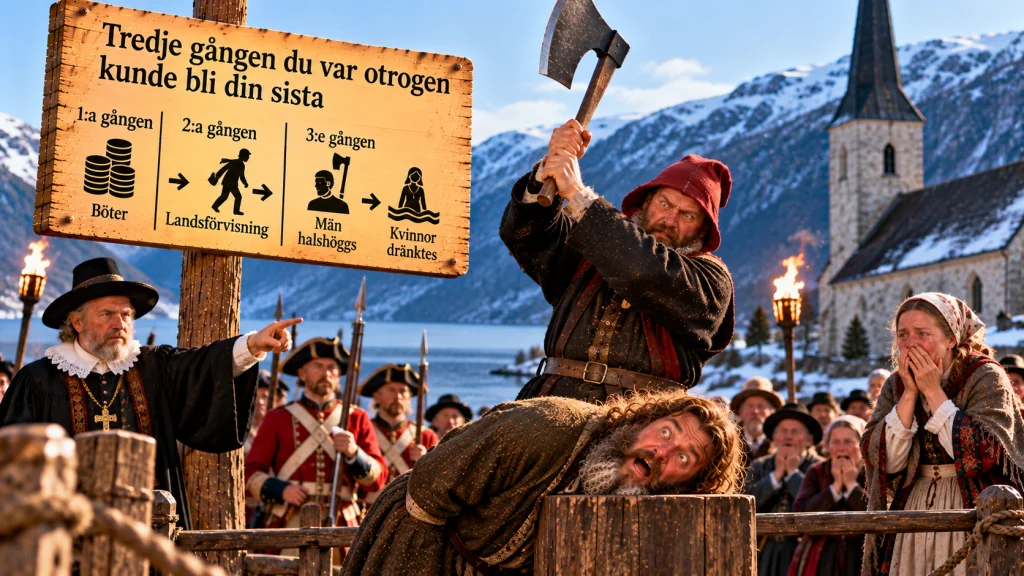
Christian V's Norwegian law from 1687 was not very understanding of repeat offenders when it came to infidelity. The first time a married person committed so-called adultery, financial punishment awaited them. The second time could also mean exile. The third time the penalty could be death.
And the law made a distinction between the sexes: a married man was to be beheaded, while a married woman was to be drowned. It is important to distinguish between what the law actually prescribed and how often such an extreme punishment was actually carried out. But as a legal text, the message was clear: Two warnings were enough.
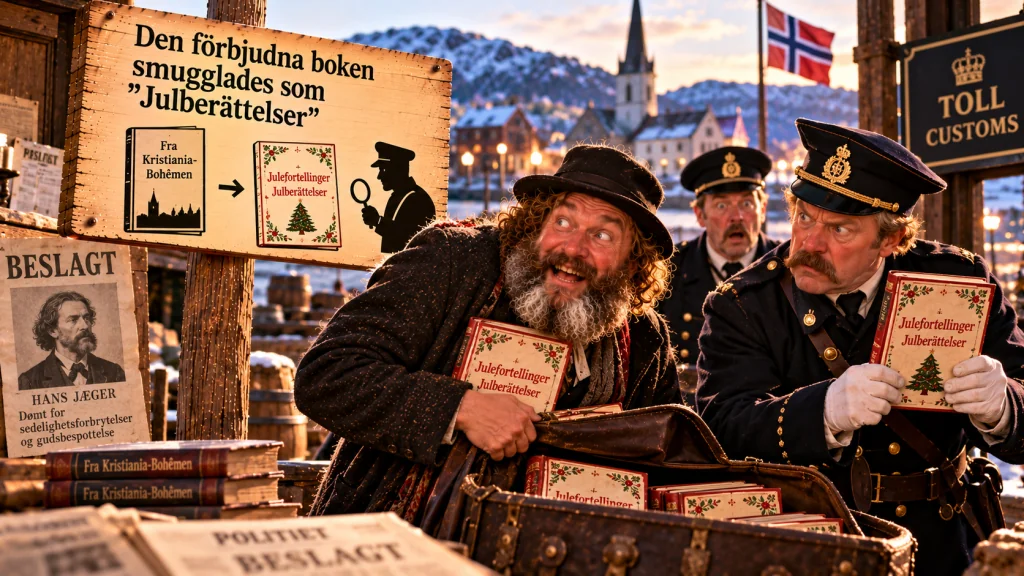
30. The banned book was smuggled as ”Christmas Carols”
In 1885, Hans Jæger published the novel Fra Kristiania-Bohêmen. The book was confiscated the same day it came out. Jæger was convicted of violating morals and blasphemy and received a prison sentence and a fine. But the story did not end there.
The following year, they tried to publish the book again, now with a much more innocent cover and the title Christmas stories by HJ - Christmas stories. The printer Christian Holtermann Knudsen tried to sell copies in Sweden, but the book was confiscated there too. In 1887 Jæger was convicted again. If a banned novel has to be disguised as Christmas cheer to reach readers, at least we know that the marketing department has tried.

Follow Peter here:
Peter Bergström
You might also like:
 Facts about the Philippines - 30 things you (maybe) didn't know
 Boat trip and cable car in Tromso - Aunt Anna on fjord and mountain
 By motorhome along the south coast of Norway – coastal roads, fishing villages and white wooden towns
 First Camp Lunde in Telemark – camping by the Telemark canal
 Traveling by motorhome in Norway – everything you need to know
 Waterfalls in Norway – mighty waterfalls you don't want to miss



 English (UK)
 Svenska