
Text and photo: Helena Bergström
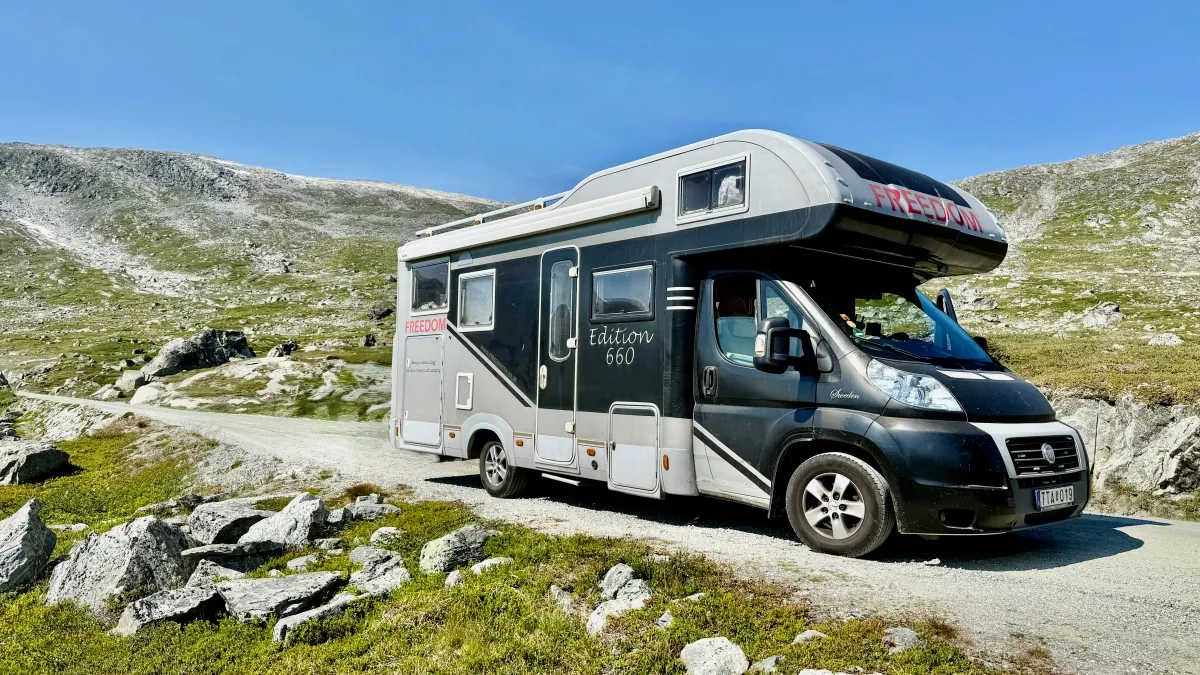
Norway is a fantastic country to explore by motorhome. The landscape is dramatic, the views are spectacular and the countryside offers a peaceful tranquility. At the same time, there are a lot to consider when it comes to regulations and practicalities. We recently spent a month in Norway by motorhome and share our best tips.
 Tweet
Tweet Share
Share Share
Share Pin
Pin Share
Share Share
ShareTable of contents
How do road tolls work in Norway?
In Norway there are many roads, bridges and tunnels where you pay a toll, so-called toll. The system is automated and you normally don't need to stop at any toll stations. Cameras read the car's registration number and the payment is handled electronically.
Foreign-registered vehicles are also subject to road tolls. As a Swedish motorhome traveler, you basically have two options.
- You can sign an agreement with an approved AutoPASS provider and get a physical electronic transponder for the motorhome. Vehicles in fee group 1 then normally receive a 20 percent discount on the road tolls.
- You can register the camper with Epass24 and drive without a tag. In this case, you will not receive an AutoPASS discount, but the correct information about, for example, fuel type and emissions can be registered so that you are charged the correct rate where the fee is environmentally differentiated.
Our tip: Register well in advance for an AutoPASS transponder – then you will get a discount. We were too late and it worked fine with Epass24, but we did not get the discount.
Motorhome over 3.5 tons – special rules
For motorhomes over 3.5 tonnes, the rules are a bit more complicated. A heavy vehicle used commercially must have an electronic toll tag, but this requirement does not apply to a motorhome used solely for private purposes.
However, there is an economic reason to obtain a tag even for a private motorhome over 3.5 tonnes. Most motorhomes are registered in vehicle category M1. An M1-registered motorhome over 3.5 tonnes can be included in the cheaper fee group 1 – but then a valid AutoPASS agreement and tag are required.
Our tip: If you are going to travel a lot in Norway, it may be worth arranging AutoPASS before your trip, especially if the motorhome weighs over 3.5 tons.
How do ferries with a campervan work in Norway?
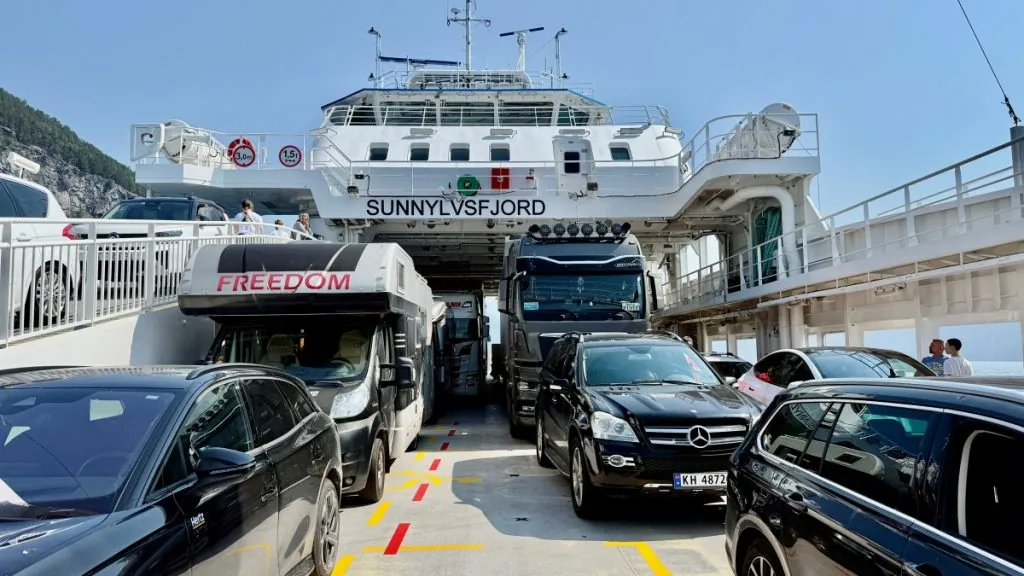
Ferries are a natural part of the Norwegian road network, especially along the west coast where the fjords cut deep into the landscape. On many stretches, the ferry is simply the most convenient, or even the only, way forward.
We registered our Swedish-registered motorhome with Epass24 before the trip and inserted a payment card. The system is used for foreign-registered vehicles without an AutoPASS agreement and can handle both Norwegian road tolls and many ferry tolls. The registration number is read automatically and the tolls are collected and charged via Epass24. For us, it worked very smoothly and we didn't have to do anything when we drove on board the ferries.
An alternative for ferries is FerryPay, where you register your vehicle and payment card and have the ferry fees deducted automatically. FerryPay does not provide a discount and is normally not needed if ferry fees are already handled through Epass24.
Anyone who uses the ferry a lot can instead investigate AutoPASS for ferry, where there is the possibility of significantly better discounts. Also keep in mind that not all Norwegian ferries are part of the same payment system. Some ferries are paid separately, while other ferry connections are free of charge.
How are the roads in Norway?
Driving a motorhome in Norway is fantastic – but it doesn’t always go very quickly. Even if the distance on the map looks short, the journey can take significantly longer than you first think.
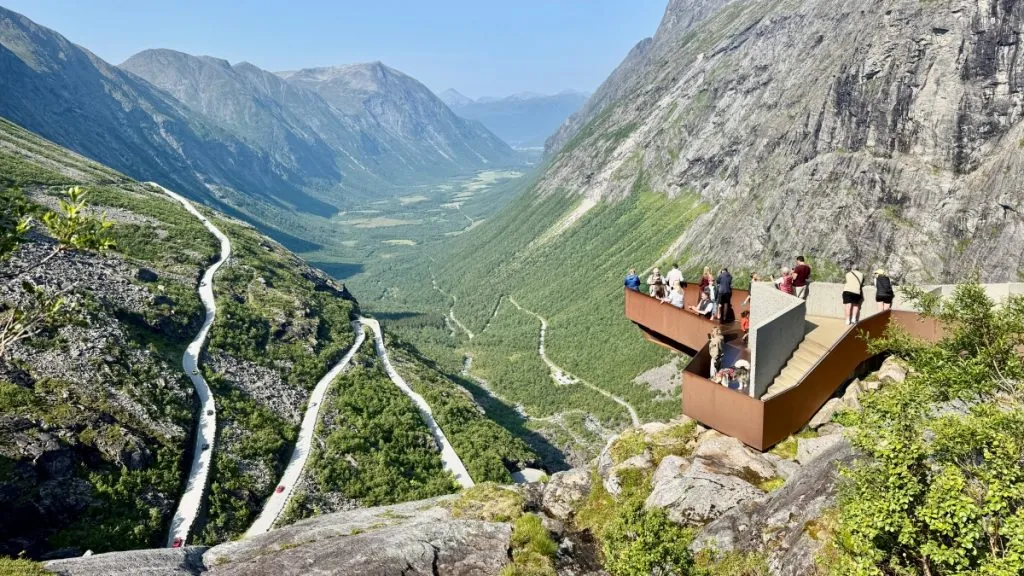
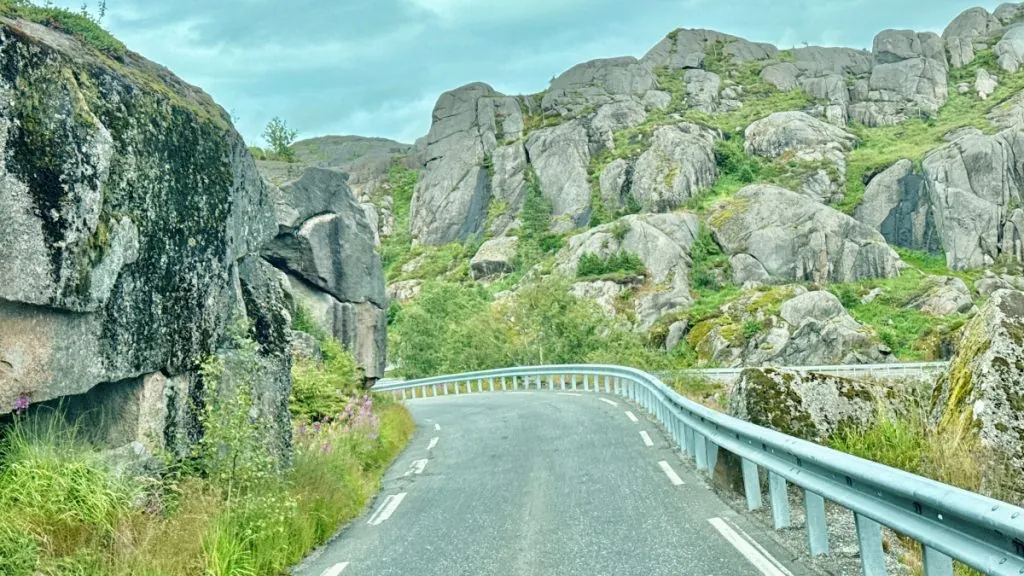
The roads can be narrow and winding and contain long climbs, steep descents, tunnels and ferry crossings. On long and steep descents, for example on roads coming down from the mountains, it is important to downshift and use the engine brake. This way you do not have to hold the brakes all the way down, which can cause the brakes to overheat.
On many smaller roads there are meeting points where you can help each other to let oncoming traffic pass. It is wise not to plan for excessively long daily stages and to adapt your speed to both the road and the weather.
Tunnels in Norway – what do you need to consider?
Tunnels are an integral part of driving in Norway. Some are only a few hundred meters long, while others continue for kilometers through the mountains. The Lærdal Tunnel on the E16 between Lærdal and Aurland, for example, is 24.5 kilometers long and is the world's longest road tunnel.
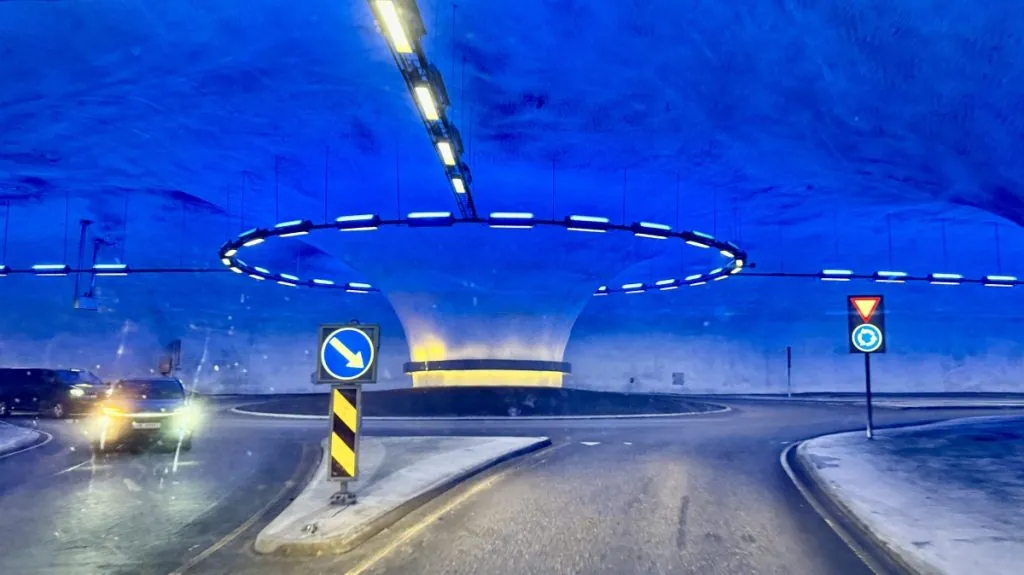
The Norwegian tunnels are modern and the safety is high. However, we found that some tunnels were a bit poorly lit. We were most fascinated when we twice drove into tunnels where there was a roundabout!
What traffic rules apply in Norway?
The basic traffic rules do not differ dramatically from the Swedish ones, but there are a few things that are good to know.
- Low beam: Vehicles must have their lights on even during the day.
- Speed: The general speed limit is 50 km/h in built-up areas and 80 km/h outside built-up areas unless otherwise stated.
- Right-hand rule: You must give way to traffic from the right unless otherwise indicated.
- Crossing points: Vehicles must give way to pedestrians at crosswalks.
- Alcohol: Norway has a low blood alcohol limit of 0.2 per mille.
What driving license is needed for a motorhome in Norway?
With a regular B driving license, you are normally allowed to drive a motorhome with a maximum total weight of 3,500 kilograms. If you have obtained a Swedish B driving license before 1 July 1996, you may, however, be covered by the Swedish transitional rule, which means that you are allowed to drive a motorhome that is registered as a passenger car even if it weighs more than 3,500 kilograms. This right also applies in Norway, provided that the B license has not been revoked or otherwise become invalid after 1 July 1996.
What are campsites and motorhomes like in Norway?
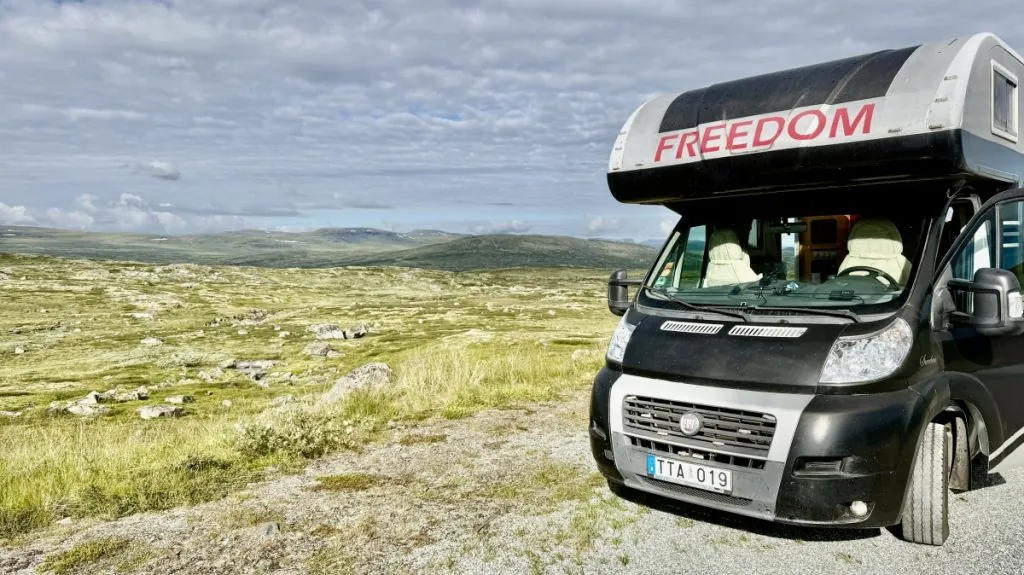
There are plenty of both campsites and motorhomes in Norway. Just like in Sweden, you can find everything from a bit simpler scenic places to luxurious resorts with every conceivable activity. Even though it is relatively expensive in Norway in general, we have found that the prices for campsites and motorhomes are quite comparable to the prices in Sweden.
How does Nortrip work?
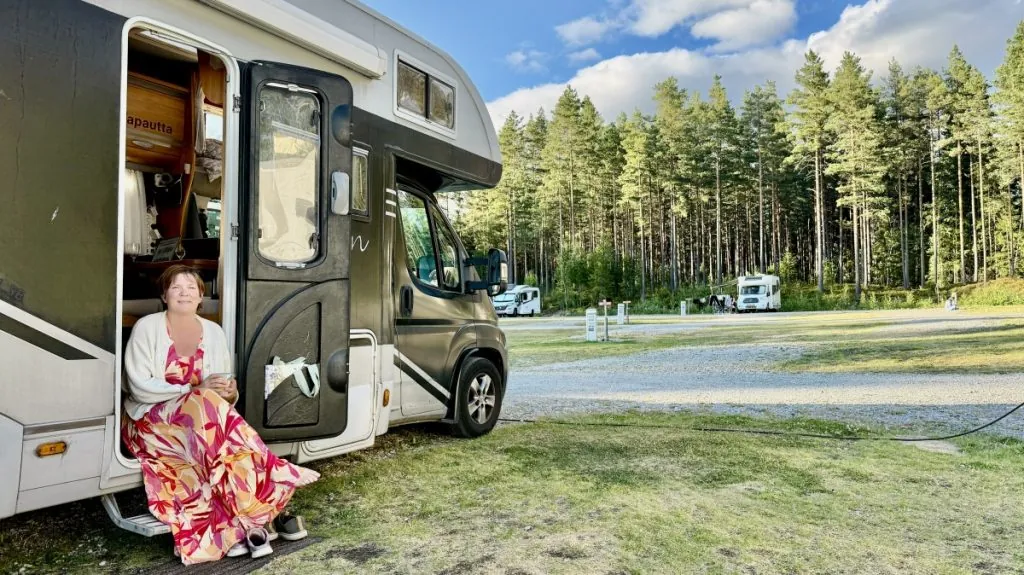
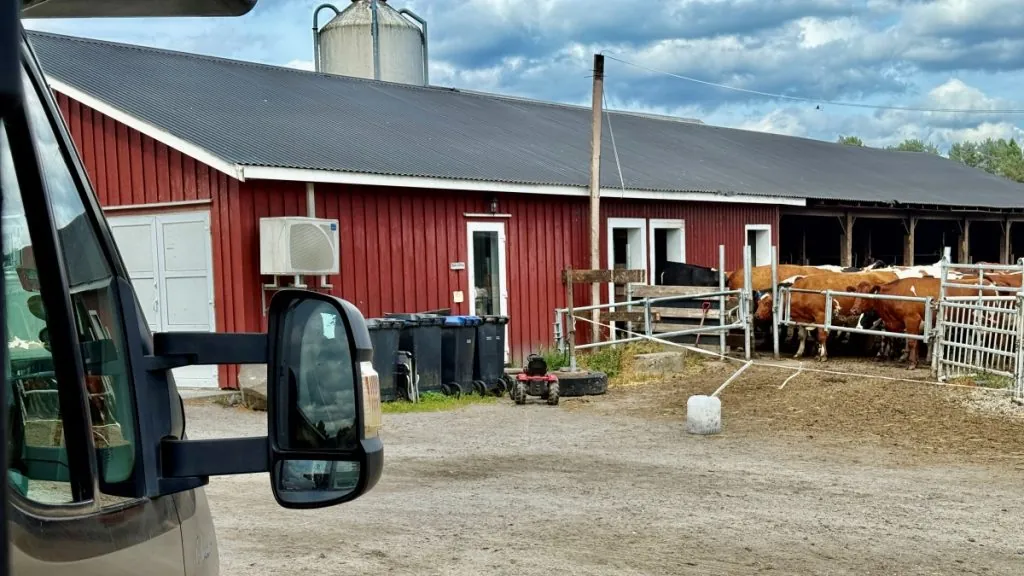
Nortrip is a fantastic concept for those who want to experience the genuine Norway. Instead of camping, you stay on farms and with other local hosts/producers and can meet people, animals and try local delicacies.
- You buy the Nortrip guide – an easy-to-navigate app (You can choose Norway or Sweden or Norway + Sweden)
- You get access to a network of farms and other hosts where you can experience local culture and stay overnight with your campervan for free
- Overnight stay is included in the membership. but services and experiences on the farm (e.g. electricity, shower, guiding, food, boat rental, etc.) usually cost extra and are paid for on site.
Can you free camp with a campervan in Norway?
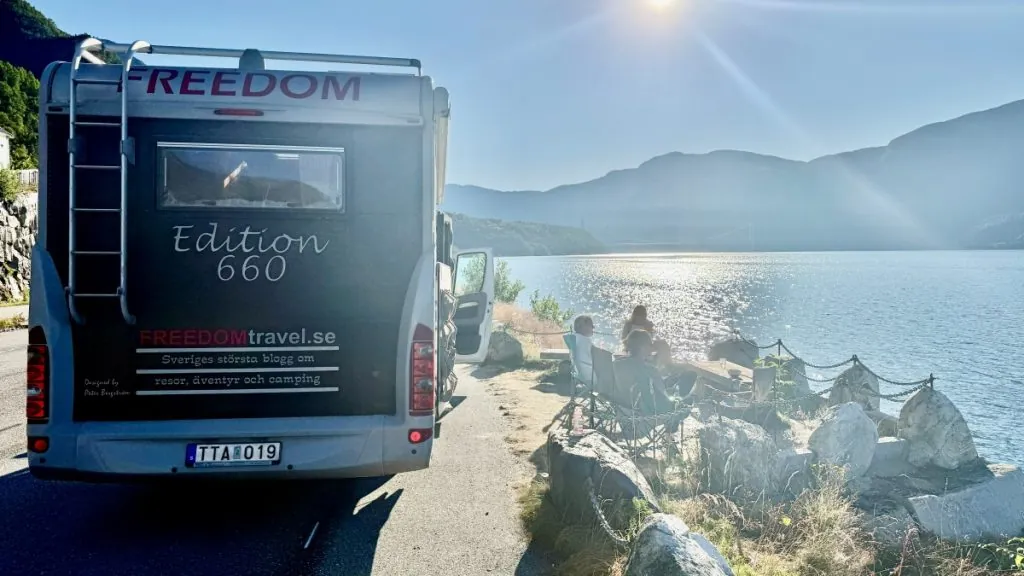
We found that it is quite easy to free camp in Norway, but it is important to take local rules into account and to be careful of nature.
With a motorhome, you are normally allowed to park on a public road where parking is permitted, even next to so-called outland, but you are not allowed to drive or park on the natural land itself. You must keep at least 150 meters away from inhabited houses and cottages and normally do not stay in the same place for more than two nights without the landowner's permission. Local regulations and signage may impose additional restrictions.
Please note that there is a difference between parking and camping. Although it is permitted to park and sleep in the vehicle, you should often avoid ”camping behavior”, such as putting up an awning, taking out outdoor furniture, etc.
What food can you bring to Norway?
Norway is not a member of the EU, but is part of the EEA, and there are therefore customs regulations to be aware of when you cross the border from Sweden. From an EEA country, such as Sweden, each person over the age of 12 is allowed to bring a total of 10 kilograms of meat, meat products, cheese and certain other animal foods into Norway.
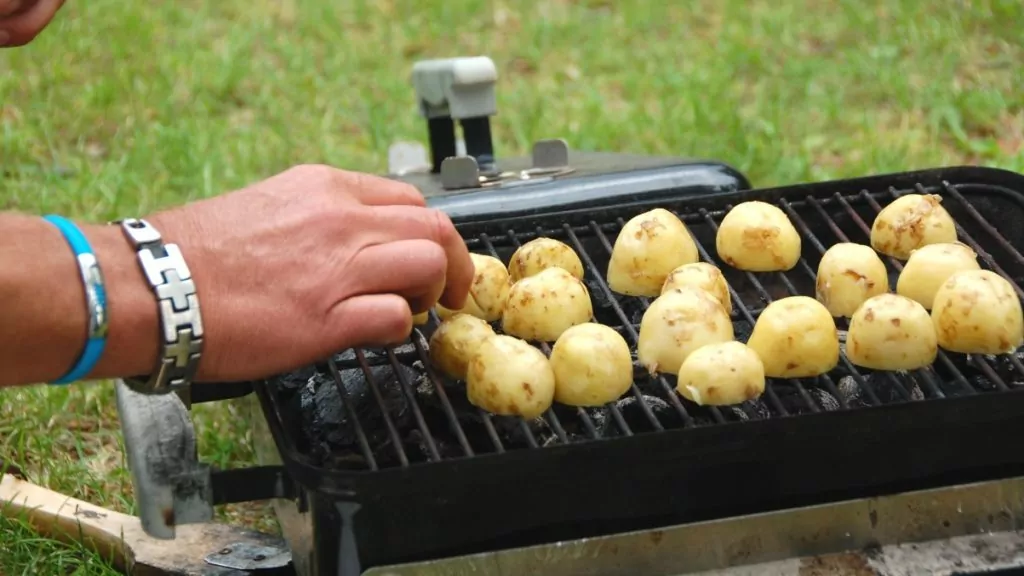
One rule that surprises many Swedes is that It is not allowed to bring potatoes to Norway. without special permission. This also applies to a regular bag of potatoes that you plan to cook in the camper.
For tourists, there is no specific value limit for personal belongings that are to be used during the trip and then taken home. However, for goods that are to be consumed, given away or left behind in Norway, the Norwegian import regulations and value limits apply.
How much alcohol can you bring into Norway?
As Norway is not part of the EU, different (stricter) rules apply for the import of alcoholic beverages. The Norwegian basic duty-free quota is per person:
- 1 liter of alcohol (maximum 60 %)
- 1.5 liters of wine (maximum 22 %)
- 2 liters of beer or cider (maximum 4.7 %)
It is also possible to exchange parts of the quota between different types of alcohol – you can check details via the Norwegian Customs app. To bring in beer and wine you must be 18 years old and for drinks over 22 percent you must be 20 years old.
And what about when you drive back to Sweden?
When you drive back from Norway, you cross the EU's external customs border, as Norway is not a member of the EU. This means, among other things, different rules for alcohol and purchased goods than if you had traveled from, for example, Denmark or Germany. For example, the Swedish Customs Agency states that a traveler from a country outside the EU may bring in 1 liter of spirits or 2 liters of strong wine, 4 liters of wine and 16 liters of strong beer duty and tax free.
The rules for food from countries outside the EU may also differ from those within the EU. If necessary, you can check the current rules from the Swedish Customs and the Swedish Board of Agriculture before your trip home.
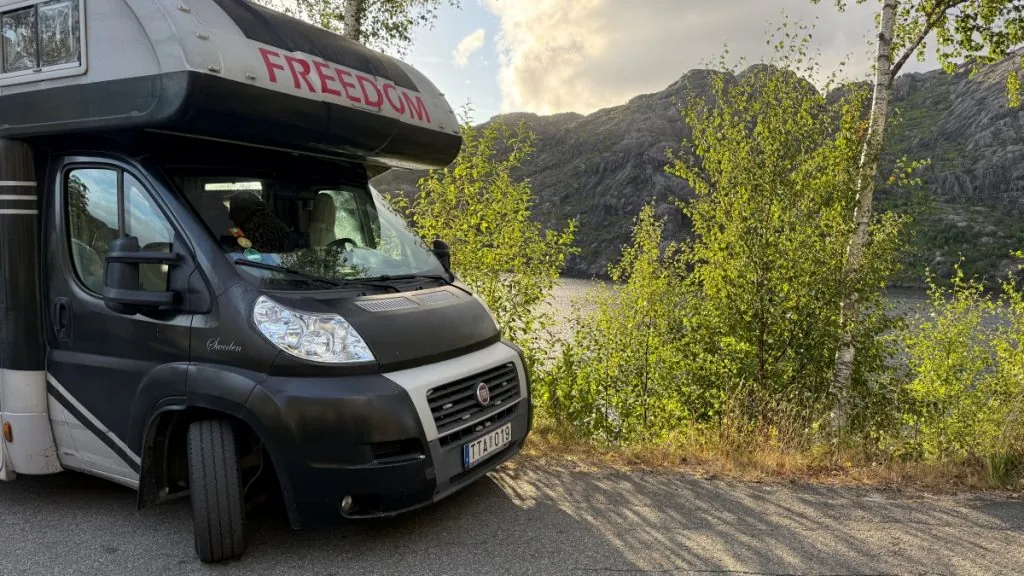
What is it like to buy food and alcohol in Norway?
There are many different grocery stores in Norway. We shopped mainly at REMA1000, which has slightly lower prices, but still has a decent selection.
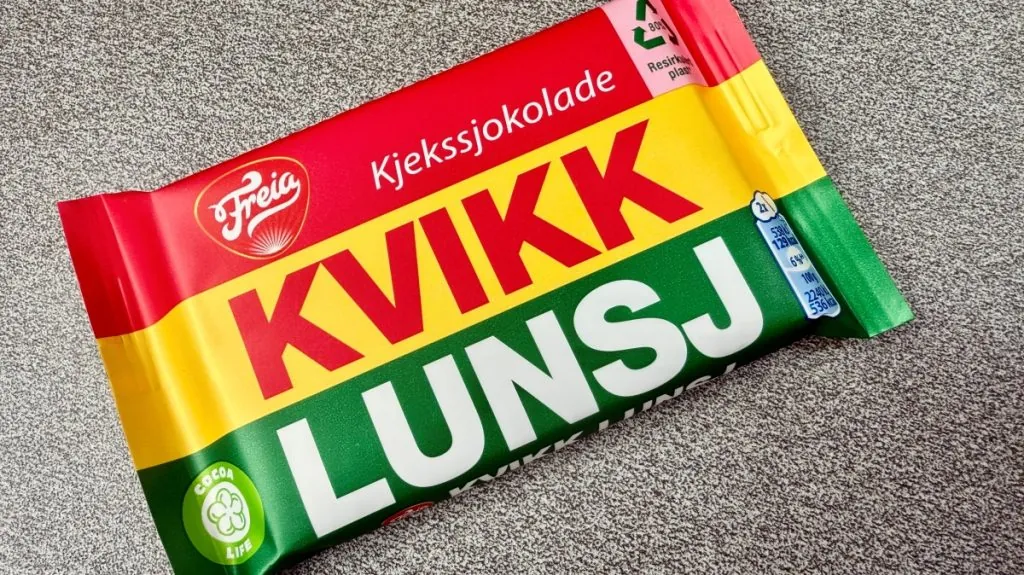
Alcohol is purchased at Vinmonopolet, which is the equivalent of Sweden's Systembolaget. However, note that beer up to 4.7% alcohol by volume is sold in regular grocery stores. And yes, both food and wine are more expensive than in Sweden.
How does it work with diesel and LPG/gasoline?
You can easily fill up on diesel and petrol at regular petrol stations around Norway. The good thing to know is that prices change from weekday to weekday – and sometimes from hour to hour. So it's worth keeping an eye on the prices!
If you have a fixed tank and want to fill up with LPG, it may be good to know that in some parts of Norway there may be a long distance between LPG stations. It may therefore be a good idea to fill up well in advance.
How does emptying grey and black water work?
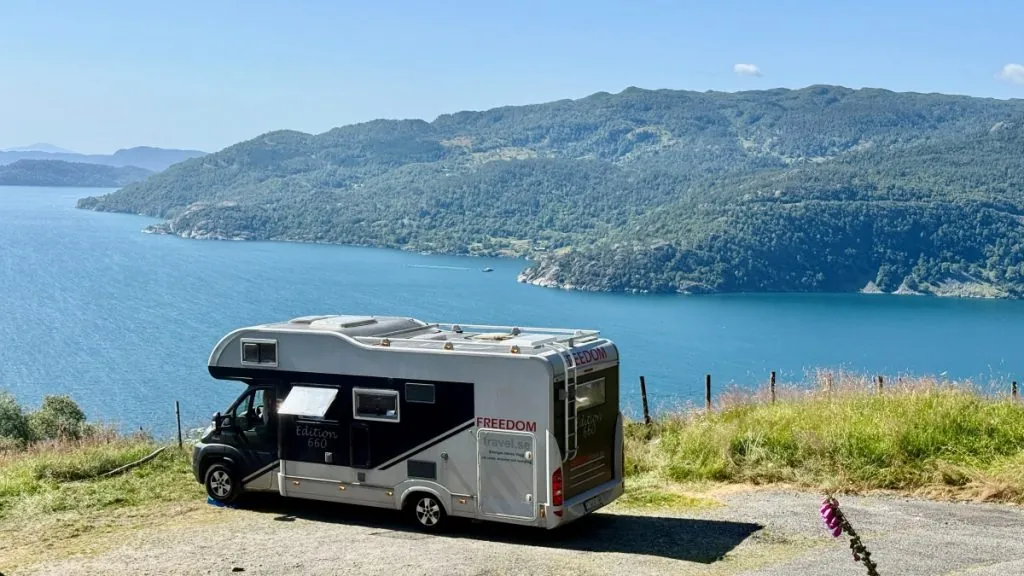
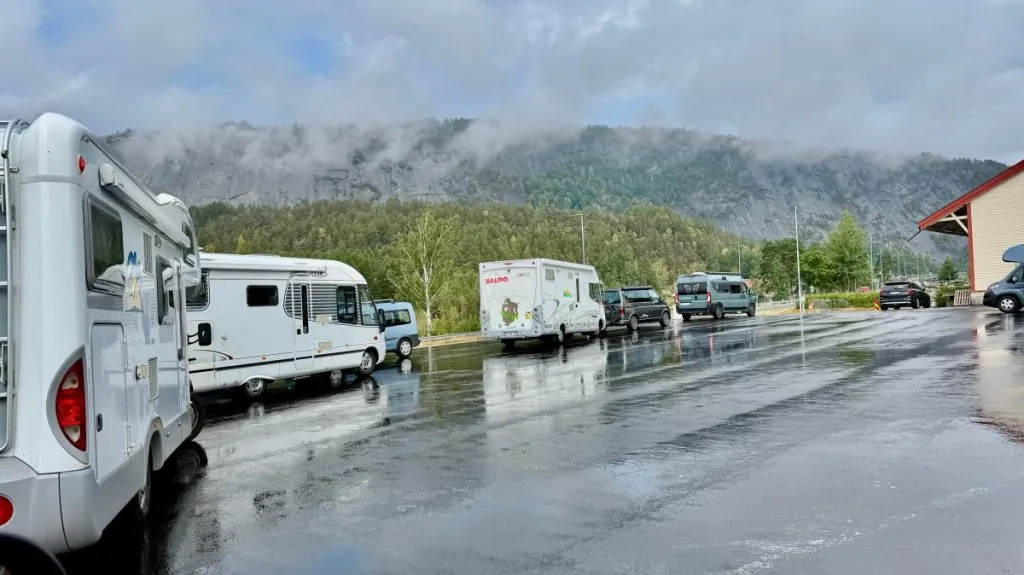
We found it quite easy to empty grey and black water in Norway. If you are camping you can of course empty there, and also at some camping sites. In addition, there are relatively many other places that offer emptying, often free of charge. We found these places mainly via The Nortrip app, but sometimes also via the Park4Night app.
How does internet and roaming work?
Norway is part of the EEA, which means that you can normally use your Swedish mobile subscription on the same terms as at home. Of course, this does not mean that the surfing allowance will last for as long as you want.
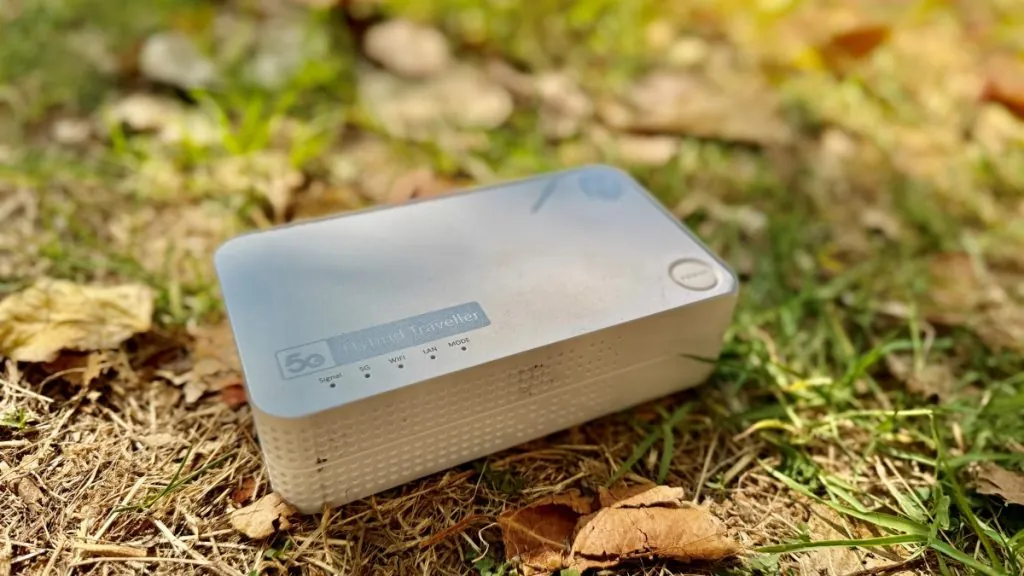
If you travel for a long time or use the internet a lot, your browsing may stop. For us it happened after two weeks, and then we were very happy that we had backup via router and digital SIM card from Wifi.se. It worked very well!
What can you see and do with a campervan in Norway?
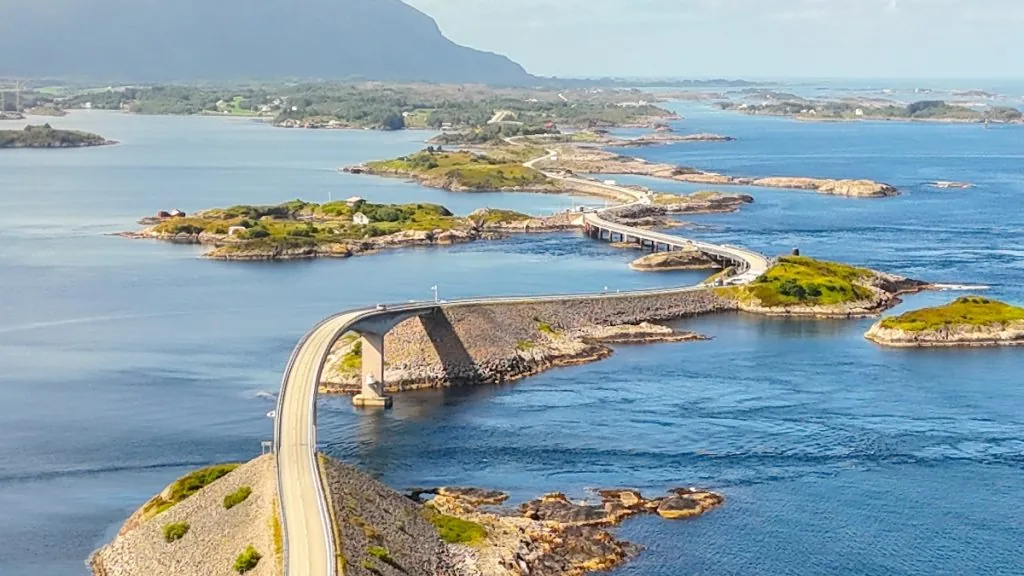
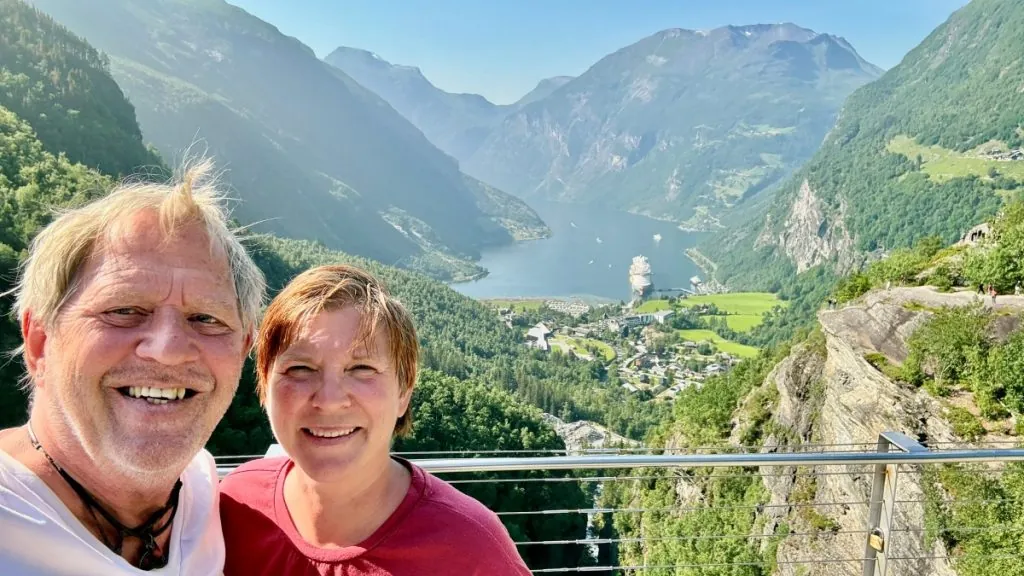
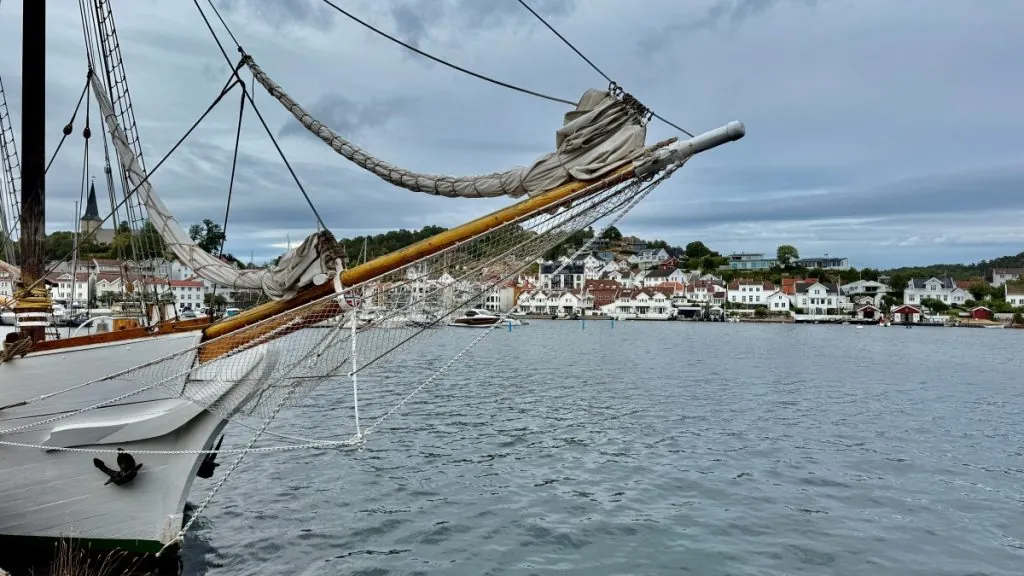
There is a lot to see and experience around Norway. We have mainly traveled in Fjord Norway and southern Norway, and along many beautiful roads. Here are our best tips.
Norway's most beautiful roads
Fjord Norway
Southern Norway
Telemark
FAQ – frequently asked questions about traveling by motorhome in Norway
Do you need AutoPASS with a Swedish motorhome?
No, a Swedish private motorhome does not generally need an AutoPASS tag to drive in Norway. The tolls are registered automatically via the registration number. However, with an AutoPASS agreement and tag, you can get a discount, and for an M1-registered motorhome over 3.5 tons, the tag can also be important for ending up in the correct and cheaper toll group.
How do you pay road tolls in Norway?
The toll stations are automatic. You can sign an AutoPASS agreement and use an electronic tag, or register a foreign-registered vehicle with Epass24 and drive without a tag.
Does a motorhome over 3.5 tons have to have an AutoPASS tag?
Not if it is owned by a private individual and used only privately. The requirement for a toll tag for vehicles over 3.5 tonnes applies to vehicles that are registered to a company or used commercially. However, for a privately registered M1 motorhome over 3.5 tonnes, a tag can give access to the cheaper toll group 1.
How do you pay for ferries with a campervan in Norway?
On most ferries that are part of the AutoPASS system, the vehicle registration number is automatically registered. You can use AutoPASS, sign a special AutoPASS for ferry agreement or register your payment card and registration number in FerryPay.
Do you get a discount on Norwegian ferries with AutoPASS?
Yes. A regular valid AutoPASS tag currently provides a 10 percent discount on ferries within the system. An advance agreement for AutoPASS for ferry can provide a 40–50 percent discount.
Is it difficult to drive a motorhome in Norway?
Not necessarily, but many Norwegian roads are narrow, winding and hilly. The drive can therefore take longer than the distance on the map suggests. Adjust your speed, use meeting points and check the current road conditions before setting off on mountain roads and minor roads.
Is it allowed to free camp with a campervan in Norway?
You are not allowed to drive out and park your camper freely in nature, citing the right of public access. However, you are normally allowed to park along public roads where parking is permitted and certain places can be used for overnight stays. You must, among other things, respect signage, stay at least 150 meters from inhabited houses and cottages and normally not stay more than two nights in the same place without permission.
Is it allowed to sleep in a campervan in a parking lot in Norway?
It may be allowed if the parking is legal and there are no local regulations or signs prohibiting overnight stays. In some cities and popular tourist areas, RV parking and overnight stays are restricted to designated areas.
Can you bring potatoes to Norway?
No. Potatoes may not be brought into Norway without special permission.
How much meat and cheese can you bring to Norway?
From Sweden and other EEA countries, each person over the age of 12 may bring a total of no more than 10 kilograms of meat, meat products, cheese and certain other animal foods.
How long are the tunnels in Norway?
Norway has many very long road tunnels. The Lærdal Tunnel between Aurland and Lærdal is 24.5 kilometers long and is the world's longest road tunnel.
When should you check the road conditions in Norway?
It is especially important when driving over mountains, along weather-exposed roads or early and late in the season. The Swedish Public Roads Administration's app Vegvesen traffikk shows, among other things, road status, mountain crossings, tunnels, bridges, traffic incidents and road cameras.
You might also like:
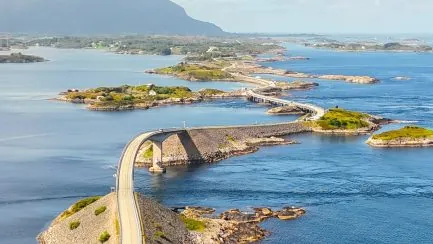 The Atlantic Road in Norway – and smoked salmon in Bud
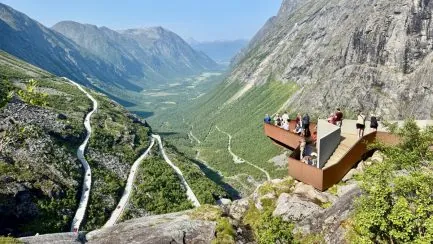 Trollstigen – one of Norway's most dramatic roads
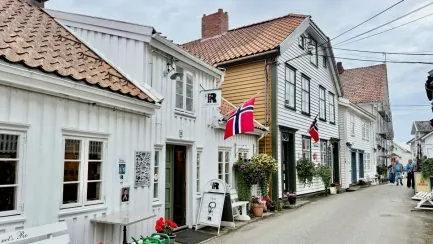 By motorhome along the south coast of Norway – coastal roads, fishing villages and white wooden towns
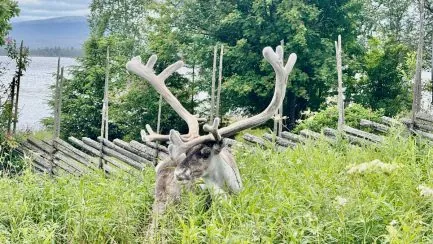 Vestre Sorken Holiday Home – our first experience with Nortrip
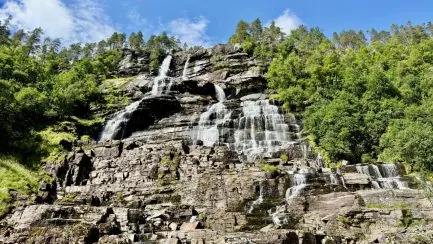 Spectacular waterfalls in Voss – Tvindefossen and Skjervsfossen
 By motorhome on a Norwegian farm – our visit to Åmli Gårdsmeieri
 English (UK)
  Svenska
Znogge says:
It is very important to check what applies when driving in another country. Since Norway is not part of the EU, it is not like driving in Denmark. As a dog owner, it is also important to keep track of different rules regarding deworming and the like.
August 20, 2026 - 8:32
bmlarsreseblogg says:
The first few times we went to Norway we had no idea that we weren't allowed to bring potatoes with us, so we just went straight across the border. This with different countries' regulations and laws is not exactly simple but oh so important.
August 20, 2026 - 12:33