

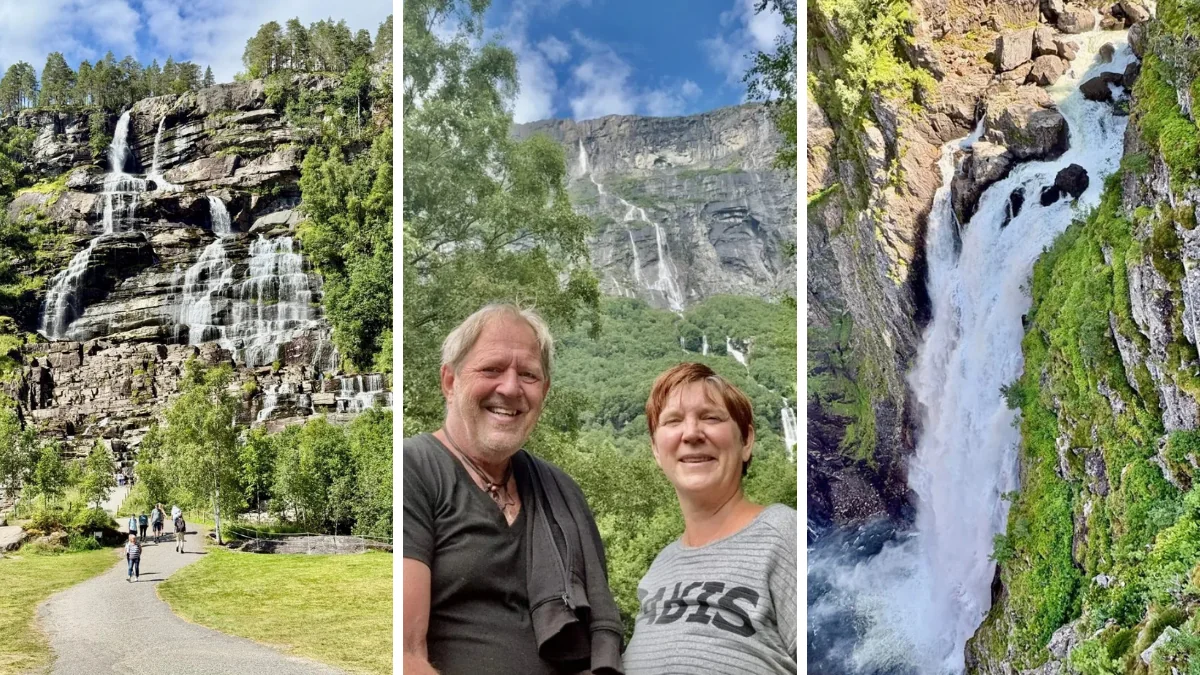

Text and photo: Helena Bergström
Norway is the land of fjords, but it could almost be called the land of waterfalls. There are thousands of rapids and falls here, from huge masses of water rushing down steep mountain sides to smaller waterfalls roaring through small villages.
 Tweet
 Share
 Share
 Pin
 Share
 Share
During our month-long campervan trip in Norway, we saw more waterfalls than we can count. Some we had planned to visit, while others appeared along the way while we were on our way somewhere else. Here, we have collected some of the waterfalls in Norway that made the biggest impression on us, along with a few more that are on our wish list.
Table of contents
Waterfall in Norway
Norway's mountainous landscape, large elevation changes, and abundant water supply create the perfect conditions for spectacular waterfalls. Many are at their most powerful in spring and early summer when the snow melts in the mountains. In fact, according to the World Waterfall Database, 10 of the world's 30 highest waterfalls are in Norway.
We traveled in Norway during the summer and found that waterfalls are an experience much later in the season as well. Here are ten waterfalls that we saw ourselves during our trip.
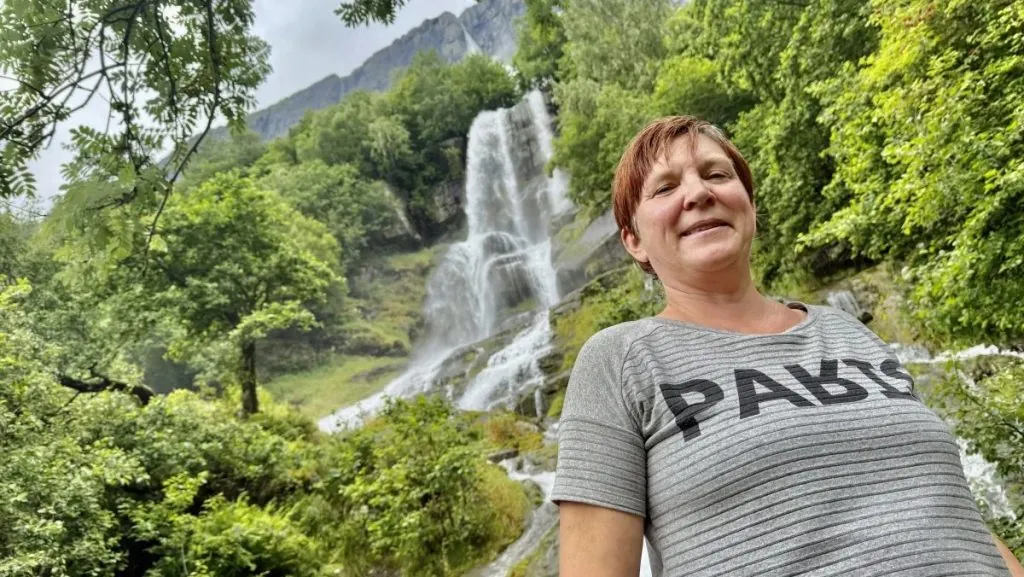
1. Vinnufossen – Norway's highest waterfall
Vinnufossen, or Vinnufallet, is located in Sunndal on Nordmøre and is a real giant. The water comes from the Vinnufonna glacier and falls in several stages down the mountainside. The total height of the fall is 845 meters, making this Norway's highest waterfall. The fall is also usually stated as Europe's highest, although there may be different ways of measuring it.
For our part, the visit to Vinnufossen was completely unplanned. We were on our way from eastern Norway to the west coast and were starting to get hungry. When we were looking for somewhere to stop with the camper to cook lunch, we found a parking lot next to a waterfall. It happened to be Vinnufossen!
After lunch, we put on our hiking boots and started walking up Vinnutrappa, a stone staircase built to make it easier to get closer to the waterfall. We didn’t go all the way up, but already a bit up you get a much closer experience of the falls and nice views over Sunndalen. From the parking lot, the entire hike to the current top of the staircase takes about 30–40 minutes and some parts are steep.

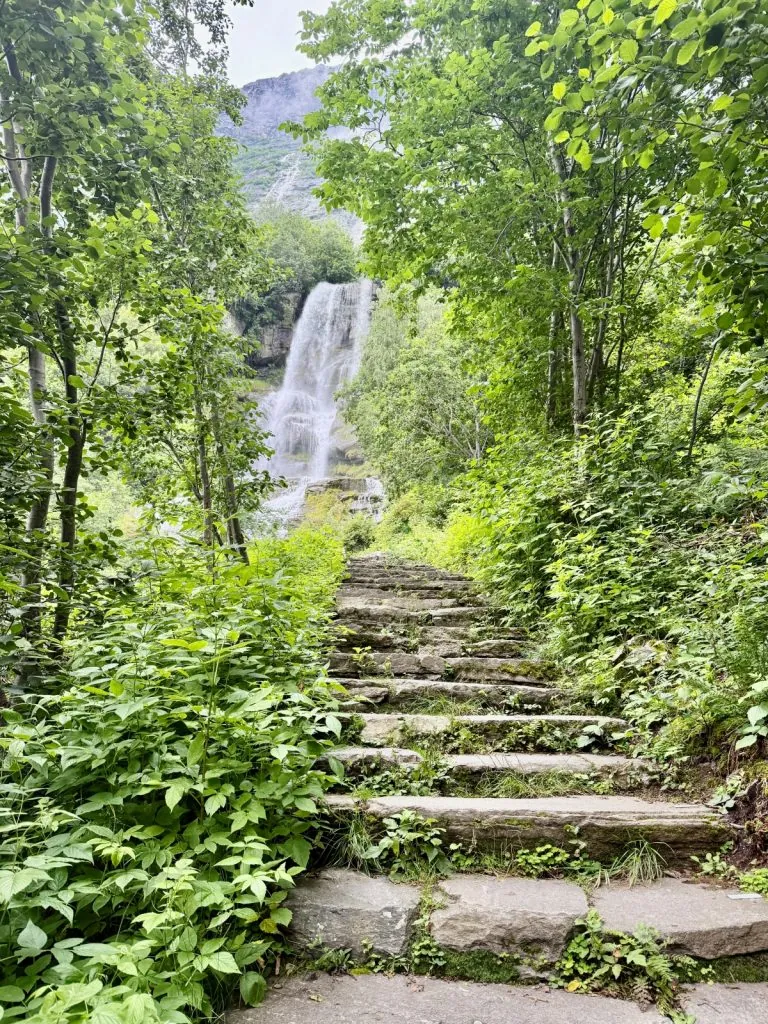
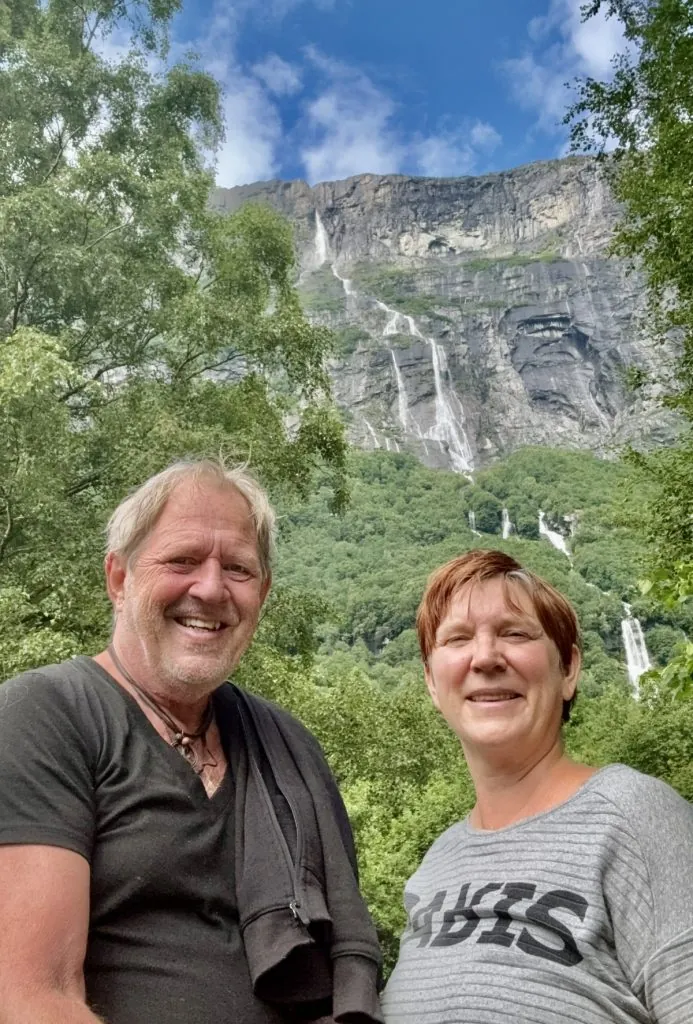
Good to know: Vinnutrappa begins at the Holsskeiet rest area along Highway 70, about six kilometers from Sunndalsøra. The waterfall usually has its highest flow during the period May–July.
READ MORE: Vinnufossen in Norway – Europe's highest waterfall

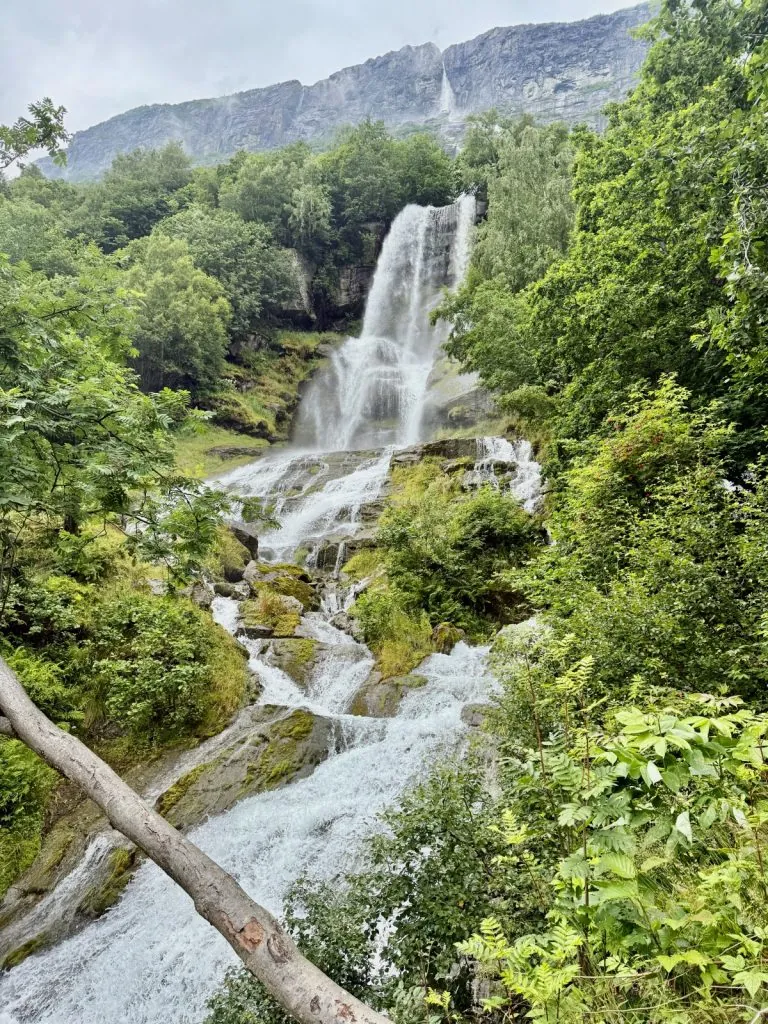
2. Vøringsfossen – Norway's most famous waterfall
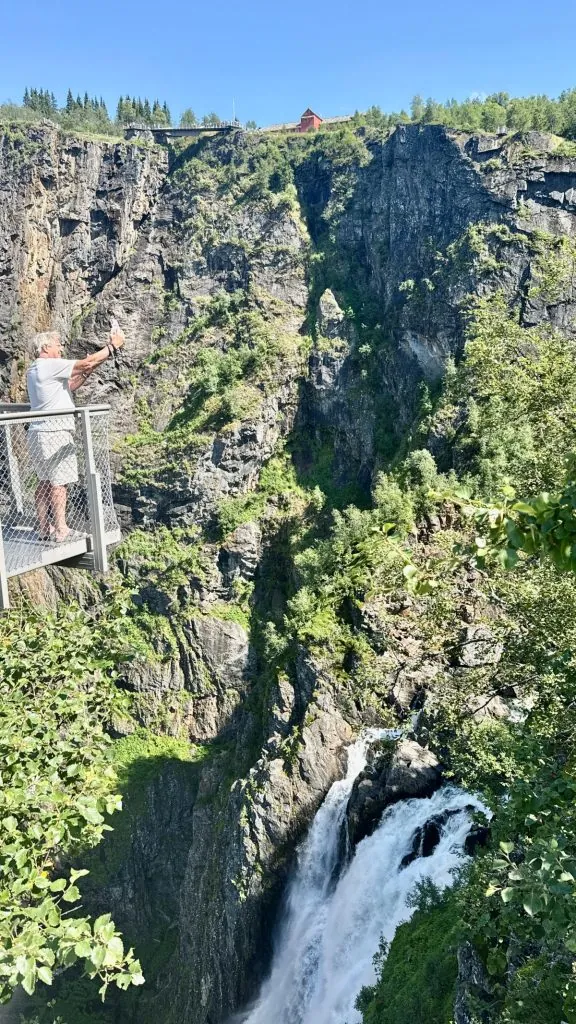
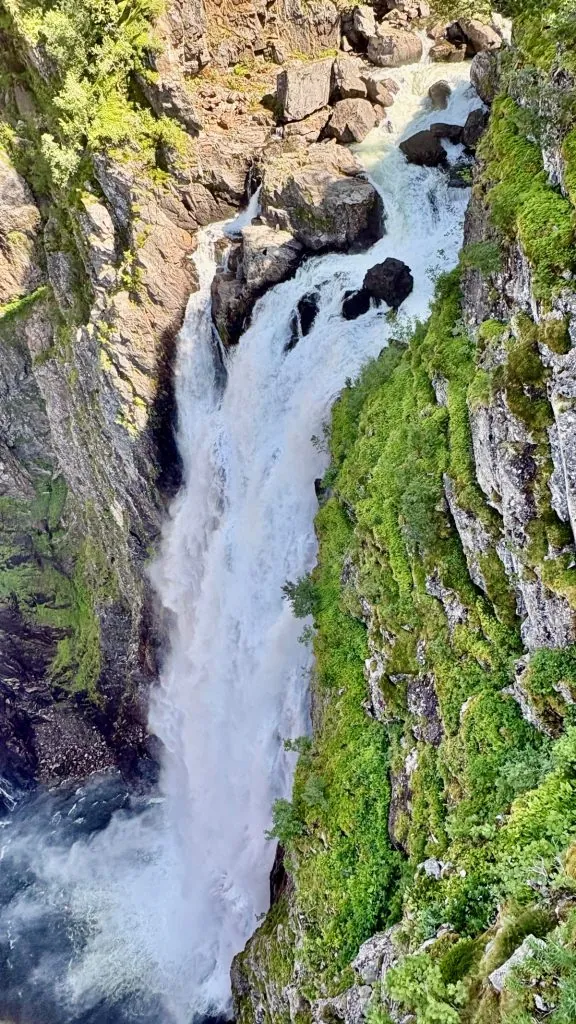
Vøringsfossen is not Norway's highest waterfall, but it is probably one of the most famous. The water plunges 182 meters from the Hardangervidda plateau down towards Måbødalen, and the entire area is now developed with walkways, viewing platforms and a spectacular step bridge over the water.
We actually remember the road to Vøringsfossen almost as well as the waterfall itself. On the way up through Måbødalen you drive through fascinating spiral tunnels where the road makes turns inside the mountain. When we followed the route on the GPS, it was at first difficult to understand how the road in front of us actually connected.
Once there, it's not just Vøringsfossen that impresses. The entire gorge is impressive, and you can walk around the area and see both the waterfall and the landscape from different angles. For us, it was as much a nature experience as a visit to an individual waterfall.
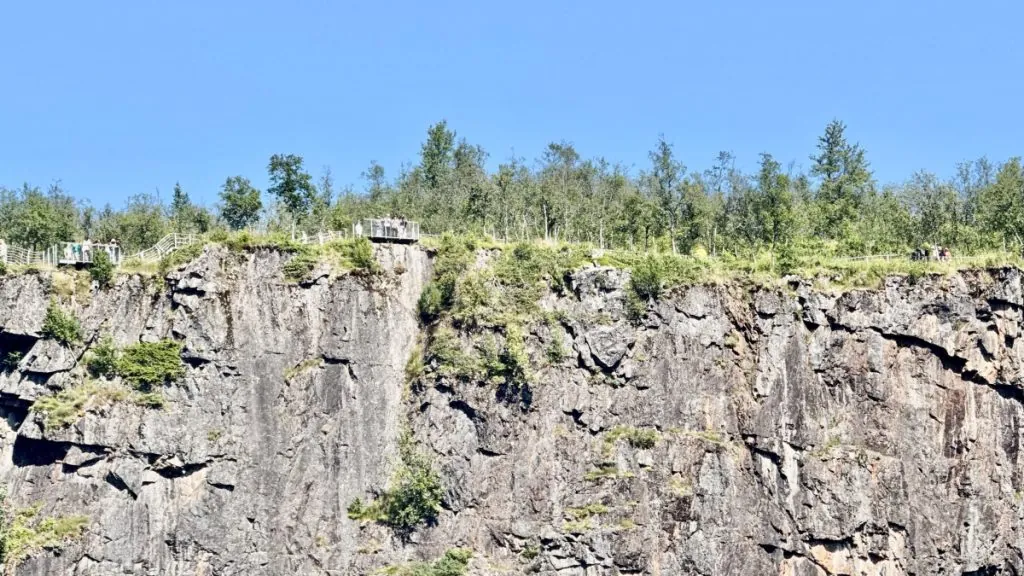
Good to know: Vøringsfossen is located along the Hardangervidda National Tourist Route, about a 20–30 minute drive up from Eidfjord. The road through Måbødalen is part of the experience, with its unusual spiral tunnels.
READ MORE: Hardangerfjorden, Vøringsfossen and Hardangervidda
3. Langfoss – 612 meters down towards Åkrafjorden
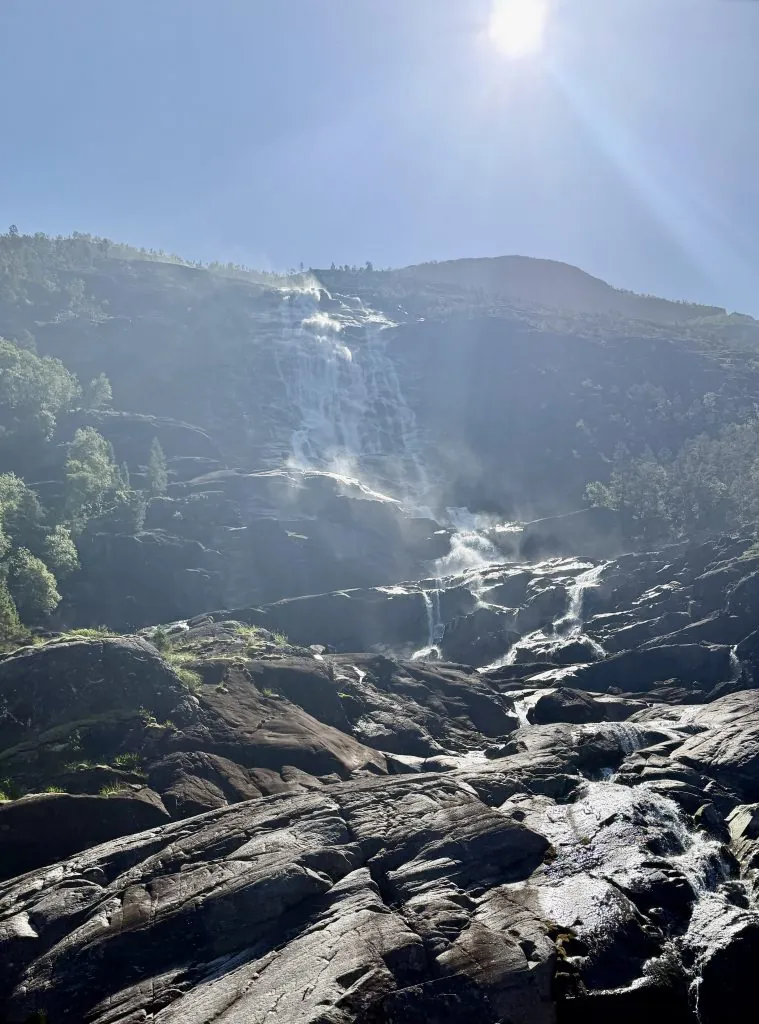
Langfoss is one of Norway's truly impressive waterfalls. The water plunges 612 meters down the steep mountainside towards Åkrafjorden, right next to the E134. Here it is almost the combination of waterfall, mountain and fjord that makes the experience. The landscape around Åkrafjorden is fantastically beautiful and Langfoss is clearly visible from the road.
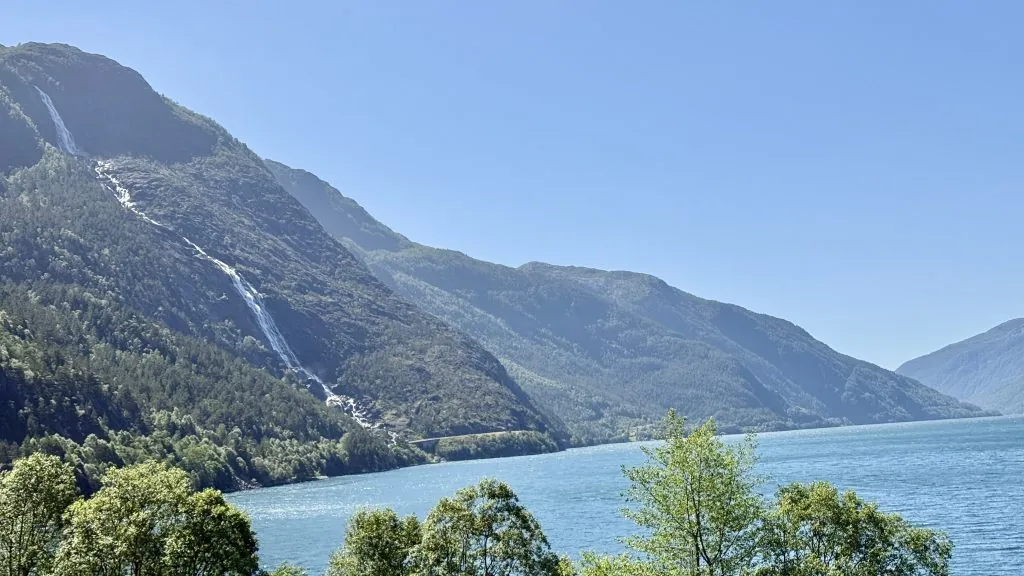
When we got here, however, it was easier to see the waterfall than to stop at it. There is limited parking space and when we visited the place it was really full. In the end, we just managed to get a spot and were able to walk to the falls.
The light wasn't very cooperative at the time either, so somewhat ironically our best photos were taken through the car window from a distance.
Good to know: Langfoss is located directly on the E134 and there is a rest area and toilets at the waterfall. However, during popular summer days there can be a lot of traffic and space is limited.
4. Låtefossen – double waterfall right by the road
Låtefossen is one of those Norwegian waterfalls that you can hardly miss. It is located right next to Highway 13 between Odda and Røldal and consists of two waterfalls that merge before the water continues under the old stone bridge.
The falls are about 165 meters high and have attracted tourists since the 19th century. The stone bridge below the waterfall was completed in 1859 and has become part of the classic image of Låtefossen.
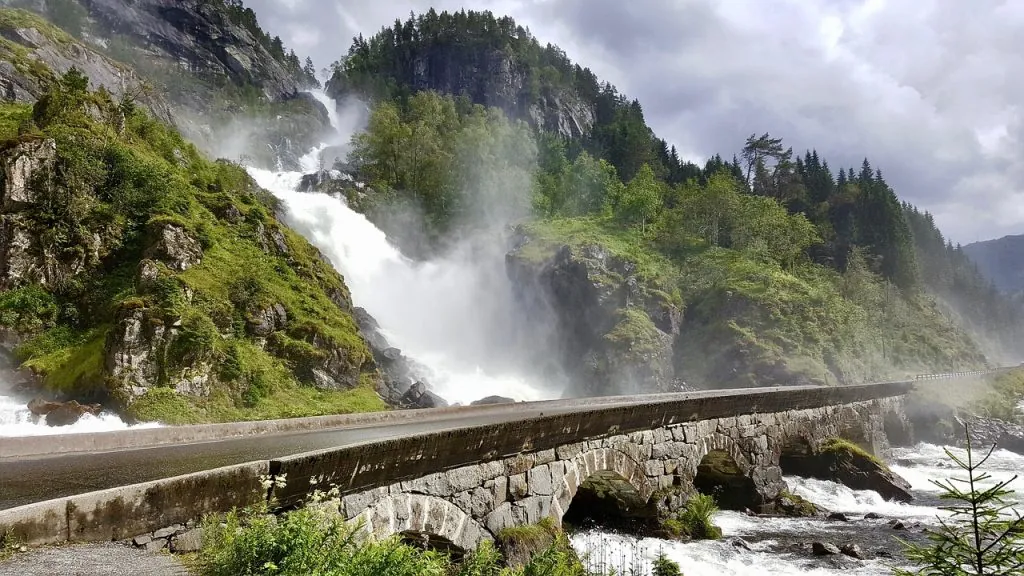
However, things didn't go as planned when we were supposed to stop. Traffic was crawling past the waterfall and the parking lot was packed. With a camper van there was no chance of getting a spot, so this time we had to make do with Låtefossen through the windows. It was still beautiful. And what stuck out in our own photo was Espelandsfossen, right next to …
Good to know: Låtefossen is very accessible, but the small parking lot can get full during the summer and the traffic past the waterfall is intense. So it is wise to be prepared that it may not be possible to stop, especially with a larger vehicle.
5. Tvindefossen – beautiful and very accessible
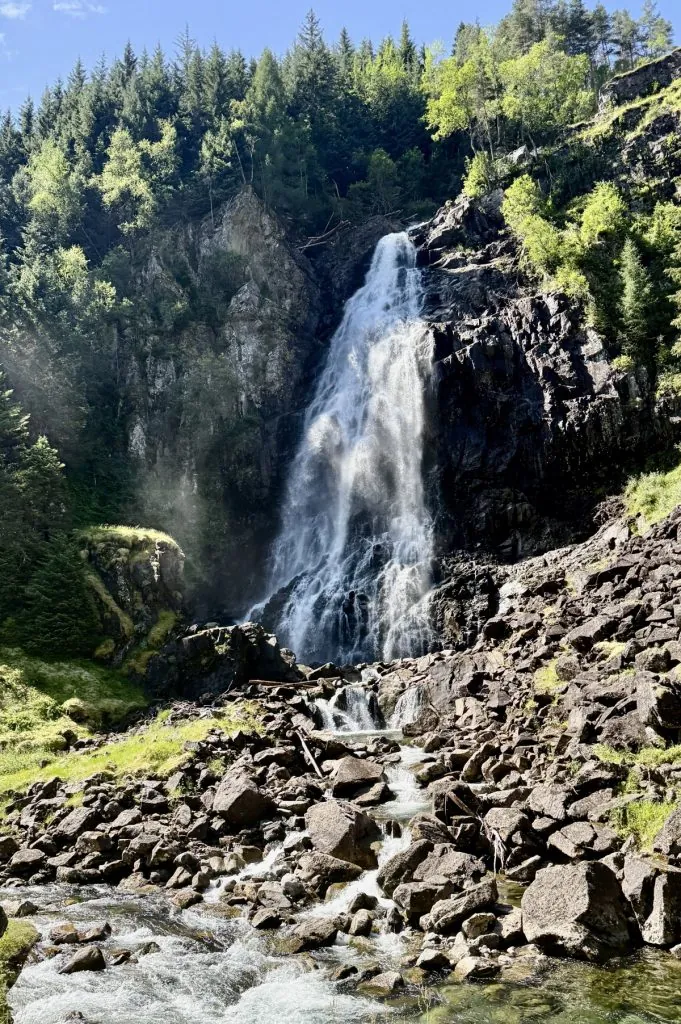
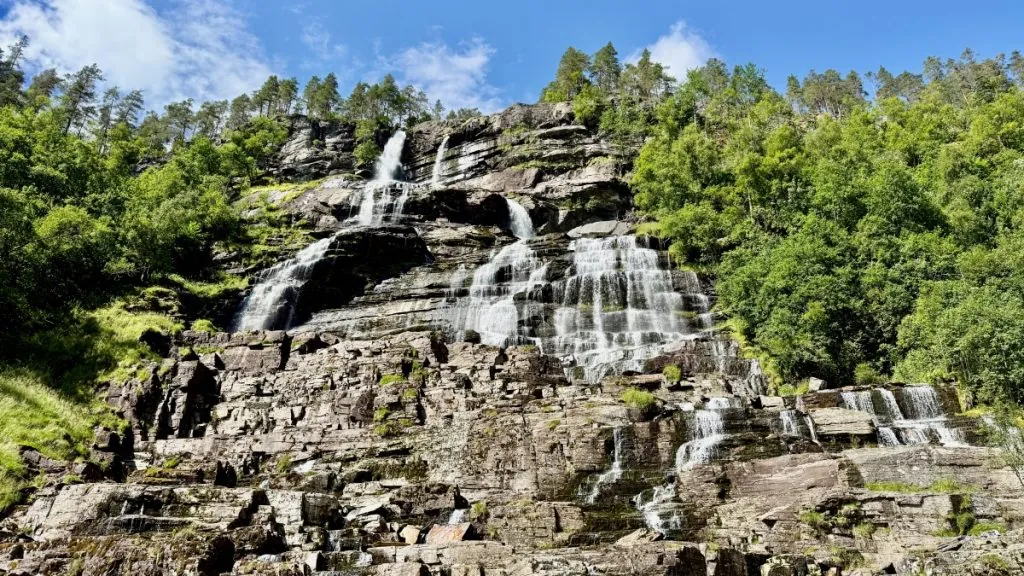
Tvindefossen is located just outside Voss and is a good example of how a nature experience doesn't always have to involve a long hike. The waterfall is 110 meters high and is located right next to the road.
For us, the stop was perfect. We were going to Voss for several reasons, including to fill up on LPG, which had proven to be much harder to find than we expected. Tvindefossen was along the way and was easy to visit.
We parked and walked the short distance to the waterfall. And despite being so easily accessible, it is truly beautiful, with the water spreading over the rocks in several levels.
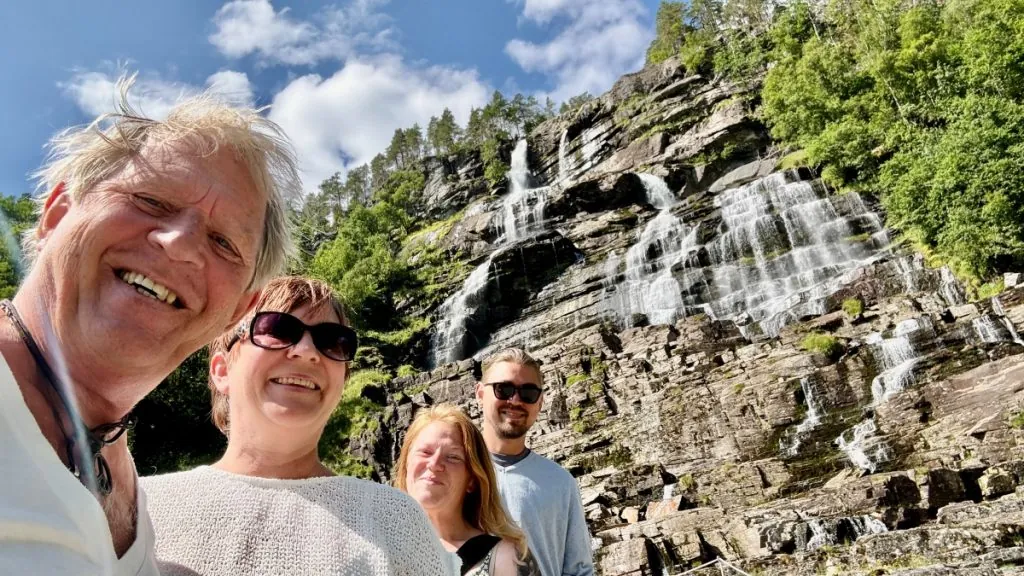
There are also old stories that the water from Tvindefossen is a fountain of youth. Unfortunately, we cannot guarantee any such effects...
Good to know: Tvindefossen is located right on the E16 and has a campsite and kiosk nearby. It is one of the easiest waterfalls on this list to make a quick stop at.
READ MORE: Spectacular waterfalls in Voss – Tvindefossen and Skjervsfossen
6. Skjervsfossen – waterfall with trails and viewpoints
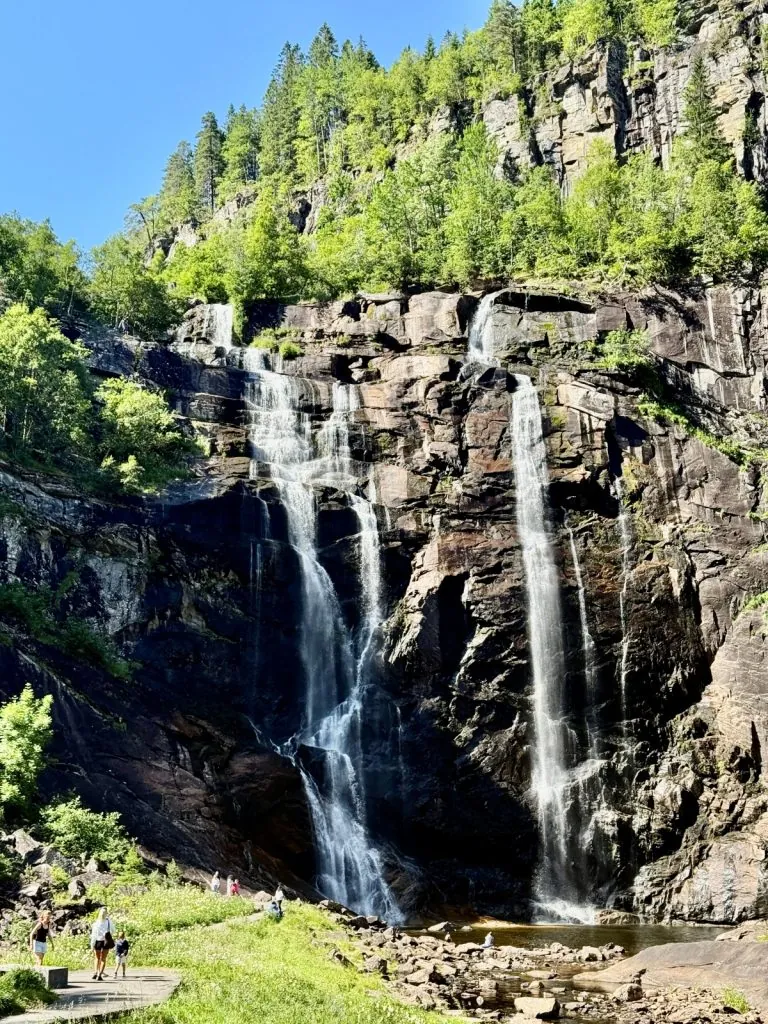
Skjervsfossen between Granvin and Voss is a waterfall worth spending a little more time at. The water falls about 150 meters and the area has been developed with paths, stairs, picnic areas and several different viewpoints.
The drive here was already part of the experience for us. We drove on beautiful winding roads surrounded by tall green mountains, and once we arrived we strolled around for a good while.
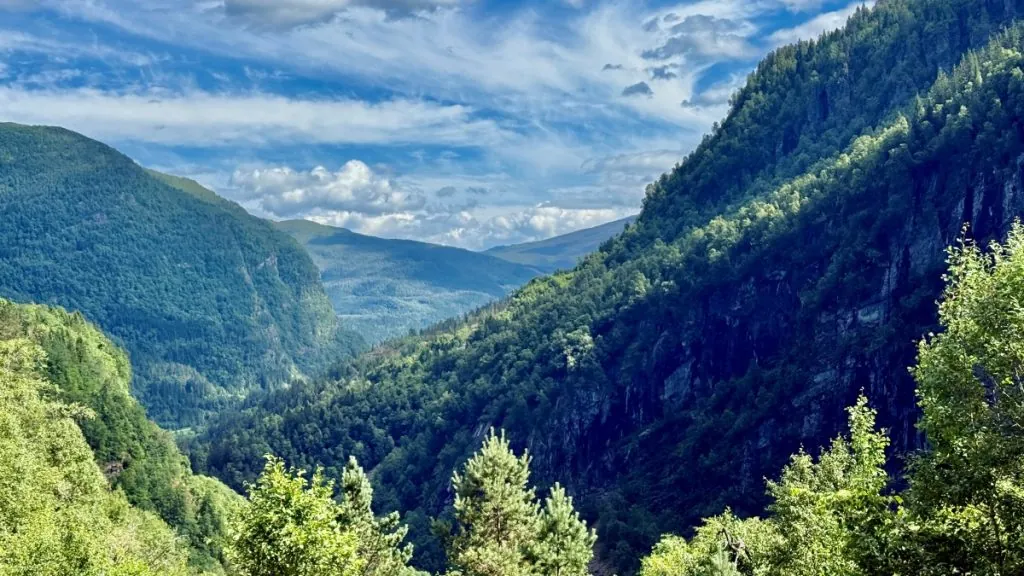
The beauty of Skjervsfossen is that you can experience the waterfall from several different angles and levels. There is even a place called The shower, where you get so close to the water masses that the name can become very literal when the water flow is high.
In the forest we also found traces and memories from the war years, which gave another dimension to the walk.
Good to know: Skjervsfossen is well-maintained with parking, paths, stairs and viewpoints. The road to the waterfall is closed in winter.
7. Stigfossen – in the middle of the drama on Trollstigen
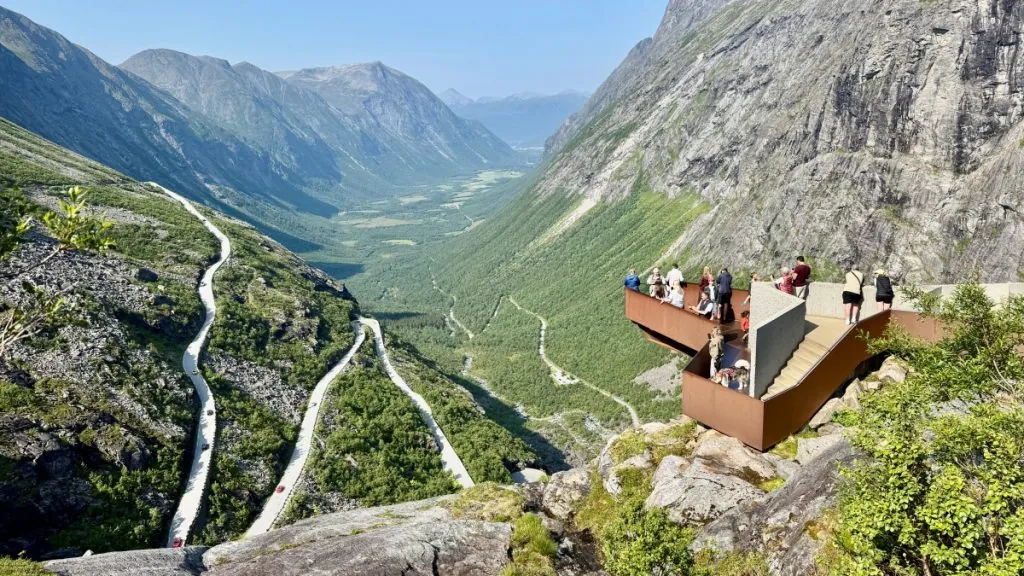
Driving the Trollstigen is an experience in itself, with eleven hairpin bends climbing up the steep mountainside. As if the scenery wasn't dramatic enough, there's also the Stigfossen waterfall.
Stigfossen has a vertical drop of almost 180 meters and the Trollstigvegen road passes the waterfall over the well-known stone bridge Stigfossbrua.
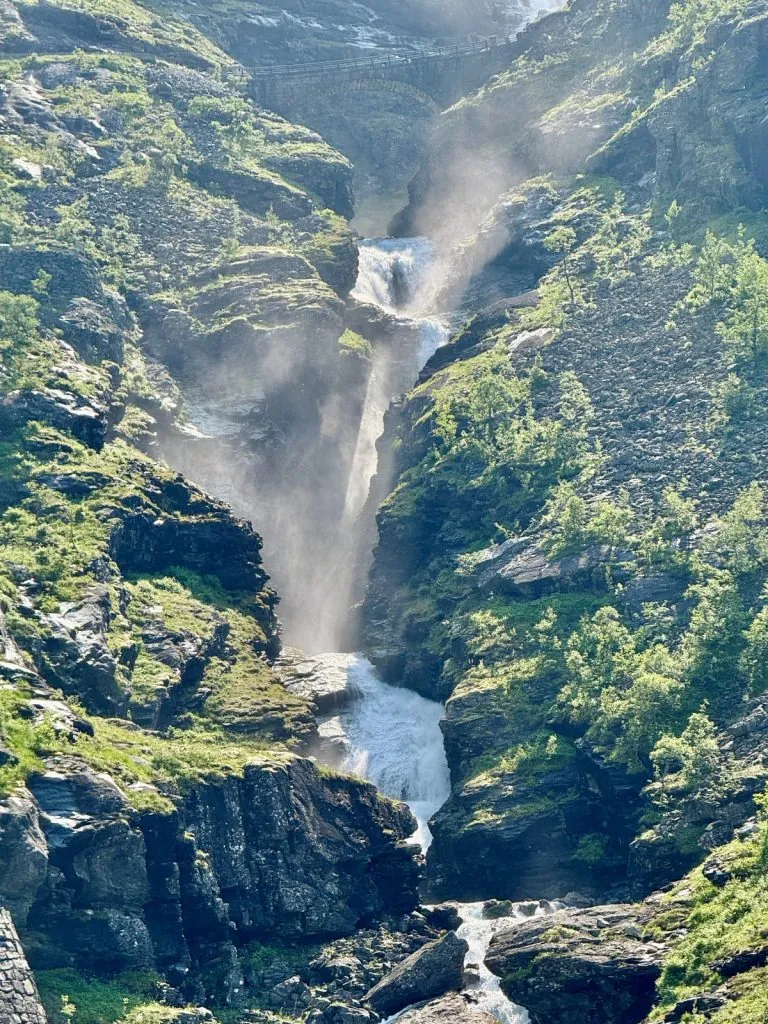
We saw the waterfall while driving the Trollstigen and here it is almost impossible to separate the waterfall itself from the rest of the experience. The water, the hairpin bends, the high mountains and the views over the Isterdalen valley together form one of the most spectacular landscapes we saw during our entire Norway trip.
From the Trollstigen plateau there are walkways and viewing platforms where you can see the road and the landscape from above. The largest platform juts out over the edge of the mountain about 200 meters above the road.
Good to know: Trollstigen is a mountain road that is closed in winter and the opening period varies depending on weather and road conditions. Therefore, check the current road status before you go.
READ MORE: Trollstigen – one of Norway's most dramatic roads
8. Øvstefossen – at Gamle Strynefjellsvegen
We only came across Øvstefossen when we started going through our photos from the trip. And it would be a shame to forget it.
The waterfall is located at the far end of Hjelledalen, just below the junction with Gamle Strynefjellsvegen. This is not a new tourist attraction. Øvstefossen has impressed travelers across Strynefjellet for more than a hundred years.
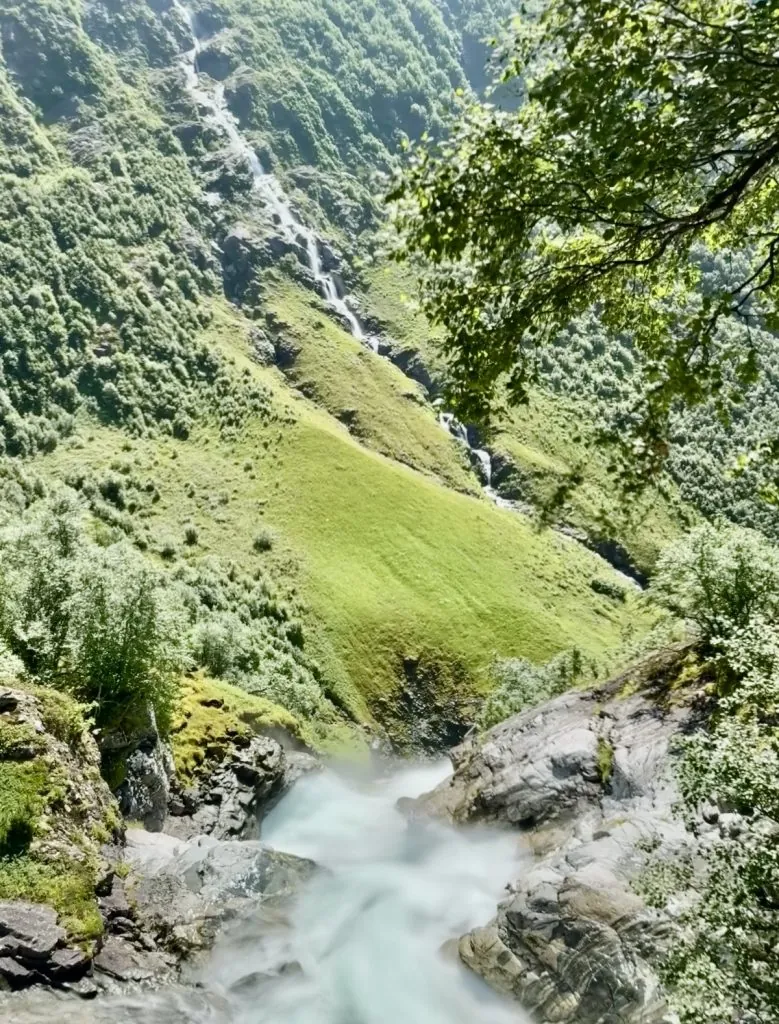
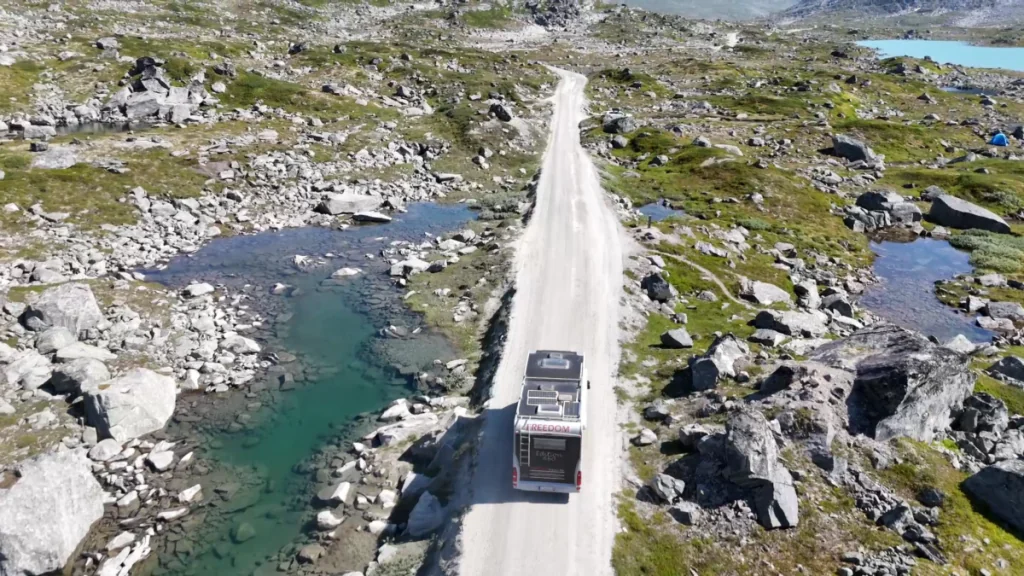
We stopped here just before we turned onto Gamle Strynefjellsvegen and took some photos. The whole environment is incredibly beautiful, and the waterfall was almost like a foretaste of the dramatic nature that awaited along the old mountain road. From the road there is a path about 200 meters long that leads closer to the roaring water.
Good to know: Øvstefossen is located right next to the Old Strynefjellsvegen. The tourist road itself is closed in winter and normally only opens when snow conditions allow. In 2026 it opened on June 15.
READ MORE: Old Strynefjellsvegen – Norway's historic mountain road
9. Hellesyltfossen – waterfall in the middle of the village
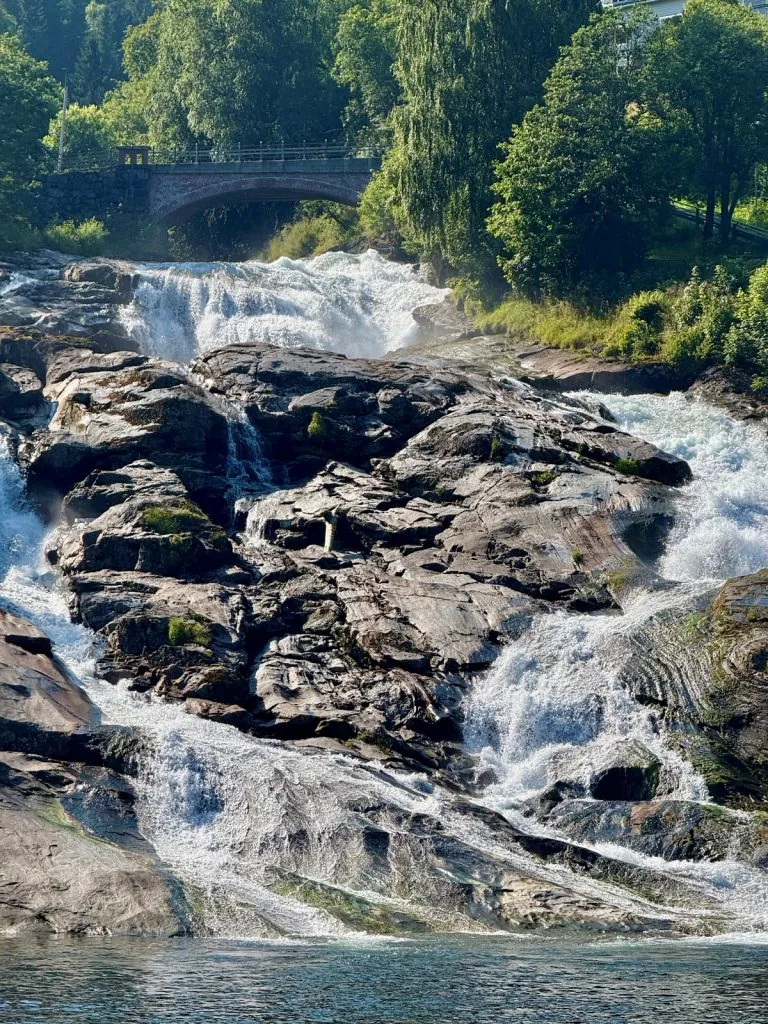
Not all Norwegian waterfalls need to plunge hundreds of meters down a mountainside to make an impression. Hellesyltfossen is special for a completely different reason: it roars straight through central Hellesylt.
The water cascades over polished granite cliffs between two bridges in the middle of the town, and the waterfall is one of the most photographed subjects in the area. It is especially powerful during the snowmelt in early summer.
We stayed at Camping Hellesylt and were therefore able to experience both the waterfall and the small town in peace and quiet. The constant sound of the water really adds to the atmosphere.
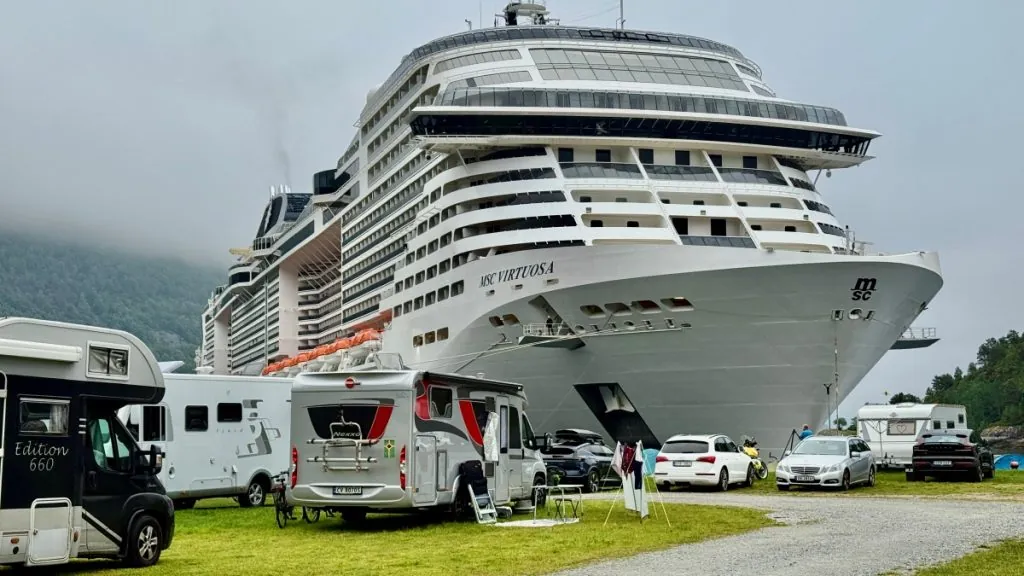
And Hellesylt offered another surprise. When we woke up one morning, a huge cruise ship had suddenly docked right next to the campsite. The contrast between the small village, the roaring waterfall and the gigantic ship was special to say the least.
Good to know: Hellesyltfossen is located right in the center and is therefore very easy to visit on foot once you are in Hellesylt. The two bridges over the falls are from 1902 and 1907 respectively.
READ MORE: Geirangerfjord – dramatic views from Geiranger to Hellesylt
10. Prestfossen – an unexpected discovery in Lom
Prestfossen in Lom was also one of those stops that didn't turn out quite as we had planned. We actually stopped in Lom to refuel and look for a place where we could empty the chemical toilet. We didn't find one, but I spontaneously thought the community looked nice and we decided to take a little walk. It was a good decision.
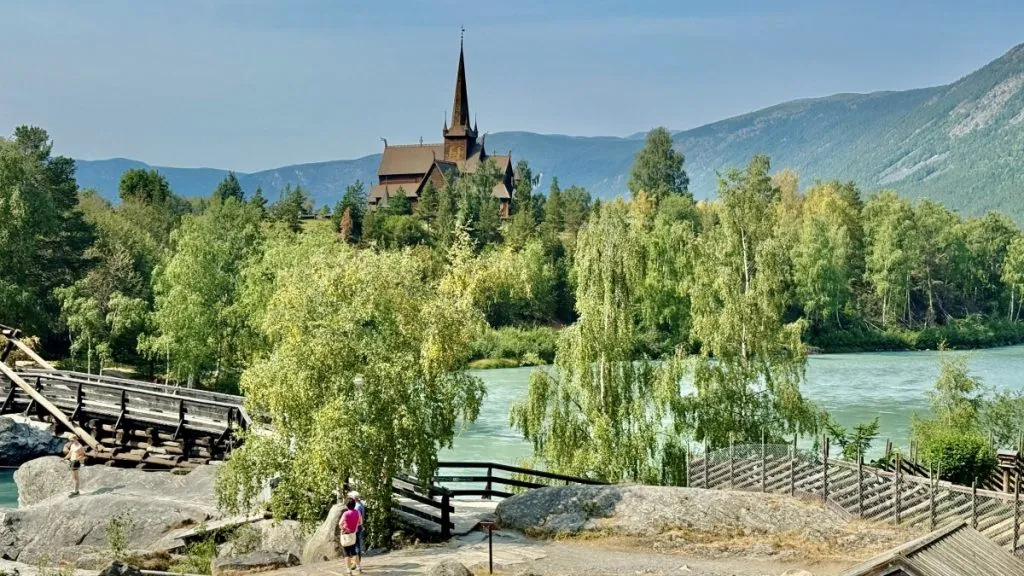
Right through Lom, Prestfossen waterfall roars, surrounded by traditional wooden buildings and with the beautiful stave church right nearby. The combination of the waterfall and Lom stave church made a much bigger impression than our initially rather prosaic stop for a drink. Lom stave church was built in the mid-12th century and is still used as a church.
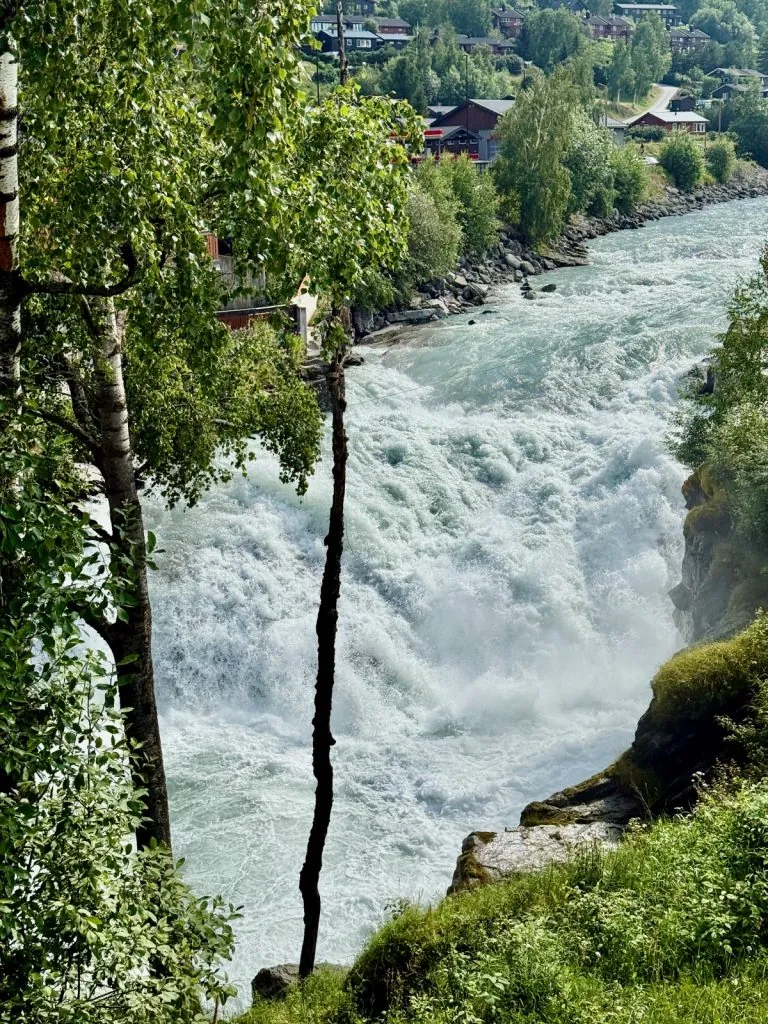
Good to know: Prestfossen is located in the middle of Lom and does not require any special excursion or hiking. Feel free to combine the waterfall with Lom Stave Church and a walk through the center.
Bonus: Gudbrandsjuvet – when the river is squeezed through the mountain
Gudbrandsjuvet is not really a classic waterfall and therefore has to be a bubbler on our list.
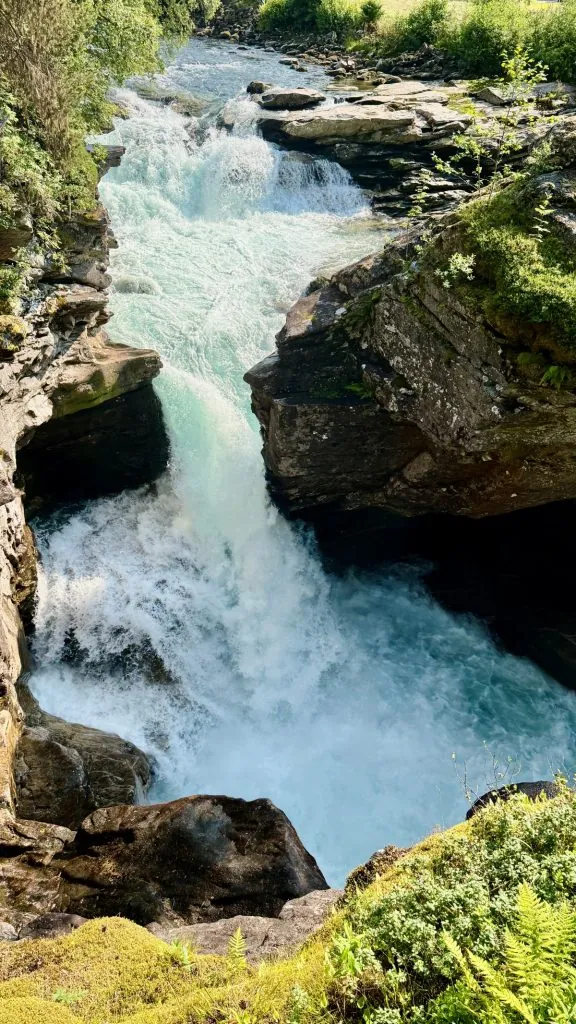
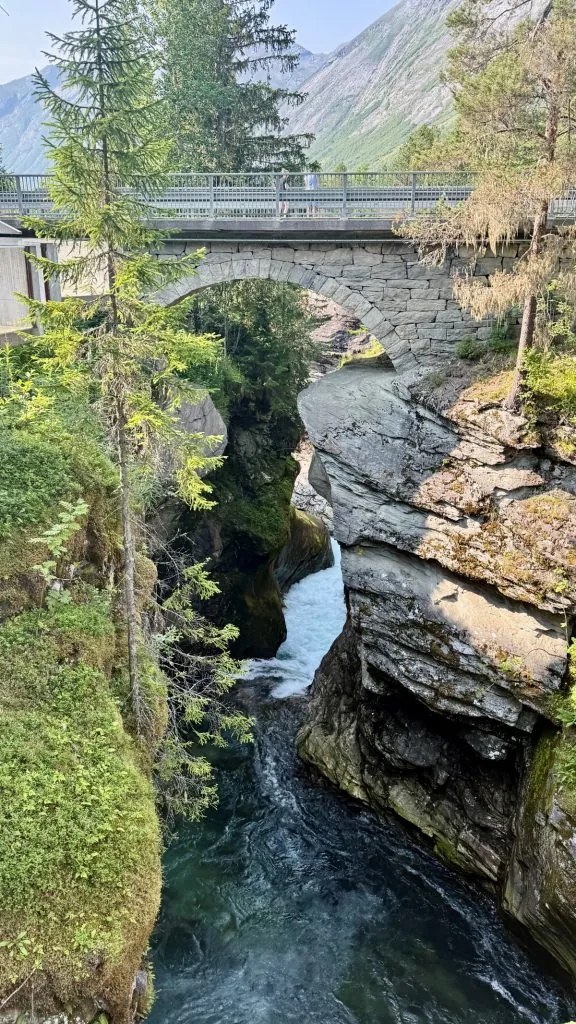
Here, the Valldøla River has carved and shaped the rock over thousands of years, creating giant craters and strange rock formations. The gorge itself is only about five meters wide in places, and the roaring water is pushed forward far below the viewing platforms.
Gudbrandsjuvet is located along the Geiranger–Trollstigen National Tourist Route and is very well laid out with footbridges and viewing platforms. For us, it was another example of how water shapes the landscape in this part of Norway.
Good to know: Gudbrandsjuvet is easily accessible along road 63 between Valldal and Trollstigen. Parts of the facility are wheelchair accessible.
More spectacular waterfalls in Norway
Despite a month in Norway, we have of course only scratched the surface. There are plenty of waterfalls that we have not yet seen and that we would like to add to our list for future trips.
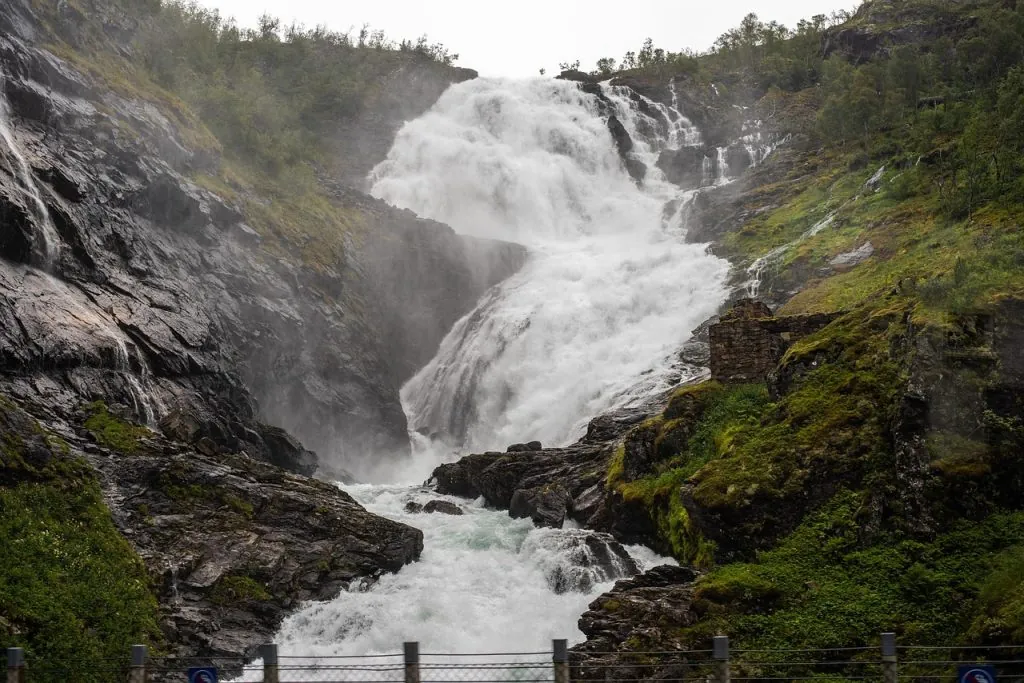
The Seven Sisters at the Geirangerfjord is one of the most iconic. The falls are best seen from the fjord, for example from a ferry, sightseeing boat or kayak. Vettisfossen in Utladalen has a free fall of 275 meters and is considered Norway's highest protected, unregulated waterfall. Kjosfossen is known from the Flåm Railway, while Steinsdalsfossen in Hardanger has the somewhat unusual feature that you can walk behind the waterfall.
Mardalsfossen, Kjelfossen and the many waterfalls in Husedalen are other names that may be worth remembering. In other words, there is reason to return.
When is the best time to see waterfalls in Norway?
Do you want to see Norwegian waterfalls at their most powerful? May and June generally the best period. Then the snow melts in the mountains and the water flow is high. Some waterfalls continue to be very watery later in the summer. For Vinnufossen, for example, May–July is stated as the period when the fall is usually the largest.
Of course, that doesn't mean that Norwegian waterfalls are only worth seeing in early summer. We traveled during the summer and saw plenty of mighty bodies of water. Weather, snowpack, altitude and regulation also affect the flow of water from place to place.
Waterfall in Norway by car and camper
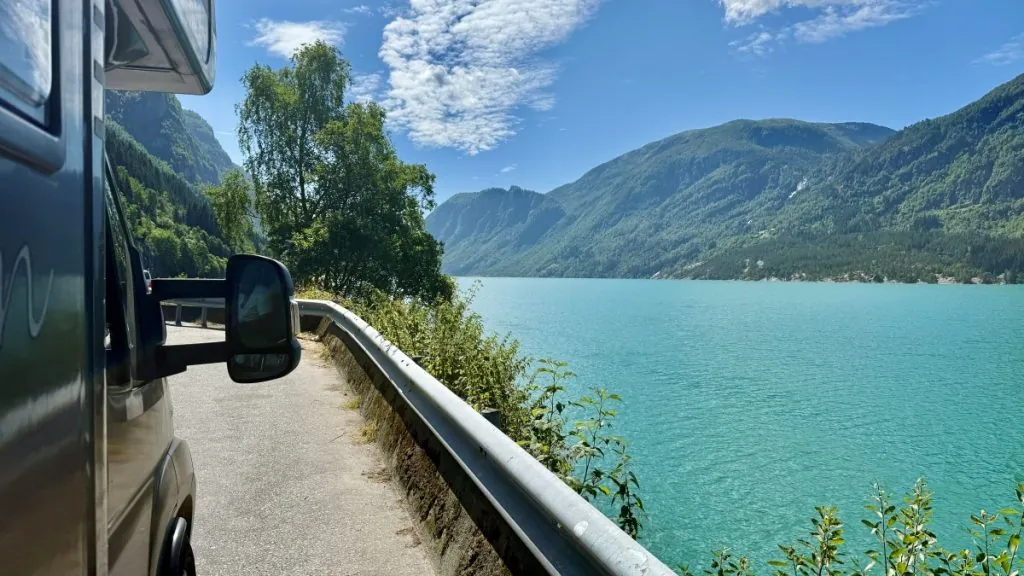
One thing we learned during the trip is that ”the waterfall is by the road” doesn’t necessarily mean it’s easy to stop there.
Tvindefossen was exemplary easy. Vinnufossen, Skjervsfossen and Øvstefossen also have arranged opportunities to stop and continue on foot. At Låtefossen and Langfoss the situation was completely different when we got there during high season. Small parking spaces, a lot of traffic and a camper van are not always the perfect combination.
Our best advice is therefore not to expect to be able to stop at every waterfall just because it is visible from the road. At popular destinations, an early start to the day can make a big difference. Read more about traveling by motorhome in Norway here!
Map of waterfalls in Norway
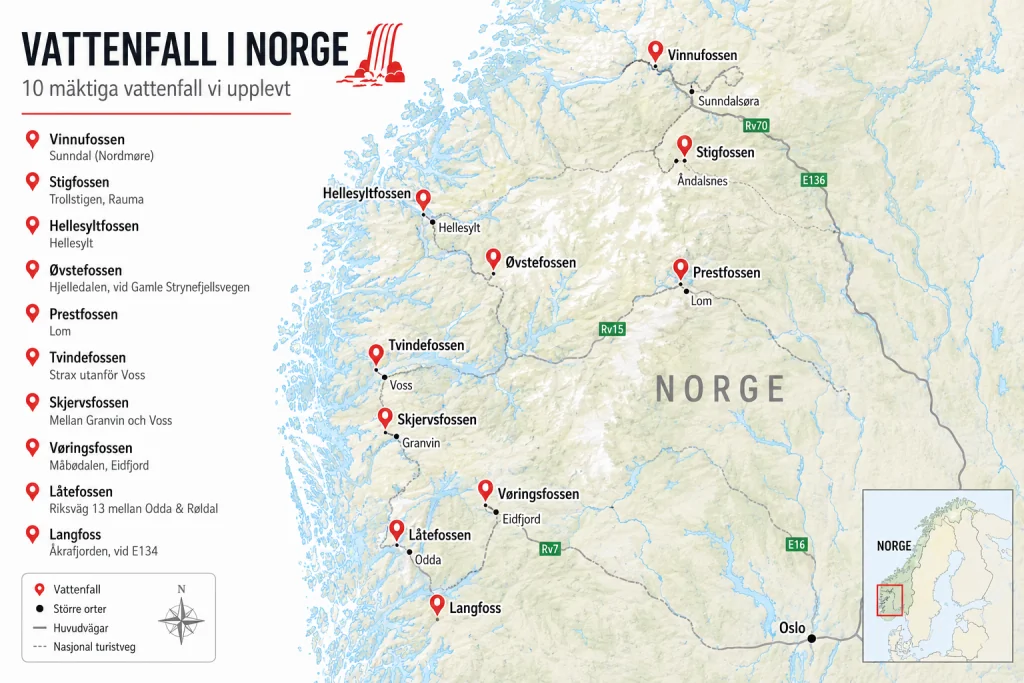
Here you can see the waterfalls on an AI-generated map. As you can see, many of Norway's spectacular waterfalls are located among the fjords. This is truly a fantastic part of Norway to discover!
FAQ – Frequently asked questions about waterfalls in Norway
What is Norway's highest waterfall?
Vinnufossen in Sunndal is listed by Visit Norway as Norway's highest waterfall according to the World Waterfall Database, with a fall height of 845 meters. However, since waterfalls can be measured in different ways, other data and rankings exist.
What is Norway's most famous waterfall?
Vøringsfossen in Måbødalen is often described as Norway's most famous waterfall. It has a drop of 182 meters and is well-maintained with walkways and spectacular viewing platforms.
When are the waterfalls at their largest in Norway?
Generally, May and June are best if you want to see really large bodies of water. This is when the snow melts in the mountains and many waterfalls have their highest water flow of the year.
Which waterfalls in Norway are easy to visit by car?
Låtefossen, Langfossen, Tvindefossen, Vinnufossen and several other famous waterfalls are located directly on or very close to major roads. However, keep in mind that parking options vary greatly. For example, at Låtefossen and Langfossen it can be crowded during high season.
You might also like:
 Trollstigen – one of Norway's most dramatic roads
 Vinnufossen in Norway – Europe's highest waterfall
 Geirangerfjord – dramatic views from Geiranger to Hellesylt
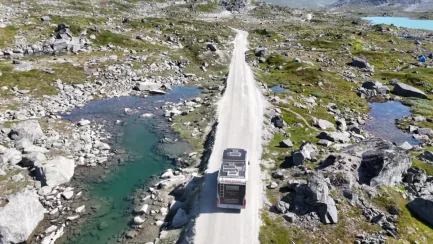 Old Strynefjellsvegen – Norway's historic mountain road
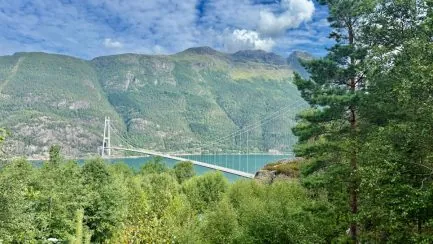 Hardangerfjord with motorhome – Eidfjord, Vøringsfossen and Hardangervidda
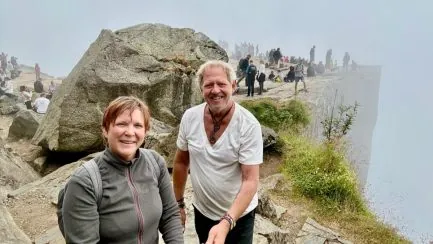 Preikestolen – our hike to Norway's most famous viewpoint



 English (UK)
 Svenska
Eval8 says:
There's something special about waterfalls. Almost a bit magical.
Happy Thursday!
September 3, 2026 - 8:46
Sara i Barcelona says:
Hi Helena!
I have incredibly strong memories of our road trip to Norway/Bergen that my husband and I did in September 2015, what a magically beautiful landscape, and then the waterfalls <3
We visited two big ones, I think one was Steinsdalsfossen as we could walk behind it. The other one was also at Hardanger and was around 150-200 m high if I remember correctly. Then we saw several along the roads of course.
I loved Norway and would love to go back again 🙂 Thanks for the trip!!
September 3, 2026 - 13:53