

Text and photo: Helena Bergström
How did the Vikings really live? What did they eat, which gods did they believe in and were they really as warlike as we often imagine? At The Viking Museum in Stockholm you get to get closer to the people who lived during the Viking Age and discover that everything might not have been quite as you thought.
 Tweet
 Share
 Share
 Pin
 Share
 Share
Table of contents
The Viking Museum – a Viking museum on Djurgården
The Viking Museum, formerly known as Vikingaliv, is located on Djurgården in Stockholm, near the Vasa Museum and Gröna Lund. We visited the museum when it was relatively new and have now returned to experience it again.
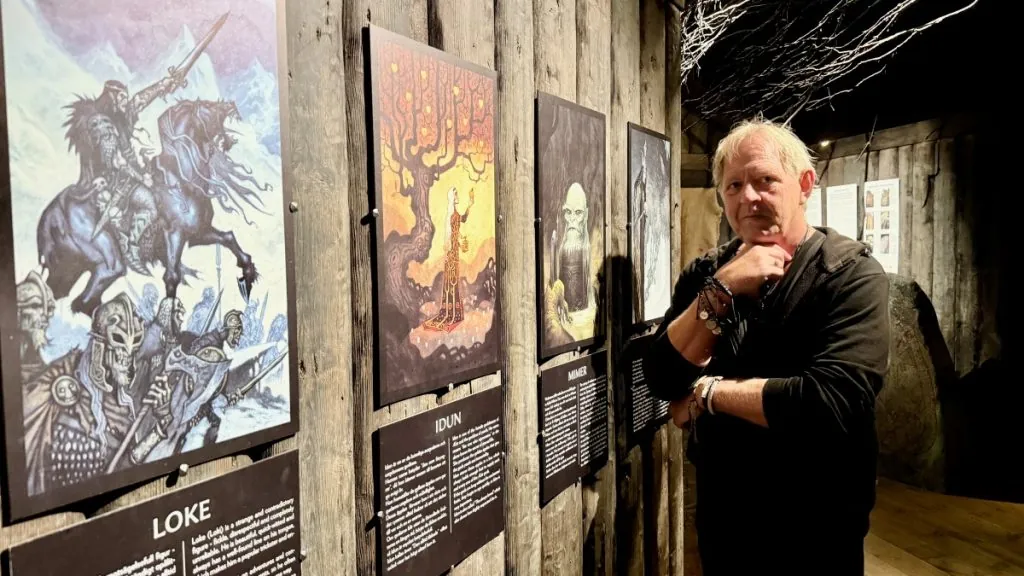
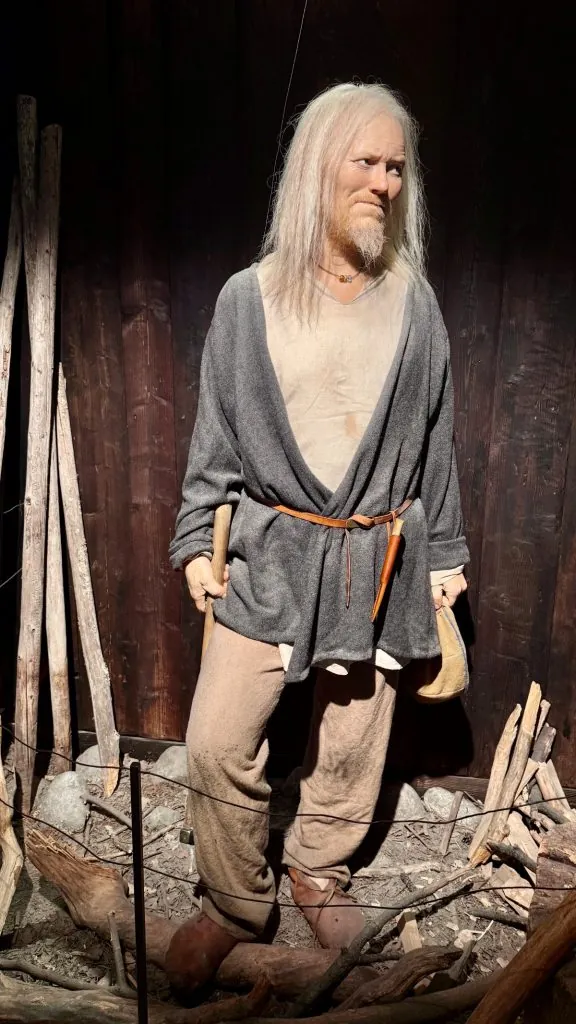
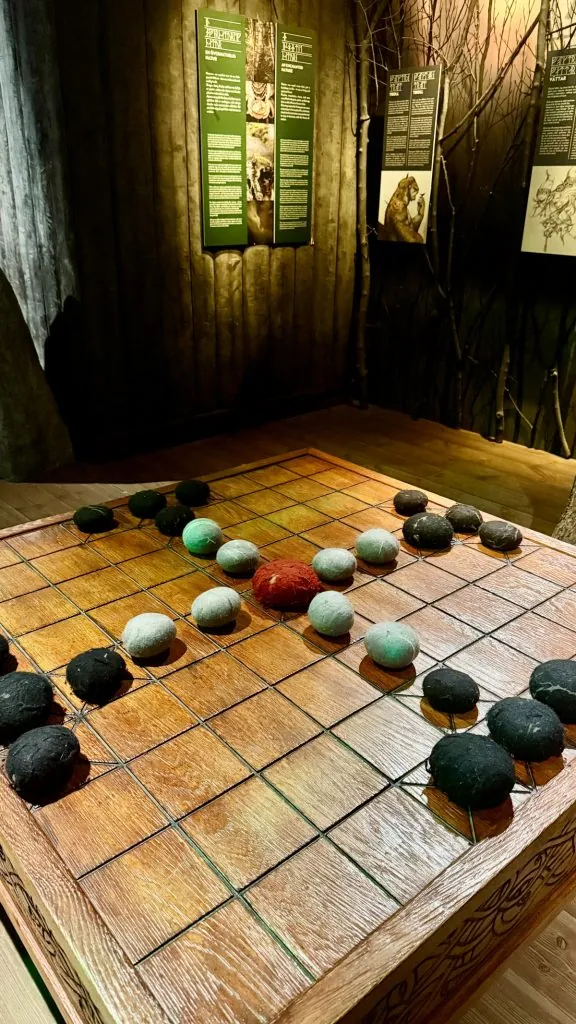
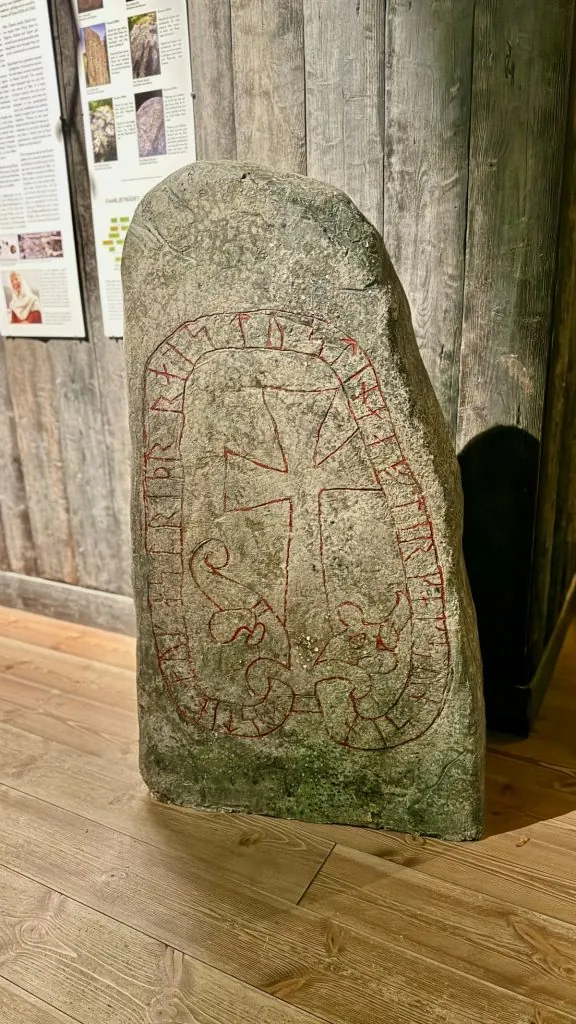
This is not a traditional museum with lots of objects in glass cases. Instead, you learn about the Viking Age through pictures, texts, lifelike figures and interactive features. The museum is not very large, but there is a lot to discover and learn.
The Vikings were more than warriors and raiders
One thing we appreciate about the museum is that it gives a broader picture of the Viking Age. Of course you learn about travel, raids and battles, but also about how people lived in everyday life. What did they eat? How did they live? What did they work with and what was family life like?
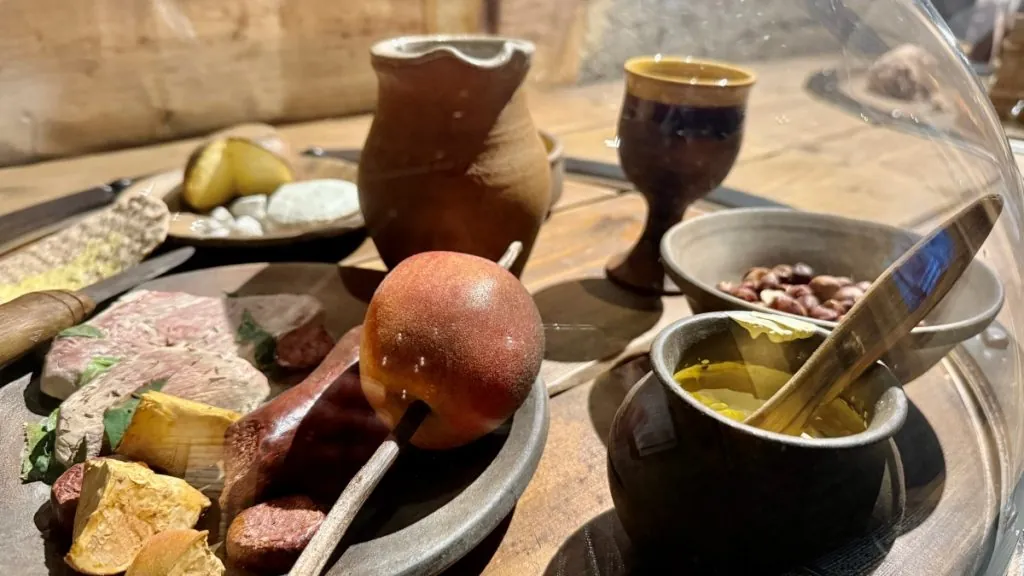
Most people during the Viking Age were actually farmers, devoting a large part of their lives to farming, cultivating crops, and caring for animals. Not all of them were warriors who constantly went out on raids.

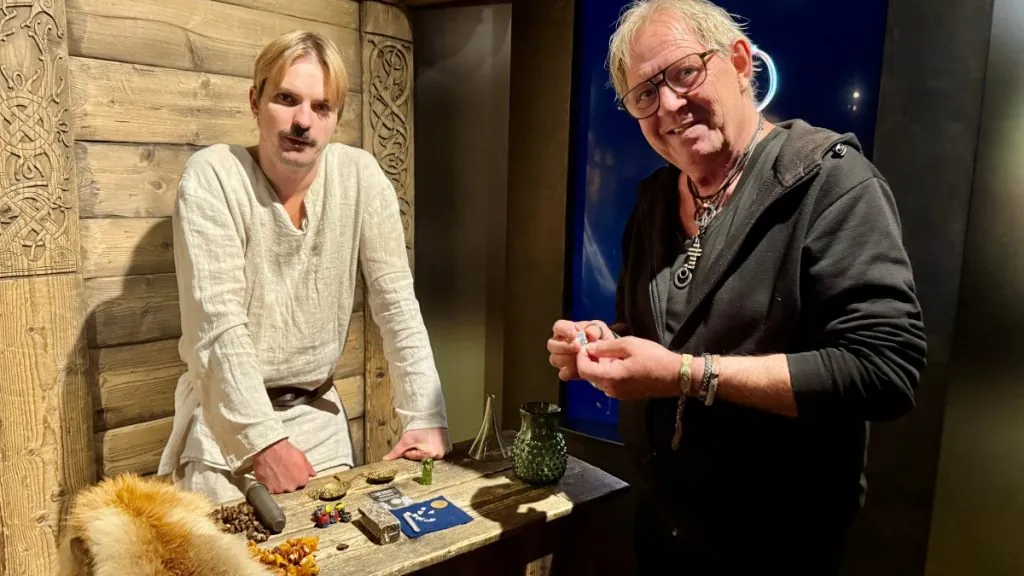
We got hooked on a man in period clothing who told us about various trade goods, such as amber, glass and jewellery. It was nice to be able to stop, ask questions and learn more. The Vikings were not only warriors, but also skilled traders with contacts far beyond the Nordic countries.
Guided tour that debunks Viking myths
One of the great things about our visit was the guided tour. The museum offers short guided tours in both Swedish and English, and these are included in the admission price. We happened to end up on an English-language tour, which worked out perfectly.

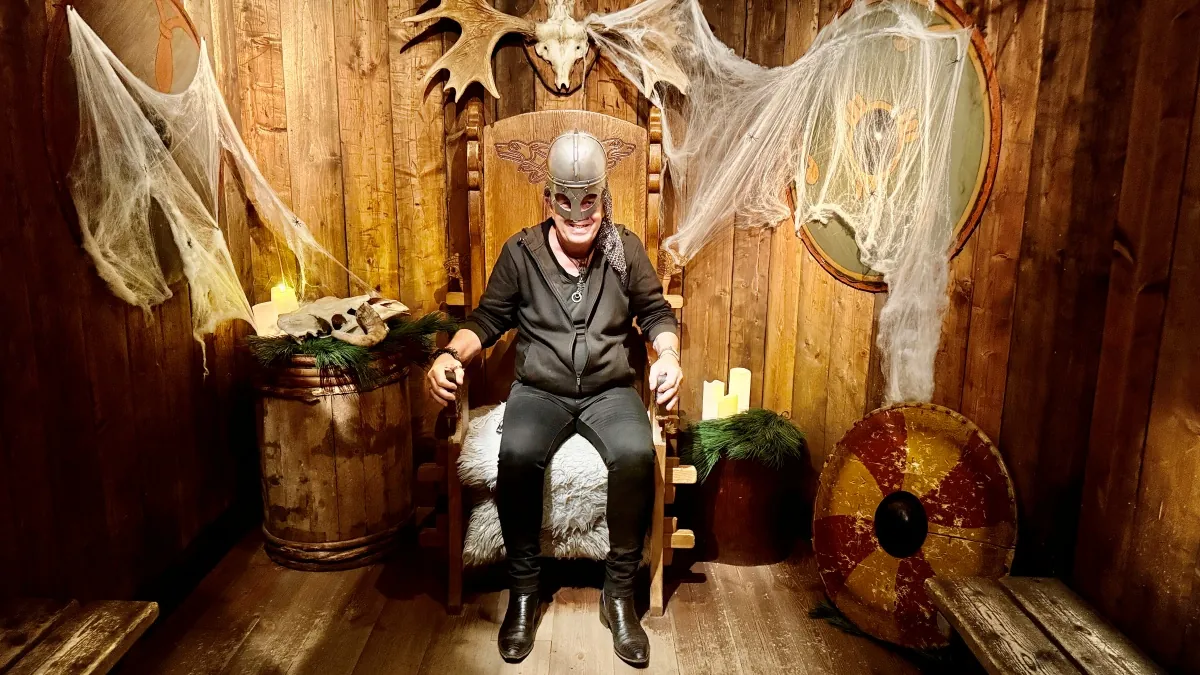
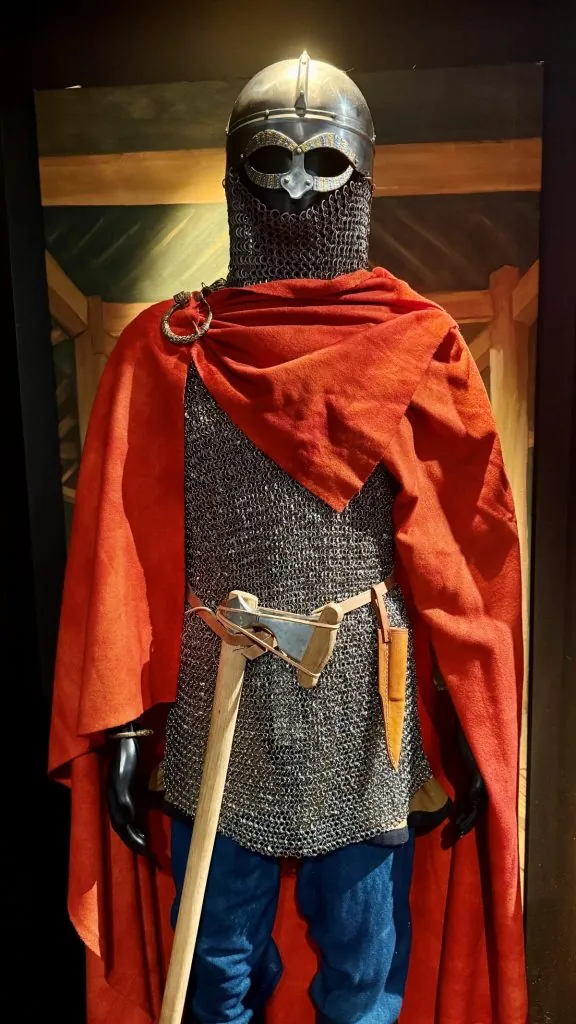
For about 20 minutes we heard lots of interesting stories from a very knowledgeable guide. Among other things, we learned that the Vikings hardly walked around with horns on their helmets. The well-known image of horned Vikings became widespread during the 19th century, including through opera productions of Richard Wagner's works.
We also learned that the word Viking was not a designation for all people who lived in the Nordic countries. danger in viking was rather about embarking on journeys and expeditions, sometimes for trade and sometimes for plunder.

Another interesting part was about religion. The people of the Viking Age believed in several gods, such as Odin, Thor and Freya. When Christianity began to spread in the Nordic countries, the new god could at first sometimes be perceived as just another god among many. However, the transition to Christianity was a long process.
I (Helena) have always been fascinated by Norse mythology. When I was younger, I actually studied the subject at university, and I also lived for a year in Iceland, where the old sagas and traditions still have a special place.
The guided tour really added value to the visit. There is something special about having the story told by an engaged person, instead of just reading signs. In addition, we were able to ask questions and learn more about things that piqued our curiosity.
Our tip is therefore to try to fit in a guided tour during your visit!
Ragnfrid's saga – a journey through the Viking Age
Another experience not to be missed is Ragnfrid's Saga. It is an approximately eleven-minute ride where you sit in a carriage that slowly travels through different environments from the Viking Age.
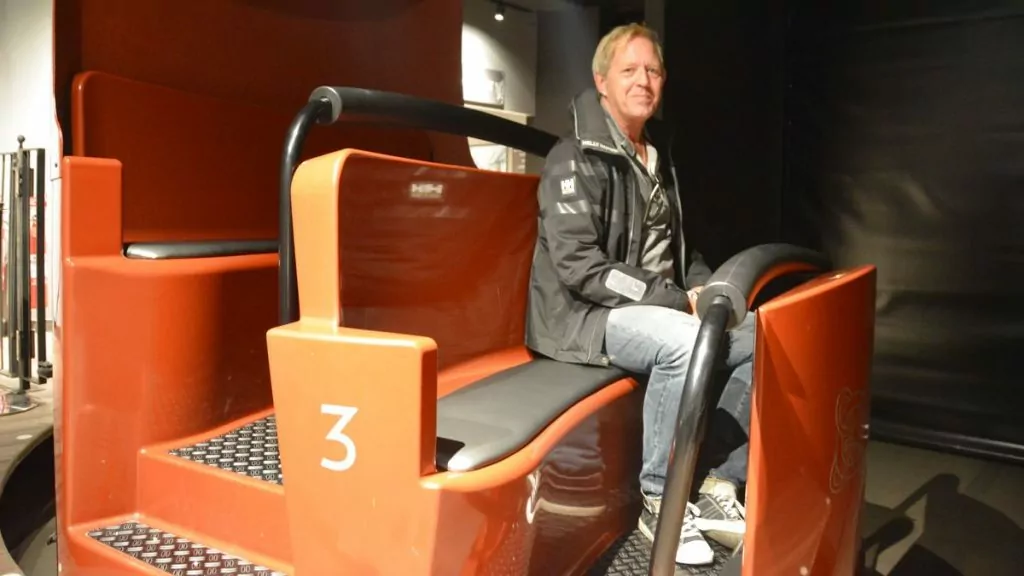
The story begins on a farm in the 10th century, where Ragnfrid lives with her family. Then, you are taken on a dramatic journey through Europe, with trade, plundering and other events that were part of the Viking Age.
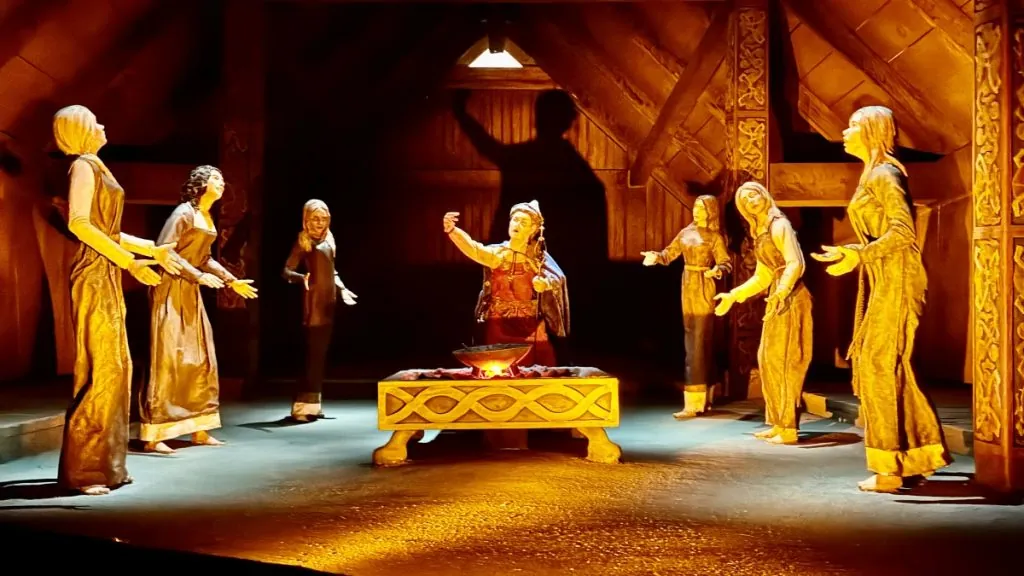
Using sound, light, figures and built environments, the story is brought to life in an imaginative way. Some scenes are quite dramatic, so the experience may be a bit exciting for younger children.
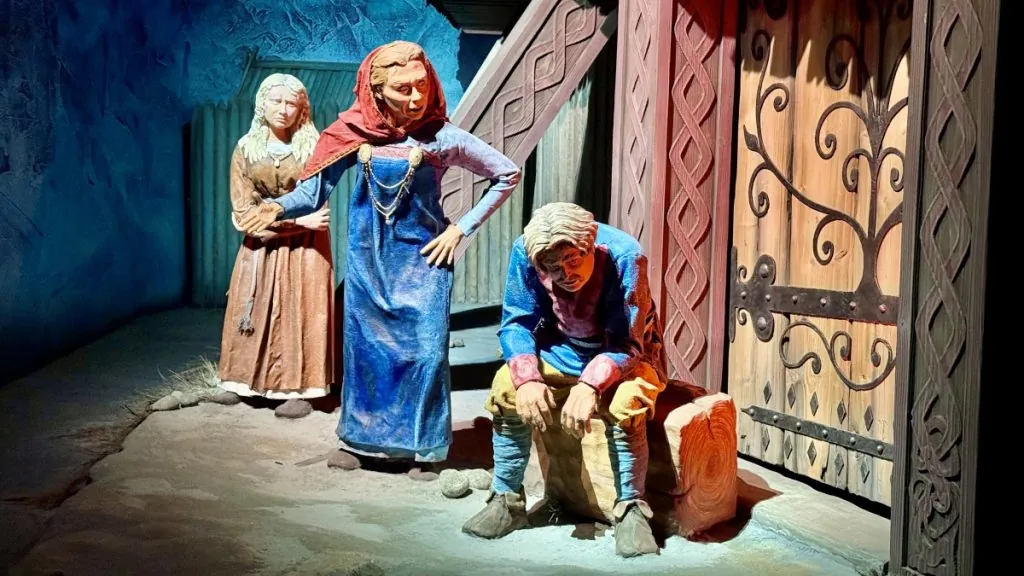
We went to Ragnfrid's Saga on our first visit to the museum, and now it was fun to relive it. It still holds up and is a nice complement to the exhibition.
Restaurant Eld – overlooking the water
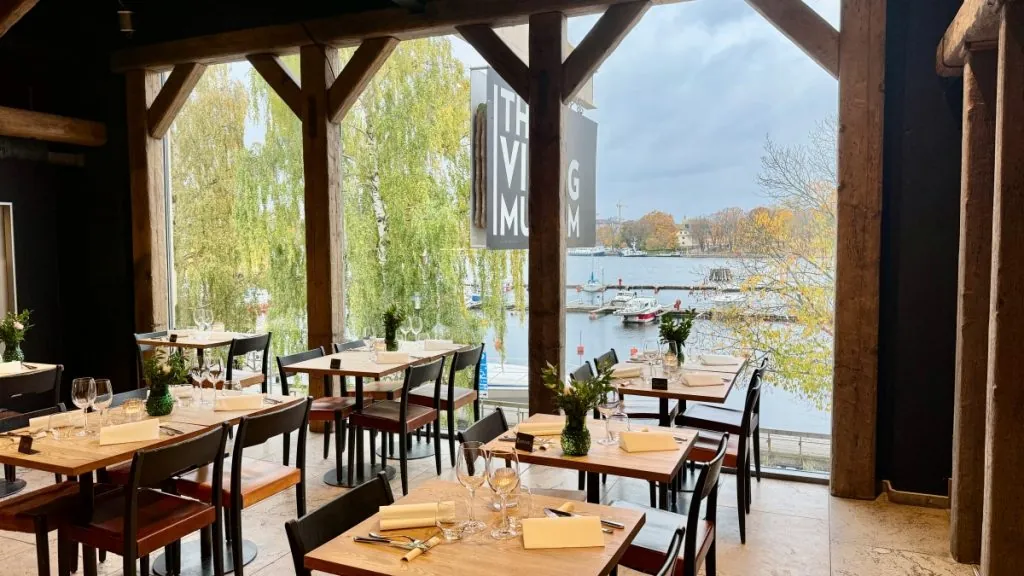
Adjacent to the museum is also Restaurant Eld, which serves food with Nordic influences. Here there are large windows and a nice view over Wasahamnen and Skeppsholmen.
We didn't eat at the restaurant during our visit, but we did peek in and thought the environment looked both cozy and inviting. The staff also told us that you can try mead here, a drink that many people associate with the Viking era. The restaurant also offers mead tastings for those who want to delve a little deeper into the drink's history.
Is The Viking Museum worth a visit?
We definitely think that The Viking Museum is worth a visit, especially for anyone who is curious about the Viking Age and wants to learn more about the people behind all the stories and myths.
It is not a huge museum, and those who primarily want to see large collections of original archaeological objects can also visit Historical Museum, which has an extensive exhibition about the Viking Age.
The Viking Museum's strength lies in making history alive and accessible. For us, it was above all the meetings with the knowledgeable staff and the interesting guided tour that made the visit memorable.
We also noticed how international the audience was. During our visit we heard Spanish, Italian, German and Norwegian, among other languages. Interest in the Vikings clearly extends far beyond the Nordic region!
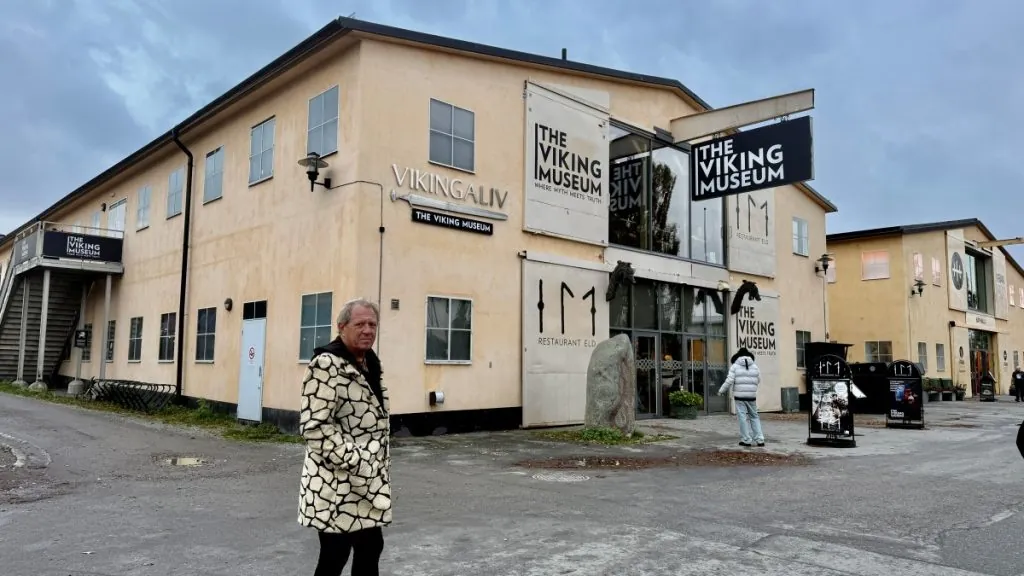
Good to know about The Viking Museum
- Was: Djurgårdsvägen 15 on Djurgården in Stockholm.
- What is it? Experience museum about the Viking Age, with exhibitions, figures and interactive features.
- Guided tours: Offered daily in Swedish and English and included in the admission price. Check current times.
- Audio guide: Available in several languages and can be used on your own mobile phone.
- Ragnfrid's saga: An approximately eleven-minute ride that is included in the admission price. Recommended for ages 7 and up.
- Restaurant: Restaurant Eld, which can also be visited without a museum ticket.
- Opening hours and prices: See The Viking Museum's official website for current information.
You might also like:
 Nordiska museet 150 years - Jubilee bridge and new exhibitions
 Swedish Museum of Natural History - Grandma Anna's secret winter journey
 Grandma Anna and the paradoxes - the secret grandchildren's trip
 Today, Äventyrs opens in Stockholm - a modern adventure museum in the city centre
 Fotografiska in Stockholm – photographic art that provokes thought
 Escape Room in Stockholm - we tested Lumenia



 English (UK)
 Svenska