



Writer: Helena Bergström
Updated: August 2026 | Plitvice National Park in Croatia is a fairytale world of turquoise lakes, mighty waterfalls and hiking trails that go over wooden bridges just above the water. We have visited the Plitvice Lakes on two different occasions and experienced the national park both during the summer and during a very watery autumn.
 Tweet
 Share
 Share
 Pin
 Share
 Share
Table of contents
Plitvice Lakes in Croatia
We first came here in October 2015, at the end of our year-long road trip through Europe. After heavy rains, the water rushed through the national park and several trails were flooded or closed. It made our visit wet and at times a bit adventurous – but the waterfalls were also absolutely stunning.
In this guide, we collect our own experiences with practical tips about hiking trails, entrances, tickets, the best time to visit Plitvice and how to get here by car or camper.

Quick guide to Plitvice National Park
- Was: Central Croatia, between Zagreb and Zadar
- Known for: 16 lakes, waterfalls and hiking trails on wooden bridges
- Time on site: At least half a day, preferably a full day
- Enter: Entrance 1 and Entrance 2
- Best time: Spring and autumn too much water and fewer visitors
- Don't miss out: Veliki Slap and the hike along the lakes
- Suitable for: Nature experiences, hiking, photography and road trips
- By motorhome: Yes, it is possible to visit Plitvice with a camper van
How to experience Plitvice Lakes
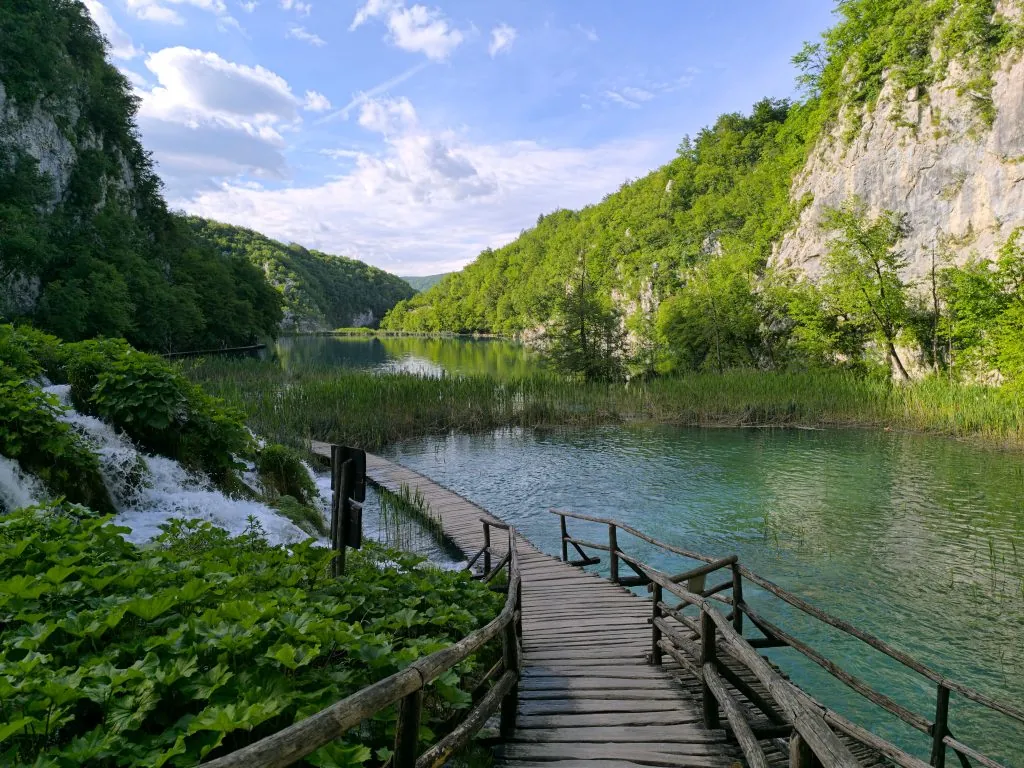
Plitvice National Park is built around 16 lakes that lie at different levels and are connected by streams and waterfalls. The lakes are usually divided into upper and lower lakes, and between them there are hiking trails and wooden bridges that in many places lead right next to – and sometimes right over – the water.

It's the combination that makes Plitvice so special. One moment you're walking through dense forest, the next along a turquoise lake, and then you're standing in front of a waterfall. In some sections, the water cascades right under the wooden trestles.

When we visited Plitvice in the fall, it had rained so much that the experience was even more dramatic. The waterfalls were powerful, the water was high, and in some places it had even overflowed the walkways.

Upper lakes and lower lakes – what's the difference?
Plitvice's 16 lakes are divided into the Upper Lakes and the Lower Lakes. The two areas offer quite different natural experiences and if you have time, it is well worth experiencing both.


- The Upper Lakes consist of 12 lakes and is located in a greener and more forested landscape. Here the beaches are softer and the lakes are larger, and the hike goes between lakes and many smaller and larger waterfalls.
- The Lower Lakes consist of four lakes which is located down in a narrow limestone canyon with high and steep cliffs. Here the landscape becomes more dramatic and it is also in this part of Plitvice that you will find the mighty Veliki Slap waterfall.
- If you have plenty of time, we recommend experiencing both the Upper and Lower Lakes. However, if you only have a few hours, you need to choose your route more carefully – and then the choice between Entrance 1 and Entrance 2 also plays a big role.

Veliki Slap – The Great Waterfall in Plitvice
Veliki Slap, which means ”the big waterfall”, is at 87 meters the highest waterfall in Plitvice National Park and one of the park’s must-sees. The waterfall is located at the Lower Lakes and is easily accessible from the area around Entrance 1.

Unlike many of the waterfalls between the Plitvice Lakes, Veliki Slap gets its water from the Plitvica stream, which cascades over the high cliff face. The amount of water varies throughout the year and after periods of heavy rain the fall becomes significantly more powerful.

When we arrived here during our rainy October trip, there was plenty of water throughout the national park. The view of Veliki Slap and the surrounding cliffs was one of the great nature experiences of our visit.

Entrance 1 or entrance 2 – which one should you choose?
Plitvice National Park has two main entrances, Entrance 1 and Entrance 2, located about three kilometers apart. Which one you choose depends mainly on how much time you have and which part of the national park you want to experience.
- Entrance 1 is located in the northern part of the park and is a good choice if you want to start at the Lower Lakes and see Veliki Slap early in your visit. This is also where we started our first visit to Plitvice.
- Entrance 2 is located further south, closer to Lake Kozjak and the Upper Lakes. From here, several of the park's hiking programs start, taking you through the upper parts of the lake system.
- If you have a full day, the choice of entrance does not have to be crucial, as several of the longer hiking programs combine the Upper Lakes and Lower Lakes. However, if you only have a few hours, it is wise to choose admission according to what you would most like to experience.

Which hiking route should you choose in Plitvice?
Plitvice has eight marked visit programs of varying lengths, from shorter tours of a couple of hours to full-day hikes of over 10 miles. The route that suits you best depends on how much time you have, which entrance you use, and whether you want to see the Lower Lakes, the Upper Lakes, or both.
- 2–3 hours: Program A from Entrance 1 shows the Lower Lakes and Veliki Slap. Program E from Entrance 2 focuses instead on the Upper Lakes.
- 3–4 hours: Program B from Entrance 1 combines Lower Lakes and Veliki Slap with electric boat across Lake Kozjak and panoramic vehicle.
- 4–6 hours: Program C from Entrance 1 or H from Entrance 2 are good options if you want to experience both the Upper Lakes and Lower Lakes during the same visit.
- 6–8 hours: Programs K1 and K2 are for those who want to hike significantly further and experience a large part of the lake area on foot.
Our tip: If you only have one day in Plitvice, we would prioritize a route that includes both the Upper Lakes and the Lower Lakes. They are two quite different natural environments and together they give a much better picture of why Plitvice is so special.

Electric boats and panoramic vehicles in Plitvice
You don't have to experience all of Plitvice on foot. Several of the hiking routes combine electric boat rides across Lake Kozjak and the park's panoramic vehicles, making it possible to see large parts of the national park without having to walk the entire distance.
The electric boats operate on Lake Kozjaksjön between piers P1, P2 and P3. The longer boat trip across the lake is also a nice part of the nature experience itself and gives your legs a welcome break between hikes.

The panoramic vehicles travel between different parts of the national park and are used on several of the marked routes to get back to the entrances. Both boat trips and panoramic vehicles are included in the entrance ticket when they are part of the route you are following.
When we visited Plitvice, we combined the hike itself with a trip across the lake in one of the quiet electric boats. It was a wonderful way to experience the national park from the water as well.

Best time to visit Plitvice – spring, summer or autumn?
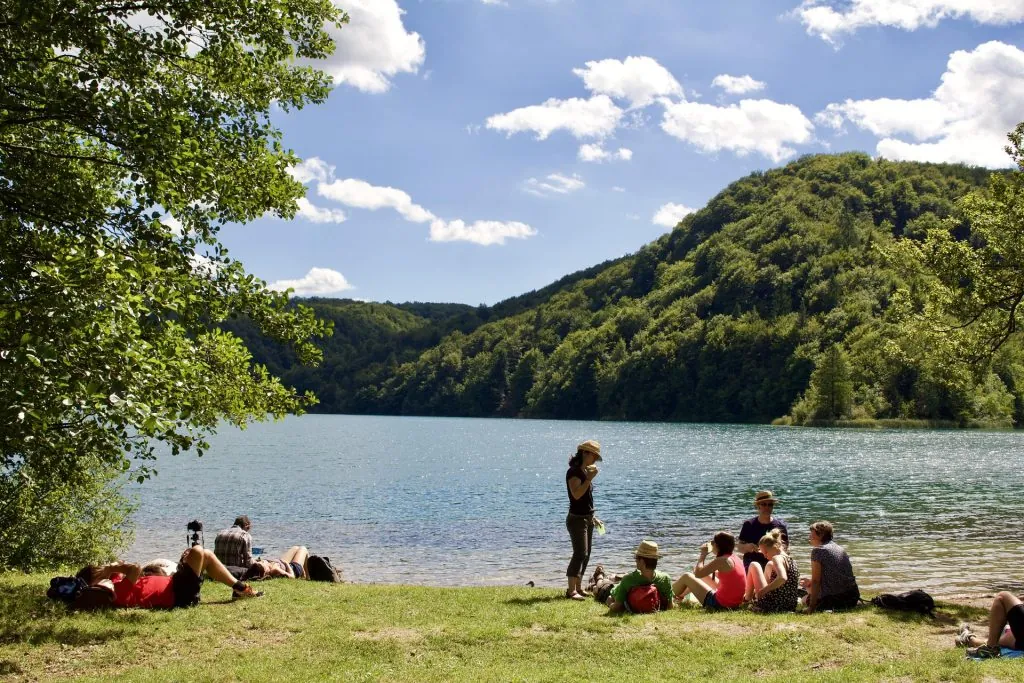
Plitvice National Park can be visited throughout the year, but if you have the choice, we would recommend spring or autumn. Then the temperature is more comfortable for hiking, it is generally less crowded and it is easier to stop, take photos and really take in nature.
Spring is a fantastic period when nature turns green and the waterfalls are often powerful after the winter and spring rainfall. It is also considerably calmer than during the height of summer.

Summer offers green forests, turquoise lakes and long days, but July and August in particular are very popular. During the high season, around 10,000–15,000 people can visit the park in one day. The narrow wooden bridges and the most popular viewpoints can therefore be crowded, making it more difficult to take photos and experience Plitvice in peace and quiet.
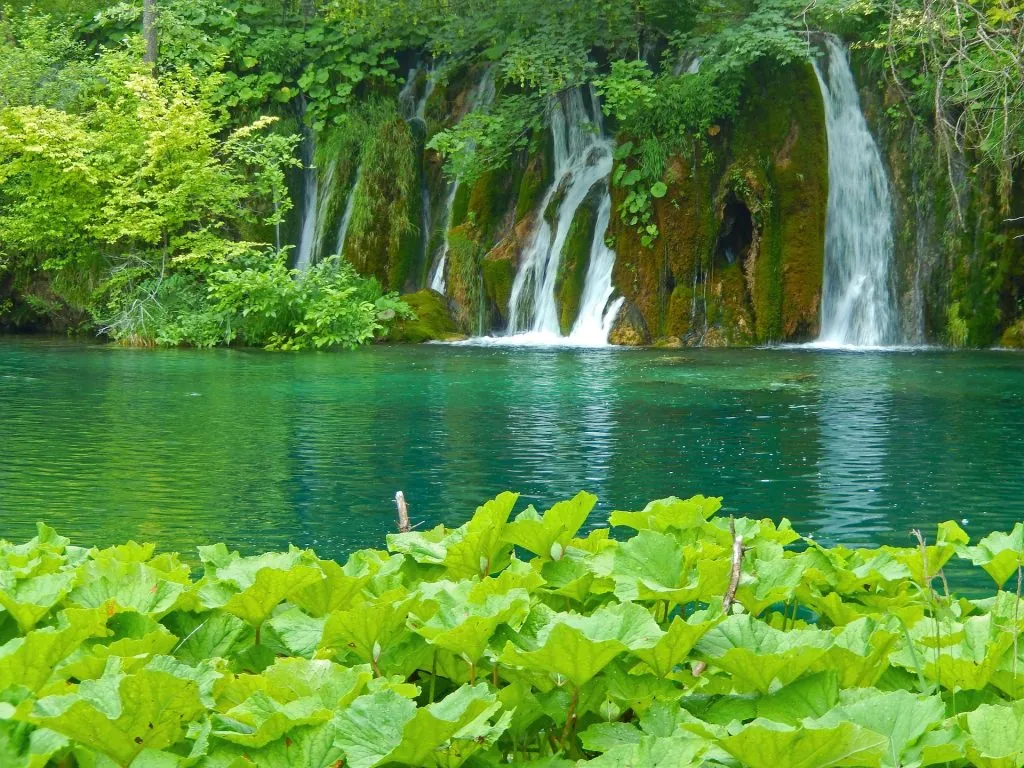
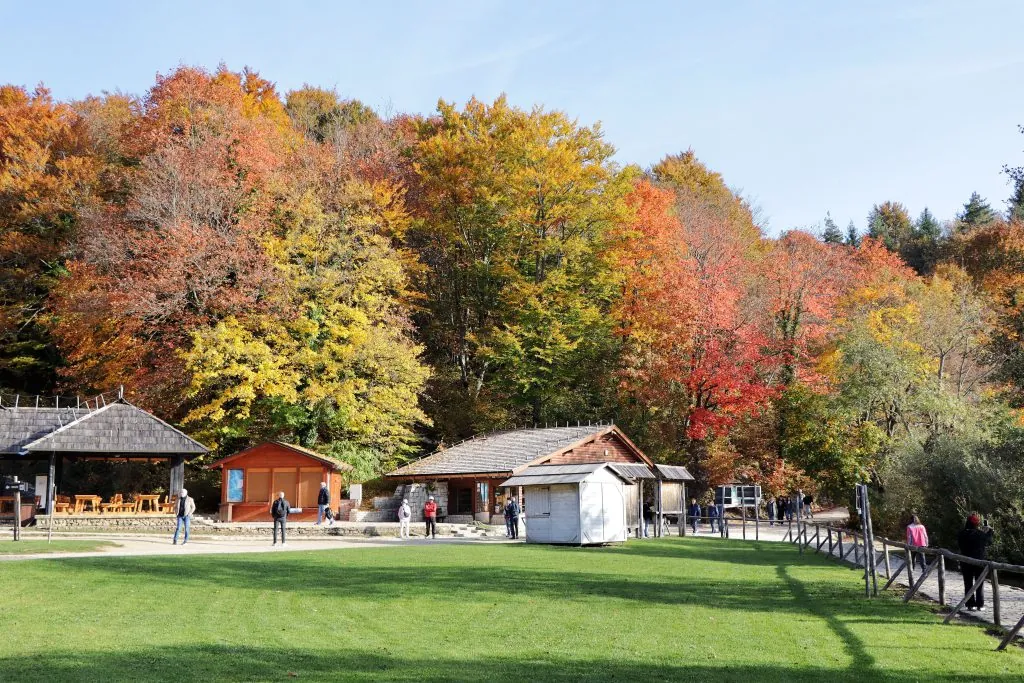
Autumn is our personal favorite. The number of visitors is decreasing, the temperature is good for hiking, and the forest is starting to change color. When we visited in October, it had rained a lot and the waterfalls were huge – but the rain also meant that some walkways were flooded and parts of the park were closed.

Tickets, prices and opening hours in Plitvice
To visit Plitvice National Park you need an entrance ticket. The price varies depending on the season and during the summer also depending on the time of day you enter. During the high season from 1 June to 30 September 2026, a regular adult ticket costs 40 euros during the day and 25 euros for later entry.
We recommend purchasing your ticket online in advance, especially if you are visiting Plitvice during July or August. When booking, you select both the entrance and the time of your visit, and the ticket should be used at the entrance you have chosen.
The entrance ticket also includes electric boats and panoramic vehicles when they are used within the visiting program you are following.
Opening hours vary throughout the year. During the summer of 2026, Entrance 1 and Entrance 2 will be open from 7:00 AM to 8:00 PM, while on-site ticket sales will close earlier. Always check the current opening hours, prices and any changes on the national park's official website before your visit.
Plitvice National Park official prices and tickets
How to get to Plitvice National Park
Plitvice National Park is located inland in Croatia, roughly between Zagreb and Zadar. For those taking a road trip through Croatia, Plitvice is therefore a natural stop between the coast and the northern parts of the country.
By car: The easiest way to get to Plitvice is by car or camper. Both Entrance 1 and Entrance 2 are located along the road through the national park and there are paid parking lots at both entrances.
From Zagreb: Plitvice is located about 130 kilometers south of Zagreb. Expect a drive of about two hours depending on traffic.
From Zadar: From Zadar it is about 120 kilometers to Plitvice and the journey takes about 1.5–2 hours by car.
From Split: From Split, the distance is about 240–250 kilometers. Expect about 3–3.5 hours by car, depending on the road and traffic.
By bus: There are also buses to Plitvice from Zagreb, Zadar and Split, among others, especially during the summer season. Bus stops are located near both Entrance 1 and Entrance 2. Always check the current timetable before your trip.

Plitvice by motorhome – parking and camping
Plitvice is a great place to visit by motorhome and was a natural stop for us during our long road trip through Europe. There is parking at both Entrance 1 and Entrance 2, and in the area around the national park there are several campsites where you can stay overnight.
Two options are Camp Korana, approximately 6 kilometers from Entrance 1, and Camp Borje, approximately 16 kilometers from Entrance 2. Both offer spaces for motorhomes and the possibility of transportation between the campsite and the national park.
When we arrived at Plitvice with a camper van in 2015, we first checked in at Kamp Turist Grabovac. The promised wifi didn't work there, which was important to us since we were working from the camper van. So after half an hour we checked out again and ended up at the small Camping place Bear instead – a simple family campsite in a garden where the wifi worked perfectly.
It may not have been the most exclusive accommodation during our year-long European trip, but it was one of those little stops that we still remember. And in the pouring October rain, we were very happy to crawl into the camper after a wet day among the Plitvice Lakes.

Food, toilets and service in Plitvice
There are restaurants, cafes and eateries in several locations in and around Plitvice National Park, including at the entrances and at some of the larger junctions within the park. Here you can buy everything from coffee and snacks to simple meals.
Toilets are available at the entrances and at several locations along the major visitor routes, but not everywhere along the hiking trails. Therefore, please take advantage of the service area when you pass by.
We recommend bringing a water bottle and a small snack in your backpack, especially if you are planning a longer route. During the summer it is also important to have plenty of water with you as it can get really hot on the hike.
Our best tips for visiting Plitvice
- Arrive early in the day. Especially during July and August, an early start makes a big difference. You'll have a calmer experience and better opportunities to take photos before the biggest crowds arrive.
- Give Plitvice plenty of time. If you have the opportunity, we would set aside most of the day and choose a route where you get to experience both the Upper Lakes and the Lower Lakes.
- Book your ticket in advance during high season. You choose the entrance and time when you book, so please decide on a walking route before you buy the ticket.
- Wear good shoes. The trails are on both regular paths and wooden bridges and can become slippery when it rains. We know from our own experience how wet it can get in Plitvice.
- Check the weather and current conditions. Heavy rain and high water may mean that some trails are temporarily closed. Bring rain gear even if the forecast looks good.
- Bring water. During the summer it can get really hot and a longer hiking route takes several hours.
- Don't stress between attractions. Plitvice is not a place where you just check off Veliki Slap and move on. Stop on the ledges, look at the smaller waterfalls and give yourself time to actually experience nature.
- Feel free to travel here in spring or autumn if you can choose. For us, Plitvice is at its best when there are fewer people and you have more space to photograph and take in the landscape.
Why are the Plitvice Lakes so special?
Plitvice is much more than 16 beautiful lakes. The national park was established in 1949 and is both Croatia's oldest and largest national park. Since 1979, the Plitvice Lakes have also been on the UNESCO World Heritage List.
The unique landscape has been created through a still ongoing natural process where limestone deposits, known as tufa or travertine, build up barriers between watercourses. This is how the lakes and countless waterfalls have been formed – and the landscape continues to slowly change.
Large parts of the almost 300 square kilometer national park consist of well-preserved forests, which together with the lakes, streams and meadows create an unusually diverse nature. There is a rich flora and fauna here and many protected species.
The limestone landscape is also home to a large number of caves. One of the most famous is Šupljara at the Lower Lakes, which is the only protected cave in the park that is open to visitors.
FAQ – frequently asked questions about Plitvice National Park
Is it allowed to swim in the Plitvice Lakes?
No, swimming is not allowed in the lakes of Plitvice National Park. The lakes and streams are part of the delicate ecosystem that the national park protects, so enjoy the turquoise waters from the hiking trails and wooden bridges instead.
Can you visit Plitvice with children?
Yes, Plitvice can be a fantastic nature experience with children, but choose a hiking route according to the age and strength of the children. Keep in mind that there are long stretches with wooden bridges, stairs and uneven paths and that not all parts are therefore suitable for strollers.
Can you bring dogs to Plitvice National Park?
Yes. Dogs are welcome in the national park but must be kept on a leash throughout the visit. They are also allowed on electric boats and panoramic vehicles, but must be kept under control so that they do not disturb other visitors or wildlife.
Are you allowed to fly drones in Plitvice?
No. Visitors are not allowed to fly drones or other unmanned aerial vehicles in Plitvice National Park. Therefore, regular cameras and mobile phones are the way to go for holiday photos.
How many days do you need in Plitvice?
For most people, a full day is enough to get a really good experience of Plitvice and see both the Upper and Lower Lakes. If you want to hike longer trails, take photos at a slower pace, or avoid making the visit a long day trip from the coast, an overnight stay in the area is a good option.
More national parks in Croatia
There are seven more national parks in Croatia. We have visited two of them, and can highly recommend visits to both. Click on the links to read more!
- Krka National Park
- Brijuni National Park
- Kornati Islands
- Mljet
- Paklenica National Park
- Risnjak
- Northern Velebit

More things to see and do in the neighbourhood of Plitvicejöarma
There is of course much more to see in the vicinity of the Plitvice Lakes. For example, you can visit cities such as Opatija, Zagreb or Zadar, or perhaps make an excursion to Island of Pag.






 English (UK)
 Svenska
Linnea says:
We considered going there from Krk last summer but felt that it was a bit far and that we would probably be crowded a lot :/ How lucky that you went there instead so I got to see some nice pictures as a consolation 🙂 .
Greetings Linnea
16 October 2015 - 17:40
Åsa says:
Looks great!
16 October 2015 - 17:49
BP says:
Absolutely marvellous views! Oh the weather seems to have had your excursion in mind. Yes, I do not mean that parts of the park were closed but that the sun shone on you today:-)
16 October 2015 - 18:22
Jan Svensson says:
Absolutely beautiful pictures, looks amazing!
16 October 2015 - 18:48
Rolle o Carina says:
Oooh so beautiful, luckily we follow your Blog 🙂 .
Have fun and enjoy....:-)
16 October 2015 - 18:51
admin says:
Linnea, I can understand your reasoning, although I highly recommend a visit to Plitvice! Very beautiful, but probably very crowded in the summer.
Åsa, absolutely fantastic actually! 🙂
BP, a bit of "skill" was involved, or planning you should call it. haha. It is raining a lot now so we have followed the forecast closely and aimed for the day that looked best 😉.
Jan Svensson, the nature here is really amazing!
Rolle and Carina, from time to time we find extra nice places! 🙂
16 October 2015 - 19:12
Marianne - Glimt av verden says:
Plitvice is a place I hope to visit one day, it looks very nice! The picture with the text "Beautiful walking paths through Plitvice National Park" was absolutely beautiful!
16 October 2015 - 19:24
s p i n d e l t j e j e n says:
Isn't it amazing!!! 🙂
16 October 2015 - 19:44
Lennart says:
So beautiful!
16 October 2015 - 20:19
admin says:
Marianne, glad you like the picture! We can definitely recommend a visit to Plitvice if you get the chance!
Spider girl, great to see your pictures! Very nice! We recognise ourselves in them, while it looks a little different in the summer heat. A fantastic place!
Lennart, sometimes you are amazed that nature can be so beautiful!
16 October 2015 - 20:46
Maria says:
Wow, so incredibly beautiful place! 🙂
17 October 2015 - 9:10
Steve says:
Fantastic! Dizzying just to look at the pictures.
17 October 2015 - 9:31
Ama de casa says:
Gosh, how beautiful! Maybe a bonus after all that it has rained so much - great!
🙂
17 October 2015 - 12:49
Ditte says:
So beautiful! Realise more and more that Croatia should get more visits from us. Very nice pictures!
But avoiding a European peak season is probably a big plus.
17 October 2015 - 15:22
Kors och Tvärs says:
Incredibly beautiful. Cool with all the water masses rushing forward, luckily you didn't slip in 🙂 .
17 October 2015 - 17:03
admin says:
Maria, incredibly beautiful! One of the highlights of the trip! 🙂
Steve, really staggering on location too! 🙂
Ama de casa, the water masses were probably much cooler, which was great! 🙂
Ditte, we can definitely recommend a visit to Croatia! And yes, as usual, it is more pleasant if you avoid the worst high season 😉.
Across and across, yes you had to look around in a few places 😉 .
17 October 2015 - 17:41
Helena says:
Such beautiful pictures! So fun to read about your experience there and see your beautiful pictures!
18 October 2015 - 16:24
admin says:
Helena, thank you and glad you enjoyed reading about our visit! A fantastic national park!
18 October 2015 - 16:31
Casa Annika says:
What incredible places you visit, places I never knew existed! I am reading and enjoying!
19 October 2015 - 0:29
Hamaca Reiseblogg says:
Oh, Plitvice is really beautiful! I was there at the end of May last year and there were also some tourists, but still not full since it was still early in the season. Looks like you got great autumn colours there now! The landscape looks even more adventurous than when we were there!
19 October 2015 - 20:40
admin says:
Casa Annika, we also discover many places we haven't heard of before. Plitvice was amazing!
Hamaca Reiseblog, glad you also visited this amazing place! May is surely a good month as well, a bit before the biggest tourist flow 😉.
20 October 2015 - 7:53
Deciree says:
Thank you very much Helena for all the nice pictures:) I have gone back and looked at everything you have posted on the blog, regarding Croatia. We talked about this park right now at home. Knew that I read with you about it... so it was great 🙂 Thanks again.
20 January 2016 - 17:24
Caroline King says:
What beautiful pictures!
25 February 2016 - 21:22
admin says:
Caroline, thank you! Plitvice National Park is a grateful motif because it is so beautiful 🙂 .
26 February 2016 - 8:52
Catharina Fundin says:
Lovely repotage in Allt om Resor, perfect for us who are going to Zadar now at the end of May, thought to go and stay in Sibenik first 3 nights and then visit Krka national park, then stay last 4 nights in Zadar. Thinking about doing a canoe safari in Kastel Segarski, or Plitvice national park. But a little tight to do everything. Which park do you recommend most, or what do you think about canoe safaris?
Is it bad to stay in both places? Better to stay in Zadar? Tips are gladly received!
04 May 2016 - 9:15
Helena says:
Glad you liked our report! We thought that Plitvice was most worth visiting and then Krka, it is probably the most talked about too. We haven't tried a canoe safari ... but it sounds nice.
09 May 2017 - 19:21
Linda, 155cm.se says:
All your posts about the Balkans are fab! Just what I need to get an overview of where to prioritise going this summer!
19 February 2017 - 23:06
Helena says:
It's great to hear that you appreciate our posts! 🙂
09 May 2017 - 19:21
Nina says:
Hello!
Do you know if you can take a dog with you?
08 May 2017 - 13:47
Helena says:
We didn't think about the dog thing when we were in Plitvice, but I have talked to a woman who checked it out, and she wrote that you can have a leashed dog in the park. It might be worth checking out the park's website as well: http://www.np-plitvicka-jezera.hr/en/
09 May 2017 - 19:24
Linda, resamedvetet.se says:
Nice post and good info for me who is thinking about whether to go there. Thank you very much!
20 July 2017 - 9:24