



Writer: Helena Bergström
Updated: August 2026 | What is there to see and do in Opatija, Croatia? The elegant coastal town on the Kvarner Bay offers grand turn-of-the-century hotels, beautiful parks, historic villas and the long Lungomare promenade. Here you can swim in the Adriatic Sea, enjoy spas and good food – and at the same time experience the history from the time when Opatija was one of Austria-Hungary's most fashionable spa resorts.
 Tweet
 Share
 Share
 Pin
 Share
 Share
Table of contents
Opatija in Croatia
We have visited Opatija several times and find the town to have a character all its own. Here, palm trees and the Adriatic Sea meet in magnificent 19th and early 20th century architecture, and the atmosphere feels in many ways more Central European than in the old stone towns further south along the Croatian coast. We have also experienced Opatija in the off-season, including during the annual chocolate festival.

Things to see and do in Opatija
Opatija is not a big city, but there is a lot to see and experience here. What makes it special is the combination of the Adriatic Sea, the elegant architecture and the heritage from its time as an exclusive spa. Here are our best tips for things to see and do in Opatija.
1. Stroll along Lungomare
One of the very best things to do in Opatija is to stroll along Lungomare, the historic promenade that follows the coast of the Kvarner Bay. The entire promenade is around 12 kilometers long and stretches from Volosko in the north, through Opatija and further south to Lovran.
Along the way you pass old villas and hotels, parks, small bathing areas and cliffs where the Adriatic Sea hits. Of course, you don't have to walk the whole distance - just a walk through central Opatija gives a nice view of the city.


2. See the Virgin and the Seagull
One of Opatija's most photographed sights is the statue of the Virgin with the Seagull, Girl with a crowbar. It stands on a cliff right by the sea along the Lungomare and has become something of a symbol of the city.
The statue was created by sculptor Zvonko Car and placed here in the 1950s. Previously, a statue of a Madonna stood on the same spot, erected in memory of Count Arthur Kesselstatt who died at sea. Today, the Virgin with the Seagull is a classic photo spot – whether the waves are roaring or the sea is calm.


3. Discover Villa Angiolina and Angiolina Park
Villa Angiolina holds an important place in Opatija's tourist history. Built in the 1840s by businessman Iginio Scarpa from Rijeka, the villa is often cited as an important starting point for Opatija's development from a small coastal town to a fashionable holiday and health resort.
Surrounding the villa is the Angiolina Park, a lush park with exotic plants brought here from different parts of the world. Here you can stroll among palm trees, camellias and other plants and at the same time get a sense of the elegant environment that attracted wealthy guests to Opatija in the 19th century.


4. See St. James' Church
In a park near the sea lies the Church of St. James, Crkva sv. Jakova. The church stands on the site of a former Benedictine monastery and has given its name to Opatija – the Croatian word for Opatija means roughly monastery or abbot's monastery. The church is considerably smaller and simpler than many of the large churches you encounter on trips through Croatia, but the location is important to the city's history.
5. Admire Opatija's grand turn-of-the-century architecture
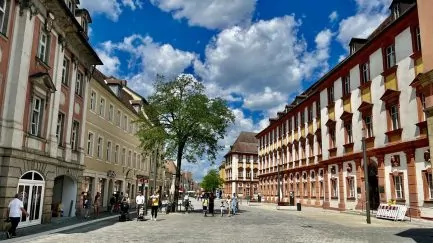
A big part of Opatija's charm is all the magnificent villas, hotels and palatial buildings from the town's heyday as a spa resort. The architecture here is noticeably different from many of the medieval stone towns along the Croatian coast.
When Opatija became popular with aristocrats and other wealthy travelers during the Austro-Hungarian era, many elegant buildings were built. Even today, facades, balconies, verandas and ornate gardens contribute to the special atmosphere. In other words, it is worth occasionally lifting your eyes from the sea and just taking a look at the houses.


6. See Hotel Kvarner and Hotel Imperial
Two buildings that tell a lot about Opatija's history are the classic hotels Kvarner and Imperial. Hotel Kvarner opened in the 1880s and is considered one of the early grand hotels in the town's development as a tourist resort.
The Hotel Imperial also dates back to the 19th century and was built for the growing stream of prominent guests. The hotels are fine examples of the grand architecture that still characterizes Opatija, making parts of the city almost feel like a Central European spa resort that happened to end up on the Adriatic Sea.

7. Visit the Juraj Šporer Art Pavilion
Right next to St. James' Church is the Juraj Šporer Art Pavilion, a historic building that is today used for exhibitions and cultural events, among other things.
Originally built in the 19th century, the building has had several different functions over the years. Today, it is part of Opatija's cultural life, so be sure to check out the current program when you're there. Even if you don't go inside, the building and its surroundings are worth seeing during a walk through the center.
8. Sunbathe and swim in Opatija
Opatija may be better known for its promenades and elegant hotels than for a classic beach holiday, but of course it's also great for swimming. Along the coast there are both landscaped bathing areas, smaller beaches and places where you can dive into the clear Adriatic Sea.
Right in the center is Slatina, one of the city's most famous bathing spots. More bathing opportunities can be found along the Lungomare and in the resorts along the coast. Expect mainly stones, cliffs and concrete terraces rather than long sandy beaches.
9. Discover the Croatian Walk of Fame
At Slatina lies Croatia's own Walk of Fame, inspired by the much more famous Hollywood version. Here are stars dedicated to prominent Croatians in the fields of culture, science and sports, among other things.
It's a small and fairly easy-going attraction that's a good place to check out while you're strolling through central Opatija. Among the people who have been recognized are several names that are well-known even outside of Croatia.

10. Eat well by the Adriatic Sea
An important part of a visit to Opatija is of course the food. Its location on the Kvarner Gulf means that fish and seafood have a natural place on the menus, while the food culture has influences from both the Croatian hinterland, Istria and Central Europe.

You will find everything from simple taverns and cafes to elegant restaurants and hotel restaurants. Be sure to try local fish dishes, seafood, Istrian pasta or truffles – and don't forget the pastries. Opatija's long tradition of elegant cafes and pastry shops fits well with the city's old spa environment.

11. Experience Opatija's spa and health resort tradition
Wellness is not a new concept in Opatija. The city's mild climate and location by the sea meant that the resort developed into a place where wealthy Europeans traveled for rest, recreation, and various treatments as early as the 19th century.
That tradition still lives on today. Many of the larger hotels have spa and wellness areas with swimming pools, saunas and massages. We ourselves have tried a chocolate massage in Opatija – a treatment that was particularly fitting since we were here in connection with the city's chocolate festival.

12. Visit one of Opatija's events
Opatija is not just a summer destination. Throughout the year, a number of festivals, concerts and other events are organized, making the city interesting even outside the traditional swimming season.
One of the events we have experienced ourselves is Chocolate Festival in Opatija, which fills the city with pralines, desserts, tastings and chocolate-themed activities. The festival is usually held in November each year. We have also visited the cozy Christmas market, which is held in December.


Where to stay in Opatija?
There are of course several different hotels to choose from. We have stayed at Grand hotel 4 Opatijske Cvijeta, which is beautifully situated by the water in a fantastic location, while it only takes a minute to walk up to the city center. The room was excellent and we had a balcony with a nice view of the sea. The hotel also has a nice wellness area, with nice pools and good treatments.

See more in the neighbourhood
There is a lot to see and experience in Croatia! Here are suggestions for some great places, not too far from Opatija:

FAQ – frequently asked questions about Opatija
Where is Opatija located?
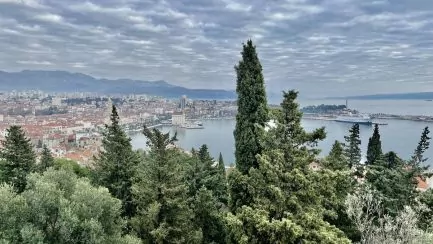
Opatija is located on the Kvarner Gulf in northwestern Croatia, about 15 kilometers from Rijeka. The city belongs to the Primorje-Gorski Kotar County and is located at the foot of the Učka mountain range. Its location makes Opatija a good starting point for exploring both the Kvarner region and nearby parts of Istria.
What is Opatija famous for?
Opatija is best known as one of Croatia's classic tourist and health resorts. In the second half of the 19th century, the town developed into a fashionable holiday resort for the Austro-Hungarian society. Many magnificent hotels, villas and parks remain from that time.
What is there to see and do in Opatija?
You can stroll along the Lungomare, see the famous statue of the Virgin with the Seagull, visit Villa Angiolina and the Church of St. James, and discover the city's elegant historical architecture. You can also swim, go to a spa, eat well, and take excursions along the Kvarner coast.
How long is the Lungomare in Opatija?
The historic Lungomare promenade is around 12 kilometers long and stretches from Volosko, via Opatija, to Lovran. Of course, you don't have to walk the entire distance - even the central part through Opatija offers nice views of the Adriatic Sea, parks, historic villas and several of the city's most important attractions. The long promenade is one of the things we like best about Opatija.
Can you swim in Opatija?
Yes. Opatija has several swimming spots and beaches, although you shouldn't expect long sandy beaches. Here, people mainly swim from cliffs, pebble beaches and landscaped bathing areas. Slatina is located in the center of the city, and along the Lungomare there are more opportunities for a swim.
Is Opatija worth visiting?
Yes, especially if you appreciate beautiful architecture, history and walks by the sea. Opatija is quite different from many other Croatian coastal resorts and has a clear character from its time as an exclusive spa. We think that the combination of the Adriatic Sea, the parks and the turn of the century environment makes the city special.
How many days do you need in Opatija?
The main sights in central Opatija can be experienced in one day, but we would like to stay two or three days. Then you have time to walk a longer distance along Lungomare, discover parks and historic buildings, eat well and perhaps book a spa or wellness treatment.
When is the best time to travel to Opatija?
Opatija can be visited all year round. Spring and early autumn are particularly good for walking and sightseeing, while summer attracts swimming and more people. Opatija also actively works with events outside the high season, and we have experienced the city ourselves during the annual chocolate festival.
What is special about Opatija's history as a spa resort?
Opatija's modern tourist history took off in the 19th century. Villa Angiolina, built in 1844, is usually seen as an important landmark, and when the railway reached the area in the latter part of the century, the resort became easier to reach for wealthy guests from Vienna and other parts of Austria-Hungary. Luxury hotels, villas, parks and spas sprang up – and much of that environment still characterizes Opatija.





 English (UK)
 Svenska
åsa i åsele says:
Hm the food doesn't sound very good, I don't like squid or oily pasta 😉 .
but given all the chocolate in the previous post, perhaps those who visit the Yacht Club have already had their fill of chocolate and their taste buds are numb 😉.
05 December 2016 - 7:30
Kors och Tvärs says:
Good thing there's chocolate for when food isn't so fun :p
05 December 2016 - 8:10
Steve says:
What a wonderful little town. If I had still been able to travel, it would have immediately been put on the visit list. Sad, however, with negative food experiences.
05 December 2016 - 8:12
Imelda says:
Have only been to Opatija in the summer and swam. Wonderful summer town!
05 December 2016 - 8:48
Frank Olsen says:
We were almost in Opatija in August when we came to the Croatian coast from Slovenia. We walked from the campsite we were at to Volosko, which is only about 500 metres from Opatija. Wonderfully beautiful area. Our post from there: http://janneogfrank.blogspot.no/2016/08/en-kroatisk-kystperle-og-hvordan-en.html
05 December 2016 - 10:07
Marina says:
It really sounds like a place worth visiting. Love those smaller places (food can be eaten some other time 😉 ).
05 December 2016 - 10:25
nils-åke says:
I thought I saw the portrait of Albert Einstein. There was a lot to see here.
05 December 2016 - 10:40
Husbilen Helge says:
But we were not there! Ha ha, was there in '77 and then the city was ugly and boring. Fortunately, tourism makes things improve and change!
05 December 2016 - 10:51
Anonymous says:
How was your own city 77 Helge, beautiful and fun?
15 April 2020 - 15:32
Lennart says:
A great country!
05 December 2016 - 11:21
Rantamor på näthinnan says:
Thank you for letting me travel with you on your amazing trips.
And because we are not big city people, but still it tickles a bit that we went to Barcelona and got a story from the daughter,
Keep up the good work, both of you.
Tjingelingen from Rantamor.
05 December 2016 - 11:30
admin says:
Åsa in Åsele, we think that food on a trip is important, but we had very many other super nice experiences in Opatija.
Across the board, there was plenty of chocolate! And it was good too 😉
Steve, Ooatija is indeed a charming and cosy town! Food is an important part of travelling, so it's a bit sad when you don't get what you expect.
Imelda, yes of course it is nice!!! We were there for a short trip in the summer of 2011 as well 🙂 ðŸ™'
Frank Olsen, yes it is really nice around here! Agree that it is a gem!
Marina, Opatija is really worth visiting!
Nils-Åke, there was apparently a science conference here once 😉.
The motorhome Helge, haha, no you were not there 😉 Wow, hard to understand that the city was ugly and boring then, the houses are still there since the turn of the century? But of course, it can have been cleaned up in many different ways!
Lennart, we can only agree!
Rantamor, it's so nice that you want to travel with us! 🙂
05 December 2016 - 11:33
Husisblogg says:
You give so many great tips to my owners so I wonder how they will find time for everything.. 🙂 .
I have been to Croatia on two occasions, but on no occasion have they directed me to Opatija, but on the other hand I have seen many other beautiful things in Croatia.
05 December 2016 - 13:06
BP says:
The city really looks incredibly cosy. By the way, I had a good laugh at the picture "Past meets present", where one of the girls meets the present in the form of a mobile phone - hahaha:-).
In addition, I think it is strong that you criticise the food at the hotel and the other restaurant. I mean, the trip is sponsored and then "expected" to say only praise. A Minestrone certainly does not contain squid but meat, sausage and vegetables....
05 December 2016 - 14:03
admin says:
Husisblogg, there are so many nice things in the world that it's impossible to keep up with everything ... But if you end up in the neighbourhood of Opatija again, I think you should steer your owners there 😉
BP, haha, yes, it was quite funny when she stands with her mobile phone? I got another picture later, but liked this one better 😉 And yes, it feels super important for us to be honest. If someone chooses to offer us an experience, we often say yes both because it can be nice for ourselves, and because we can write about it on the blog. BUT we will always write honestly what we think. If we don't, you can't trust anything we write.
05 December 2016 - 15:33
Anette says:
Turn-of-the-century buildings are truly magnificent.
Sad to be disappointed when you eat out, often you have high expectations, hopefully you just had bad luck and get better food at the next place.
If not, you will have to make do with the chocolate 😉.
05 December 2016 - 16:10
Henny says:
I agree that it is important to be honest. Of course, it felt a bit sour that it did not work out so well for you when you visited Nolia in Piteå, but as I said, good that you wrote as it was. That you also have negative views on a sponsored trip, I really give a thumbs up for.
05 December 2016 - 18:37
Matts Torebring says:
You are so touched by the knowledge you gather and share so much. Fantastic!
05 December 2016 - 19:28
Deciree says:
Surely it is the best, to visit smaller places and just be:) Then the fact that the buildings are so insanely beautiful is just better. Take care of your friends. Hugs from us
05 December 2016 - 21:01
admin says:
Anette, we are always disappointed if the food is not good, but you can't be lucky every time. Regardless, Opatija is a fantastic destination!
Henny, thank you! Yes, we feel that we absolutely must be honest in all situations. That's almost what a blog is based on!
Matts, yes we have seen a lot and it's fantastic! It's probably lucky that we take photos and write down, otherwise it would be difficult to remember 😉.
Deciree, it is very beautiful in Opatija and it is fascinating that it is so different from other villages and towns in Croatia (which are also beautiful, but in a different way).
05 December 2016 - 21:17
Mias Mix says:
Croatia is very beautiful and lovely. Most of all I liked the clear clean water when we were there. Many nice pictures you show and have seen some on Instagram as well. Chocolate festival you do not say no to.
Thank you for your concern and comment. We are struggling on. Hugs
05 December 2016 - 22:30
admin says:
Mia's Mix, we agree that the clear water is amazing. Hugs
06 December 2016 - 8:27
Elisabeth says:
Another enticing city to discover!!! Thanks for that!
14 December 2016 - 20:35