



Writer: Helena Bergström
Updated: August 2026 | The Turku archipelago offers thousands of islands, small communities, ferries, archipelago food and beautiful nature. We have experienced the archipelago both summer and winter, from Pargas and Nagu to Korpo. Here we collect our best tips for the Turku archipelago – with attractions, experiences and practical advice for those who want to venture out among the islands.
 Tweet
 Share
 Share
 Pin
 Share
 Share
Table of contents
Turku archipelago – a huge island world
Outside Turku, a huge archipelago spreads out, with thousands of islands and islets. Here you can travel from island to island by bridges and ferries, stop in small archipelago communities and experience everything from art and culture to swimming, saunas and local food.
A natural route out into the archipelago runs from Turku to Pargas and on towards Nagu and Korpo. If you want to continue even further, you can continue towards Houtskär and Iniö, among other places, or take connecting boats to islands further out in the sea.
We have especially discovered Pargas, Nagu and Korpo, both during a winter trip and during warmer parts of the year. In the winter we encountered an almost quiet archipelago with snow, ice, saunas and fishing, while the summer of course offers significantly more people, open restaurants and boating.
Pargas – the gateway to the archipelago
Pargas is located about 25 kilometers from Turku and is often described as the gateway to the Turku archipelago. From here the road continues further out towards Nagu and Korpo, but Pargas is also worth a stop in its own right.
In the center you can walk in Gamla Malmen, the older part of the city with narrow streets and wooden houses. Pargas is also known for its large limestone quarry, which has been of great importance for the development of the town.
Surrealist art at Art Bank
One of the more unexpected attractions we found in Pargas is the Art Bank, where a large private collection of art by Salvador Dalí is displayed alongside other art and antique furniture.


When we visited the Art Bank, we were given an introduction to the collection and to Dalí's unique artistry. Even for those who are not very interested in art, it is a different experience – there are plenty of strange details to discover here.
One of my personal favorites was a small side table in the shape of a lamb, complete with tabletop and pull-out drawer. Practical? Maybe. Discreet? Not exactly.


Summer by the sea in Pargas
We have also visited Pargas by motorhome and stayed at Solliden Camping, which is located by the sea a bit outside the center. Here you get a completely different picture of the archipelago than the one we encountered on our winter trip, with greenery, water and significantly more life and activity.
Pargas works well as a first stop on a trip further out among the islands, but also as a base if you want to combine the archipelago with a visit to Turku.

Nagu – harbor life and archipelago feel
From Pargas the road continues towards Nagu. A ferry takes you across to the island, and soon you arrive in the church village of Nagu, which during the summer is one of the liveliest places in the archipelago.
Around the guest harbor are restaurants, cafes and shops, and boats come and go from the piers. There is also Nagu Church, a medieval grey stone church, and a small maritime museum.
Nagu is a good place to stop before continuing further into the archipelago. During the high season the atmosphere is lively, while the winter months offer a much quieter side of archipelago life.
Flavors from Nagu
When we traveled through the archipelago in winter, we stayed one night in a cabin near Nagu. There we were served a dinner from the Köpmans restaurant in Nagu, which was one of the great dining experiences of the trip.
We tried pancakes with smoked roach mousse, pike burgers and lamb on homemade archipelago bread. This was accompanied by flavours such as sea buckthorn, pickled cucumber and marinated red onion. It was rustic, creative and very tasty – and above all a nice introduction to ingredients and flavours from the archipelago.

marinated red onion

Korpo – art, nature and tranquility
After another ferry ride you will arrive at Korpo. Here the feeling becomes even more small-scale, with forests, sea, small roads and a calm that is easy to appreciate.
In Korpo there is, among other things, a medieval stone church and various activities connected to art and archipelago culture.
Art along the Barefoot Path
One of our more unusual experiences in Korpo was the Barefoot Path, an art trail through the forest where artwork has been placed among trees, stumps and moss. The idea is actually that the path should be experienced barefoot during the warmer part of the year. We came here in the middle of winter and had no plans whatsoever to throw our shoes off in the snow.

We could experience the art, however. One piece of art after another appeared in the forest, including tree stumps covered in mirrors. If you look closely at our pictures, you can even find Peter in one of them.
The Barefoot Path has not developed with new exhibitions in recent years, but many of the artworks still remain in the area.


Stay at Hotel Nestor
During our winter trip, we also stayed at Hotel Nestor in Korpo, a small hotel where archipelago life is combined with art, culture and modern comfort. It fit very well with the experience we had of Korpo – personal, small-scale and far from large hotel complexes.
Today, the hotel also houses the Back Pocket restaurant, focusing on seasonal ingredients and flavors from the area.

Turku archipelago in winter
Most people probably associate the Turku archipelago with summer, sailboats and sunny piers. However, perhaps our most memorable trip through the archipelago was in the middle of winter.
There were significantly fewer people, many businesses were closed and the landscape was white and still. At the same time, we got to experience a side of the archipelago that is easily missed during the summer.
Ice fishing off Pargas
During the winter trip we visited Stentorp's sheep farm outside Pargas, where Jill and Heikki Christiansen welcomed us. We followed them out onto the ice, where Heikki had drilled holes and laid out a long net under the ice. Meter after meter the net was pulled up – until finally a pike-perch appeared.

Afterwards, we met the farm's Finnish landrace sheep and looked at wool products that Jill designed with inspiration from Finnish and Nordic culture, among other things. The visit ended in the best way: with hot fish soup made with pike-perch and perch.
Stentorp had its last public summer season in 2026, so our experience will now live on above all as a nice memory from the trip - and as a picture of the local crafts and archipelago life we encountered.


Sauna, hot tub – and ice bath
A winter trip to Finland is of course not complete without a sauna. At our cabin in the archipelago there was a sauna, a hot outdoor whirlpool and an ice bath. Some of our travel party bravely threw themselves into the icy water.
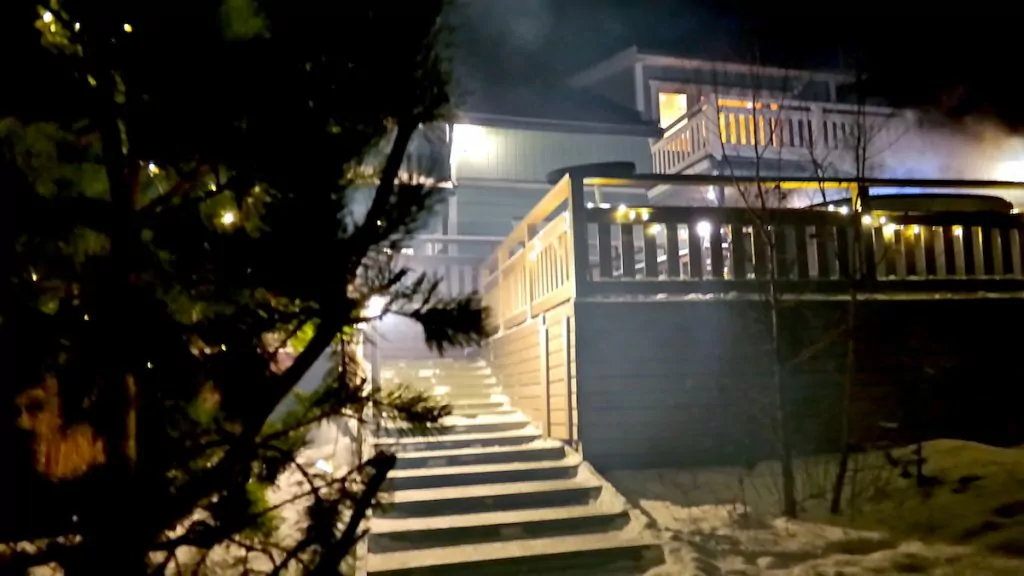
We didn't. Peter and I chose the hot tub and still have no problems with that decision.

Food in the Turku archipelago
The food was actually one of the great highlights of our winter trip. Much of it revolved around local ingredients and flavors that fit very well into the archipelago environment.
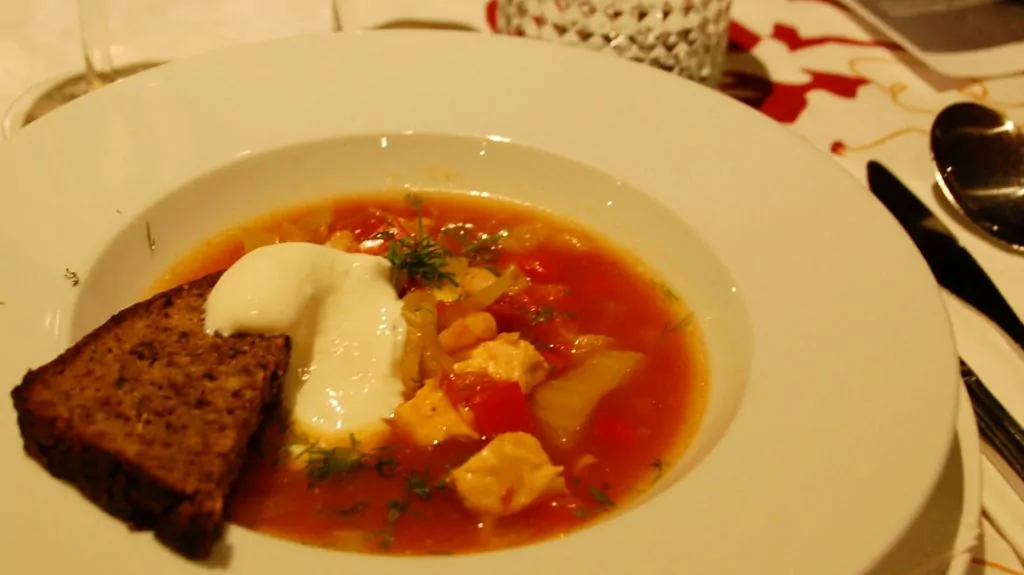
We ate, among other things, pike-perch, perch, whitefish, smoked roach, pike and lamb. To accompany this, archipelago bread, root vegetables and sea buckthorn appeared in various forms. In Korpo, for example, we got to try whitefish from Hjalmar's, cooked with cheese and mushrooms and served with oven-baked root vegetables and archipelago bread.
It doesn't have to be advanced fine dining to be memorable. Some of our best food memories from the archipelago are the rather simple dishes with fish, bread and local ingredients.

Archipelago ring road
A popular way to discover the Turku archipelago is to follow the Archipelago Ring Road. The entire route is around 250 kilometers long and takes you through Pargas, Nagu, Korpo, Houtskär and Iniö before returning to the mainland.
Along the way, regular roads are combined with bridges and a number of ferries. This makes the journey itself part of the experience – you are constantly moving between new islands and environments.
For the entire Ring Road, it's a good idea to set aside at least three to five days. This will give you time to stop along the way instead of just trying to get around.
Some of the ferry connections on the Ring Road are seasonal, meaning that the entire route is primarily a trip for the warmer part of the year. Therefore, always check current ferry times and traffic periods before your trip.
Little Ring Road
If you have less time, there is also the Little Ring Road, a shorter version of about 120 kilometers. Here too you get to experience both islands and ferries, but the route can be done in a couple of days. It is therefore an alternative if you want to get a taste of the archipelago without venturing out on the entire big Ring Road.

Ferries in the Turku archipelago – how it works
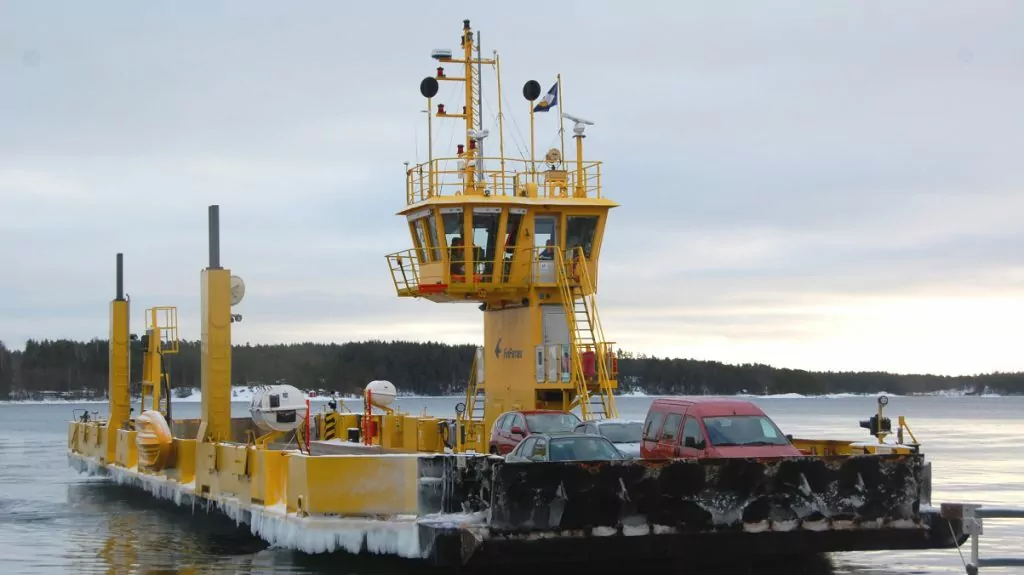
Traveling by ferry may seem a bit complicated at first, but on the route from Pargas via Nagu to Korpo it is easy. Between the main islands there are road ferries that operate as part of the road network. You simply drive on board with a car, camper or bicycle and continue your journey on the other side.
The ferries between Pargas and Nagu and between Nagu and Korpo are free and run regularly. However, if you want to drive the entire Archipelago Ring Road, you will need to plan a little more. Some of the connections further out in the archipelago are seasonal, and some trips may need to be booked or paid for.
The best advice is therefore: The further out into the archipelago you intend to travel, the more important it is to check the ferries in advance.
It is also possible to continue out to smaller islands without your own boat. From Nagu, for example, there are connecting boats to islands further out in the archipelago, but that is a completely separate trip – and we will save that for the day we venture even further out among the islands ourselves.
Turku archipelago by motorhome
The Turku archipelago is well suited to exploring by motorhome. You can take your motorhome on the ferries between the main islands and decide for yourself how far out among the islands you want to travel. We have stayed with a motorhome at Solliden Camping in Pargas, which is close to both the sea and the centre of Pargas.
If you want to drive the entire Archipelago Ring Road by motorhome, it is wise to plan your trip in advance. Above all, check the ferry traffic, as some connections are seasonal and rules or booking procedures may differ between different ferries.
The roads on the islands can also be significantly smaller than the main roads on the mainland. That's part of the charm, but with a larger camper it's nice not to be in too much of a hurry. An alternative is of course to leave the camper and discover parts of the archipelago by bike. The archipelago ring road is also popular with cyclists.

When is the best time to visit the Turku archipelago?
Which time is best depends a lot on what kind of archipelago you want to encounter.
Summer is the easiest time for a first trip. That's when most restaurants, cafes, accommodations and other businesses are open, the guest harbors are full of boating life and the seasonal ferries make it possible to drive the entire Archipelago Ring Road.
Spring and early autumn suitable for those who want a little more peace. The nature can be amazing and there are less crowds, but it is extra important to check what is open.
Winter is a completely different experience. The archipelago becomes quieter, many tourist activities close and you can't expect to travel in the same way as in the summer. At the same time, snow, ice, saunas and almost deserted landscapes can make the trip very special.
We are glad we got to see both sides. The Turku archipelago on a sunny summer day is beautiful – but there is something very special about standing out on the ice on a cold winter day and waiting for a pike perch to emerge from a hole.
More to see and do in the neighbourhood
The Turku archipelago is easy to combine with a few days in Turku. The city includes Turku Castle, the cathedral, museums, restaurants and the beautiful environment along the Aura River. North of Turku is also Naantali, with wooden houses, a marina and Moominworld during the summer season. Here you will find tips and reports:

FAQ about Turku archipelago
Where is the Turku archipelago located?
The Turku archipelago is located outside Turku in southwestern Finland and includes thousands of islands and islets. From Turku you can drive via Pargas towards Nagu and Korpo, among others.
How to get around the Turku archipelago?
Many of the larger islands are connected by bridges and ferries, making it possible to travel by car, camper or bicycle. Between Pargas, Nagu and Korpo, the ferries function as part of the road network.
How much do ferries cost in the Turku archipelago?
The ferries between Pargas and Nagu and between Nagu and Korpo are free of charge. There are also other ferry connections on the Archipelago Ring Road where a fee or reservation may apply.
How long does it take to drive the Archipelago Ring Road?
The entire Archipelago Ring Road is about 250 kilometers long. Allow three to five days to experience the islands and make stops along the way.
You might also like:
 MUSAN in Ayia Napa - museum of underwater sculpture
 Visiting Mannaminne in Nordingrå - a different kind of open-air museum
 Visiting Zorngården and the Zorn Museum in Mora - fascinating!
 Visiting Turku Castle - Swedish and Finnish history
 Nieu-Bethesda in South Africa - art, fossils and charming accommodation



 English (UK)
 Svenska
Lennart says:
Nice experiences!
19 January 2016 - 9:27
Steve says:
What an amazing experience you will have. The barefoot path is truly an art experience beyond the ordinary.
19 January 2016 - 8:54
Alexandra says:
That barefoot path sounded interesting, I'll try to memorise it for when it's warmer! It definitely sounds like the Turku archipelago is worth a visit. I've only been to Turku once and then we just stayed in the city centre to spend the day in the Moomin world. 🙂
PS. I've started blogging again, at a new address too. ? Ds.
19 January 2016 - 9:40
Ama de casa says:
Ooh! I have become a bit of a Dalí fan. After visiting the museum in his home town of Figueres, we also checked out Dalí museums in Paris and St Peterburg in Florida.
And I'm not even particularly interested in art....
What fun things you get to do! 🙂
19 January 2016 - 11:20
Ditte says:
So very nice! You get to see and experience so much and I'm sure it's very exotic for many participants. I have been in the neighbourhood of Pargas and at the Art Bank, but in the summertime.
It's really nice to get around the Turku archipelago in the summer by bike or other means.
Fun to now take part in the winter here. Lovely pictures and fun to keep up with. (I have experienced Åland and the Åland archipelago in winter, but only in Helsinki and Turku).
19 January 2016 - 11:31
Helga says:
How exciting!
19 January 2016 - 11:50
admin says:
Steve, that's an interesting idea even if we couldn't try the barefoot thing right now 😉.
Lennart, really!
Alexandra, Turku is a nice city but the archipelago also has a lot to offer! What fun that you started blogging again! I will of course check it out!
Ama de casa, what fun! We can definitely recommend the Art Bank in Pargas, apparently the best Dali exhibition in Europe! 🙂 And we agree - lots of fun stuff 🙂 .
Ditte, some things are a bit exotic even for us, but of course much more so if you come from China or Japan 😉 Glad you were at Art Bank!
Helga, very exciting, and lots left! 🙂
19 January 2016 - 12:19
Helena says:
The barefoot path sounds cosy to walk on, during the summer then. In winter, I would not want to walk on it barefoot either 🙂 Fun to discover art like this in the forest.
19 January 2016 - 12:38
admin says:
Helena, walking is a bit more fun when you never know what's behind the next tree 😉.
19 January 2016 - 12:54
Annika says:
How wonderful you have it in Finland. The Turku archipelago is so incredibly beautiful!
You can go back with Freedom in the summer, oh my!
Pargas is nice.
The barefoot path seems wonderful.
Such nice pictures from your stay in Finland!
19 January 2016 - 14:34
admin says:
BP, yes haha, Finland can be a bit exotic 🙂 I also liked both the idea of a barefoot path and the artworks that were placed here and there in the forest. We were also very surprised that there was so much Dali art in this small place, apparently the best Dali collection in Europe!
Annika, we can only agree, it's really super nice here! And yes, I think it could be perfect to drive around here with a motorhome in the summer. Glad you like our pictures! 🙂
19 January 2016 - 14:57
BP says:
It just gets more and more exotic here on your blog:-) The artworks on Barfotastigen are absolutely superb. I would love to see them during the summer. What a fun idea! Oh what a trip you make!
I'm not a Dali fan, but I'm still surprised that so many of his artworks are in "little" Pargas.
PS. Understand that real winter clothes were needed... DS.
19 January 2016 - 14:12
nils-åke hansson says:
We liked the Åboland archipelago. Those of you who have a guide and are there in the winter are still more exciting.
19 January 2016 - 17:02
admin says:
Nils-Åke, glad you liked the archipelago here. We do too! 🙂
19 January 2016 - 17:28
Marina says:
Dali's artworks are awesome. And I have to say that I like them more and more and you can always find something new every time you look at something created by him.
19 January 2016 - 17:30
Krisztina says:
I also liked that side table of a lamb.
19 January 2016 - 17:59
Rolle o Carina says:
Looks exciting and interesting in Finland where you are!
But the cold there nothing appealing,in the north down to -34 🙂 🙂 .
Have fun and enjoy....
19 January 2016 - 18:59
Deciree says:
But so nice for you. You look like you are having a great time 🙂 Hugs!
19 January 2016 - 19:26
admin says:
Marina, I am not particularly interested in art or knowledgeable, but I also like Dalí's art 🙂 .
Krisztina, when I see it, I feel like all the other furniture is way too uncreative, haha 😉.
Rolle and Carina, today we have met a lot of bloggers who have been on "pre-tour" in northern Finland and they have had just as cold as you write! We have had a much better climate in Turku 🙂.
Deciree, really super nice here, and I think it must be nice in the summer too! 🙂
19 January 2016 - 22:17
Ulla widing says:
It looked very nice out in the forest with all the art, the whole stay looks to be pleasant....?
20 January 2016 - 2:22
Steel city anna says:
What a beautiful building the hotel is. Very nice and cosy. I'll leave the artworks uncommented haha!
22 January 2016 - 17:32
admin says:
Ulla Widing, it was a bit cosy and exciting with a forest full of art! 🙂
Steel city Anna, the hotel is very cosy and nice too! And you should have different opinions about art 😉.
22 January 2016 - 22:08
Aaa says:
How revolutionary, and wise, to immerse yourself in neighbouring Finland! But believe me, the archipelago is even more beautiful in summer and thus deserves at least one more visit... We were not in Korpo itself, only in Galtby. We also skipped Pargas, except for Hesburger. We mostly immersed ourselves in Nagu and Kökar.
15 February 2016 - 20:11
Christina says:
That exhibition looks really exciting! Salvador Dali's art has a way of inspiring.
Have fun!
14 August 2016 - 22:06
Daliwall says:
I'm glad you liked ArtBank Finland. Remember that it is a private art gallery. The Dalí Foundation does not allow the term museum to be used.
Welcome back. We are on fb and instagram as Artbank Finland. ArtBank.fi
29 September 2016 - 17:48