



Text and photo: Helena Bergström
Updated: October 2026 | Winter storage of a motorhome – what is the best way to do it? Over the years, we have winter stored our motorhome in several different ways, both outdoors and indoors. Here we collect our experiences and tips on everything from water, batteries and LPG to moisture, mice and how to find a good place for winter storage.
 Tweet
 Share
 Share
 Pin
 Share
 Share
Table of contents
Winter storage of the motorhome – or driving it all year round?
The first question is of course whether the camper should be stored for the winter at all. Many people use their camper all year round, and there is certainly a charm in rolling out even when the landscape is white with snow. We have tried driving a camper in the winter ourselves and have, among other things, winter camped in Trosa.
Over time, we came to the conclusion that we enjoy using the camper van best during three seasons: spring, summer and autumn. Our old Adria is not the most energy-efficient camper van to heat up when it's really cold, and during the winter we like to travel in other ways.
For those who want to continue using their motorhome all year round, there is a lot to consider when it comes to winter tires, heating, water and the risk of various parts freezing.
READ MORE: Winter camping with a campervan – tips for camping in winter

Winter storage of a motorhome - inside or outside?
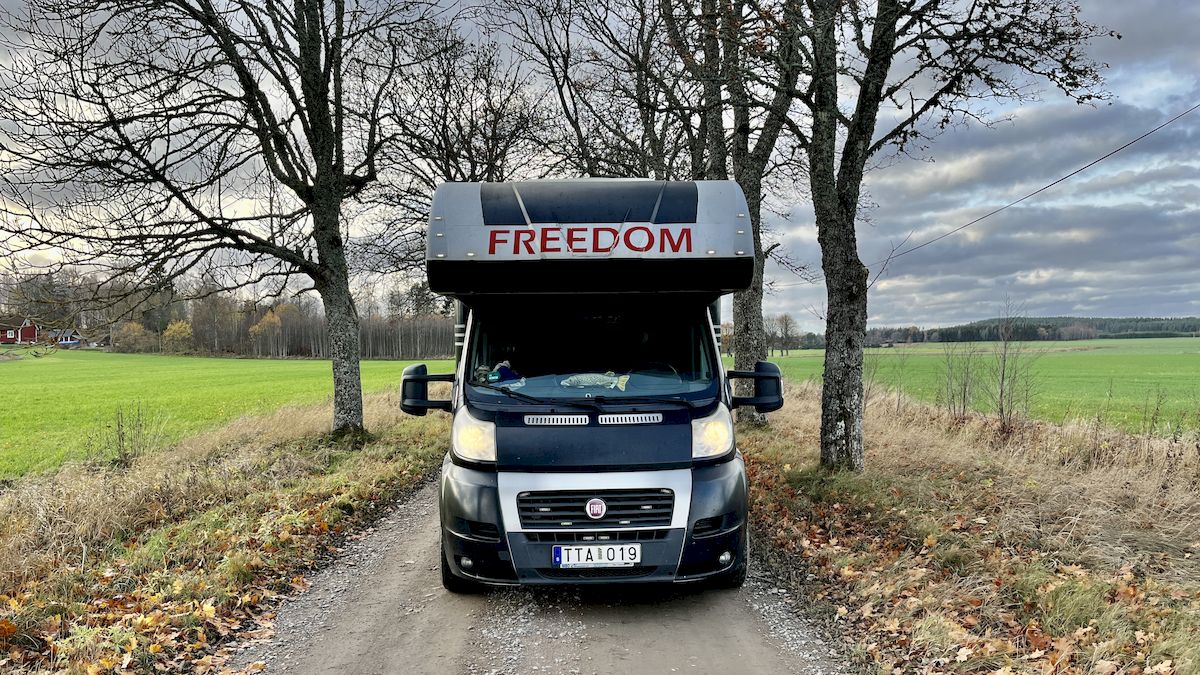
A motorhome can of course be left outside in the winter, but it is then exposed to rain, snow, ice, temperature changes and moisture. We have had FREEDOM left outside for several winters and feel that the windows, plastic parts and locks in particular have taken a beating over the years.
One winter we tried to protect the car by covering it with a large, heavy cover. It provided some protection from the elements, but if you use a cover it is important to consider ventilation and that the material does not rub against the car.


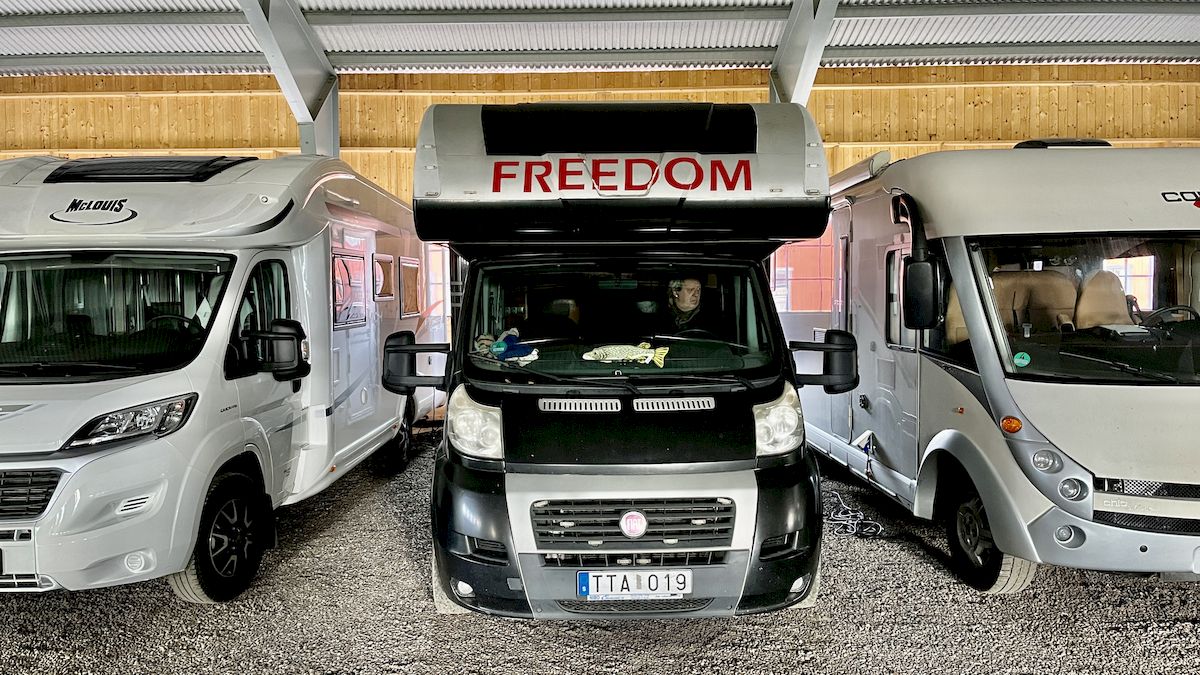
We now prefer to store the camper indoors. The room does not necessarily need to be heated. What is more important is that it is dry and has good ventilation.
Access to electricity is also a plus, not least for being able to maintain the batteries. However, not all storage locations offer electricity.

This is how we have winterized our camper over the years
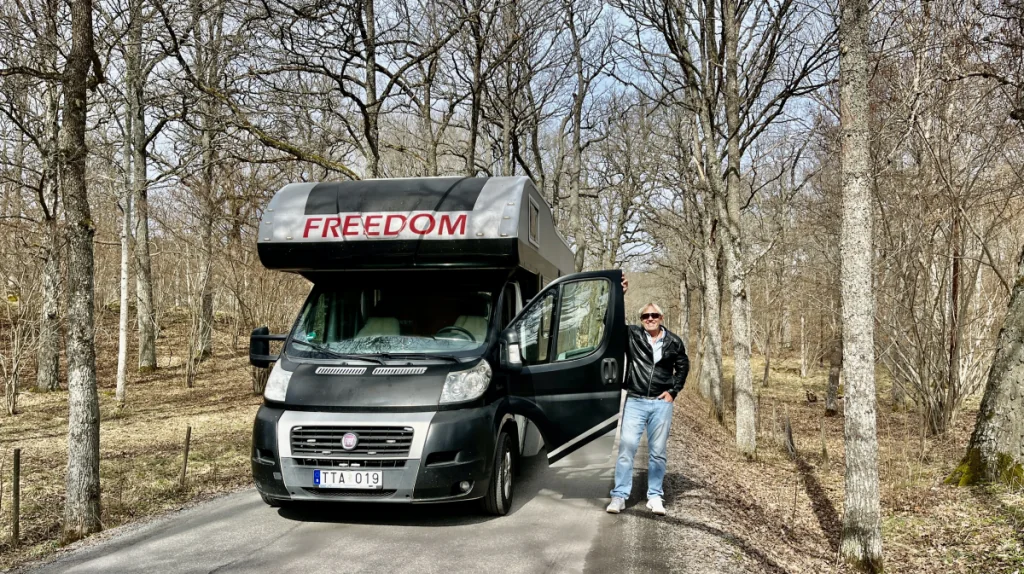
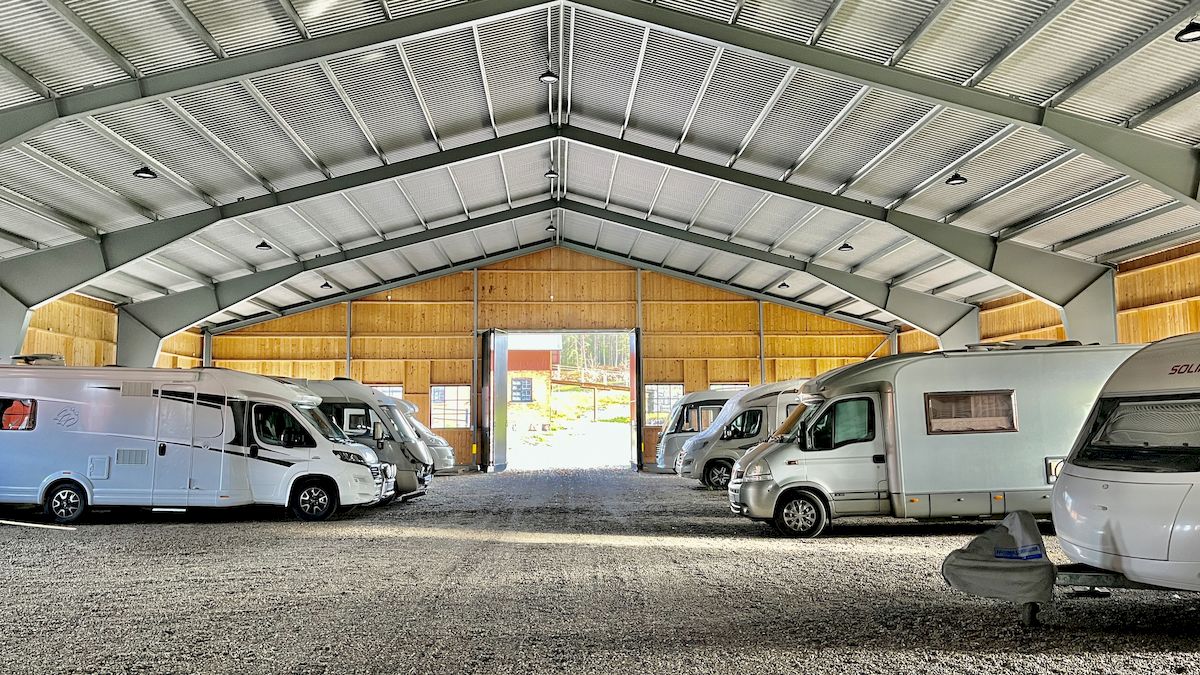
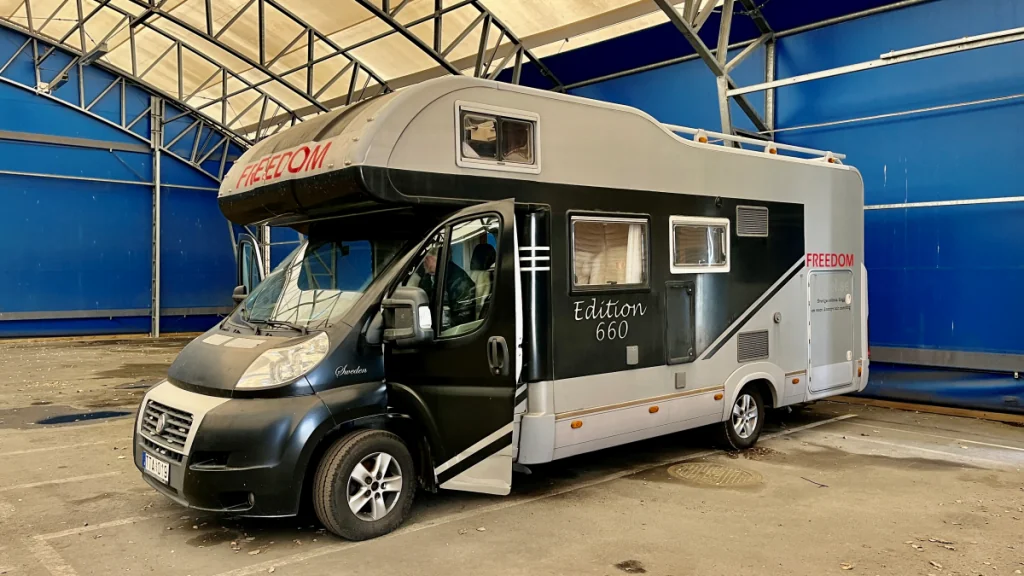
We have had a camper van since 2008 and have tried many different solutions. Some winters FREEDOM has been outside, sometimes with a cover, and other times we have managed to find space in a garage or other premises.
One winter, for example, the camper was parked in a garage in Värmland. It worked great for the car, but was much less convenient for us. We don't have a regular car besides the camper and I, Helena, don't have a driver's license. So once the camper is parked, we have to find another way to get home.
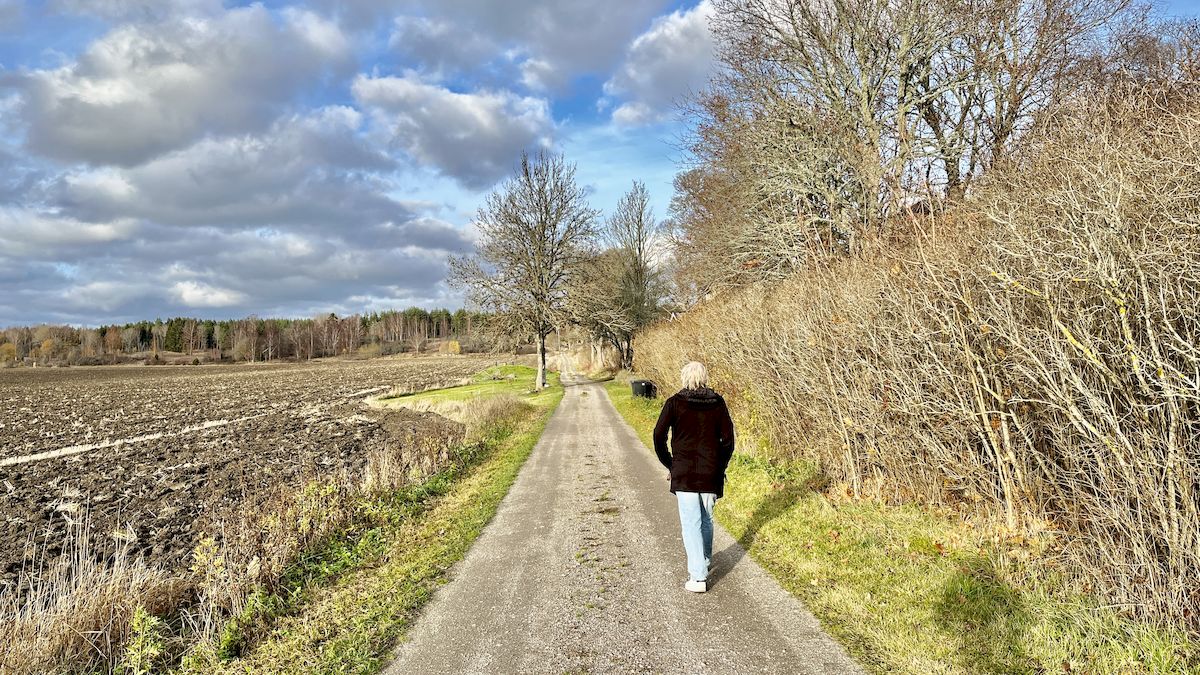
Over the years, we have therefore realized that it is not just the storage location itself that has to work. The distance from home and the ability to get to and from the location also play a big role.
Finding winter storage for your camper
Finding a good place for winter storage is not always easy. Peter usually looks for storage spaces via Storage365, and our experience is that it is important to be out there in good time.
We don't know if it's particularly difficult to find winter storage in the Stockholm area, but we've often had to be prepared to travel quite far. We've winter stored our camper around Tierp, and for the winter of 2026/2027 we've found a place outside Örebro.
For us, the distance is extra important because FREEDOM is our only car and only Peter has a driver's license. So when we leave the camper, we have to be able to get home by public transport or solve the transport in some other way. Of course, the same problem arises the other way when it's time to pick up the car in the spring.
There are also several things that may be good to check before booking a storage space:
- Is there access to electricity?
- Is the room dry and ventilated?
- What does fire protection and safety look like?
- What about gas cylinders?
- When can you drop off and pick up the camper?
- Do you have access to the car during the winter?
- What is covered by your own insurance and what is the storage company responsible for?
The rules can vary greatly between different storage locations. Some locations do not allow you to come and go as you please, but instead have set drop-off and pick-up times. So read the terms and conditions before booking – especially if you think you may need to access your camper during the winter.
Checklist – prepare the motorhome for winter storage
Once the site is set up, it's time to get your camper ready for winter. Exactly what needs to be done will depend on the camper, its equipment and how it will be stored. So be sure to check the instructions for your particular camper and its various systems.
1. Wash, clean and empty the camper
It's nice to park a clean camper - and even nicer to be greeted by a reasonably fresh car in the spring. Empty the refrigerator, pantry and other spaces of food and things that could go bad or attract pests.
Also take the opportunity to check the exterior of the camper. Are there any cracks, damage or anything else that should be fixed before putting it away?
2. Drain the water system thoroughly
This is one of the most important points if the motorhome is going to be parked in a place where temperatures can drop below freezing. Freezing water expands and can cause costly damage.
Drain the fresh water tank, grey water tank, water heater and pipes according to the instructions for your motorhome. Also don't forget the toilet and other areas where water can stand.
Taps and mixers are usually left open in the middle position after emptying, but follow the instructions for your particular system.
3. Check what applies to the LPG
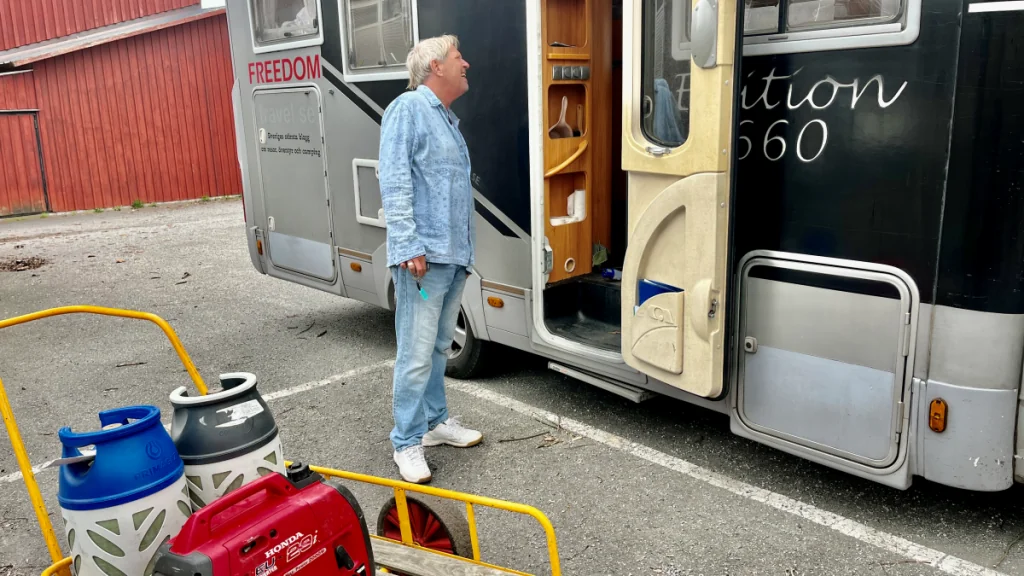
Different storage locations may have different rules for LPG. Many do not allow LPG cylinders to be left in vehicles that are stored indoors for the winter.
Therefore, check the rules where you will be standing and at the same time check how the bottles should be stored if you take them out.
4. Take care of the batteries
Batteries do not do well when left discharged for long periods of time. How best to handle them depends on the battery type, the motorhome's electrical system and whether there is access to electricity at the storage location.
In a location with electricity, trickle charging may be an option. If electricity is not available, the batteries may need to be disconnected or handled in another way according to the manufacturer's recommendations. Remember that this applies to both starter batteries and living room batteries.
5. Think about tires and handbrake
When your motorhome is going to be stationary for a long time, it is wise to check the tire pressure and follow the recommendations for long-term storage of your particular vehicle and tires.
Another detail is the handbrake. When parked for a long time, an applied parking brake can in some situations get stuck. How the car should be secured depends on the vehicle and the parking location, so follow the vehicle manufacturer's instructions and the rules that apply where the car is parked.
6. Reduce the risk of mice
Mice can cause much bigger problems than just a few small footprints on the floor. They can gnaw through insulation, textiles and cables, causing costly damage.
The most important thing is not to leave anything edible in the car. Also check if there are obvious ways in for small rodents and ask the storage facility if there are usually problems with mice on the premises.
We have first-hand experience of how stubborn a mouse in a camper can be – one once followed us for about 3,000 kilometers!
READ MORE: A mouse accompanied us 3,000 kilometres in the motorhome.
7. Prevent moisture problems
Good ventilation is important during long-term storage. Make sure the camper's regular ventilation openings are not blocked and consider whether mattresses and cushions need to be positioned so that air can circulate around them.
If the car has problems with moisture, the cause should of course be addressed - a moisture absorber cannot replace functioning ventilation or repair a leak.
READ MORE: Water leak in the motorhome – how we found and fixed it
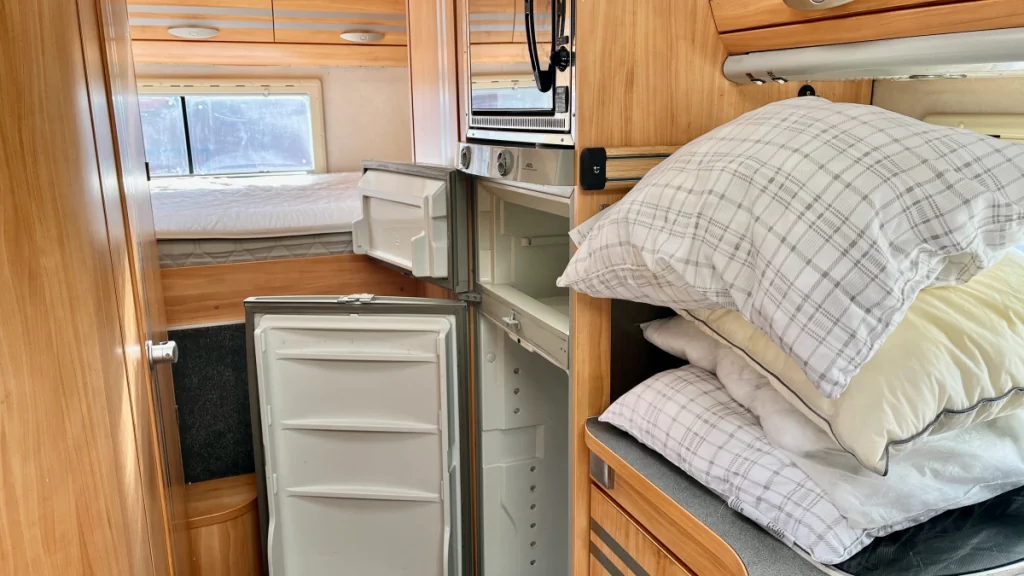
8. Leave the fridge and freezer open
Empty and clean the refrigerator and leave the door ajar during storage. The same applies to a separate freezer compartment. This reduces the risk of mold and unpleasant odors.
9. Check shutdown and insurance
If the motorhome is not going to be used for a longer period, it may be appropriate to park it. At the same time, check what happens to the insurance when it is parked and what protection applies while the car is in winter storage.
It is also wise to check what the storage facility's insurance covers. Don't assume that everything that can happen to the car is automatically covered by it.
10. Document the condition of the motorhome
We usually take a photo of the FREEDOM when we leave it in storage. It only takes a minute or so and provides documentation of what the car looked like when it was left.
Feel free to take photos of both the car and the place where it is parked. Also save the agreement and other information from the storage company.
When to bring the motorhome out after winter storage
And then comes the best day – when the camper is to be woken up after winter!
One spring when we went to pick up FREEDOM, it had no power and the starter battery was dead. The storage garage had emailed ”Bring jump leads!”, but that doesn’t help much when you get there by public transport and don’t have another car to connect them to.
To be on the safe side, we had bought a charged battery jump starter and brought it with us. It was lucky, because without it we wouldn't have been able to start FREEDOM.
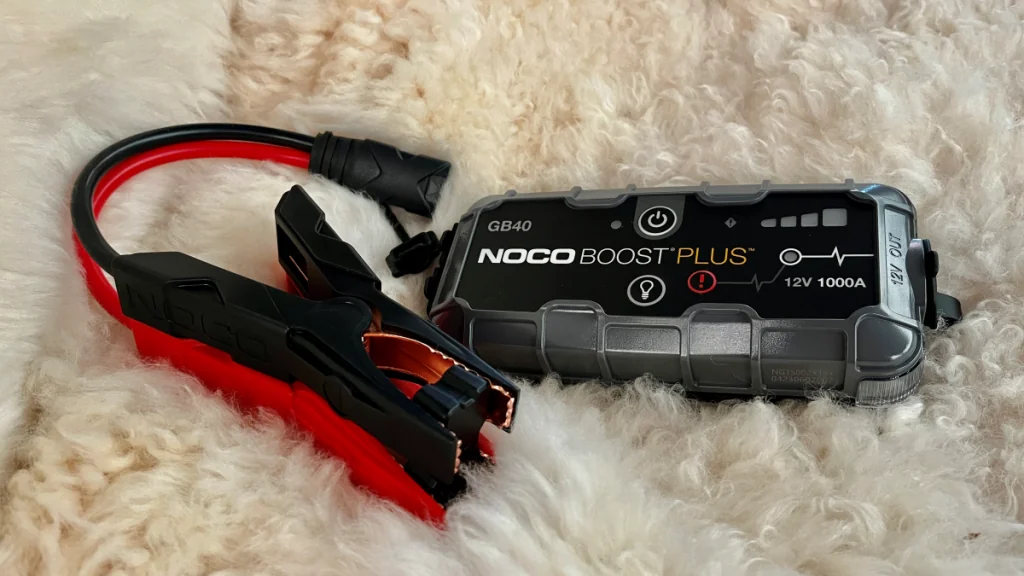
Battery starter, which we have used sometimes.
When you bring your camper out, it's a good idea to go through it before your first long trip of the year. Check the batteries, tires, and tire pressure, and look for any damage, moisture, or signs of pests.
The water system should be restored and flushed according to the instructions for the car, and LPG, refrigerators and other equipment should be checked before being used again.
Then the more enjoyable work remains: cleaning, making the beds, filling the cupboards and getting the camper ready for a new season.
We always find something that needs fixing when FREEDOM comes home. One year it's a window, another year it's a small detail in the interior. A motorhome may never be truly "finished" - but that's also part of life with a motorhome.

Our experiences with winter storage
After many years of motorhome ownership, we have tested everything from outdoor storage under snow and tarpaulin to garages and large storage rooms. For us, indoor storage works best, preferably in a place with electricity and a reasonable distance from Stockholm.
But the perfect winter storage is not always possible to find. In practice, you have to weigh price, distance, electricity, availability and storage conditions against each other – and sometimes accept that the first motorhome adventure of the spring begins with a long journey to pick up the car.
What do you do with your camper in the winter? Is it outside or inside – or do you not store it at all during the winter?
You might also like:
 Attaching a LPG tank to your motorhome - we're ready for Europe!
 Installing solar panels on the motorhome - finally solar panels on the roof!
 The brakes on the motorhome stopped working - what should we do?
 We tested the Bluetti Pioneer Na in a motorhome and houseboat - portable power station test!
 Cool box that can handle roads and waves – we've got one for our motorhome and houseboat






 English (UK)
 Svenska
Frido says:
It was a nice, neat and bright storage you found!
05 November 2022 - 8:05
Helena says:
Yes, a really well organised place! 🙂
05 November 2022 - 18:16
BP says:
Went to the link just because. What prices! You must be a millionaire to store your motorhome over the winter in the Stockholm area...
05 November 2022 - 18:58
Helena says:
Having a motorhome is not exactly cheap ... it's true! It is certainly easier if you live in the country and can have the motorhome on the plot or similar. But millionaire I don't know 😉 We now pay about 6500 SEK for Nov - May, in a cold garage, but with electricity connected. In the meantime, we do not have to pay parking space where we live (which is also not free).
05 November 2022 - 20:21