


Writer: Helena Bergström
Updated: October 2026 | Three wooden towns, three different personalities and a journey through Sweden. We took the camper to Eksjö, Hjo and Nora to make a Trästadsklassiker. On the way we discovered that it is really only the material that unites them – because the experience is completely different.
 Tweet
 Share
 Share
 Pin
 Share
 Share

Table of contents
Three wooden cities – three different parts of Sweden
Eksjö, Hjo and Nora are called together Three Wooden Cities. All three have well-preserved historic city centers with wooden houses and all have been awarded by Europa Nostra for their work in preserving their cultural environments. The cooperation between the cities was formed in 1997.
But it is important to clarify one thing right away. Of course, Three Wooden Cities does not mean that Sweden only has three cities with old wooden houses. It is the name of a collaboration between Eksjö in Småland, Hjo by Lake Vättern and Nora in Bergslagen.
We visited all three during the same motorhome trip and did what is called a Wooden Town Classic. And already after the first town we began to understand what was perhaps the most interesting thing about the trip. They are not very similar.

Eksjö, Hjo or Nora – what's the difference?
A little simplified, it can be described Eksjö as the military town, Hjo as the spa town and Nora as the iron and mining town. That's also how Tre Trästäder themselves differentiates the cities. For us, the differences became even clearer when we actually traveled between them.
Eksjö has a dense old town centre with wooden houses, farms and a lot of history. Hjo opens onto Lake Vättern with the harbour, the city park and the old spa villas. In Nora the small wooden town idyll is mixed with railways, mining and mining history. Same building material. Three completely different stories.

We did a Trästad classic with a camper
We had decided to visit all three wooden towns during the same trip and started in Eksjö. At each tourist office we picked up a sticker for our classic card and when all three were together a small gift was waiting in the last town. And of course it's nice to have a gift. But we soon realized that the gift was actually the least important thing.

The whole idea instead gave us a reason to follow a route through Sweden and discover three cities that we might otherwise have visited individually. It became a goal to get to all three, but above all it became a journey between them. The journey is the destination, we usually say. Here it became almost literal.
The Wooden City Classic is still there. You pick up a classic card at one of the three tourist offices, collect a sticker in each city and receive a gift when the classic is completed. The cities can be visited in any order.


1. Eksjö – the unique wooden town in Småland
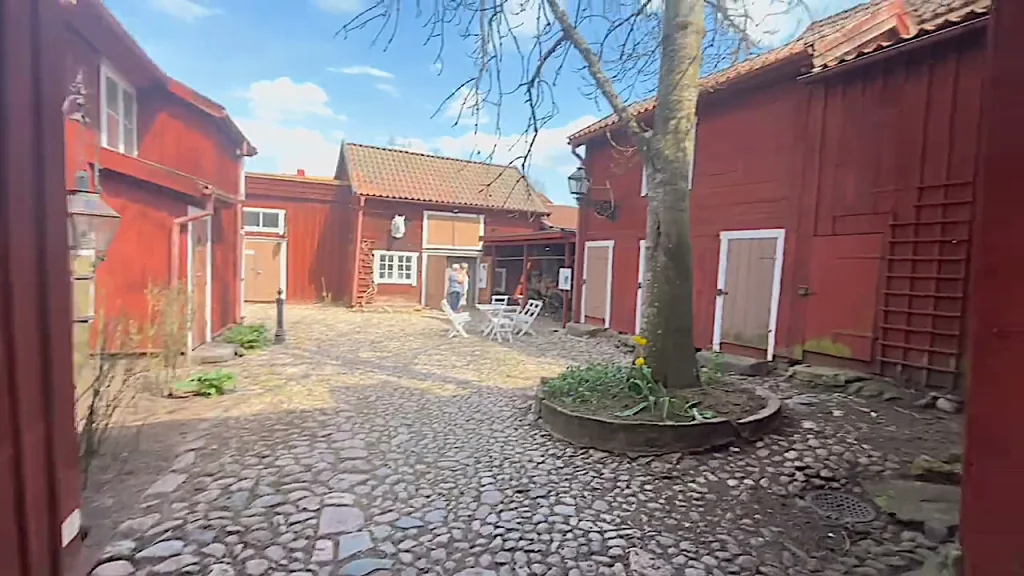
We started our Wooden City Classic in Eksjö and here you almost immediately find yourself in the middle of history. The old town is dense, the houses are close together and behind the gates there are courtyards that you can easily miss if you just walk straight through the city.

Eksjö was burned down in 1568 during the Nordic Seven Years' War and was subsequently rebuilt. Many old wooden houses have survived and the northern part of the Old Town also escaped the great fire that hit the southern quarters in 1856. This makes Eksjö the one of the three cities where we perhaps get the clearest sense of walk around inside the wooden city's history.
Our best experiences in Eksjö
The easiest way to start is to stroll around. Look at the houses, enter the courtyards and let the small streets guide you. If you want to understand more, we recommend a guided city walk.

Eksjö Museum tells both the history of the city and its long military tradition. The latter is important for understanding why Eksjö is usually described as the military city among the three wooden cities.
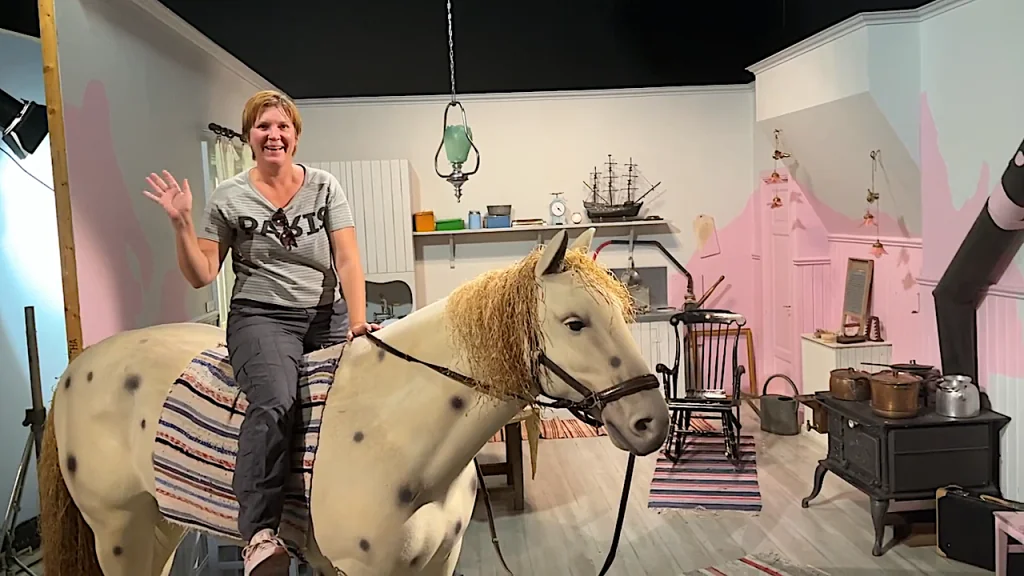
We stepped straight into the Aschan family's home.
One of our strongest experiences was the Aschanska farm. The Aschan family owned the farm from the 1830s and when the last of five siblings, Hedda Aschan, died at the age of 101 in 1984, there were no heirs. The farm was passed down and much of the interior has been preserved.

That's the kind of museum we like best. Instead of showcases with a few selected objects, you get to enter a real home where furniture, kitchen items and personal belongings still tell the story of the people who lived there. And after all the history, we did something much simpler. We ate ice cream at Eksjö Konditori. It would turn out that ice cream became a recurring theme throughout our Trästadsklassiker.

Don't miss in Eksjö
If you have more time, the Eksjöån River is nice to walk along and there is exciting nature around the city. We ourselves made an excursion to Skrôle Hie, a dramatic ravine where the stream flows among dead tree trunks, mosses and mushrooms. Eksjö is also a good base for excursions in Astrid Lindgren's footsteps. We have visited, among other things, the real-life Katthult and Filmbyn Småland in Mariannelund.
Our feeling: Choose Eksjö if you primarily want a dense historic wooden town environment, old farms and a lot of history within walking distance.
READ MORE: What to do in Eksjö - 11 tips for the wooden city in Småland
2. Hjo – the spa town on Lake Vättern
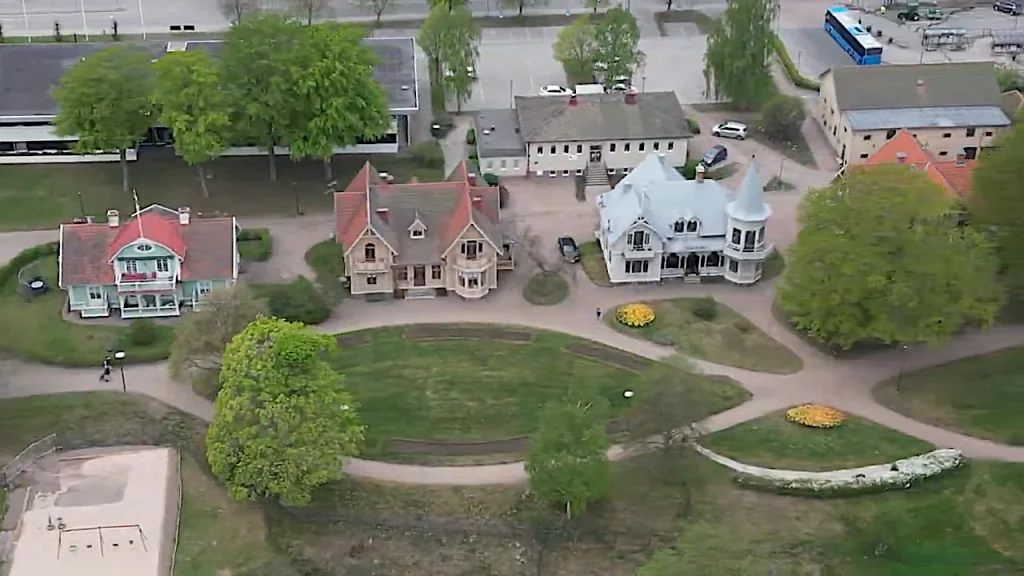
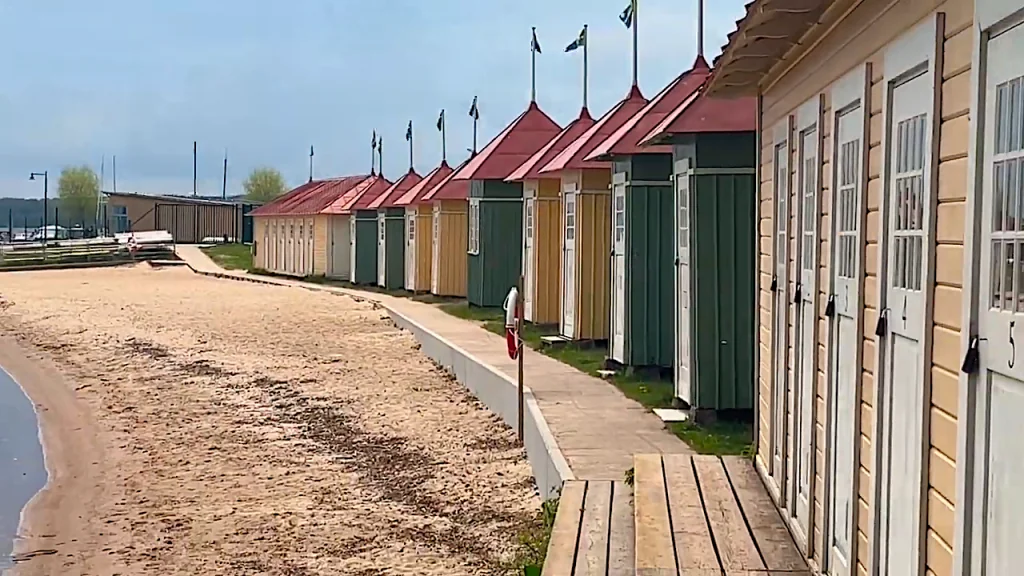
Then everything changes. When we get to Hjo, the wooden houses are still there, but Lake Vättern takes over the experience. Here you are drawn between the old town center, the harbor and the large city park with its beautiful wooden villas.
Hjo has medieval roots but gained another identity when the town developed into a health resort in the latter part of the 19th century. People came here for treatments, bathing, fresh air and recreation. It is this history that can still be felt when you walk through the city park. Hjo was awarded the Europa Nostra in 1990 for the preservation of the overall wooden town environment.

From the wooden houses down to Lake Vättern
We started among the wooden houses in the old town. You can walk here on your own, but a guided walk opens doors to courtyards and stories that are otherwise easy to miss.

A person who appears in Hjo's story is Estrid Ericson, the founder of Svenskt Tenn, who grew up here. At the Cultural Quarter Pedagogien we saw an exhibition about her, but also about the history of Hjo and the old bathing culture. Then it is almost difficult to avoid Vättern. The harbor became one of our favorite places. Here are the boats, the view and the steamboat Trafik, which makes trips on Vättern during the summer.
Hjo city park tells the story of the spa period

The city park was built in the 1870s for the guests of the Hjo Vattenkuranstalt. Here were treatment rooms, restaurants, hotels and social rooms and guests could walk between the buildings in the green park. Many of the old wooden villas still remain and it is the combination of the park, the buildings and Lake Vättern that gives Hjo a completely different character than both Eksjö and Nora.
And then there was the ice cream again… In Eksjö we had already had time to eat ice cream. In Hjo we found Moster Elin's. The ice cream menu was almost ridiculously long and Peter naturally took on the heavy task of trying it again. There are also more ice cream shops in the city, so the truly ambitious can probably make their own Hjo ice cream classic. We also had lunch at restaurant Känsla and bought cheese at Almnäs Bruk, where we picked Wrångebäck and Almnäs Tegel from the self-service fridge and swish the payment.

Our feeling: Choose Hjo if you want to combine a wooden town with water, harbor life, greenery and a spa feel. Of the three, it is perhaps the one that most clearly feels like a Swedish summer town.
READ MORE: What to do in Hjo - 12 tips for the wooden town by Lake Vättern

3. Nora – the iron and mining town in Bergslagen
The last city on our trip was Nora. And once again the feeling changed. Nora is one of those cities where everything feels a little smaller. Low wooden houses in different colors stand side by side and some almost seem to lean in different directions. When we walked through the center, I got the same feeling as when I visited my grandmother and grandfather as a child.
It almost smells like history about Nora. The city received city privileges in 1643 and was strongly influenced by mining. Nora was awarded the Europa Nostra in 1993 for its work in preserving its historical cultural environments. But here, you only have to walk down to Lake Norasjön to understand that the story is not just about wooden houses.

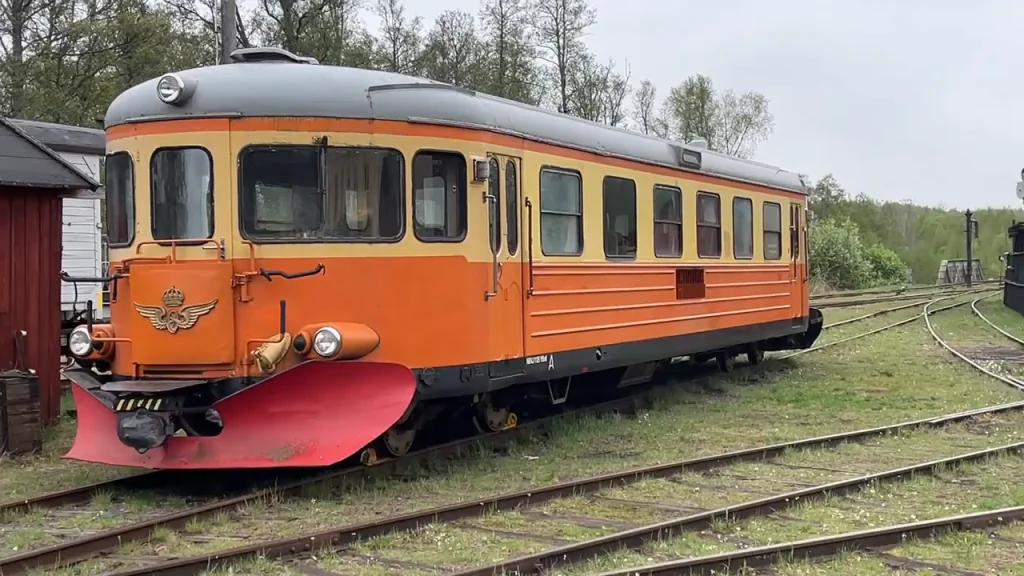
The rails run crisscross through Nora
Down by the station area, the railway tracks appear and soon old locomotives, carriages and railway buildings stand before us. The railway museum was one of our finest experiences in Nora. Here we saw old locomotives and carriages together with objects and photographs from the history of the railway. It is also here that the difference between the three cities becomes so clear.

Eksjö tells a lot about city life and military history. Hjo opens up to Lake Vättern and the spa life. In Nora, the story leads further into Bergslagen, to the mines, the smelters and the iron.
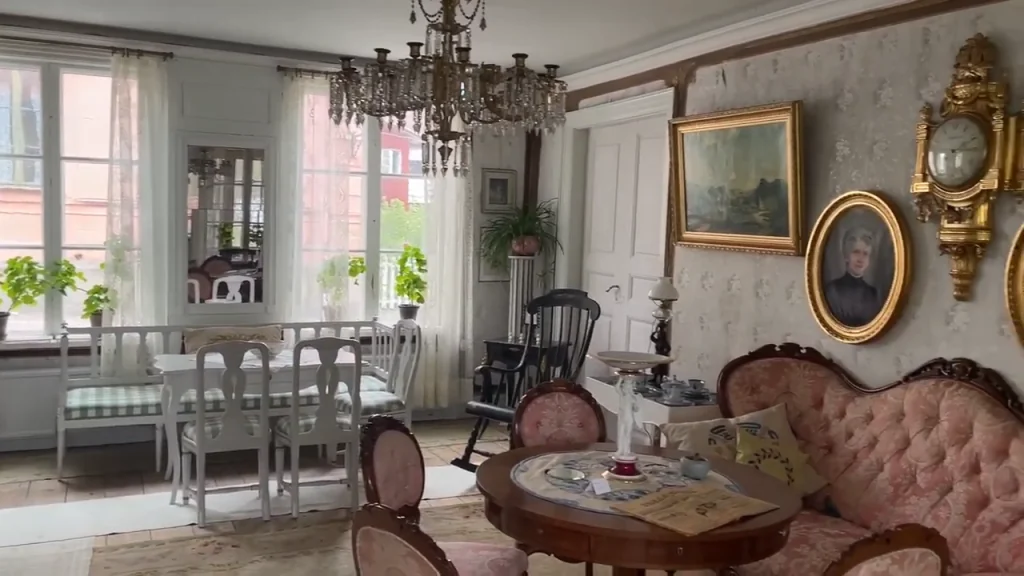
Göthlinska gården – another time bubble
We also really liked Göthlinska gården, a preserved bourgeois home where furniture and objects still remain. It's almost like a parallel to Aschanska gården in Eksjö: two old family homes in two wooden towns, but with their own people and stories.
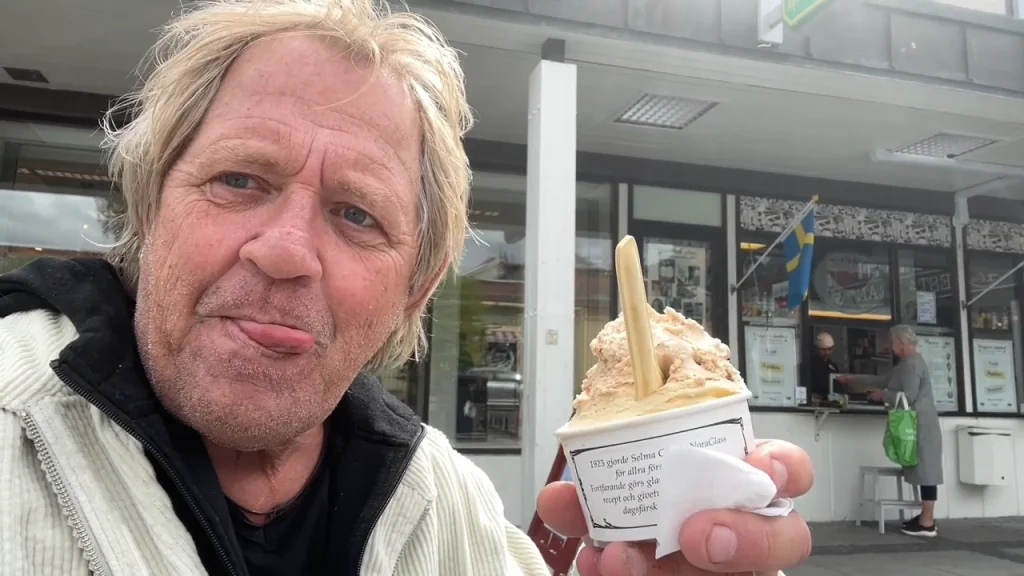
And then, of course, one important thing remained. Ice cream. NoraGlass has been manufactured since 1923 and we also ended up with the local version here. Three wooden cities and ice cream in all. It wasn't planned. But some travel concepts apparently create themselves.
Our feeling: Choose Nora if you want to combine the idyll of the small wooden town with the railway, mines and Bergslagen's industrial history.
READ MORE: What to do in Nora - 12 tips for the wooden town in Bergslagen
Eksjö, Hjo or Nora – which wooden town should you choose?
After visiting all three, we actually think the question is wrong. They don't compete very well with each other. Do you primarily want to walk through a dense old city center with historic courtyards, we would choose Eksjö. Do you want to combine wooden house with Lake Vättern, harbor, city park and summer feeling, suits Hjo better. And attracts railway, mining history and Bergslagen, we would choose Nora. But that's exactly why the Trästad classic is fun. You don't have to choose.
Our three favorite experiences – one from each city
If only we could choose an experience in each city we would choose different things. In Eksjö we would go into Aschan farm, where an old family home still feels strangely present. In Hjo we would choose the walk through the city park and down towards Lake Vättern, since that is where the spa town and today's Hjo meet. And in Nora we would choose the railway environment, because the old locomotives and rails tell so much about Bergslagen and why the small town developed the way it did. It perhaps says more about the differences than all the historical years combined.
How to make a Trästad classic
The concept is simple. You visit Eksjö, Hjo and Nora in any order and collect a sticker from each city on a special classic card. When all three stickers are in place, you have made a Trästadsklassiker and receive a gift as a souvenir. Classic cards are available at tourist offices and can also be ordered from Tre Trästäder.
There is also a free app with digital tours and information about the cities. But our advice is not to make the stickers themselves the goal. Give each city time. It is only when you have time to walk around, go through a few doors and see what is behind the nice facades that the differences begin to emerge.
How many days are needed for Three Wooden Cities?
Technically, it is of course possible to drive between cities, pick up three stickers and call the classic completed much faster. But why would you do that? We would expect at least one day in every city, so three days for the wooden towns themselves. With four or five days you get a much better trip and can add in nature, museums and excursions around.
Eksjö has, for example, Skrôle Hie, Skurugata and the Astrid Lindgren environments within easy reach. Around Hjo there is Vättern, Almnäs Bruk and many excursion destinations. From Nora you can continue straight into Bergslagen's mining and mill history. Then Tre Trästäder will not be three points to check off. It will be a road trip.
Three wooden towns with a camper
We did the trip ourselves by camper van and think the concept is very suitable for camper van travelers. All three towns are small enough to be explored on foot once the car is parked.

In Eksjö there is Motorhome park Eksjö City within walking distance of the city center and also Eksjö Camping. Pasted text (2) In Hjo we stood ourselves on parking space Lokstallet, with a central location and service. Hjo Camping is another option close to the city and Lake Vättern. Pasted text In Nora we stood on the campsite at Skojarbacken, from where we could easily walk into the city center. Paste text

For us, the campervan also became part of the trip itself. We didn't have to check in and out of three different hotels, but could have our own little home with us from wooden town to wooden town.

Video from Three Wooden Towns
FAQ – frequently asked questions about Tre Trästäder
What are Sweden's Three Wooden Cities?
Three Wooden Cities consist of Eksjö in Småland, Hjo by Lake Vättern and Nora in Bergslagen. It is a collaboration between three cities with well-preserved historic wooden city environments. The network was formed in 1997.
Why Eksjö, Hjo and Nora?
All three have well-preserved wooden town environments and have been awarded by Europa Nostra for their work with cultural environments. Eksjö received its award in 1997, Hjo in 1990 and Nora in 1993.
Are Eksjö, Hjo and Nora Sweden's only wooden towns?
No. Sweden has many places with historic wooden buildings. Three Wooden Cities is the name of the collaboration between Eksjö, Hjo and Nora.
What is a Trästadsclassic?
A Wooden City Classic involves visiting Eksjö, Hjo and Nora and collecting a sticker in each city. When all three stickers are collected, the classic is completed and you receive a gift. The cities can be visited in any order.
Which of the three wooden cities is the best?
It depends on what you are looking for. Eksjö is a good fit for those who want to experience a dense historical wooden town and old farm environments. Hjo combines the wooden town with Lake Vättern, the harbor and the old spa environment, while Nora combines the wooden town with the railway and Bergslagen's mining and iron history. We wouldn't choose either. It's the differences between them that make the journey worth making.
How long does a Trästadsklassikir take?
We recommend at least three days if you want to experience all three cities, preferably four or five if the trip will include excursions and a slightly slower pace. The classic itself, however, does not impose any such requirement – you visit the cities in any order and can do the trip at a pace that suits you.
You might also like:
 Things to do on Öland - 25 sights and experiences
 15 unusual attractions in Sweden
 Visiting Visan's ship - a different kind of monument in Småland
 Visiting the Carl Larsson farm in Sundborn
 Film locations in Sweden - 30 locations from films and TV series
 Mårbacka in Sunne – a visit to Selma Lagerlöf's world



 English (UK)
 Svenska
bmlarsreseblogg says:
Our three wooden cities are lovely and the classic is a fun concept. We have of course visited them a few times but a few weeks ago we picked up our card and first sticker in Eksjö. Yesterday we were at Moster Elins in Hjo and ate ice cream (not alone exactly) but then the Tourist Office was closed so it will be a new visit ...
23 July 2023 - 8:48
Helena says:
Of course they are nice cities! But hmm, you don't want to be without a sticker because it's closed ... There should be a solution to that? (Pick up in a box perhaps, or take a photo of the place and pick up at the next place?)
24 July 2023 - 19:31
Ditte says:
Nice wooden cities! And great tips and pictures!
Have visited the cities several times but Hjo has received the most visits. I grew up in Mariestad and Töreboda the first 10 years of my life and Hjo received many visits.
Be there last on a work trip in 2021 https://dittemitti.se/hjo-valkomna-till-denna-fina-stad-vid-vattern/ and also visited an exhibition with Svenskt Tenn's founder, Estrid Eriksson, in the "leading role". She was born here. https://dittemitti.se/i-hjo-med-farg-form-och-firma-svenskt-tenn/
And yes, Sweden has so many beautiful places to visit.
23 July 2023 - 12:21
Helena says:
Fun with these additions!!! Thanks Ditte! 🙂
24 July 2023 - 19:31
Anonymous says:
Not all of Eksjö burned to the ground, just half of it 🤣.
25 July 2023 - 0:34
Helena says:
Hi Anonymous! I think you are thinking of the later fire, which happened in 1856? Then half the town burned down. Phew, imagine the fires in wooden towns in the past ...!!!
25 July 2023 - 6:49
Lena i Wales och lite överallt says:
Two down and Nora to go!
Take care!
26 July 2023 - 10:31