


Text and photo: Björn Erik Gustavsson
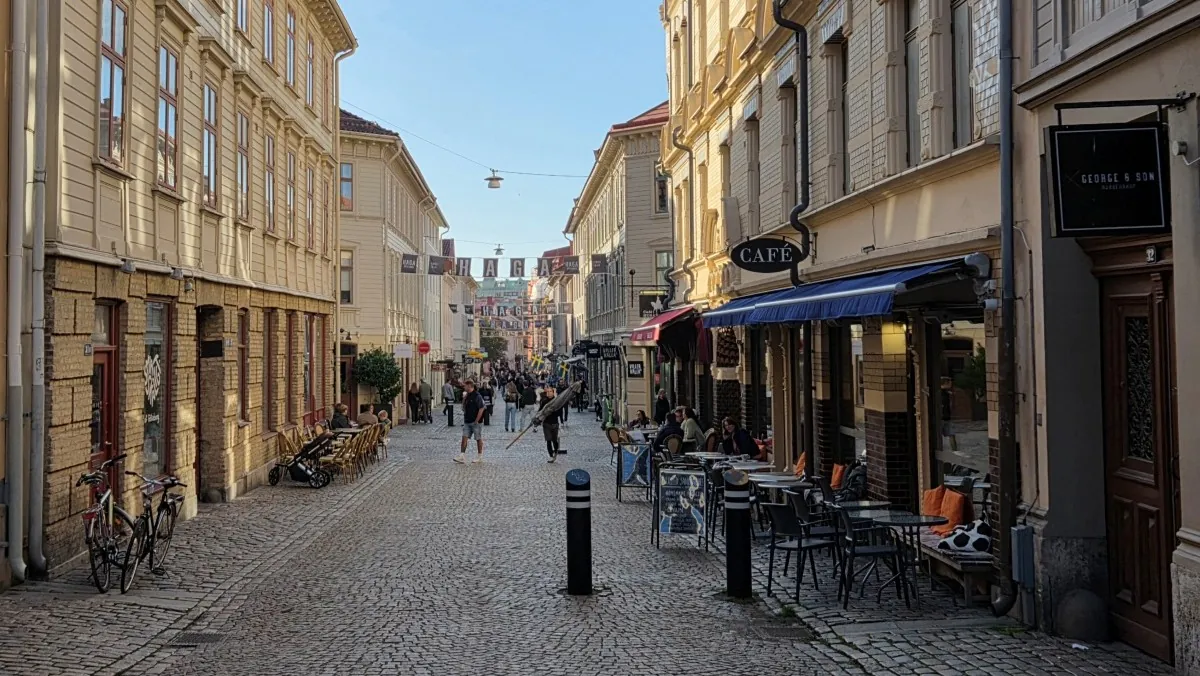
Here is a report from five days of intense cultural experiences in autumnal Gothenburg. Join us for a book fair, opera, theater, concerts, an art tour and a visit to perhaps Sweden's most authentic beer hall, where almost nothing has changed in the last hundred years.
 Tweet
Tweet Share
Share Share
Share Pin
Pin Share
Share Share
ShareTable of contents
The Gothenburg Book Fair – a wealth of literature and meetings
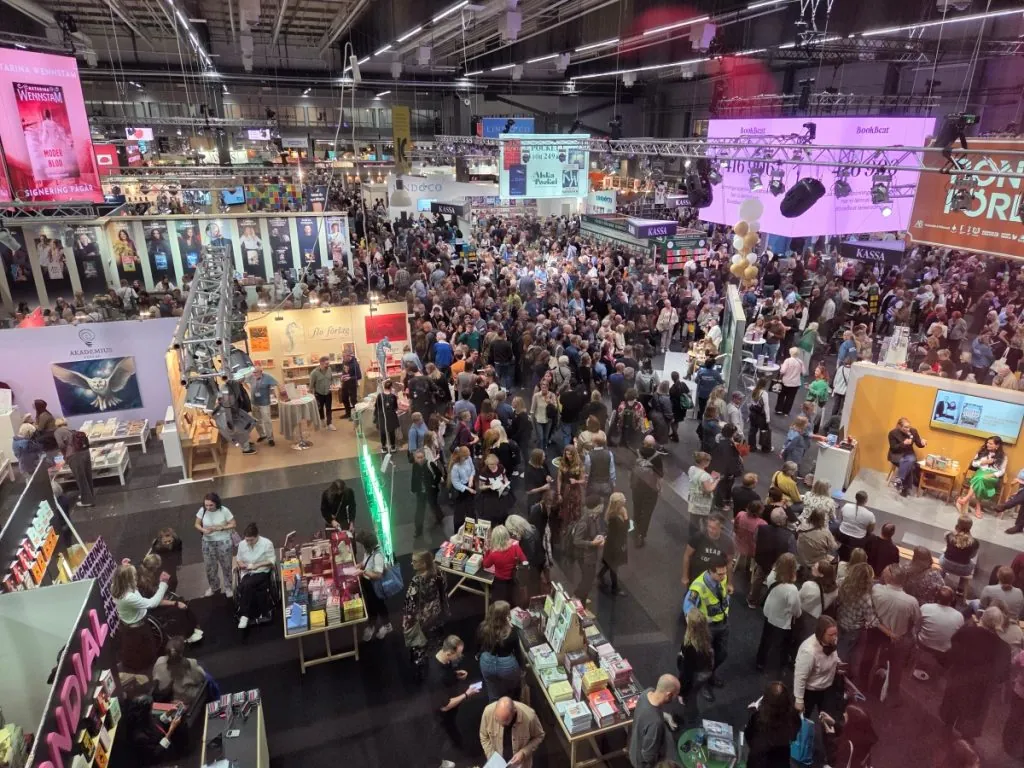
But first, a bustling book fair: lively, exciting, tiring. The Swedish fair: transformed into a literature Ica maxi, with lots of bargains.
An abundance of everything, really. Parallel to the crowds in the large exhibition hall (100,000 visitors this year), a number of parallel seminars were taking place. The most interesting of the year was about poetry. The word acrobat Isabella Nilsson juggled the moderator's questions with a mix of nonsense attitude and philosophical elegance. A little further away, Siw Malmqvist entertained. She ended by singing a Swedish Topps classic from 1967, "En natt jag drömde" - at which point the audience stood up and sang along.
Jazz on the legendary Nefertiti
The first evening in ”Little London” I visited a historic jazz club, located in the basement vaults of a dog-year-old textbook. Nefertiti (opened in 1978) has long been one of Scandinavia’s premier jazz clubs. British saxophonist Jasmine Myra and her band performed spiritual jazz, akin to both classical and folk music. Seamless solos, intense presence – but at the same time everything was so laid-back and relaxed; both brilliance and reflection. Plus a super-talented pianist who made the basement darkness sparkle.
La traviata at the Gothenburg Opera – a modern interpretation
More cultural experiences: La traviata at the Gothenburg Opera; here in a very strong production by Silvia Paoli, whose feminist interpretation perfectly highlights what a sacrificial lamb Violetta becomes for the double standards of patriarchal society.
Verdi wrote La traviata after seeing a dramatization of Alexandre Dumas' novel The Lady of the Camellias at the Vaudeville Theater in Paris – a work that in turn harks back to Dumas's own love story with the teenage girl Marie Dupless; a beautiful courtesan who died of pneumonia at the age of 23 (the prostitutes of Paris still consider her their patron saint and her grave in the Montmartre cemetery is always covered with fresh flowers).
The premiere was a fiasco, however; perhaps mainly due to the sensitive content. Here, the love between a possessed man (a pillar of society) and a prostitute is depicted. Even worse: Verdi reveals sympathy for ”the fallen one”. He shows how this self-sacrificing Violetta is doomed to perish in a society permeated with hypocrisy and double standards.

The Gothenburg Opera's staging comes across as surprisingly modern, even though it's mainly set in an imagined 19th century. A number of anachronisms spice up the setting, such as Eyes Wide Shut-influenced costumes – and a 60s Mercedes that rolls onto the stage.
Alfredo's father (Orhan Yildiz) steps out to correct his son Alfredo (Tobias Westman). Violetta (Ania Jeruc) should, given the family's reputation, leave as soon as possible. Alfredo's mother and sister wait in the background (extra Fanny Wranne plays the boarding school-clad, upper-class sister with outstanding body language).

Vivaldi in the historic salons of the Grand Theatre
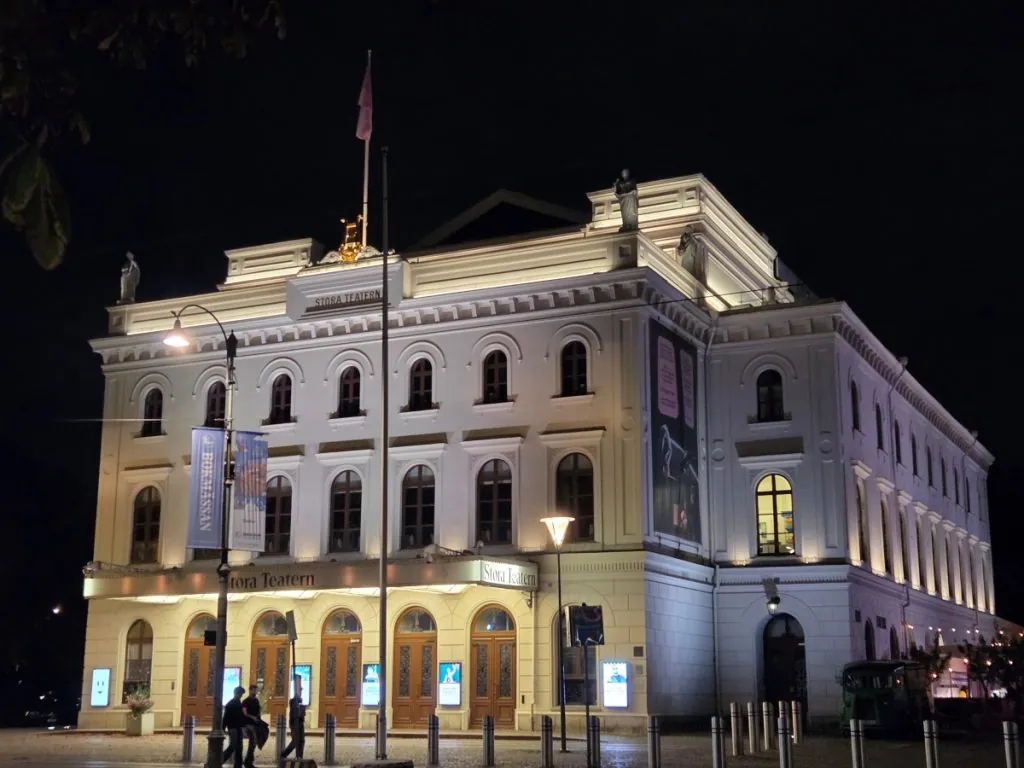
The beautiful new opera house on the Göta River was inaugurated in 1994, replacing the previous opera operations in the Great Theatre (”Stora”); a building from 1859 that is now rented out for events of various kinds.
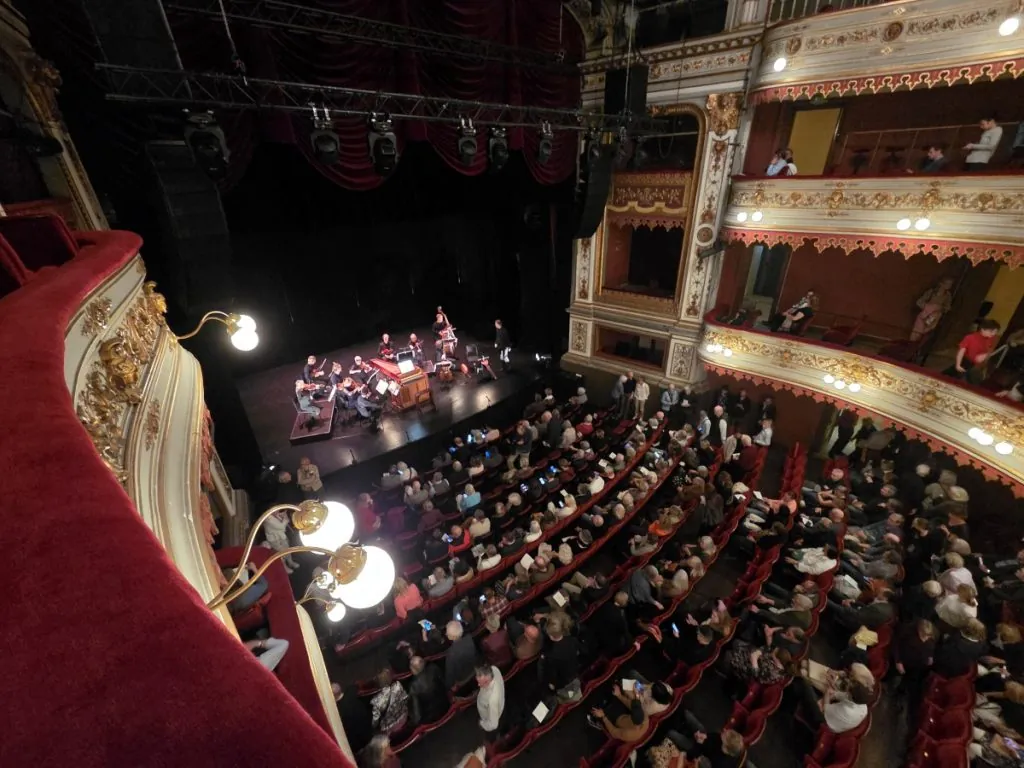
I myself experienced a Vivaldi concert there with the high-class Gothenburg Baroque, which under the direction of Magnus Kjellson offered a richly varied program. Concertmaster Fredrik From particularly distinguished himself as an equilibrist violin soloist, Anna Jobrant with her clear soprano, and Karl Peter Eriksson, who with his dramatically charged bass voice unleashed strong rhythmic Vivaldi forces.
Lars Norén at Teater Trixter
One of Sweden's most exciting off-theatres, Teater Trixter, which is housed in an alternative romantic venue next to a traffic route, offered a staging of "A Small Novel"; an unfinished Lars Norén text that was found on the playwright's desk after his passing in 2021.
The work is based on a true story about a convicted woman in the United States who will soon be executed. A horrific story where incest and exploitation become the breeding ground for mental illness and acts of violence. Strong but static despite Kristin Falksten doing her best to bring the monologue text to life.
Art and design at Gothenburg's museums
There were also some art tours. The Art Museum at Götaplatsen – one of Sweden’s foremost when it comes to 19th and 20th century art – is an art experience in itself. However, the visit to Röhsska was a bit of a disappointment; this design museum from 1916 boasts displays with objects that seem a bit whimsically themed. I had expected more from this historic institution. And it’s a shame that the nearby Valand art school didn’t get the opportunity to showcase its creativity here at Röhsska.
Tips for exciting places
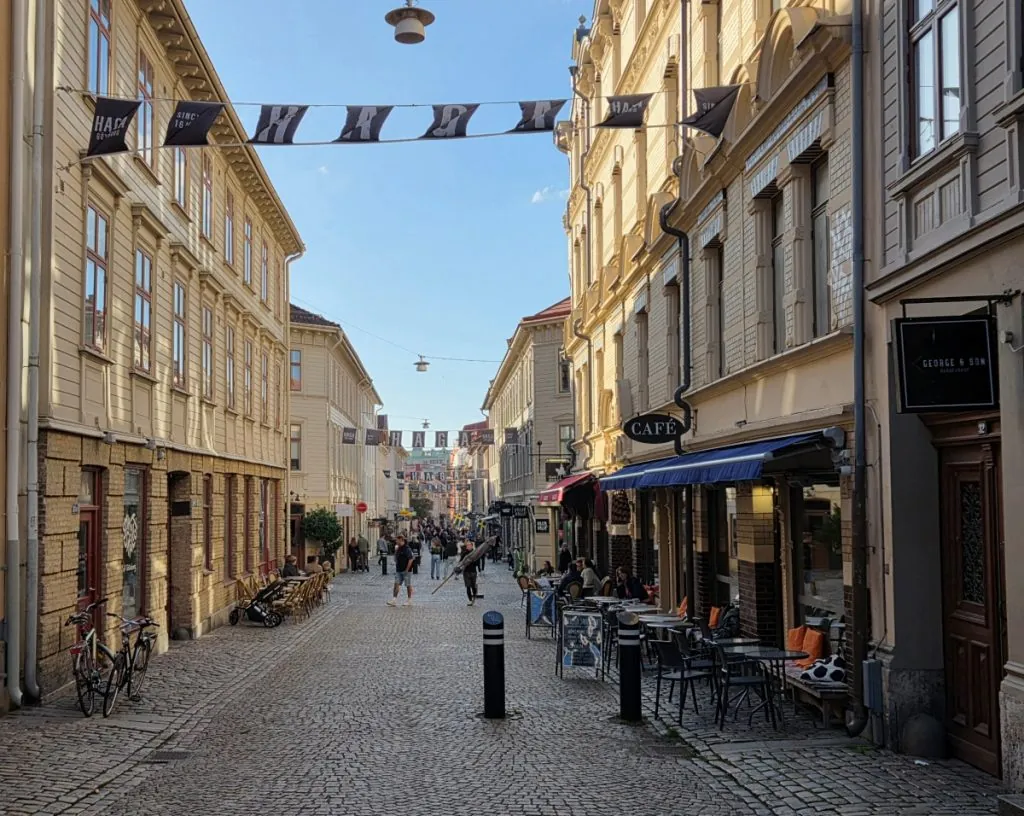
Finally, I would like to recommend some exciting places.
The sunflower, Gothenburg's oldest vegetarian restaurant and a gathering place for all kinds of radicals in the 70s, still holds its own. Beetroot steaks, lentil soups and the like are served over the counter by staff who seem to have been there since the 70s – and there are many regulars.
An even more classic establishment is beer hall "7"” at Kungstorget, which has retained its current appearance since 1933: dark-paneled veneer walls, marble tables, red-and-white checkered tile floors, oil paintings made by former regulars. The beer hall is still frequented by a popular clientele. Stepping in here is like stepping back in time many years.
Something similar can be said about ancient ”"The Meatball Cellar"” a little further away, which also houses ”Café du Nord” and where a large part of the visitors are regulars. Here, Gothenburg locals sweep between the tables and here many older people seem to have found a point of reference. Here, old times have lingered and – not least: here, classic home cooking is still a given.
On the other side of the street rises Large market hall, opened in 1889 and still retains its original interior. Next to Östermalmshallen in Stockholm, this is probably the best-preserved market hall in the country. In addition, old-style market trading still takes place on the square outside.
Follow Björn Erik here:

Mr Björn Erik Gustavsson
You might also like:
 Trolls in Gamleby - Friends of the Garpe Sculpture Park
 Visiting Mannaminne in Nordingrå - a different kind of open-air museum
 Visiting Monet's Garden - a wonderful art experience
 Glasshouses and glassworks in Glasriket - guide with map
 Visiting the Carl Larsson farm in Sundborn
 Liseberg and Gränna - Grandma Anna spins around


 English (UK)
  Svenska