



Writer: Co-operation partner
When your home is empty during a trip, the risk of burglary, water damage and other unwelcome events increases. It is important to review your home insurance, understand its terms and conditions and plan your protection well in advance of your departure. Those who prepare well can both avoid problems and act more quickly if something happens.
 Tweet
Tweet Share
Share Share
Share Pin
Pin Share
Share Share
ShareBefore you pack your bags, it's crucial to know how your accommodation is protected while you're away. With the right home insurance before the trip increases security and helps you deal with unforeseen situations that may arise while no one is home. Knowing the terms of theft and damage reduces the risk of misunderstandings if an accident does occur. By combining practical supervision and good planning, you can reduce stress and focus more on your trip. When the practical things at home are in order, it will also be easier to focus on planning for the trip.
Table of contents
Risks of empty homes and the importance of proper protection
An unattended home is more likely to be the target of both burglaries and water damage, especially during longer trips. Thieves can quickly spot visible signs that no one is home, making preparation extra important.
Aside from burglary, pipe leaks and fires are also examples of damage that can become significantly more extensive if action is delayed. Preventing these risks saves both time and trouble when returning home.
How to review your home insurance before your trip
Before you travel, it is important to carefully review your home insurance. Check what is covered in the event of theft, water and fire damage while you are away, and whether there are any due diligence or supervision requirements (for example, locks and the home being looked after during longer trips). In addition to property protection, home insurance also includes liability protection and legal protection, but the scope and additions differ between companies.
Also review the compensation limits, deductible and whether the insurance applies to longer periods of absence. Many insurance policies have special conditions when you are away for more than a certain period, and supplements may be required for certain valuables or special situations. The link above contains information about home insurance and what it covers.
It is also important to find out if there are special rules for digital equipment or cash, and what is required in the event of a claim. By being prepared for these areas, you will get a better overview and reduce the risk of unpleasant surprises when you return home.

Requirements for supervision and care during extended absences
Insurance companies generally require that the home is properly locked and that certain preventive measures are taken during extended absences. The term ”reasonably locked” means locking with approved locks and that spare keys are kept safe.
Longer absences can mean increased supervision requirements, especially for houses, and some insurance policies have special rules when you are away for more than a certain period of time. Having someone check the home regularly and perhaps empty the mailbox can reduce the risk of damage or burglary.

Valuables, limitations and what applies in the event of loss
Many insurance policies cover valuables such as jewelry, electronics, and bicycles but have fixed limits on compensation. It may therefore be important to check the maximum limit for your most valuable items before departure.
If you have expensive electronics or other valuables that need to be left at home, it may be wise to store them in a locked space. Ask your insurance company if you need to make any additions to your home insurance or if there are any special safety regulations that must be followed in order to receive full compensation.
Practical measures to prevent damage and burglary
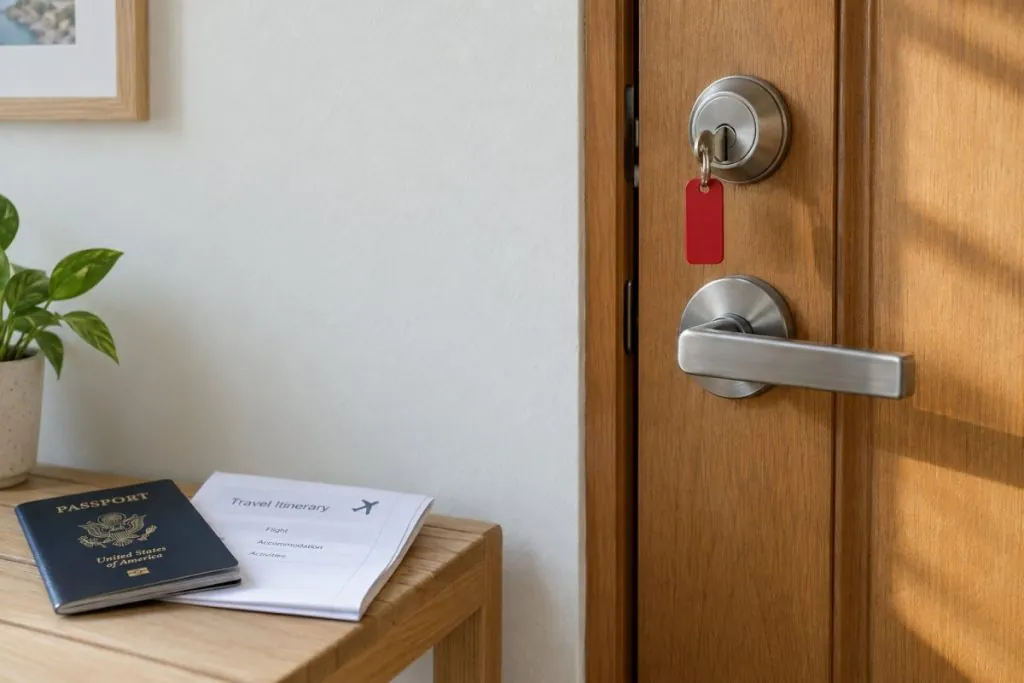
Checking locks and adding window locks increases security in the home. Timers for lighting can make the home look occupied and thus reduce the risk of burglary.
Turn off the main water tap when away for a longer period of time to reduce the risk of water damage. Handle garbage and collect mail so that it is not visible from the outside that no one is home, which is also recommended by authorities when traveling for a longer period of time.
Documentation and preparations if you have to file a claim
Take photos of valuables, save receipts and note down serial numbers to make it easier to file a claim. If something happens, these documents can be crucial for quick processing and correct compensation.
Also, make sure you have access to contact information for the insurance company and information about what to attach to a claim. Remember that easy access to these documents saves both time and frustration.
Checklist before departure to secure your home
- Go through all the locks and check the doors and windows.
- Use timers for lighting and draw curtains if it feels safe.
- Save digital copies of important documents such as receipts and insurance policies.
- Notify a neighbor or friend who can keep an eye on the home.
- Make sure you have the correct phone number and information at hand in case of any damage report.
By following these points, the experience will be safer and the practical protection will be better adapted to the length of the trip and your needs.
You might also like:
 Traveller safety - 10 things to consider



 In a troubled world... (But we mustn't let worry take over!)
 Things we forgot while travelling... and what happened next!
 Internet on the move - 4 ways to get connected





 English (UK)
  Svenska