



Writer: Helena Bergström
What is it like travelling by motorhome in Corsica? We travelled here by motorhome for a month ten years ago, and we liked it so much that we've now gone back! Here we tell you about ferries, roads, campsites and other things you might wonder about.
 Tweet
 Share
 Share
 Pin
 Share
 Share
This article contains affiliate links. This means we may earn a commission if you book through our links - at no extra cost to you.
Table of contents
What are the entry rules for visiting Corsica (France)?
Corsica belongs to France, and to travel in France you need a valid passport or national ID card. When travelling by vehicle, you should also bring the registration certificate. Read more about travelling by motorhome in France here.
Which ferries go to Corsica?
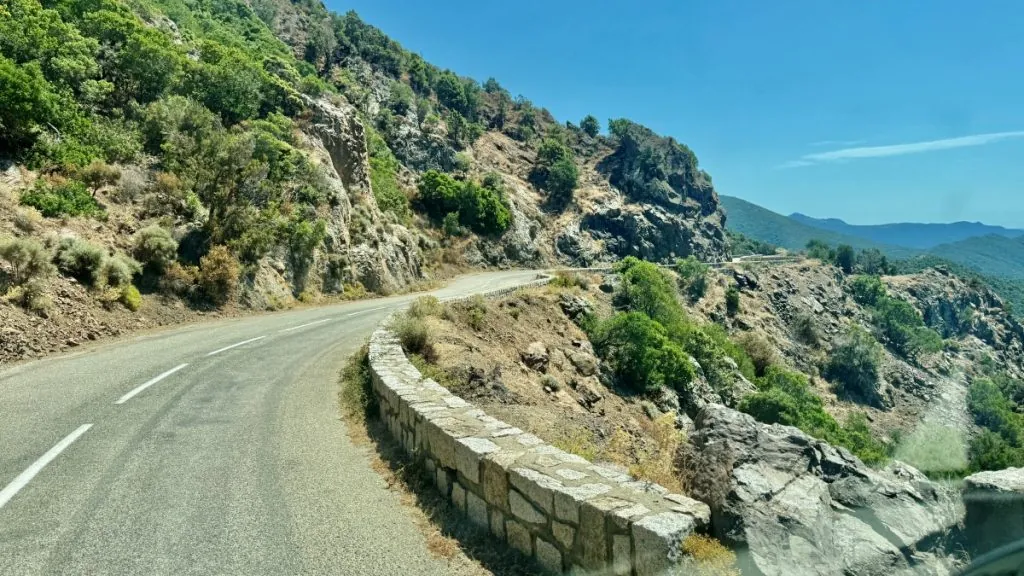
There are many different ferries to Corsica, with different companies and from different locations, in both France and Italy. The largest shipping company is Corsica Ferries. We have travelled Nice - L'Île-Rousse and Nice - Bastia and Bonifacio-Sardinia. In addition, you can travel from Toulon, Livorno or Savona, for example.
Prices vary greatly depending on the season, departure day and a lot of other things. Most recently we paid 170 euros from Nice to Corsica (longer trip), but 200 euros from Corsica to Sardinia (shorter trip). You can easily compare and book different ferry trips via Ferry hopper.
What are the roads like in Corsica?
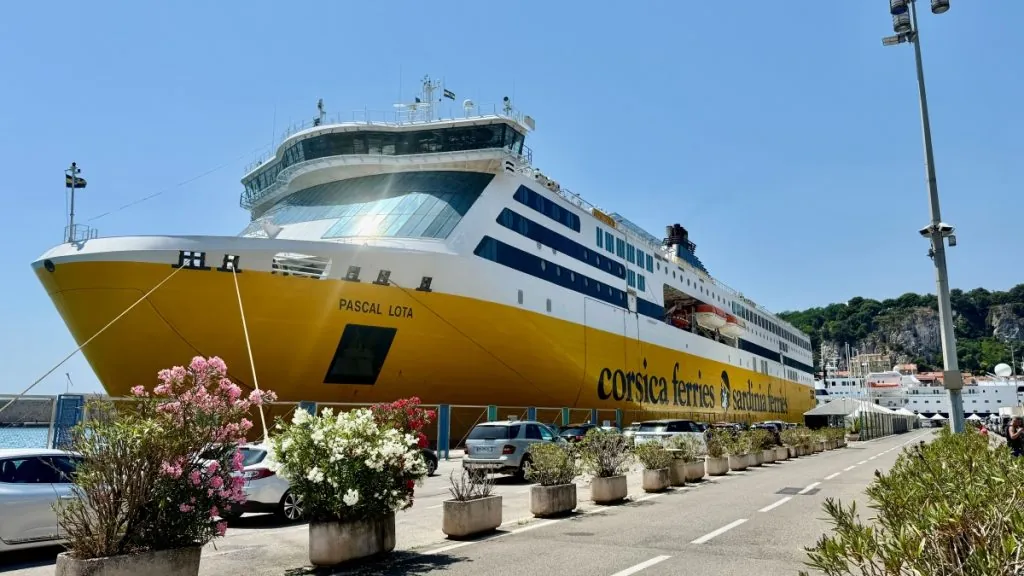
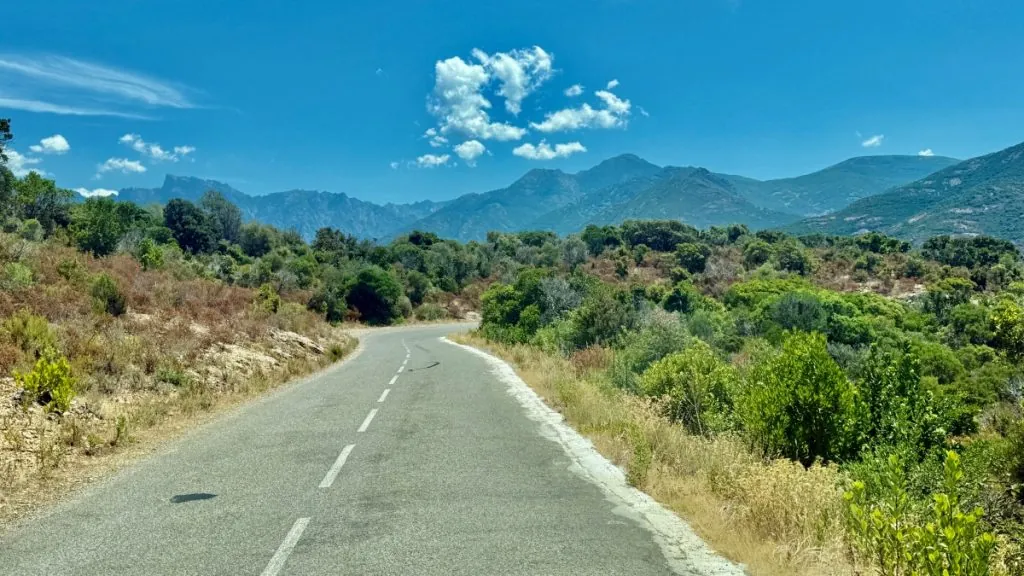
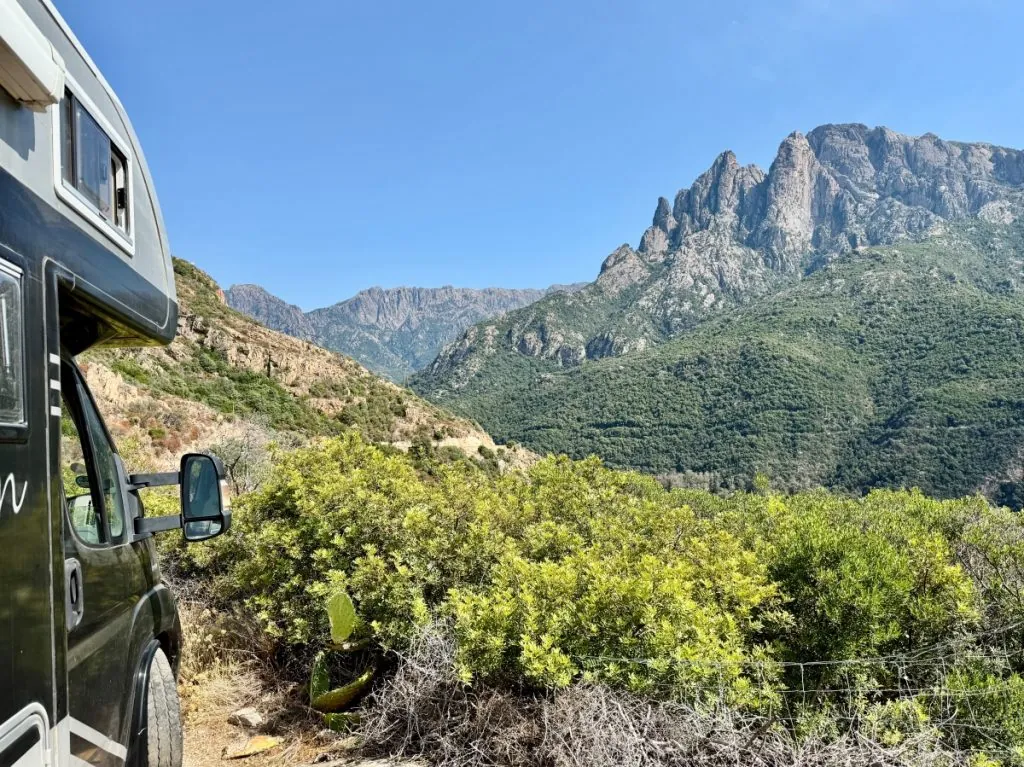
Corsica's roads often offer stunning views, but they can be challenging to drive. Many roads wind their way through the mountains, offering sharp hairpin bends, steep and narrow. The most dramatic mountain road is probably Calanche di Piana!
The quality of the road is sometimes quite good, but you must be constantly prepared for repairs, potholes, dents, poor verges and frequent speed bumps. As the roads are often narrow, encounters can be challenging.

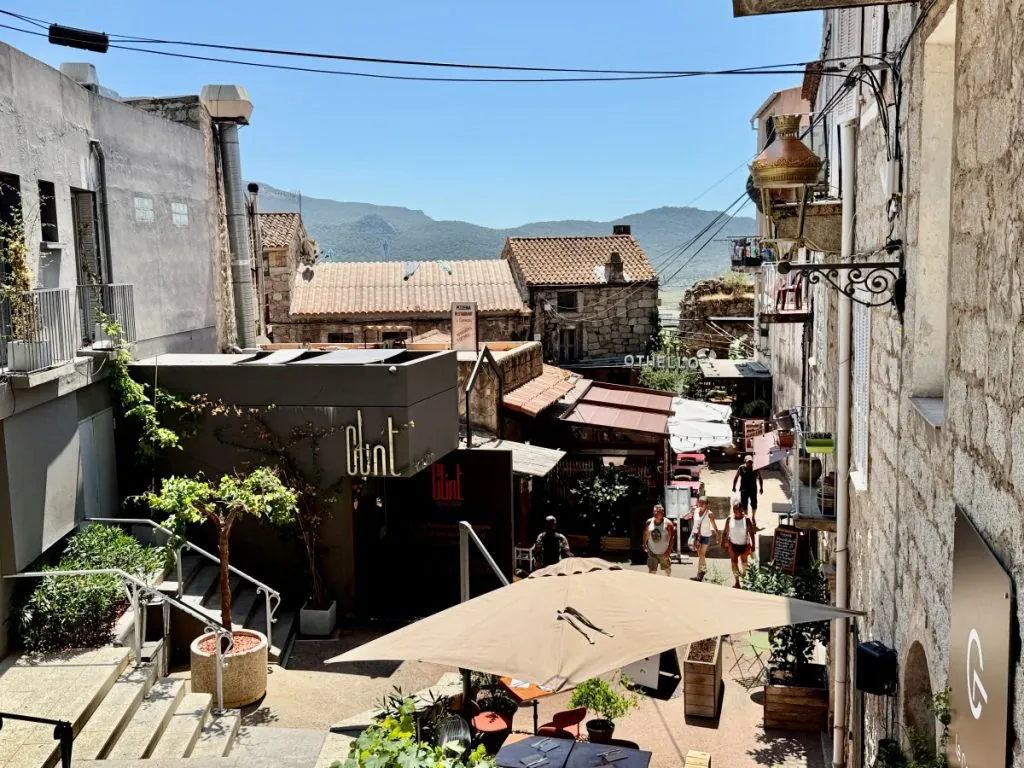
In cities, some streets can be extremely crowded and you may have to fold in your rear-view mirrors and tread very carefully to get through at all. Some city streets are best avoided altogether with a motorhome, and it's simply not driving fast with a motorhome in Corsica.

Do you pay road tolls?
There are no motorways in Corsica, but there are occasional stretches of country roads signposted for speeds between 90 and 110 km/h. There are national roads (N roads) and departmental roads (D roads). All roads are free of charge.

How is the traffic?
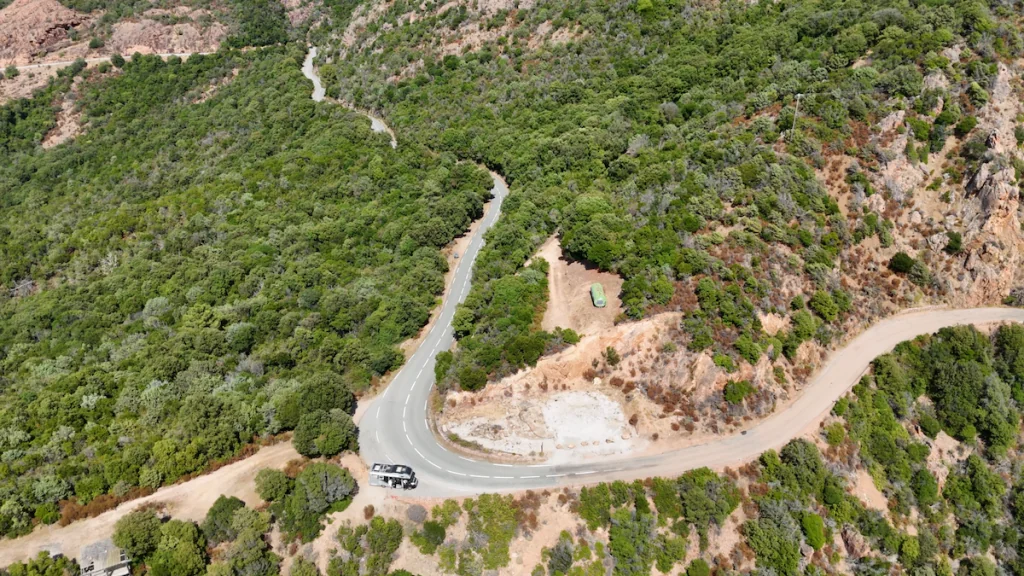
In the Corsican countryside, traffic is relatively calm, while in the cities it can get a bit more hectic. As the roads are often narrow and winding, you may want to drive slowly in a motorhome, while small cars catch up and want to overtake.
What are the speed limits for motorhomes in Corsica?
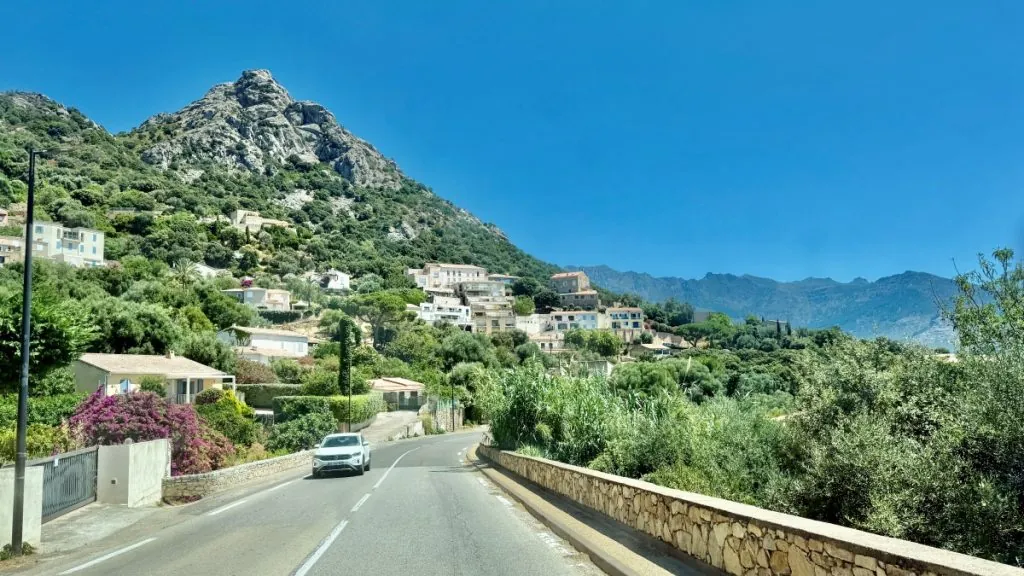
In urban areas the speed limit is 30 or 50 km/h, outside urban areas the speed limit is usually 80 km/h, and there are occasional stretches of country roads signposted with higher speeds. In our experience, we often do not reach the posted speed with our motorhome, but have to drive slower due to narrow and winding roads.
What are the driving licence rules for motorhomes in Corsica (France)?
Your Swedish driving licence is valid in France just like at home. There is a transitional rule in Sweden which means that if you obtained a Swedish driving licence before 1 July 1996, which has not been revoked, you can drive motorhomes over 3.5 tonnes if they are classed as a passenger car class II and not as a lorry.
You have the same competences throughout the EEA, but it can be difficult for individual police officers in other countries to keep track of Swedish transitional rules. If you wish, you can download and bring an equivalence table in the language of your choice, from Transport Agency website.

How big a motorhome can you drive in Corsica?
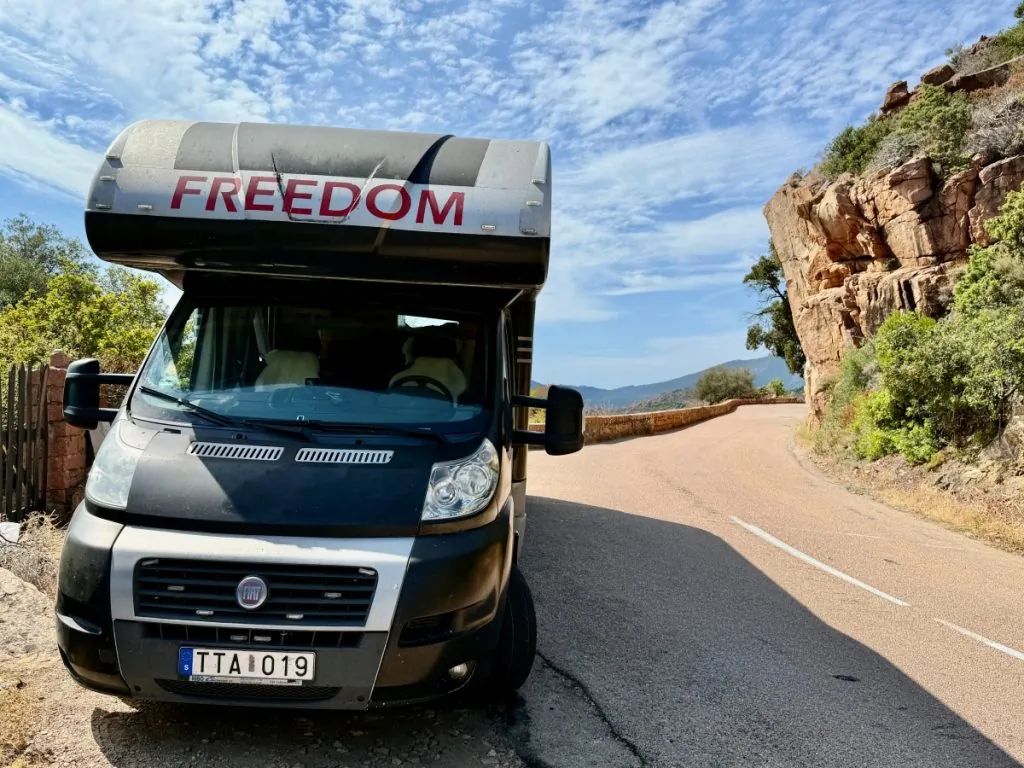
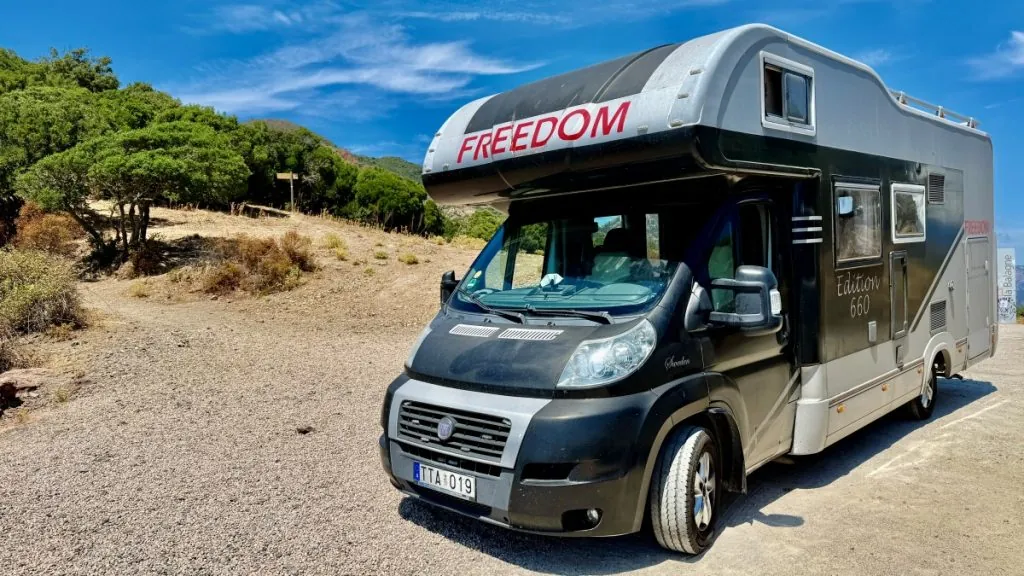
There are no rules limiting the size of motorhomes you can bring to Corsica, but the island offers narrow, steep and challenging roads, so driving with an oversized motorhome can be tough. Most camping vehicles you'll see in Corsica are motorhomes up to around 8 metres in length, as well as flatbeds, vans, small camper vans and cars with roof tents.
In our experience, it's best to take a motorhome that's no more than 8 metres long, and even a motorhome of this size can feel quite large on the narrow Corsican roads. If you want to take an even larger motorhome, you should research which roads and which campsites might work.
With a slightly larger motorhome, it can be particularly challenging to drive in towns and cities and to park at beaches, shops, etc. One tip, if you are driving a slightly larger motorhome, is to avoid the high season. When all the holidaymakers park along the roadsides, it simply becomes extra crowded.
What happens when you drive a motorhome weighing over 3.5 tonnes in Corsica?
If you drive a motorhome weighing more than 3.5 tonnes in Corsica, you must comply with French road traffic regulations, which means that you must have a driving licence with the appropriate qualification (B licence in some cases or C1) and that you must affix "Angle Morts" stickers to the motorhome.
Please note that some roads, especially in urban areas, may have a maximum vehicle weight limit. Also note that driving a larger vehicle on Corsica's often narrow and winding roads can be challenging.
Are there environmental rules to follow when driving a motorhome in Corsica?
In many places in Corsica, both in towns and villages, a French environmental sticker is required. This sticker can only be ordered online and should be ordered directly from the French authorities here. Please note that it can take up to six weeks to receive the sticker, so you should order it well in advance.
Zones requiring an environmental sticker are labelled with a red round ring on a white background and the text "Zone". When the zone ends, it is labelled "Zone fin".
When travelling in Corsica (France), do you need to carry anything special in your motorhome?
In addition to the stickers mentioned above (environmental sticker and Angle Morts sticker), you will also need the following items in your campervan:
- Registration certificate for the motorhome
- Warning triangle
- Reflective vest
- If you have a rear bike rack: a reflective warning sign
- Recommended: Spare lamps, First aid kit, breathalyser
How much does it cost to refuel?
It is difficult to say what it costs to refuel because it depends on where and what you refuel, and because prices change. During this trip, we have found that prices are relatively similar to those in Sweden. Good to know is that diesel is called "gazole" and LPG is called "GPL"
How to fill/refuel LPG?
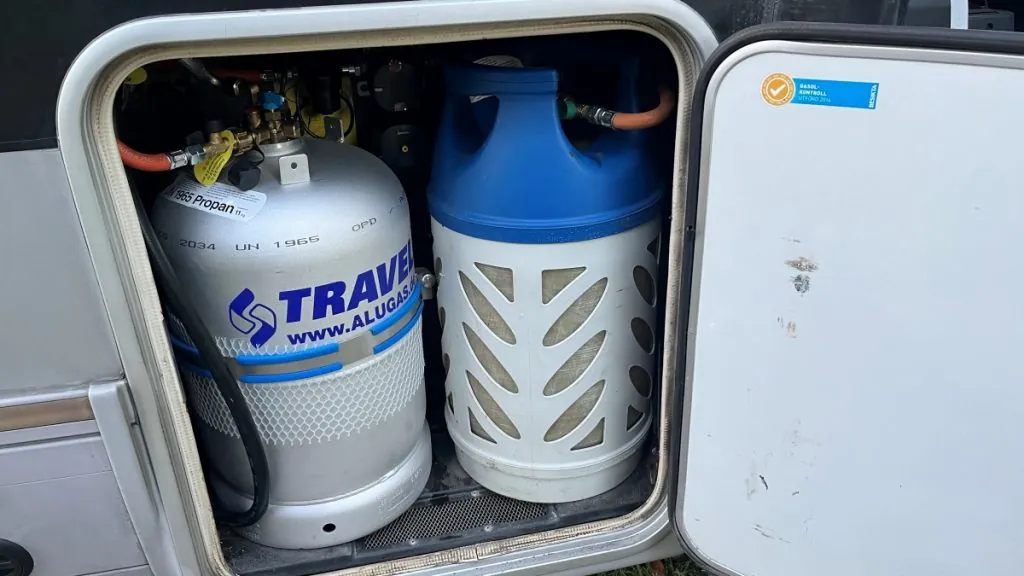
Changing standard Swedish LPG cylinders abroad is often difficult, as LPG systems differ. The best way may be to install a fixed tank for LPG/gasoil, which can be filled in many places in Europe.
If you don't have a fixed tank and are only travelling in Europe for a short period, or don't need much LPG, one option is to travel with full LPG cylinders, which you calculate can last for the whole period.
Where can you empty tanks and fill water?
In mainland France, we saw many places where you can empty grey and black water tanks and fill fresh water. We have not seen the same in Corsica. On the other hand, as free camping is limited here, you can take the opportunity to fill and empty at campsites and caravan parks.
Can you free camp with a motorhome in Corsica?
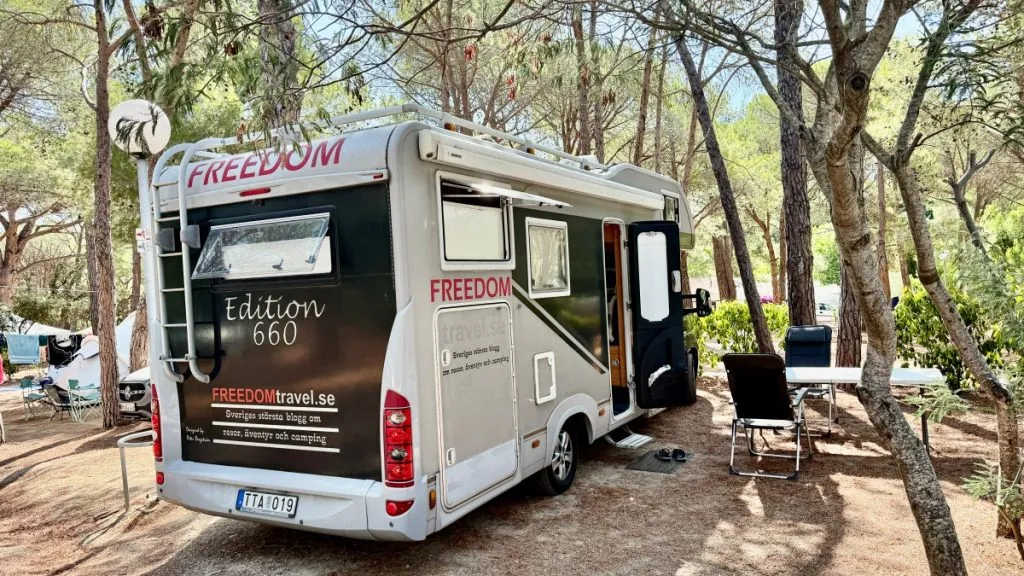
The rules on fricamping in Corsica are very restrictive, i.e. much more restrictive than in the rest of France. The basic rule is that it is forbidden to free camp in Corsica, and there is a risk of high fines. Note that it is particularly restrictive on the coast and in natural areas. In addition, free camping is often disliked by the local population.
However, sleeping overnight in a motorhome in a marked parking space should be allowed, as long as there are no prohibition signs and as long as you do not engage in camping behaviour (i.e. you must not unfold the awning or footboard or take out the outdoor furniture).
How do car parks work in Corsica?
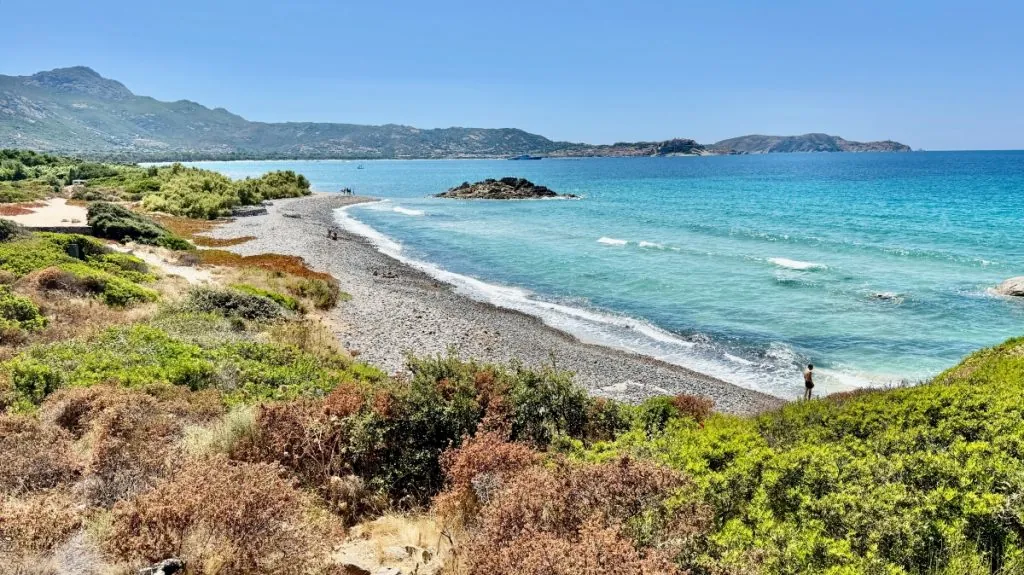
The caravanning culture is not very widespread in Corsica, but there are some simple places to stay that can be described as caravan sites or simple nature campsites. You can use these apps to find caravan parks:
- CamperContact
- Camping-Car Park
- Park4Night
What are the campsites like in Corsica?
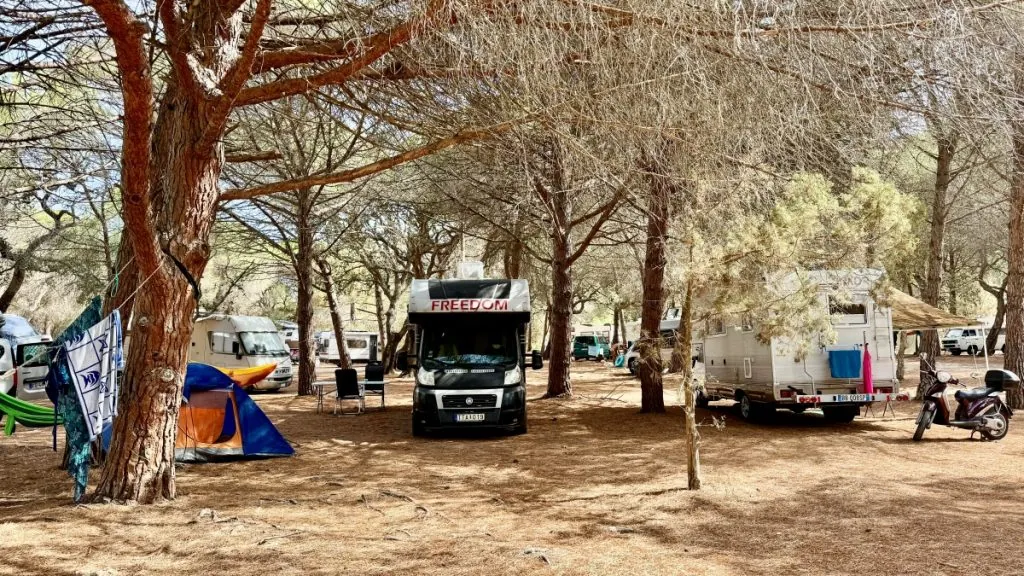
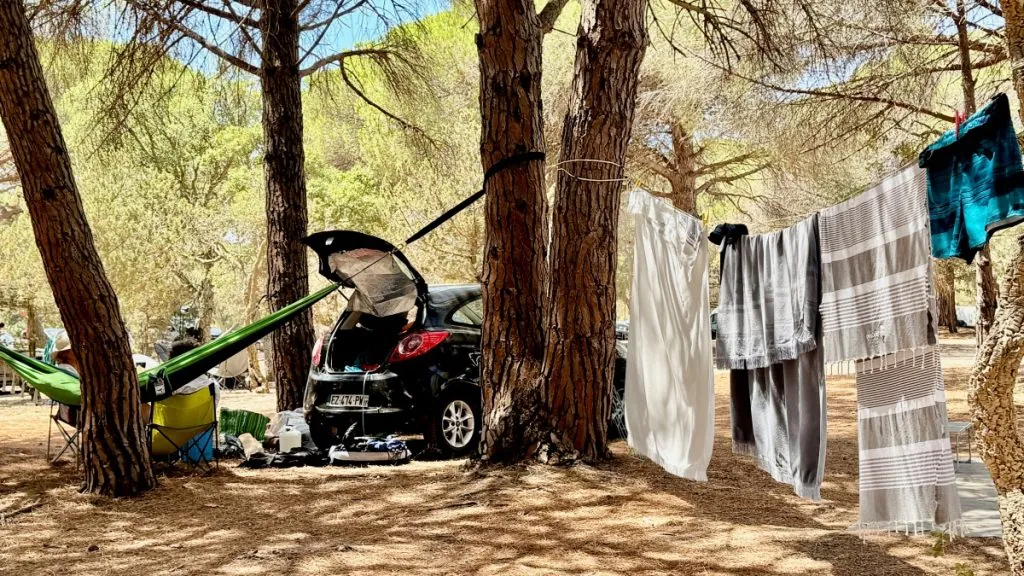
There are around 200 campsites in Corsica. Camping is very popular, and people camp with all kinds of vehicles and equipment: motorhomes (mainly smaller ones), caravans, campervans, vans, small camping cars, cars with roof tents, large or small tents, hammocks and so on.
Many campsites in Corsica are scenic. Some are more organised, with marked pitches, while others are more "wild", where you are welcome to set up anywhere you like.
During our motorhome trip to Corsica (July 2025), we have not pre-booked a camping pitch once, and it has always worked out. Most of the time there have been plenty of places, and in a few cases there have only been a few places left. On one occasion we have been offered a 'spare pitch' outside the usual places.

What are the costs of pitches and campsites in Corsica?
It is difficult to give a general answer on the price of pitches and campsites, as it varies a lot, depending on the level of service, location, season and other factors. During this trip, in July 2025, we have paid between €10/day (simple pitch/natural campsite) and €54/day (well-organised campsite with many activities).
Can you manage in English?
We don't speak French or Italian, so yes, you can get by in English. In Corsica, Corsican (closely related to Italian) and French are spoken. We find that most people we meet speak either decent or good English, especially younger people and those working in the tourism sector.
Sometimes we meet people who don't speak English or who only know a few words, but then you can usually smile and gesticulate a little. You don't need to speak French to travel by motorhome in Corsica!
What do you need to consider in terms of safety?
Corsica is generally a very safe and secure place, but it is of course always wise to check the current security situation when visiting another country. You can find up-to-date information via the Embassy's travel information on France or by downloading the "UD Resklar" app.
To protect yourself from theft and burglary, it is good to think about where you park your motorhome and to be careful with your valuables. You can also choose, for example, to get an alarm for your motorhome and good locks for your bicycles. Don't forget to check your travel insurance (home insurance) and motorhome insurance.
What is available in shops and restaurants?
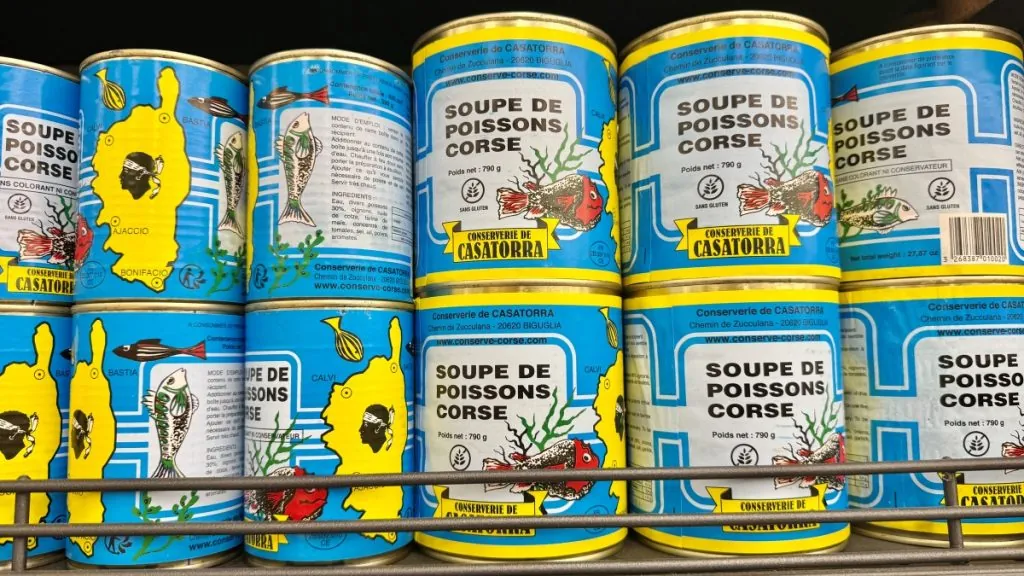
The range of products in the larger supermarkets is good and reminds you of what it is like to shop in French supermarkets. Please note that Lidl is not present in Corsica and that in some parts of the island you may be directed to smaller shops, where the range of products is more limited and prices significantly higher. There are also often shelves with local specialities, such as wines, cheeses, local fish soup and more.
Restaurants offer seafood (Moules frites is common) and traditional French 3-course menus. Some restaurants also serve dishes with wild boar.
What's not to miss when travelling by motorhome in Corsica?
There is a lot to see and do when traveling by motorhome in Corsica! We can highly recommend visiting:
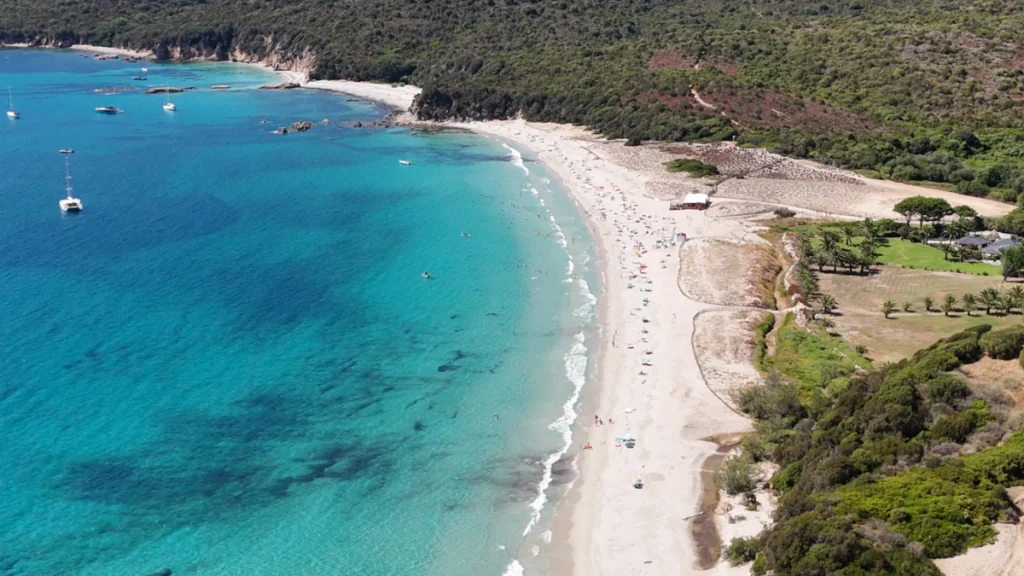
In addition, there are many fantastic beaches! You will find all our tips for Corsica here.
You might also like:
 Travelling by motorhome in France - everything you need to know
 Ferry from Nice to Corsica - our experience with Corsica Ferries
 Things to do in Calvi, Corsica - 15 tips for a holiday favourite
 Things to do in Porto-Vecchio, Corsica - 16 tips
 Sperone beaches at Bonifacio - canoeing in southern Corsica
 What to do in Bonifacio, Corsica - our top 15 tips



 English (UK)
 Svenska
BP says:
A whole "tip box" for all those who have a motorhome or caravan and intend to go to Corsica.
The pictures you have shown are absolutely wonderful and considering that you can even buy Corsican fish soup in a can ...:-)
23 July 2025 - 20:14