


Writer: Helena Bergström
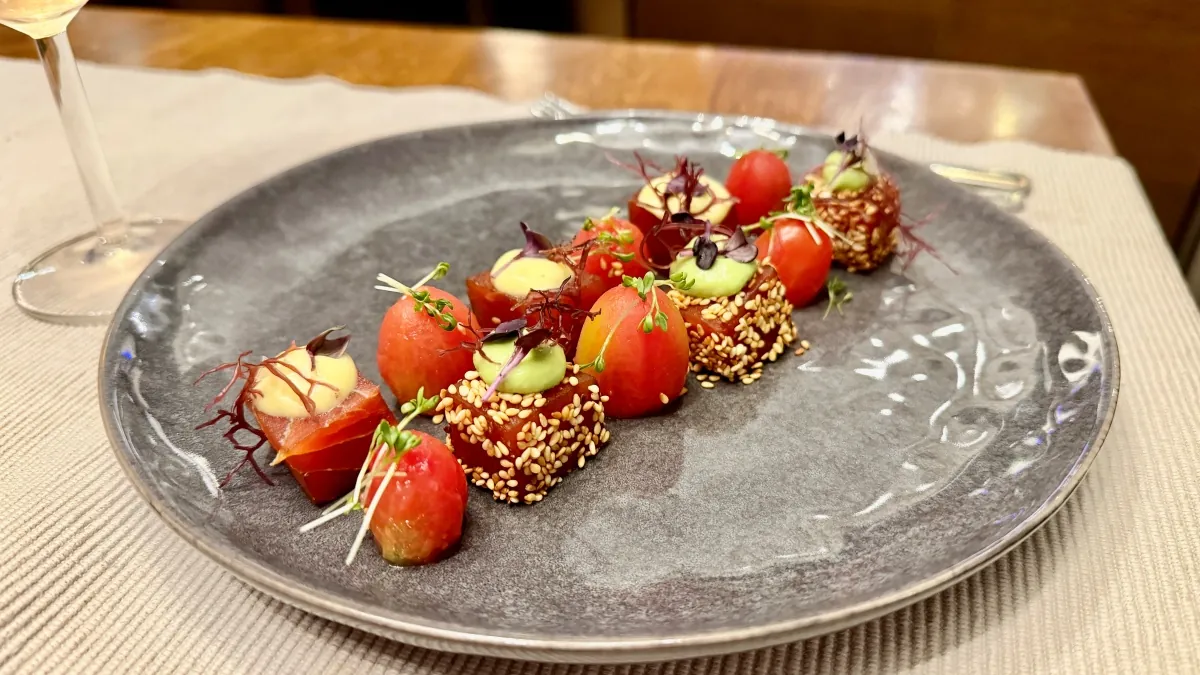
What do you do when you want to relax with a hobby? Peter watches cooking videos on YouTube and then spends hours in the kitchen... Right now, it's all about fine dining at home. Here are Peter's best tips for those of you who also want to experiment with purées, tweezers and decorative plating!
 Tweet
 Share
 Share
 Pin
 Share
 Share
Table of contents
Fine dining at home
So, what do we mean by fine dining at home? Well, Peter is inspired by the kind of meals you can get at Michelin-starred restaurants and other fine establishments. Some weekend evenings, when he has time, he stands in the kitchen to tinker and experiment... Peter is neither a chef nor an expert in cooking – he just thinks it's fun to be creative and try new things in the kitchen. Here are his best tips!
1. Find inspiration online
Peter finds inspiration for his cooking experiments on the Internet. He primarily watches YouTube videos, and his favourite is Chief Majk, which shows how to cook fine dining at home.

2. Review the equipment
Of course, you don't need to buy lots of new, expensive equipment to experiment with cooking, but it can still be worth reviewing the equipment in your kitchen. Peter has bought a blender/mixer, as we didn't have one before, as well as some plastic bottles for storing purées and sauces. He already had a sous vide, which has now come in very handy.
Peter has also been longing for new, colourful tableware for a long time, and during Black Week we found some really affordable plates at Åhléns, so we jumped at the chance. That's why there are different plates in different pictures!

3. Utilise potatoes and root vegetables in a variety of ways
Peter notes that potatoes are a common source of carbohydrates in many fine dining recipes. Potatoes are a great ingredient that can be used in many ways, for mashed potatoes, potato cakes and a thousand other innovative potato dishes.
Root vegetables are also used fresh, in the form of carrots, beetroot and parsnips, for example. Root vegetables are often used in several ways at the same time, for example both as a purée and as a cooked side dish.



4. Use vegetables in many ways
In addition to potatoes and other root vegetables, vegetables play a major role in fine dining cuisine. These can be both very ”basic” vegetables, such as cabbage and leeks, and slightly more exclusive vegetables such as asparagus and Asian mushrooms.

Vegetables are often used in more than one way. You might use one part of the vegetable to make a vegetable purée, while another part of the vegetable can be chopped, cooked and served as a side dish.

Peter says that vegetable purées often contain a large amount of pure vegetable ingredients and only small amounts of cream. In other words, it feels like a nutritious and healthy flavouring, and we save any leftovers in bottles in the fridge to use in other meals.

5. The ingredients don't have to be ”luxurious” – but they do need to be carefully prepared.
One might think that fine dining food must be very exclusive, but Peter has often used relatively common ingredients, such as chicken, turkey or salmon. Instead, the focus is on preparing the ingredients with care, which in our case has often been done by Peter using sous vide.


6. Be creative with the layout
A big focus is on being creative with the presentation! When Peter cooks fine dining at home, he spends a lot of time arranging the food nicely and decorating it with small dollops of vegetable purée and small sprigs of vegetables or herbs. How should the food be arranged? Well, that's a matter of taste... just try it out!


7. Bring inspiration to everyday meals
Last but not least... why not bring inspiration to everyday meals? When Peter recently cooked meatballs and mashed potatoes, it turned into a completely new approach …

Do you like experimenting with fine dining at home?
Do you like experimenting with fine dining at home? Do you like cooking? Or going to restaurants?
You might also like:
 3 simple and delicious casseroles with stir-fries
 Luxurious seafood buffet at home – tips, menu and inspiration
 Homemade meatballs with cream sauce and mashed potatoes
 Cheese and charcuterie tray - tips for a luxurious party
 Luxury food on the cheap - our top tips





 English (UK)
 Svenska
Eval8 says:
It looks so lovely and delicious!
I never make such beautiful arrangements, but it would certainly be fun to try.
Happy Wednesday!
17 December 2025 - 8:10
Helena says:
Of course it can be fun to experiment! And I think it's fun to eat and photograph it all 🙂 Have a great day!
17 December 2025 - 17:41
Anna i Portugal says:
Food is enjoyable! I don't have the patience to arrange the presentation; I'm hungry when the food is ready. Peter clearly has a knack for it; perhaps he would do well on MasterChef? Have a pleasant day!
17 December 2025 - 9:45
Helena says:
Of course it's fun! I know you can cook both beautiful and delicious meals too! He's probably watched MasterChef quite a bit, but I think he sticks to cooking as a hobby at home... 🙂
17 December 2025 - 17:43
Hannas krypin says:
What a lovely post. I hadn't thought about experimenting like this at home. It certainly looks both nice and tasty.
17 December 2025 - 10:55
Helena says:
Yes, this has been, and is, a fun experiment! Have a great day!
17 December 2025 - 17:44
bmlarsreseblogg says:
Even though we don't exactly engage in fine dining, we enjoy cooking good food and presenting it nicely. Our sous vide isn't in the motorhome, but it's great for cooking food to the perfect temperature. What's more, everything else can be prepared while the meat or fish is left to cook. The tuna looks divine. We'll have to try that sometime.
17 December 2025 - 12:46
Helena says:
Food cooked sous vide is absolutely fantastic! 🙂
17 December 2025 - 17:44
Ditte says:
How exciting! And delicious! We love to cook good food, but due to my back problems, I have to sit in the kitchen while the food is cooking, so many steps have had to be omitted. But we always buy good quality ingredients. I usually buy meat and fish and shellfish at Hötorgshallen or Östermalmshallen, and sometimes at a well-stocked ICA supermarket with manual checkout. And good ingredients really do make a big difference.
Both daughters are very good at cooking, and one of them is probably almost as good as Peter. But there isn't always time. It takes time to cook everything from scratch.
Perfect for enjoying delicious food at home.
At Franzén, a tasting menu costs around 5,500 Swedish kronor, plus a drinks package costing at least 3,500-6,000 Swedish kronor. It's certainly an experience, but an expensive one. (So between 10,000-15,000 Swedish kronor per person, depending on extras and coffee. .)
17 December 2025 - 14:15
Helena says:
Thank you for your comment, Ditte! Yes, I'm looking forward to trying this type of food at home. We have friends who have eaten at Franzén, so we understand that it's both fantastic and quite expensive. We won't be visiting there in the foreseeable future, so we'll continue here at home 🙂
17 December 2025 - 17:46
BP says:
How lucky you are, Helena :-) A master chef who not only cooks food for the stomach but also creates dishes that are a feast for the eyes. Peter's creations are pure works of art. He should sign up for Sweden's Master Chef.
I don't like cooking, so I often order food from restaurants. It's usually nicely presented, but not always.
In general, I think it's extremely important to let your eyes eat too. Because if it's nicely presented, you'll forgive any ”flavour mistakes”.
17 December 2025 - 18:06
JoY says:
Superbly presented, and it's clear that Peter enjoys cooking. We both cook and enjoy it, but we don't present our dishes quite so beautifully. Jakob has mentioned sous vide, but we haven't tried it yet.
17 December 2025 - 20:32
Lena - gott för själen says:
Oh, my God, what dishes he fixes! What a luxury to have such a chef at home 🙂
Hug Lena
02 February 2026 - 13:06