

Writer: Helena Bergström
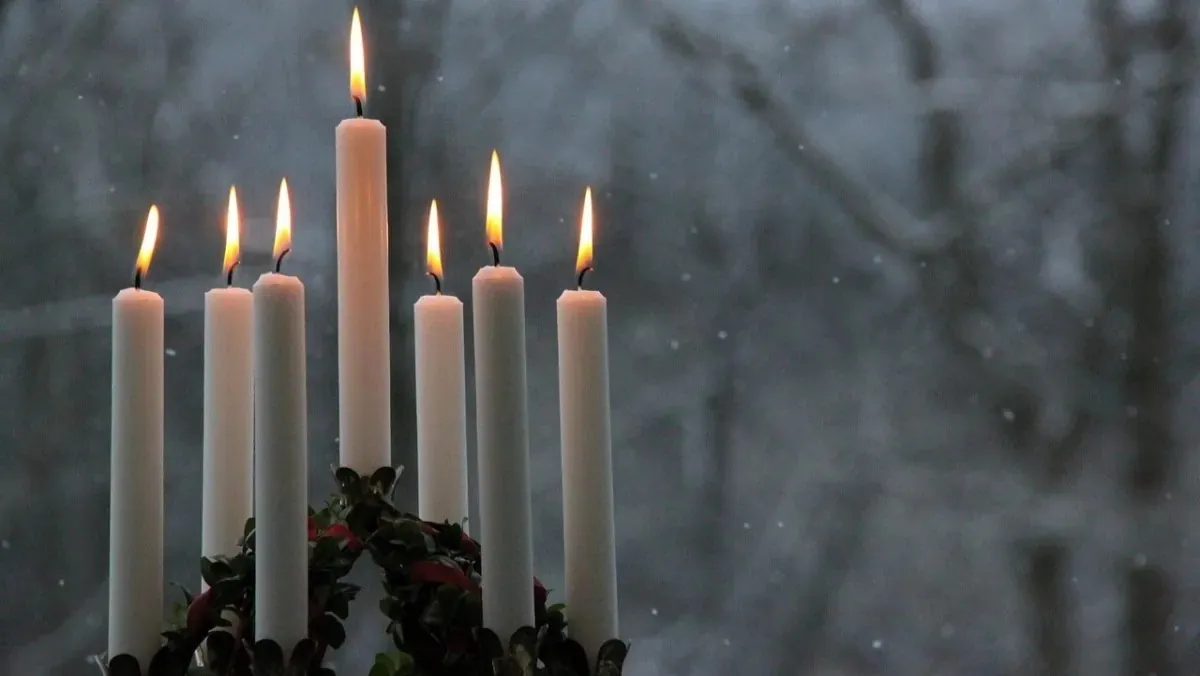
Every year on 13 December, Sweden is filled with candlelight, white robes and familiar melodies. For many, Lucia is associated with childhood memories, school performances and early mornings in front of the television. But how old is this tradition really – and how much has it changed? And above all... what will Lucia celebrations look like in the future?
 Tweet
 Share
 Share
 Pin
 Share
 Share
Table of contents
Traditions – and how they change
We humans like to think that ”this is how it has always been, and this is how it will always be,” but that is rarely the case. Quite the contrary, one might say. Change is the only constant. But in the midst of this eternal forward movement, we are quite good at holding on to our traditions in some form... and that's fine!


Lucia in the past – myths, darkness and light
Long before Lucia processions and saffron-scented buns, Lucia was a night to be feared. In rural Sweden, Lucia night marked the longest night of the year – a time when supernatural beings were said to be on the move.
It was not until the 19th century that the Lucia celebrations we recognise today began to take shape – initially among upper-class families, where a woman or girl would dress in white and wear a crown of candles. Skansen eventually helped to carry on the tradition and make it known to the general public.

Lucia now – a changing tradition
Today, Lucia is both a tradition and a reflection of our times. The celebration has moved from churches to schools, television sofas and social media. Some phenomena that were considered completely normal a few decades ago – such as choosing Lucia through beauty contests in daily newspapers – feel quite foreign today. Battery-powered lights, instead of candles, may also be considered a somewhat later invention. Change does not have to be a bad thing, but can be necessary for a tradition to be kept alive in a new context.
One thing that shows how important the Lucia celebrations are to us is the heated debates that arise every year at the beginning of December. Can boys be Lucia? Are gingerbread men allowed in the Lucia procession? Should parents be invited to the preschool's Lucia celebrations, or not?
There are many issues on which opinions may differ, but most people seem to agree that we want to preserve tradition in one way or another. It's simply nice to have candles, community and a break from the winter darkness. And who doesn't love saffron and lussekatter?


Lucia in the future – what happens next?
What will Lucia look like in 20, 50 or 100 years? Perhaps the holiday will be celebrated more locally and personally, where anyone who wants to can wear a crown – regardless of gender or age? Perhaps Lucia will become less of a performance and more of a symbol: of thoughtfulness, tranquillity and light in a dark or troubled time?
It is difficult to know how the future will unfold, but traditions that survive are often those that are allowed to change. Lucia is a celebration that has been in constant flux ever since the first myths about the long, dark Lucia night. Because the tradition is so beloved, because the debates are so heated every year, and because the celebration is constantly adapting to new circumstances, we feel confident that the tradition will live on.

Lucia has always reflected her time, and as long as we long for light in the darkness, the celebration will likely remain, in some form.

What does Lucia mean to you?
How do you celebrate Saint Lucia's Day? What does the holiday mean to you? How do you think Saint Lucia's Day will evolve in the future?
You might also like:
 Christmas rhymes - 25 tips for Christmas presents with rhymes
 Celebrate New Year's abroad - 10 memorable New Year's on trips


 Aunt Anna and death - All Saints' Day and cemeteries of the world
 Christmas trees through the ages – Aunt Anna and the Christmas trees
 How New Year is celebrated around the world – 15 exciting New Year's traditions



 English (UK)
 Svenska
Madde says:
It has definitely changed. I am so old that Lucia is a big weekend for me. I love watching the Lucia procession, and I miss the Lucia celebrations at school/nursery. My daughter was at the celebration at my son's nursery. He loves to sing, but he became a little shy and sat on the teacher's lap, while a bunch of girls gave it their all. I suppose it's all right.
13 December 2025 - 6:16
Helena says:
I also think Lucia is an important holiday. Don't you think it is for younger people? Sure, it can be a little embarrassing, but it would be nice if it could be adapted so that it works for everyone...!
15 December 2025 - 19:13
Eval8 says:
We were at church yesterday for Lucia. B5 was Santa Claus. There were gingerbread men and star boys. However, only two of the star boys had cones on their heads. I'm so old that I get hung up on things like that.
Happy Lucia Day!
13 December 2025 - 9:38
Helena says:
I think it's great to have real star boys! Even though I can accept that everyone can be whatever they want, I still think this is the best 🙂
15 December 2025 - 19:14
BP says:
I don't celebrate either of these things, but I saw some examples from three smaller towns in Sweden, not Stockholm, and they celebrated as they always have. Or rather, as I have always understood them to celebrate. Not even the candles on Lucia's head had been replaced – sooo.
Oh no, a boy can't be Lucia, he's Lucius ;-) And star boys and gingerbread men absolutely must be included in the procession...
13 December 2025 - 18:31
Helena says:
It's great that the tradition lives on! 🙂 I must also say that I love the fact that there is a bit of debate every year, because it means that the tradition is important! Personally, I think that a female Lucia is traditional, and nice in a traditional Lucia procession, but if someone wants to do a slightly more untraditional version of the Lucia procession, I have no objection 😉
15 December 2025 - 19:16
Rosor och ruiner says:
Lucia is a lovely celebration, I really like it! When the children were younger, it was a joy to watch their Lucia procession. They were really professional at secondary school. And when they sang for their grandmother when they were little, it was so cute!
I always want to watch Lucia Morning on television; it's cosy and builds up the Christmas spirit! If you didn't see this year's broadcast on SVT, I can recommend it; it was recorded in Visby!
Hugs Gunilla
14 December 2025 - 17:50
Helena says:
Lucia is certainly a wonderful celebration, I agree! How lovely to be recording in Visby! All the best!
15 December 2025 - 19:18