



Writer: Helena Bergström
Updated: September 2026 | New Year's is celebrated in many parts of the world, but the way to welcome the new year can look very different. In some places, people eat grapes at breakneck speed, in others they jump out of a chair, predict the future or take a walk with a suitcase. Here we offer 15 exciting New Year's traditions from around the world - and also tell you about some of our own New Year's celebrations abroad.
 Tweet
 Share
 Share
 Pin
 Share
 Share
For many, New Year's Eve is a night of celebration, good food, and anticipation for the new year. At the same time, there are many traditions and beliefs about how to attract luck, money, love, or travel in the coming year.
Some customs are very old, others much younger, and the extent to which they are actually practiced varies of course between different parts of a country, families and generations. But together they say a lot about our human desire to leave the old behind us – and hope for something good ahead.
READ ALSO: 7 New Year's dishes from around the world that bring good luck and fortune

Table of contents
1. In Spain, people eat twelve grapes on the stroke of midnight.
If you're celebrating New Year's in Spain, you have to be quick. At midnight, it's tradition to eat twelve grapes, one for each hour. If you complete all twelve, it is said, according to tradition, to bring good luck and prosperity during the twelve months of the year.
The celebration at Puerta del Sol in Madrid is particularly famous, with thousands of people gathering in front of the clock. The chimes are also broadcast on television so that Spaniards around the country can try to get their grapes in time. It may sound simple – until you realise how fast the clock strikes…

2. In Denmark, people jump into the new year
In Denmark you can literally jump into the new year. As midnight approaches, people climb onto a chair or sofa and jump down when the clock strikes twelve. This is supposed to bring luck in the coming year.

Another Danish New Year's classic is wreath cake, a tall almond paste pastry that is often served with bubbly. But it's still the jumping that gets us hooked. What if New Year's resolutions could be accomplished just as easily?

3. In Finland, people predict the future in molten metal
Do you want to know what to expect in the coming year? In Finland, an old New Year's tradition has been to melt small metal horseshoes and pour the melted mass into cold water.

The metal quickly solidifies into a strange figure, and then it's up to the imagination. The shape – and sometimes the shadow it casts – is interpreted as a sign of what the future holds.
The tradition is often associated with "New Year's tin", but since tin figures could previously contain lead, other and safer materials are now used.

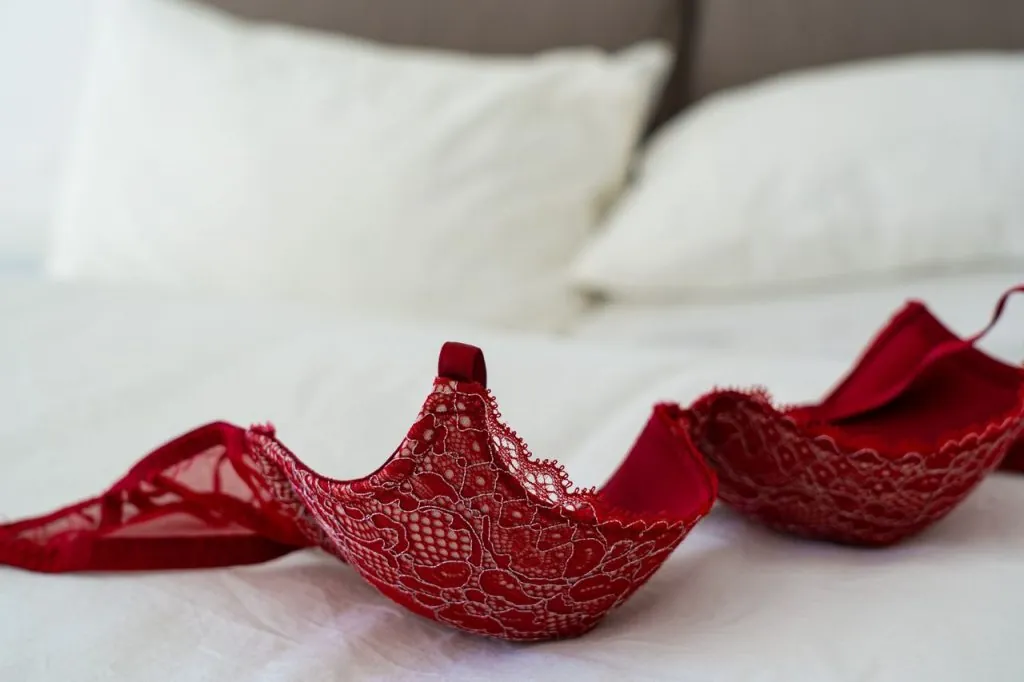
4. In Italy, red underwear is said to bring luck.
Thinking about your New Year's outfit? In Italy, what you have can be just as important under Red is associated with happiness and prosperity, among other things, and a well-known Italian New Year's tradition is therefore to wear something red – not least red underwear – on New Year's Eve.
There are also different variations on the rules regarding the garments. But we may not need to go that far. We will content ourselves with stating that red underwear can be an alternative to four-leaf clovers.
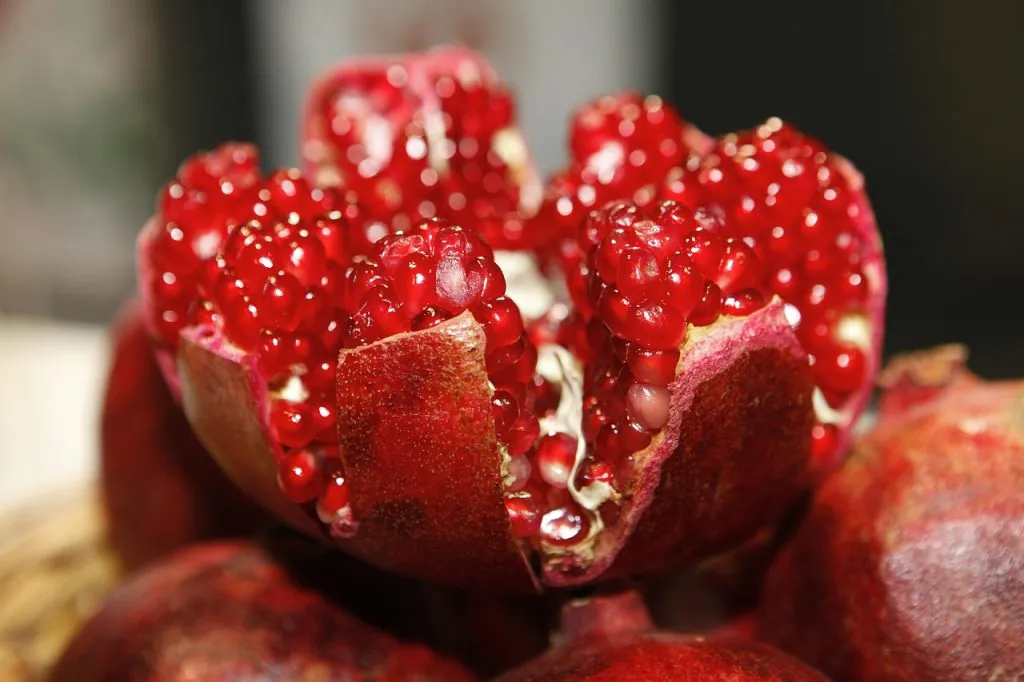
5. In Greece, people crush pomegranates for good luck.
The pomegranate has long symbolized fertility, abundance and happiness in Greece. In connection with the New Year, there is a tradition where a pomegranate is crushed on the ground at the entrance to the house. The more seeds that are scattered, the better luck the family is said to expect in the coming year.
The pomegranate is also used as a decoration and symbol of good luck in Greek homes. This is much more than just an unusually messy way to open a fruit.
6. In Scotland, the first visitors of the year play a special role
The Scottish New Year celebration is called Hogmanay, and one of the most famous traditions is first-footing. It's about who is the first to step over the threshold after midnight.
Traditionally, a tall, dark-haired man was considered particularly auspicious, and the first visitor of the year would bring symbolic gifts such as coal, whisky or shortbread. The gifts were said to provide warmth, food and good cheer throughout the year.
Hogmanay is also associated with bonfires, torchlight processions, fireworks and of course Auld Lang Syne, the song that is now sung at New Year's far beyond the borders of Scotland.
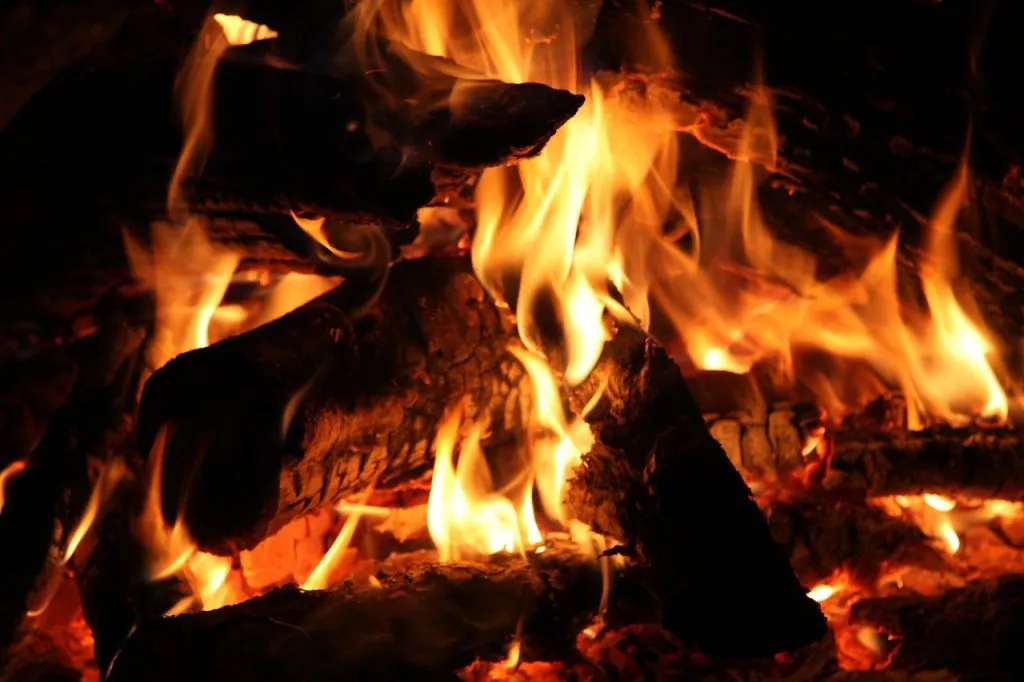
7. In Ecuador they burn the old year
In Ecuador, people can say goodbye to the old year in a much more tangible way. Before the New Year, figures and dolls called old years – ”old years”. They can represent everything from famous people and politicians to cartoon characters or other people and events that have shaped the year.
At midnight, the figures are burned. The symbolism is easy to understand: the old year literally goes up in smoke and you can start anew.
8. In Brazil, people jump over seven waves
On Brazilian beaches, New Year's Eve can mean white clothes, flowers, and people wading into the ocean.
A well-known tradition is that jump over seven waves, sometimes with a wish or thought for each wave. The tradition has connections to Afro-Brazilian religions and the sea goddess/orixán Iemanjá, although wave jumping is now also practiced by people without a religious affiliation.
Especially in Rio de Janeiro, the beach is a central location for New Year's celebrations. And doesn't it sound quite wonderful to start the year barefoot in the sea?

9. In Colombia, a suitcase can attract new trips
This New Year's tradition feels particularly relevant to us at FREEDOMtravel. In Colombia, there is a folk tradition that involves taking a suitcase and take it for a spin at the turn of the year. The idea is that this will provide a coming year filled with travel and adventure.
There are different variations. Sometimes you should walk around the block and sometimes a shorter trip is enough. Does it work? No idea. But of all the New Year's rituals on this list, this still feels like one we should consider trying!

10. In the Philippines, round fruits are served for prosperity
In the Philippines, shape plays a role when setting the New Year's table. Round shapes resemble coins and are therefore associated with money and prosperity.
A tradition is to set the table twelve round fruits, which can symbolize the twelve months of the year. For example, it can be oranges, apples, grapes and other more or less round fruits.
There are different variations on the number and exactly how the tradition is carried out, but the basic idea is the same: the new year should ideally be a year of good finances and prosperity.

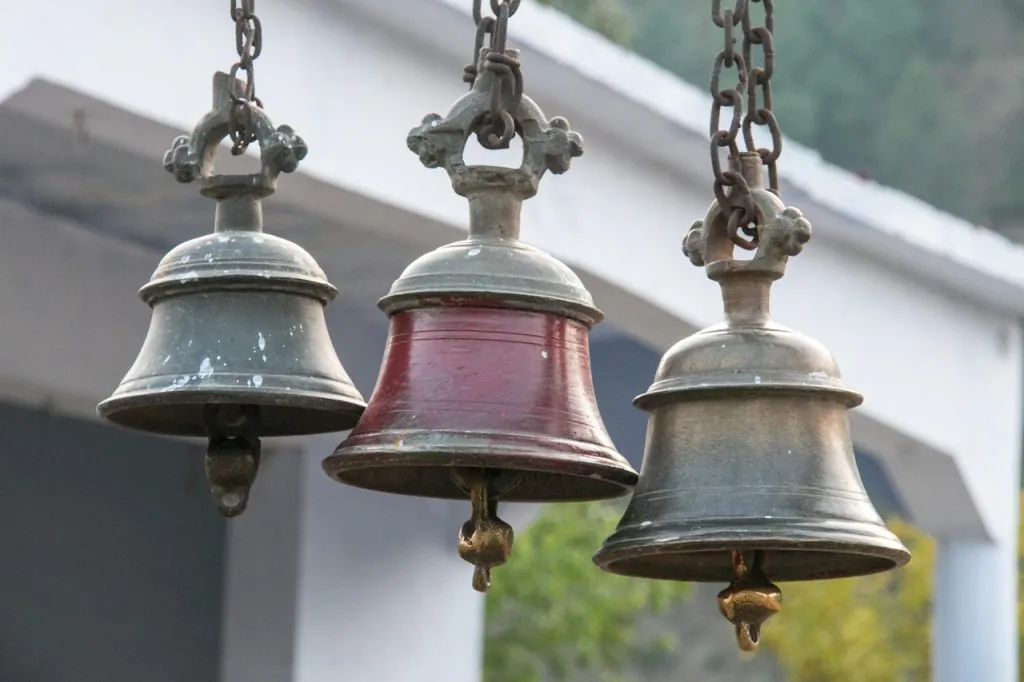
11. In Japan, temple bells ring 108 times
New Year doesn't have to be about big parties and fireworks. In Japan, there is a much more contemplative Buddhist tradition called Joya no kane.
On New Year's Eve, the bells at Buddhist temples ring together 108 times. In Buddhism, speech is linked to the human desires and worldly temptations that cause suffering.
The chimes thus become a way of cleansing oneself of the burdens of the old year and entering the new with a cleaner mind. A rather beautiful contrast to champagne corks and firecrackers.
12. In Romania, bears dance into the New Year
This is one of the most spectacular traditions on the list. In parts of northeastern Romania, especially in the Moldavia region, New Year's Eve is celebrated with bear dances, The Bear's Dance. Participants dress in bearskin or bear-like costumes and dance to loud drum beats.
The tradition has ancient roots and the bear has been attributed with strong symbolic properties. The dance is associated with, among other things, driving away evil forces and welcoming a new and prosperous year.
So it's not like all of Romania is filled with dancing bears on New Year's Eve - but in places where the tradition still lives on, it can be quite a spectacle.
13. In Chile, New Year can be celebrated among the dead
This tradition is particularly relevant in Talca in central Chile, so we shouldn't say that Chileans generally celebrate New Year's in the cemetery.
In Talca, families have been flocking to the city cemetery on New Year's Eve to pay their respects to deceased relatives since 1979. The tradition began with a family wanting to spend the midnight hour at the grave of a deceased family member and eventually developed into an established local custom.
The municipality now opens the cemetery especially on New Year's Eve, and many families come there to remember and welcome the new year with their dead relatives. A little sad perhaps – but also beautiful.
14. In Germany, a British valet is a New Year's tradition
”Same procedure as last year?” ”Same procedure as every year!” Do you recognize the lines? Then you may have seen Dinner for One, the short British comedy sketch about Miss Sophie and her increasingly drunken valet James.
The strange thing is that it has become a New Year's classic, especially in Germany and several other European countries - while many Britons were barely aware of it for a long time.
The sketch was recorded for German television in the 1960s and has been shown around New Year's for a long time. It's almost as if an old Swedish sketch suddenly turned out to be mandatory New Year's entertainment in the UK. And yes – the same procedure every year.
15. In Estonia, you can eat your way to strength for the New Year
We end with a tradition for the hungry. An old Estonian New Year tradition says that you should eat seven, nine or twelve times on New Year's Day. These numbers have been considered auspicious, and by eating several times one would gain the strength of the same number of people in the coming year.
Of course, this doesn't mean that today's Estonians sit around and stuff themselves with twelve full dinners every New Year. This is rather an older folk tradition and a fine example of how food, numbers, and beliefs about luck are often woven together around the turn of the year.

New Year can fall at completely different times of the year
So far we have mainly talked about New Year's Eve on December 31st. But it is easy to forget that New Year's Day doesn't always fall at the same time all over the world..
The Gregorian calendar is used internationally in large parts of the world, but other religious and traditional calendars also exist in parallel. Therefore, there are plenty of other occasions to wish a happy new year.
For example, the lunisolar New Year is celebrated in China and several other Asian countries and cultures, usually in January or February. The Persian New Year Nowruz falls around the spring equinox in March, while Songkran, the traditional Thai New Year, is celebrated in April.
The Jewish New Year Rosh Hashanah falls in the fall according to the Hebrew calendar. In other words, you can celebrate New Year much more often than once a year – if you really want to.

New Year around the world – here's how we celebrated ourselves
We have celebrated most of our New Year's at home in Sweden, but over the years there have also been quite a few New Year's celebrations on the road.
We have celebrated New Year's Eve in, among other things, New Zealand, Kenya, Ukraine, Hungary, Malaysia, Philippines, Portugal, Israel and Sri Lanka. And our New Year's abroad has really looked different.
We have celebrated on the beach in Malaysia and Sri Lanka, been part of a huge New Year's celebration in Kiev and experienced New Year's in places where the celebration didn't look anything like back home in Sweden.
That's perhaps what's so fun about celebrating New Year's while traveling. You know roughly what's going to happen – an old year is going to end and a new one is going to begin – but not quite. how it will happen.
And sometimes it's not particularly luxurious at all. One of our more unusual New Year's celebrations was in Israel, where the New Year's food consisted of fast food and Coca-Cola. Apparently, not all New Year's celebrations need to include lobster and champagne to be memorable.

Same New Year – but very different traditions
Twelve grapes, a suitcase, red underwear, 108 bells, seven waves or a dancing bear. New Year's traditions can look very different, but behind many of them are the same thoughts.
We want to leave something behind. We hope for happiness, health, love, money or new adventures. And we like to believe that the new year can be a little better than the old one.
We ourselves, of course, particularly like the Colombian idea of the suitcase. If running around the house with it is enough to guarantee a whole year of travel, it still feels like a pretty small effort.
What New Year's tradition would you most like to try? And have you celebrated New Year's in any other country?
You might also like:
 Celebrate New Year's abroad - 10 memorable New Year's on trips
 9 places associated with Lucia
 Aunt Anna and death - All Saints' Day and cemeteries of the world
 Christmas trees through the ages – Aunt Anna and the Christmas trees
 Lucia in the past, present and future – a tradition in constant change
 The Yule Goat, the Yule Witch and the Yule Cat – meet Europe's Christmas creatures



 English (UK)
 Svenska
Eval8 says:
This year, we're celebrating New Year's Eve at home, just the two of us.
Happy New Year 2026
30 December 2025 - 10:09
Helena says:
We will do the same this year. Wishing you a very Happy New Year!
30 December 2025 - 19:19
Jossu says:
A New Year's celebration in a summer-warm country in South America would have been nice right now.
I have celebrated New Year's Eve in Finland and Lebanon.
During New Year's Eve in Lebanon, I looked up at the sky and saw what I thought were fireworks. I was surprised that they never exploded, but then I learned that they weren't fireworks, but gunshots. People celebrated by shooting guns into the sky.
Shortly afterwards, I was standing on the balcony when shooting started, and the shots passed just a few metres away from me.
30 December 2025 - 11:12
Helena says:
Lebanon was a different place to celebrate New Year's Eve! Interesting what you're saying...!! Happy New Year!!
30 December 2025 - 19:20
BP says:
I LOVE posts like this, where you gather information about different customs in different countries, both in terms of the celebrations themselves and the food, which you wrote about the other day.
I have celebrated Christmas and New Year's Eve in England, the United States, Germany, France, Spain and Switzerland. In the United States, we stayed in a huge RV at a campsite in Florida, next door to Trump's Mar-a-Lago. A little trivia...
30 December 2025 - 19:07
Helena says:
Glad you like it! I'm fascinated by things like this, traditions around the world, so I can really get into it... 😉 You've managed to celebrate in quite a few places! Next door to Mar-a-Lago was a bit unexpected... Wishing you a really Happy New Year!!
30 December 2025 - 19:21
Nilla Tankebubblor says:
Happy New Year! What a lovely list. It's so strange that my daughter in Australia is celebrating New Year's Eve in the heat of summer, while we have snow and sub-zero temperatures. 🙂
3 January 2026 - 11:30