

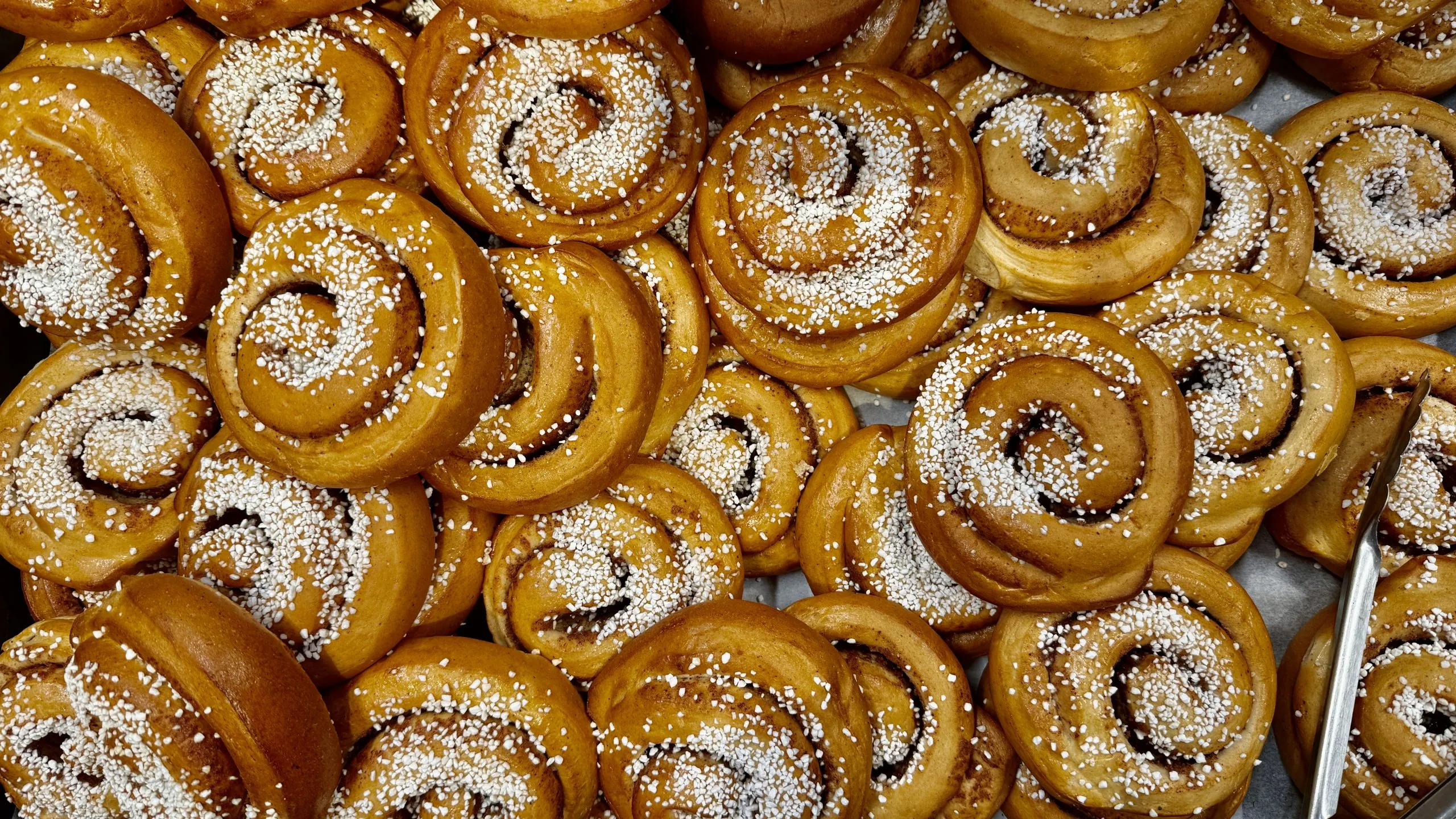

Writer: Peter Bergström
The cinnamon bun has followed us from childhood kitchens to cafes, work meetings and travels – and sometimes all the way to friends on the other side of the world. But how Swedish is it really, who came up with Cinnamon Bun Day and how did cinnamon from the other side of the world end up in perhaps our most beloved coffee bun? Here are 30 things about the cinnamon bun that made us see the little bun with completely new eyes.
 Tweet
Tweet Share
Share Share
Share Pin
Pin Share
Share Share
ShareTable of contents
1. Cinnamon is the bark of a tropical tree
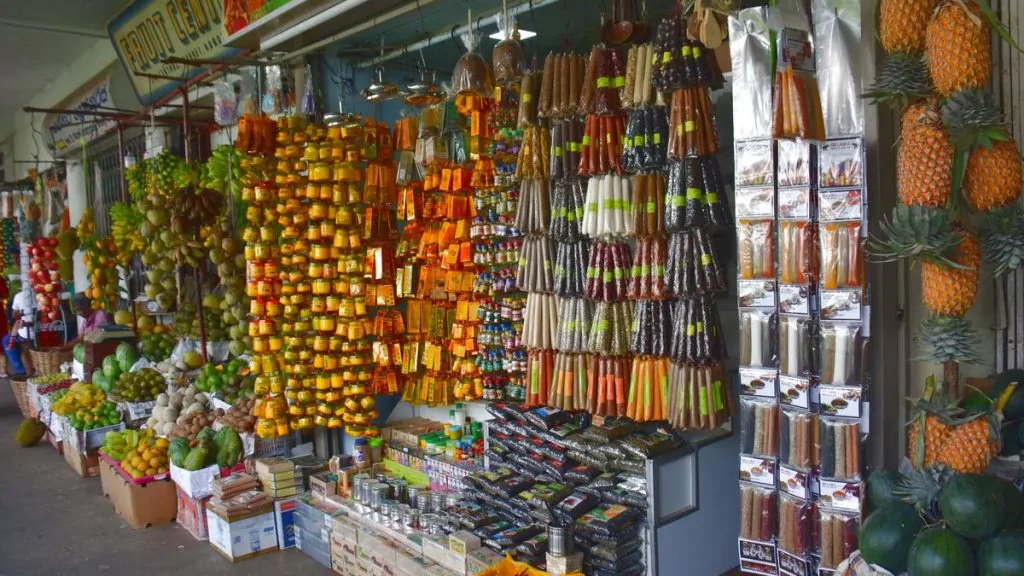
The brown powder in your cinnamon bun actually starts out as bark. Cinnamon comes from trees and shrubs in the genus Cinnamomum, and it is primarily the inner bark that is used as a spice.
Ceylon cinnamon is a tropical plant and can grow to be over 20 meters tall in its natural habitat. In commercial cultivation, however, it is kept much lower and bushier so that the bark can be harvested. So our entire Swedish fika classic actually starts with someone peeling a tree.
2. The word cinnamon roughly means ”small tube”
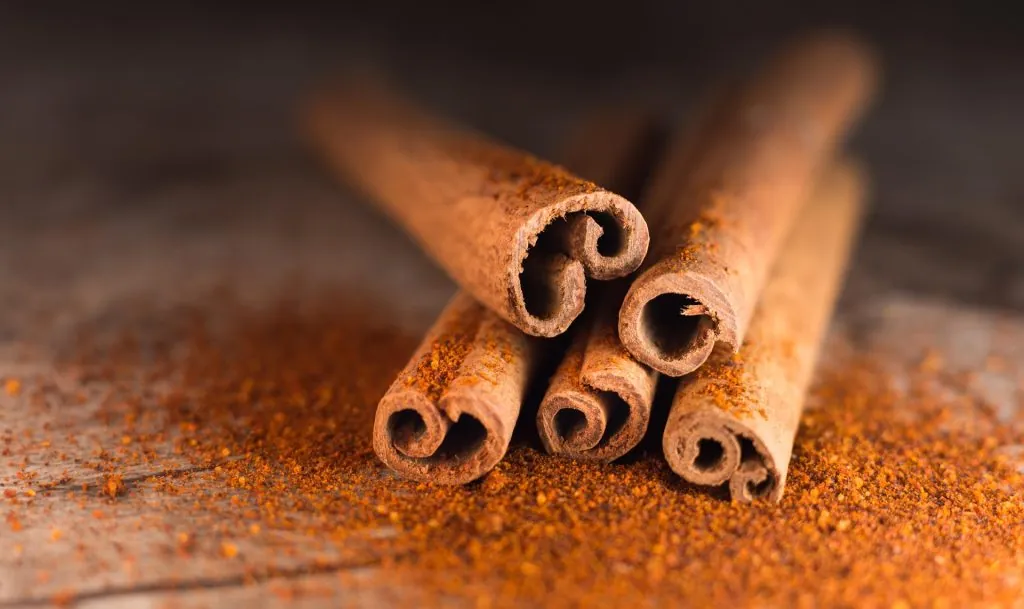
Even the name describes what the spice looks like. The Swedish word cinnamon has existed since Old Swedish and has come via German and French, among others. At the very back is Latin canna, which means pipe. The French diminutive form cinnamon means approximately small tube. If you look at a rolled up cinnamon stick, the name suddenly becomes very logical.
3. The history of cinnamon is thousands of years older than that of the cinnamon bun
The Swedish history of cinnamon buns is relatively young. The history of cinnamon is something completely different. Sri Lanka's Department of Cinnamon Development describes a history that can be traced back to around 1400 BC, although the clear written evidence specifically for Ceylon cinnamon is younger.
When we sprinkle cinnamon over the bun dough, we are using a spice with a history that began several thousand years before any Swede came up with the idea of rolling it into wheat dough.
4. Real cinnamon and cassia cinnamon are not the same thing
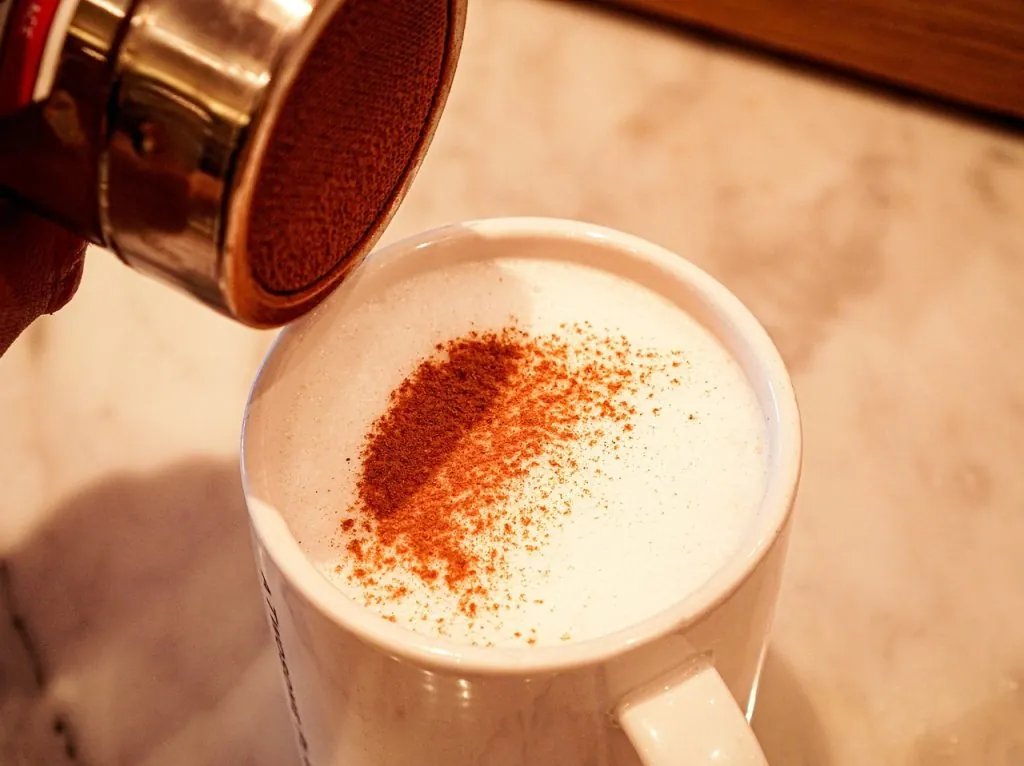
What we call cinnamon in everyday life can come from different species. Ceylon cinnamon, Cinnamomum verum, is often called real cinnamon, while cassia cinnamon, for example, comes from other species.

Ceylon cinnamon is primarily associated with Sri Lanka, while other commercial cinnamon varieties are produced in China, Indonesia and Vietnam, among others. Sri Lanka's own cinnamon authority distinguishes between four major commercial types. The taste, aroma and chemical content also differ between the varieties.

5. Cinnamon was used in Swedish bread several hundred years before the cinnamon bun
We think this is one of the more fun details. Food historian Richard Tellström dates cinnamon and cardamom in Swedish food culture to around the 16th and 17th centuries. Cinnamon was therefore used to flavor bread long before the modern cinnamon bun existed.

In other words, cinnamon had been waiting in Swedish kitchens for several hundred years before the rest of the ingredients and society were ready for the bun itself.
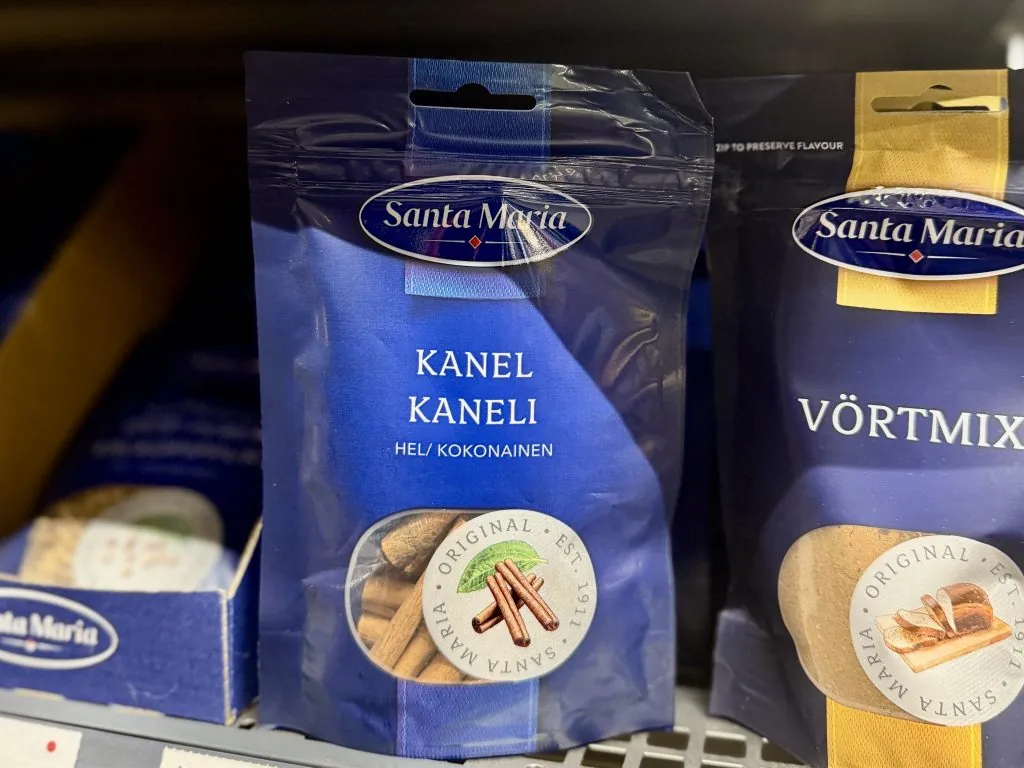
6. The ingredients of the cinnamon bun entered Swedish baking over different centuries
A modern cinnamon bun looks simple, but historically it is almost like a timeline in dough form. According to Richard Tellström, fine wheat bread was already available in the Middle Ages. Cinnamon and cardamom were introduced in the 16th and 17th centuries, butter in bread in the 17th century and sugar in bread in the 18th century. Industrial yeast only came in the 19th century.
It took several hundred years to assemble the parts that we today throw into the shopping cart in a few minutes.
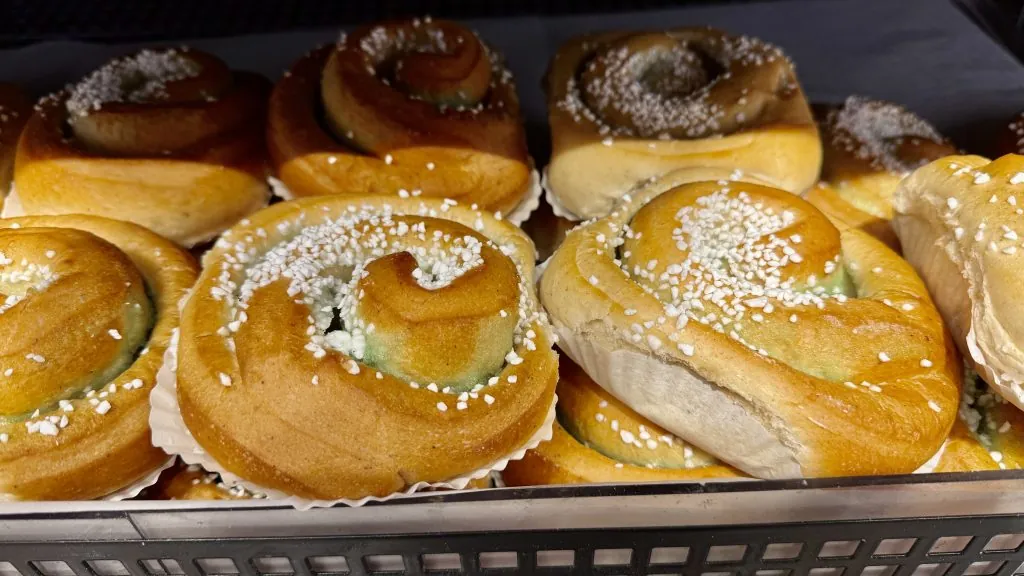
7. Before the 20th century, sweet and soft coffee bread was a luxury
Today, a cinnamon bun feels almost like the very definition of everyday coffee. Historically, the conditions were completely different.
Fine wheat flour, butter, sugar and imported spices cost money. Sweet and soft coffee bread was therefore for a long time mainly for the more affluent. It took industrialization, increased imports and growing prosperity before the combination we know as the cinnamon bun could become food for many. The everyday bun thus began as something considerably more luxurious.
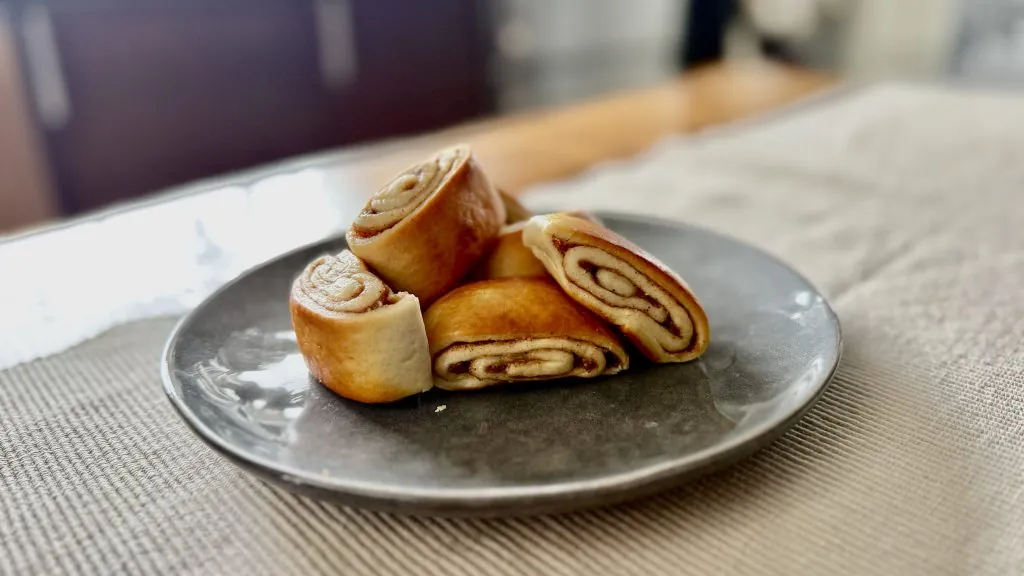
8. There is a record of the cinnamon bun from 1867
This is where the story gets a little tricky. Smaka Sverige states Northern Halland newspaper 1867 as the first time the cinnamon bun was written about. At the same time, other sources describe the history of the cinnamon bun as fairly unexplored and place the emergence of the modern bakery product in the 1920s.
We therefore think that 1867 is an exciting historical trace – but not proof that today's cinnamon bun looked and tasted exactly as it does now.
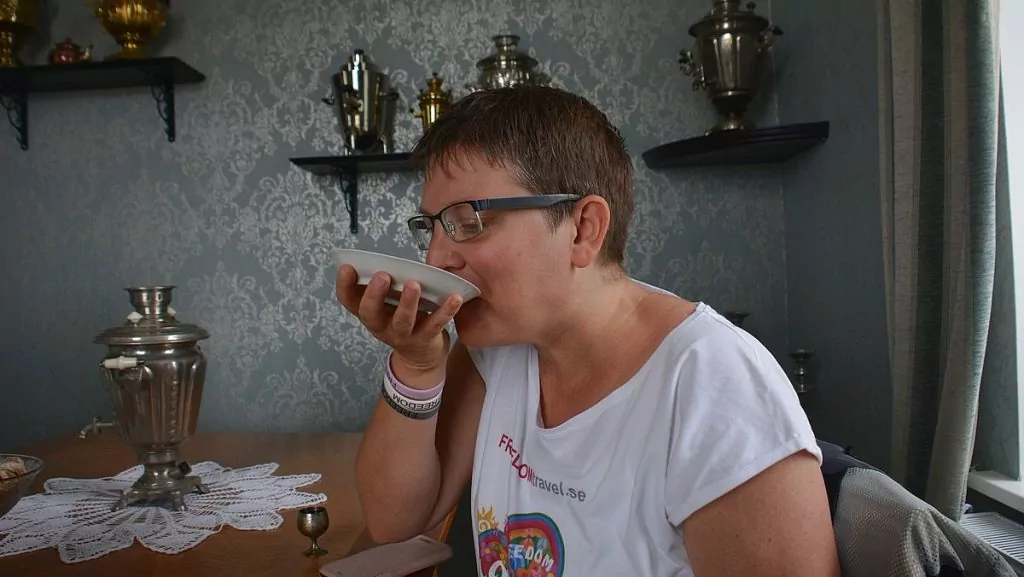
9. The end of World War I helped the cinnamon bun thrive
During World War I, there were shortages and restrictions on several raw materials. After the war, flour, sugar, and imported spices became easier to obtain.
It was also during the 1920s that the modern cinnamon bun began to appear more clearly. The Institute for Language and Folklore describes the period after the First World War as the time when many believe the bun appeared in earnest. After years of scarcity, both the raw materials and a longing for something a little more festive were available.
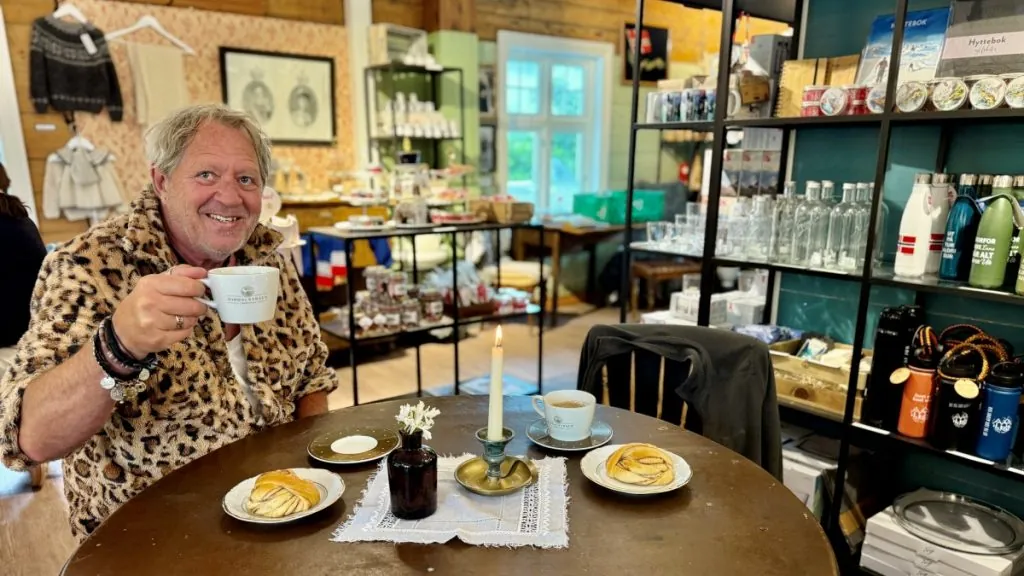
10. A recipe from 1924 is similar to today's cinnamon bun – but lacks the butter in the filling
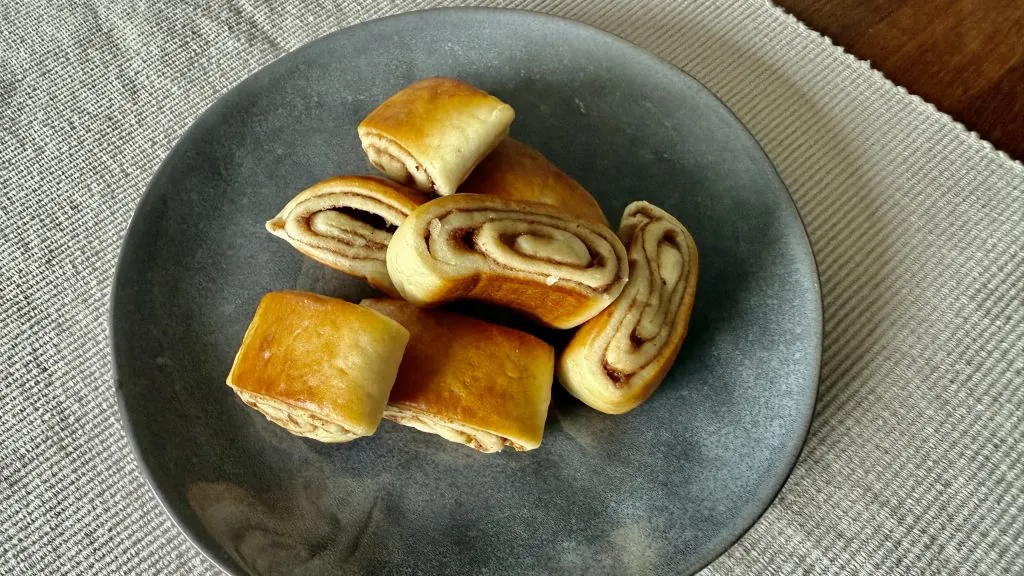
Here we found a real little gem. In The Housewife's 1000 Recipes There is a recipe for ”snackors” from 1924. The wheat dough is rolled out, sprinkled with cinnamon and sugar, rolled up, cut into slices and brushed with egg before baking. The construction feels very familiar to a modern bun eater.
But according to the review of the cookbook, one thing is missing from the filling: butter. Cinnamon and sugar – yes. But no buttery slush between the rounds. The Roaring 20s apparently still had room for improvement.
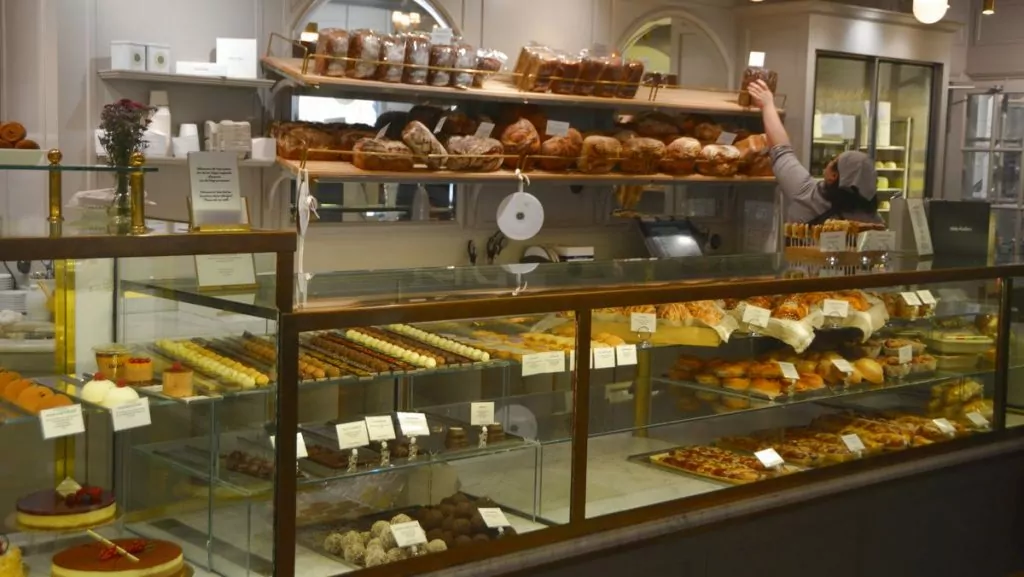
11. The cinnamon bun didn't really catch on until the 1950s.
Just because a product exists does not mean it is in every kitchen. Several sources point to 1950s as the cinnamon bun's real popular breakthrough. The economy had improved, raw materials were more available and home baking increased. The cinnamon bun began to become a natural feature on Swedish coffee tables.
This is where the history of the cinnamon bun begins to seriously transition from bakery history to family history.
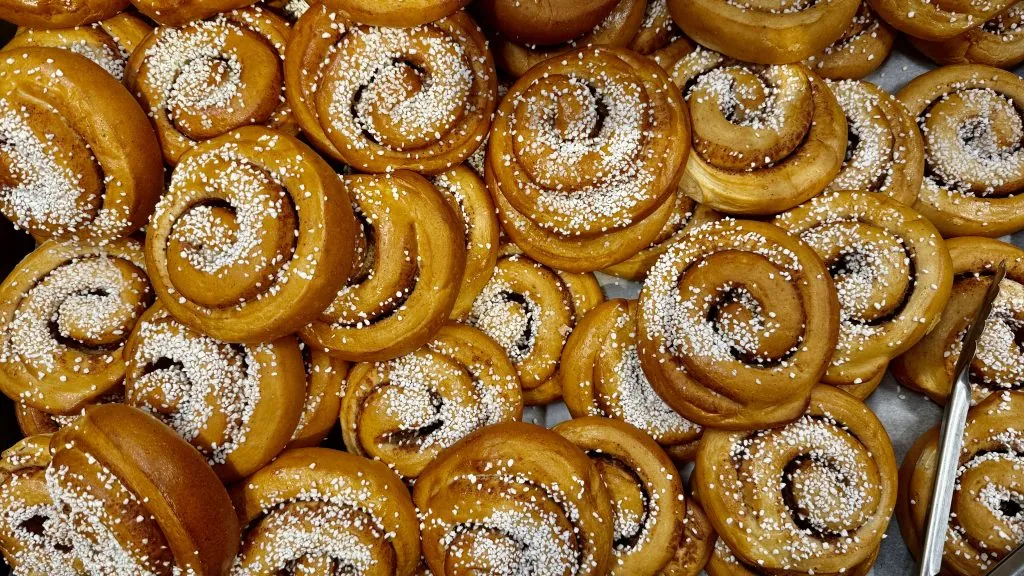
12. Our Cookbook had cinnamon buns as early as 1951
Our Cookbook was first published in 1951 and would become one of Sweden's most widely distributed basic cookbooks. History from the Home Baking Council states that the first edition contained recipes for both cinnamon rolls and cinnamon buns. That says something about where the bun was at that time: it was on its way from the pastry shop's baking sheets straight into Swedish home kitchens.
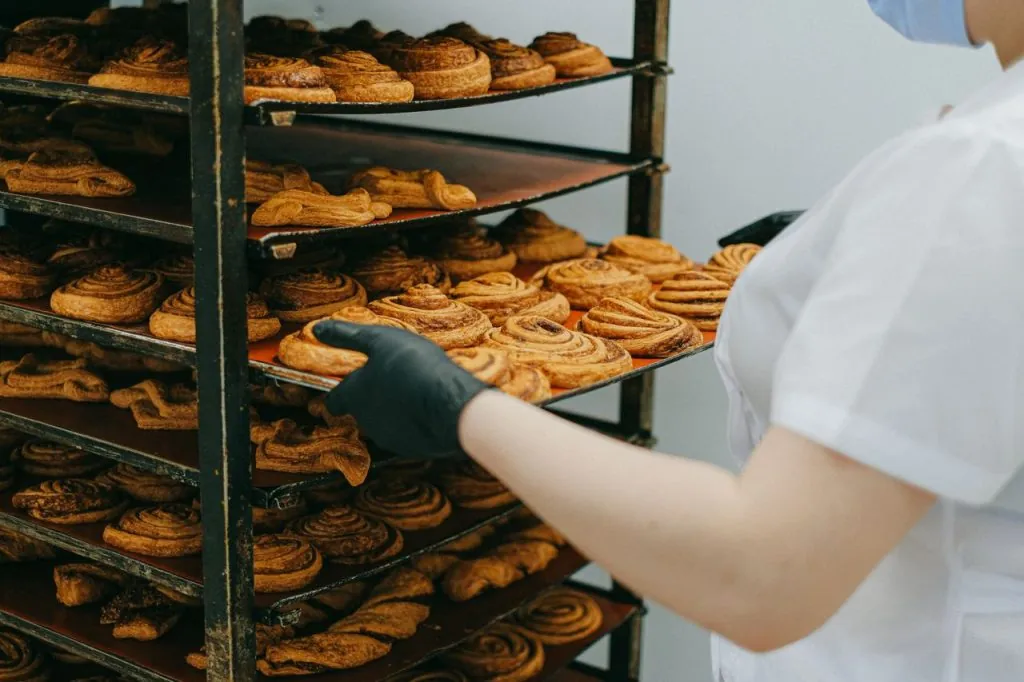
13. A cinnamon bun cost about 10 öre in 1952
From Alingsås there is a price information from 1952 where a cinnamon bun cost around 10 öre. For comparison, a liter of milk cost an average of around 41 öre that same year. By now the bun had become so accessible that schoolchildren could buy one at recess. In a few decades, a pastry based on previously expensive ingredients had begun to become part of everyday life.
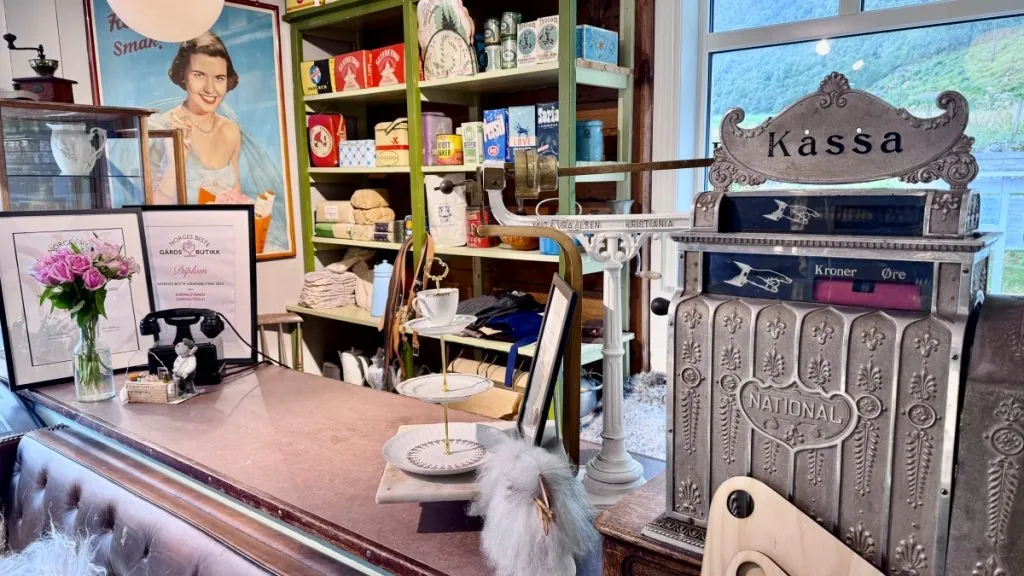
14. In the 1950s, the cinnamon bun moved into more and more Swedish homes
In the 1950s, cinnamon buns became increasingly common as homemade coffee bread. Isof describes how the buns spread from bakeries and patisseries to homes and could function both as a snack and as a simpler and more filling accompaniment to coffee than pastries.
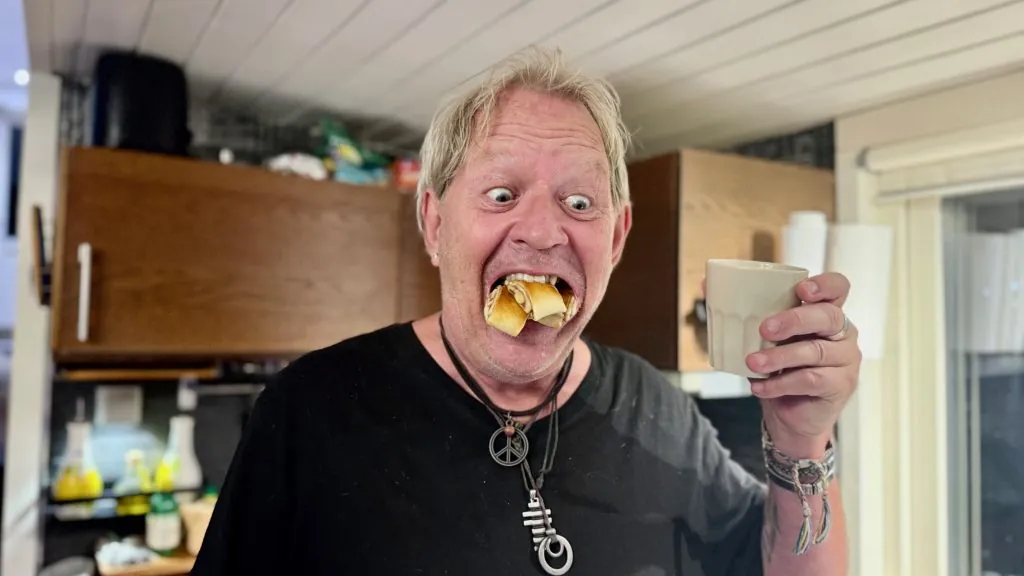
And here I come into the story. When I was about seven to thirteen years old, my mother baked lots of cakes and buns. When the cinnamon bun dough was rolled out, I kept a particularly close eye on the ends. They didn't make any nice buns anyway and could therefore be sacrificed to my son. And bun dough alone is so delicious when you're a child.
I've still never baked a cinnamon bun myself. But more than half a century later, the memory of my mother, the baking table, and the dough hands remains.
15. Today's classic cinnamon roll seems to be younger than the cinnamon bun
This surprised us. The Institute for Language and Folklore writes that the so-called cinnamon snail is said to have originated in the 1960s as a way to simplify and speed up baking. The dough was rolled out, butter was spread on, cinnamon and sugar were sprinkled on top, and the whole thing was rolled up and cut into pieces.
This means that the form many of us consider as the classic cinnamon bun may actually be considerably younger than the pastry itself.
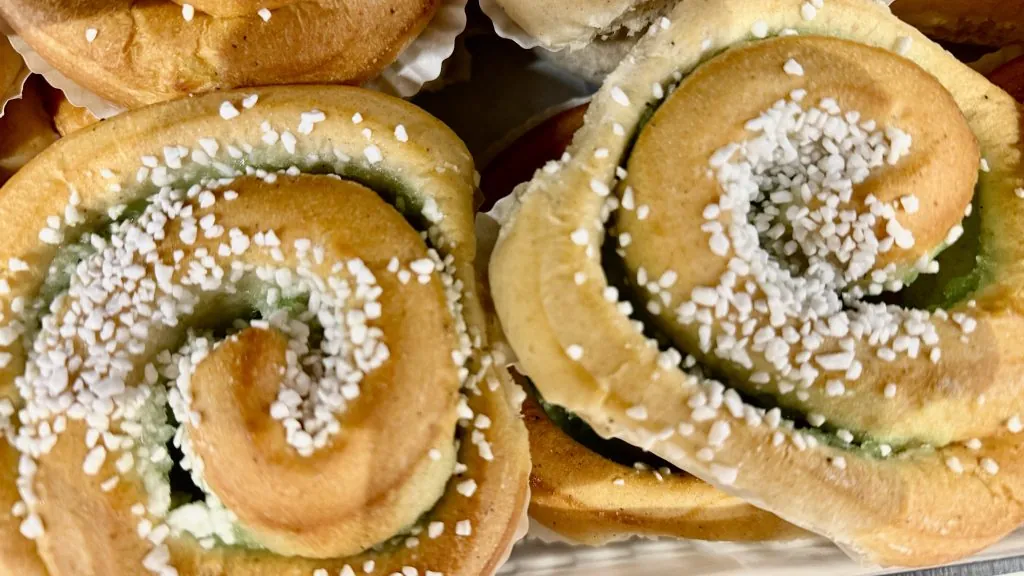
16. "Bulle" is related to ball and bump
It's not just the word cinnamon that has a funny story. Bull in the meaning of bread has been used at least since the 17th century and is connected to the Old Swedish word for something swollen or round. The word is also related to, among other things, ball and bump.
So when one of Helena's international fellow students at Karolinska Institutet held up a cinnamon bun, studied it carefully and tried to say ”"ball"”, the person was almost better off linguistically than either of them knew. That story actually took on a completely different dimension when we wrote this article.
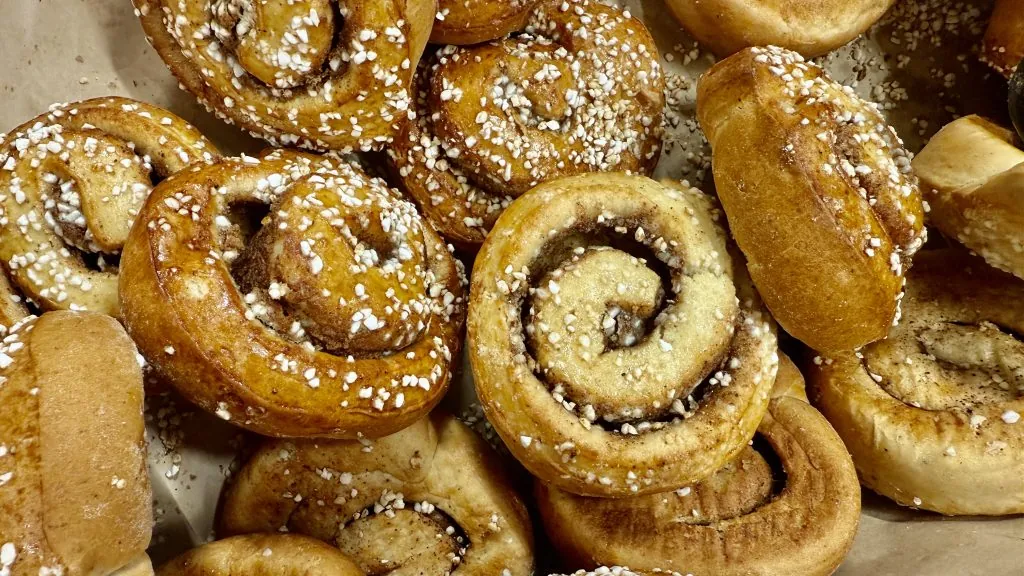
17. Cardamom in the wheat dough itself is a Nordic specialty
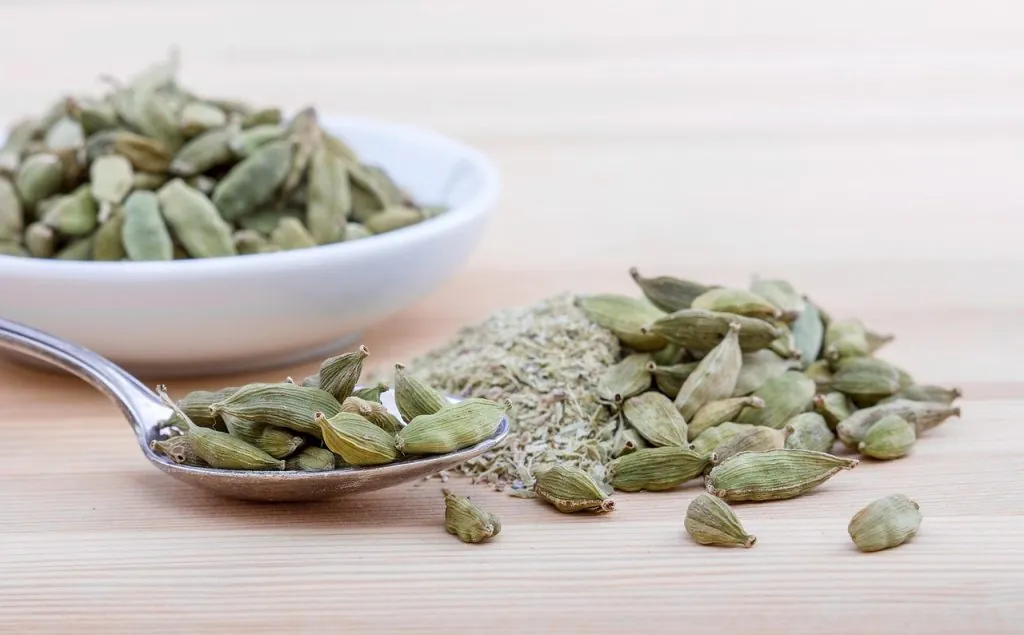
Cinnamon gets the spotlight, but a Swedish cinnamon bun often contains another spice: cardamom in the wheat dough.
Isof refers to pastry chef Jan Hedh and writes that sweet bread with cinnamon is found in the baking traditions of several countries, but that Sweden, Finland and Norway stand out by flavoring the wheat dough with cardamom.
This means that what we perceive as the taste of "cinnamon bun" is actually an interaction between at least two spices with long journeys behind them.
18. Swedish cinnamon rolls and American cinnamon rolls are not the same thing
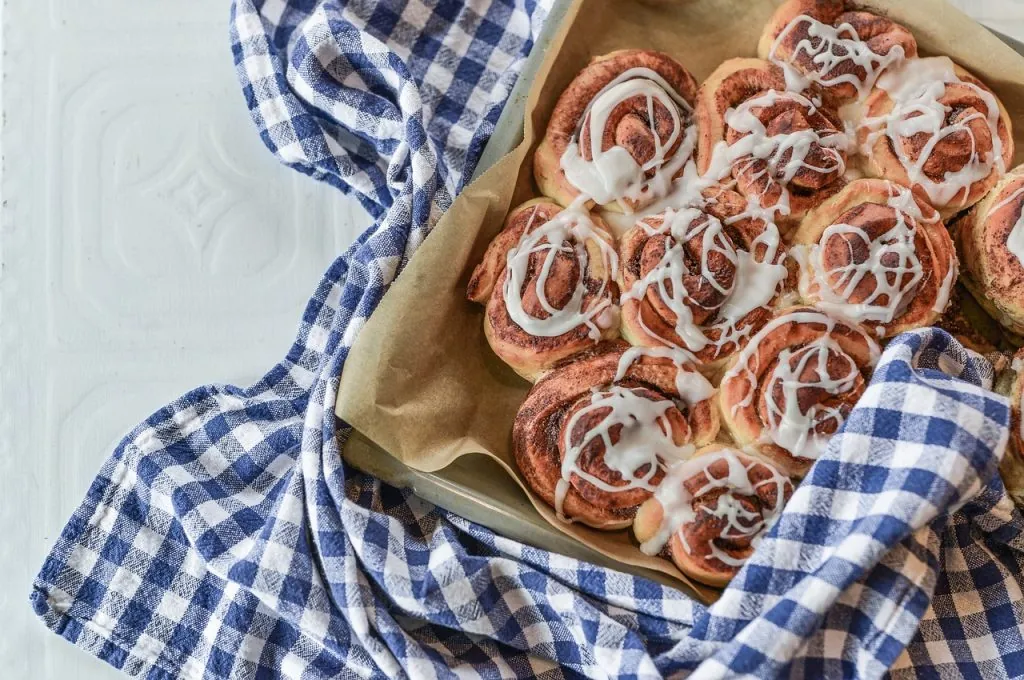
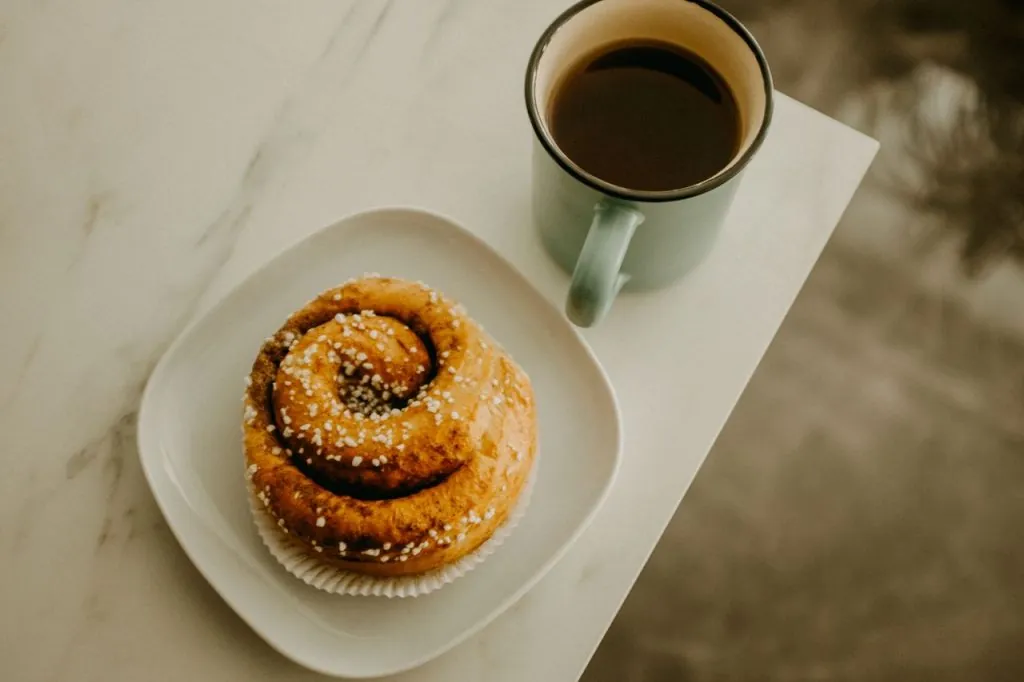
They belong to the same large family, but they have developed differently. The Swedish version is typically a spiced wheat bun with cinnamon and butter filling and often pearl sugar on top. In other countries, thick icing or frosting is common. Smaka Sverige also notes that icing is often used abroad instead of pearl sugar.
An American cinnamon roll can therefore be both sweeter, stickier and heavier than the Swedish fika bun.
19. The cinnamon bun is used to market Sweden abroad
The bun is no longer just something we eat with coffee. Isof notes that the cinnamon bun is used internationally to market Sweden and Swedish products. Smaka Sverige also describes how it is sold in cafes with a Swedish or Nordic profile abroad.
A piece of wheat dough has thus become a small edible advertisement for Sweden. And we have seen for ourselves how quickly it can work. When our South African friends Henri and Michelle travelled with us in the camper through southern Sweden for 18 days, we wanted to let them taste a new Swedish dish every day. On the very second day, Michelle discovered the cinnamon bun.
Then it was over. Every time we went grocery shopping, Michelle went on her own bun hunt. When a store ran out of cinnamon buns, she was really disappointed. I then introduced cinnamon rolls as a backup solution. They disappeared too.

20. The cinnamon bun has become a symbol of Swedish fika
Visit Sweden describes the cinnamon bun as one of the most iconic Swedish fika pastries and as something you can find in almost every Swedish bakery and café. This also explains why the bun can appear almost everywhere in life.
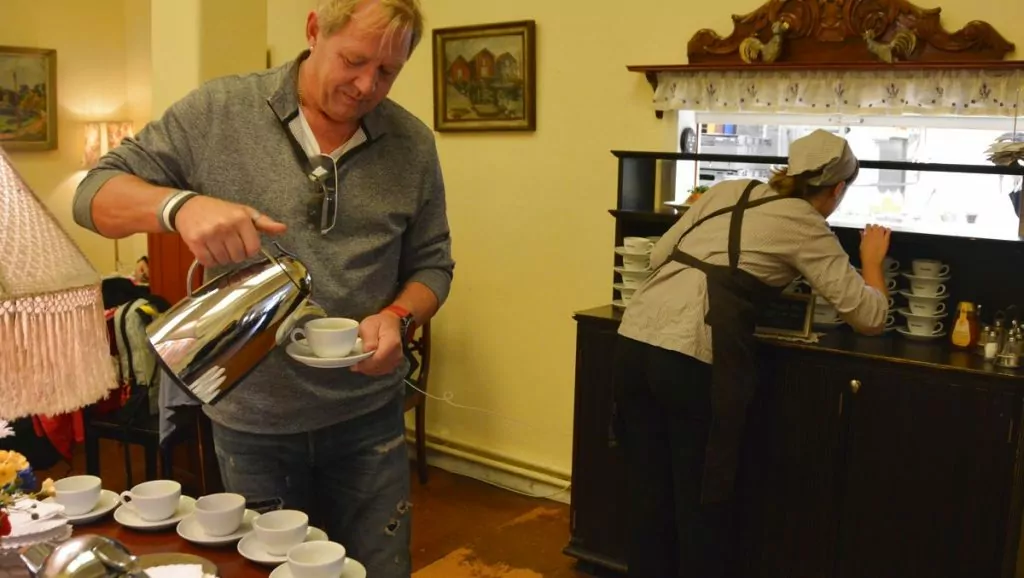
For Helena, it is associated with home visits, cafes, studies and work meetings. During her time at Karolinska Institutet, students liked to go to the cafes around Sankt Eriksplan after lectures and sometimes had a cinnamon bun. Helena described the feeling in two words when we started writing: Good and safe.
21. Cinnamon Bun Day is from 1999 – not from grandma's time
October 4th now almost feels like an old Swedish tradition. It's not. Cinnamon Bun Day was created in 1999, when the Swedish Home Baking Council celebrated its 40th anniversary. So we have been eating cinnamon rolls for considerably longer than Sweden has celebrated Cinnamon Roll Day. We are not going to comment on what this says about our age.
22. It was Kaeth Gardestedt who invented Cinnamon Bun Day
Traditions don't always mysteriously emerge over the centuries. Sometimes there's actually a person behind them. The person who came up with the cinnamon bun theme in 1999 was Kaeth Gardestedt, then project manager at the Home Baking Council. She wanted the day to be associated with, among other things, thoughtfulness, a sense of home and care.
It's fascinating how well it matches what Helena spontaneously told me when we started talking about this: ”Cinnamon buns feel both delicious and safe in some way.”
23. The Home Baking Council was started when more and more women began working professionally.
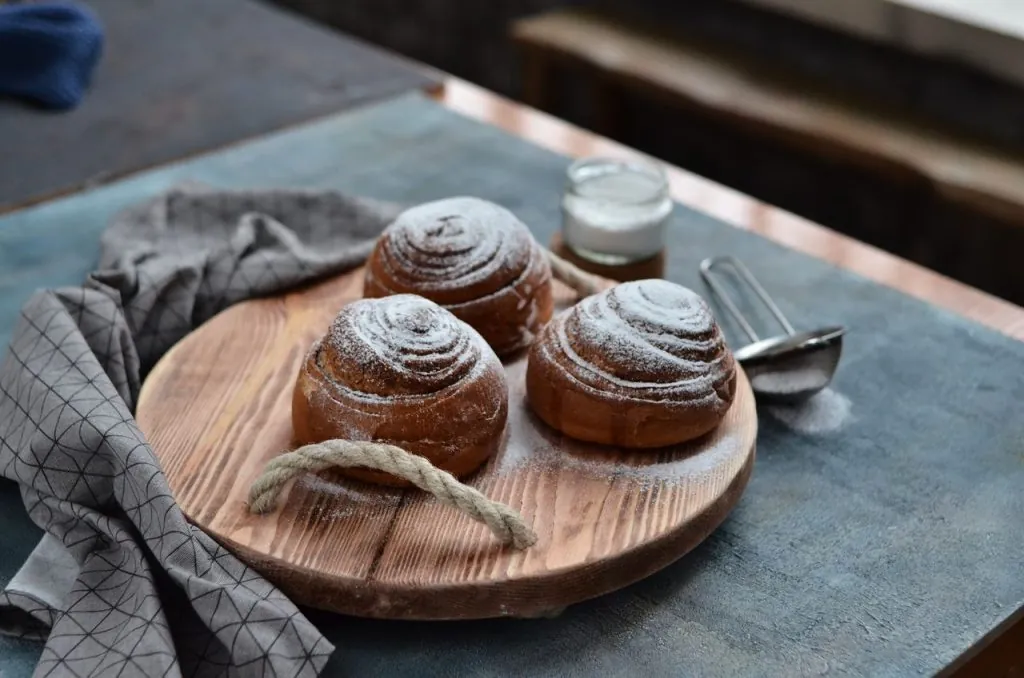
The story behind Cinnamon Bun Day itself is almost as interesting as the day itself. The Home Baking Council was founded in 1959 by Swedish companies in the flour, yeast and sugar industries. Isof started at a time when more and more women were entering the workforce and freezers and factory-made foods were becoming more common in homes. The aim was to encourage people to continue baking at home.
Forty years later, the same organization used the cinnamon bun to once again shine a spotlight on home baking.
24. Cinnamon Bun Day didn't make it into the calendar until 2004
The day was created in 1999, but it took another five years before it took the next step. In 2004, Cinnamon Bun Day was added to the calendar. Isof then describes how interest gradually increased and how more and more people began to know about and pay attention to the day.
It is thus a tradition that has grown from an idea to something that today makes Swedish grocery stores and bakeries go completely bananas every October.
25. About eight million cinnamon rolls can be eaten in a single day
There are different estimates and the numbers vary between years, so we are not going to pretend that there is an eternally accurate noise counter.
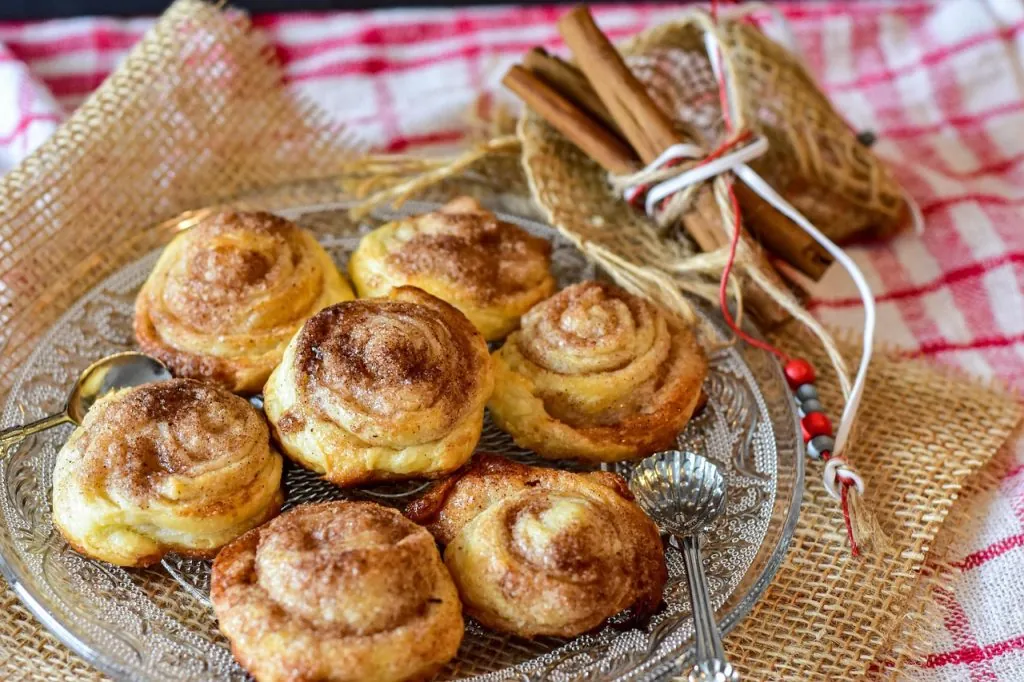
Taste Sweden states around 8.3 million cinnamon rolls on Cinnamon Bun Day. That's almost one bun per Swede – in a single day. And we still don't know who took two.
26. Cinnamon Bun Day was created for a homely feel – and commerce quickly caught on
When Kaeth Gardestedt created the day, there were thoughts of caring, a sense of home and home baking. But Isof's archive also shows how bakeries and shops quickly seized the opportunity with offers and large quantities of buns.
As we write this ahead of Cinnamon Roll Day 2026, we only need to go out into the city to see the next chapter. Cinnamon rolls are everywhere, shops advertise them, and newspapers do taste tests. A tradition from 1999 has become both a family memory and a commercial giant.
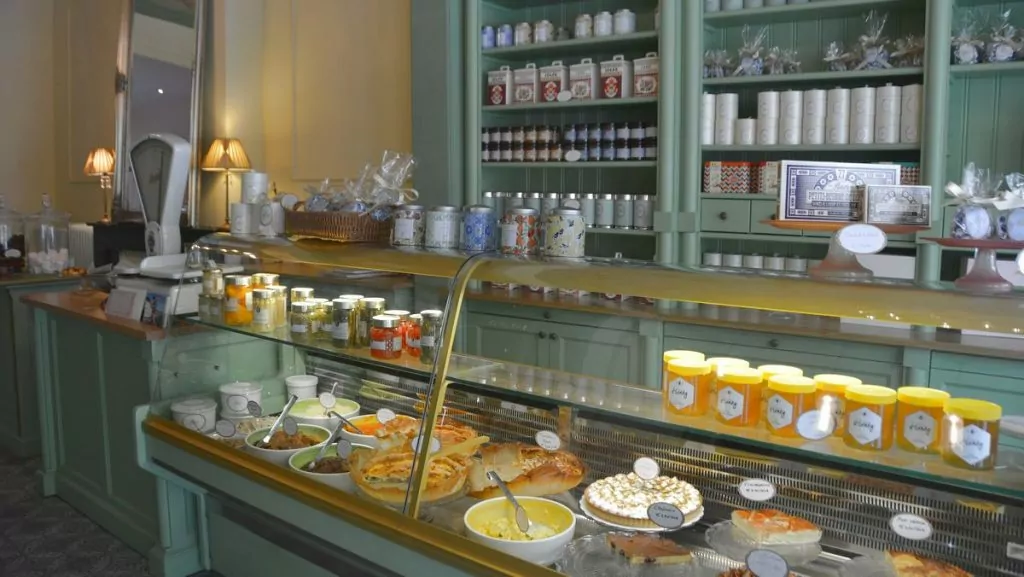
27. The cinnamon bun comes in many more shapes than the snail
The cinnamon bun has never been locked into a single shape. Historical descriptions mention shells, croissants, cut buns, pretzels and other variations. The shape has changed while the basic idea – sweet wheat bread and cinnamon – has lived on.
It also makes Michelle's Swedish discovery a little more fun. When the regular cinnamon bun was out of stock, the cinnamon rolls worked just fine. You should never underestimate a good spare bun.
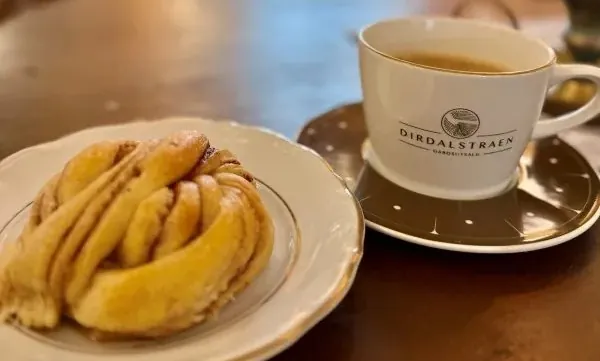
28. Gothenburg has made the cinnamon bun great in a completely different way
In the Haga district of Gothenburg, the cinnamon bun has its own tourist format: The Haga Bun, a cinnamon bun the size of a plate. Gothenburg's official visitor website highlights it as one of the area's most famous pastries. It's actually a pretty logical Swedish development. First we invent the bun. Then we give it its own day. Then Gothenburg makes it the size of a Frisbee.

29. ”Kanelbulle” and ”kanelsnurra” seem to have come about at different times
Food historian Richard Tellström dates the name cinnamon bun to the 1920s and cinnamon roll to the 1950s. The words also reflect how the pastry has developed. Bun, knot, snail and spin are not just different names for exactly the same historical product – the shape and manufacturing have changed over time.
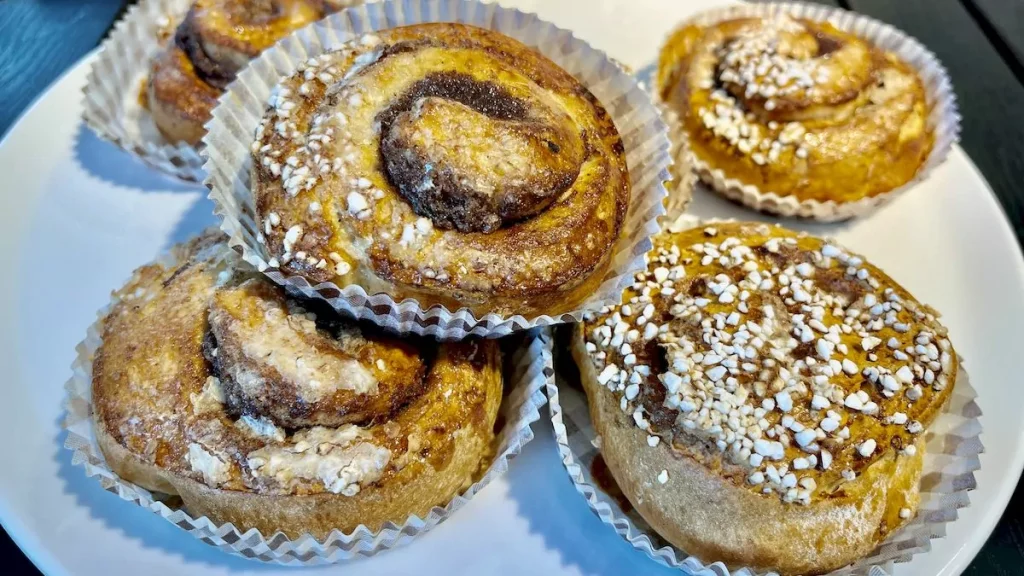
That obvious cinnamon bun on the coffee table turns out to be considerably less obvious when you start digging.
30. The cinnamon bun is younger than many people think – but built on several hundred years of Swedish food history
Perhaps the strangest thing we discovered is that there really isn't a single year when someone can say: This is where the cinnamon bun was born.
There is an early mention from 1867, cinnamon had been used in Swedish bread long before that, recipes that begin to resemble today's bun can be found in the 1920s and the big popular breakthrough only came in the 1950s. The cinnamon bun's own day was added as late as 1999. The cinnamon bun is therefore not an invention from a moment in time.
It is the result of several hundred years of spice trade, baking, better economics, changing Swedish homes – and a whole lot of fika.
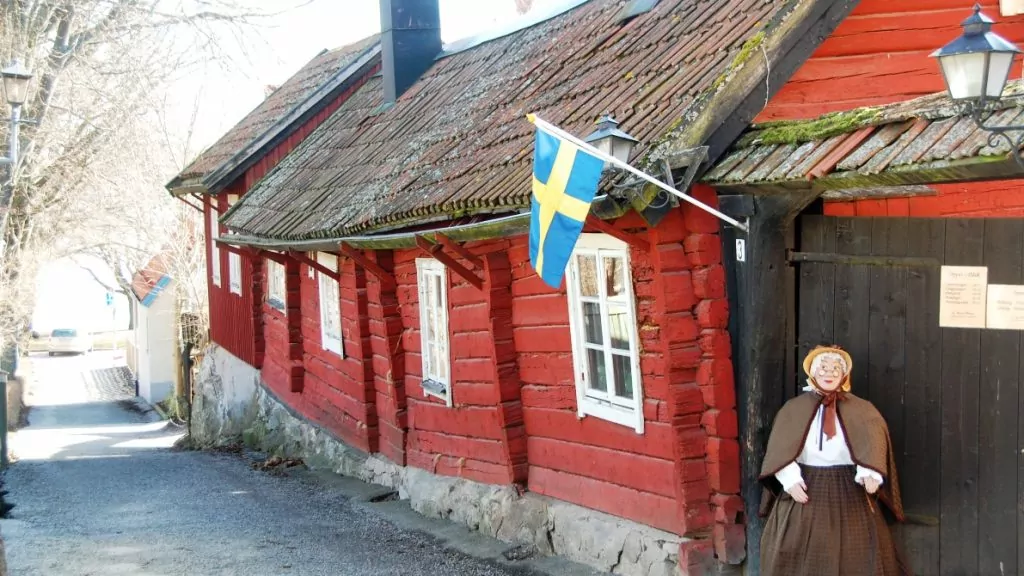
A bun can also be a person you remember
When we started writing this article, we thought we'd dig up 30 different facts about cinnamon buns. And we did. But at the same time, something else happened.
I found myself back in the kitchen of my childhood and watching my mother roll out the bun dough. Helena started thinking about coffee at home, her student years around Sankt Eriksplan and the feeling that a cinnamon bun can somehow be both delicious and safe. Then Henri and Michelle popped into my mind and we once again saw Michelle disappearing among the shelves in a Swedish grocery store in search of the cinnamon bun of the day.
Maybe that's why this particular bun has become so difficult to replace. Because it could be a mother who baked when you were little. A grandmother who always had something in the freezer. A café after school. A work meeting. Children waiting for the baking sheet to come out of the oven. Or the first time someone from the other side of the world gets to taste Sweden.
We don't just eat the taste. We eat the memory of all the times we've tasted it before. And that's why we're curious: Who do you think of when you smell the aroma of freshly baked cinnamon buns?
You might also like:
 Facts about lussekatter - 12 things you (maybe) didn't know?
 Durian, the king of fruits - Auntie Anna's fruit session
 Best ice cream in Sweden - our favourites
 Luxury seafood buffet at home - like in a restaurant
 Goose or St Martin? - a European feast with goose, candles and croissants
 Easter food around the world - a taste journey beyond herring and eggs



 English (UK)
  Svenska