


Writer: Helena Bergström
Did you know that the Scanian feast of St Martin the Goose is actually about the saint St Martin? And that this holiday is celebrated in many parts of Europe? In some countries, a ”goose dinner” is served and in others, candle processions or croissants are the order of the day...
 Tweet
 Share
 Share
 Pin
 Share
 Share
Table of contents
St Martin of Tours - a French saint
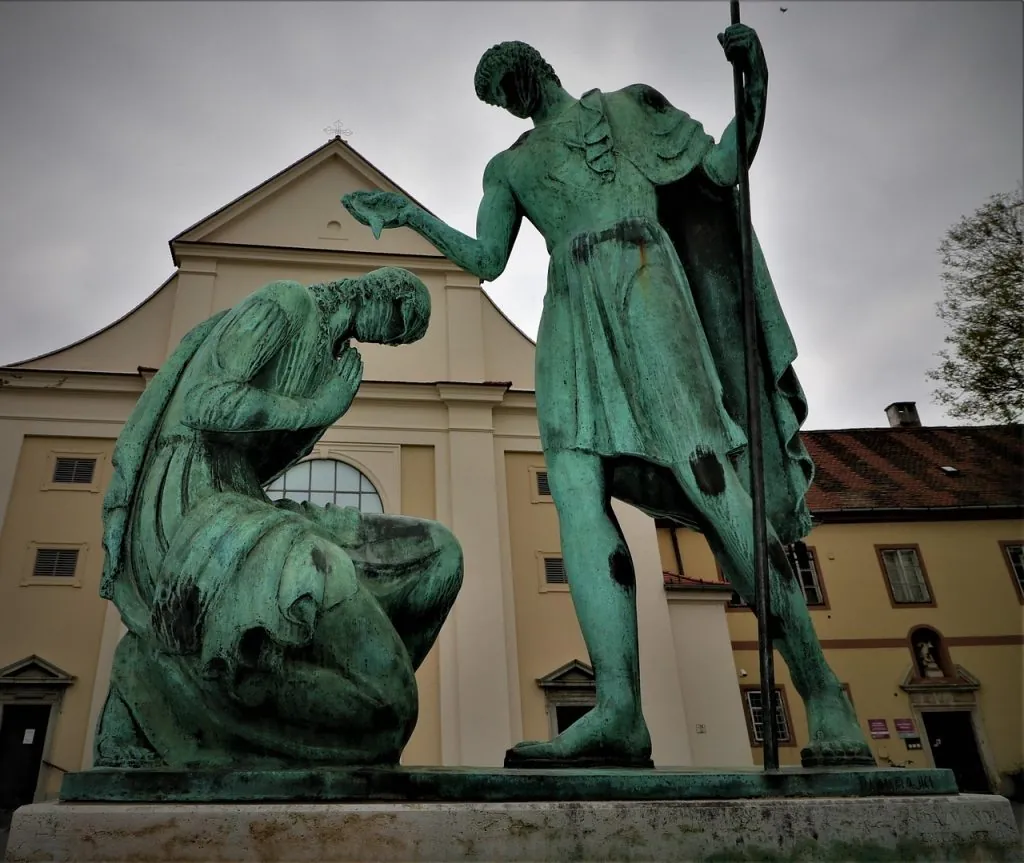
St Martin (or Martin of Tours) lived in the 3rd century and was a Roman soldier who later became the bishop of Tours in present-day France. France. Legend tells of an occasion when the soldier Martin generously shared his cloak with a frozen beggar. This and other noble deeds made Martin a symbol of humanity and compassion, and the people were keen to make him a bishop.
How does the goose come into the picture?
But what does the goose have to do with all this? It may not be obvious, but legend has it that Martin didn't want to be a bishop, simply because his humility made him feel unworthy of the role. To escape, he came up with the idea of hiding in a goose house. However, the geese exposed him by cackling loudly, and as a reminder, they have been given an involuntary starring role in the festivities...

How to celebrate Mr Goose in Skåne
I myself have grown up in Skåne and I remember that the holiday was celebrated in various ways, although we didn't have ”goose dinner” in my family. I do remember, however, that we made ”goose pies” at school.
In the past, the feast was a culinary ritual that marked the end of the harvest season and the beginning of Lent for Christmas. Today, it seems that the festival is enjoying a bit of a revival, not least in some gastronomic circles. A classic goose dinner is eaten on Mårtensafton, 10 November, or on any day throughout the week and includes:
- Starter: Black soup - a soup made with goose blood, broth, wine, brandy, dried fruit and spices.
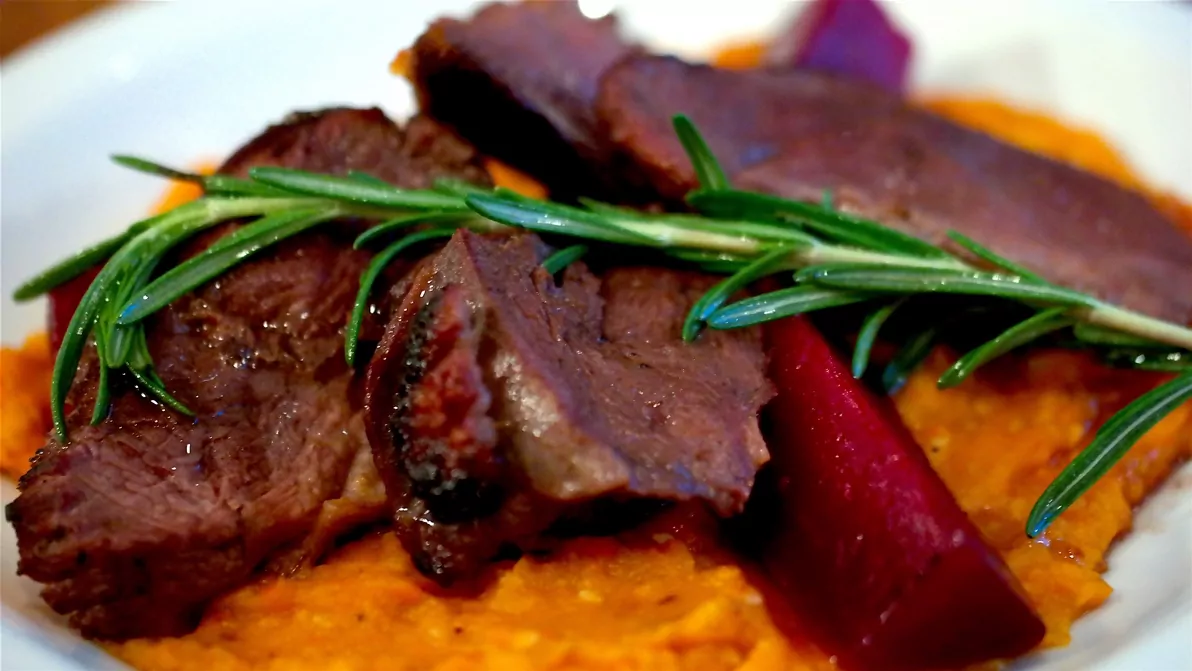
- Main course: Roast goose - stuffed with apples and prunes, served with brown sauce, red cabbage and potatoes.
- Dessert: Scanian apple cake - a rich apple cake made with rye bread, apples, butter and sugar.

How St Martin is celebrated across Europe
Saint Martin is celebrated not only in Skåne, but in many places around Central Europe. In Sweden, we often celebrate on the ”evening” (compare with Easter Eve, Midsummer's Eve, Christmas Eve!), in this case on 10 November, while further down in Europe people like to celebrate on the ”day” itself, i.e. 11 November. Here are some examples of how the celebrations are organised:
Belgium - lantern parades, singing and buns
In some regions of Belgium, in the north of the country, children go on lantern parades, sing St Martin's songs and receive sweets, and it is also common to light a big fire. In these places they also bake a bun, with raisins and currants, in the shape of an old man with a pipe.


The Netherlands - lantern parades, singing and sweets
In the Netherlands, the atmosphere is playful, with children going door-to-door with lanterns and singing songs in exchange for candy, a bit like a warm and friendly version of Halloween. The celebrations are particularly strong in the north.
Germany - lanterns, singing and goose
Germans like to celebrate St Martin's Day, especially in the Rhineland and the western part of Germany. Children take part in lantern parades on the evening of 11 November, carrying homemade paper lanterns and singing Martin songs. A ”St Martin” on horseback may join the procession, dressed in a red cloak and Roman helmet. Afterwards, a St Martin's bonfire is lit and in the evening you can eat ”Martinsgans” - a meal of roast goose, red cabbage, potatoes and chestnuts.


Poland - St Martin's croissants
In Poland, St Martin is celebrated with sweets, especially in the beautiful city of Poznan. Here certified bakers bake the pastry rogale świętomarcińskie - St Martin's croissants - especially around 11 November, but nowadays also all year round as this has become a signature activity of the city of Poznan. When we visited Poznan a few years ago, we ourselves try baking St Martin's croissants during a workshop. Fun!

These delightful pastries are made from puff pastry filled with poppy seeds and other ingredients, before being glazed with a sugary icing. The croissants are crescent-shaped, to recall a horseshoe once dropped by the saint's horse...

Hungary - party, wine and goose
In Hungary, the day is called ”Szent Márton napja” and is an important holiday. The celebration combines food, wine and folk culture and it is traditional to eat goose, foie gras, goose soup and young Martin wines from the year's harvest.
Austria - Family party with goose and bun
St Martin is an important saint in Austria and celebrations are particularly strong in Burgenland, Styria and Lower Austria. Children have lantern parades, as in Germany, and Martin songs are sung. They also eat Martinigansl, which is goose with red cabbage and dumplings, and Martinskipferl, which is a crescent-shaped sweet bun.

St Martin the Goose - celebrating with light, fellowship and food
Common to all celebrations, whether you're in Skåne, Germany or Poland, is the sense that St Martin's Day is about warmth in the dark - about celebrating the good things in life before winter sets in.
So next time you're sitting at a Scanian goose table or biting into a Polish St Martin's croissant in Poland, think about how the same story - of a man, a cloak and a goose - continues to fly across Europe

What are your experiences with St Martin or St Martin the Goose?
What are your experiences with St Martin or St Martin the Goose? Please tell us!
You might also like:
 Christmas rhymes - 25 tips for Christmas presents with rhymes
 Celebrate New Year's abroad - 10 memorable New Year's on trips
 Aunt Anna and death - All Saints' Day and cemeteries of the world
 Christmas trees through the ages – Aunt Anna and the Christmas trees
 New Year is a time for hope for the future – 7 New Year's dishes that represent luck and good fortune
 How New Year is celebrated around the world – 15 exciting New Year's traditions



 English (UK)
 Svenska
Znogge says:
I actually didn't know that the day is also recognised and celebrated abroad. Here in Skåne it is common to have a goose dinner and I think it is very good. However, I skip the black soup, but there is usually an alternative.
09 November 2025 - 9:34
Helena says:
I have also always associated the holiday with Skåne, but on trips in Central Europe during this time I noticed that they celebrated a Martin, at the same time as we celebrated Mårten ... 😉 It sounds reasonable with an alternative to the black soup, can understand that not everyone wants to eat it.
10 November 2025 - 8:35
Eval8 says:
I was born in Skåne, but I don't think goose is very good. So I never eat it. I prefer turkey or young cock.
However, I thought it was only a Swedish phenomenon.
09 November 2025 - 11:08
Helena says:
I actually like goose, but have mostly eaten it in central Europe, where it is more common. Turkey is a favourite with us! 🙂 And yes, I also thought it was a Swedish (Scanian) tradition until I happened to be travelling in Central Europe in November... 😉
10 November 2025 - 8:37
Enna says:
Very exciting post! Wish you a nice Sunday 🙂
09 November 2025 - 15:30
Helena says:
Thank you very much!
10 November 2025 - 8:37
BP says:
What a fun post! I had a pretty good grasp of the traditions, but the Polish croissant variant was completely new to me. Then I must shamefully admit that I have never eaten goose, nor tasted black soup. Then again, I have eaten English, Scottish and German blood sausages - hahaha:-) But I have never tasted the liquid variant with cognac, among other things...
09 November 2025 - 17:24
Helena says:
Glad you were aware of the traditions! This holiday is not really noticed by everyone ... I like goose, but I have not tasted black soup either ...;)
10 November 2025 - 8:38
Marika says:
As a Scanian, we always ate goose when I was little on my uncle's birthday on 9/11. Then I became a vegetarian and that was the end of that. But I remember it as an important party just before Christmas. I didn't know that Martin was hiding with the geese. Fun to read!
09 November 2025 - 19:21
Helena says:
Glad to hear you were part of the goose tradition! 🙂
10 November 2025 - 8:39
Hanneles bokparadis says:
I found blood soup at Coop on Hisingen in one of those sausages... now I've tasted it.
11 November 2025 - 23:02
Hanneles bokparadis says:
Black soup I mean, apple cake I am more familiar with 🙂
12 November 2025 - 12:41