


Writer: Helena Bergström
Updated: October 2026 | Hard shells, strong claws and absolutely fantastically delicious meat. For us, crab dinners are part of autumn, but crabs are also fascinating animals. Did you know that they can regrow lost bones, that some dress up with algae and that the world's largest crab can measure several meters between the tips of its claws?
 Tweet
Tweet Share
Share Share
Share Pin
Pin Share
Share Share
ShareTable of contents
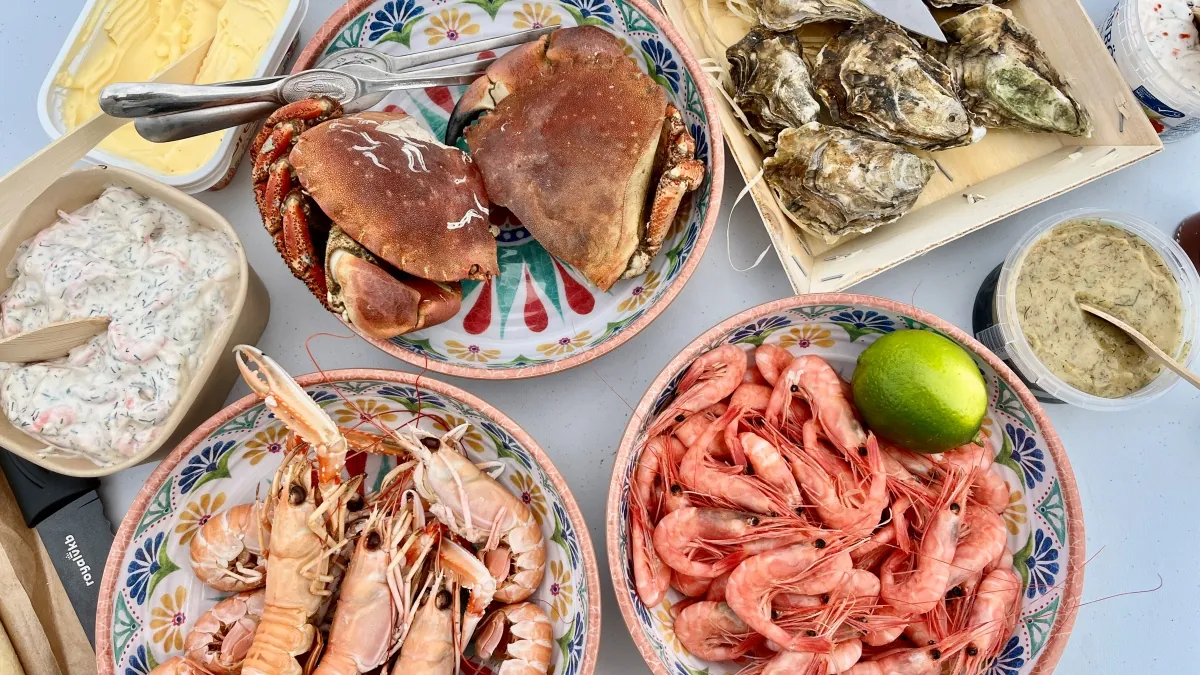
Crab is one of our big autumn favorites
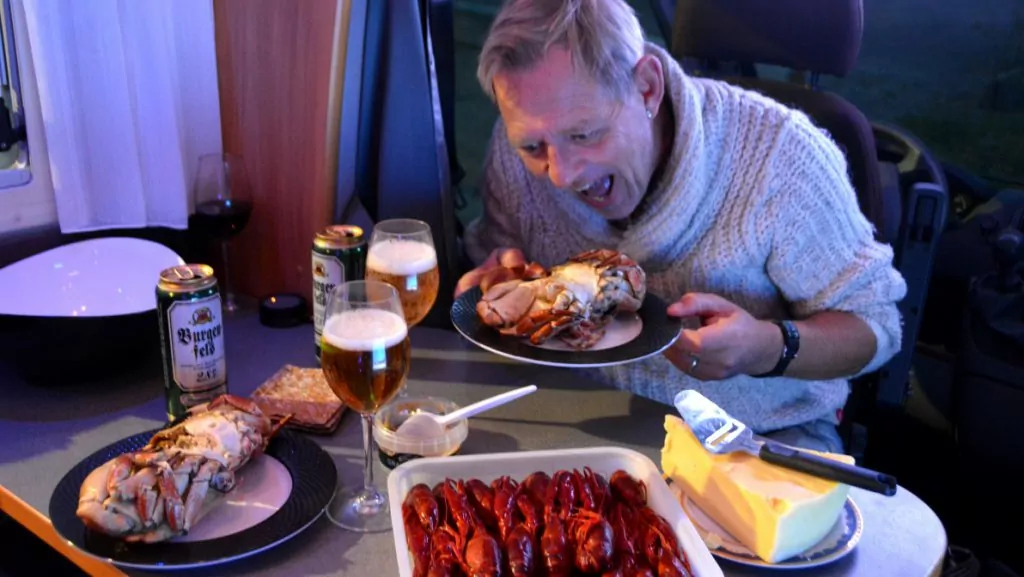
Peter has been eating crab since he was ten. His parents loved crab, so he learned early on how to open the shell and scoop out all the delicious meat. When I met him, he taught me too – and I've been hooked ever since.
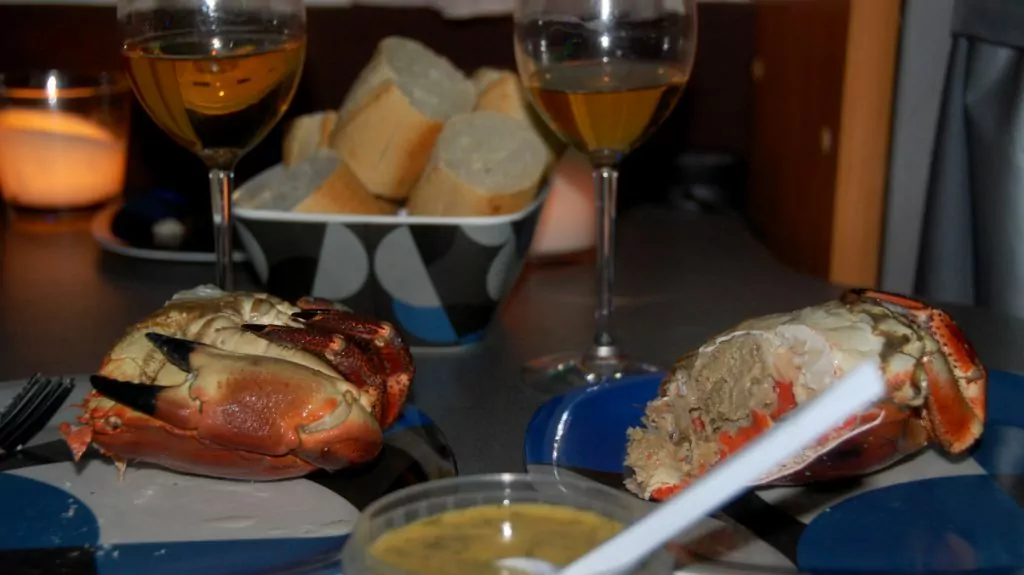
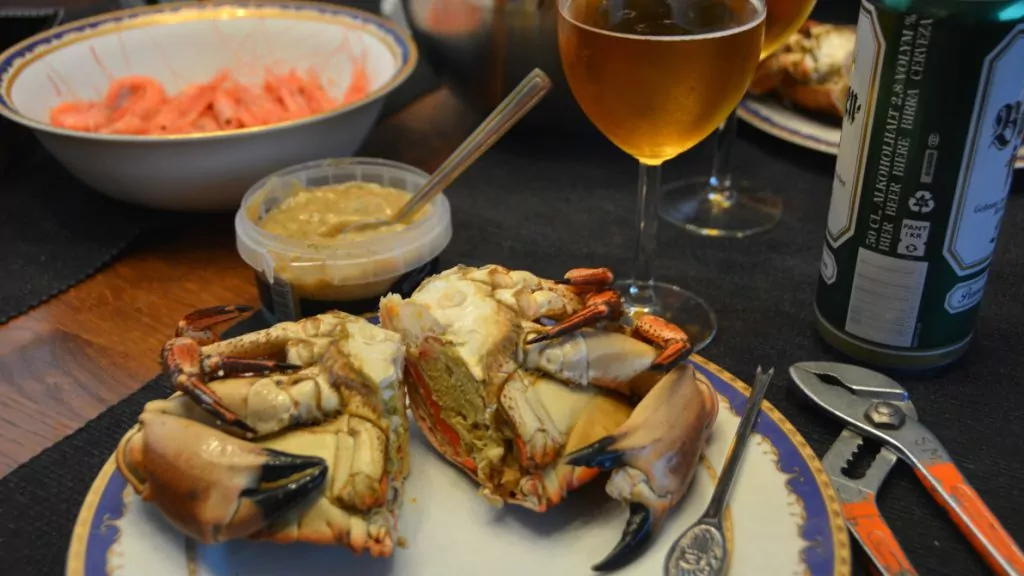
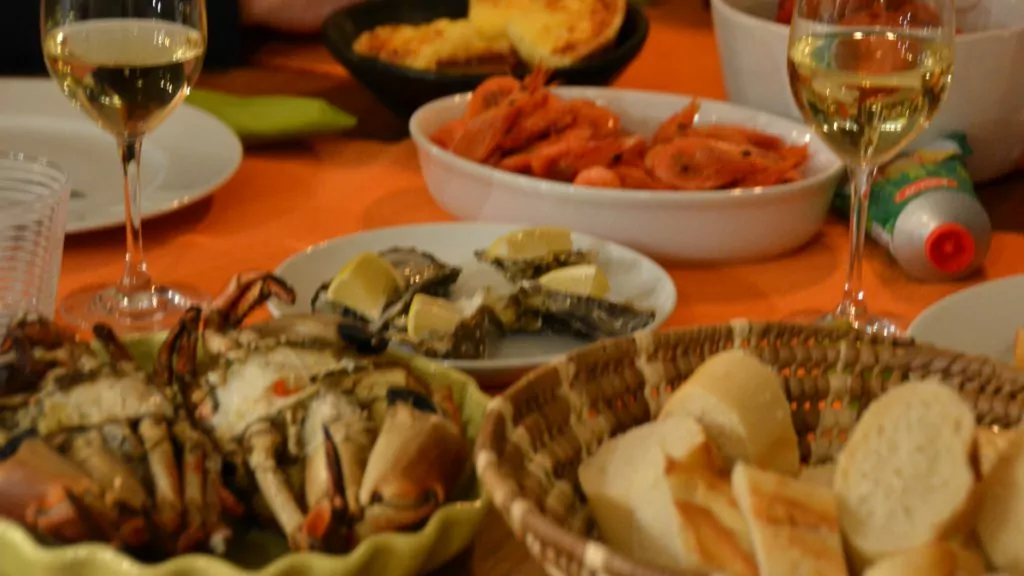
At home we usually eat the crab whole, with a butler's sauce and tasty side dishes. Sitting at the table for a long time, talking and fiddling is a big part of the pleasure. Crab is simply one of our big favorites in the fall.
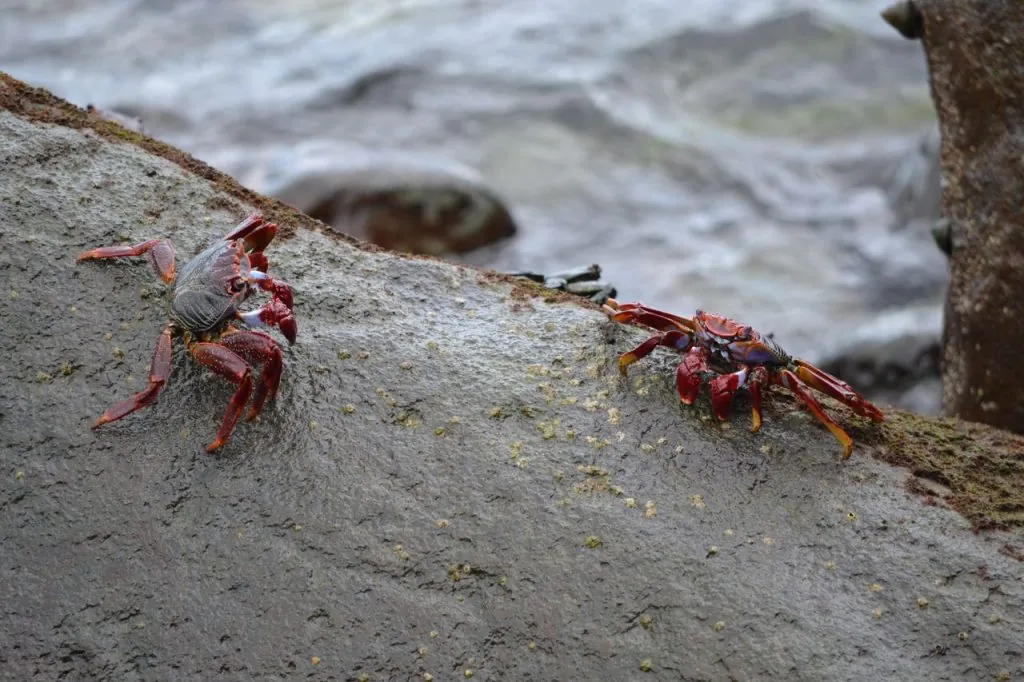
When we travel, we encounter crabs in other contexts. We have eaten small crabs in Vietnam, seen land crabs on an island off Zanzibar and slept in a tent on a beach in the Philippines where we only discovered warning signs about coconut crabs the next morning. More on that below…
Quick facts about crabs
| Question | Short answer |
|---|---|
| What are crabs? | Crustaceans, which belong to the arthropods. |
| How many species are there? | Thousands. The group of true crabs is called Brachyura. |
| Where do they live? | In the sea, freshwater and on land, depending on the species. |
| Which one has the largest leg span? | Japanese spider crab, up to about 3.7 meters from claw tip to claw tip. |
| Guinness World Record for Size | The largest specimen recorded by Guinness had a leg span of 3.69 meters and weighed 18.6 kilograms. It was a Japanese spider crab. |
| Which is the largest on land? | Coconut crab, up to about one meter in leg span. It belongs to the hermit crab family. |
| Which crab do we eat most often in Sweden? | Crab stick is a common species in Swedish fish counters. |
| When is crabmeat best eaten? | Autumn is a cherished season. |
25 facts about crabs
1. Crabs can grow new legs
A lost bone doesn't have to be lost forever. Crabs can regenerate bones and claws, and the new parts grow through molting.
However, it doesn't happen overnight. In the crabs described by NOAA, it can take several molts before a replacement leg reaches normal size. The ability is impressive, but it costs both time and energy to repair the body.
2. The crab must shed its shell to grow.
The crab's hard shell acts as an exoskeleton. It protects the body, but cannot grow in the same way as the animal inside.

Therefore, the crab must shed its shell. It sheds its old shell, and the new one is initially soft. This allows the body to expand before the shell hardens. During this period, the crab is particularly vulnerable to predators and needs protection.

3. Crabs often walk sideways – but not all of them
A crab speeding sideways across the sand is a familiar sight. The shape and joints of the legs make sideways walking efficient for many crabs.

But not all of them walk the same way. There are also species that mainly move forward. Therefore, it is a bit misleading to say that crabs can only walk sideways. The crab world is more varied than that.
4. There are thousands of species of crabs
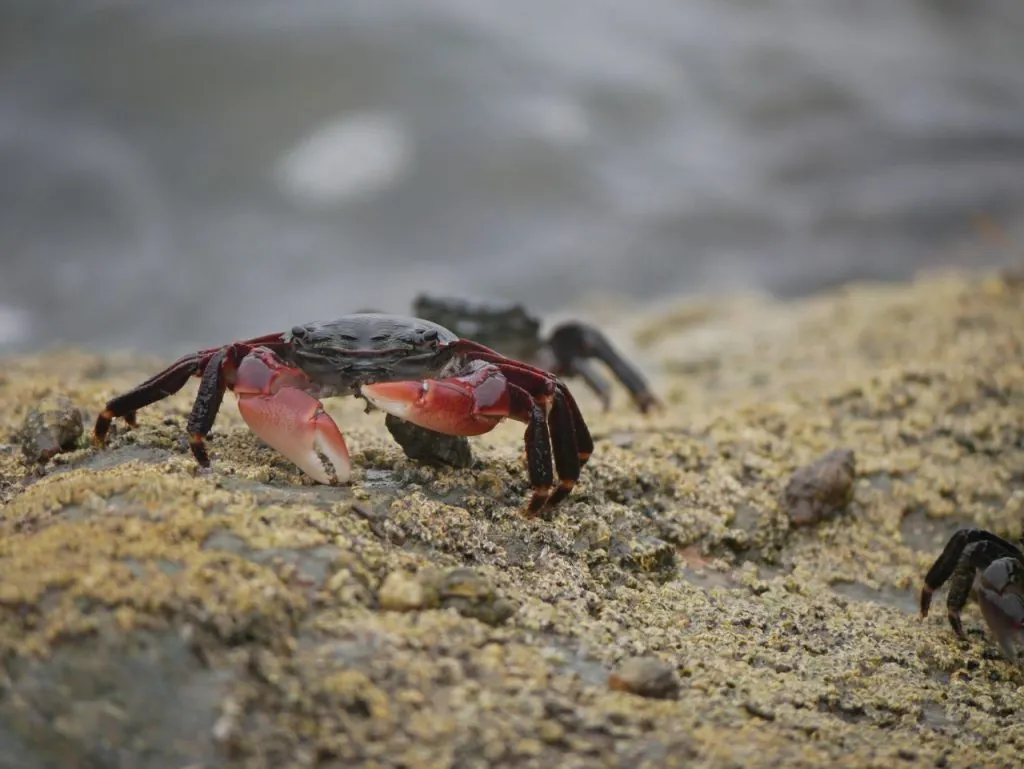
The word crab encompasses an enormous diversity of shapes, colors, and sizes. Crabs proper belong to the group Brachyura, but several animals that are called crabs in everyday language belong to other groups.
The coconut crab is an example. It looks crab-like and has crab in its name, but is more closely related to hermit crabs. So the common names don't always follow the biology's classification.
5. Our fall favorite is called crab bag
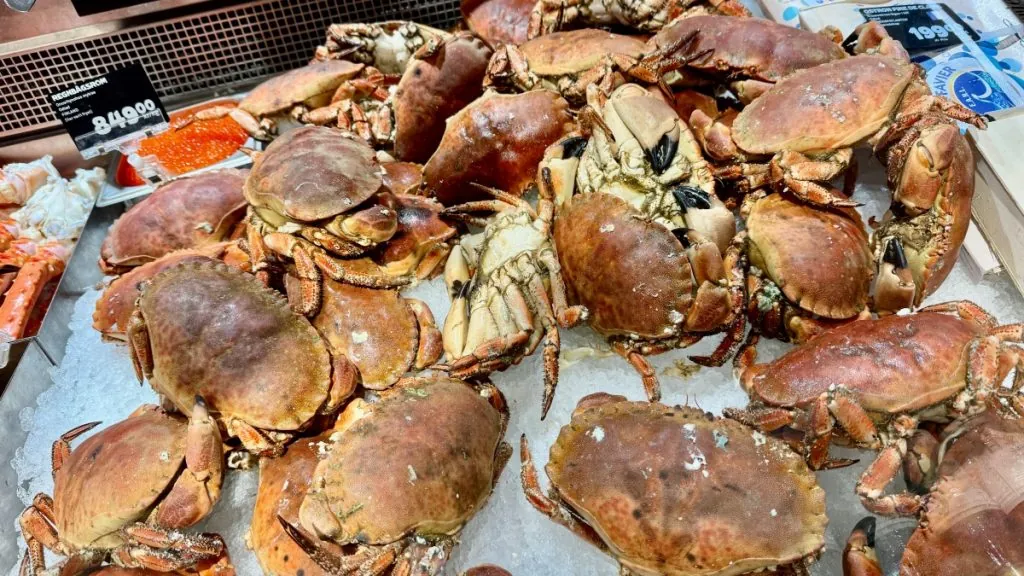
The crab we usually buy for our autumn dinners is the crab bag, with the scientific name Cancer pagurus. In English it is called brown crab or edible crab, among other things.
It is a different species than many of the crabs served in restaurants in other parts of the world. So ”crab” on the menu doesn’t always tell you what species you’re getting.
6. The crab bag has a shell edge that resembles a pie
The crab shell is recognizable by its wide, oval shell and its strong claws with black tips. The front edge of the shell has rounded flaps that in English are often compared to the edge of a pie. The next time you see a whole crab shell in the fish counter, you can look for that wavy edge.
7. Claws are also a pair of legs
True crabs have five pairs of legs. The front pair is modified into claws, while the other four pairs are usually used for walking.
The claws are versatile tools. They are used, among other things, to capture and handle food and to defend themselves. So when counting the crab's ten legs, the claws should also be counted.
8. The underside distinguishes the female from the male
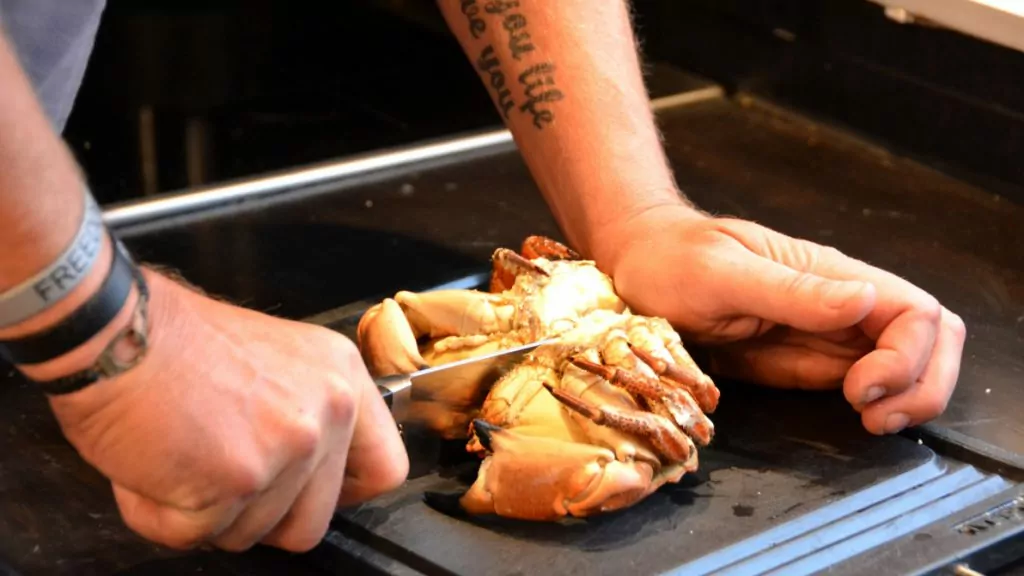
In the crab's pouch, the tail patch on the underside can help you tell the sexes apart. The male's is narrower, while the female's is wider and rounder. The wider shape provides space for the eggs that the female carries under her body.
9. A female can carry millions of eggs
A female crab can produce around 250,000 to three million eggs, depending on size. Fertilized eggs are carried under the body until they hatch. However, many eggs do not mean that as many adult crabs survive. Losses during the larval stage are high.
10. Crabs start life as larvae
Newly hatched crab shells are small larvae that live in the water. They go through several stages of development before they take on the familiar crab shape and begin living on the bottom. It is a completely different life than the adult life under rocks and on the seabed.
11. The shore crab is a different species
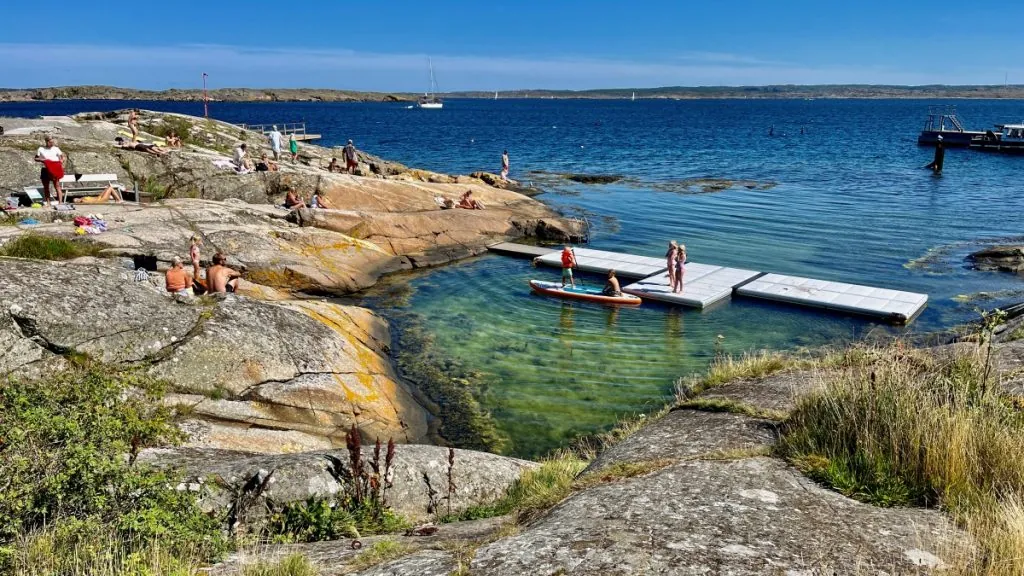
The crabs you see on piers and among rocks on the west coast are often shore crabs, Carcinus maenas. They are a different species than the crabmeat we usually buy for dinner.
The shore crab is smaller and its color can vary. The name does not mean that all specimens are green, although the species is often called green crab in English.
12. The crab-eating bat likes to hunt at night
The crab is mainly active at night and eats mussels, snails and other crustaceans. Its claws are used to reach its food. In other words, it is more than just a quiet figure on the seabed: it is also a predator.
13. Not all crabs live in the sea
There are crabs in both saltwater and freshwater, and species that spend large parts of their lives on land. Their dependence on water varies. On an island off Zanzibar We have seen land crabs ourselves. We don't know what species it was, but the memory serves as a nice reminder that crabs don't just belong under the water's surface.
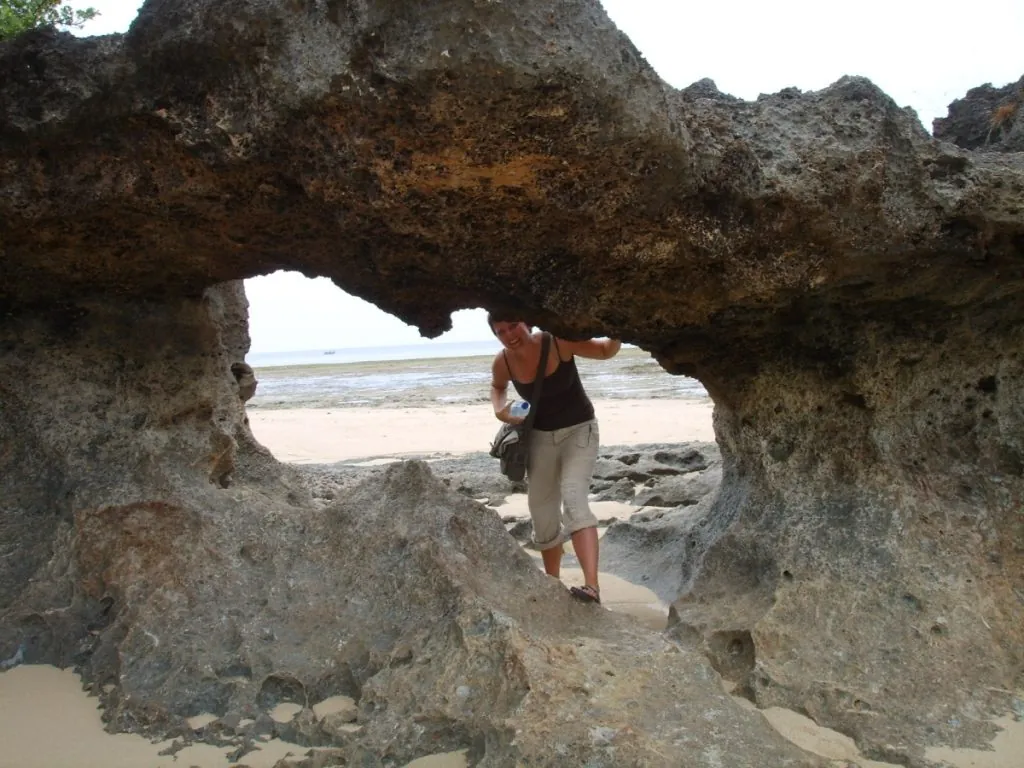
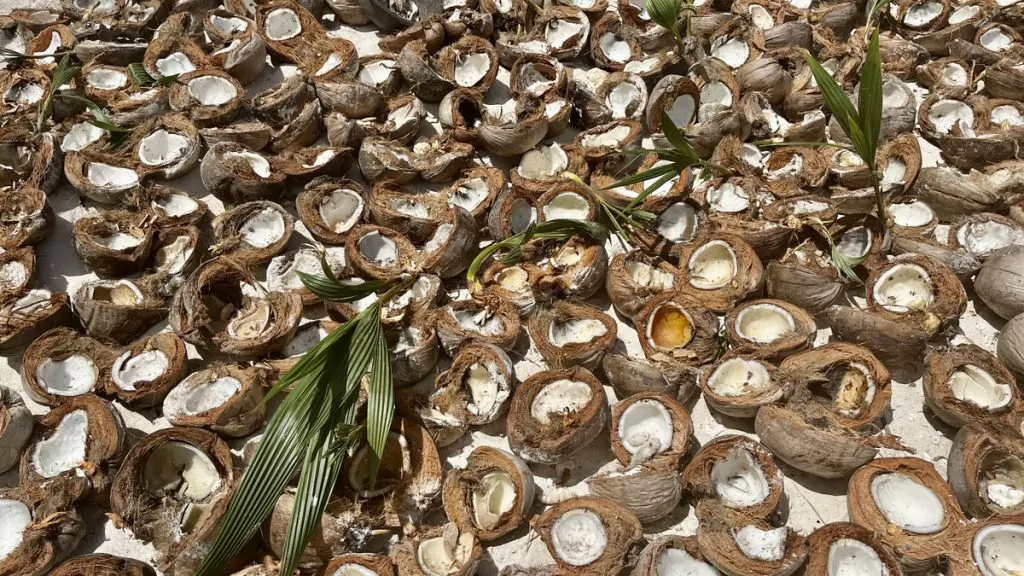
14. The coconut crab is a giant on land
The coconut crab, Birgus latro, is the world's largest terrestrial arthropod and can have a leg span of about one meter. It is related to hermit crabs, but adults do not carry around a borrowed shell.
Coconut crabs can climb trees and open coconuts, although they also eat other things. Adults live on land and cannot swim.
We have a special connection with them: once we slept in a tent on a beach on Apid Island in the Philippines. Only when we woke up the next morning did we see the warning signs about ”coconut crab”. It might have been good to discover them before bedtime…

15. The Japanese spider crab has the world's largest leg span
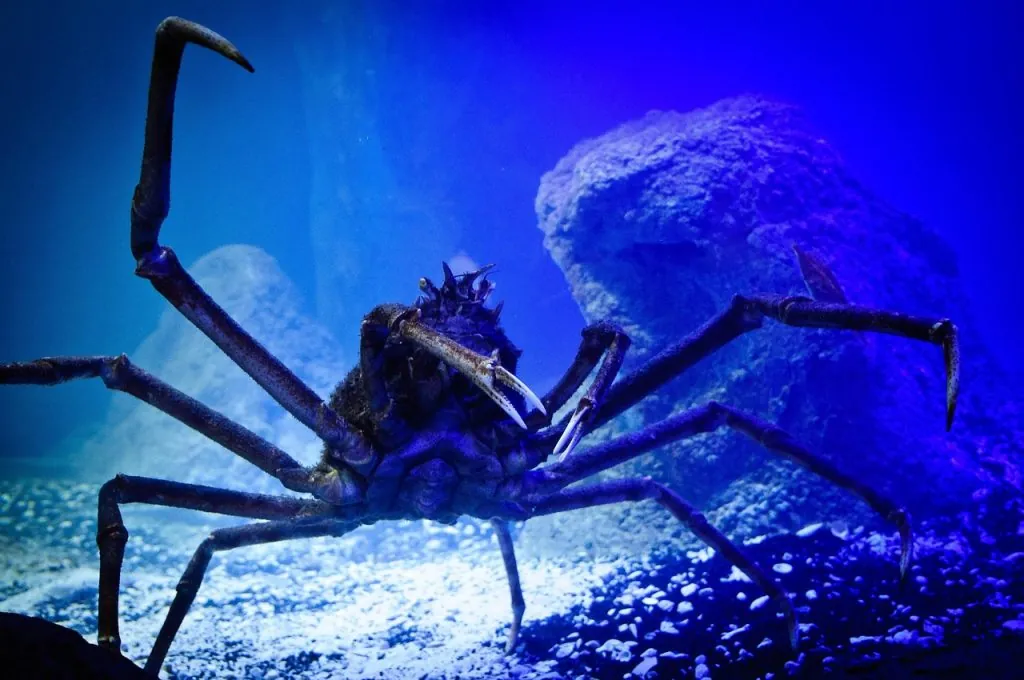
Which is the world's largest crab? If you count the distance between the tips of its claws, the answer is the Japanese spider crab, Macrocheira kaempferi. It can reach around 3.7 meters.
Guinness World Records lists a record specimen with a leg span of 3.69 meters and a weight of 18.6 kilograms. That's a big difference from the crab in our fish counter! That doesn't mean that the body itself is several meters wide. It's the very long legs and claws that give it the enormous extension. The species lives in the sea around Japan.
16. Some crabs dress up
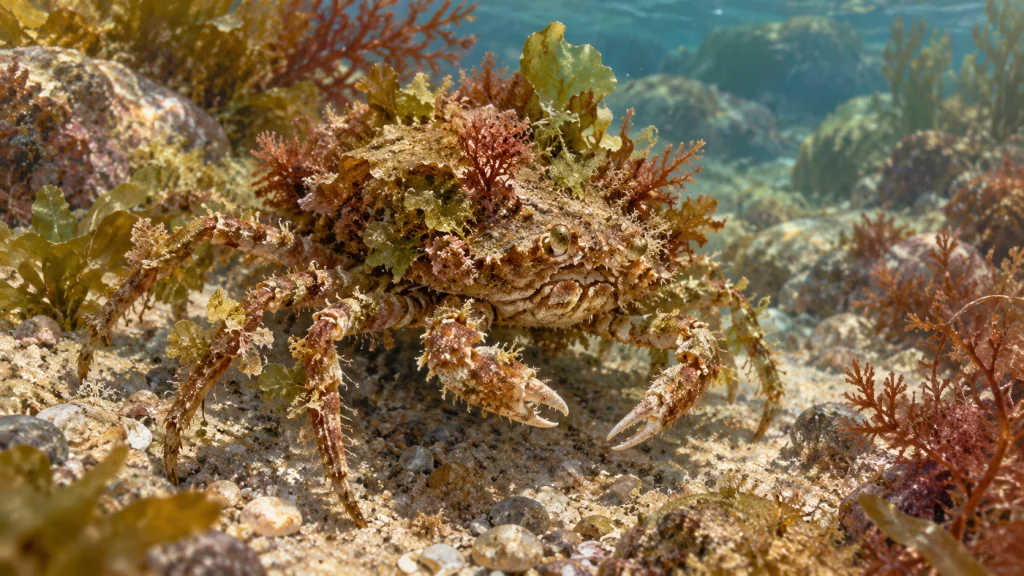
Decorator crabs take camouflage to a new level. For example, they attach algae and other materials from their surroundings to their bodies, making them harder to spot.
In the species Naxia tumida, there are small hooks on the shell that help hold the decorations in place. The algae can continue to grow there. The result can look like a small piece of sea vegetation that suddenly starts walking.
17. Autumn is a lovely time for crab dinner
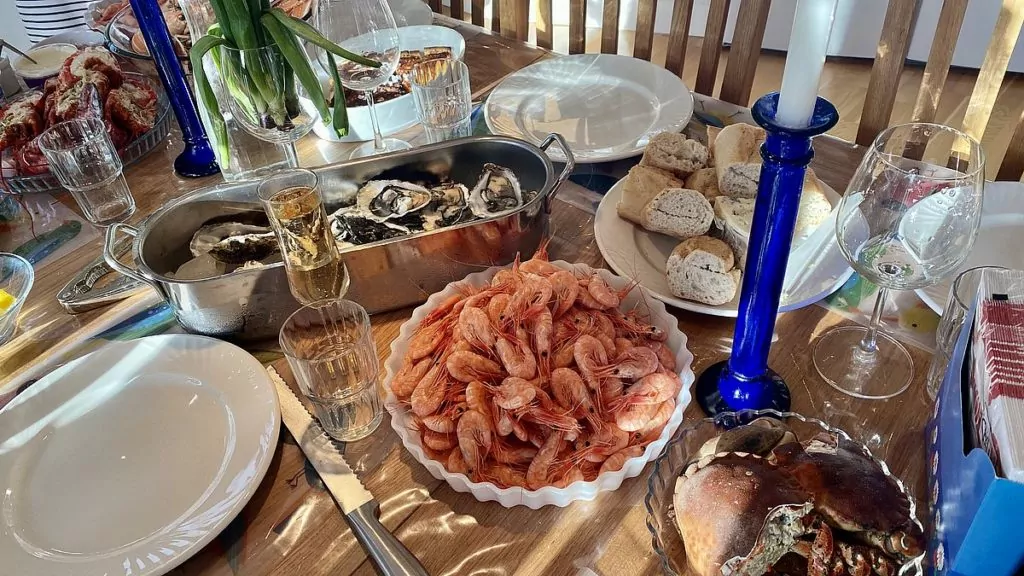
Crabmeat is caught at different times of the year, but autumn is a popular season for eating. The Norwegian Seafood Council describes Norwegian crab as being at its best in autumn.
For us, that's one of the great advantages of autumn. We usually eat it whole, with a master's sauce, and let dinner take its time. A little bit of food, a lot of conversation and something good to drink – that's not always needed.
18. The color of the crab changes when it is cooked
Many crabs turn a more distinct red or orange color when cooked. An important part of the explanation is the pigment astaxanthin. In the shell, the pigment can be bound to proteins that affect how the color looks. When heat changes the proteins, the red color appears more clearly. So the transformation is not due to adding color to the cooking water.
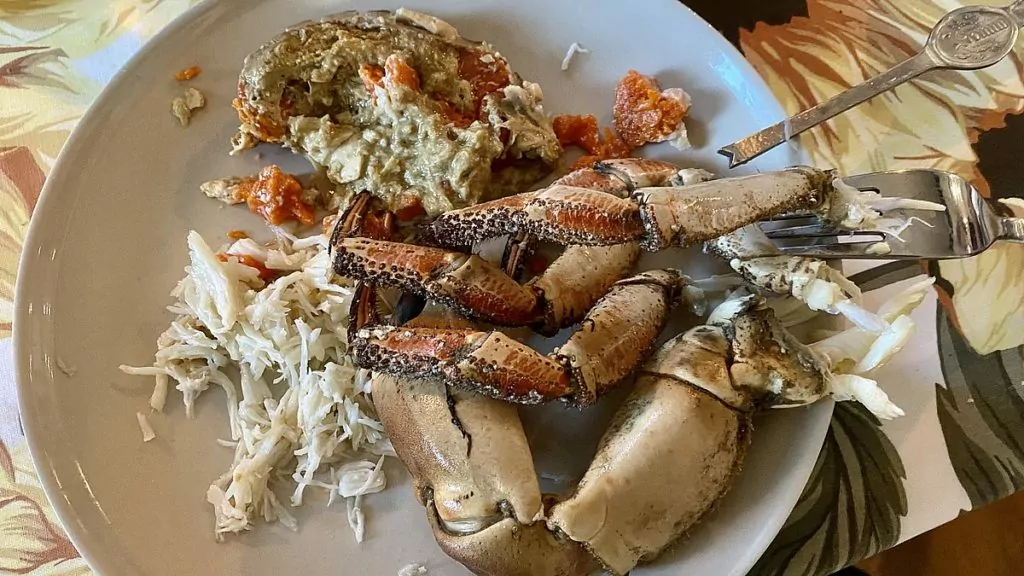
19. The white meat is hiding in several places
It's easy to focus on the big claws, but white crab meat is also found in the legs and small compartments of the body. There can be a lot of good stuff in there to take advantage of.
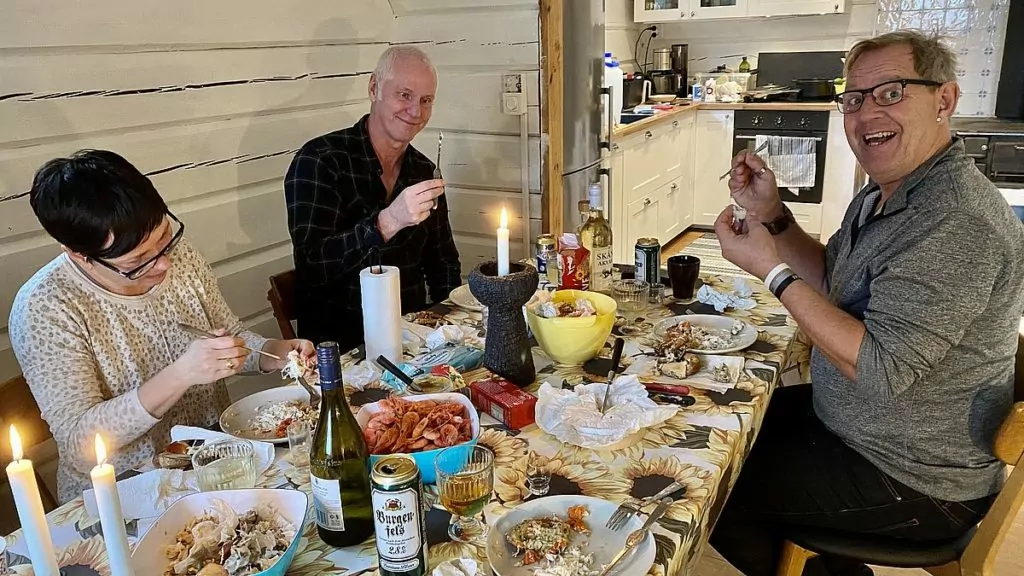
Peter showed me how to get the meat when I started eating whole crab. If you're also a beginner, our guide is here Eating a whole crab – how to open and clean it, where we show how we do it step by step.
20. Not all crabs have rum.
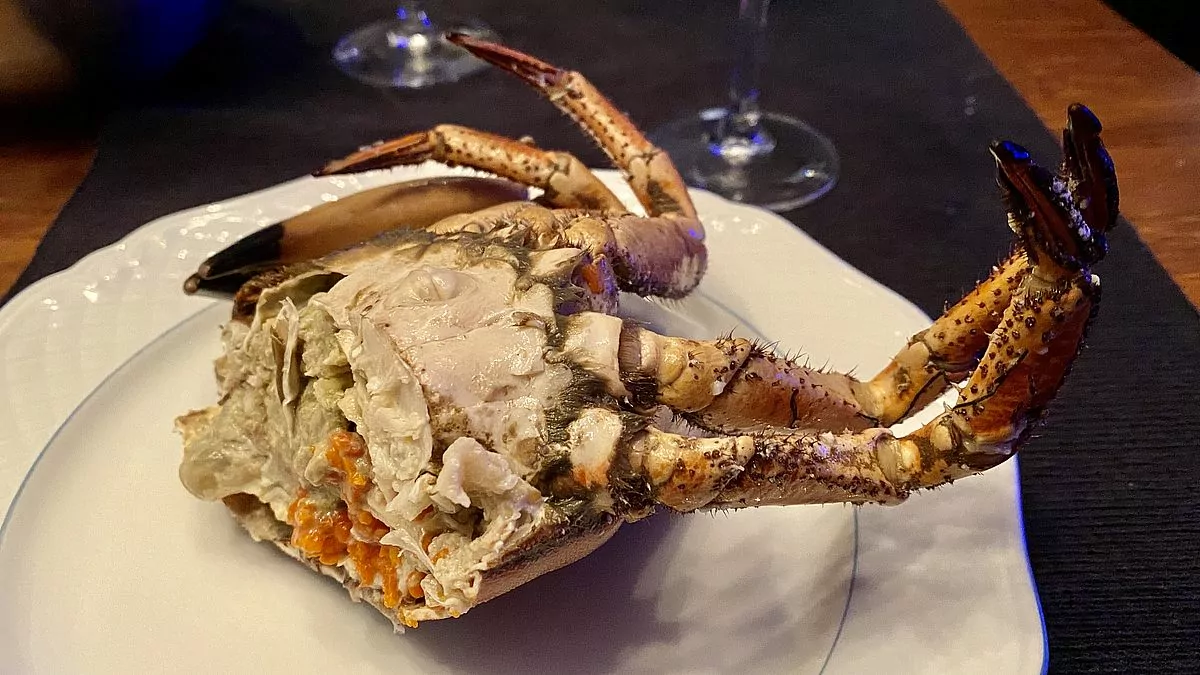
The orange or red roe that you can find inside a cooked female crab is eggs in the female's ovaries. It is not the same as the fertilized eggs that she may later carry under her body. The amount of roe that is present depends, among other things, on the stage of development of the female. A crab without roe is therefore not necessarily a bad crab. It could also be a male.
21. Crab butter is not fat or ordinary meat
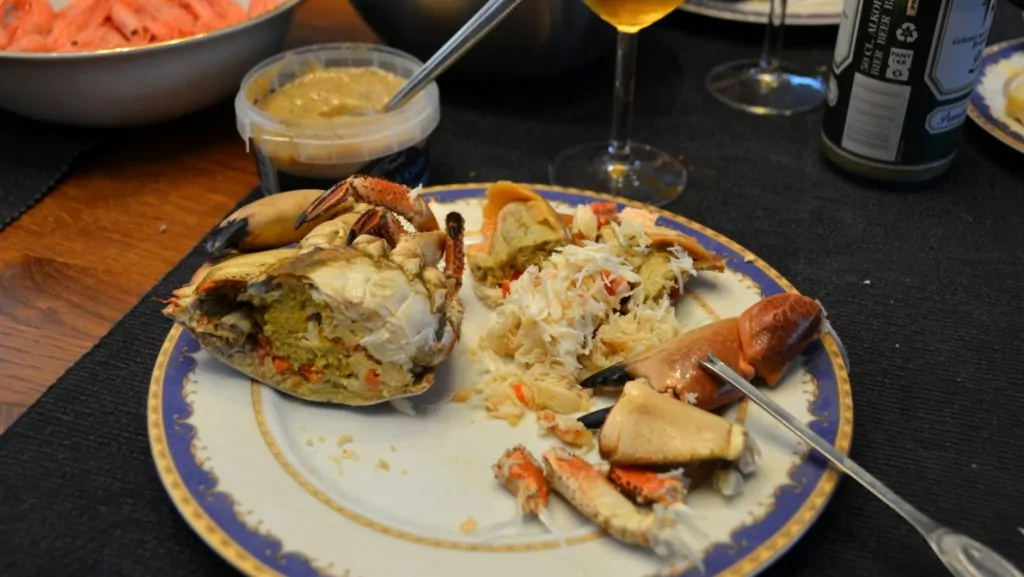
Under the shell is a soft, yellowish-brown or greenish-brown mass, commonly called crab butter. It consists primarily of a digestive organ, the hepatopancreas, which performs functions similar to the liver and pancreas.
We have previously eaten and enjoyed crab butter. However, when we updated our guide, we noted the Swedish National Food Administration's advice not to eat it, as it may contain high levels of cadmium. The agency clarifies that the advice applies to everyone. The white crab meat is not covered by that advice.
22. Soft-shell crab is a stage, not a separate species
In restaurants abroad, you may come across soft-shell crab. The name describes a crab that has recently molted and whose new shell has not yet hardened. It is therefore not the name of a specific species. Blue crab is an example of a species sold in this way. After cleaning, the soft-shell crab can be cooked and eaten with the shell still on.
23. Crab on the journey can look completely different
A Swedish crab dinner with a large crab bag is just one of many ways to eat crab. Different species and sizes provide different eating experiences, and cooking and accompaniments vary as well.
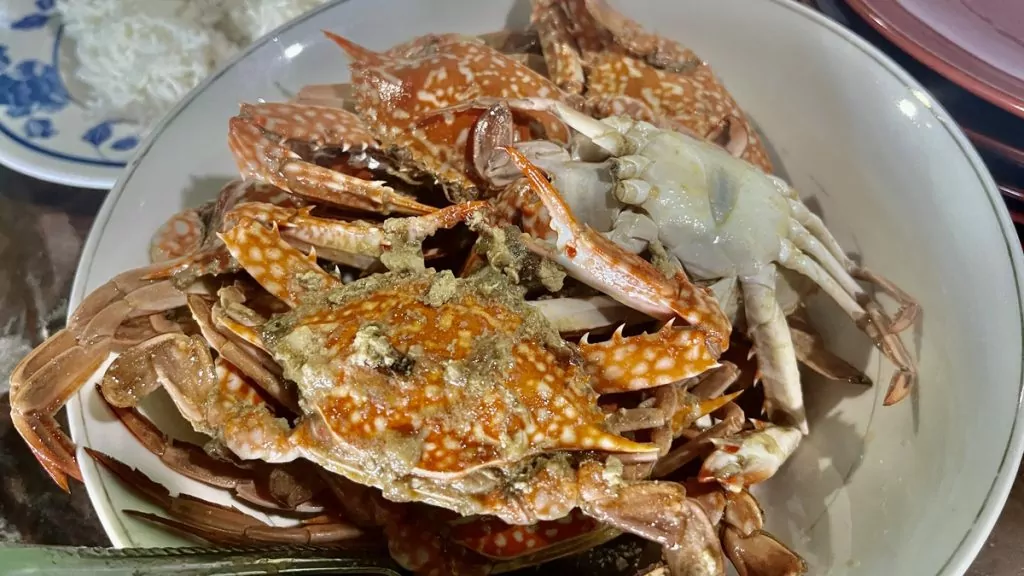
When we ate crab in Vietnam and the Philippines, the crabs were very small compared to the ones we usually eat at home. We don't know what species it was, but it was another experience of how different crab on the plate can be.
24. Crab meat can be used in many dishes
Whole crab is our most common option at home, but the meat can also be used in salads, soups, pasta and filled crêpes, for example. So you don't have to serve the whole animal to have a delicious crab dinner.
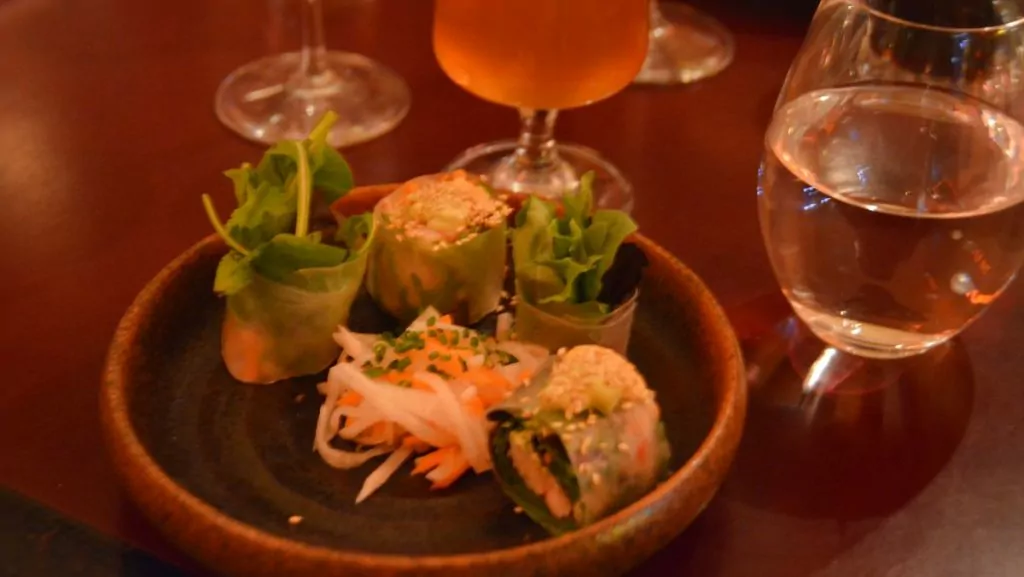
We like to eat crab in different ways at restaurants. If you also want to vary your seafood dinners, you can find more ideas in our article Seafood recipes.
25. Crabsticks are not the same as crab meat
The name may be confusing, but crab sticks are usually made from surimi: finely ground and washed fish that is used as a raw material in various shaped products. Alaskan pollock is often used. The products are flavoured and shaped to mimic crab meat.
The content varies between products, so crab sticks are not the same as pure pieces of crab meat. We have personally experienced that a dish described as, for example, crepes with crab filling sometimes contains crab sticks. If you want to know what you are getting, the easiest thing to do is ask.

An autumn favorite with many surprises
For us, crab is both a delicious dinner and a connection to Peter's childhood. Over the years, it has also become part of our travel memories – from small crabs in Vietnam to warning signs on a Philippine beach.
But when autumn comes, we still yearn most for a whole crab, courtier's sauce, and a long dinner together.
You might also like:
 Yerseke in the Netherlands - Aunt Anna in mussel paradise
 Facts about lussekatter - 12 things you (maybe) didn't know?
 Luxurious seafood buffet at home – tips, menu and inspiration
 Mussels - Aunt Anna and the sweets of the sea
 Can you eat red crayfish on Smögen?
 Facts about chanterelles – 25 interesting things you might not know



 English (UK)
  Svenska