


Text and photo: Helena Bergström
Sifnos is known for its food culture, but the food is also closely connected to another of the island’s strong traditions – ceramics. During our days on the island we managed to try local specialties like mastelo, revithadas, chickpea balls and melopita, find some really charming restaurants and visit potters who still keep the old craft alive.
 Tweet
Tweet Share
Share Share
Share Pin
Pin Share
Share Share
ShareTable of contents
Food on Sifnos – simple, genuine and well-prepared
Vi hade sett fram emot att upptäcka maten på Sifnos, en ö som är känd för sin gastronomi och sina lokala specialiteter. Eftersom flera måltider ingick i upplägget för vår resa, som till viss del arrangerades i samarbete med en lokal pr-byrå, åt vi på samma restauranger flera gånger.
Först tyckte vi kanske att det var lite synd att inte hinna upptäcka fler olika restauranger. I efterhand såg vi också charmen med upplägget. Framför allt fick vi möjlighet att återvända till samma middagsrestaurang kväll efter kväll, lära känna personalen och prova många olika rätter.
What stayed with us above all was the feeling. We often experienced the food on Sifnos as unartificial and genuine. Not necessarily fancy or trendy – just well-cooked, generous and very tasty.
Yalos Sifnos – breakfast with a sea view
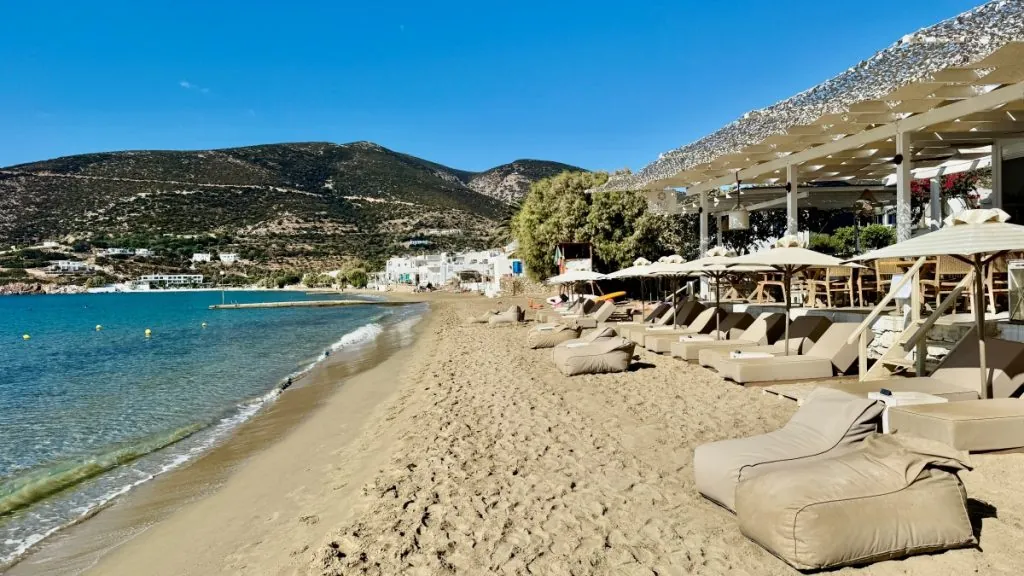
We stayed in Platis Gialos and every morning we walked to Yalos Sifnos for breakfast. The location is hard to fault: the restaurant is right on the beach and while we ate we could look out over the sea.
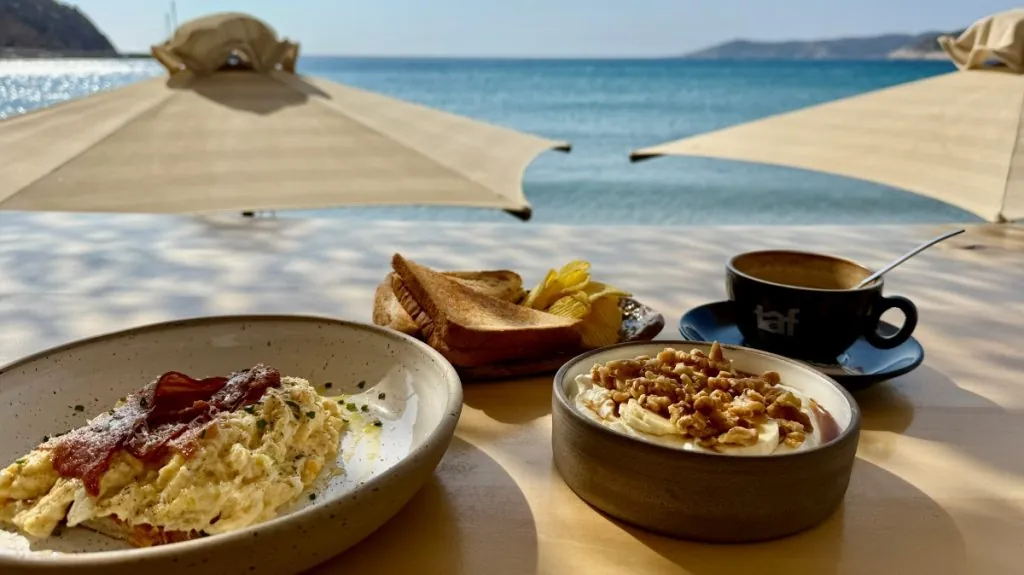
Peter fastnade för en krämig äggröra med parmesan, som var så god att han var tvungen att sticka över en gaffel så att även jag fick smaka. Själv fastnade jag för toast med kalkon och ost, och grekisk yoghurt med honung och valnötter eller frukt.
And the Greek yogurt! So thick, creamy and delicious. With honey and walnuts, you don't really need much else.

Cyclades – the restaurant that became our regular spot
Most evenings we had dinner at Cyclades in Platis Gialos. Of course, this meant that we didn't have time to try as many restaurants on the island, but instead this place almost became our little regular spot.
Cyclades is not the type of restaurant that feels fancy or pretentious. Quite the opposite. The atmosphere here was warm, relaxed and homely, the food well-prepared and the service fantastic.

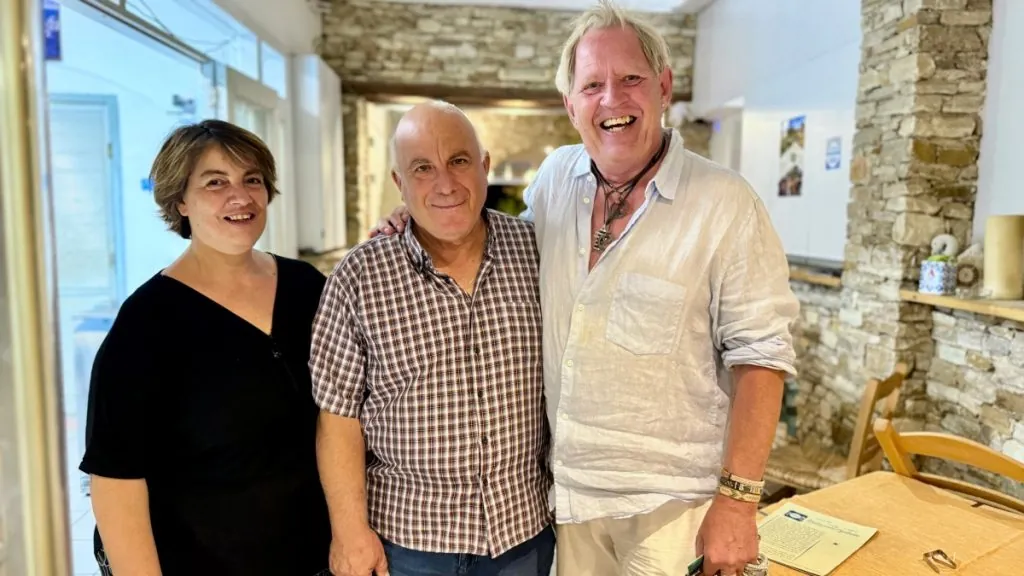
We were well looked after by a very nice waiter and the owner, and after a few evenings it started to feel almost like family coming back. We also managed to try a lot of the menu.
Imam – slow-baked eggplant
One of our favorites was imam, a dish of slow-baked eggplant, tomato, onion and olive oil. It may not look that spectacular on the plate – but oh so delicious! The eggplant becomes very soft and the flavors are concentrated. This was definitely one of the dishes we would have loved to have again.
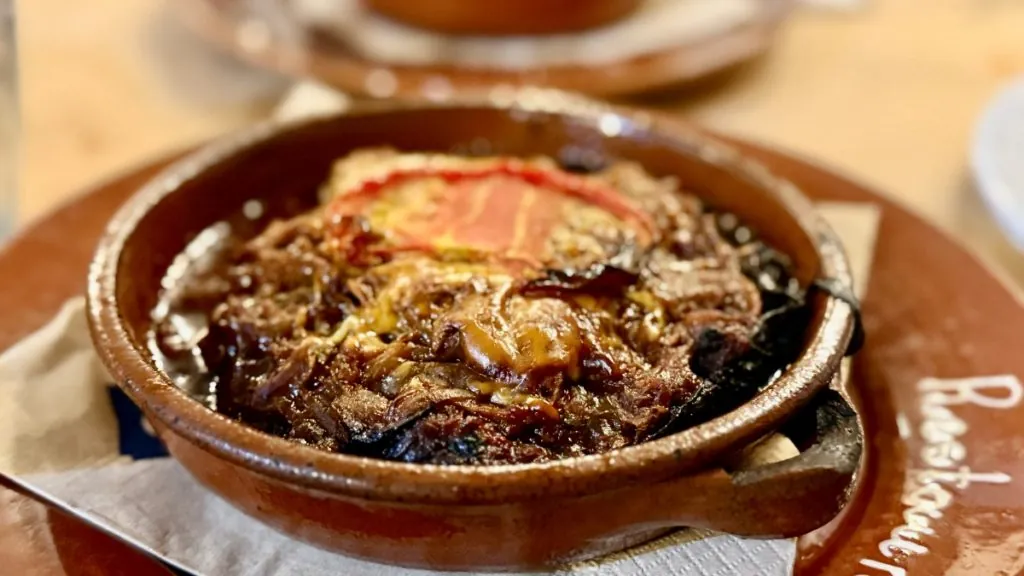
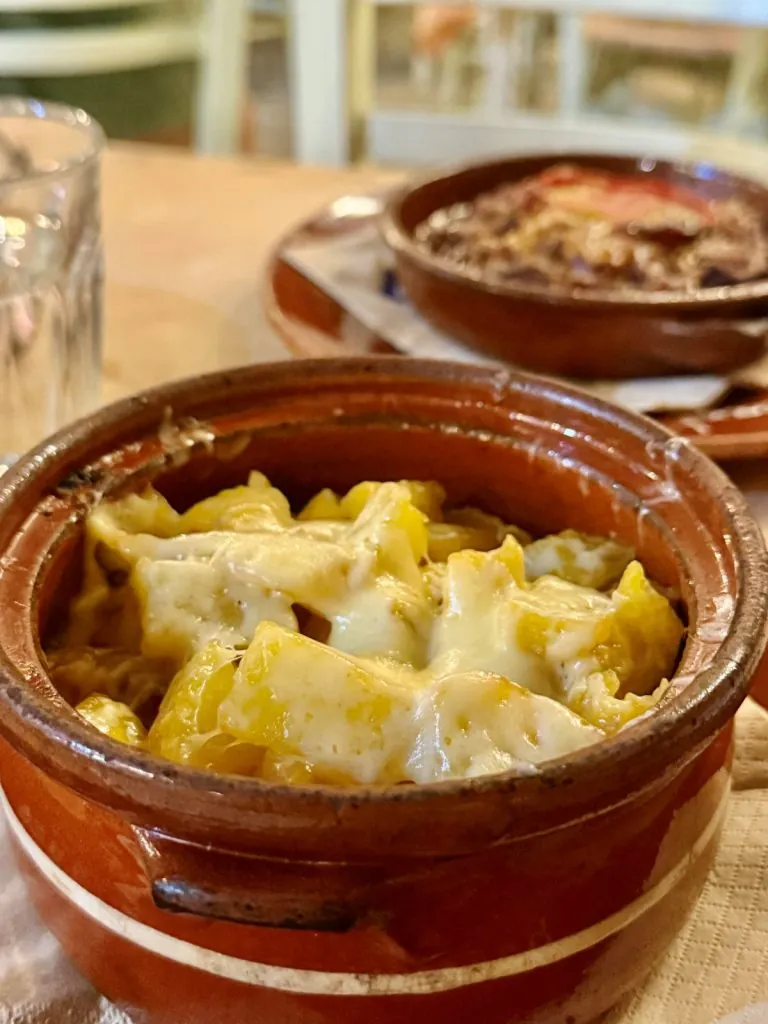
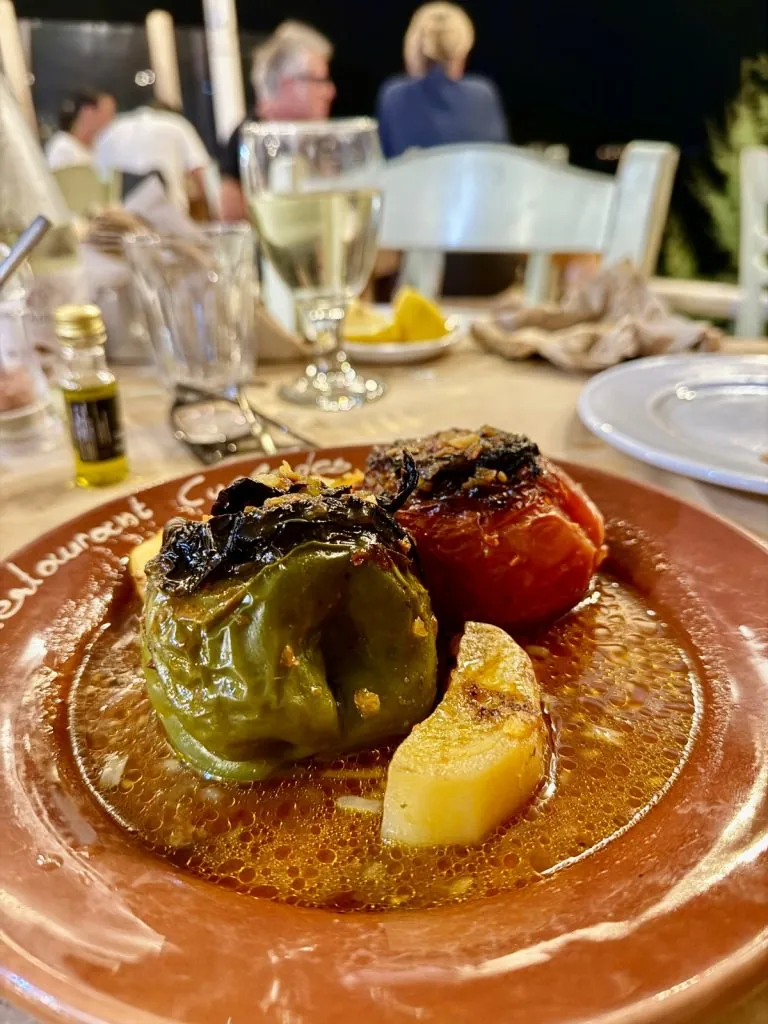
Another favorite was pork cooked in the oven with potatoes and cheese. Hearty, rustic food and very tasty. We also tried zucchini balls, grilled shrimp, shrimp saganaki and stuffed peppers.
Revithada – Sifnos’ classic chickpea stew
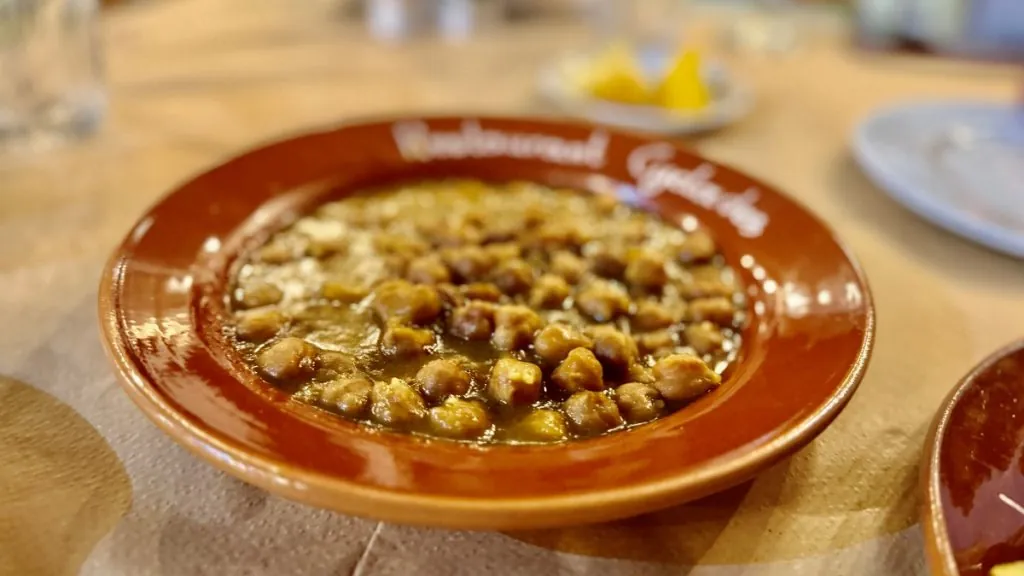
A dish that you almost have to try on Sifnos is revithad, the island's traditional chickpea stew. Chickpeas, onions and olive oil are cooked very slowly, traditionally in a special ceramic pot in a wood-fired oven.
Revithada has a strong connection to the Sunday meal. Traditionally, the stew was prepared on Saturday evening and left to simmer overnight, to be ready by Sunday.
Självklart ville vi prova! Och? Nja … Vi är glada att vi provade och rätten var det absolut inget fel på, men om vi ska vara ärliga blev just revithada inte någon av våra personliga favoriter på Sifnos. Kikärtor skulle däremot få revansch senare.
Mastelo – both a dish and a ceramic vessel
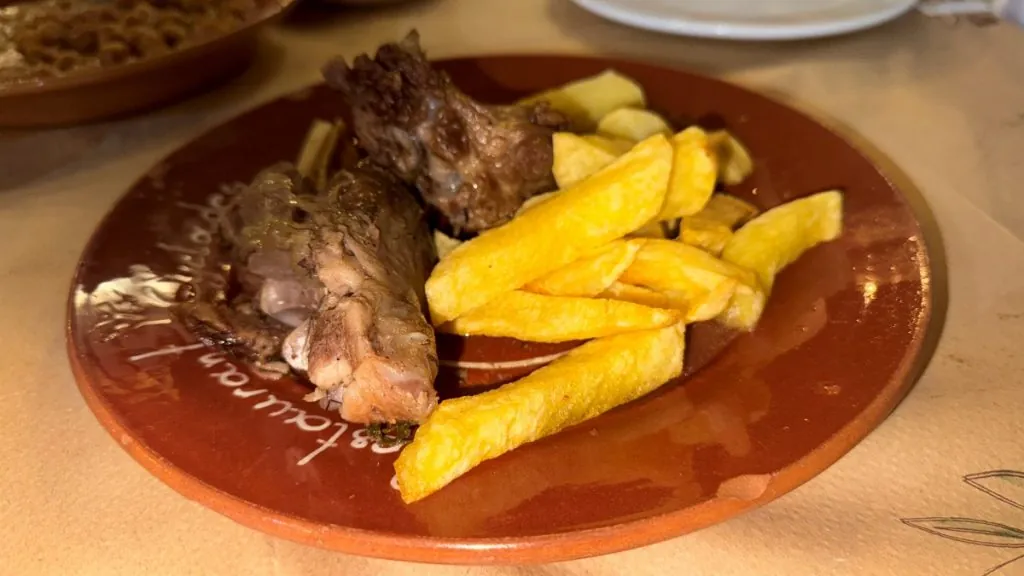
Another classic we tried on Cyclades was mastelo, which is traditionally made with lamb or goat that is cooked for a long time with red wine and dill, among other things.
But here’s where something really interesting starts to happen. Mastelo is not just the name of the dish – it’s also the name of the traditional ceramic vessel in which it’s cooked. And the more we learned about the food on Sifnos, the clearer it became that the island’s food culture and ceramic tradition are closely intertwined. More on that in a moment!
Melopita – the honey pie that wasn't on the menu
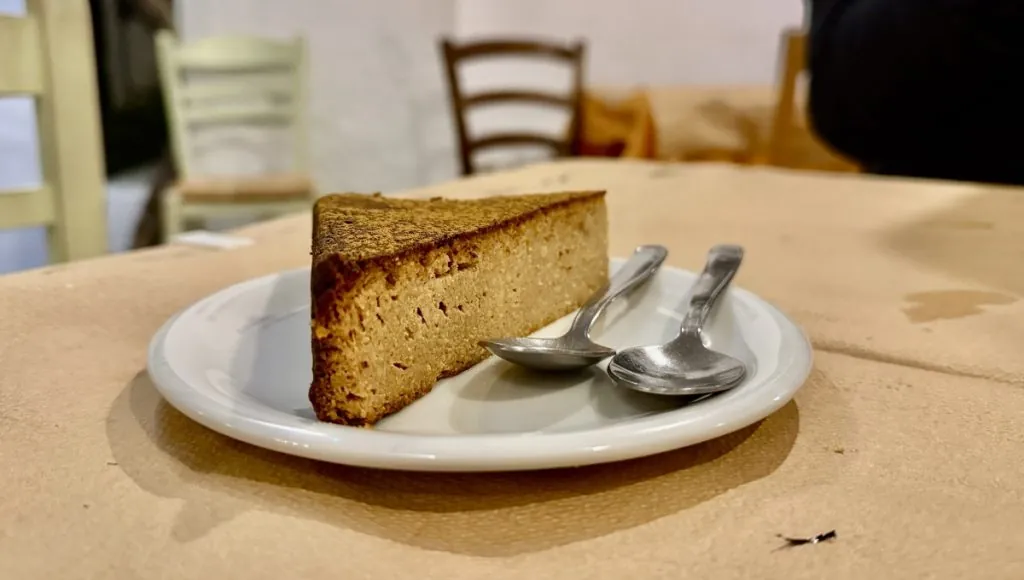
One evening we asked if the restaurant had melopita, Sifnos' traditional honey pie. No, unfortunately. Of course, there was nothing strange about it and we didn't think anything more about it.
But the next evening we had a surprise. The owner had gone and bought melopita from another place – just because we had asked for it! So nicely done!
And how lucky she was that she did. The soft and juicy pie, traditionally made with cream cheese, honey and eggs, was amazingly delicious. A little on the cheesecake side, but still something completely unique. A very good dessert – and a small gesture that says a lot about why we enjoyed ourselves so much in Cyclades.
Tsikali in Vathi – lunch with your feet in the sand
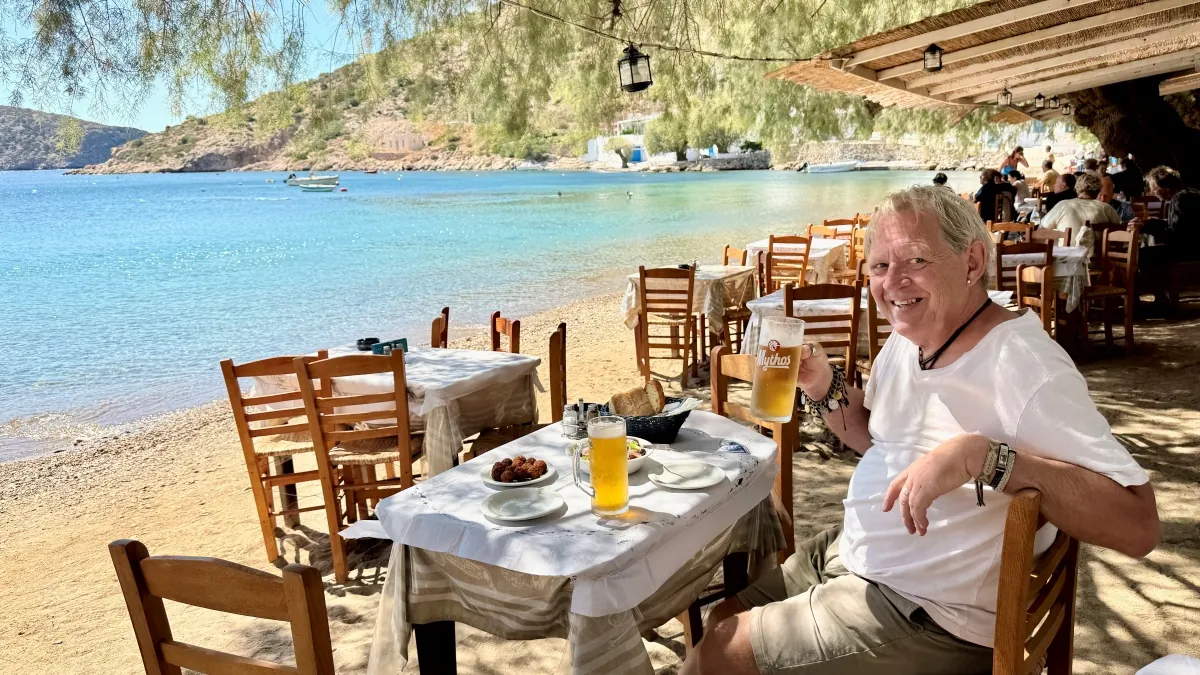
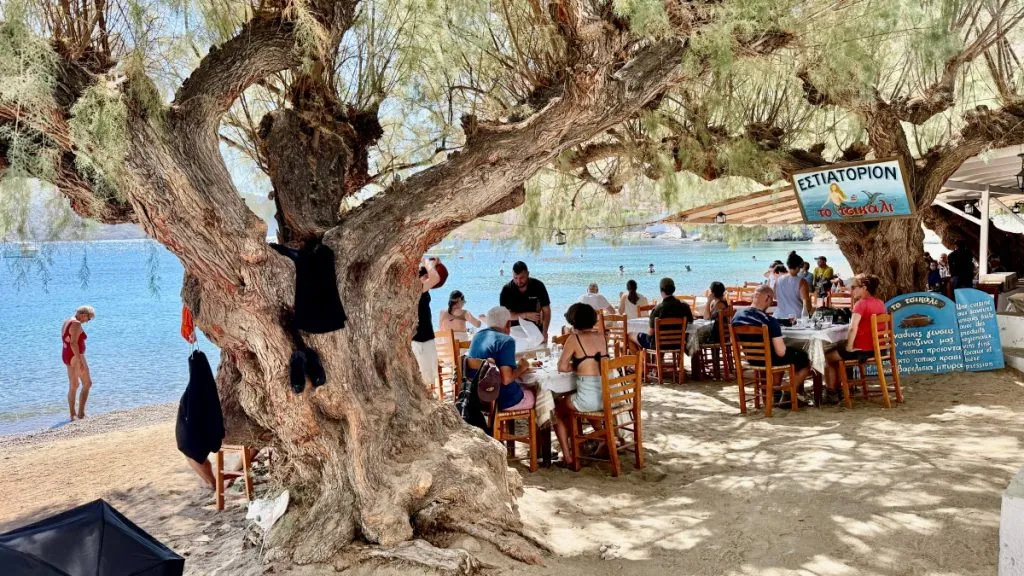
En annan dag tog vi oss till Vathi och promenerade en bit längs stranden för att äta lunch på Tsikali. Här är miljön en stor del av upplevelsen. Borden står alldeles intill och på stranden, så att vi kunde sitta med fötterna i sanden medan vågorna rullade in bredvid.
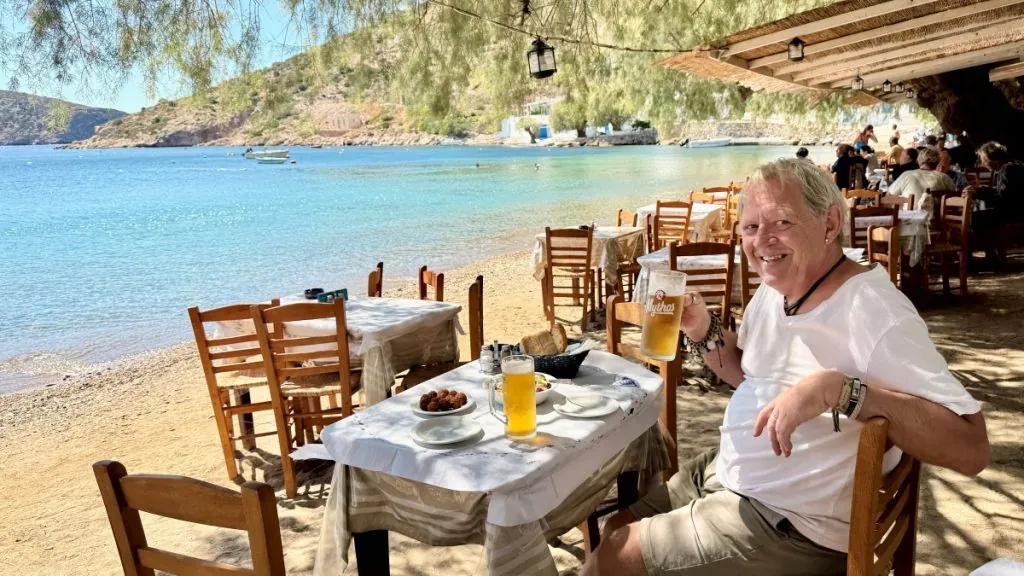
We ordered a Greek salad Sifnos-style, with a soft local cheese instead of the feta cheese we usually associate with Greek salad. Among other things, Sifnos produces fresh mizithra, a soft cheese made from goat or sheep milk. The salad was fantastic.
For this we took in revithokeftedes, kikärtsbollar. Och här fick kikärtorna sin revansch! Kikärtsgrytan hade inte riktigt blivit vår grej, men de frasiga kikärtsbollarna var en helt annan historia. Mycket, mycket goda.
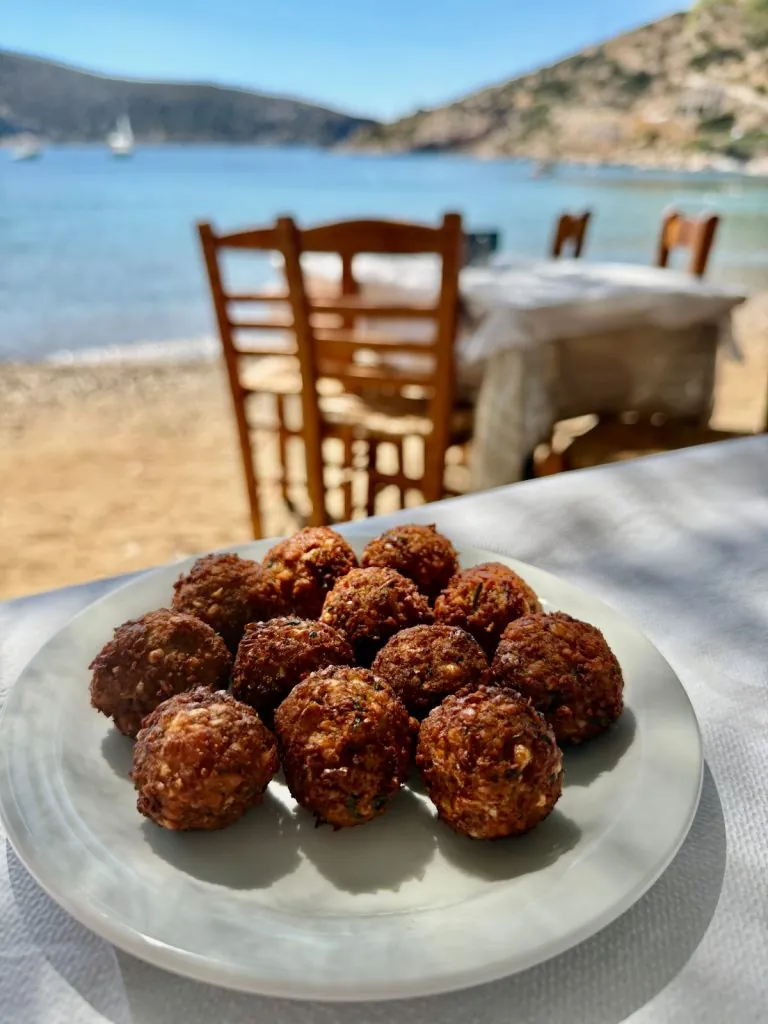
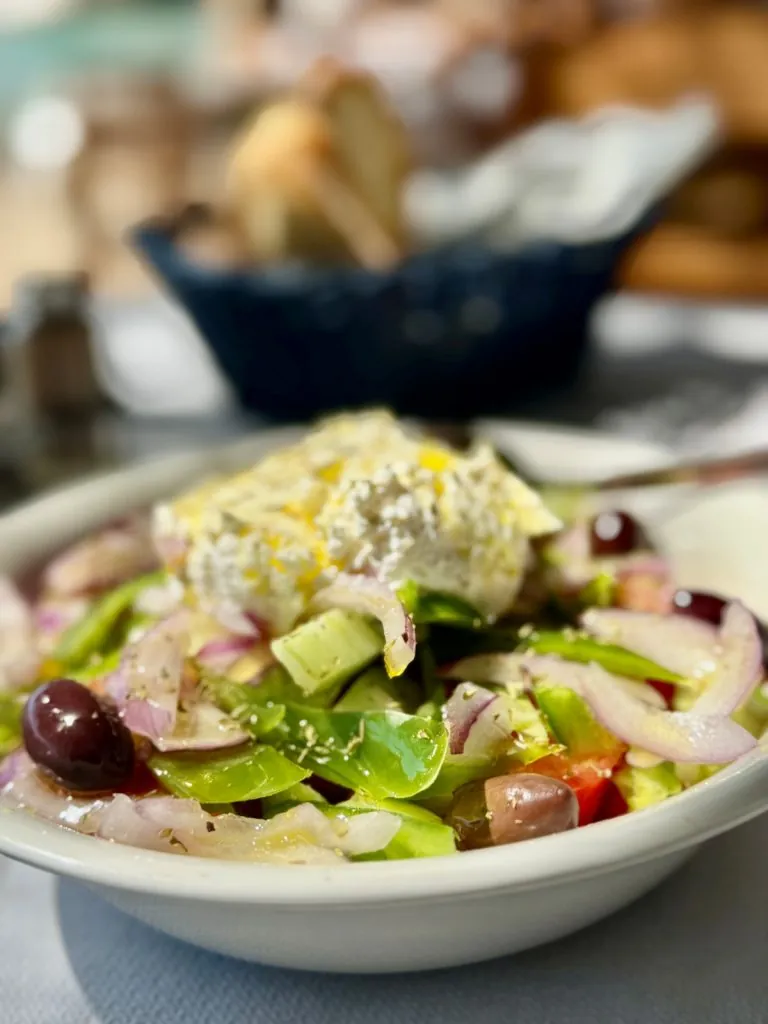
With good food, sand under our feet and the sound of the waves next to us, lunch at Tsikali was one of our finest dining experiences on Sifnos.
Lunch at Loumidis Family Farm
One of the most special lunches of the trip was not actually at a restaurant at all. At Loumidis Family Farm, we first got to meet the farm's wonderfully tame and sociable animals and then settled down to a lunch where the ingredients basically came from the farm itself.
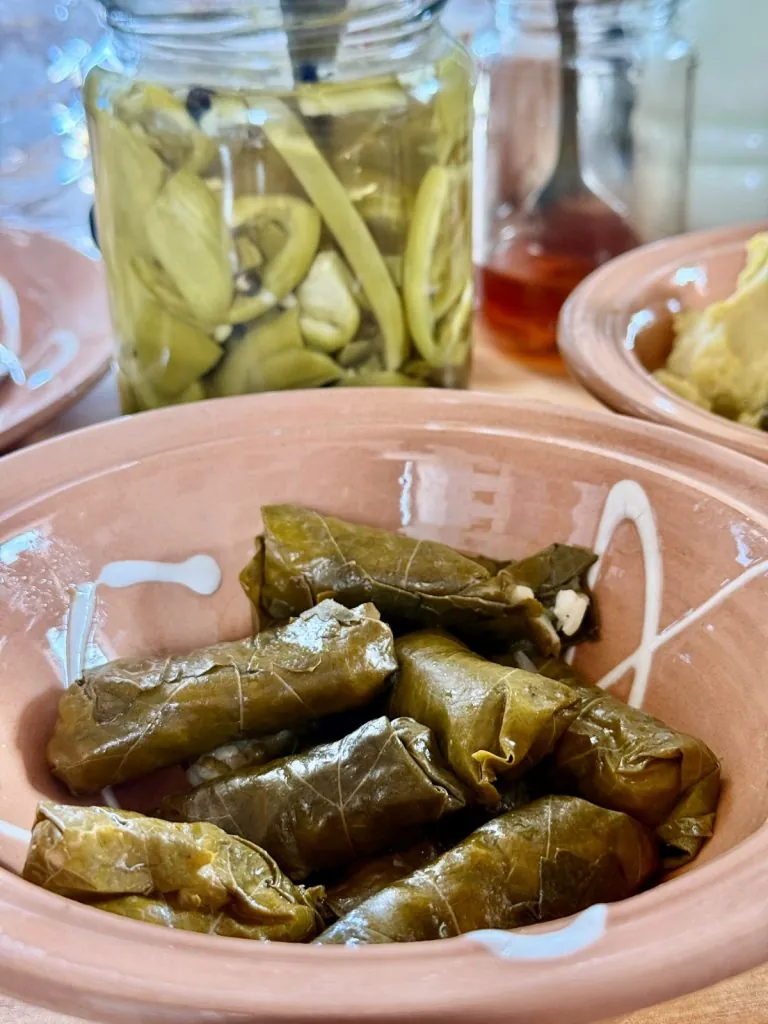
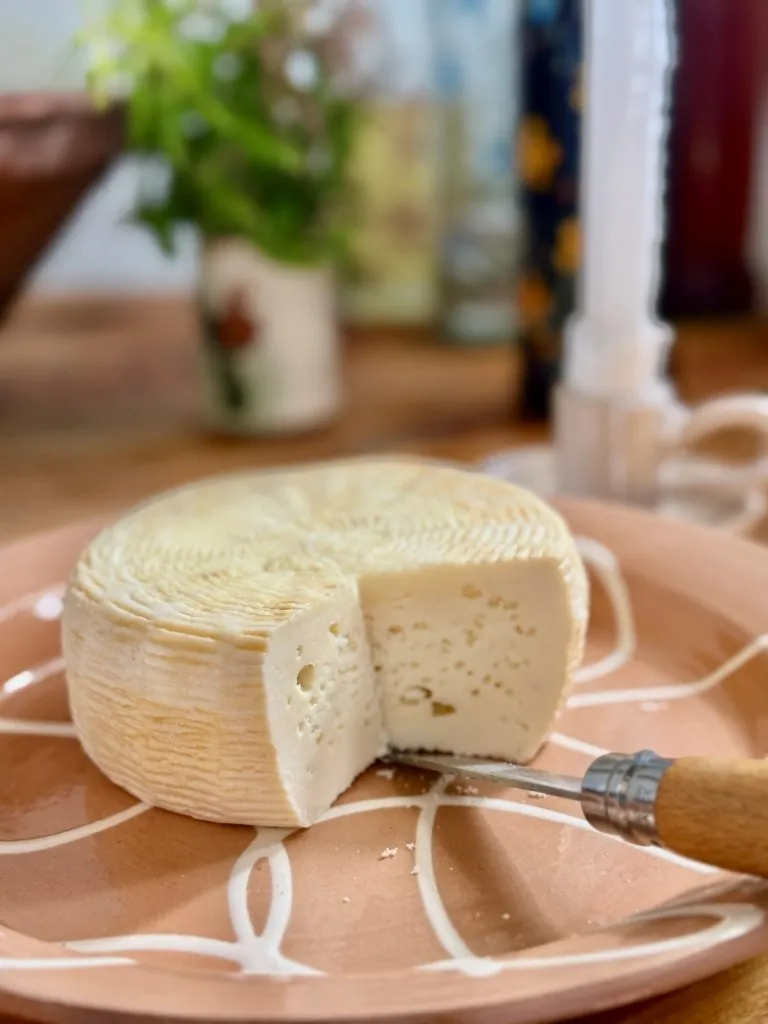
On the table were stuffed peppers, vine leaf dolma, cheeses, olives, fava beans, bread and grapes. For dessert we had yogurt with the farm's own honey. That visit was so special that it has received its own report.
READ MORE: Visit a farm on Sifnos – Loumidis Family Farm
3Gyro in Kamares – a more modern ending
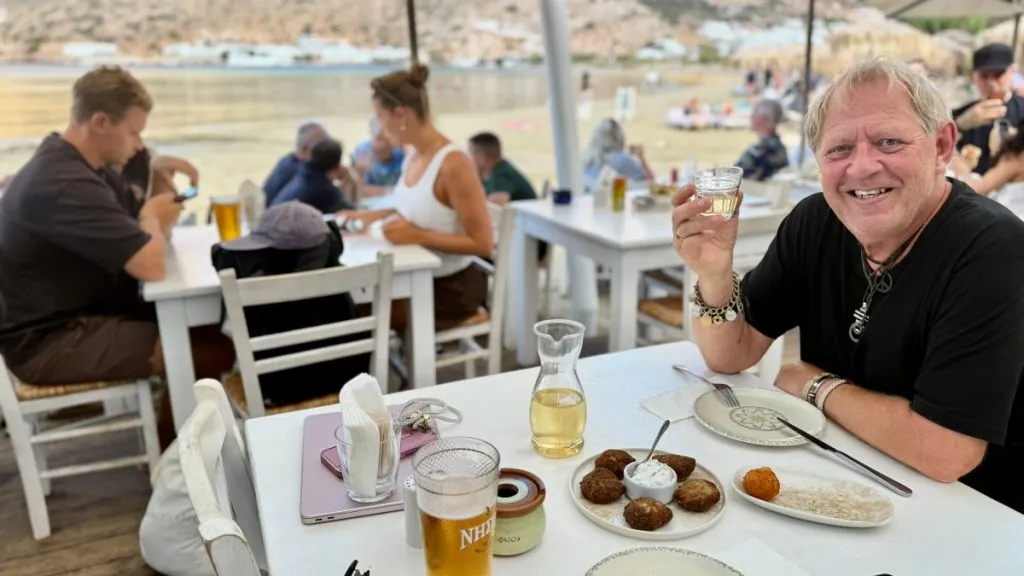
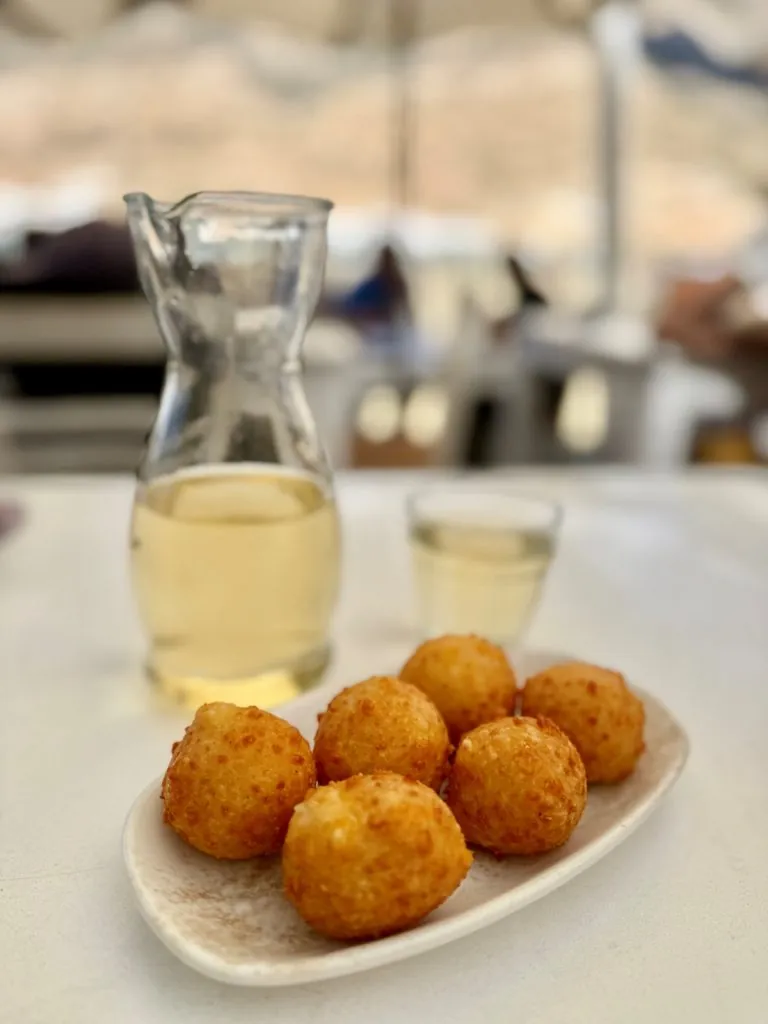
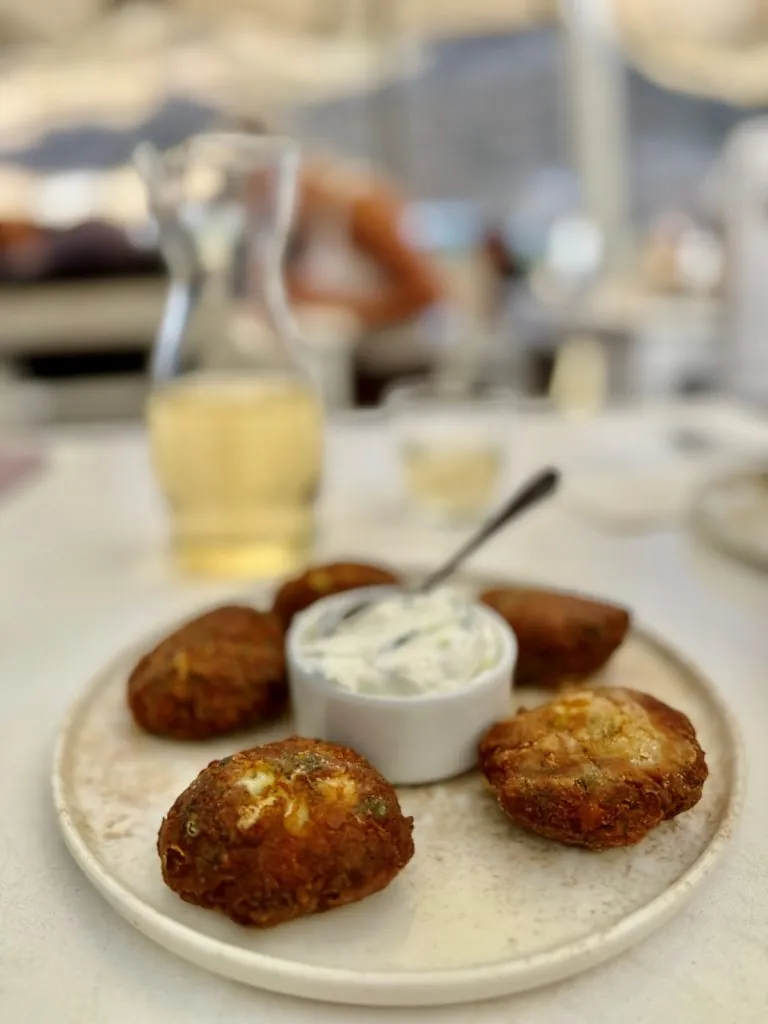
On our last day we had lunch in Kamares before it was time to leave Sifnos by ferry. We ended up at 3Gyro, which felt a bit more modern and international than several of the restaurants we had visited before. We sat outside with a view of the beach and started with cheese balls and zucchini balls with tzatziki.
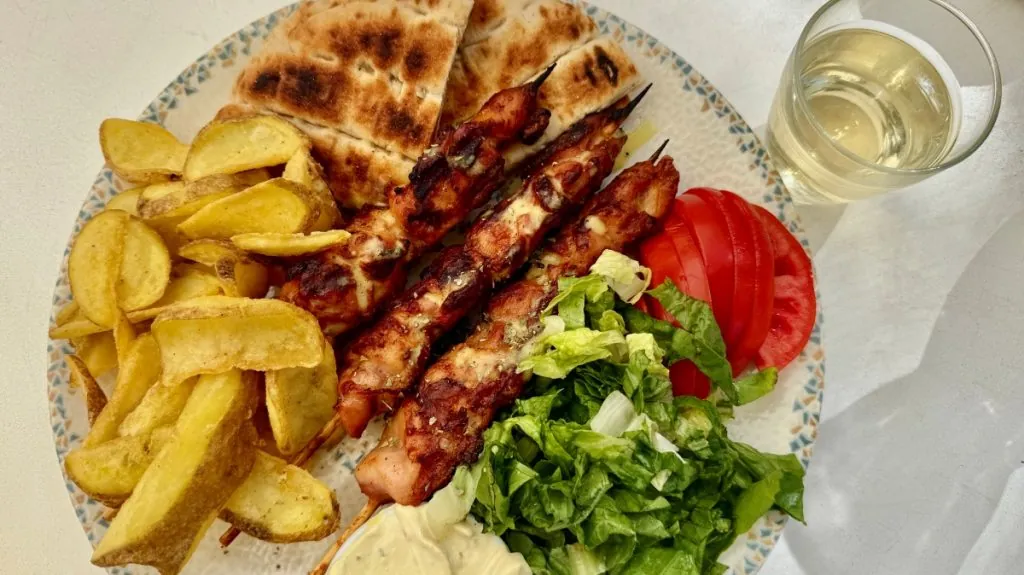
Both varieties were made at the restaurant and the cheese balls in particular were insanely good. Then we shared some souvlaki before it was time to say goodbye to Sifnos.
From food to ceramics
After a few days on Sifnos, we began to realize that food and ceramics are almost inseparable.
The island's potters have been making vessels for people's everyday lives for generations – and different vessels have had different functions in the kitchen. Some of Sifnos' most famous dishes are still traditionally prepared in ceramics developed specifically for the purpose.
To understand the food culture on Sifnos, you almost also need to understand a little about the ceramics.
Ceramics at Sifnos – a living tradition
Sifnos has a very long ceramic tradition, and an important explanation lies beneath the feet of the island's inhabitants: here there is clay with refractory properties.
This made it possible to produce robust vessels that could withstand high temperatures and could be used for cooking. From the beginning, ceramics were primarily a matter of practical objects – vessels for cooking, storing and serving food and drink.
Over time, the potters of Sifnos became known far beyond the island. During the 19th and 20th centuries in particular, Sifnos potters established themselves in many other places in Greece and the eastern Mediterranean. Craftsmanship was simply something that Sifnos was really good at.
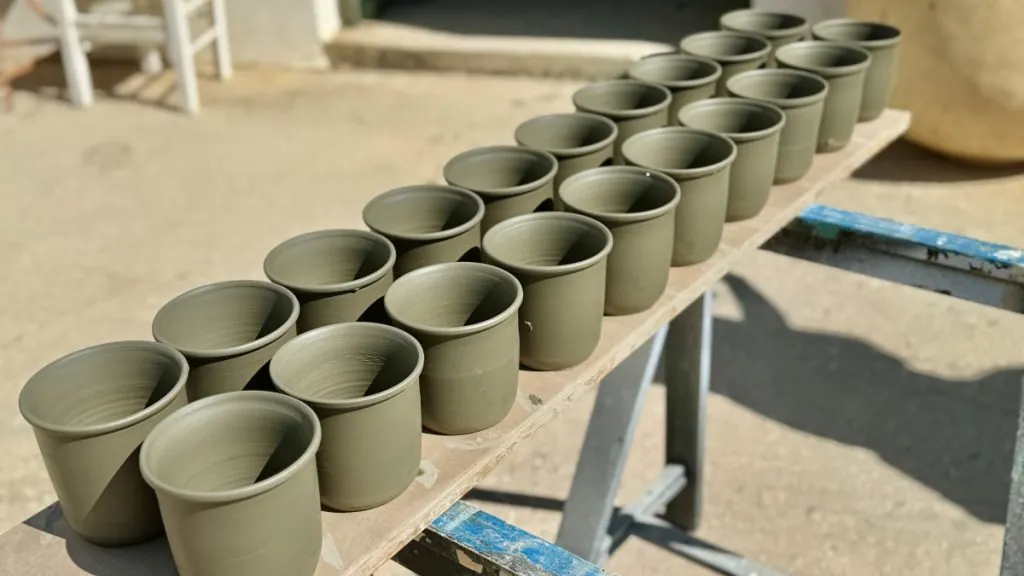
Narlis Pottery – where food and ceramics meet
Our first encounter with pottery on Sifnos was with a guide, who took us to Narlis Pottery and Narlis Farm. The family-run business combines two of the island's strong traditions: food and pottery.
We saw different types of ceramic vessels and learned how their design is related to their use. One vessel is used for the slow-cooked chickpea stew revithad, another for mastelo, and other shapes have their own special functions. It was fascinating to realize that the shapes are not just decorative. They have been developed for a purpose.
Those who want to delve deeper than we did can book activities with Narlis, including cooking and pottery. We only made a short visit, but it seemed very nice.
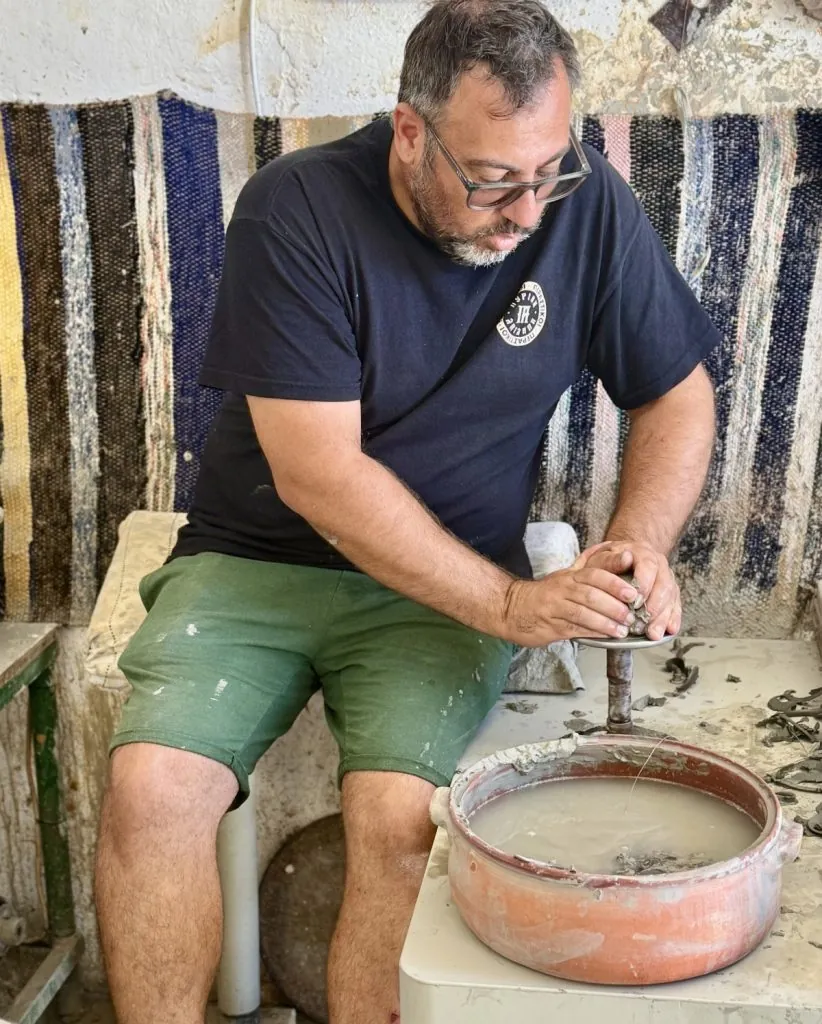
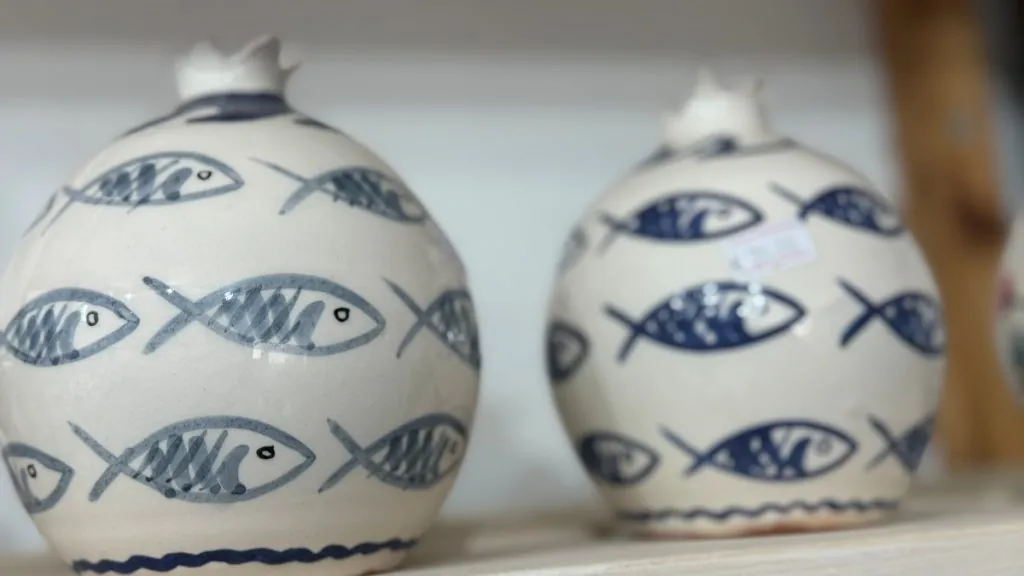
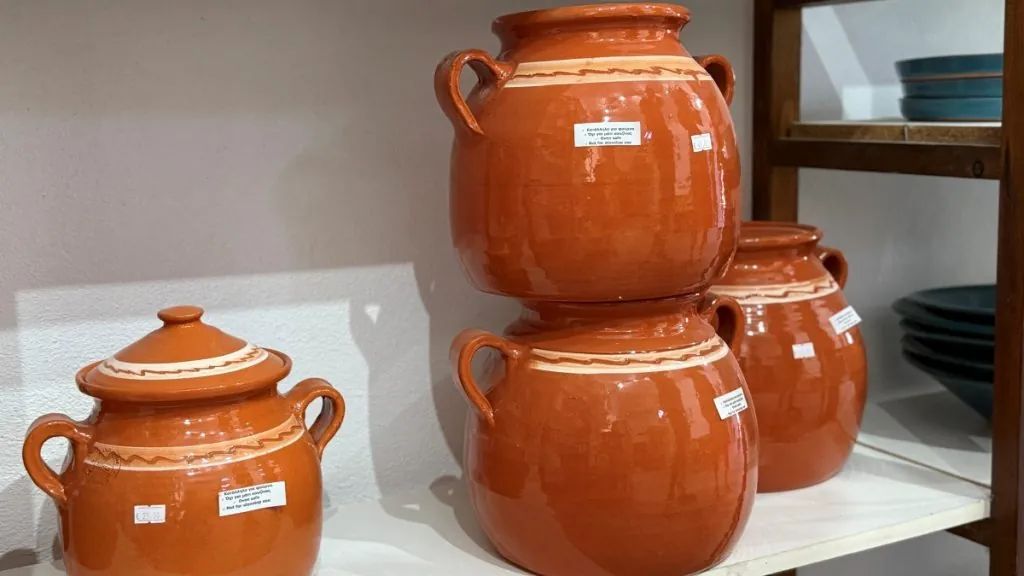
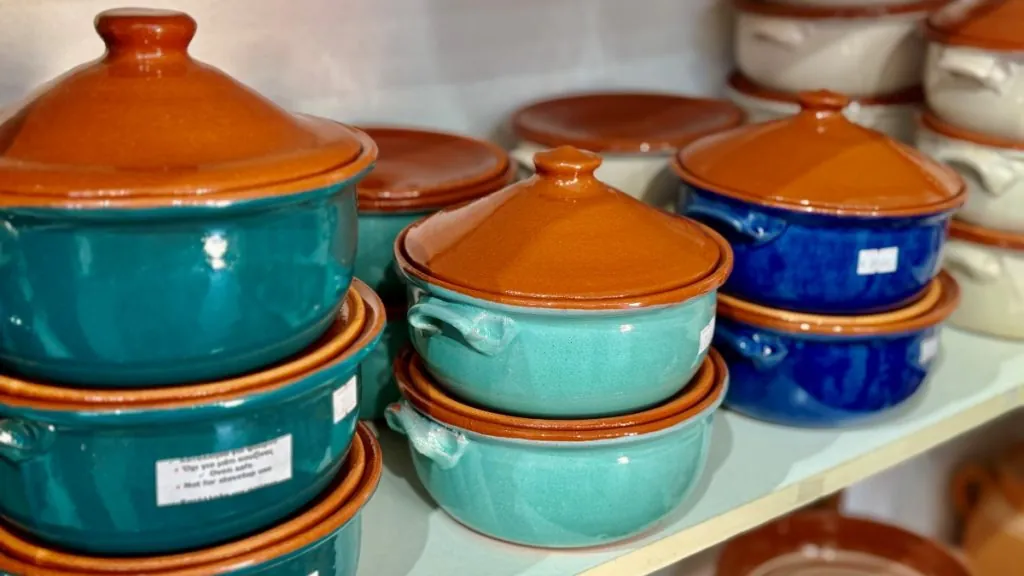
Apostolidis – ceramic craftsmanship up close
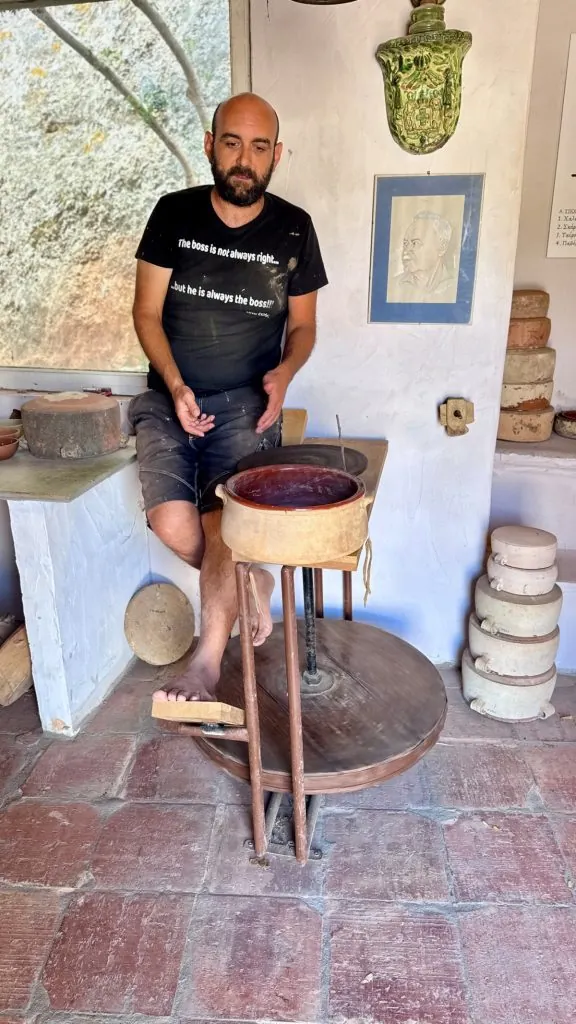
When we later had a rental car on Sifnos, we decided to visit another potter: Apostolidis. It was an even more in-depth encounter with the craft. We got to look into the workshop, see how the pottery was turned and hear stories about how the craft on Sifnos has developed through the generations.
Refractory clay gave the ceramics special properties
An important prerequisite for ceramics on Sifnos is the fireproof, or refractory, clay. When processed and fired correctly, it can produce cookware that can withstand very high heat.
This made Sifnos pottery particularly useful in the kitchen and contributed to the island's potters becoming famous for their utensils.
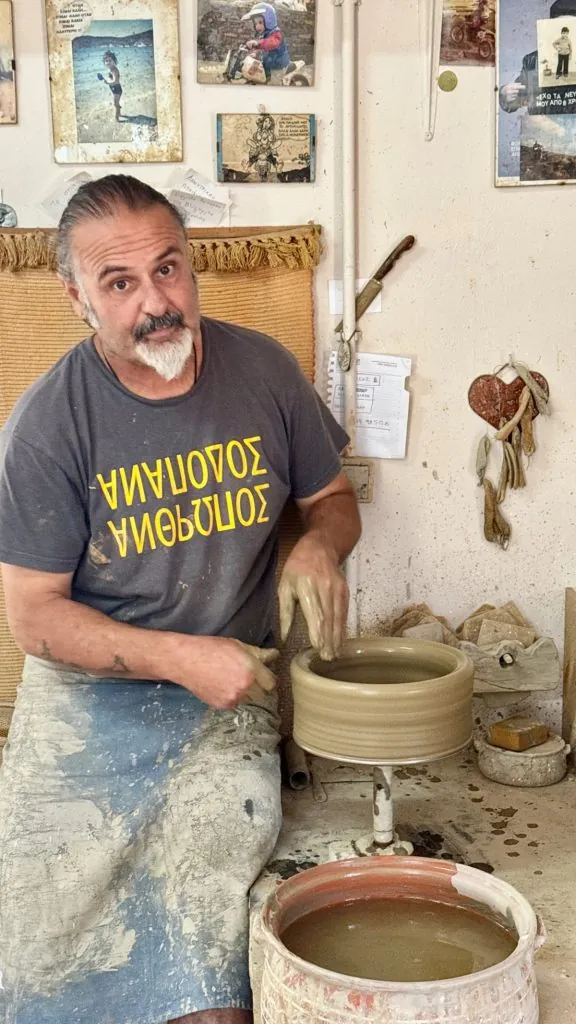
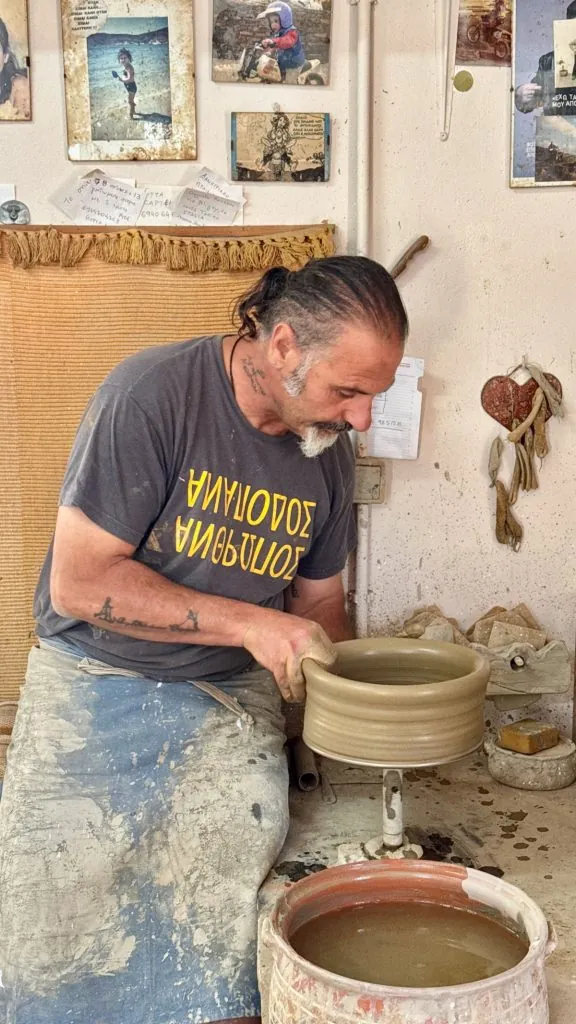
Ceramicists from Sifnos became sought after
During the 19th and 20th centuries, many Sifnos potters began to seek out other parts of the island and establish workshops elsewhere. The knowledge spread to other Greek islands and the Greek mainland, among other places.
The potters of Sifnos gained such a good reputation that the word sifnius, i.e. someone from Sifnos, in some places came to be associated with the profession of potter itself. This says a lot about the importance of the craft to the island.
The vessel that only the masters can make
At Apostolidis we also got to see one of the more advanced traditional vessels. It has a rounded bottom, a shape that makes it possible to use the vessel over an open fire. But the shape also makes it difficult to manufacture.
We were told that the vessel must be turned in a special way, upside down, so that the bottom can be sealed last. It is a technique that requires great skill and that, according to the potters, only a few masters have mastered today.
Seeing someone turn after hearing about all these generations of potters of course gave the craft another dimension.
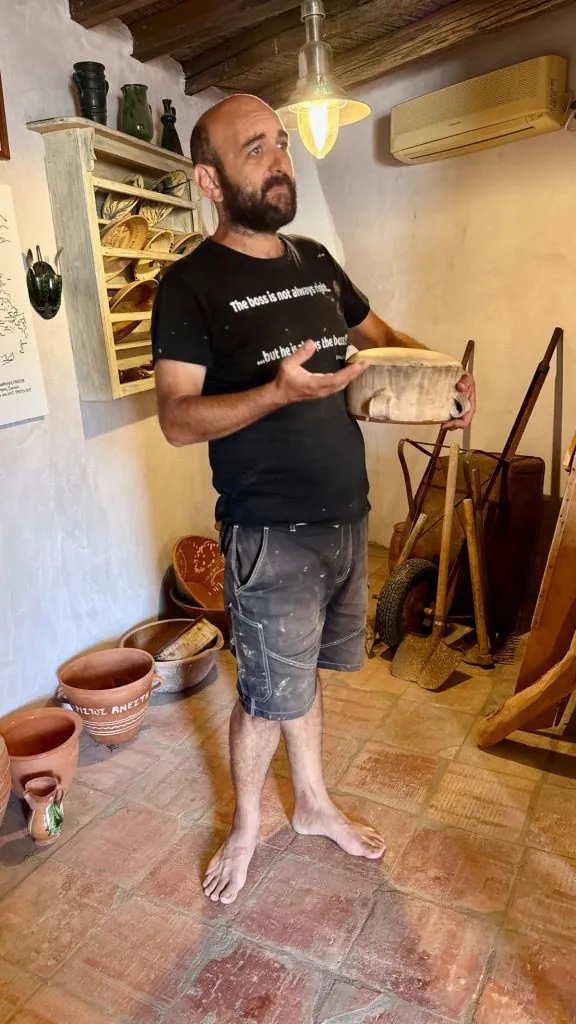
From cooking pots to chimneys and souvenirs
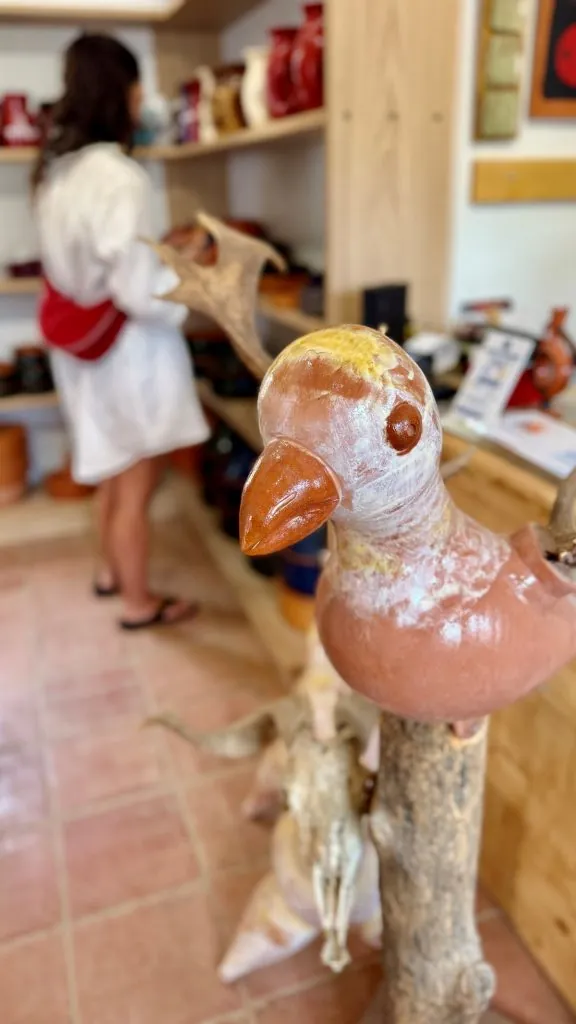
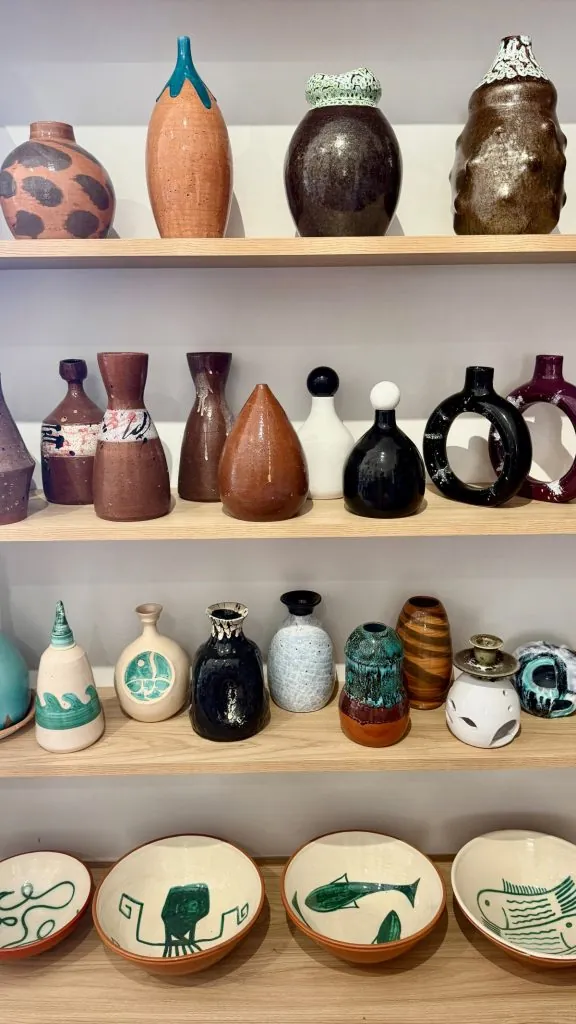
As tourism grew on Sifnos, the demand for ceramics also changed. Visitors didn’t necessarily need large vessels to cook in – they wanted something beautiful to take home.
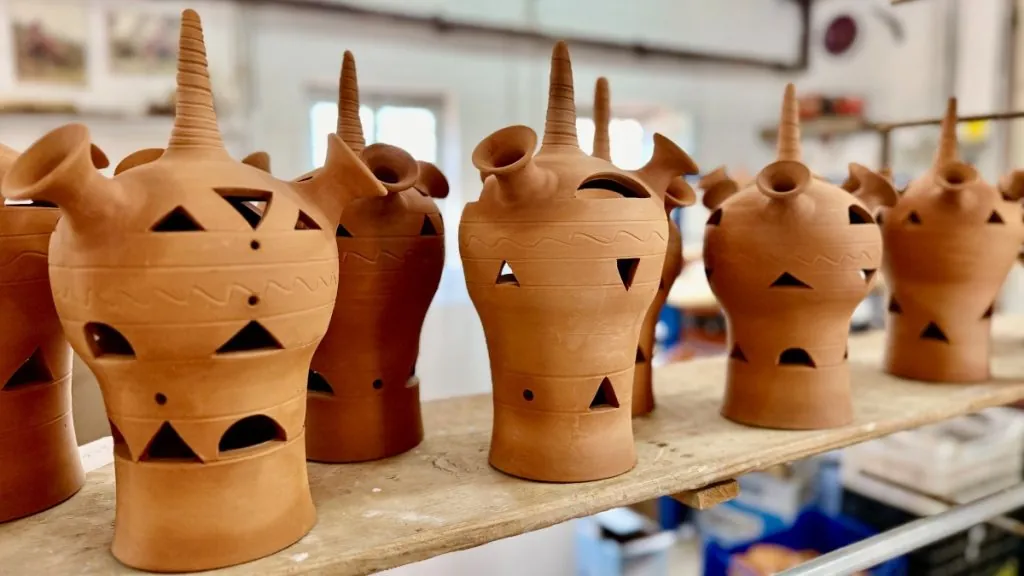
And inspiration was everywhere on the island. A detail that is typical of Sifnos are the decorative chimneys, flaroy, which can be found in many different forms on the whitewashed houses.
Apostolidis said that visitors started asking about the chimneys. The potters therefore started making smaller versions of the shapes, including lanterns where you can put a candle. A fine example of how an old craft can change without losing the connection to the place.
Local flavors to try on Sifnos
There is of course much more to eat on Sifnos than you can try in a few days. Some specialties are particularly fun to look out for:
- Revithada – traditional slow-cooked chickpea stew, often associated with the Sunday meal.
- Revithokeftedes – fried chickpea balls and one of our personal favorites.
- Mastelo – slow-cooked lamb or goat, traditionally cooked in a ceramic vessel of the same name.
- Melopita – soft honey pie with cream cheese, eggs and honey. Very tasty!
- Mizithra – fresh, soft cheese that can appear in salads, among other things.
- Manoura – a more mature and flavorful local cheese.
- Caper – grows on Sifnos and is used in various local dishes.
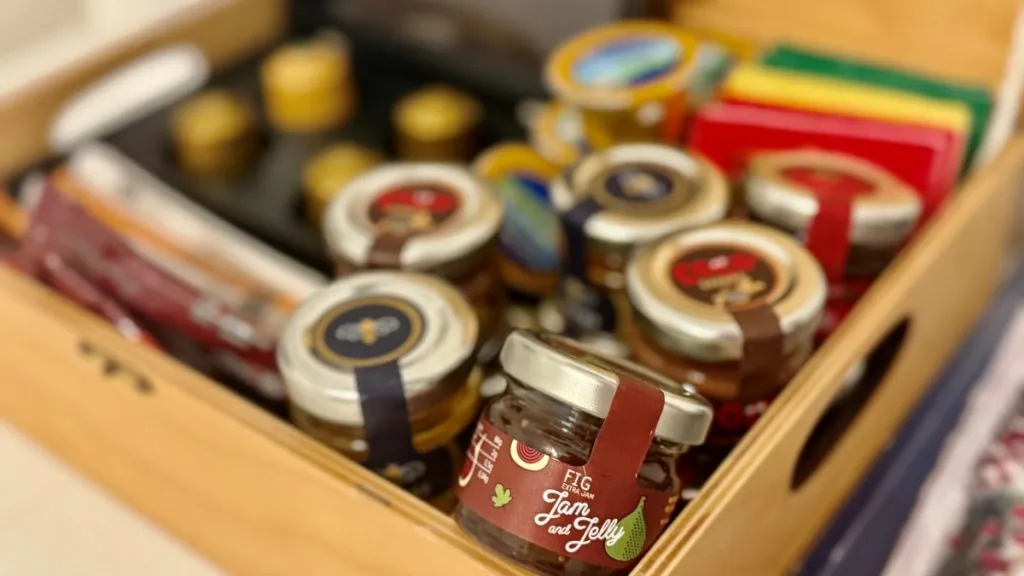
- Thyme honey – tasty and aromatic honey from the island's thyme, good with yogurt and cheese, for example, and an important ingredient in melopita.
- Amygdalota – traditional almond sweets made from ground almonds and sugar, among other things. A bit like marzipan and a classic sweet on Sifnos.
Did you know? A cookbook legend from Sifnos
Sifnos has another strong connection to Greek food culture. Nikolaos Tselementes, one of the most influential figures in modern Greek cooking, had his roots on Sifnos.
His cookbooks had such a huge impact that the surname Tselementes eventually began to be used as a colloquial word for cookbook in Greece.
Every year, a gastronomy festival is organized on Sifnos that bears his name and brings together food traditions from the Cycladic islands.
Our impressions of the food and ceramics on Sifnos
When we think back to the food on Sifnos, it's perhaps not any single dish that lingers most. It's the feeling.
The food was often simple in the best possible way: authentic, well-cooked and made with heart. We remember the owner who found melopita for us, the lunch with our feet in the sand, the creamy yogurt for breakfast and all the small dishes that came to the table night after night.
And then there's the ceramics. What at first might look like beautiful bowls and pots in souvenir shops turned out to be a tradition that is closely intertwined with people's everyday lives and the island's food culture.
Perhaps that is precisely why food and ceramics go so well together on Sifnos. Both have grown out of the same place – from the island’s raw materials, nature, history and the way people use what is around them.
You might also like:
 8 restaurants on Andros island - with wonderful Greek flavours
 Restaurants on Naxos – and local food to try
 Visiting Monet's Garden - a wonderful art experience
 Best restaurant at Arlanda? - we have tested La Girafe
 Palma for Foodies - hot food destination in Mallorca
 Beer and wine in Tallinn - beer bars, German beer hall and Ukrainian food



 English (UK)
  Svenska