

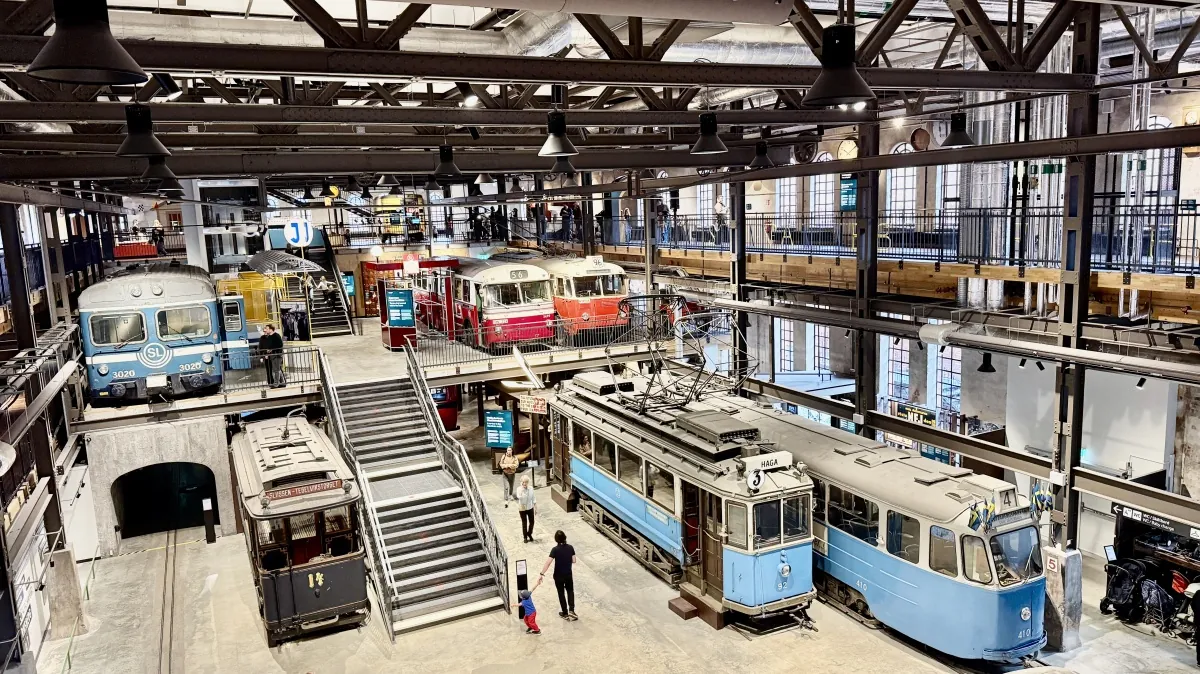
Writer: Helena Bergström
At the Tram Museum in Stockholm you can take a journey through the history of public transport, from horse-drawn carriages to the subway and modern buses. There are charming old vehicles, interesting stories and lots of activities for children. We visited the museum for the first time and also heard the eerie story of the Silverpilen and the ghost station Kymlinge!
 Tweet
 Share
 Share
 Pin
 Share
 Share
Table of contents
The Tram Museum in the Gasworks on Djurgården
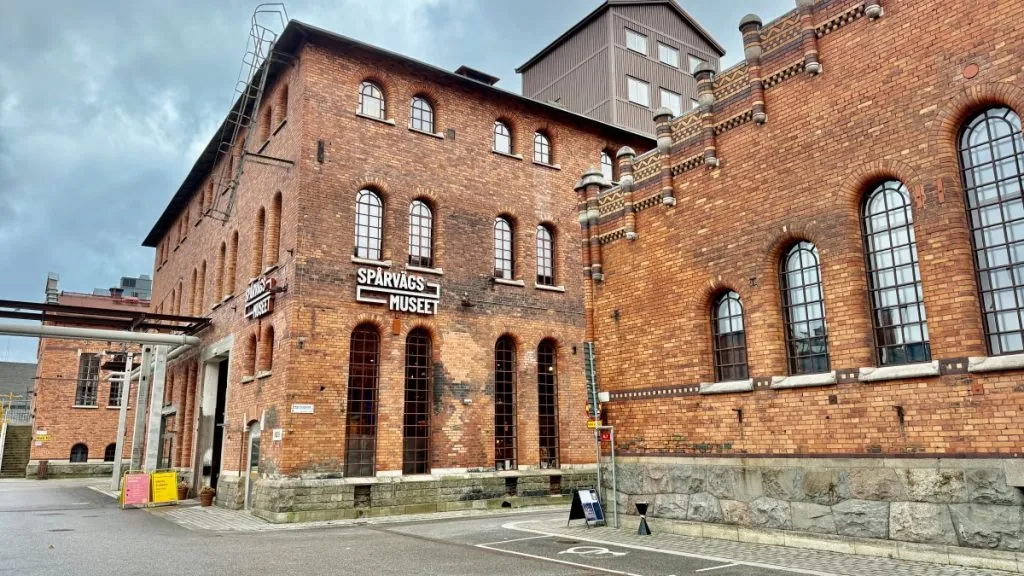
The Tram Museum is located in the old Gasworks in Norra Djurgårdsstaden, in a beautiful industrial building from 1893, designed by architect Ferdinand Boberg. Town gas was previously produced here, and the building was used, among other things, in the process of purifying the gas.
We had never visited the museum before, so it was a little excursion for us. We took the metro to Ropsten and then walked to the museum, which is located in the Hjorthagen area.
The Tram Museum has been located in various locations over the years, including Söderhallen on Södermalm. Since 2022, it has been located in the fine premises of Gasverket, where there is plenty of space for both large vehicles and various exhibitions.
Historic trams, buses and metro trains
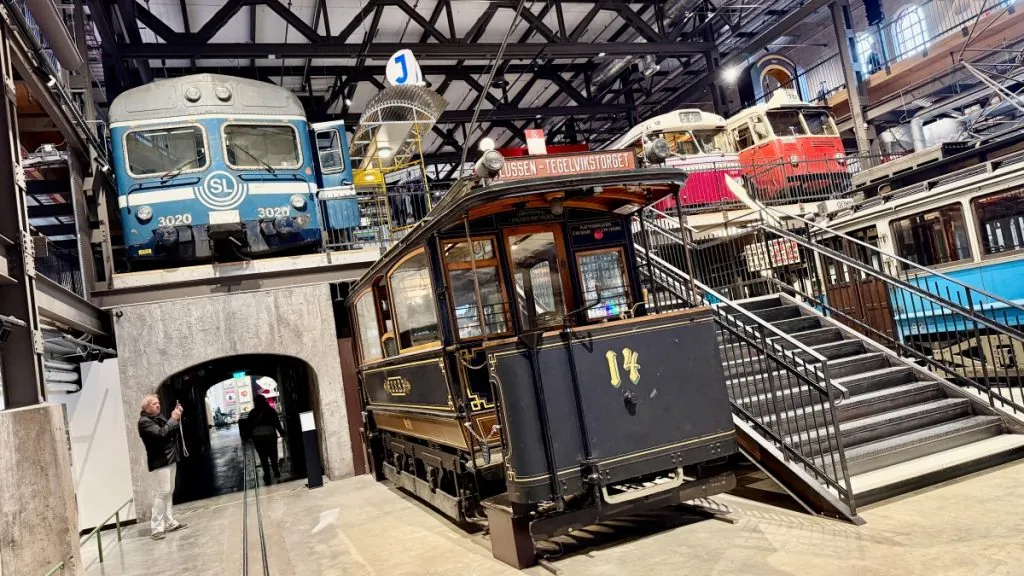
There is a lot to discover at the Tram Museum! Here you can follow Stockholm's public transport through the ages, from horse-drawn carriages to trams, buses and metro trains.

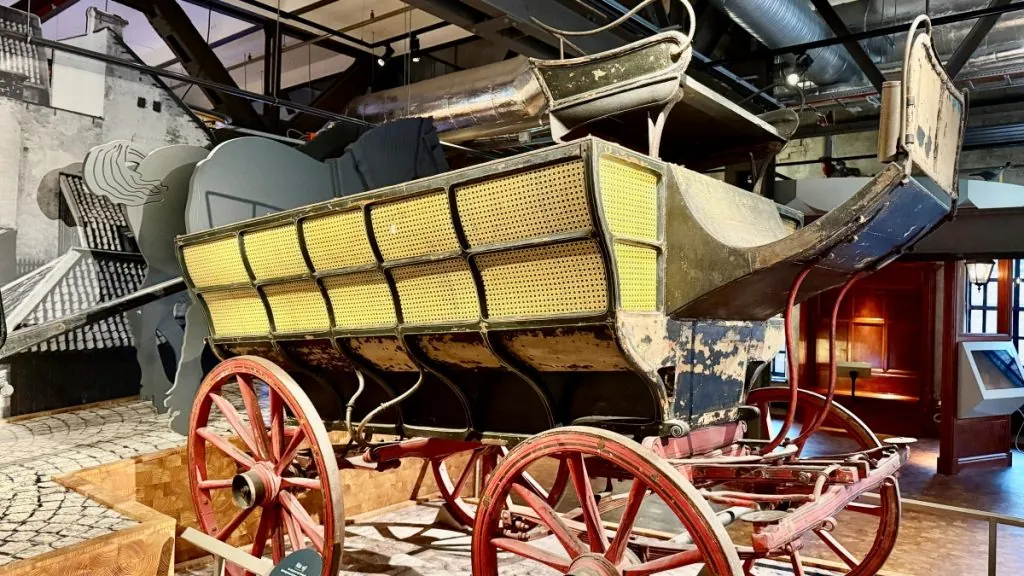
One of the oldest vehicles is the Wurst horse-drawn coach from the 1840s. It is an open carriage with upholstered seats for eight passengers, pulled by one or two horses. The name Wurst, which means sausage in German, comes from the fact that the carriage was thought to resemble a sausage!
The horse-drawn bus was used primarily for summer excursions to the city's parks. Although the early horse-drawn buses were called omnibuses, from the Latin word for "all," the trips were primarily a pleasure for the upper class.

We also fell in love with several of the old trams and buses. There is something particularly charming about vehicles from the past, especially those from the mid-20th century. You can imagine what Stockholm looked like when these trams and buses rolled down the city streets.
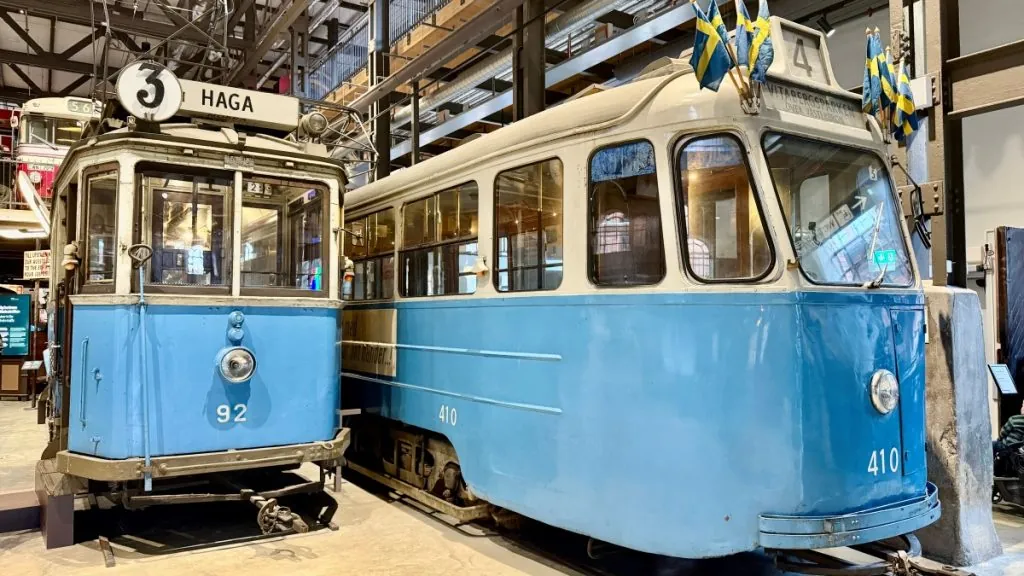
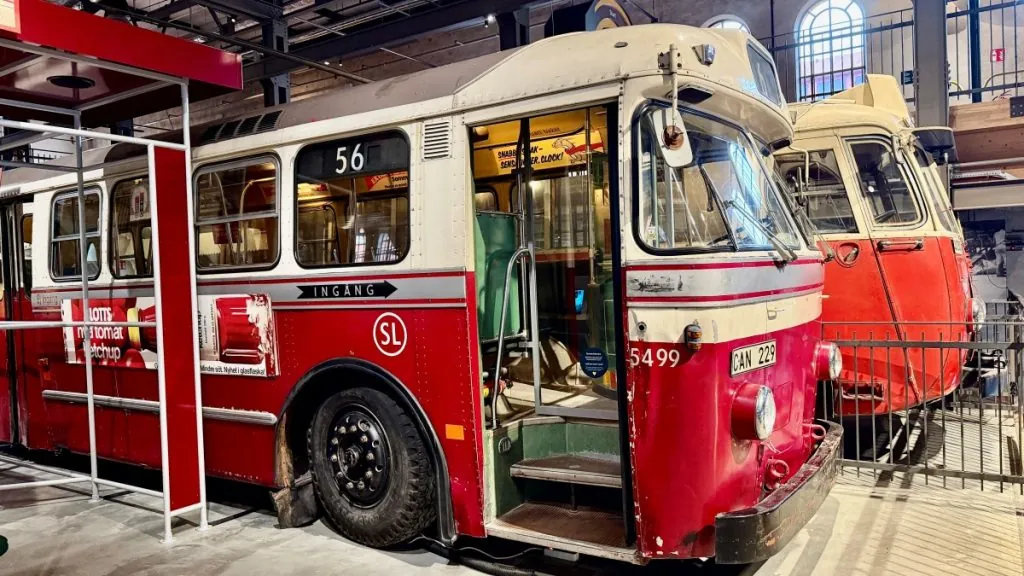
The museum also has exhibitions about the metro and archipelago traffic. In other words, it is not just trams that are at the center, but the importance of public transport for the development of Stockholm as a whole.

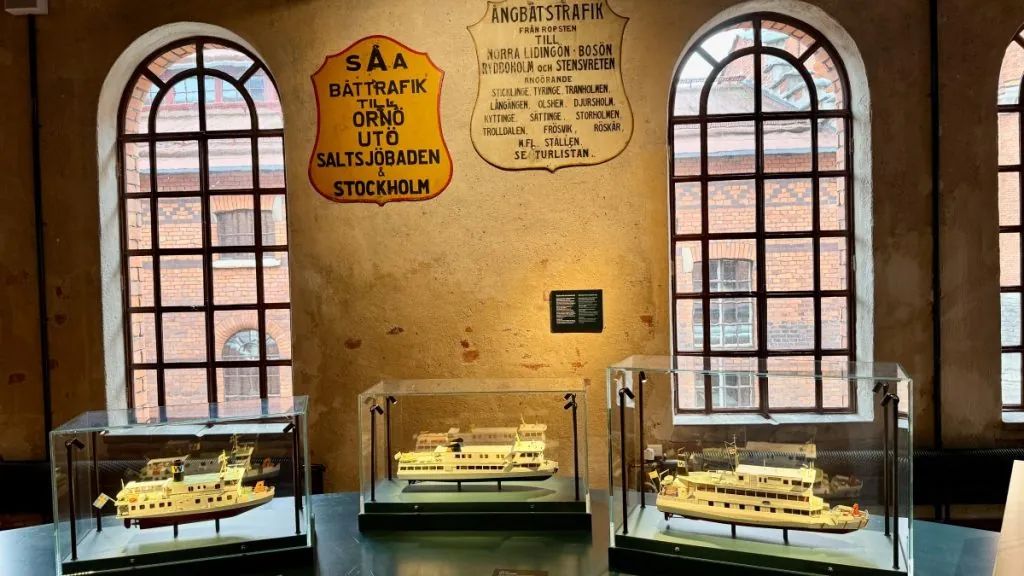
Tickets, uniforms and the people behind the traffic
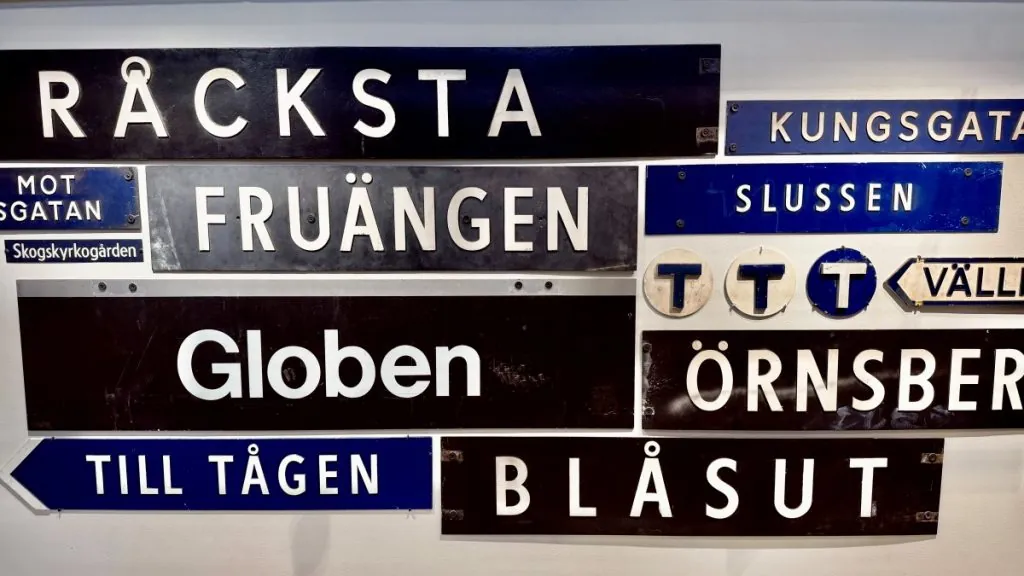
In addition to the large vehicles, there are lots of smaller items to look at, such as old tickets, signs, photographs and uniforms from different eras. We found the exhibition on uniforms particularly interesting.
Here you can not only see how conductors and drivers have been dressed over the years, but also read about how the uniforms have sometimes been the subject of conflict. In 1986, for example, a checkpoint guard fought for the right to wear a turban at work. The issue ended up in court, where he was found in favor, and today both turbans and headscarves are permitted.
Another story is about train driver Martin Åkersten, who in the summer of 2013 protested against the ban on shorts on the Roslagsbanan line. He and several colleagues simply started wearing skirts instead! The protest received a lot of attention and eventually led to the ban on shorts being lifted.
It's stories like these that make the museum extra interesting. The history of public transport is not just about vehicles and technology, but also about the people who worked there and how society has changed.
Silverpilen and the ghost station Kymlinge
Our visit started with a guided tour that turned out to be about the Silverpilen, Stockholm's legendary ghost train. It was a special activity during the fall holidays, and we thought it was really fun to hear more about this strange story!
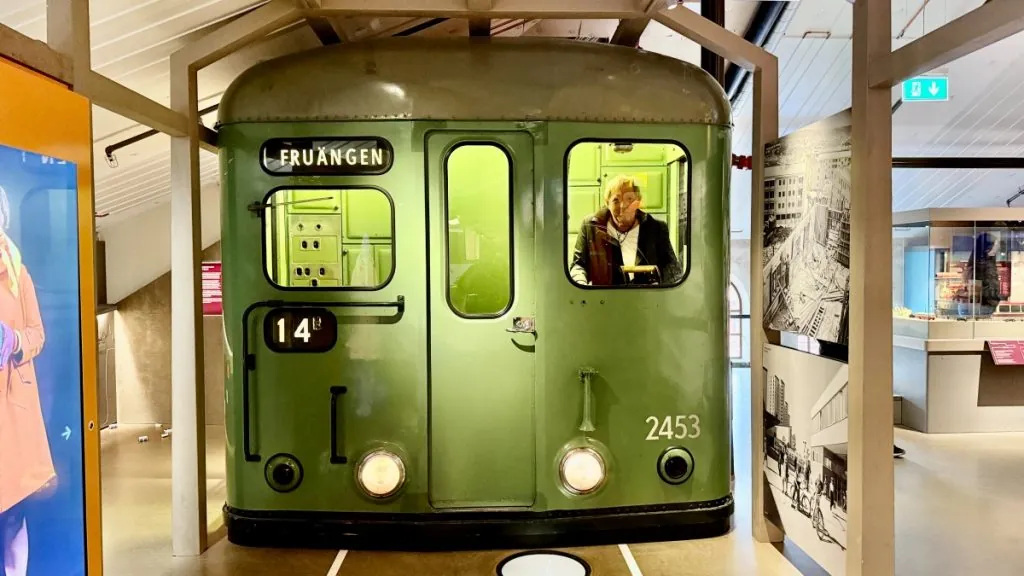
The Silver Arrow was actually a real subway train. It consisted of eight silver-colored carriages that began operating in the 1960s. Unlike the regular green subway carriages, the Silver Arrow carriages were unpainted, giving them a different and somewhat mysterious appearance.
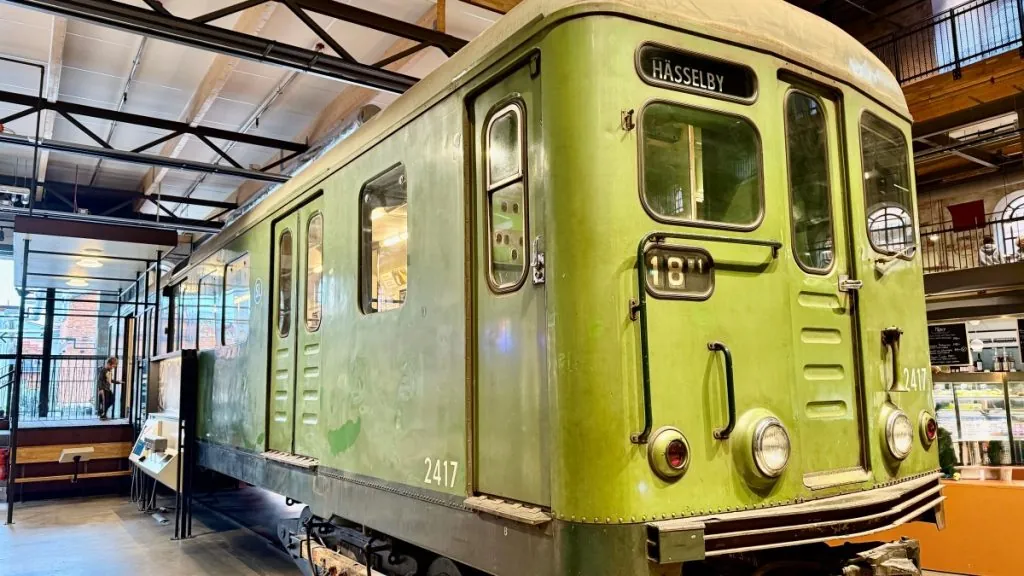
Over time, various stories about the train began to spread. One of the most famous stories is about a person who, after a late night of partying, boards a strange train. After a while, the person discovers that the fellow passengers are dead and that the train is on its way to Kymlinge, the station where the dead get off…
Kymlinge is also a real place. The station is located on the blue line of the metro, between Hallonbergen and Kista, and construction began in the 1970s. However, plans for the area changed and the station was never opened. To this day, metro trains pass the abandoned station without stopping.
During the tour we heard a version of the ghost story, and we also saw a film that told more about the Silverpilen and got to take a tour of the eerie station. For us it was extra fun because we had previously seen one of the Silverpilen's old carriages on Manna memory in Ångermanland. There is a preserved carriage from the real train!
Silverpilen and Kymlinge have become part of Stockholm's modern walking legends, and although the ghost stories are of course made up, it is fascinating how they have grown around real places and vehicles.

The Tram Museum with children – lots to discover
We visited the Tram Museum on a Saturday during the fall break, and there were certainly plenty of families with children there! The stroller parking lot was full of strollers and there was a lot of activity throughout the museum.
It's easy to see why the museum is popular with children. There's plenty to play with and discover. Children can dress up, try out various interactive activities, test whether they can run as fast as a train and ride a mini-subway.
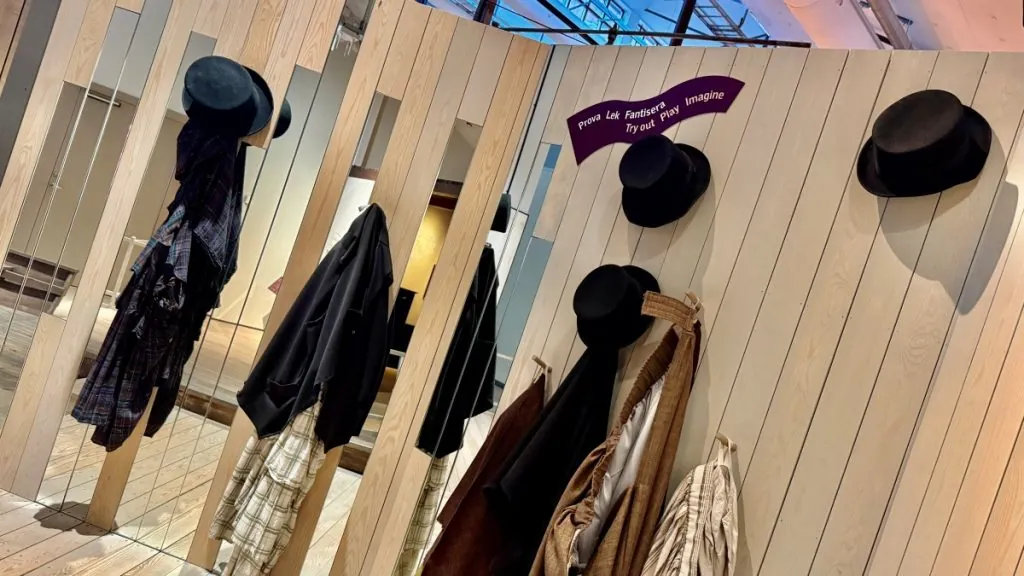
Despite the large crowd, we found the premises to be spacious and never too crowded. There was plenty of room for both playing and for those of us who wanted to walk around and look at the exhibitions in peace and quiet.
And although the museum is very child-friendly, we really want to emphasize that it is also interesting for adults. We had no children with us and enjoyed the visit very much! There is also a café for those who want to take a break during the museum visit.
Good to know about the Tram Museum
- Was: Gasverkstorget 1 in Norra Djurgårdsstaden, Stockholm.
- What is it? Museum about Stockholm's public transport, with historic vehicles, exhibitions and interactive activities.
- Getting here: Metro to Ropsten and then about a ten minute walk. You can also take a bus to the area.
- For children: Many activities, including dressing up, interactive stations and a mini subway.
- Guided tours: The museum offers various exhibitions and activities. The selection varies.
- Café: Located next to the museum.
- Opening hours and prices: See The Tram Museum's official website for current information.
The Tram Museum is a nice excursion destination for both adults and children. We especially appreciated the historic vehicles, the human stories and the unexpectedly exciting guided tour of the Silver Arrow. A museum that gives a nice insight into both Stockholm's history and how everyday life has changed over time!
Read also – more experiences nearby
You might also like:
 Nordiska museet 150 years - Jubilee bridge and new exhibitions
 Swedish Museum of Natural History - Grandma Anna's secret winter journey
 Grandma Anna and the paradoxes - the secret grandchildren's trip
 Today, Äventyrs opens in Stockholm - a modern adventure museum in the city centre
 Fotografiska in Stockholm – photographic art that provokes thought
 The Viking Museum in Stockholm – experience the Viking Age on Djurgården



 English (UK)
 Svenska