



Writer: Helena Bergström
Updated: September 2026 | Sète is a colorful port city on the Mediterranean Sea in southern France. Here, canals and fishing boats mingle with beaches, seafood, art and a big dose of southern French atmosphere. The city is sometimes called the ”Little Venice of Languedoc”, but Sète definitely has its own character. Here are our tips for things to see and do in Sète.
 Tweet
 Share
 Share
 Pin
 Share
 Share
Table of contents
Sète in southern France
Sète is located in the Hérault department in the Occitanie region, about 30 kilometers southwest of Montpellier. The city is located between the Mediterranean Sea and the large lagoon Étang de Thau, famous for its oyster and mussel farms.
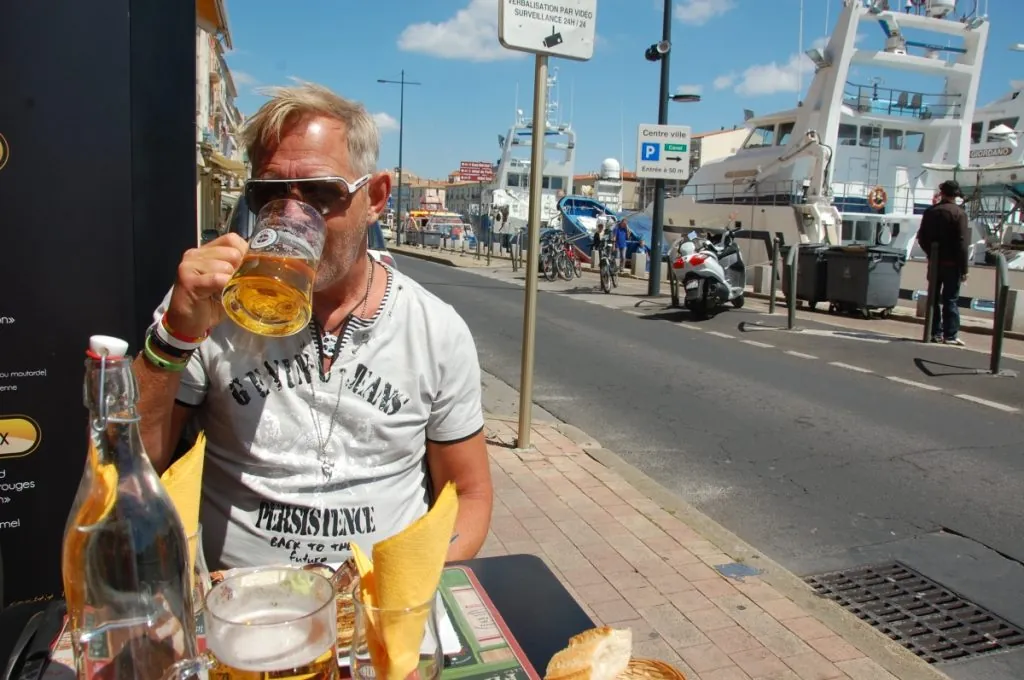
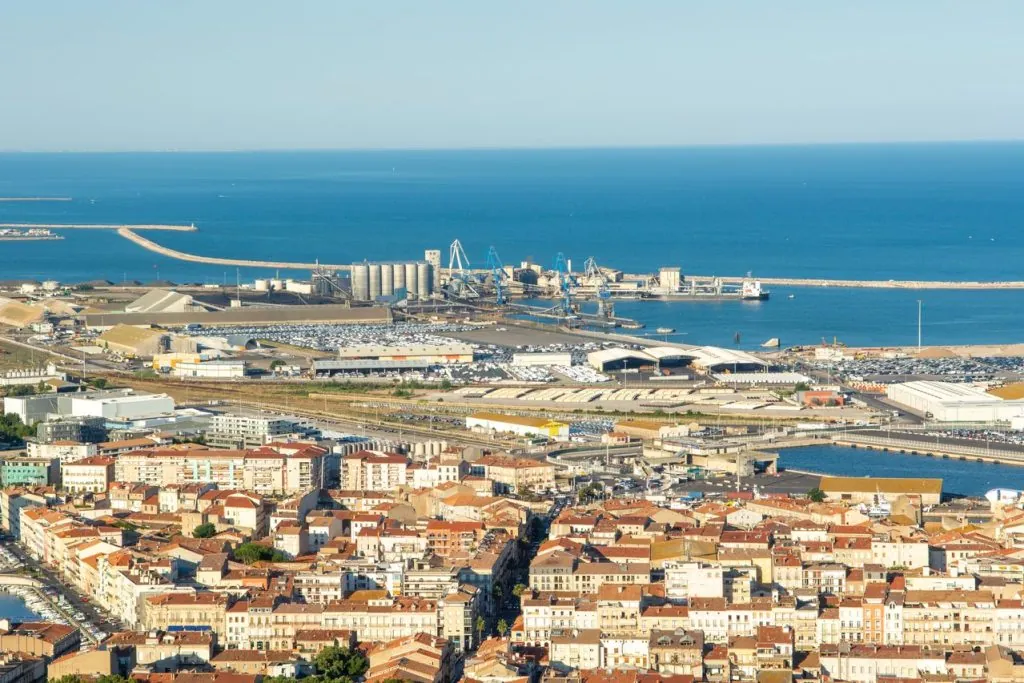
Sète is primarily a port city. There is a fishing port, a commercial port and marinas, while canals cut through the center and give the city its special character. When we visited Sète, we didn't immediately come in from the most flattering side.
Our long walk into Sète
We had parked a bit far from the center and started walking. And walking… First we passed nice beaches. Then we came to a large harbor area with cranes and industrial buildings that didn't feel overly charming.
We were starting to get a little discouraged. Were we really on the right track? Where was that nice town that people had told us about?
Finally, the surroundings changed. We arrived at the canals and were greeted by boats, bridges, outdoor cafes and houses along the water. There it was!
Things to do in Sète – 10 tips
Yes, we finally found our way to Sète, and now we can share our best tips.

1. Stroll along the Canal Royal
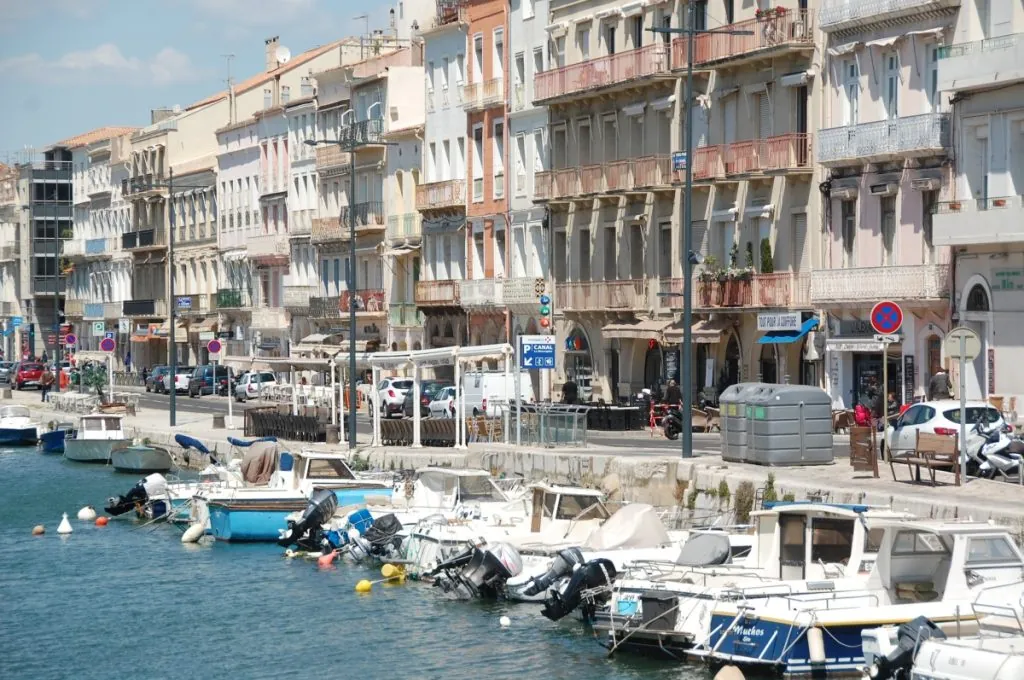
The Canal Royal runs through the heart of Sète and is a great place to start your exploration. Along the quays are restaurants and cafes and in the water are various types of boats. The bridges, houses and life along the canal give central Sète its own unique atmosphere.
It is here, above all, that you understand why Sète is sometimes called the ”Little Venice of Languedoc.” Although with a bit more of a fishing port and significantly fewer gondolas.


2. Discover the alleys and Quartier Haut
Leave the canal sometimes and venture into the neighborhoods behind the harbor. Here you will find small streets, shops, squares and artistic elements.
Of particular interest is the Quartier Haut, the old district that grew up above the port. The area has strong connections to fishermen and immigrants from Italy and still has a distinct Mediterranean character.
There are also studios and street art here that show a different side of Sète than the one you encounter along the large quays.
3. Climb Mont Saint-Clair
To understand Sète's unusual geography, climb Mont Saint-Clair. It rises about 180 meters above the city and from the top you get a view of Sète, the Mediterranean Sea and the Étang de Thau. From here it becomes clear how the city is sandwiched between different bodies of water.
We didn't go up Mont Saint-Clair during our visit, but next time it would definitely be on the list.
4. Experience the fishing port
Sète has not emerged as a picturesque tourist destination. This is a real port town, and fishing is still an important part of its identity. This also means that some parts are more beautiful than others. Cranes, workboats and port facilities are part of the cityscape.
We discovered that during our long walk towards the center. But it is also the mix that makes Sète interesting. Here, both the charming and the slightly rougher side by side.

5. Visit the Market Square of Sète
If you want to discover what the area has to offer in terms of food, the market hall Les Halles de Sète is a good stop. Here you will find fish, seafood, cheeses, charcuterie, fruit, vegetables and other local products all under one roof.
Sète is a city where the food has strong connections to both the Mediterranean and Italian immigration. This is evident in everything from fish and seafood dishes to the city's most famous specialty, Sétoise tielle.
6. Taste tielle sétoise and seafood
Sétoise Tielle is a small round pie filled with squid in a spicy tomato sauce. The dish has Italian roots and has become something of a culinary symbol for Sète.
But there is of course much more from the sea here. The proximity to the Étang de Thau makes the area famous for oysters and mussels, while the fishing port contributes the daily catch from the Mediterranean. We managed to get a pretty good introduction to the marine cuisine ourselves.

7. Eat a lunch you might remember for eleven years
We chose a restaurant at random and ordered a three-course lunch. We ended up with three completely new taste experiences for us. For starters, we had mixed seafood including raw mussels and sea snails. Then we were served fried shark with sauce and French fries and the meal ended with crème brûlée.
Everything was delicious, although I thought the sea snails looked a little suspicious. This was back in the day when a three-course lunch cost us 15 euros. We won't promise that price today. But the memory remains.

8. Watch the traditional water knight games
One of Sète's most special traditions is nautical jousts, a water knight game. Two boats meet on the canal and at the far end of each boat stands a participant with a lance and shield. The goal is simple, at least in theory: to make the opponent end up in the water.
The tradition is strongly associated with Sète and the competitions are an important part of summer folk life. The jousting games receive particular attention during the Fête de la Saint-Louis in August.
9. Discover the Étang de Thau and Pointe Courte
Across Sète from the Mediterranean Sea lies the Étang de Thau, a large coastal lagoon where oysters and mussels are grown. Also located by the lagoon is Pointe Courte, an old fishing district with small houses, boats, nets and a completely different atmosphere than central Sète.
We didn't have time to discover this during our visit, but for those who want to get closer to Sète's fishing culture and relationship with the Étang de Thau, the area is interesting. If you have more time, you can also continue around the lagoon to towns like Bouzigues, which is particularly associated with oyster farming.
10. Enjoy the beaches
Sète is not just a port and canals. There is also a long coastline with fine sandy beaches. We passed the beaches on our walk towards the city and got at least a taste of that side of Sète.
To the south, the beaches continue along the narrow strip of land between the Mediterranean Sea and the Étang de Thau. Here there are plenty of opportunities for swimming and beach life during the warmer part of the year.

Sète – a city built around the port
Unlike many very old French towns, Sète is relatively young. The city's modern history took off under Louis XIV. In 1666, the first stone was laid for the port that would provide the Canal du Midi and the Languedoc region with a connection to the Mediterranean.
Sète grew up around the port and over the centuries fishing, trade and immigration have shaped the city. Not least, people from Italy have left a clear mark on both the food culture and the city's neighborhoods.
Sète has also become known as a city of culture. The poet Paul Valéry was born here, as was the singer Georges Brassens. Those who are particularly interested can visit the Musée Paul Valéry and the Espace Georges Brassens.
Sète with a campervan
We arrived in Sète by campervan, but our parking strategy was not exactly optimal. We ended up far from the centre and had a considerably longer walk than we had planned. In hindsight, we should have planned that part a little better.
Sète is a busy port city where traffic and parking can be difficult, especially during high season. If you are coming by motorhome, it is therefore wise to check current parking and overnight accommodation options before driving into the city centre.
How much time do you need in Sète?
For the center itself and the canals, half a day may be enough, but Sète has much more to offer than we first realized.
If you also want to experience Mont Saint-Clair, Pointe Courte, the beach and maybe have a long lunch, we would set aside at least a full day.
With two days there is also time to discover Étang de Thau and take an excursion to one of the towns around the lagoon.
Is Sète worth a visit?
Yes, and perhaps above all because Sète is not completely organized. Our first impression consisted of a long walk, beaches and a port area with large cranes. We almost started to wonder why we had been tipped off about the city.
Then we arrived in the city center. There, the canals, the boats, the outdoor cafes, the small shops and a lunch with more new taste experiences than we had expected awaited us. We actually wanted to stay longer, but the trip had to continue. Next time we will park closer.

More to see and do near Sète
Of course, there is more to discover near Sète. Here you will find tips and reports:
You might also like:
 Visiting Rocamadour in France - a sacred pilgrimage site
 Visiting the Gorges du Tarn in France - a scenic canyon
 Visiting the Ardèche in France - canoeing at the Pont d'Arc
 Visiting Chateau de Beynac in France - a historic gem
 Visiting the Dune du Pilat in France - Europe's largest sand dune
 Calanche di Piana - dramatic mountain roads in western Corsica



 English (UK)
 Svenska
Maggan och Ingemar says:
That meal would not have filled me up. And also raw mussels and snails....no, I won't do that. Have gone past Sete, but not stopped, looks to be a cosy town. Will probably make sure to stop next time.
28 April 2015 - 23:44
Inga M says:
This city is a real little gem. Looks just the right amount of small town and picturesque. And what a location with water on several sides.
I wouldn't have made it through that meal, but you're used to eating both.
29 April 2015 - 3:29
admin says:
Maggan and Ingemar, sorry I missed printing all the dishes - that was just the starter! I have changed the post now. Of course it was food so we were full!
🙂
Inga M, we like seafood and enjoy trying new things, but there were many different dishes to choose from!
29 April 2015 - 3:55
Marina says:
It looked really cosy, perhaps worth stopping there next time there is talk of a trip to the south of France.
29 April 2015 - 3:55
Steve says:
So many new and exciting places for you to discover.
What a fantastic lunch. The starter was of the cooler variety.
29 April 2015 - 7:15
Znogge says:
I was in Sète when I travelled by train. We ate at one of the restaurants by the canal and it was the first time I encountered a toilet with only a hole in the floor... We stayed a few days before moving on...
29 April 2015 - 7:42
Lennart says:
Exciting and affordable lunch!
We passed there in 2014 on our way to the north, did not stop right there!
Maybe next time!
29 April 2015 - 8:04
BP says:
What did I say;-) Really fun that you liked Sete! Oh just the food - yummy! You wouldn't even get these delicacies for five hundred here at home. Just the divine starter would cost three hundred bucks. I'm surprised that France has such low prices. Lucky for you:-)
29 April 2015 - 8:12
Anonymous says:
Sounds very exciting! What kind of shark was it? Did you find out?
29 April 2015 - 8:25
Nils-Åke Hansson says:
There were many taste experiences. I have never tasted shark. 15Euro good price.
Stay well
Nisse
29 April 2015 - 8:34
admin says:
Marina, very nice and worth a trip here! Then there is a lot that we have not had time to see yet ...
Steve, the starter was an experience!
🙂
Znogge, don't know exactly but guess those toilets were more common in Europe in the past! I also encountered them the first time I travelled by train, but it was in Eastern Europe somewhere.
Lennart, we also found it very affordable!
BP, we said the same thing when we ate. I wonder what it would have cost in Sweden? But it will be cheap because it is fished locally! No transport...
Anonymous, no unfortunately. We also thought about it...
Nils-Åke, I have only eaten rotten shark in Iceland (a strange speciality they have). This shark was good! White meat that melted in the mouth.
29 April 2015 - 8:45
solan says:
An interesting city, tricky to find. We have succeeded once out of three times. Perhaps the best is to stand a bit outside and bus in. We will do that next time. Still good route!
29 April 2015 - 8:59
JoY says:
We cycled in there as we were parked along the sea. Yes, there were many restaurants there, I remember.
Hugs
29 April 2015 - 9:16
Ama de casa says:
What a cosy city! And how good all the seafood is in France!
🙂
29 April 2015 - 10:53
Alexandra says:
Glad you liked Séte, so did we! 😀 Also remember that there were many restaurants there, however, we did not try any of them, we had a picnic in a park instead. Raw mussels sounded a bit nasty though haha
29 April 2015 - 10:55
admin says:
Solan, we were a bit too far away and had to walk a bit. But there was a car park at the castle where you might be able to stand? Most places were for cars with a maximum height of 2.10, but there were some larger vehicles outside the barrier.
JoY, glad you were here too!
Ama de casa, amazing with all the seafood! And cheap compared to Sweden!
Alexandra, I didn't even know you could eat raw mussels, but apparently! They were a bit like oysters in texture, and tasted fresh from the sea!
🙂
29 April 2015 - 12:10
CavaforLunch.com says:
Such lovely pictures! It must be an absolutely amazing place 🙂
29 April 2015 - 13:47
Anders och Birgitta says:
Nice to read about Sete, we have travelled through there many times but never stopped.
29 April 2015 - 14:29
Ditte says:
How nice that you went there and also enjoyed the city. And exciting menu! I would probably have chosen another one, but it's fun to try what you haven't eaten before.
I was here many years ago when we rented a large caravan at a campsite south of Montpellier, in Valras Plage. And sometime in my youth. But when I saw the canal pictures, the memory was refreshed.
29 April 2015 - 15:02
Lena i Wales says:
How nice to see pictures from Sète. I recognise myself at the canal. Sure is nice there!
Nice to see the newspaper article about you.
Enjoy your stay in glorious France!
29 April 2015 - 15:58
admin says:
CavaforLunch, thank you for your comment! Sure, a great place!
Anders and Birgitta, it was a nice stop!
Ditte, you've been everywhere!
😉
Lena in Wales, thank you for the greeting and glad that you were also in Sete!
29 April 2015 - 17:17
Linnea Edmark says:
You look like you're having a great time! Good food, sun and nice weather. Things to remember the days when everything is not as sunny, warm and nice 😉.
Greetings Linnea I Bavaria
30 April 2015 - 11:12
steel city anna says:
How nice! And sunny! Hail has just now. The food looks good and if I had not known what it was, I would have tasted it 🙂 .
30 April 2015 - 18:02
Margret Björklund says:
We have visited Sete 2 times when we go down to ? in Spain. A real gem lived well both times ate good food mussels and fish recommend staying there do not pass by very cosy place ????
28 April 2018 - 13:49